




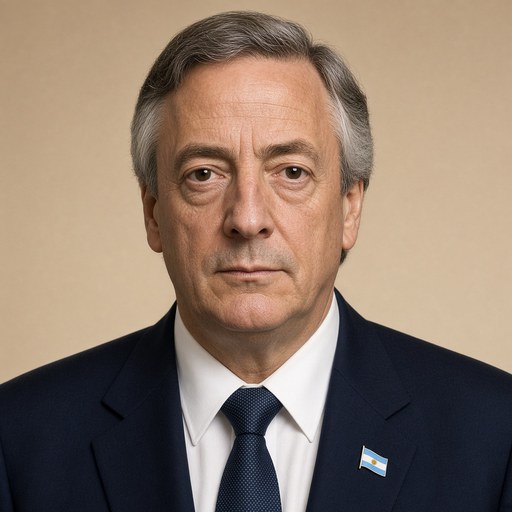
Néstor Kirchner at the 52nd Annual Convention of the Argentine Chamber of Construction
 Néstor Kirchner · President of Argentina
- Context
- Kirchner addressed the 52nd Annual Convention of the Argentine Chamber of Construction in November 2005, highlighting economic recovery and the national development model.
- Main themes
- Construction sector growth, national economic recovery, poverty reduction, fiscal responsibility, social inclusion and equality, national development model, infrastructure investment, self-reliance and sovereignty, rejection of trickle-down economics, institutional quality, regional integration, unity between government and society
- Duration
- ~25 min
- Words
- 3,034
- Sentences
- 100
- Readability
- 36
- Grade
- 15.4
- Syntax
- 3.24
- Vocabulary
- 2.25
Translated from Spanish
The broad sphere of national life a sentence belongs to. Every sentence has an Arena, so it is the denominator the other indices are read against.
Other100 sentences in 31 paragraphs
Governors, Mr. President of the Argentine Chamber of Construction; Mr. Minister of Federal Planning, Public Investment and Services; national and provincial authorities; Mr. Secretary General of UOCRA; business leaders; representatives of construction entities; ladies and gentlemen: first of all, I want to thank you for the opportunity to share with you another annual convention of this chamber.
It is important for us to refer to the annual situation of our homeland in this context, without forgetting the starting point, while also trying to unravel the paths we still have to travel. It is interesting for us to analyze, in order to introduce improvements, what obstacles we encounter in our work and what is the best way to overcome them.
I believe we have reasons to be rationally optimistic. I do not say this only because of what the statistics and numbers of the economy or the construction sector indicate; I believe there are deeper reasons. It is as if Argentines are recovering the memory of the best times, as if we are leaving behind a long night.
We are increasingly advancing against the idea of "it cannot be done," regaining our self-esteem and beginning to believe in our potential, our creative capacity, our work. It is not that the difficulties have disappeared or that the obstacles have been overcome, but we are starting to have the conviction that with dedication and effort we can overcome or defeat them. More and more Argentines accept the true evidence of the failure of the "trickle-down wealth" theory that made us squander opportunities. Very few are still willing to maintain that the market alone reduces poverty levels. It is becoming increasingly clear that a country with strong inequality reduces poverty to a lesser extent than one with a more equitable distribution.
When we express that we are facing the historic opportunity to design a national project, a model of a nation integrated in its various regions that, from serious capitalism, aims to provide opportunities for work and well-being while intelligently integrating into the world, we are not mistaken. Consequently, the achievements we can showcase today reaffirm the path we have taken. We are winning the battle against the idea that what is Argentine is not valuable; we are starting to believe in ourselves and we are walking the path of building the country we dream of.
It is not in vain that we demand that multilateral credit organizations respect the autonomy of our decisions; it is not in vain that we resist believing that the recommendations of the officials and technicians of those entities are correct and reasonable in all circumstances. We are committed, without ambiguity, to maintaining fiscal responsibility and to modifying the policies that have caused more problems and more poverty in our country.
We know that Argentines will overcome our difficulties in a framework of unity in diversity. It will not be the task of a single government nor the solitary task of the government; we must link the efforts of the government and society, of national-minded entrepreneurs, of intellectuals, of our middle class, of workers, with a profound sense of homeland and with a modern and bold criterion to defend what is ours.
The challenge is to achieve internal sustainability to build from it a solid foundation for integration into the world. We must drastically reduce levels of exclusion and inequality so that the most marginalized Argentines can see in this new model the possibility of their work and well-being. Improving the quality of institutions, improving the quality of life of our population by eradicating the most urgent hunger and extreme poverty, reducing unemployment rates, and ending situations of extreme inequality will help to give political firmness to this national project.
The world teaches that there can be no sustainable democracy with social exclusion. The real Argentine economy is sending positive and promising signals, the result of the policies we have implemented, as we have reduced the percentage of the population living below the poverty line by 10 points. There are no precedents for such a pronounced decrease in such a short time. We must remember that we took office a year and a half ago; in just the last year, 3 million 200 thousand people have left poverty and 3 million 600 thousand people have left extreme poverty.
Responsible fiscal management, correct monetary policy, the results of the fight against tax evasion, increased revenue, a higher level of reserves, low inflation, and decreasing interest rates accompany a sustained growth of the economy. It is in this framework of fiscal responsibility that we have managed to maintain a significant fiscal surplus, but not at the expense of neglecting the needs of our development. We know that not every surplus is defensible; when surpluses are achieved at the expense of reducing social spending or eliminating investments in physical infrastructure, the surplus loses its virtue. Neglecting those in need or relegating the creation of infrastructure ultimately turns something good into an instrument of negative political, social, and economic imbalance for the country and for the functioning of the economy.
But despite the good signals and the reality of economic improvement, we still have obstacles to overcome. These are obstacles that will not be impossible to overcome, but that hinder the speed of the progress we seek. They have their roots in the dark night we have been overcoming, in our recent history, in the true dismantling suffered by the State that has left scars that today hinder us. The model of exclusion had concrete beneficiaries in interests that do not want to give up their privileged position in any way. They remain entrenched in sectors that do not yet understand the new situation, exhibiting typical behaviors of the old Argentina, obstacles that we will overcome with our effort and that highlight the need for the cultural change that we will all achieve together.
The State must overcome its own inertia and deactivate the bureaucratic instruments that delay and slow down public investments. Years of state disinvestment not only created backwardness and poverty, but also stiffened state structures and lost the capacity to accelerate processes. For years, structures were prepared for the dismantling and sale of state assets, and now that we need the State to invest, the process of realizing public investment is very slow.
The interests favored by the old model that we must overcome have not been entirely defeated and strive to obstruct, to prevent, and to discourage; they use all their capacity to activate the defense of an old Argentina of privileges and perks that has favored only them for decades. However, it is a matter of survival to prevent them from hindering this new construction. We must add to these obstacles the fact that some, believing that all the difficulties of the country have already been overcome, are deceived by the mirage of easy profit. Resorting to simply increasing prices based on the significant demand that exists in your sector, instead of betting on growth through investments to produce more, is to be deceived by an illusion. Those who act this way may obtain greater profits in some circumstances in the very short term, but if they do not increase their productivity, they will lose the ability to maintain their place in the industry due to a decline in their competitiveness.
The increase in the consumption of construction materials can create that possibility for increases. Asphalt consumption has grown by 33.2 percent; cement consumption by 18.6 percent; the production of non-flat steel products – among which round iron for concrete stands out – has grown by 16 percent, and the consumption of paints for construction has increased by 17.5 percent. The domestic glass market for construction grew by 20 percent in September. Some are tempted, hesitate, and are led by the ease of raising prices taking advantage of the higher demand; between making a lot in the short term and gaining market and solidity through investment, they should not hesitate. Thinking of the whole would be the best way to defend one's own interest; this is the point that our business community must strengthen.
As we see, these are not insurmountable obstacles, but they do exist. Let no one believe that it will be easy; it would be bad to act with the impunity of believing that these problems do not exist.
We are not only Argentines overcoming one of many crises; we are laying the solid foundations of a new country. A new country that is more inclusive, with more equity and social justice. We are making Argentina a serious country, a normal country. Productive investments will help this collective construction. For now, we have returned to planning public works, which means jobs for Argentine workers; public works mean better quality of life for all, public works mean truly federal integration. With public works, we will have a better foundation for the development of private activities, for commerce, for tourism. We are rescuing towns from their abandonment and we will grow based on valuing our genuine work.
We are talking about something that we can all perceive; it is not necessary to know about economics to realize the improvements in the variables. It is enough to see the reopening of factories, the increase in the number of Argentines selling abroad, the roads and buildings under construction, the increase in medium and small producers integrated into the system, the generation of new cooperatives, and so many other initiatives that are developing everywhere.
The sectors producing goods grew by 14 percent, and among them, the construction activity has already grown by 27 percent during our government. We must act to reinforce productive investment, which is at a level close to 18 percent of GDP, recovering after the crisis but still insufficient for sustainable and lasting growth over time. The State is the first to give the signal; public works investment, composed of direct investment in constructions and capital transfers for that purpose, will increase the budget for 2005 by 54.1 percent, as the 4.664 billion of the current year will rise to 7.153 billion. Real direct investment in constructions exceeds the current level by 50.6%. Transfers for capital expenses to the provinces will increase by 55.4% compared to the current year. Projects financed with road and water trust funds will grow by 72.2% and 45.8%, respectively. The credit allocated to the National Road Directorate will increase by 62%, and the Urban Development and Housing Program will increase by 119.8%.
The upward trend of public investment will continue. In 2002, 1.271 billion was invested; in 2003, 1.707 billion; and in 2004, 3.265 billion is planned, with 2.169 billion already executed. This implies, as of October 31, an execution of 65% of the current credit. We have budgeted to execute 4.553 billion in 2005.
In addition to the almost 37 thousand homes and 9 thousand housing solutions that the Argentine provinces have underway, our Federal Plan aims to add 120 thousand more, of which we expect to complete almost 60 thousand in 2005. We have launched a plan to improve 140 thousand homes, of which we are already bidding for 40 thousand.
In the More Schools, Better Education program, 192 schools are in the bidding process at a cost of 201 million, and it is planned to add another 198 million to complete another 250 schools in 2005.
94 water and flood control works, with an investment of 857 million; basic sanitation works for 107 million; maintenance works for 25 thousand kilometers of our roads, 83 percent of the total. 215 works are being bid, which will total an investment of 4.510 billion pesos, which speaks for itself of the importance that public works have gained in the reactivation process.
I propose then that in our analysis we do not lose perspective to see where we come from and where we are going. When we took office, we faced the dilemma of a prostrate and impoverished Argentina, with astonishing levels of indigence and inequality; we were at the bottom of a recession that had lasted since 1998, the longest since the Great Depression of 1930. Almost isolated from the world, colossally indebted, to the point of putting at risk the minimum international credibility. Continuously harassed by creditors from all over and deeply concerned about the situation of internal disintegration that existed then, under the constant pressure of organizations that at least shared the responsibility for the debacle with the agents of failure erected as prosecutors, and yet they wanted to demand more from us every day. The force of the figures, the daily reality of our lives, the facts that Argentines are realizing, overcoming the obstacles that present themselves, give us reason for truly rational optimism.
It is not about falling into triumphalism; we must not go from the most pernicious defeatism to the exuberance of irrational optimism; it is about being cautious but firm; it is about learning to revalue in its proper perspective the fact that Argentines will be able to rise again. We are making progress and we must take advantage of it to consolidate new business opportunities in all fields, integrate into the world in a way that suits us, so that Argentines can live better, in peace, achieving prosperity and inclusion for all.
In the early days of our government, when everything was falling apart, the Argentine Republic was criticized and absent from the investment maps of the entire world. In the next 30 days, we will have the pleasure of receiving in our homeland the presidents of South Korea, the People's Republic of China - beyond the novel - of Vietnam, of Israel, of Pakistan, the Kings of Spain, and the King of Morocco. Asia and North Africa, the Middle East, and Europe look to Argentina as an opportunity for investment, partnership, and shared progress, with more than half of the world's population represented on our soil by their highest authorities; it is an immense opportunity. It will be up to us, the State and the Argentine people, and its entrepreneurs, to ensure that the interest they show today in our homeland bears fruit in work and opportunities for well-being for those of us who are here. We are gradually recovering our international projection; we are, and we repeat it again as we did last year, rationally optimistic, as we stated during the recent exposition.
We truly believe that Argentina and Argentines must quickly regain our self-esteem; it is time to realize that what is Argentine is not what they wanted us to believe during the last decade fundamentally, where everything of ours, Argentine work, Argentine investment, Argentine entrepreneurs, the Argentine middle class, the Argentine working class, was considered the worst, as they told us in the world; on the contrary, we are respected everywhere, our technicians, our professionals, our intellectuals. We must strongly rebuild our national entrepreneurship that was devastated in the past decade and also understand that for a country to consolidate and grow, it must be managed with absolute responsibility and rationality.
Zero deficit, surplus at any cost, at the expense of reducing investment and social spending or cutting public investment, which for some is a cost that must be eliminated from national budgets because that cost leads us to regression, are theories that must definitely be set aside in our ideas, which truly do not withstand the slightest debate because having strayed, having practiced those concepts filled us with the poor, the indigent, and the unemployed.
You will see that in the next unemployment announcement there is an interesting and significant new decrease in it, a significant drop in unemployment, and this is the result of important private investments, significant public investment, and that Argentines are regaining the sense that we can also develop our country. We want to integrate into the world, but we want to develop Argentina; we want to integrate into the world, but we want national entrepreneurs; we want to integrate into the world, but we want Argentine workers to have jobs; we want to integrate into the world, but with competitiveness and the ability to access all markets.
This goes beyond any ideological vision, it goes beyond any natural differences we may have as Argentines; we must understand that the construction of the homeland and a country for all cannot be exacerbated by the contradictions of the diversity of nuances; the diversity of nuances is present when discussing who has the initiative of government and what profile a certain government should have. When governing and executing policies, we must think about building a country that contains us all. A strong Argentina is the only way we will be able to continue solving all our problems.
I deeply thank the construction entrepreneurs, many of whom invested in very difficult moments for Argentina. Companies distributed throughout the country, small and large companies, that had to endure times when the State did not pay anything, when the State called to rescind and reduce work plans to somehow resolve the contracts that bound them. I believe that this page of history between you who invested and continued to believe in Argentina, who did not sell the machines they had left, who did not sell the hope of continuing to believe in national entrepreneurship, who did not sell the dreams that construction helps to change, to provide work and social dignity, I truly thank you strongly because it is a gesture that all Argentines must value. Just like the construction workers who were great victims, at one point there were almost 80,000 workers in the sector with their construction books, and today they are around 250,000 to 280,000 workers, because they were severely punished by the policies we had to endure.
Ladies and gentlemen, it is a great honor to be here; I wanted to be here, I was a governor in a very difficult moment, we shared together the hopes of a different Argentina, and today I have the opportunity to be here as president, which is why I deeply thank you for the possibility of sharing with you that today we are realizing that dream of building Argentina together. Thank you very much.
The original Spanish. The tags above are read on the English translation's sentences.
Señores gobernadores, señor presidente de la Cámara Argentina de la Construcción; señor ministro de Planificación Federal, Inversión Pública y Servicios; autoridades nacionales y provinciales; señor secretario general de la UOCRA; señores empresarios; señores representantes de entidades de la construcción; señoras y señores: en primer lugar quiero agradecer la oportunidad que nos brindan de compartir con ustedes otra convención anual de esta cámara.
Es para nosotros importante poder referirnos en este marco a la situación anual de nuestra patria, sin olvidar el punto de partida, intentando además desentrañar los caminos que nos falta recorrer. Es interesante que analicemos, para ir introduciendo mejoras, qué obstáculos encontramos en la tarea y cuál es el mejor camino para vencerlos.
Creo que tenemos motivos para ser racionalmente optimistas. No lo digo sólo por lo que indican las estadísticas y los números de la economía o del sector de la construcción, creo que existen razones más profundas. Es como si los argentinos estuviéramos recuperando la memoria de las mejores épocas, es como si estuviéramos dejando atrás una larga noche.
Cada vez más avanzamos contra la idea del “no se puede”, recuperamos la autoestima y empezamos a creer en nuestra potencialidad, nuestra capacidad creativa, nuestro trabajo. No es que se hayan borrado las dificultades ni que se hayan superado los obstáculos, pero empezamos a tener la convicción de que con dedicación y esfuerzo los podemos superar o vencer. Cada vez más argentinos aceptan la evidencia verdadera del fracaso de la teoría del “derrame de la riqueza” que nos hizo dilapidar oportunidades. Muy pocos quedan dispuestos a sostener que el mercado por sí solo reduce los niveles de pobreza. Se advierte cada vez más claro que un país con fuerte inequidad reduce la pobreza en menor magnitud que otro con una distribución más igualitaria.
Cuando expresamos que estábamos ante la oportunidad histórica de diseñar un proyecto nacional, un modelo de nación integrada en sus diversas regiones que desde un capitalismo serio se plantee otorgar oportunidades de trabajo y bienestar, al tiempo de integrarse con inteligencia al mundo, no nos equivocábamos. En consecuencia los logros que hoy podemos lucir ratifican el camino adoptado. Estamos ganando la batalla contra la idea de que lo argentino no vale, estamos empezando a creer en nosotros y estamos transitando el camino de la construcción de aquel país que soñamos.
No en vano reclamamos a los organismos multilaterales de crédito que respeten la autonomía de nuestras decisiones, no en vano nos resistimos a creer que las recomendaciones de los funcionarios y técnicos de esas entidades son la acertadas y razonables en todas las circunstancias. Estamos comprometidos, sin ambigüedades, a mantener la responsabilidad fiscal y a modificar las políticas que ocasionaron más problemas y más pobreza en nuestro país.
Sabemos que los argentinos vamos a superar nuestras dificultades en un marco de unidad en la diversidad. No será tarea de un solo gobierno ni tarea solitaria del gobierno, debemos concatenar los esfuerzos del gobierno y la sociedad, de los empresarios con sentido nacional, de los intelectuales, de nuestra clase media, de los trabajadores, con un profundo sentido de patria y con un criterio moderno y audaz de defender lo nuestro.
El desafío es lograr sustentabilidad interna para construir desde ella una base sólida de integración al mundo. Tenemos que disminuir drásticamente los niveles de exclusión y desigualdad para que los argentinos más sumergidos puedan ver en este nuevo modelo la posibilidad de su trabajo y su bienestar. Mejorar la calidad de las instituciones, mejorar la calidad de vida de nuestra población erradicando el hambre más urgente y la pobreza extrema, disminuir los índices de desempleo y terminar con las situaciones de extrema desigualdad, ayudará a dar firmeza política a este proyecto nacional.
El mundo enseña que no puede haber democracia sostenible con exclusión social. La economía argentina real otorga señales positivas y auspiciosas, resultado de políticas que aplicamos, ya que hemos disminuido 10 puntos el porcentaje de población que se ubica bajo la línea de pobreza. No se registran antecedentes de una baja tan pronunciada en tan corto plazo. Debemos recordar que asumimos hace un año y medio; sólo en el último año 3 millones 200 mil personas dejaron la pobreza y 3 millones 600 mil personas dejaron la indigencia.
El manejo fiscal responsable, la correcta política monetaria, el resultado de la lucha contra la evasión, el incremento de la recaudación, el mayor nivel de reservas, la baja inflación, las tasas de interés en baja, el cambio realista y flexible acompañan un crecimiento sostenido de la economía. Es en ese marco de responsabilidad fiscal que hemos logrado mantener un importante superávit fiscal, pero no a costas de desatender las necesidades de nuestro desarrollo. Sabemos que no cualquier superávit es defendible, cuando los superávit se logran merced a la disminución del gasto social o a la eliminación de inversiones en infraestructura física el superávit pierde virtuosidad. Desatendiendo a los que necesitan o relegando la creación de infraestructura se termina por hacer de algo bueno un instrumento de desequilibrio político, social y económico negativo para el país y negativo para el funcionamiento de la economía.
Pero a pesar de las buenas señales y la realidad de la mejora económica nos quedan obstáculos por superar. Se trata de obstáculos que no serán imposible de superar, pero que dificultan la velocidad del avance que pretendemos. Tienen sus raíces en la negra noche que venimos superando, en nuestra historia reciente, en el verdadero desguace sufrido por el Estado que ha dejado secuelas que hoy dificultan. El modelo de exclusión tenía como beneficiarios concretos a intereses que no quieren de ningún modo ceder su lugar de privilegio. Quedan enquistados en sectores que no comprenden aún la nueva situación procederes típicos de la vieja Argentina, obstáculos que superaremos con nuestro esfuerzo y que evidencian la necesidad del cambio cultural que entre todos concretaremos.
El Estado debe vencer su propia inercia y desactivar los instrumentos burocráticos que retrasan y lentifican las inversiones públicas. Es que años de desinversión estatal no sólo crearon atraso y pobreza, se anquilosaron las estructuras estatales y se perdió la capacidad para acelerar los procesos. Durante años se prepararon las estructuras para el desguace y la venta de los activos estatales y hoy que necesitamos que el Estado invierta se hace muy lento el proceso que lleva a concretar la inversión pública.
Los intereses favorecidos por el viejo modelo que debemos superar no han sido vencidos íntegramente y pugnan por obstruir, por impedir y por desalentar; utilizan toda su capacidad para activar la defensa de una vieja Argentina de prebendas y privilegios que durante décadas les ha favorecido solamente a ellos. Sin embargo es una cuestión de supervivencia impedir que eviten esta nueva construcción. Debemos sumar a esos obstáculos el hecho de que algunos, creyendo ya superadas todas las dificultades del país, se dejan engañar por el espejismo de la ganancia fácil. Recurrir al simple incremento de precios en base a la importante demanda que existe en vuestro rubro, en vez de apostar al crecimiento con inversiones para producir más, es dejarse engañar por un espejismo. Los que así actúen quizás en el muy corto plazo obtengan en alguna circunstancia mayor ganancia, pero si no incrementan su productividad perderán la posibilidad de conservar su lugar en la industria por caída de su competitividad.
La suba del consumo de los insumos para la construcción puede generar esa posibilidad de incrementos. Ha crecido el consumo del asfalto en un 33,2 por ciento; el del cemento en un 18,6 por ciento; la fabricación de productos siderúrgicos no planos – entre los que se destacan el de hierro redondo para hormigón – creció un 16 por ciento y el consumo de pinturas para la construcción un 17,5 por ciento. El mercado interno del vidrio para la construcción creció en setiembre un 20 por ciento. Algunos se dejan tentar, dudan y se dejan llevar por el facilismo de incrementar precios aprovechando la mayor demanda, entre ganar mucho en un corto plazo y ganar mercado y solidez por inversión no deberían dudar. Pensar en el conjunto sería la mejor manera de defender el interés propio, es ese el punto que nuestro empresariado debe fortificar.
Como vemos no son obstáculos insuperables, pero que existen, existen. Que nadie crea que será fácil, lo malo sería actuar con la impunidad de creer que esos problemas no existen.
No sólo estamos los argentinos superando una de las tantas crisis, estamos echando las sólidas bases de un nuevo país. Un nuevo país más inclusivo con más equidad y justicia social. Estamos haciendo de la Argentina un país serio, un país normal. Las inversiones productivas ayudarán a esa construcción colectiva. Por lo pronto hemos vuelto a planificar obra pública, que es mano de obra de trabajadores argentinos; obra pública es mejor calidad de vida para todos, obra pública es integración verdaderamente federal. Con obra pública tendremos una mejor base para el desarrollo de las actividades privadas, para el comercio, para el turismo. Estamos rescatando los pueblos de su abandono y creceremos sobre la base de darle valor a nuestro trabajo genuino.
Hablamos de algo que todos podemos palpar, no es necesario saber de economía para darse cuenta de las mejoras de las variables. Basta ver la reapertura de fábricas, el incremento del número argentinos que venden al exterior, los caminos y edificios en construcción, el incremento de los medianos y pequeños productores integrados al sistema, la generación de nuevas cooperativas y tantas otras iniciativas que se desarrollan por doquier.
Los sectores productores de bienes crecieron en un 14 por ciento y de ellos la actividad de la construcción creció ya un 27 por ciento durante nuestro gobierno. Debemos actuar para reforzar la inversión productiva, que está en un nivel cercano al 18 por ciento del PBI, recuperándose tras la crisis pero que resulta todavía insuficiente para un crecimiento duradero y sostenible en el tiempo. El Estado es el primero en dar la señal, la inversión de obra pública compuesta por inversión directa en construcciones y transferencia de capital para esa finalidad incrementan el presupuesto para el 2005 en un 54,1 por ciento, ya que los 4.664 millones del año actual pasaron a sumar 7.153 millones. La inversión real directa en construcciones supera un 50,6% la vigente. Las transferencias para gastos de capital a las provincias se incrementan en un 55,4% respecto del año actual. Las obras financiadas con los fondos fiduciarios vial e hídrico crecerán un 72,2% y un 45,8% respectivamente. El crédito asignado a la Dirección Nacional de Vialidad se verá incrementado en 62% y el Programa de Desarrollo Urbano y Vivienda aumentará un 119,8%.
Seguirá la tendencia ascendente de la inversión pública. En el 2002 se invirtieron 1.271 millones, en el 2003, 1707 millones y en el 2004 hay 3265 previstos, se ejecutaron ya 2.169 millones. Lo que implica al 31 de octubre una ejecución del 65% del crédito vigente. Tenemos presupuestado para el 2005 ejecutar 4.553 millones.
A las casi 37 mil viviendas y 9 mil soluciones habitacionales que tienen en ejecución las provincias argentinas, nuestro Plan Federal pretende sumarle 120 mil más, de las que esperamos terminar casi 60 mil en el 2005. Pusimos en marcha el plan de mejoramiento de 140 mil viviendas de las que estamos licitando ya 40 mil.
En el programa Más Escuelas, Mejor Educación se encuentran en un proceso de licitación 192 a un costo de 201 millones, y se prevé sumarles otros 198 millones para concretar en el 2005 otras 250 escuelas más.
94 obras hídricas y de control de inundaciones, con una inversión de 857 millones; obras de saneamiento básico por 107 millones; obras de mantenimiento asegurado de 25 mil kilómetros de nuestras rutas, un 83 por ciento del total. 215 obras licitadas, lo que totalizará una inversión de 4.510 millones de pesos, lo que habla por sí de la importancia que ha cobrado la obra pública en el proceso de reactivación.
Propongo entonces que en nuestro análisis no perdamos la perspectiva para advertir de dónde venimos y hacia dónde vamos. Cuando asumimos el gobierno enfrentamos el dilema de una Argentina postrada y empobrecida, con asombrosos niveles de indigencia y desigualdad, estábamos en el fondo de una recesión que duraba desde 1998, la más larga desde la gran depresión del año 30 . Casi aislados del mundo, colosalmente endeudados, al punto de poner en riesgo la mínima credibilidad internacional. Continuamente acosados por acreedores de toda latitud y fuertemente preocupados por la situación de disgregación interna que existía entonces, bajo la constante presión de organismos que por lo menos compartían la responsabilidad de la debacle con los personeros del fracaso erigidos en fiscales, y sin embargo nos pretenden y pretendían exigir cada día más. La contundencia de las cifras, la cotidiana realidad de nuestras vidas, los hechos que los argentinos vamos concretando, venciendo los obstáculos que se nos presentan, nos dan motivo para un optimismo realmente racional.
No se trata de caer en exitismos, no debemos pasar del más pernicioso derrotismo a la exuberancia de un optimismo irracional, se trata de ser cautos pero firmes, se trata de aprender a revalorizar en su justa perspectiva el hecho de que los argentinos seremos capaces de resurgir. Estamos logrando progresos y deberemos aprovechar para consolidar nuevas oportunidades de negocios en todos los campos integrarnos al mundo de un modo que nos convenga, para que los argentinos vivamos mejor, en paz y logrando prosperidad e inclusión para todos.
En los comienzos de nuestro gobierno, cuando todo caía en derredor, la República Argentina estaba criticada y ausente de los mapas de inversores de todo el mundo. En los próximos 30 días tendremos el gusto de recibir en nuestra patria a los señores presidentes de Corea del Sur, de la República Popular China -más allá de la novela- de Vietnam, de Israel, de Pakistán, a los Reyes de España y al Rey de Marruecos. Asia y el norte de Africa, el Medio Oriente y Europa miran a la Argentina como una oportunidad de inversión, asociación y progreso compartido, más de la mitad de la población del mundo representada en nuestro suelo por sus más altas jerarquías, es toda una inmensa oportunidad. Estará en nosotros, el Estado y el pueblo argentino, en sus empresarios, lograr que ese interés que muestran hoy por nuestra patria fructifique en trabajo y oportunidad de bienestar para los que aquí estamos. Estamos recuperando paulatinamente nuestra proyección internacional; somos, y lo volvemos a repetir como el año pasado, racionalmente optimistas, como lo dijimos durante la exposición reciente.
Creemos realmente que la Argentina y los argentinos debemos recuperar rápidamente nuestra autoestima, es hora de darnos cuenta de que lo argentino no es lo que nos quisieron hacer creer durante la última década fundamentalmente, donde todo lo nuestro, el trabajo argentino, la inversión argentina, los empresarios argentinos, la clase media argentina, la clase trabajadora argentina somos de lo peor, como nos decían en el mundo; por el contrario, somos respetados en todos lados, nuestros técnicos, nuestros profesionales, nuestros intelectuales. Tenemos que reconstruir fuertemente nuestro empresariado nacional que fue devastado en la década pasada y también entender que para que un país se pueda consolidar y pueda crecer tiene que ser administrado con absoluta responsabilidad y racionalidad.
El déficit cero, el superávit de cualquier manera, a costa de disminuir la inversión y el gasto social o disminuir la inversión pública, que para algunos es un costo que debe ser eliminado en los presupuestos nacionales porque ese costo nos produce retroceso, son teorías que definitivamente tienen que ser alejadas en nuestras ideas, que realmente no resisten el menor debate porque haberse alejado, haber practicado esos conceptos nos llenó de pobres, de indigentes, de gente sin trabajo.
Ustedes verán que en el próximo anuncio del desempleo hay una nueva baja interesante e importante del mismo, una importante baja del desempleo, y esto es fruto de las importantes inversiones privadas, de la importante inversión pública y de que los argentinos estamos recuperando el sentido de que nosotros también podemos desarrollar nuestro país. Queremos integrarnos al mundo pero queremos desarrollar la Argentina, queremos integrarnos al mundo pero queremos empresarios nacionales, queremos integrarnos al mundo pero queremos trabajadores argentinos que tengan trabajo; queremos integrarnos al mundo pero con competitividad y posibilidades de acceder a todos los mercados.
Esto va más allá de cualquier visión ideológica, va más allá de cualquier diferencia natural que podamos tener los argentinos, tenemos que entender que la construcción de la patria y de un país para todos no puede agudizarse en las contradicciones de la diversidad de matices, la diversidad de matices está cuando se discute quién tiene la iniciativa de gobierno y qué perfil debe tener un determinado gobierno. Cuando se gobierna y se ejecutan políticas tenemos que pensar en la construcción de un país que nos contenga a todos. Una Argentina fuerte es la única forma en que vamos a poder seguir resolviendo todos nuestros problemas.
Les agradezco profundamente a los empresarios de la construcción, muchos de ellos apostaron en momentos muy difíciles de la Argentina. Empresas distribuidas por todo el país, empresas chicas y grandes, que tuvieron que soportar momentos en los que el Estado no pagaba nada, donde el Estado llamaba a rescindir y achicar los planes de obras para poder resolver de alguna manera los contratos que los unían. Creo que esa página de la historia entre ustedes que apostaron y siguieron creyendo en la Argentina, en la que no vendieron las máquinas que les quedaban, en la que no vendieron la esperanza de seguir creyendo en un empresariado nacional, en la que no vendieron los sueños de que la construcción ayuda a cambiar, a dar trabajo y dignidad social, realmente les agradezco fuertemente porque es un gesto que todos los argentinos debemos valorar. Igual que a los trabajadores de la construcción que fueron grandes víctimas, quedaron en un determinado momento casi 80 mil trabajadores nada más en el rubro con su libreta de la construcción y hoy están rondando los 250, 280 mil trabajadores, porque fueron castigados fuertemente por las políticas que nos tocaron soportar.
Señoras y señores, es un alto honor estar aquí, quería estar aquí, estuve como gobernador en un momento muy difícil, compartimos juntos las esperanzas de una Argentina distinta y hoy me toca estar como presidente, por eso les agradezco profundamente la posibilidad de compartir con ustedes, que ese sueño de construir la Argentina juntos hoy lo estemos concretando. Muchísimas gracias.