




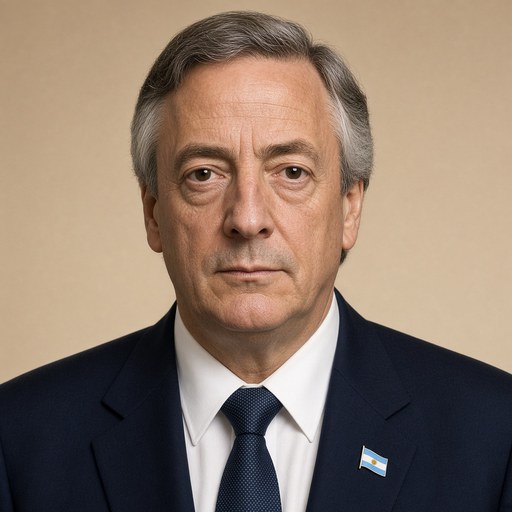
ALCA: Néstor Kirchner at the IV Summit of the Americas in Mar del Plata
 Néstor Kirchner · President of Argentina
- Context
- Kirchner addressed the IV Summit of the Americas in Mar del Plata on November 4, 2005, arguing against the FTAA and the Washington Consensus.
- Main themes
- FTAA rejection, job creation and poverty reduction, Washington Consensus failure, sustainable development, democratic governance, human rights, fight against terrorism, structural adjustment criticism, Latin American integration, social inclusion, debt and multilateral organizations, regional sovereignty in development policy
- Duration
- ~28 min
- Words
- 3,391
- Sentences
- 114
- Readability
- 31
- Grade
- 16.0
- Syntax
- 3.34
- Vocabulary
- 2.29
Translated from Spanish
The broad sphere of national life a sentence belongs to. Every sentence has an Arena, so it is the denominator the other indices are read against.
Other114 sentences in 63 paragraphs
Excellencies, Presidents and Ladies; Vice Presidents; Special Envoys; Representatives of International Organizations; National, Provincial, and Municipal Authorities; Ladies and Gentlemen: we want to extend the warmest welcome to this beautiful city of Mar del Plata, hoping that these working days will bear fruit in the construction of another step that will pull the path of this Summit of the Americas process.
If this collective construction, which aims to encompass the American geography that has traversed the last decade of its history, must integrate a central theme into its agenda to produce results that help the well-being of our peoples, that theme must be the motto of this IV Summit, where the Presidents and representatives of the different countries must stop speaking in whispers to speak out loud and seek the points of agreement and resolution that our hemisphere needs.
Creating jobs to combat poverty and strengthen democratic governance brings us directly to the central problem faced by the countries that seek to develop. We must build consensus on the importance of preserving and strengthening the community of democracies based on the conviction to staunchly defend the full validity of human rights, the maintenance of peace, and the fight against international crime, drug trafficking, and money laundering.
A special chapter deserves the achievement of consensus regarding the fight against terrorism. Argentina considers all acts of terrorism to be criminal and unjustifiable. There is no racial, religious, ideological, or any other reason that can justify the murder of innocent civilians. We Argentines have a deep sense of solidarity with the victims of terrorism worldwide and with their families. We were victims in the cases of the Israeli Embassy and AMIA, and we commit to permanent support for the pursuit of truth and the fight against terrorism.
We must build consensus to end chronic poverty, overcome indigence and exclusion, prevent the deepening of the social gap, the degradation of the environment, recurrent crises, the need to sustain education as a decisive factor for individual and social progress, promote access to knowledge, and foster economic growth with equity, create jobs to combat poverty and strengthen democratic governance.
The motto that calls us makes us perceive the need and presence of new paradigms. Creating decent work, how to do it in the best and most effective way, is key to the debate on what are the best paths to achieve sustainable development that guarantees the well-being of our peoples, linked to the attributes of freedom, justice, security, and protection; the creation of jobs is not only a fundamental vehicle for social integration but can also become the true key to building governance.
In obtaining those consensuses to advance in the design of the new policies that the situation demands, the discussion regarding whether they should respond to unique prescriptions with the pretense of being universal, valid for all times, for every country, and every place cannot be absent. That uniformity that the so-called "Washington Consensus" aimed for today has empirical evidence regarding the failure of those theories. Our continent, in general, and our country, in particular, is a tragic proof of the failure of the "trickle-down theory."
Of course, the criticism of that model does not imply either ignoring or denying local responsibility, the responsibility of Argentine leadership. We take responsibility as a country for having adopted those policies, but we demand that those international organizations, which imposed them, contributed to, encouraged, and favored the growth of that debt, also assume their share of responsibility.
The disastrous consequences that structural adjustment policies and external indebtedness have had for the full exercise of human rights, especially economic, social, and cultural rights, are tragically experienced and traverse the map of Latin American instability. It is not about ideology, nor even about politics; it is about facts and results.
It is the facts that indicate that the market alone does not reduce poverty levels, and it is also the facts that prove that a point of growth in a country with strong inequality reduces poverty to a lesser extent than in another with a more equitable income distribution.
The results of the recipes we criticize are reflected in the Argentine crisis of 2001 and in the fall of several democratic governments in the region, some of which are still experiencing worrying institutional instability.
It is then the regional experience and not the theory of the bureaucracies of multilateral organizations that demonstrates that it is advisable to allow, within a framework of rationality, each country to choose its best path for development with social inclusion. That rationality we speak of must allow for verification in economically and socially quantifiable results.
A new development strategy must aim to obtain sources of resources that derive from the daily effort and work of our citizens. We need to create, produce, export goods and services, scientific and technical innovations, and cultural creations.
From the blind and exclusive faith in the market, the advised or imposed objective of reducing or minimizing the role of governments, making the State disappear, and advancing the degradation of politics, we must move towards generating a new strategy for sustainable growth, with equity, institutional quality, the exercise of representation, control, and citizen participation.
Equity is central; it promotes growth and effectiveness through political and social sustainability, enabling better use of human resources, which in turn leads to economic viability. To achieve equity, the creation of decent jobs is fundamental.
In our country, with much shared effort, but without any help from the International Monetary Fund, after reducing our debt with multilateral credit organizations by more than 14.9 billion dollars in net terms, and achieving a successful debt restructuring, overcoming default, we have made significant advances in this struggle for equity.
During our government, poverty decreased from 57.5 percent to 37.7 percent, and 5.6 million people rose out of poverty, while 5.3 million people left indigence. Between the first half of 2003 and the first half of 2005, 33.5 percent of households that were poor ceased to be so, meaning one in three. In the same period, 53.4 percent of households that were indigent ceased to be so, meaning more than one in two.
The decrease in the rate of the population in conditions of indigence was from 27.5 to 12.6; between June 2003 and August 2005, the general wage index grew by 28.74, placing it 16.49 above the growth of the basic food basket and 13.85 above the local basic basket.
The unemployment rate fell to such an extent that 32 percent of the unemployed and 28 percent of the underemployed ceased to be so. The indices continue to improve, reaching, for this last monthly measurement, 10.3, after being at 24 percent. Genuine employment increased, while employment plans declined; jobs with Social Security coverage grew faster than the level of employment, reaching the highest level in the series at 5,536,000, with a rate of 25 percent and 10.7 percent in this last year.
For the first time in years, inequality decreases as the top income quintile loses 2.1 percent in favor of the lower quintiles. Argentina is achieving, with great efforts, I repeat, to regain the path of development and has reached significant and sustained growth of its economy, while also managing to reduce, as we have seen, the indices of unemployment, poverty, and indigence significantly.
The indicators show, after the exit from the crisis, a sustained growth of the economy, a surplus situation in fiscal accounts for the third consecutive year and external accounts, along with a recomposition of reserves. Argentina grew by 8.8 percent in 2003; 9 percent in 2004, and in the first half of 2005 exceeded 9 percent.
The consolidated primary surplus stands at 5 percent of GDP, and reserves grew from less than 10 billion dollars to more than 26 billion dollars. Exports have great potential to reach 40 billion dollars this year, with an estimated growth of 15 percent, increasing the trade surplus. Since the exit from default, Argentina consolidates as an opportunity for productive investments.
The enrollment in primary education and the number of students starting first grade stand at over 91.5 percent and 86.9 percent respectively, and the illiterate population does not exceed 3 percent, with women's literacy reaching 97.4 percent.
The return of technical education and increased investment in education, which has grown from 2 percent of GDP to 4, and we will increase it to 6 percent before 2010, along with the discussion of a new educational model, will enhance our possibilities of building a better future.
The infant mortality rate has significantly decreased from 16.8 per thousand to the current close to 12 per thousand. Strong investment in public health, housing, and infrastructure will allow us to improve even further.
In these numbers, there is no magic or miracle; they condense much effort and work. We conceive that this improvement contributes to the stability and balance of South America; it is the result of having built on the pillars of work, production, consumption, and exportation, within a framework of healthy macroeconomic balance.
Unfortunately, in that process of recovery, expansion, and transformation, we did not have the help of the International Monetary Fund, which supported and financed, to the tune of 9 billion dollars, until weeks before the collapse, the convertibility regime, fiscal deficit, and indebtedness. That figure, curiously, is almost equivalent to the total debt my country has with that organization.
In summary, in an exercise that we can qualify as perverse, without fear of being mistaken, fresh funds, constant and tangible money, were given not only to those who did not pay but also to those who continued to spend and maintained a chronic fiscal deficit. Today, what is denied to Argentina is no longer funds or new loans that we have not requested and that, obviously, we do not intend to do; it is something much worse; we are denied refinancing unless we accept certain conditionalities that are nothing other than the same policies that led us to default.
For Argentina, which was rushing towards the abyss, there was help and fresh funds; for Argentina, which is recovering with effort and solitude, there is no refinancing. This situation would deserve a few paragraphs from García Márquez in his "magical realism."
As if all this were not enough, as in so many developing countries, we continue to be affected both by that archaic view of the debt issue and by an unjust international trade system for agricultural products, where subsidies and non-tariff measures from developed countries continue to prevent our countries from fully growing with their genuine resources. It is as if it were intended that the ten plagues of Egypt should fall upon us.
At this point, it is necessary to warn that when analyzing the international trade system, agricultural subsidies, or tariff barriers, one must take into account the asymmetries and different levels of development. Because equality is a valuable and necessary concept, but only applicable to those who are equal. Equal treatment for the different; equal treatment between powerful and weak countries; equal treatment between highly developed economies and emerging economies is not only a lie but also a deadly trap. A trap that first ensnares and affects the weak, but that then, in one way or another, also ends up reaching the powerful.
There is today a clear international consensus on the need to reform and update the institutions that emerged from Bretton Woods, as well as on the need to introduce improvements in the functioning of the financial system for a globalized economy. It is not a whim; it is simply to accept a new world reality.
Unfortunately, in the specifics of the reforms, the discussion seems to have focused more on the issue of representations and voting powers than on substantial issues.
The vision of officials regarding emerging countries seems to be exhausted in the central concern of only improving early warning systems regarding crises, evaluating how to resolve them, and finding financing for their prevention.
We intend for the International Monetary Fund and the World Bank to fulfill the counter-cyclical role for which they were created, to avoid the system of cross conditionalities, to increase the degree of transparency of their operations, to reduce the costs of their functioning, and to improve their lending capacity.
It does not seem wrong for them to actively work in cooperation with the private financial sector or other sectors of the economy, but they must carefully avoid becoming prisoners or managers of particular interests.
If these issues are addressed correctly, the discussion about representativeness makes sense; otherwise, the effort in the supposed reinvention will be greater than the benefits it generates.
Regarding the financial system as a whole, in terms of external debt, it must be approached with greater fairness, ceasing to pretend equal treatment for those in different situations. It is necessary to privilege savings over speculation and the participation of savers over that of large concentrated operators, who are usually holders of insider information.
It demands prioritizing retail investors, the original creditors of debt issuances, and creditors in a pre-crisis stage. In any case, those who become creditors in the post-crisis stage cannot be privileged.
We have said that we do not advise anyone to "default" on their debt if it can be avoided. We now say that we will fulfill our commitments to those who have participated in our restructuring process, whom we consider our priority in our payments today.
The International Monetary Fund cannot pretend to impose conditions that are contradictory to each other and opposed to our growth possibilities, nor can it demand the return of funds that it allocated during a crisis to finance a program doomed to immediate failure.
Our payment capacity must be measured based on the commitments made in the debt restructuring and our growth capacity. If we were to affect our growth, we would affect our payment capacity, and in that, we will respect our priorities by resorting to the remedies that the system puts at our disposal.
We hope that the International Monetary Fund knows how to listen and, above all, understand and comprehend. It is about negotiating with sincerity and good faith.
For the development we seek, our membership in Mercosur, as the regional market of our own and the emerging South American Community, is essential. We have taken on significant challenges that we will only be able to face with reasonable chances of success through the coordination of positions and actions.
That is why we continue to believe that any integration will not serve us; simply signing an agreement will not be an easy or direct path to prosperity.
The possible integration will be one that recognizes diversities and allows for mutual benefits. An agreement cannot be a one-way street of prosperity in one direction. An agreement cannot result from an imposition based on relative positions of power. On the contrary, as in other regions - there is the testimony of the European Union - trade integration agreements must include safeguards and compensations for those who suffer relative setbacks, so that the agreement does not exacerbate their weaknesses. That is not only an acceptable way but fundamentally viable.
Integration will be possible to the extent that existing asymmetries are addressed and if negotiations satisfy the fundamental interests of each country, especially regarding access to markets without restrictions.
The problem of developing emerging economies, within a framework of equity, should not be approached from the perspective of developed countries, as if it were a matter of charity regarding those who have less.
In this sense, regarding our continent, as I told the President of the United States today, I still believe that due to leadership issues in the region, your nation, your country, the United States, has an unavoidable and inexcusable responsibility to help give a definitive and final place and position to this framework of asymmetries that has brought so much instability to the region.
I believe that your role as a potential world leader is undeniable. This is not a value judgment, but a fact of reality. We believe that the responsible exercise of that leadership in relation to the region must necessarily consider that the policies that were applied not only caused misery and poverty, in short, the great social tragedy, but also added regional institutional instability that led to the fall of democratically elected governments amid violent popular reactions, instability that brother countries are still experiencing.
Worse still, we cannot ignore statistical data that show a growing and concerning detachment from the democratic system among the inhabitants of various places in our region as a consequence of the lack of a dignified quality of life. Thus, we arrive at a paradoxical situation: in the name of democracy, we have less democracy.
More developed countries must associate with the sustainable growth strategies of less developed countries, understanding that their convenience lies there, helping to make the world more stable, secure, and peaceful.
Our country considers democracy a universal value that does not belong to any country or region, and our government directs its efforts to improve its quality, reinforcing the rule of law and ensuring the impartiality and independence of the judiciary, as well as implementing international treaties on human rights that are part of our Constitution.
We know that the market organizes economically, but does not articulate socially. We must ensure that the state intervenes where the market flows and abandons. It is the state that must act as the great repairer of social inequalities in a permanent effort of inclusion and creating opportunities by strengthening access to education, health, and housing, promoting social progress based on the effort and work of each individual.
At the center of the regional political reality is change, and a pivotal place in that change is occupied by the creation of decent work. And at this point, the other inseparable term of the equation, the role of investment and companies, takes on special relevance, a role that must be exercised with social responsibility.
It is logical that profitability is the central value of any entrepreneur, but there must also be a search for balance that contributes to feeding the virtuous circle of the economy.
Without effectively addressing poverty and exclusion and providing jobs, there will be no well-being. The lack of well-being in our peoples is the root of the greatest instabilities. Governance will be at risk if we do not create jobs.
We do not proclaim this from any theory; we invite you to see the sufferings and achievements that Argentina has experienced, we invite you to see the harsh experience we have had, we invite you to take into account the gradual recovery of our self-esteem, the strengthening of our institutions, and the fundamental task of creating decent work in pursuit of equity and social inclusion.
We must ensure that globalization works for everyone and not just for a few. That is why we maintain that regional economic integration and political multilateralism hold the keys to a future where the world is a safer place.
We hope that these working days will help us better represent our peoples, that we presidents have all the courage that the moment and time indicate, that we have the strength and fortitude to present our relative truth, that we also have the capacity to listen to others and to seek in the relative truth of one and the other that truth that can synthesize us in the construction of the new times we desire. But we must speak clearly; we have to say what we think.
Our poor, our excluded, our countries, our democracies can no longer bear that we continue to speak in a low voice; it is essential to speak with great respect and in a loud voice, to build a system that once again encompasses us all in a framework of equality and restores hope and the possibility of obviously building a different world and a region that is up to the circumstances that I know the presidents desire and want.
So, I deeply thank you for your presence at this Summit, I deeply appreciate the active participation you have, and from Argentina, with absolute responsibility and humility, we wanted to make clear what our relative vision is of the stage and the time we are living in.
Thank you very much.
The original Spanish. The tags above are read on the English translation's sentences.
Excelentísimos señores presidentes y señoras; señores vicepresidentes; señores enviados especiales; señores representantes de organismos internacionales; autoridades nacionales, provinciales y municipales; señoras y señores: queremos darle la más calurosa bienvenida a esta hermosa ciudad de Mar del Plata, deseando que estas jornadas de trabajo fructifiquen en la construcción de un escalón más que jalone el camino de este proceso de Cumbre de las Américas.
Si esta construcción colectiva, que quiere abarcar la geografía americana que atraviesa la última década de su historia, tiene que integrar un tema central a su agenda para producir resultados que ayuden al bienestar de nuestros pueblos, ese tema tiene que ser el lema de esta IV Cumbre, donde los señores presidentes y los representantes de los distintos países debemos dejar de hablar en voz baja para hablar en voz alta y buscar los puntos de acuerdo y resolución que nuestro hemisferio necesita.
Crear trabajo para enfrentar la pobreza y fortalecer la gobernabilidad democrática, nos remite de lleno al problema central que enfrentamos los países que pretendemos desarrollarnos. Debemos construir los consensos en cuanto a la importancia de preservar y fortalecer la comunidad de democracias en cuanto a la convicción de defender a ultranza la plena vigencia de los derechos humanos, el sostenimiento de la paz y la lucha contra la delincuencia internacional, el narcotráfico y el lavado de dinero.
Un capítulo especial merece la obtención de consenso respecto de la lucha contra el terrorismo. La Argentina considera todos los actos de terrorismo, criminales e injustificables. No hay ninguna razón racial, religiosa, ideológica o de cualquier otra naturaleza que pueda justificar el asesinato de civiles inocentes. Los argentinos tenemos un profundo sentimiento de solidaridad con las víctimas del terrorismo en el mundo y con sus familiares. Fuimos víctimas en los casos de la Embajada de Israel y la AMIA, y comprometemos apoyo permanente a la obtención de la verdad y al combate contra el terrorismo.
Debemos construir consensos para terminar con la pobreza atávica, vencer a la indigencia y a la exclusión, evitar la profundización de la brecha social, la degradación del medio ambiente, las recurrentes crisis, la necesidad de sostener a la educación como factor decisivo para el progreso individual y social, fomentar el acceso al conocimiento y promover el crecimiento económico con equidad, crear trabajo para enfrentar la pobreza y fortalecer la gobernabilidad democrática.
El lema que nos convoca nos hace percibir la necesidad y la presencia de nuevos paradigmas. Crear trabajo decente, cómo hacerlo de la mejor y más eficaz manera, está en la clave del debate sobre cuáles son los mejores caminos para lograr un desarrollo sustentable que garantice el bienestar de nuestros pueblos, vinculado con los atributos de la libertad, la justicia, la seguridad y la protección, la creación de trabajo no sólo es un fundamental vehículo de integración social, sino que puede constituirse en la verdadera clave de la construcción de la gobernabilidad.
En la obtención de esos consensos para avanzar en el diseño que las nuevas políticas que la situación exige, no puede estar ausente la discusión respecto de si aquéllas habrán de responder a recetar únicas con pretensión de universales, válidas para todo tiempo, para todo país, todo lugar. Esa uniformidad que pretendía lo que dio en llamarse el “Consenso de Washington” hoy existe evidencia empírica respecto del fracaso de esas teorías. Nuestro continente, en general, y nuestro país, en particular, es prueba trágica del fracaso de la “teoría del derrame”.
Por supuesto, la crítica de ese modelo no implica ni desconocer ni negar la responsabilidad local, la responsabilidad de las dirigencias argentinas. Nos hacemos cargo como país de haber adoptado esas políticas, pero reclamamos que aquellos organismos internacionales, que al imponerlas, contribuyeron, alentaron y favorecieron el crecimiento de esa deuda, también asuman su cuota de responsabilidad.
Las consecuencias nefastas que las políticas de ajuste estructural y del endeudamiento externo tuvieron para el pleno ejercicio de los derechos humanos, en especial los derechos económicos, sociales y culturales, se viven y recorren trágicamente el mapa de la inestabilidad latinoamericana. No se trata de ideología, ni siquiera de política, se trata de hechos y de resultados.
Son los hechos los que indican que el mercado por sí solo no reduce los niveles de pobreza y son los hechos también los que prueban que un punto de crecimiento en un país, con fuerte inequidad, reduce la pobreza en menor magnitud que en otro con una distribución del ingreso más igualitaria.
Los resultados de las recetas que criticamos son los que se vieron reflejados en la crisis argentina del 2001 y en la caída de varios gobiernos democráticos de la región, algunos de ellos transitando aún una preocupante inestabilidad institucional.
Es entonces la experiencia regional y no la teoría de las burocracias de los organismos multilaterales, la que demuestra que lo aconsejable es dejar que, en un marco de racionalidad, cada país pueda elegir su mejor camino para el desarrollo con inclusión social. Esa racionalidad de la que hablamos, debe permitir su verificación en resultados cuantificables económica y socialmente.
Una nueva estrategia de desarrollo tiene que apuntar a obtener fuentes de recursos que deriven del esfuerzo y trabajo diario de nuestros ciudadanos. Necesitamos crear, producir, exportar bienes y servicios, innovaciones científico técnicas y creaciones culturales.
De la fe ciega y excluyente en el mercado, el objetivo aconsejado o impuesto de reducir o minimizar el rol de los gobiernos, hacer desaparecer al Estado y avanzar en la degradación de la política, debemos pasar a la generación de una nueva estrategia de desarrollo de crecimiento sustentable, con equidad, calidad institucional, ejercicio de la representación, el control y la participación ciudadana.
La equidad es central, promueve el crecimiento y la eficacia, a través de la sustentabilidad política y social, posibilitando un mejor uso de los recursos humanos y ello revierte en viabilidad económica. Para lograr equidad es fundamental la creación de empleo digno.
En nuestro país, con mucho esfuerzo compartido, pero sin ayuda alguna del Fondo Monetario Internacional, tras reducir en términos netos más de 14.900 millones de dólares nuestra deuda con organismos multilaterales de crédito, y obtener una exitosa reestructuración de la deuda, superando el default, hemos logrado importantísimos avances en esta lucha por la equidad.
Durante nuestro Gobierno la pobreza bajó del 57.5 por ciento al 37.7 por ciento y salieron de la pobreza 5.600.000 personas y abandonaron la indigencia 5.300.000 personas. Entre el primer semestre de 2003 y el primer semestre de 2005, un 33.5 por ciento de los hogares que eran pobres dejaron de serlo, es decir uno cada tres. En el mismo período un 53.4 por ciento de los hogares que eran indigentes dejaron de serlo, es decir más de uno de cada dos.
La baja del índice de la población en condiciones de indigencia fue del 27.5 al 12.6; entre junio de 2003 y agosto de 2005, el índice general de salarios creció un 28.74 ubicándose un 16.49 por encima del crecimiento de la canasta básica de alimento y un 13.85 por encima de la canasta básica local.
La tasa de desocupación descendió de tal modo que un 32 por ciento de los desocupados y el 28 por ciento de los subocupados dejaron de serlo. Los índices siguen mejorando hasta ubicarse, para esta última medición mensual, en un 10.3, luego de estar en el 24 por ciento. Aumentó el empleo genuino, mientras declinaban los planes de empleo, los empleos con cobertura de la Seguridad Social crecieron más velozmente que el nivel de empleo, alcanzando el nivel más alto de la serie 5.536.000 a razón de un 25 por ciento y un 10.7 por ciento en este último año.
Por primera vez en años disminuye la desigualdad en tanto el quintín de los ingresos más altos, pierde a favor de los quintines más bajo un 2.1 por ciento. La Argentina está logrando con grandes esfuerzos, repito, retomar la senda del desarrollo y ha alcanzado un importante y sostenido crecimiento de su economía, a la vez, ha logrado reducir, como vimos, de manera significativa los índices de desocupación, de pobreza e indigencia.
Los indicadores muestran, después de la salida de la crisis, un crecimiento sostenido de la economía, una situación superavitaría de las cuentas fiscales por tercer año consecutivo y externas, junto con una recomposición de las reservas. Argentina creció el 8.8, en 2003; el 9 en 2004 y en el primer semestre de 2005 superó el 9 por ciento.
El superávit primario consolidado se ubica en un 5 por ciento del PBI y las reservas crecieron de menos de 10 mil millones de dólares a más de 26 mil millones de dólares. Las exportaciones tienen grandes posibilidades de llegar este año a 40 mil millones de dólares, estimándose su crecimiento en un 15 por ciento haciendo crecer el superávit comercial. Desde la salida del default, Argentina se consolida como una oportunidad para las inversiones productivas.
La matrícula de la enseñanza primaria y el número de alumnos que empiezan primer grado, se ubican por encima del 91.5 por ciento y el 86.9 por ciento respectivamente, y la población analfabeta no supera el 3 por ciento, llegando la alfabetización de la mujer al 97.4 por ciento.
El retorno de la educación técnica y la mayor inversión en educación, que del 2 por ciento del PBI ya creció al 4, y la haremos crecer hasta el 6 por ciento, antes de 2010, juntamente con la discusión de un nuevo modelo educativo potenciarán nuestras posibilidades de construir un mejor futuro.
La tasa de mortalidad infantil ha descendido significativamente pasando del 16.8 por mil hasta ubicarse en el actual cercano de 12 por mil. La fuerte inversión en salud pública, vivienda e infraestructura nos posibilitará mejorar aún más.
En estos números no hay magia ni milagro, se condensa mucho esfuerzo y trabajo. Concebimos que esta mejora contribuye a la estabilidad y al equilibrio de Sudamérica, es el resultado de haber construido sobre los pilares del trabajo, la producción, el consumo y la exportación, en un marco de sano equilibrio macroeconómico.
Lamentablemente, en ese proceso de recuperación, expansión y transformación no contamos con la ayuda del Fondo Monetario Internacional, que si apoyó y financió, en el orden de los 9 mil millones de dólares hasta semanas antes del colapso, el régimen de convertibilidad, déficit fiscal y endeudamiento. Aquella cifra, curiosamente, es casi equivalente a la deuda total que tiene mi país con ese organismo.
En síntesis, en un ejercicio que podemos calificar de perverso, sin temor a equivocarnos, se le dieron fondos frescos, dinero constante y sonante, no sólo a los que no pagaban, sino a los que seguían gastando y mantenían un déficit fiscal crónico. Hoy, lo que se le niega a la Argentina, no son ya fondos o nuevos préstamos que no hemos solicitado y que, obviamente, ni pensamos hacerlo, (aplausos) es algo mucho peor, se nos niega la refinanciación si no aceptamos determinadas condicionalidades que no son otras que las mismas políticas que nos condujeron al default.
Para la Argentina, que corría hacia el abismo, había ayuda y fondos frescos; para la Argentina que con esfuerzo y soledad se recupera, no hay refinanciación. Merecería esta situación que García Márquez le dedicara unos párrafos de su “realismo mágico”.
Por si todo esto fuera poco, como en tantos países en desarrollo, continuamos siendo afectados tanto por esa visión arcaica del tema de la deuda, como por un sistema de comercio internacional injusto para los productos agrícolas, donde los subsidios y medidas paraarancelarias de los países desarrollados, continúan impidiendo que nuestros países puedan crecer plenamente con sus recursos genuinos. Es como si se pretendiera que cayesen sobre nosotros las diez plagas de Egipto.
En este punto es necesario advertir que a la ahora de analizar el sistema de comercio internacional, subsidios agrícolas o barreras arancelarias, hay que tener en cuenta las asimetrías y los diferentes grados de desarrollo. Porque la igualdad es un concepto valioso y necesario, pero sólo aplicable a los que son iguales. Igual tratamiento para los diferentes; igual tratamiento entre países poderosos y débiles; igual tratamiento entre economías altamente desarrolladas y economías emergentes, no sólo es una mentira sino que, además, resulta una trampa mortal. Trampa que primero atrapa y afecta a los débiles, pero que luego de un modo u otro, también termina llegando a los poderosos.
Existe hoy un claro consenso internacional en torno a la necesidad de reformar y actualizar los organismos surgidos de Breton Wood, así como respecto a la necesidad de introducir mejoras en el funcionamiento del sistema financiero para una economía globalizada. No es capricho, es simplemente aceptar una nueva realidad mundial.
Lamentablemente en lo específico de las reformas, la discusión parece haberse centrado más en el tema de las representaciones y los poderes de voto, que en los temas sustanciales.
La visión de los funcionarios en relación a los países emergentes, parece agotarse en la preocupación central de sólo mejorar los sistemas de alerta temprana respecto de las crisis, evaluar el modo de resolverlas y encontrar el financiamiento de su prevención.
Pretendemos que el Fondo Monetario Internacional y el Banco Mundial cumplan el rol contracíclico para el cual fueron creados, eviten el sistema de condicionalidades cruzadas, aumenten el grado de transparencia de sus operaciones, reduzcan los costos de su funcionamiento y mejoren su capacidad de préstamo.
No parece mal que trabajen activamente en cooperación con el sector financiero privado u otros sectores de la economía, pero deben cuidadosamente evitar quedar prisioneros o ser los gestores de los intereses particulares.
Si estos temas se abordan correctamente, la discusión sobre la representatividad adquiere sentido; de lo contrario, el esfuerzo en la supuesta reinvención será mayor que los beneficios que genere.
En cuanto al sistema financiero en su conjunto, en materia de deuda externa debe adoptárselo de mayor justicia, dejando de pretender trato igualitario a quienes están en situaciones distintas. Privilegiar el ahorro sobre la especulación y la participación de los ahorristas sobre la de los grandes operadores concentrados, usualmente, tenedores de información privilegiada.
Exige privilegiar a los inversores minoristas, a los acreedores originales de las emisiones de deuda, a los acreedores en una etapa de precrisis. En todo caso, no puede privilegiarse a quienes resulten acreedores de la etapa poscrisis.
Hemos dicho que no aconsejamos a nadie de “defaultear” su deuda, si se puede evitarlo. Decimos ahora que cumpliremos nuestros compromisos con quienes han participado de nuestro proceso de reestructuración, a quienes consideramos hoy nuestra prioridad en nuestros pagos.
El Fondo Monetario Internacional no puede pretender condicionamientos que resulten contradictorios entre sí y opuestos a nuestras posibilidades de crecimiento ni exigir la devolución de fondos que en plena crisis destinó a financiar un programa condenado al fracaso de manera inmediata.
Nuestra capacidad de pago debe medirse en función de los compromisos contraídos en la reestructuración de la deuda y en nuestra capacidad de crecimiento. Si afectásemos nuestro crecimiento, afectaríamos nuestra capacidad de pago y en eso respetaremos nuestras prioridades acudiendo a los remedios que el sistema pone a nuestro alcance.
Esperamos que el Fondo Monetario Internacional sepa escuchar y, sobre todo, comprender y entender. Se trata de negociar con sinceridad y buena fe.
Para el desarrollo que buscamos, nuestra pertenencia al Mercosur, como el mercado regional de lo propio y de la naciente Comunidad Sudamericana, es primordial. Hemos asumido trascendentes desafíos que sólo estaremos en condiciones de encarar con razonables posibilidades de éxito, mediante la coordinación de posiciones y acciones.
Por eso, seguimos pensando que no nos servirá cualquier integración; simplemente, firmar un convenio no será un camino fácil ni directo a la prosperidad.
La integración posible será aquélla que reconozca las diversidades y permita los beneficios mutuos. Un acuerdo no puede ser un camino de una sola vía de prosperidad en una sola dirección. Un acuerdo no puede resultar de una imposición en base a las relativas posiciones de fuerza. Por el contrario, como en otras latitudes -está allí el testimonio de la Unión Europea-, los acuerdos de integración comercial deben contemplar salvaguardas y compensaciones para que los que sufren atrasos relativos, de modo que el acuerdo no potencie sus debilidades. Ese es un modo no sólo aceptable, sino fundamentalmente viable.
La integración será posible en la medida que se atiendan las asimetrías existentes y si las negociaciones satisfacen los intereses fundamentales de cada país, especialmente, en materia de acceso a los mercados sin restricciones.
Es que el problema del desarrollo de las economías emergentes, en un marco de equidad, no debe abordarse desde el punto de vista de los países desarrollados, como si fuera un asunto de beneficencia respecto de los que menos tienen.
En este sentido, respecto a nuestro continente, como hoy se lo decía al señor presidente de los Estados Unidos, sigo creyendo que por las cuestiones de liderazgo en la región, su Nación, su país, la Nación de los Estados Unidos, tiene una responsabilidad ineludible e inexcusable para ayudar a ir dándole el lugar y la posición definitiva y final a este marco de asimetrías que tanta inestabilidad han traído a la región.
Creo que su rol de primera potencial mundial es insoslayable. No se trata de un juicio de valor, sino de un dato de la realidad. Creemos que el ejercicio responsable de ese liderazgo en relación a la región, debe considerar necesariamente que las políticas que se aplicaron no sólo provocaron miseria y pobreza, en síntesis la gran tragedia social, sino que agregaron inestabilidad institucional regional que provocaron la caída de gobiernos democráticamente elegidos en medio de violentas reacciones populares, inestabilidad que aún transitan países hermanos.
Peor aún, no podemos ignorar datos estadísticos que dan cuenta de un creciente y preocupante desapego por el sistema democrático de los habitantes de distintos lugares de nuestra región como consecuencia de la falta de una digna calidad de vida. Llegamos así y por esa vía a un rejuntado paradojal: en nombre de la democracia tenemos menos democracia.
Los países con mayor desarrollo deben asociarse a las estrategias de crecimiento sustentable de los países menos desarrollados en la inteligencia de que allí está su conveniencia, ayudando a que el mundo sea más estable, seguro y pacífico.
Nuestro país considera a la democracia un valor universal que no constituye patrimonio de ningún país o región, y nuestro Gobierno orienta sus esfuerzos a mejorar su calidad, reforzando el Estado de derecho y asegurando la imparcialidad e independencia de la Justicia, así como implementando los tratados internacionales en materia de derechos humanos que forman parte de nuestra Constitución.
Sabemos que el mercado organiza económicamente, pero no articula socialmente. Debemos hacer que el Estado ponga allí, donde el mercado fluye y abandona. Es el Estado el que debe actuar como el gran reparador de las desigualdades sociales en un trabajo permanente de inclusión y creando oportunidades a partir del fortalecimiento de la posibilidad del acceso a la educación, la salud y la vivienda, promoviendo el progreso social basado en el esfuerzo y el trabajo de cada uno.
En el centro de la realidad política regional está el cambio y un lugar nodal en ese cambio, lo ocupa la creación de trabajo decente. Y en este punto, es donde adquiere especial relevancia el otro término inseparable de la ecuación, el rol de la inversión y las empresas, rol que debe ser ejercido con responsabilidad social.
Es lógico que la rentabilidad sea el valor central de cualquier emprendedor, pero también debe buscarse el equilibrio que contribuya a alimentar el círculo virtuoso de la economía.
Sin enfrentar eficazmente la pobreza y la exclusión y dando trabajo, no habrá bienestar. La falta de bienestar en nuestros pueblos, es la raíz de las mayores inestabilidades. La gobernabilidad estará en riesgo si no creamos trabajo.
No lo proclamamos desde ninguna teoría, invitamos a ver los sufrimientos y los logros que tuvo la Argentina, invitamos a ver la durísima experiencia que hemos tenido, invitamos a tener en cuenta la paulatina recuperación de nuestra autoestima, el fortalecimiento de nuestras instituciones y la tarea fundamental de crear trabajo decente tras el norte de la equidad y la inclusión social.
Debemos lograr que la globalización opere para todos y no para unos pocos. Por eso sostenemos que la integración económica regional y en la multilateralidad política se encuentran las llaves de un porvenir donde el mundo sea un lugar más seguro.
Esperamos que estas jornadas de trabajo nos sirvan para representar mejor a nuestros pueblos, que los presidentes tengamos todo el coraje que la hora y el tiempo indican, que tengamos la fuerza y la fortaleza de plantear nuestra verdad relativa, que tengamos también la capacidad de escuchar al otro y de buscar en la verdad relativa de uno y del otro esa verdad que nos pueda sintetizar en la construcción de los nuevos tiempos que deseamos. Pero hay que hablar claro, tenemos que decir lo que pensamos.
Nuestros pobres, nuestros excluidos, nuestros países, nuestras democracias, ya no soportan más que sigamos hablando en voz baja; es fundamental hablar con mucho respeto y en voz alta, para construir un sistema que nos vuelva a contener a todos en un marco de igualdad y nos vuelva a devolver la esperanza y la posibilidad de construir obviamente un mundo distinto y una región que esté a la altura de las circunstancias que sé que los presidentes desean y quieren.
Así que, les agradezco profundamente vuestras presencias en esta Cumbre, les agradezco profundamente la participación activa que tienen y, desde la Argentina, con absoluta responsabilidad y humildad, hemos querido dejar en claro cuál es la visión relativa que tenemos de la etapa y del tiempo que nos toca vivir.
Muchísimas gracias.