




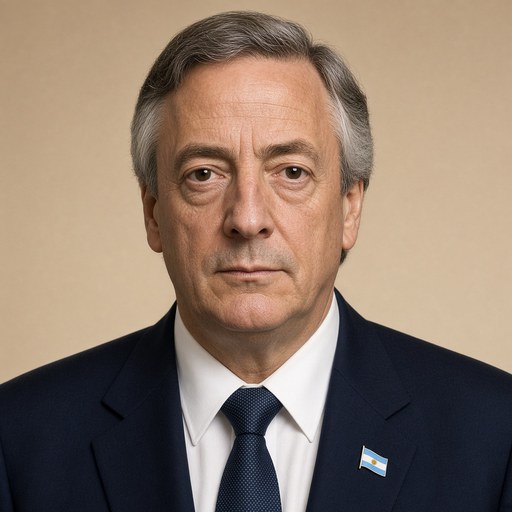
Néstor Kirchner before the Legislative Assembly of Congress, 2004
 Néstor Kirchner · President of Argentina
- Context
- Kirchner addressed the Argentine Legislative Assembly on March 1, 2004, delivering his annual state of the nation report nine months into his presidency.
- Main themes
- State of the nation address, economic recovery, social equity, institutional legitimacy, political sincerity, national identity, Latin American integration, globalization, corruption, productive development, collective national project, democratic governance
- Duration
- ~78 min
- Words
- 9,412
- Sentences
- 399
- Readability
- 39
- Grade
- 13.7
- Syntax
- 3.04
- Vocabulary
- 2.24
Translated from Spanish
The broad sphere of national life a sentence belongs to. Every sentence has an Arena, so it is the denominator the other indices are read against.
Other399 sentences in 167 paragraphs
Ladies and gentlemen members of the National Congress, People of my Homeland:
By virtue of paragraph 8 of article 99 of the Constitution of the Argentine Nation, we come to report on the state of the Nation before this Legislative Assembly.
In one hundred and fifty-one years of validity of the National Constitution, this Congress begins its 122nd ordinary session, reaching an uninterrupted series of twenty consecutive sessions.
The task that the constitutional text proposes puts us in a position to address the most salient aspects of the situation of our Republic, those that are central due to their importance, the measures adopted accordingly, and the probable courses of action.
We want to address these issues stripped of hypocrisy; we want to approach them from the humility of our relative vision and from the strength of our convictions, addressing, through their representatives, the entire people of the Argentine Nation.
We will not attempt to make a simple enumeration of facts and government measures that, it is important to remember, are in the ninth month of management. We do not want to turn our presence here into a mere obligation imposed by protocol. We will try to take advantage of this institutional instance to reflect, together with the legislators, representative of all political ideas, regarding the point where we find ourselves, the probable lines of action, and the expectations of results that the situation presents to us.
It is the opportunity that institutional life offers us to pause and look at our problems in all their gravity and to be able to assume the paths of solution that the situation advises according to our perspective, which in no way seeks to deny other points of view. But it is also essential to point out that the different points of view are not neutral in terms of choosing the interests that each one seeks to defend.
Our conviction compels us to try to serve the interest of the whole over sectoral or party interests, to put the common good above individual interests, and to work for the solution of the ills we suffer not from a short-term vision but by assuming that we must, in this generation and at this moment, take on the responsibilities of the hour with the spirit to face and resolve the problems.
We do not disqualify any of the other points of view; we ask that, without subterfuge or duplicity, they express with the clarity that the moment demands the special interests that their points of view defend, so that the debate is as rich, plural, and diverse as we need.
To lift this Argentina that we do not want prostrated, the first thing we must demand of ourselves is sincerity, rationality, and truth. Only then can we find the way and the place where, by combining the various relative truths and attending to the best interests, we Argentines feel part of the same collective, the same project, the same country.
That will give value to our differences, to our pluralities, enriching a collective dream that has room for the other, for those different from us, for all.
We want to build a modern Argentina that grows with equity. That integrates into the world with dignity and that sustains itself internally to be able to join, from its national identity, a world that is increasingly interdependent.
The starting point of that construction can only be the recognition of the exact point where we find ourselves. We have said that we are in the worst of worlds, in our own hell, and that the improvement we perceive is only the ascent of the first step.
What took many years to destroy, exploding in the hands of a leadership that was not up to the circumstances, cannot be rebuilt in one or a few years of orderly and prudent management with a correct direction. We must tell ourselves the truth and begin by keeping in mind the difficulties that the situation will present to us, to assume the importance of the constant and joint effort that we must apply to make those dreams we propose a reality. The model of economic concentration, the dominance of special interests, corruption to unimaginable limits, the destruction of the productive system and industrial activity, high social exclusion, grounded in an impressive indebtedness, has demonstrated in all its harshness the lack of its own sustainability and fell spectacularly, destroying the legitimacy of institutions and dismantling the legality and social cohesion typical of a normal country.
That fall is today, along with other similar phenomena that are repeated in other latitudes, and dramatically in our large house, Latin America, the most complete social demonstration of the unviability of any model that neglects internal sustainability to achieve integration into the world of globalization.
This is not another diagnosis. Without the intention of falling into reductionism, it is necessary to identify from the state of the Nation the problems that occupy the central points of the agenda of our democracy. Argentina has not had a project for too long. Its country project that guarantees economic growth with equity, sustainable, that is our first problem. We face a gigantic and impressive debt and suffer a high and unbearable level of social exclusion; these are the other two problems that derive from the first.
Solving these issues permanently and not temporarily will take the majority of our effort. To make matters worse, Argentine political culture has ended up installing the false vision that one can coexist with problems almost indefinitely, without assuming them, without facing them, and, worse still, without resolving them. Argentina in recent decades has not had a country project that socially integrates its inhabitants within a framework of equity and development. Industrialization based on import substitution was a project that set the country in motion towards that goal and produced its fruits.
The projects that followed only focused on dismantling the welfare model that had accompanied that nascent industrialization.
During the last century, we have spent more time destroying what was done and confronting each other internally than in building a project that addressed our particular situation as well as the phenomena that characterize the global reality.
Our strategy to face and solve this problem must be to build serious capitalism in our country. Capitalism with clear rules in which the State fulfills its role intelligently, to regulate, to control, to be present where it is necessary to mitigate the ills that the market does not repair. A State that brings balance to society and allows the normal functioning of the country. Serious capitalism where monopolies do not prevail and where concentration that stifles the initiative of small and medium entrepreneurs is avoided. Serious capitalism where the investor and the consumer are protected, with explicit and transparent regulatory frameworks and control bodies that fulfill their role.
If we had practiced serious capitalism, we could have built a normal country. We would not have indebted ourselves to the point of exaggeration, and we would not have allowed our brothers to fall into indigence and exclusion.
The debt and more than half of the population below the poverty line are the effects that the absence of a national project has caused. In the matter of debt, the most rigorous historical examination shows that from the beginnings of our history, indebtedness was constant and payments were problematic.
The most recent history made the application of a vision presided over by the needs of the moment usual, treating it as a government issue and not as a societal issue, so that successive governments seemed to choose the path of simply postponing the due dates into the future.
The concept consistent with the idea of simply enduring in government, completing a term, presided over the reasoning and offloaded the problems onto the future and future governments. Successive names were installed as supposed solutions based on the renewal of deadlines, the increase of interests, and the postponement of payments. Plan Brady, Debt Swap, Shielding, Mega Swap, were names that became part of the daily chronicle, the political language, and our realities as magical formulas for solutions to buy time without facing the problems we suffered.
And so it went for us. Maintaining a rigid exchange system based on the deepening of indebtedness accelerated the fall because, as was predictable, the resources did not even reach to cover the payment of interests.
On this path, Argentina ended up paying dearly for what it did not even receive, trying to buy time, paying enormous profits to lenders, to their local partners, and to their propagandists, but burying its future possibilities under an immense mountain of debt papers. We are not the government of default. We do not want to repeat the old mistakes nor evade historical responsibility. We do not want to persist in default, but the coldest rationality indicates that the recipes of the past cannot be applied.
They cannot be applied because the world has changed its attitude towards debt crises. From rushing to rescue to avoid the risks of contagion, thus indirectly assuming their share of responsibility for lack of foresight or for having favored the growing indebtedness of countries, entering through one window funds that were withdrawn through another, international organizations have begun to demand compliance without any type of aid. They cannot be applied because Argentina has reached the limit of its social viability and institutional destruction, due to the increase in exclusion and the exhaustion of the constant adjustment resource, which revealed its most perverse side by transforming recession into depression.
The purest rationality indicates that Argentines will have to face great efforts to emerge from default and also marks that the path of old recipes is doomed to failure because the resources we are capable of generating today cannot satisfy everyone.
We Argentines, the multilateral credit organizations, and Argentina's private creditors must keep in mind that the mass of resources is what exists and cannot be increased either miraculously or explosively.
At the same time, we must assume, from the purest rationality, that if resources do not grow, no one can expect more resources for themselves or for their sector of interest. The most rational option is the one we have adopted and propose. There is no sustainability for any program that does not contemplate economic growth and social inclusion. It is vital to obtain internal sustainability to give temporary viability to any program, and sustainability is only possible based on growth with equity.
The agreement with the International Monetary Fund, which we have signed and respected and which we are exceeding in its goals, is the best option that met that prior requirement of responsibility, of taking charge of our obligations. The persistence in the committed effort and the continuity we are giving to the structural reforms appropriate to our relative situation also require that international organizations respect what has been agreed. The opposite, the constant change of rules or the increase in pressures, does not lead to a relationship of good faith essential for us to continue fulfilling what has been agreed.
The proposal to creditors articulated in Dubai is based on the most absolute rationality and is grounded in the first postulate that must preside over a relationship of good faith: nothing has been promised nor will be committed that cannot be fulfilled.
The most irrational and destructive thing for a relationship would have been to propose the deception of another solution doomed to failure in the short term. Internal sustainability, growth with equity, compliance with multilateral organizations under the agreed conditions, and a viable proposal to creditors are three aspects of the same rational solution to a serious, grave, and persistent problem.
What is new regarding the historical and, above all, the recent past, is that we are not trying to develop and implement a short-term or temporary solution that contemplates the simple duration of a government.
We have set ourselves the enormous task of building a strategic solution that focuses on sustainable growth in the long term, and that, of course, requires the understanding and participation of the Argentine people and their institutions, and aims to be understood and attended to by multilateral credit organizations and the creditors themselves.
The debt is not a problem created by this government. The debt is the responsibility of the bad governments of Argentina and of those who fostered, protected, and took them as models from abroad. However, the debt is our problem. It is a problem for all Argentine society, which must commit itself with seriousness and rationality to provide a definitive solution.
The Argentine people must know that we do not intend to choose the easy path of compromising any exit trusting that the due dates will fall on the next government. As they must also know, the chosen path is not an easy one, nor free of risk, nor absent of pressures. They must know that important economic interests will try to twist our arm, divert us from the path, confuse our course.
Multilateral organizations must respect what has been signed. In any case, they must assume their shared responsibility for the growth of indebtedness. When it was clear that our country would not be able to pay, they granted new credits that only served to increase the debt problem and, without preventing the explosion, deepened the crisis.
The rest of the creditors must acknowledge that they were carried away by the possibility of continuing to obtain attractive profits that the high interest rates associated with the increase in country risk represented, and today they must face their share of responsibility when the risk ended up affecting them.
They share the consequences that arise from the new situation, marked by the change in strategy of the multilateral credit organizations that ceased to resort to bailouts to cover their losses.
In all cases, it is about understanding that there is no other possibility than growth as a guarantee for internal sustainability, for external compliance, and for exiting default. The so-called vulture funds, which, along with the most recalcitrant and insatiable financial interests, seek to profit from the difficult situation by executing media and spectacular actions but destined for failure to achieve their ends, must understand the firmness of national positions.
It is clear that there is no room for adjustments or for increasing indebtedness. We will not pay debt at the cost of hunger and exclusion for millions of Argentines, generating more poverty and increasing social conflict, so that the country explodes again. It would be good for them to remember how much they were willing to accept for their claims in 2001, when the government, institutions, politicians, the country, everything was collapsing.
This government, with rationality and all due prudence, will continue to follow firm negotiation principles with sovereign debt holders, trying to exit default without jeopardizing the growth that national accounts and all indicators show.
We will not pay at the cost of more and more Argentines being denied access to education, health, housing, and decent employment. By growing our economy, we will improve our capacity to pay.
As we said here: we are not the default project. We know that our debt is a central problem. But we will not pay in any way. It is not about ideologies, it is not about whims, recklessness, verbosity, inflexibility, or whatever you want to call it. It is about a cold and rational reading of the numbers and the economy. It is about realistically assuming what the situation indicates. The irrational, what seems to be the result of the most intoxicated fantasy, is the size of our debt. What was irresponsible and lacking good faith was incurring it.
We are certain that we will receive a thousand pressures. We know that they will put obstacles in our way that we must overcome. But we know the immense support that our defense of national interests has from the vast majority of our people. We will not back down.
We will not let ourselves be confused. We know that we are discussing interests. We take responsibility for defending the interests of all Argentines and their future. It is nothing less than a discussion about money, but it is also nothing more than that. There is no room for grandiloquence or imposed silence. It is nothing more and nothing less than a discussion of interests, and that is how we will approach it in defense of national interests.
The poverty of our people is the other central issue. The slightest sense of solidarity, the most modest notion of social justice, any idea of equity that one may have, must help us conclude that there is no viable country with more than fifty-five percent of Argentines below the poverty line.
That is why we mention the level of social exclusion as the other great problem of the Argentine Republic. To recreate in our homeland the conditions for social progress, so that children can aspire to live better than their parents based on effort, ability, and work, is a responsibility that concerns us all.
Our economy must be centrally oriented towards growth and reinstating the upward social mobility that characterized Argentina. Quality education and health policies, as well as social protection and promotion for those who need it most, must be put at the service of the goal of expelling that scourge of poverty invading more and more Argentine homes.
The State must take the lead in repairing social inequalities, with all of society supporting that effort to enable the rights of those who have the least. This is the landscape we must build throughout the country. And we will not back down on this either.
The way we resolve each of the problems will severely condition, if we resolve them poorly, the solution of the others. There is a strong interdependence among them. Without a national project suitable to our reality and that of the world, we will have no future. The debt has made us all poorer as the funds that constitute it have not been applied to improving our development. The way we face its payment must not diminish our capacity to tackle the formidable social task we must develop.
The only thing that will provide internal sustainability, even to the very possibility of paying, is sustainable economic growth that allows us to drastically reduce the social exclusion that the dying model has caused. We walk the country and look into the faces of millions of inhabitants from different latitudes of our land. We listen to and see the needs and dreams of our people.
We are certain that we are living through a very singular moment in Argentina. Amid the immense shadows cast by the debt problem, the pain of exclusion, and impoverishment, a path for profound change is concretely perceived, leading to the realization of a national project.
Profound change will mean leaving behind the Argentina that sheltered impunity for genocides, thieves, and corrupt individuals while condemning millions of our compatriots to misery and marginality.
Profound change is the Argentina that we are beginning to give birth to together. A country that regains its pride and rebuilds its self-esteem and nationality. A homeland that will not embarrass us and will dare to defend its fate with dignity but with rationality.
As a generation, we have the enormous responsibility, the immense privilege, and the opportunity to design a different country, a more serious country, a normal country.
We have said that change is the name of our future. And we are changing, we are building our future. For each of the problems that the past insists on raising before us, we generate actions and tasks that aim to become solutions to prevent setbacks.
We know that we are moving in the right direction. In a short time, we have been able to take enormous steps that help us have confidence in our future. Our country holds riches and capabilities that we must strive to manifest in all areas of national activity. Politics put at the service of the common good, institutions gradually reconciling with society, the State trying to heal wounds with assistance and, above all, with an intense task of social promotion, macroeconomic variables under control, and proactive state investment in service of growth and promotion of activity, with an emphasis on strengthening public education to fulfill its role of equalizing opportunities, are part of the new scenario that allows us to recreate hope and expectations.
While we know that change will not happen overnight, we insist that the profound cultural change we need to produce cannot be thought of without winning the daily battle. Advancing one step each day is the best guarantee to avoid regression, stagnation, or yielding.
Unrestricted defense of human rights and human dignity, effective enhancement of institutional quality, and improvements in legislation are part of the new national scenario and promote and actualize the fight against impunity and corruption.
A country with memory, truth, and justice must commit deeply to the defense of human rights. This concept must be integrated into the ideology of all political parties. It cannot be reduced to a concept of the right or the left. From one end of the ideological spectrum to the other, the defense of human rights must constitute a national and rational commitment.
While it is true that this commitment in our country requires the search for total clarification of the past to access the truth and punish those responsible for the most cruel violations of human rights recorded in our latitudes, the issue need not be limited to that.
Respect for human rights must also commit us to the present and the future, to the country we want to build, to the country we deserve.
Respect for the rights of others must be a characteristic of daily life in our nation. It must become a central theme of our culture in all areas of action.
Let the world know that we Argentines, who have been victims and protagonists of the most cruel violations of human rights known, are on the path to their firm defense. And there is no room for speeches here. Our daily action must be filled with that respect, and our future can only have that hue.
In the short time of our government, we have made gigantic strides to improve institutional quality. The changes aimed at strengthening the Supreme Court of Justice, the self-limitation of presidential powers for the appointments of its new members, lower judges, prosecutors, and defenders, as well as the enactment of regulations aimed at operationalizing that increase in institutional quality within the Executive Branch, constitute milestones that must be mentioned when recalling what has been done.
We know it will not be easy; we know we cannot do it alone. We also know that this change, to become irreversible, must be with everyone.
An intelligent State with the capacity to regulate and control compliance with the rules in all areas where it is required must have the appropriate tools for that purpose. A normal country in which a type of legal security prevails that drives constitutional rights in their entirety. We repeat once again, with legal security for capital and also for workers and consumers. A new, balanced, and honest labor law, a new federal co-participation law that clearly defines the framework of fiscal responsibility for the Nation and the Provinces, a regulatory framework for the provision of public services where the new rules of the game that must govern are clear.
The State, recovering its regulatory and control role. The concessionaires and providers of public services managing with knowledge of their obligations and rights. Everyone contributing to an adequate framework where the rights of users and consumers are respected. Between emergencies and solutions for the current situation, we have left behind twenty years of our history and the dreams and hopes of several generations. Our democracy cannot take another twenty years to strategically structure a new national project. We must mark an end of an era, Argentines. This is the opportunity, and we have the possibility to do it.
Even our shortcomings must transform into the opportunity to build the new. With politics put at the service of the common good, with an unparalleled advance in institutional quality, with respect for human rights placed at the forefront of the fight against all impunity, we are facing the profound changes needed to open a new era.
That is why we want to transform public education into a main strategy for integrated and equitable development. Education, science, and new technologies must play a central role in transforming the productive model and the social model, towards a knowledge society that has the full inclusion of the human being as its ideal.
All the inhabitants of our homeland must have guaranteed their right to access high-quality education. This is a central priority. They must have that guarantee regardless of their social origin and place of birth.
The university and the scientific-technological system must commit strongly to the development model undertaken. If a significant portion of our children and young people remain marginalized from schools or knowledge, it will be impossible to have a society without excluded individuals and solidly integrated around the common values that constitute our nationality.
The recovery of education is the main instrument for regaining lost upward social mobility. The attributes that must determine the life horizon of our children and young people must be linked to study, dedication, and effort. In a country with such inequality, the future cannot be conditioned by the social situation of origin.
In a framework of respect for federalism, we want to overcome the crisis of Argentine education, provide coverage to the most needy sectors, overcome issues of quality, inequality, integration, and lack of homogeneity, so that together we can build a national educational system of high quality across all jurisdictions.
After these goals, we have increased the education budget by 20 percent and prioritized investment in basic education, in universities – which received full funding on the day – and in science and technology. We have not only updated teacher incentives but have also tripled the resources committed for this purpose in 2004 compared to the previous year, realizing the increase recently announced.
With the construction of 700 new schools, we have launched a program that surpasses what was done since the second half of the last century, with a federal distribution of investment and addressing the particularities of each region.
A national program now serves the 1,000 poorest schools, allowing half a million children to access teaching materials, uniforms, books, health services, better building infrastructure, and new educational technologies to improve the quality of their education.
We will provide students across the country with 3,500,000 books, which will double the textbook market. We are bringing readings to non-traditional places. 4,000,000 copies of stories have been distributed in stadiums, tourist sites, community dining rooms, hospitals, transport terminals, summer schools, to recover habits that have historically distinguished us.
With the delivery of 350,000 school aid scholarships, we have contributed to ensuring that our youth and adolescents continue their studies, while we advance towards improving quality and better alignment with the demands of the labor market and the university, to prevent dropouts and failures.
The 1,500 scholarships for high-achieving secondary school students to pursue teaching studies indicate that the State is interested today in attracting the best educational performances to teaching. It is also about recovering technical education. The 1,000 scholarships for students who wish to study strategic careers for national development will allow for the association of universities, study, production, and companies that require scientific knowledge, and will bring together efforts that are currently disaggregated.
A minimum of 180 school days has been established for institutions across the country, in an agreement signed with all the Provinces, to balance opportunities, so that the principles of equality and equity prevail in a public education system that guarantees a foundational preparation for students regardless of the geographical location of their school.
These are no longer just words. They are actions. We cannot continue to waste time. We will restore the dignity and social prestige of our teachers, who must be conceived as the main actors of change; we will succeed in stopping the drain of our leading intellectuals and scientists to other countries. We must be able to be proud again of our schools, our universities, and our research laboratories.
In this field, the future of all our children is defined.
We are also working in the area of social development, from a federal and territorial perspective, coordinating with Provinces, Municipalities, and social and private sector organizations, in the implementation of policies that emphasize family and the improvement of their quality of life.
We have overcome institutional fragmentation reflected in the existence of 56 overlapping programs through a true conceptual reorientation. The State, in a protective role accompanied by citizen participation, becomes the best guarantor of accessibility, providing direct coverage to the most vulnerable age groups. By exercising a promotional role, it stimulates the initiatives of individuals, families, and institutions for their development, conceiving income generation as an effective social integrator.
The programs are articulated around three major axes. The protection of families, guaranteeing food security, and promoting local development and the social economy.
The "Family Plan" through different instruments fosters the integration and development of families in vulnerable situations in two fundamental ways. With a focus on each home, building bonds of belonging and emotional support. With a community focus, strengthening citizens' rights, creating a space of identity, and highlighting the value of solidarity and friendship.
Directly, 766,106 benefits have been provided, which include the purchase of prosthetics, medications, construction materials, clothing, sewing machines, tools, supplies, teaching materials, basic household equipment, recreational items, investing about 40,000,000 pesos in this.
The system of lifelong pensions for those over 70 years old without access to pension benefits and belonging to households in poverty has been universalized, including 178,706 beneficiaries.
The Social and Health Development Train has allowed access to services in areas with difficult access, providing 22,200 benefits and an intense cultural action in 90 days of work.
With 797,000 potential beneficiaries, the Social Pass was launched, allowing holders of social income programs and pension beneficiaries to travel at reduced fares on underground and surface railway services in the metropolitan area.
Food security is guaranteed with the plan known as "The Most Urgent Hunger," which aims, by articulating public and private efforts, to allow access to adequate, sufficient food in accordance with the particularities and customs of each region of the country. It includes benefits that address the healthy child and pregnant woman with the delivery of fortified milk, food modules for families, for school, child, and community dining rooms; self-production of food in gardens and farms, and the delivery of food tickets. Implemented through the transfer of resources and financing to governmental and non-governmental organizations, with an investment of $429,983,000, it allowed the support of 15,325 dining rooms benefiting 2,484,223 people; the development of 523,169 gardens with benefits to 3,339,430 beneficiaries and a local and focused approach directly to 6,595,459 people.
We know that work is the best integrator of a society, and we want to create the conditions so that the tables of all households are served with the fruits of decent work done with pride. This is the aim of the "Hands to Work" Plan, our National Plan for Social Economy and Local Development, starting from income generation. In this framework, 6,947 community-based productive ventures have been developed, benefiting 141,000 micro-entrepreneurs. 43 workshops have already been completed, with 8,600 members of provincial and municipal advisory councils participating. 620 training activities have been carried out with 71,400 members of civil society organizations, provincial administrators, and members of associative groups for production.
We have helped strengthen 155 microbanks that assist 47,260 micro-entrepreneurs. The Plan also includes the provision of tools and supplies for beneficiaries of the "Heads of Unemployed Households" program to help them generate greater income for themselves and their families.
The recent creation of the Social Effectors Registry will allow the incorporation of entrepreneurs without stable income into the monotributo system, integrating them into the formal economy and promoting their activity with a two-year exemption from the corresponding taxation.
Laying the first bricks is not building a house. But solid houses are built in good places, brick by brick. In the reconstruction of the social fabric, in the reconstruction of a culture of work that surpasses mere assistance management, no task is small. The proof that every action is important is given by the fact that in the sum of these initiatives, 500,000 more people have been incorporated into the market.
Honoring the payment of this internal debt that we Argentines have requires perseverance, creativity, imagination, commitment, open-mindedness, and solidarity, but above all, daily work. It is necessary to defeat the culture of privilege or clientelism, placing men and women as the recipients of this effort.
In health, we have focused on primary care and prevention with an emphasis on public hospitals. We have initiated actions to complete unfinished works and the immediate operation of hospitals located in Chaco, San Juan, Buenos Aires, La Rioja, Santa Fe, Entre Ríos, and Tucumán, as well as dozens of primary care centers across the country.
In the realm of the Federal Health Council, the "Federal Health Plan" is being developed, integrating the efforts of all jurisdictions with the ideal of providing all inhabitants with access to the same level of health, to break with the fragmentation and exclusion of Argentines with lower incomes. The "Remediar Program," in 5,400 Primary Care Centers where 15,000 monthly first aid kits are administered, focuses its action on the right to access medications for those who lived marginalized from access, so that 15,000,000 beneficiaries have received 30,000,000 free treatments.
As a result of the prescription of medications by their generic names, more than 3,000,000 Argentines who could not before can now acquire their medicines. Today, 71 percent of prescriptions are written this way, and last year, 78 percent of medications maintained their value. As a result, we Argentines have saved 2.9 billion pesos that would have been spent on medications had previous trends continued. The State, through centralized purchasing, saves almost 800 million in its spending on medicines.
The transformation of PAMI has been focused as a state policy so that, in a framework of transparency, the quality of services for retirees and pensioners improves substantially, taking on a leading role in the field of social security.
Unemployment is the most painful wound a nation can suffer. Hence, our priority is to generate active employment policies for those who suffer this scourge firsthand. Thanks to training, investments in works, and incentives for companies, about 120,000 beneficiaries of social plans have already returned to work and can now live off the income they earn through their efforts. But since it is not about exchanging new jobs for precarious work, the State recovers its supervisory role and has audited 12,000 companies and surveyed more than 40,000 workers to ensure that these are properly registered jobs.
After more than ten years, we have increased the minimum vital and mobile wage by 75 percent, restoring to the institute a role of reference value for all of society. We have provided an increase of 224 pesos in the basic agreements of all dependent workers in the private sector and added a non-remunerative allowance of 50 pesos. Gradually, we are also restoring the income of retirees and pensioners.
Argentina not only has to grow. It has to grow by generating employment. Today, for every point of growth in the product, we are generating three times more jobs than ten years ago. The generation of new genuine jobs encourages our confidence that the unemployment rates will continue to decline in any of the measurement methods considered.
Achieving adequate levels of security has been one of the central concerns. We have started to apply a comprehensive and integrative vision to it. The first thing we must consolidate is the idea that there is no and will be no conducive environment for impunity in Argentina.
Respect for human rights and the breaking of any ties of complicity between leadership sectors, police sectors, and crime are central. A policy of clean hands and rewarding those who have a vocation to serve must be maintained to produce a profound cultural change.
For the first time in ten years, the indices indicate that the trend of increasing crime is being reversed. However, the fight in this area must be deepened. Integration of the efforts of the various areas of national order among themselves, coordination with each of the Provinces based on the specificity of their situation, and integration with citizens to prevent crime and also to control police action must be the conducive basis to win this battle.
Among the achievements are the improvement of institutional quality itself, the construction of a hostile environment for impunity, a fruitful intelligence task applied to the prevention and clarification of crimes, the deployment of federal forces in various territorial operations, the determined effort to eradicate crimes of a more violent nature as evidenced in the case of dismantling operations, the reform and adjustment of training plans in police and security force institutes. To the various legislative reforms in the area of kidnappings, increased penalties, creation of various registries, is added the decision to build more and better prisons, starting with the first ten located in different places across the national territory.
In economic matters, as everyone knows and observes, we are recovering our installed potential and have grown at rates of around 8.4 percent annually. Inflation stands at just 3.4 percent, investments are growing, and exports are breaking records. Consumption is expanding firmly, financial and banking markets are now fully liberated, the monetary reunification of the country has been achieved, the fiscal surplus of both the Nation and the Provinces has reached levels that exceed those of the last twenty years, and the generation of credit is beginning to be revitalized.
Revenue increased by 43.2 percent compared to 2002, reaching a historic record of 72.275 billion pesos, a trend that will continue this year. More than 1,900,000 jobs have been created, of which 1,300,000 have been in private activities, transferring improvements in productivity to real wages. The pace of job creation is around 70,000 jobs per month, which is equivalent to 0.8 for each point of growth in the product (in the 1990s it was 0.2 for each point).
We have produced conceptual changes in the orientation of economic policy. In the previous decade, economic policy was aimed at modifying the expectations of financial markets where speculative capital moves, as that was the requirement to continue expanding the deficit based on greater indebtedness. Under those conditions, the country risk indicator weighed more than any data from the real economy.
In the new circumstances, economic policy is aimed at generating facts, facts of the real economy, the productive economy. Production, consumption, investment, employment, and the reduction of poverty are the indicators that matter. The economy looks at the compatriot of flesh and blood.
Thus, the recovery of consumption has been placed at the center of the economy. Without growing consumption, recovery lacks a locomotive, and sustained growth does not define its path. Without consumption, there is neither market nor solution.
It is paradoxical to hear in our country self-proclaimed economic gurus, defenders of capitalism, advocating recipes that always require restricting consumption, ignoring that if there is one thing that distinguishes capitalism, it is the idea of consumption. Capitalism as a system of ideas has prevailed among other things because consuming and living better is not a good theory but a substantial aspect of the human condition.
Because we know the importance of investment and the weight of exports in our growth possibilities, we focus on consumption. Without a growing and demanding internal market, investments are placed in speculative sectors, real estate, directed at a small portion of the population, or where the State guarantees enormous rates of profitability with its regulation.
For investment to be directed towards productive activities that raise the productivity of the economy and expand the frontier of development, a growing internal market and opportunities for exporting goods to the world must be combined.
Without a realistic exchange rate, without a growing and even sophisticated internal market, exporting with added value does not have a sufficient base to develop solidly. This causes the country to primarily export agricultural goods or energy, which in our case are an exceptional base of competitive advantages, but which are not – if we look with a future vision – the whole. Nor can low wages be the basis of our competitiveness. Consumption, investment, and exports are part of a whole that must generate employment in quantity and quality to ensure a stable base of growth and, more broadly, development, which is the way to talk about well-being.
We must not incur more debt. We must maintain a solid fiscal position for both the Nation and the Provinces, keeping the trend of surplus to ensure not only that we can meet needs in the social sphere and stimulate productive activities but also enjoy sufficient autonomy to assert strategic national objectives.
The set of regulations known as the anti-evasion package has constituted the beginning of the profound changes we must implement in tax matters. We started by demanding strict compliance and waging the strongest fight against those who do not pay their taxes. Of course, maintaining this line has required us to say no many times. No to special and concentrated interests, no to new adjustments, no to subordinating the State to any type of sectoral interest. But we will continue unwaveringly on this path of commitment to the interest of the whole.
With the creation of the Ministry of Federal Planning and Infrastructure, and with the decision expressed from the first day of our government, public works have been planned and executed again in Argentina, overcoming the vision that stigmatized this as unproductive spending. This helps to increase the speed of economic recovery.
We have already mentioned the hospitals, schools, prisons under construction, and roads under construction. Delayed housing plans have also been launched with the "Federal Program for the Reactivation of Fonavi Works" in its first and second stages, 33 PROSOFA works (drinking water, social assistance, and basic sanitation) have been completed in seven different provinces, 916 works of the "Housing Improvement and Basic Infrastructure Program" have been completed, and the execution of the "Neighborhood Improvement Program" has begun, which reaches 121 localities and benefits 55,517 families. The bidding process for the "Federal Energy Transport Plan" has begun to interconnect the Wholesale Electric Market with the Patagonian System Electric Market, including works at the transformer stations of Choele Choel and Puerto Madryn.
Paralyzed works have been restarted, and priority works of the national road network have been bid and initiated, addressing 38,500 kilometers of the existing network.
The concessioned road corridors, approximately 8,000 kilometers, have been regrouped and re-bid, reducing the number from 17 to 6, eliminating compensations amounting to 325 million pesos per year, maintaining the tariff structure for the general public and neighborhood rates. Investments from the "Federal Flood Control Plan" have been reactivated and projected, we have rehabilitated sanitation services in areas affected by floods, and projects with Chile, Bolivia, Paraguay, and Uruguay have been completed, prioritizing those works that facilitate regional integration.
Passenger rail services forgotten for ten years have been recovered, 2,586 kilometers of tracks have been rehabilitated, and the railway workshops in La Plata and Tafí Viejo have been restored. The freight railway transported 20 million tons of goods. We are undertaking the reconversion of the Belgrano Cargas Railway by reactivating idle branches, and the Transpatagonian railway corridor has been relaunched.
The national and international public transport system has been stabilized, normalizing the relationship with service permit holders. The labor reintegration of personnel from closed airline companies has been made possible, creating a federal airline for which we promote privatization.
With the first loans from the National Communications Industrial Complex trust, which coordinates public and private efforts to finance private sector communication projects evaluated with criteria of economic efficiency and profitability, entrepreneurial spirit, the development of new technologies, investment attraction, and new income opportunities have been combined.
In communications, the reactivation of the sector that receives purchase orders for the manufacture of inputs and products is complemented by investment commitments of 3.1 billion pesos. Regarding tariffs, a balanced model has been designed that does not affect residential consumers of electricity and gas with any increase.
In terms of National Defense, the completion of the first stage of the project "National Defense in the Democratic Agenda" is of significant importance, which, with broad participation from academics and specialists, was dedicated to the study, reflection, and addressing of the main axes of national defense policy from a plural and interdisciplinary perspective.
Work is being done on the review of training curricula for officers and subordinate personnel of all forces, with the aim of strengthening levels of excellence and training within the norms and standards of democratic ethics.
We have continued to advance in cooperation relations with neighboring countries, both regionally and hemispherically. Regarding Peacekeeping Operations, the joint contingent deployed in the United Nations peacekeeping force in Cyprus has been renewed.
On December 4, 2003, the "National Plan for the Destruction of Stockpiled Anti-Personnel Mines in the Argentine Armed Forces" was completed. In terms of equipment, the contract with Lockheed Martin Argentina for the maintenance of the aircraft fleet and the development of the Pampa aircraft has been approved, achieving the creation of an aeronautical technology hub, applying the "Buy Argentine Work" system, returning our country to a cutting-edge technology market. The construction of 5 high-seas patrol boats with cutting-edge technology is being implemented in Argentine shipyards, with an estimated cost of around 120 million US dollars. These are multipurpose vessels (patrolling, underwater rescue, support for Antarctic campaigns, surface rescue, firefighting on ships), using locally developed technology.
A conceptual model of secondary monopulse radar is under development, which includes its patenting, a prototype, and the subsequent serial construction of 20 radars under contract with INVAP. For better airspace control, it is planned to update existing radars by incorporating state-of-the-art technologies and acquiring three new 3D radars.
As part of a first stage of re-equipping the Army, it is planned to replace heavy equipment to have easily deployable units, developing our potential to world standards.
In the Ministry of the Interior, actions are coordinated with all Provinces and Municipalities, seeking to achieve specific assistance. Dialogue rounds have been implemented to establish the thematic agenda of Political Reform, receiving proposals from 50 civil organizations, chambers, universities, and various actors on the topics to be addressed.
The fees for issuing identity documents have been corrected, and the first DNI for all children from 0 to 6 months has been made free. With the enactment of a new, more inclusive migration law that aligns with our history as a receiving country.
In terms of foreign relations, we need to reintegrate the Argentine Republic into the world. This must be clear to us. It is not an apocalyptic vision. It is the harsh reality we must live. Due to its problems, our country is practically outside the world of globalization, subject to various pressures and in a weak situation, running the risk of falling behind definitively compared to the most developed countries.
We are living a moment of inflection in world history, characterized by the end of the Cold War and the bipolar world that characterized it, which has not yet been explicitly replaced by any other scheme. There is, however, the preeminence of a single hegemonic superpower.
The old parameters have fallen, and the new pillars on which future international relations will be based have not yet clearly emerged. Old thought schemes are falling, unable to comprehend the new world reality, and international institutions are weakening as they do not find their new role.
What must not fall are national interests, which in our case, on specific issues such as the sovereign claim over the Malvinas Islands, are part of the set of state policies that we must all defend. In that world, Argentina must try to occupy a place with its own, solid, judicious, and dignified posture. That place will always be conditioned by its specific weight, limited not only by the size of our economy but also in terms of the credibility and predictability of its actions. However, to the extent that we consolidate a national model of sustainable development with equity, within the framework of democracy and respect for human rights, a dignified integration is possible.
With the certainty that peace and development can mutually reinforce each other, we seek to integrate into the world based on balanced, sovereign, and independent relations aimed at strengthening peace and security grounded in international law, multilateralism, respect for the self-determination of peoples, and the defense of human rights.
Correcting the insertion problems of developing countries in the international economy is a basic prerequisite for generating consensus and stability. These are essential elements for reducing the level of global conflict.
The path to strengthening domestic consumption in developing countries and promoting a symmetrical opening of international markets will contribute to that objective. The new strategy for international insertion must be based on the concept of productive integration, with strong interaction among those nations that have mutual trade complementarity.
That is why we must reinforce and expand Mercosur. That is why we believe that any Free Trade Agreement of the Americas will not serve us. The possible agreement will be one that recognizes diversities and allows for mutual benefits. An agreement cannot be a one-way street, leading to prosperity in only one direction. An agreement must address the strong existing asymmetries; otherwise, it will deepen injustice and cause the collapse of our economies.
We must make the world understand that the existence of tariff and non-tariff barriers, as well as the subsidy policies and protectionism of central countries, pose obstacles to international trade and hinder the growth of developing countries.
The wound that the attacks against the Israeli Embassy and AMIA caused in our homeland has turned the clarification of these abhorrent crimes into a matter of state, which commits us to a frontal fight against international terrorism.
In line with this, to deepen the investigation and prevent cover-ups, total access to the files has been ordered, initiating investigations into those responsible and enabling active collaboration with the Justice system and the entities that have fought for so long in solitude, now ten years after their criminal realization.
What has been done in these intense nine months of management cannot fit into a speech. The Chief of Cabinet and the group of ministers are presenting today, in accordance with clause 10 of Article 100 of our National Constitution, the Detailed Report on the State of the Nation regarding the business of their respective Departments, which exempts us from going into more detail in our report, in honor of brevity.
Here we have tried to address the central aspects of the management, the broad outlines, to outline the course that events mark as the new direction for Argentines. Of society and its government.
Surely, many noteworthy events, many days of intense work, many hours of reflection, debate, and struggle have been left unmentioned. It does not matter. We should not be concerned about any small oversight, for we know that we are on the right path.
If we had to define the state of the Argentine Nation, we should say: Argentina is taking charge of its problems, working intensely to overcome them. The state of our homeland is expectation, it is hope, it is the commitment to fight all the battles necessary to move forward.
We will not overcome our problems without a profound change in behavior. It is about looking and thinking differently, respecting rights and taking responsibility for obligations and duties. To assume with a new logic the need to definitively overcome what we have identified as our central problems.
There is a residual Argentina, destroyed by the scars of what has happened to us. The one we want to overcome. And there is the Argentina of our dreams, the one we want to build, the one we are building.
That must be the Argentina project. We have placed the government on the side of the people, on the side of our community. In our own way, with our style, we have taken the government out of the offices and into the streets, to the neighborhoods, to the towns and cities where our people live, work, suffer, and struggle.
To silence the murmur of selfish interests, which only think of their own gain, to not stop to respond to those who daily spew their hatred, their envy, and even their failures, as well as others who defend their unconfessable ends, we must learn to listen. Listen to the people. That is a primary democratic virtue.
I listen and will continue to listen to the citizens. Dialoguing with them, without intermediaries or exegetes. I learn of their needs from their own mouths. That is how I come to know their concerns. I try to resolve, and if I make a mistake, I correct it. I know that I am not the owner of the truth, nor do I have the revealed truth. But I believe in my relative truth, in what my truths and convictions are. No one should believe that this is only my battle. No one has ever succeeded alone. I need everyone's help. We have to fight many battles. A battle against hunger, against poverty, against misunderstanding. Ultimately, the battle for our flag to truly shelter us all.
I arrived with my dreams, which I believe are the shared dreams of the vast majority of Argentines, and my convictions to the government house. We learned that we can. That inaction, apathy, and indifference can be overcome. That it is possible, provided we confront the problems and are willing to make the effort to face them, without having to renounce either our dreams or our convictions.
Surely in the efforts to rebuild national identity, in the efforts to consolidate plurality and consensus, in the efforts to feel pride in defending our things, we will face the daily affront of those who accuse us of being irrational because we say we must prioritize our internal debt; by those who accuse us of being irrational, verbose, and overacting for saying that in absolute good faith we will pay what we can pay and do not commit to what we cannot pay.
But every time we pay, we must keep in mind that there are millions of Argentines who are suffering from hunger and exclusion. And those millions of Argentines suffer from hunger and exclusion because there has been leadership and international organizations that are completely insensitive to the realities of our brothers.
It does not matter. I have neither radio nor microphones nor newspapers. They can keep writing, but the convictions of a generation that gave everything for a new country, even within the framework of its own mistakes, remain absolutely firm.
And we are absolutely convinced that we can rebuild, and rebuild an Argentina with dignity, with equity, and with social inclusion. We are not making any kind of speculation, nor are we thinking about future times.
Argentines who are watching us here today, in the Honorable Congress of the Nation, know that there is an Argentina and that there are Argentines who are willing to build the history of that Argentina that we deserve. It is absolutely possible.
But if you, gentlemen legislators, allow me, I want to ask the Argentine people from this Honorable Congress to help me, to ask the Argentine people to accompany me, to ask the Argentine people to give us the spiritual strength in the most difficult moments.
We have come to not capitulate: we have come to lay the first step of a dignified, just homeland, with equity, where the National Flag will once again shelter us all.
Thank you very much, gentlemen legislators, thank you very much for sharing this moment, and thank you to all the Argentine people for this ongoing support.
Thank you.
The original Spanish. The tags above are read on the English translation's sentences.
Señores miembros del Congreso Nacional, Pueblo de mi Patria:
En virtud del inciso 8 del artículo 99 de la Constitución de la Nación Argentina, venimos a dar cuenta del estado de la Nación ante esta Asamblea Legislativa.
En ciento cincuenta y un años de vigencia de la Constitución Nacional, este Congreso inicia su período ordinario número 122, alcanzando una serie ininterrumpida de veinte períodos consecutivos.
La tarea que el texto constitucional propone nos pone en ocasión de abordar los aspectos más salientes de la situación de nuestra República, aquellos que son centrales por su importancia, las medidas adoptadas en consecuencia y los probables cursos de acción.
Queremos abordar estos temas despojados de hipocresía, queremos asumirlos desde la humildad de nuestra visión relativa y desde la fortaleza de nuestras convicciones, dirigiéndonos, a través de sus representantes, al pueblo todo de la Nación Argentina.
No trataremos de hacer una simple enunciación de hechos y medidas de gobierno que, preciso es recordarlo, transita el noveno mes de gestión. No queremos convertir nuestra presencia aquí en una simple obligación impuesta por el protocolo. Trataremos de aprovechar esta instancia institucional para reflexionar, junto a los señores legisladores, representativos de todas las ideas políticas, respecto del punto en donde nos encontramos, las probables líneas de acción y las expectativas de resultados que la situación nos plantea.
Es la oportunidad que la vida institucional brinda para que nos detengamos a mirar nuestros problemas en toda su gravedad y para poder asumir los caminos de solución que la situación aconseja según nuestra perspectiva, que de ningún modo intenta negar otros puntos de vista. Pero también resulta insoslayable señalar que los distintos puntos de vista no son neutros en materia de elegir los intereses que cada uno persigue defender.
Nuestra convicción nos impone tratar de servir al interés del conjunto por sobre los intereses sectoriales o de partido, poner el bien común por sobre los intereses individuales y trabajar para la solución de los males que padecemos no desde una visión de coyuntura sino asumiendo que debemos en esta generación y en este momento asumir las responsabilidades de la hora con ánimo de enfrentar y resolver los problemas.
No descalificamos entonces ninguno de los otros puntos de vista; les pedimos que, sin subterfugios ni dobleces, expresen con la claridad que el momento exige los intereses especiales que sus puntos de vista defienden, para que el debate sea lo rico, plural y diverso que necesitamos.
Para levantar esta Argentina que no queremos postrada lo primero que debemos reclamarnos es sinceridad, racionalidad y verdad. Así podremos encontrar el modo y el lugar en que conjugando las diversas verdades relativas y atendiendo los mejores intereses, los argentinos nos sintamos parte de un mismo colectivo, de un mismo proyecto, de un mismo país.
Eso dará valor a nuestras diferencias, a nuestras pluralidades, enriqueciendo un sueño colectivo que tenga lugar para el otro, para el diferente a nosotros, para todos.
Queremos construir una Argentina moderna, que crezca con equidad. Que se integre al mundo con dignidad y que se sustente internamente para poder sumarse desde su identidad nacional a un mundo cada vez más interdependiente.
El punto de partida de esa construcción no puede ser otro que el reconocimiento del punto exacto donde nos encontramos. Hemos dicho que estamos en el peor de los mundos, en el propio infierno, y que la mejora que percibimos es sólo el ascenso del primer escalón.
Lo que tardó en destruirse muchos años, explotando en las manos de una dirigencia que no estuvo a la altura de las circunstancias, no se podrá reconstruir ni en uno ni en pocos años de gestión ordenada y prudente con un rumbo correcto. Debemos decirnos la verdad y comenzar por tener presentes las dificultades que la situación nos presentará, para asumir la importancia del esfuerzo constante y conjunto que deberemos aplicar para hacer realidad esos sueños que nos proponemos. El modelo de concentración económica, señoreo de los intereses especiales, corrupción hasta límites inimaginables, destrucción del sistema productivo y de la actividad industrial, elevada exclusión social, cimentado en un impresionante endeudamiento, demostró con toda su crudeza la carencia de propia sustentabilidad y cayó estrepitosamente, destruyendo la legitimidad de las instituciones y desarticulando la legalidad y la cohesión social propias de un país normal.
Aquella caída es hoy, junto con otros fenómenos similares que se repiten en otras latitudes, y dramáticamente en nuestra región, nuestra casa grande, América latina, la muestra social más acabada de la inviabilidad de cualquier modelo que desatienda la sustentabilidad interna para lograr integración al mundo de la globalización.
No se trata de otro diagnóstico. Sin ánimo de caer en reduccionismos, es necesario que identifiquemos del estado de la Nación los problemas que ocupan los puntos centrales de la agenda de nuestra democracia. La Argentina no ha tenido desde hace demasiado tiempo un proyecto. Su proyecto de país que le garantice un crecimiento económico con equidad, sustentable, ese es nuestro primer problema. Afrontamos una gigantesca e impresionante deuda y sufrimos un altísimoe insoportable nivel de exclusión social, estos son los otros dos problemas que se derivan del primero.
Solucionar de un modo permanente y no coyuntural esos temas nos llevará la mayor parte del esfuerzo. Para colmo, la cultura política argentina ha terminado por instalar la falsa visión de que se puede convivir con los problemas casi indefinidamente, sin asumirlos, sin enfrentarlos y, lo que es peor, sin resolverlos. La Argentina de las últimas décadas no ha tenido un proyecto de país que integre socialmente a sus habitantes en un marco de equidad y desarrollo. La industrialización en base a la sustitución de importaciones resultó un proyecto que puso al país en marcha tras ese objetivo y produjo sus frutos.
Los proyectos que le siguieron sólo se abocaron al desguace del modelo de bienestar que había acompañado a aquella incipiente industrialización.
Durante el siglo pasado hemos invertido más tiempo en destruir lo hecho y en enfrentarnos internamente que en la construcción de un proyecto que atendiera a nuestra situación particular así como a los fenómenos que caracterizan a la realidad mundial.
Nuestra estrategia para enfrentar y solucionar este problema debe ser la de construir en nuestro país capitalismo en serio. Capitalismo con reglas claras en las que el Estado cubra su rol con inteligencia, para regular, para controlar, para estar presente donde haga falta mitigar los males que el mercado no repara. Un Estado que ponga equilibrio en la sociedad y que permita el normal funcionamiento del país. Capitalismo en serio donde no imperen los monopolios y donde se evite la concentración que ahogue la iniciativa de los pequeños y medianos emprendedores. Capitalismo en serio donde se proteja al inversor y también al consumidor, con marcos regulatorios explícitos y transparentes y organismos de control que cumplan su rol.
Si hubiéramos hecho capitalismo en serio, podríamos haber construido un país normal. No nos hubiéramos endeudado hasta la exageración y no hubiéramos permitido que nuestros hermanos cayeran en la indigencia y la exclusión.
La deuda y más de la mitad de la población bajo la línea de pobreza son los efectos que la ausencia de un proyecto nacional causó. En el tema de la deuda, el más riguroso examen histórico demuestra que desde los inicios de nuestra historia el endeudamiento fue constante y los pagos resultaron problemáticos.
La historia más reciente tornó usual la aplicación al problema del endeudamiento de una visión presidida por las necesidades de la coyuntura, tomándola como un tema del gobierno y no como una cuestión de la sociedad, de modo que los sucesivos gobiernos parecieron elegir el camino de simplemente postergar hacia el futuro los vencimientos.
El concepto consistente en la idea de simplemente durar en el gobierno, culminar un mandato, presidía los razonamientos y descargaba en el futuro y en los futuros gobiernos, los problemas. Sucesivos nombres se fueron instalando como supuestas soluciones basadas en la renovación de los plazos, el incremento de los intereses y la postergación de los pagos. Plan Brady, Canje de Deuda, Blindaje, Megacanje, fueron nombres que se incorporaron a la crónica diaria, al lenguaje político y a nuestras realidades como fórmulas mágicas de solución para ganar tiempo sin enfrentar los problemas que padecíamos.
Y así nos fue. Sostener un rígido sistema cambiario en base a la profundización del endeudamiento aceleró la caída pues, como era previsible, los recursos no llegaron siquiera a alcanzar para mantener el pago de los intereses.
Por este camino la Argentina terminó pagando muy caro lo que ni siquiera recibía, intentando comprar tiempo, pagando enormes ganancias a los prestamistas, a sus socios locales y a sus propagandistas, pero sepultando sus posibilidades de futuro bajo una inmensa montaña de papeles de deuda. No somos el gobierno del default. No queremos repetir los viejos errores ni eludir la responsabilidad histórica. No queremos persistir en el default, pero la más fría racionalidad indica que las recetas del pasado no pueden aplicarse.
No pueden aplicarse, porque el mundo cambió de actitud ante las crisis de endeudamiento. De correr presurosos al salvataje para evitar los riesgos del contagio, asumiendo de ese modo indirectamente su cuota de responsabilidad por imprevisión o por haber favorecido el creciente endeudamiento de los países, ingresando por una ventanilla fondos que se retiraban por otra, los organismos internacionales pasaron a exigir el cumplimiento sin auxilios de ningún tipo. No pueden aplicarse, porque la Argentina se ubicó en el límite de su viabilidad social y destrucción institucional, por incremento de la exclusión y por agotamiento del recurso del ajuste constante, que reveló su costado más perverso al transformar en depresión la recesión incipiente.
La más pura racionalidad indica que los argentinos deberemos afrontar grandes esfuerzos para salir del default y marca también que el camino de las viejas recetas está condenado al fracaso porque los recursos que somos capaces de generar hoy no pueden conformar a todos.
Los argentinos, los organismos multilaterales de crédito y los acreedores privados de la Argentina, debemos tener presente que la masa de recursos es la que existe y no puede incrementarse ni milagrosa ni explosivamente.
Al mismo tiempo debemos asumir, desde la más pura racionalidad, que si los recursos no crecen nadie puede pretender más recursos para sí o para su sector de interés. La opción más racional es la que hemos adoptado y proponemos. No existe sustentabilidad para ningún programa que no contemple crecimiento económico e inclusión social. Es vital obtener sustentabilidad interna para dar viabilidad temporal a cualquier programa y la sustentabilidad sólo es posible en base al crecimiento con equidad.
El acuerdo con el Fondo Monetario Internacional, que hemos firmado y respetado y que estamos sobrecumpliendo en sus metas, es la mejor opción que cumplía con aquel requisito previo de responsabilidad, de hacernos cargo de nuestras obligaciones. La persistencia en el esfuerzo comprometido y la continuidad que estamos dando a las reformas estructurales adecuadas para nuestra situación relativa requieren a su vez que los organismos internacionales respeten también lo acordado. Lo contrario, el cambio constante de reglas o el incremento de las presiones, no conduce a una relación de buena fe imprescindible para que sigamos cumpliendo lo acordado.
La propuesta a los acreedores explicitada en Dubai parte de la más absoluta racionalidad y se cimenta en el primer postulado que debe presidir una relación de buena fe: no se ha prometido ni se comprometerá nada que no resulte posible cumplir.
Lo más irracional y lo más destructivo para una relación hubiera sido postular el engaño de otra solución condenada al fracaso en un corto plazo. Sustentabilidad interna, crecimiento con equidad, cumplimiento con los organismos multilaterales en las condiciones acordadas y propuesta viable a los acreedores son tres aspectos de una misma solución racional a un problema serio, grave y persistente.
Lo nuevo respecto de lo histórico y, sobre todo, del pasado reciente, es que no tratamos de elaborar y concretar una solución de tipo coyuntural o cortoplacista, que contemple la simple duración de un gobierno.
Nos hemos propuesto la enorme tarea de construir una solución estratégica, que ponga eje sobre el crecimiento sustentable en el largo plazo, y que, por supuesto, requiere la comprensión y participación del pueblo argentino y de sus instituciones, y pretende ser entendida y atendida por los organismos multilaterales de crédito y los propios acreedores.
La deuda no es un problema que haya creado este gobierno. La deuda es responsabilidad de los malos gobiernos de la Argentina y de quienes los prohijaron, protegieron y tomaron como modelos desde el exterior. Sin embargo, la deuda es nuestro problema. Es un problema de toda la sociedad argentina, que debe comprometerse con seriedad y racionalidad a brindarle una solución definitiva.
El pueblo argentino debe saber que no nos proponemos elegir el camino fácil de comprometer cualquier salida confiando en que los vencimientos le sobrevendrán al próximo gobierno. Como debe también saber que el camino elegido no es un camino fácil, ni exento de riesgo ni ausente de presiones. Debe saber que importantes intereses económicos tratarán de torcernos el brazo, desviarnos del camino, confundirnos el rumbo.
Los organismos multilaterales deben respetar lo firmado. En todo caso, asumir su corresponsabilidad por el crecimiento del endeudamiento. Cuando todo indicaba que nuestro país no podría pagar, concedieron nuevos créditos que sólo sirvieron para incrementar el problema del endeudamiento y, sin evitar la eclosión, ahondaron la crisis.
El resto de los acreedores debe asumir que se dejaron llevar por la posibilidad de continuar obteniendo atractivas ganancias que significaban los elevados intereses que el incremento del riesgo país suponía, y hoy tienen que afrontar su cuota de responsabilidad cuando el riesgo los terminó afectando.
Comparten las consecuencias que derivan de la nueva situación, signada por el cambio de estrategia de los organismos multilaterales de crédito que dejaron de recurrir al salvataje para enjugarles sus pérdidas.
En todos los casos se trata de comprender que no existe otra posibilidad que el crecimiento como garantía para la sustentabilidad interna, para el cumplimiento externo y para la salida del default. A los llamados fondos buitres que, junto a los intereses financieros más recalcitrantes e insaciables, intentan lucrar con la difícil situación ejecutando acciones mediáticas y espectaculares pero destinadas al fracaso para lograr sus fines, les cabrá entender la firmeza de las posturas nacionales.
Queda claro que no existe margen para recurrir a ajustes ni al incremento del endeudamiento. No pagaremos deuda a costa del hambre y la exclusión de millones de argentinos generando más pobreza y aumentando la conflictividad social, para que el país vuelva a explotar. Sería bueno que recordaran cuánto daban por sus acreencias en el 2001, cuando gobierno, instituciones, políticos, el país, todo se caía.
Este gobierno, con racionalidad y toda la prudencia del caso, seguirá principios firmes de negociación con los tenedores de deuda soberana intentando salir del default sin poner en riesgo el crecimiento que las cuentas nacionales y todos los indicadores evidencian.
No pagaremos a costa de que cada vez más argentinos vean postergado su acceso a la educación, la salud, la vivienda, el empleo decente. Creciendo nuestra economía mejorará nuestra capacidad de pago.
Como dijéramos aquí: no somos el proyecto del default. Sabemos que nuestra deuda es un problema central. Pero no pagaremos de cualquier modo. No se trata de ideologías, no se trata de capricho, temeridad, verborragia, inflexibilidad o como quieran llamarle. Se trata de una fría y racional lectura de los números y de la economía. Se trata de asumir con realismo lo que la situación indica. Lo irracional, lo que parece fruto de la más embriagada fantasía, es el tamaño de nuestra deuda. Lo irresponsable y ausente de buena fe fue contraerla.
Tenemos la certeza de que recibiremos una y mil presiones. Sabemos que nos pondrán obstáculos que deberemos superar. Pero sabemos el inmenso apoyo que nuestra defensa de los intereses nacionales tiene en la gran mayoría de nuestro pueblo. No vamos a aflojar.
No nos dejaremos confundir. Sabemos que estamos discutiendo intereses. Nos hacemos cargo de la defensa de los intereses de todos los argentinos y de su futuro. No se trata de otra cosa que de una discusión sobre dinero, pero tampoco nada menos que de eso. No valen altisonancias ni silencios impuestos. Se trata nada más ni nada menos que de una discusión de intereses y así habremos de encararla en defensa de los intereses nacionales.
La pobreza de nuestro pueblo es el otro tema central. El más mínimo sentido de la solidaridad, la más modesta noción de la justicia social, cualquier idea de equidad que se tenga, debe ayudarnos a concluir que no hay país viable con más del cincuenta y cinco por ciento de argentinos por debajo de la línea de pobreza.
Por eso mencionamos el nivel de exclusión social como el otro gran problema de la República Argentina. Recrear en nuestra Patria las condiciones para el progreso social, para que los hijos puedan aspirar a vivir mejor que sus padres sobre la base del esfuerzo, la capacidad, el trabajo, es una responsabilidad que nos compete a todos.
Nuestra economía debe orientarse centralmente a crecer y reinstalar la movilidad social ascendente que caracterizó a la Argentina. Educación y salud política de primera calidad y protección y promoción social de los que más necesitan deben ponerse al servicio del objetivo de expatriar ese escarnio de la pobreza invadiendo cada vez más hogares argentinos.
El Estado puesto a la cabeza de la reparación de las desigualdades sociales y toda la sociedad acompañando ese esfuerzo para viabilizar los derechos de los que menos tienen, es el paisaje que debemos construir en todo el país. Y en esto tampoco vamos a aflojar.
El modo en que resolvamos cada uno de los problemas condicionará severamente, si lo resolvemos mal, la solución de los otros. Existe una fuerte interdependencia entre ellos. Sin proyecto nacional adecuado a nuestra realidad y a la del mundo, no tendremos futuro. La deuda nos ha hecho a todos más pobres en tanto los fondos que constituyen aquella no han sido aplicados a la mejora de nuestro desarrollo. El modo en que afrontemos su pago no debe disminuir nuestra capacidad para encarar el trabajo de la formidable tarea social que debemos desarrollar.
Lo único que dará sustentabilidad interna, inclusive a la propia posibilidad de pagar, es un crecimiento económico sustentable que permita disminuir drásticamente la exclusión social a que dio lugar el modelo agonizante. Caminamos el país y miramos la cara de millones de habitantes de las distintas latitudes de nuestra tierra. Escuchamos y vemos las necesidades y los sueños de nuestro pueblo.
Tenemos la certeza de estar viviendo una instancia muy singular de la Argentina. Entre los inmensos conos de sombra que proyectan el problema de la deuda, el dolor de la exclusión y el empobrecimiento, se percibe concretamente un sendero para el cambio profundo, de concreción de un proyecto de Nación.
Cambio profundo significará dejar atrás la Argentina que cobijó en impunidad a genocidas, ladrones y corruptos mientras condenaba a la miseria y a la marginalidad a millones de nuestros compatriotas.
Cambio profundo es la Argentina que comenzamos a parir entre todos. Un país que recupera su orgullo y recompone su autoestima y su nacionalidad. Una Patria que no nos avergonzará y se animará a defender con dignidad pero con racionalidad la que será su suerte.
Como generación tenemos la enorme responsabilidad, el inmenso privilegio y la oportunidad de diagramar un país diferente, más serio, un país normal.
Hemos dicho que cambio es el nombre de nuestro futuro. Y estamos cambiando, estamos construyendo nuestro futuro. Por cada uno de los problemas con que el pasado se empecina en levantarse ante nosotros, generamos acciones y tareas que persiguen el objetivo de constituirse en soluciones para impedir retrocesos.
Sabemos que marchamos en el buen sentido. En poco tiempo hemos podido dar enormes pasos que nos ayudan a tener confianza en nuestro futuro. Nuestro país encierra riquezas y capacidades que debemos preocuparnos en poner de manifiesto en todas las áreas de la actividad nacional. La política puesta al servicio del bien común, las instituciones reconciliándose de a poco con la sociedad, el Estado tratando de restañar las heridas con asistencia y, sobre todo, con una intensa tarea de promoción social, las variables macroeconómicas bajo control y una proactiva inversión estatal al servicio del crecimiento y promoción de la actividad, el acento puesto en el fortalecimiento de la educación pública para que cumpla su rol de igualadora de oportunidades, forman parte del nuevo escenario que permite recrear la esperanza y las expectativas.
Si bien sabemos que el cambio no se producirá de un día para el otro, insistimos en que el profundo cambio cultural que necesitamos producir no puede pensarse sin ganar la batalla del día a día. Avanzar un paso cada día es la mejor garantía para no retroceder, para no estancarnos, para no ceder.
Defensa irrestricta de los derechos humanos y la dignidad del hombre, incremento efectivo de la calidad institucional y mejoras en la legislación constituyen parte del nuevo escenario nacional y promueven y efectivizan la lucha contra la impunidad y la corrupción.
Un país con memoria, verdad y justicia tiene que comprometerse profundamente con la defensa de los derechos del hombre. Este concepto debe integrarse al ideario de todos los partidos políticos. No puede reducirse a un concepto de derechas o izquierdas. Desde un punto al otro del espectro ideológico, la defensa de los derechos humanos debe constituir un compromiso nacional y racional.
Si bien es cierto que aquel compromiso en nuestro país obliga a la búsqueda del esclarecimiento total del pasado para acceder a la verdad y castigar a los culpables de la más cruel violación de los derechos humanos de que se tenga registro en nuestras latitudes, la cuestión no tiene por qué reducirse a ello.
El respeto de los derechos humanos nos debe también comprometer con la actualidad y con el futuro, con el país que queremos construir, con el país que nos merecemos.
El respeto a los derechos del otro debe ser una característica de la vida diaria en nuestra Nación. Debe pasar a ser tema central de nuestra cultura en todos los ámbitos de acción.
Que el mundo sepa que los argentinos, que hemos sido víctimas y protagonistas de las más crueles violaciones a los derechos humanos producidas que se conozcan, estamos encaminados a su más firme defensa. Y aquí no caben discursos. Nuestra acción cotidiana tiene que estar cargada de ese respeto y nuestro futuro sólo puede tener ese matiz.
En el corto lapso de nuestro gobierno, hemos concretado gigantescos pasos para mejorar la calidad institucional. Los cambios que tienden al fortalecimiento de la Corte Suprema de Justicia, la autolimitación de facultades presidenciales para las designaciones de sus nuevos miembros, los jueces inferiores, los fiscales y los defensores, así como el dictado de una normativa tendiente a operativizar ese incremento de la calidad institucional en el ámbito del Poder Ejecutivo, constituyen hitos de imprescindible cita a la hora de rememorar lo hecho.
Sabemos que no será fácil, sabemos que solos no podemos hacerlo. Como también sabemos que ese cambio, para tornarse irreversible, debe ser con todos.
Un Estado inteligente con capacidad para regular y controlar el cumplimiento de las reglas en todos los ámbitos donde ello se exija, debe contar con las herramientas adecuadas a esa finalidad. Un país normal en el que impere un tipo de seguridad jurídica que motorice los derechos constitucionales en su totalidad. Lo repetimos una vez más, con seguridad jurídica para el capital y también para el trabajador y el consumidor. Una nueva, equilibrada y honesta ley laboral, una nueva ley de coparticipación federal que defina con claridad el marco de la responsabilidad fiscal de la Nación y las Provincias, un marco normativo para la prestación de los servicios públicos en donde queden claras las nuevas reglas de juego que deban regir.
El Estado, recuperando su rol regulador y de control. Los concesionarios y prestadores de servicios públicos gestionando en conocimiento de sus obligaciones y derechos. Todos contribuyendo a un adecuado marco donde se respeten los derechos de los usuarios y los consumidores. Entre emergencias y soluciones para la coyuntura hemos dejado veinte años de nuestra historia y los sueños y las esperanzas de varias generaciones. Nuestra democracia no puede tardar otros veinte años para estructurar estratégicamente un nuevo proyecto nacional. Debemos marcar un final de época los argentinos. Es la oportunidad y tenemos la posibilidad de hacerlo.
Hasta nuestras carencias tienen que transformarse en la oportunidad de construcción de lo nuevo. Con la política puesta al servicio del bien común, con un incomparable avance de la calidad institucional, con el respeto a los derechos humanos puesto en el vértice de la lucha contra toda impunidad, estamos encarando los cambios profundos que se necesitan para abrir el nuevo tiempo.
Por eso queremos transformar a la educación pública en una estrategia principal de desarrollo integrado y equitativo. La educación, la ciencia y las nuevas tecnologías deben desempeñar un papel central en la transformación del modelo productivo y del modelo social, hacia una sociedad del conocimiento que tenga por ideal la inclusión plena del ser humano.
Todos los habitantes de nuestra Patria deben tener garantizado su derecho a acceder a una educación de alta calidad. Esta es una prioridad central. Deben contar con esa garantía independientemente de su origen social y de su lugar de nacimiento.
La Universidad y el sistema científico-tecnológico tienen que comprometerse fuertemente con el modelo de desarrollo emprendido. Si una parte importante de nuestros niños y jóvenes continúan marginados de las escuelas o de los conocimientos, será imposible contar con una sociedad sin excluidos y sólidamente integrada en torno a los valores comunes que constituyen nuestra nacionalidad.
La recuperación de la educación es instrumento principal para recuperar la perdida movilidad social ascendente. Los atributos que deben decidir el horizonte vital de nuestros niños y jóvenes deben vincularse al estudio, la dedicación, el esfuerzo. En un país con tanta desigualdad el futuro no puede estar condicionado por la situación social de origen.
En un marco de respeto por el federalismo queremos superar la crisis de la educación argentina, dar cobertura a los sectores más necesitados, superar los problemas de calidad, de desigualdad, de integración y falta de homogeneidad, para que entre todas las jurisdicciones construyamos un sistema educativo nacional de alta calidad.
Tras esos fines hemos incrementado en 20 por ciento el presupuesto educativo y privilegiado la inversión en educación básica, en universidades –que recibieron el total del financiamiento al día– y en ciencia y tecnología. No sólo hemos puesto al día los incentivos docentes sino que hemos triplicado para 2004 los recursos comprometidos a ese efecto durante el año anterior, concretando el incremento recientemente anunciado.
Con la construcción de 700 nuevas escuelas hemos puesto en marcha un programa que supera lo hecho desde la segunda mitad del siglo pasado, con una distribución federal de la inversión y atendiendo a las particularidades de cada región.
Un programa nacional atiende ahora a las 1.000 escuelas más pobres, permitiendo que medio millón de niños accedan a material didáctico, guardapolvos, libros, salud, mejor infraestructura edilicia y nuevas tecnologías educativas para mejorar la calidad de su educación.
Pondremos en manos de los estudiantes de todo el país 3.500.000 libros, lo que duplicará el mercado de libros de texto. Estamos llevando lecturas a lugares no tradicionales. 4.000.000 de ejemplares de cuentos se distribuyeron en estadios, lugares de turismo, comedores comunitarios, hospitales, terminales de transporte, escuelas de verano, para recuperar hábitos que nos destacaron históricamente.
Con la entrega de 350.000 becas de ayuda escolar hemos aportado a que nuestros jóvenes y adolescentes continúen sus estudios, al tiempo que avanzamos hacia la mejora de la calidad y una mejor articulación con las demandas del mundo laboral y de la Universidad, para evitar deserciones y fracasos.
Las 1.500 becas para que los alumnos medios con mejores promedios puedan sostener estudios de profesorado indican que el Estado se interesa hoy por captar y atraer a la docencia los mejores rendimientos educativos.Se trata también de recuperar la enseñanza técnica. Las 1.000 becas para estudiantes que quieran estudiar carreras estratégicas para el desarrollo nacional permitirán asociar universidades, estudio, producción y empresas que requieran conocimientos científicos y habrán de sumar esfuerzos hoy disgregados.
Se ha establecido el mínimo de 180 días de clase para los establecimientos de todo el país, en un acuerdo firmado con el conjunto de las Provincias, para equilibrar las oportunidades, de modo que imperen los principios de igualdad y equidad en una educación pública que garantice una base de preparación de alumnos sin que importe la ubicación geográfica de su escuela.
No son ya palabras. Se trata de hechos. No podemos seguir perdiendo el tiempo. Vamos a recuperar la dignidad y el prestigio social de nuestros docentes, que deben concebirse como los principales actores del cambio, vamos a lograr frenar el drenaje al exterior de nuestros principales intelectuales y científicos. Tenemos que poder volver a estar orgullosos de nuestras escuelas, de nuestras universidades y de nuestros laboratorios de investigación.
En este campo se define el futuro de los hijos de todos.
También en materia de desarrollo social trabajamos, desde una mirada federal y territorial, concertando con Provincias, Municipios y organizaciones sociales y del sector privado, en la implementación de las políticas que ponen el acento en la familia y la mejora de su calidad de vida.
Superamos la fragmentación institucional traducida en la existencia de 56 programas superpuestos en una verdadera reorientación conceptual. El Estado, en un rol protector acompañado por la participación ciudadana, se constituye en el mejor garante de accesibilidad dando cobertura directa a los sectores etarios más vulnerables. Ejerciendo un rol promotor estimula las iniciativas de las personas, familias e instituciones para su desarrollo, concibiendo la generación de ingresos como un eficaz integrador social.
Los programas se articulan en torno a tres grandes ejes. La protección de las familias, el garantizar la seguridad alimentaria y el promover el desarrollo local y la economía social.
El “Plan Familia” a través de diferentes instrumentos propicia la integración y el desarrollo de las familias en situación de vulnerabilidad en dos sentidos fundamentales. Con eje en cada casa u hogar, construyendo vínculos de pertenencia y contención afectiva. Con eje en lo comunitario, afianzando los derechos ciudadanos, creando un ámbito de identidad y resaltando el valor de la solidaridad y la amistad.
En forma directa se brindaron 766.106 prestaciones que comprenden compra de prótesis, medicamentos, materiales de construcción, indumentaria, máquinas de coser, herramientas, insumos, material didáctico, equipamiento básico para el hogar, elementos recreativos, invirtiendo en ello unos 40.000.000 de pesos.
Se universalizó el sistema de pensiones vitalicias para mayores de 70 años sin acceso a beneficios previsionales y pertenecientes a hogares en situación de pobreza, incluyendo a 178.706 beneficiarios.
El Tren de Desarrollo Social y Sanitario ha permitido el acceso a los servicios de localidades con dificultades de acceso brindando 22.200 prestaciones y una intensa acción cultural en 90 días de trabajo.
Con 797.000 potenciales beneficiarios se puso en marcha el Abono Social que permite a los titulares de programas de ingreso social y beneficiarios de pensiones el viaje con tarifa reducida en los servicios ferroviarios subterráneos y de superficie en el área metropolitana.
La seguridad alimentaria se garantiza con el plan conocido como “El Hambre Más Urgente”, que tiene por finalidad, articulando esfuerzos públicos y privados, permitir el acceso a una alimentación adecuada, suficiente y acorde a las particularidades y costumbres de cada región del país. Se incluyen allí prestaciones que contemplan la atención del niño sano y la embarazada con entrega de leche fortificada, módulos alimentarios para familias, para comedores escolares, infantiles y comunitarios; autoproducción de alimentos en huertas y granjas y entrega de tickets alimentarios. Implementado a través de la transferencia de recursos y financiamiento a organismos gubernamentales y no gubernamentales, con una inversión de $ 429.983.000, permitió la atención de 15.325 comedores que benefician a 2.484.223 personas; el desarrollo de 523.169 huertas con prestaciones a 3.339.430 beneficiarios y un abordaje local y focalizado directo a 6.595.459 personas.
Sabemos que el trabajo es el mejor integrador de una sociedad y queremos crear las condiciones para que las mesas de todos los hogares estén servidas con el fruto del trabajo decente realizado con orgullo. Hacia eso apunta el “Plan Manos a la Obra”, nuestro Plan Nacional de Economía Social y Desarrollo Local, a partir de la generación de ingresos. En ese marco se han desarrollado 6.947 emprendimientos productivos asociativos comunitarios financiados, que comprenden a 141.000 microemprendedores como beneficiarios. Se concretaron ya 43 talleres en los que participaron 8.600 integrantes de los consejos consultivos provinciales y municipales. Se han llevado a cabo 620 actividades de capacitación con 71.400 integrantes de organizaciones de la sociedad civil, administradores provinciales y miembros de grupos asociativos para la producción.
Se ayudó al fortalecimiento de 155 microbancos que asisten a 47.260 microemprendedores. El Plan comprende también la entrega de herramientas e insumos para beneficiarios del programa “Jefes y Jefas de Hogar Desocupados” a fin de ayudarles a generar mayores ingresos para ellos y sus familias.
La reciente creación del Registro de Efectores Sociales permitirá la incorporación al monotributo de emprendedores sin ingresos estables, integrándolos a la economía formal y promoviendo su actividad con una exención por dos años de la tributación correspondiente.
Colocar los primeros ladrillos no es hacer una casa. Pero las casas sólidas se construyen en buen lugar y ladrillo a ladrillo. En la reconstrucción del tejido social, en la reconstrucción de una cultura del trabajo que supere la mera gestión asistencial, no hay tarea pequeña. La prueba de que toda acción es importante la da el hecho de que en la suma de estas iniciativas se logró incorporar a 500.000 personas más al mercado.
Hacer honor al pago de esta deuda interna que tenemos los argentinos requiere tesón, creatividad, imaginación, compromiso, apertura mental y solidaridad, pero sobre todo, trabajo diario. Es necesario derrotar la cultura de la prebenda o del clientelismo poniendo al hombre y a la mujer como destinatarios de este esfuerzo.
En salud hemos puesto el acento en la atención primaria y la prevención con eje en los hospitales públicos. Hemos encaminado acciones para la finalización de obras inconclusas y la inmediata puesta en funciones de hospitales ubicados en Chaco, San Juan, Buenos Aires, La Rioja, Santa Fe, Entre Ríos y Tucumán, así como decenas de centros de atención primaria de todo el país.
En el ámbito del Consejo Federal de Salud se elabora el “Plan Federal de Salud” integrando los esfuerzos de todas las jurisdicciones tras el ideal de brindar a todos los habitantes el acceso a igual nivel de salud, para romper con la fragmentación y la exclusión de los argentinos con menor ingreso. El “Programa Remediar”, en 5.400 Centros de Atención Primaria donde se administran 15.000 botiquines mensuales, focaliza su acción en la atención del derecho de los que vivían marginados del acceso a los medicamentos de modo que 15.000.000 de beneficiarios han recibido 30.000.000 de tratamientos gratuitos.
Como resultado de la prescripción de medicamentos por su nombre genérico, más de 3.000.000 de argentinos que antes no podían hoy pueden adquirir sus remedios. Hoy, el 71 por ciento de las recetas se prescriben de esa manera y durante el año pasado el 78 por ciento de los medicamentos mantuvieron su valor. Como resultado, los argentinos hemos ahorrado 2.900 millones de pesos que de continuar las tendencias previas se habrían pagado en medicamentos. El Estado, a partir de la compra centralizada, ahorra casi 800 millones en su gasto en remedios.
La transformación del PAMI se ha focalizado como una política de Estado para que en un marco de transparencia mejore sustantivamente la calidad prestacional a los jubilados y pensionados adquiriendo un papel rector en el ámbito de la seguridad social.
El desempleo es la herida más dolorosa que pueda sufrir una Nación. De allí que nuestra prioridad está puesta en generar políticas activas de empleo para quienes sufren en carne propia ese flagelo. Gracias a la capacitación, las inversiones en obras y los incentivos a empresas, unos 120.000 beneficiarios de planes sociales ya se reincorporaron al trabajo y hoy pueden vivir de los ingresos que ganan con su esfuerzo. Pero como no se trata de cambiar nuevos empleos por trabajos precarios, el Estado recupera su rol fiscalizador y lleva fiscalizadas 12.000 empresas y relevados más de 40.000 trabajadores para vigilar que se trate de trabajos correctamente registrados.
Después de más de diez años, hemos incrementado el salario mínimo vital y móvil en un 75 por ciento, reotorgándole al instituto un rol de valor referencial para toda la sociedad. Hemos dispuesto un aumento de 224 pesos en los básicos de convenio de todos los trabajadores en relación de dependencia del sector privado y añadimos una asignación no remunerativa de 50 pesos. Gradualmente, estamos además recomponiendo los ingresos de jubilados y pensionados.
La Argentina no sólo tiene que crecer. Tiene que crecer generando empleo. Hoy por cada punto de crecimiento del producto, estamos generando tres veces más empleo que hace diez años. La generación de nuevos puestos de trabajo genuinos alienta nuestra confianza en que continúe el descenso de los índices de desocupación en cualquiera de los métodos de medición que se tomen en cuenta.
La obtención de niveles adecuados de seguridad ha sido una de las preocupaciones centrales. Hemos partido de aplicar a aquella una visión integral e integradora. Lo primero que debemos consolidar es la idea de que no existe ni existirá campo propicio para la impunidad en la Argentina.
El respeto por los derechos humanos y la ruptura de cualquier lazo de complicidad entre sectores dirigenciales, sectores de la policía y delincuencia, son centrales. Una política de manos limpias y el premio a los que tienen vocación de servir deben sostenerse para producir un profundo cambio de cultura.
Por primera vez en diez años los índices indican que se revierte la tendencia a la suba en la cantidad de delitos. Sin embargo, la lucha en este terreno debe ahondarse. Integración de los esfuerzos de las distintas áreas del orden nacional entre sí, coordinación con cada una de las Provincias en función de la especificidad de su situación e integración con los ciudadanos para prevenir el delito y también para controlar la acción policial, tiene que ser la base propicia para ganar esta batalla.
Se cuentan entre los logros la propia mejora de la calidad institucional, la construcción de un escenario hostil a la impunidad, una fértil tarea de inteligencia aplicada a la prevención y el esclarecimiento de delitos, el despliegue de fuerzas federales en diversos operativos territoriales, el decidido embate para erradicar los delitos de características más violentas puesto en evidencia en el caso de los desarmaderos, la reforma y adecuación de los planes de formación en los institutos de las fuerzas policiales y de seguridad. A las diversas reformas legislativas en materia de secuestros, agravamiento de penas, creación de diversos registros, se suma la decisión de construir más y mejores cárceles, comenzando por las diez primeras ubicadas en distintos lugares del territorio nacional.
En materia económica, como todos saben y advierten, estamos recuperando nuestro potencial instalado y hemos crecido a tasas del orden del 8,4 por ciento anual. La inflación se ubica en apenas un 3,4 por ciento y las inversiones crecen, las exportaciones baten récords. El consumo se expande firmemente, los mercados financieros y bancarios están hoy totalmente liberados, se ha concretado la reunificación monetaria del país, el superávit fiscal tanto de la Nación como de las Provincias alcanza niveles que superan los de los últimos veinte años y comienza a revitalizarse la generación de créditos.
La recaudación se incrementó en un 43,2 por ciento respecto del 2002 y ascendió al récord histórico de 72.275 millones de pesos en una tendencia que continuará el presente año. Se han creado algo más de 1.900.000 puestos de trabajo, de los cuales 1.300.000 lo han sido en actividades privadas, trasladándose las mejoras en la productividad al salario real. El ritmo de creación se ubica en torno a los 70.000 puestos de trabajo mensuales, lo que equivale a un 0,8 por cada punto de crecimiento del producto (en la década del noventa era 0,2 por cada punto).
Hemos producido cambios conceptuales en la orientación de la política económica. En la década anterior, la política económica se orientaba a modificar las expectativas de los mercados financieros donde se mueven capitales especulativos, pues ese era el requisito para poder seguir expandiendo el déficit en base a mayor endeudamiento. En esas condiciones, el indicador de riesgo país pesaba más que cualquier dato de la economía real.
En las nuevas circunstancias, la política económica se orienta a generar hechos, hechos de la economía real, la economía productiva. La producción, el consumo, la inversión, el empleo, la disminución de la pobreza, son los indicadores que importan. La economía mira al compatriota de carne y hueso.
Es así que la recuperación del consumo ha sido puesta en el centro de la economía. Sin consumo creciente la recuperación se queda sin locomotora y el crecimiento sostenido no define su sendero. Sin consumo no hay ni mercado ni solución.
Resulta paradójico escuchar en nuestro país a gurúes económicos, autoproclamados defensores del capitalismo, defender recetas donde siempre hay que restringir el consumo, ignorando que si algo distingue al capitalismo es la idea del consumo. El capitalismo como sistema de ideas ha prevalecido entre otras cosas porque el consumir y vivir mejor no es una buena teoría sino un aspecto sustancial de la condición humana.
Porque conocemos la importancia de la inversión y el peso de las exportaciones en nuestras posibilidades de crecimiento hacemos centro en el consumo. Sin mercado interno creciente y demandante, las inversiones se ubican en sectores especulativos, inmobiliarios, dirigidos a una pequeña porción de la población o donde el Estado garantiza con su regulación tasas enormes de rentabilidad.
Para que la inversión se dirija a las actividades productivas que eleven la productividad de la economía y expandan la frontera del desarrollo deben combinarse un mercado interno creciente y las oportunidades de exportación de mercaderías al mundo.
Sin un tipo de cambio realista, sin un mercado interno creciente y hasta sofisticado, la exportación con valor agregado no tiene suficiente base para desarrollarse con solidez. Eso hace que el país exporte prioritariamente bienes agrícolas o energía, que en nuestro caso son una base excepcional de ventajas competitivas, pero que no son –si miramos con visión de futuro– el todo. Tampoco los bajos salarios pueden ser la base de nuestra competitividad. Consumo, inversión, exportaciones, forman parte de un todo que debe generar empleo en cantidad y calidad para asegurar una base estable de crecimiento y, lo que es más amplio, de desarrollo, que es la forma de hablar de bienestar.
No debemos endeudarnos más. Debemos mantener una sólida posición fiscal tanto de la Nación como de las Provincias manteniendo la tendencia del superávit para garantizar no sólo poder atender necesidades en el plano social y en el estímulo a las actividades productivas, sino también gozar de la suficiente autonomía como para afirmar objetivos nacionales estratégicos.
El conjunto de normas conocidas como el paquete antievasión ha constituido el comienzo de los profundos cambios que debemos concretar en materia impositiva. Iniciamos por exigir el cumplimiento estricto y dando el más fuerte combate contra los que no pagan sus impuestos. Por supuesto que mantenernos en esta línea nos ha exigido decir muchas veces no. No a los intereses especiales y concentrados, no a nuevos ajustes, no a dejar subordinado el Estado a cualquier tipo de interés sectorial. Pero seguiremos sin claudicaciones por este camino de compromiso con el interés del conjunto.
Con la creación del Ministerio de Planificación Federal e Infraestructura, y con la decisión expresada desde el primer día de nuestro gobierno, se ha vuelto a planificar y a ejecutar obra pública en la Argentina, superando la visión que estigmatizaba esto como gasto improductivo. Esto ayuda a incrementar la velocidad de la recuperación económica.
Hemos mencionado ya los hospitales, las escuelas, las cárceles en construcción, los caminos en construcción. Se pusieron además en marcha demorados planes de vivienda con el “Programa Federal de Reactivación de Obras Fonavi” en su primera y segunda etapa, se finalizaron 33 obras del PROSOFA (agua potable, ayuda social y saneamiento básico), en siete distintas provincias, se finalizaron 916 obras del “Programa Mejoramiento Habitacional e Infraestructura Básica”, se inició la ejecución del “Programa Mejoramiento de Barrios”, que alcanza a 121 localidades y beneficia a 55.517 familias. Se inició el proceso licitatorio del “Plan Federal de Transporte de Energía” para interconectar el Mercado Eléctrico Mayorista con el Mercado Eléctrico del Sistema Patagónico, incluyendo obras en las estaciones transformadoras de Choele Choel y Puerto Madryn.
Se reiniciaron obras paralizadas y se licitaron e iniciaron obras prioritarias de la red vial nacional y se concretó la atención de 38.500 kilómetros de la red existente.
Se reagruparon y relicitaron los corredores viales concesionados, de aproximadamente 8.000 kilómetros, bajando de 17 a 6 el número de ellos, eliminando compensaciones por la suma de 325 millones de pesos por año, manteniendo la estructura tarifaria para el público en general y las tarifas vecinales. Se han reactivado y proyectado inversiones del “Plan Federal de Control de Inundaciones”, rehabilitamos los servicios de saneamiento en zonas afectadas por inundaciones y se concretaron proyectos con Chile, Bolivia, Paraguay y Uruguay, priorizando aquellas obras que facilitan la integración regional.
Se han recuperado servicios ferroviarios de pasajeros olvidados hace diez años, se rehabilitaron 2.586 kilómetros de vías, los talleres ferroviarios de La Plata y Tafí Viejo. El ferrocarril de carga transportó 20 millones de toneladas de mercaderías. Encaramos la reconversión del Ferrocarril Belgrano Cargas reactivando ramales ociosos, se relanzó el corredor ferroviario Transpatagónico.
Se estabilizó el sistema de transporte público de pasajeros nacional e internacional, normalizando la relación con los permisionarios de los servicios. Se posibilitó la reinserción laboral de personal de empresas aéreas que habían cerrado, creando una aerolínea federal de la que propiciamos su privatización.
Con los primeros préstamos del fideicomiso Complejo Industrial Nacional de las Comunicaciones, que coordina esfuerzos públicos y privados para financiar proyectos del sector privado de las comunicaciones evaluados con criterio de eficiencia económica y rentabilidad, se han combinado espíritu emprendedor, desarrollo de nuevas tecnologías, captación de inversiones y nuevas oportunidades de renta.
En materia de comunicaciones, a la reactivación del sector que recibe órdenes de compra para la fabricación de insumos y productos, se suman compromisos de inversión por 3.100 millones de pesos. En cuanto a las tarifas, se ha diseñado un modelo de equilibrio que no afecta a los consumidores residenciales de luz y gas en ningún incremento.
En lo que hace a la Defensa Nacional resulta de significativa importancia la concreción de la primera etapa del proyecto “La Defensa Nacional en la Agenda Democrática”, que con amplia participación de académicos y especialistas se dedicó al estudio, la reflexión y el abordaje de los principales ejes de la política de defensa nacional desde una perspectiva plural e interdisciplinaria.
Se trabaja en la revisión de las currículas de formación de cuadros de oficiales y personal subalterno de todas las fuerzas, con el objetivo de fortalecer los niveles de excelencia y la formación dentro de normas y estándares propios de la ética democrática.
Se ha continuado avanzando en las relaciones de cooperación con los países vecinos, del ámbito regional y hemisférico. En cuanto a Operaciones de Mantenimiento de la Paz, se renovó el contingente conjunto desplegado en la fuerza de paz de Naciones Unidas en Chipre.
El 4 de diciembre de 2003 se finalizó el “Plan Nacional de Destrucción de Minas Antipersonal Almacenadas en las Fuerzas Armadas Argentinas”. En materia de equipamiento, se aprobó el contrato con Lockheed Martin Argentina de concesión para el mantenimiento de la flota de aviones y desarrollo del avión Pampa, concretando la creación de un polo tecnológico aeronáutico, disponiendo la aplicación del sistema “Compre Trabajo Argentino”, retornando nuestro país a un mercado de tecnología de punta. Se implementa la construcción de 5 patrulleros de alta mar con tecnología de punta, en astilleros argentinos, por un monto estimado del orden de los 120 millones de dólares estadounidenses. Se trata de buques multipropósito (patrullaje, rescate submarino, apoyo a campañas antárticas, rescate en superficie, combate de incendios en buques), con uso de tecnología de desarrollo local.
Se encuentra en desarrollo un modelo conceptual de radar monopulso secundario, lo que comprende su patentamiento, un prototipo y la posterior construcción en serie de 20 radares por contrato con el INVAP. Para mejor control del espacio aéreo se tiene previsto actualizar los radares existentes incorporando tecnologías de última generación, adquirir tres nuevos radares 3D.
Como parte de una primera etapa de reequipamiento del Ejército se tiene pensado efectuar el recambio de equipos pesados a fin de contar con unidades de fácil desplazamiento, desarrollando nuestro potencial a nivel de los estándares mundiales.
En el ámbito del Ministerio del Interior se coordinan acciones con el conjunto de las Provincias y los Municipios, recurriendo a la concreción de puntuales asistencias. Se han implementado rondas de diálogo para establecer la agenda temática de la Reforma Política recibiendo la propuesta de 50 organizaciones civiles, cámaras, universidades y diversos actores sobre los temas a tratar.
Se corrigieron las tasas por expedición de documentos de identidad y se estableció la gratuidad del primer DNI para todos los niños de 0 a 6 meses. Con el dictado de una nueva ley de migraciones, más inclusiva y acorde a nuestra historia de país receptor.
En materia de relaciones exteriores, necesitamos reinsertar a la República Argentina en el mundo. Esto debe quedarnos claro. No se trata de una visión apocalíptica. Es la cruda realidad que nos toca vivir. Por sus problemas, nuestro país está prácticamente fuera del mundo de la globalización, sujeto a las más diversas presiones y en una débil situación, corriendo el riesgo de retrasarse de modo definitivo respecto de los países de mayor desarrollo.
Vivimos un momento de inflexión en la historia mundial, caracterizado por el fin de la guerra fría y el mundo bipolar que la caracterizaba, el que todavía no ha sido sustituido de forma expresa por ningún otro esquema. Se advierte, sí, la preeminencia de una única superpotencia hegemónica.
Han caído los viejos parámetros y no han surgido todavía con claridad los nuevos pilares sobre los que se asentarán las relaciones internacionales del futuro. Caen los viejos esquemas de pensamiento, incapaces de comprender la nueva realidad mundial, y las instituciones internacionales se debilitan en función de que no encuentran su nuevo rol.
Los que no deben caer son los intereses nacionales, que en nuestro caso en temas puntuales, como el reclamo soberano sobre las Islas Malvinas, integran el conjunto de políticas de Estado que todos debemos defender. En ese mundo la Argentina debe tratar de ocupar con postura propia, sólida, juiciosa y digna, un lugar. Ese lugar estará siempre condicionado por su peso específico, limitado no sólo por el tamaño de nuestra economía sino también en orden a la credibilidad y previsibilidad de sus actos. Sin embargo, en la medida en que consolidemos un modelo nacional de desarrollo sustentable con equidad, en el marco de la democracia y el respeto a los derechos humanos, una digna integración es posible.
Con la certeza de que la paz y el desarrollo pueden reforzarse mutuamente, tratamos de integrarnos al mundo con sustento en relaciones equilibradas, soberanas e independientes tendientes al fortalecimiento de la paz y la seguridad asentadas en el derecho internacional, el multilateralismo, el respeto a la autodeterminación de los pueblos y la defensa de los derechos humanos.
Corregir los problemas de inserción de países en desarrollo en la economía internacional es presupuesto básico para generar consensos y estabilidad. Son esos elementos indispensables para reducir el nivel de conflictividad mundial.
El camino del fortalecimiento del consumo interno de los países en desarrollo y el favorecimiento de una apertura simétrica de los mercados internacionales contribuirán a ese objetivo. La nueva estrategia de inserción internacional debe basarse en el concepto de la integración productiva, con fuerte interacción de aquellas naciones que poseen complementación comercial mutua.
Por eso debemos reforzar y ampliar el Mercosur. Por eso pensamos que no nos servirá cualquier Acuerdo de Libre Comercio de las Américas. El Acuerdo posible será aquel que reconozca las diversidades y permita los beneficios mutuos. Un acuerdo no puede ser un camino de una sola vía, de prosperidad en una sola dirección. Un acuerdo debe hacerse cargo de las fuertes asimetrías existentes, si no, profundizará la injusticia y ocasionará el quiebre de nuestras economías.
Debemos hacer entender al mundo que la subsistencia de las barreras arancelarias y paraarancelarias y la política de subsidios y el proteccionismo de los países centrales, oponen trabas al comercio internacional y obstaculizan el crecimiento de los países en desarrollo.
La herida que en nuestra Patria provocaron los atentados contra la Embajada de Israel y la AMIA ha transformado al esclarecimiento de estos aberrantes crímenes en una cuestión de Estado, que nos compromete a una frontal lucha contra el terrorismo internacional.
En sintonía con esto, para profundizar la investigación e impedir encubrimientos, se dispuso la apertura total de los archivos, ordenando la investigación sobre aquellos y posibilitando una activa colaboración con la Justicia y las entidades que lucharon tanto tiempo en soledad ya a diez años de su criminal concreción.
Lo hecho en estos intensos nueve meses de gestión no cabe en un discurso. La Jefatura de Gabinete y el conjunto de ministros cumplen en la fecha con la presentación, en los términos del inciso 10 del artículo 100 de nuestra Constitución Nacional, de la Memoria Detallada del Estado de la Nación en lo relativo al negocio de sus respectivos Departamentos, lo que nos exime de entrar en más detalles en nuestro informe, en honor a la brevedad.
Aquí hemos tratado de abordar los aspectos centrales de la gestión, los grandes rasgos, delinear el rumbo que los hechos marcan como el nuevo rumbo de los argentinos. De la sociedad y de su gobierno.
Seguramente nos han quedado en el tintero muchos hechos destacables, muchas jornadas de intenso trabajo, muchas horas de reflexión, de debate y de lucha. No importa. No debe importarnos ningún pequeño olvido, pues sabemos que marchamos en el rumbo correcto.
Si tuviéramos que definir el estado de la Nación Argentina deberíamos decir: la Argentina está haciéndose cargo de sus problemas, trabajando intensamente para salir de ellos y superarlos. El estado de nuestra Patria es la expectativa, es la esperanza, es el compromiso para dar todas las batallas que sean necesarias para salir adelante.
No superaremos nuestros problemas sin un profundo cambio en las conductas. Se trata de mirar y pensar diferente, respetar los derechos y hacerse cargo de las obligaciones, de los deberes. Asumir con nueva lógica la necesidad de superar definitivamente los que hemos identificado como nuestros problemas centrales.
Hay una Argentina residual, destruida por las huellas de lo que nos pasó. La que queremos superar. Y está la Argentina de nuestros sueños, la que queremos construir, la que estamos construyendo.
Ese debe ser el proyecto Argentina. Hemos puesto al gobierno del lado de la gente, del lado de nuestro pueblo. A nuestro modo, con nuestro estilo, hemos sacado al gobierno de los despachos a la calle, a los barrios, a los pueblos y a las ciudades donde nuestra gente vive, trabaja, sufre y lucha.
Para acallar el rumor de los intereses mezquinos, que sólo piensan en su propia ganancia, para no detenerse a contestar a aquellos que diariamente destilan sus odios, sus envidias y hasta sus fracasos, como así también otros que defienden sus inconfesables fines, tenemos que aprender a escuchar. Escuchar al pueblo. Esa es una principal virtud democrática.
Yo escucho y seguiré escuchando a los ciudadanos. Dialogando con ellos, sin intermediarios ni exégetas. Me entero de sus necesidades por boca de ellos mismos. Así voy conociendo sus preocupaciones. Trato de resolver, y si me equivoco, corrijo. Sé que no soy el dueño de la verdad, ni tengo la verdad revelada. Pero creo en mi verdad relativa, en lo que son mis verdades y mis convicciones. Nadie debe creer que esta es sólo mi batalla. Nadie nunca pudo solo. Necesito la ayuda de todos. Tenemos que dar muchas batallas. Batalla contra el hambre, contra la pobreza, contra la incomprensión. En definitiva, la batalla para que nuestra bandera nos cobije de verdad a todos.
Llegué con mis sueños, que creo que son los sueños compartidos de la inmensa mayoría de los argentinos, y mis convicciones a la casa de gobierno. Aprendimos que podemos. Que se pueden vencer la inacción, la desidia, la indolencia. Que se puede, a condición de que afrontemos los problemas y nos dispongamos al esfuerzo de enfrentarlos, sin necesidad de renunciar ni a los sueños ni a las convicciones.
Seguro que en los esfuerzos por volver a construir la identidad nacional, en los esfuerzos por consolidar la pluralidad y el consenso, en los esfuerzos de sentir orgullo defender nuestras cosas, vamos a tener el agravio cotidiano y diario de aquellos que nos acusan de ser irracionales porque decimos que tenemos que priorizar en nuestra deuda interna; por aquellos que nos acusan de ser irracionales, verborrágicos y que sobreactuamos por decir que con absoluta buena fe vamos a pagar lo que podemos pagar y no comprometemos a aquello que no podemos pagar.
Pero cada vez que paguemos tenemos que tener en cuenta que hay millones de argentinos que están sufriendo el hambre y la exclusión. Y esos millones de argentinos sufren el hambre y la exclusión porque hubo una dirigencia y organismos internacionales totalmente insensibles a las realidades de nuestros hermanos.
No importa. No tengo ni radio ni micrófonos ni diarios. Pueden seguir escribiendo, pero las convicciones de una generación que dio todo por un nuevo país, aun en el marco de su propio error, siguen absolutamente firmes.
Y estamos absolutamente convencidos de que podemos reconstruir, y reconstruir una Argentina co dignidad, con equidad y con inclusión social. No estamos haciendo ningún tipo de especulación, ni estamos pensando en tiempos futuros.
Argentinos y argentinas que hoy nos están observando aquí, en el Honorable Congreso de la Nación sepan que hay una Argentina y que hay argentinos que estamos dispuestos a construir la historia de esa Argentina que nos merecemos. Es absolutamente posible.
Pero si ustedes, señores legisladores, me permiten, yo quiero desde este Honorable Congreso pedirle al pueblo argentino que me ayude, pedirle al pueblo argentino que me acompañe, perdile al pueblo argentino que nos dé la fuerza espiritual ante los momentos más difíciles.
Nos vinimos a claudicar: vinimos a colocar el primer escalón de una Patria digna, justa, con equidad, donde la Bandera Nacional nos vuelva a cobijar a todos.
Muchisimas gracias, señores legisladores, muchas gracias por compartir este momento, y muchas gracias a todo el pueblo argentino por este acompañamiento permanente.
Gracias.