





- Context
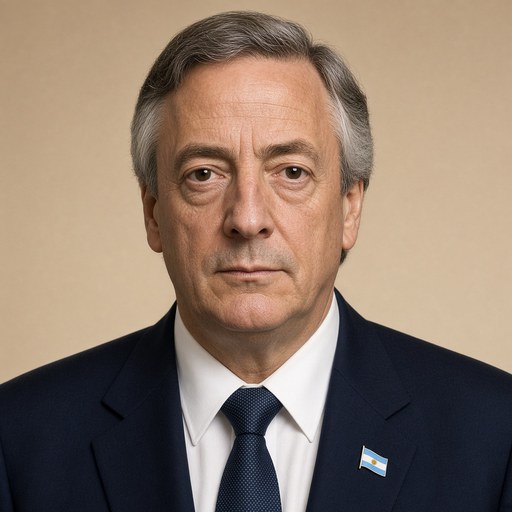
- Kirchner addressed a ceremony in Buenos Aires on December 16, 2003, to formally present the newly created National Archive of Memory.
- Main themes
- National Archive of Memory, human rights, memory and truth, impunity and justice, Argentina's military dictatorship 1975–1983, societal accountability, Operation Condor, Mercosur human rights, political identity and values, solidarity among human rights organizations
- Duration
- ~9 min
- Words
- 1,118
- Sentences
- 31
- Readability
- 42
- Grade
- 16.4
- Syntax
- 3.55
- Vocabulary
- 2.05
Translated from Spanish
The broad sphere of national life a sentence belongs to. Every sentence has an Arena, so it is the denominator the other indices are read against.
Other31 sentences in 11 paragraphs
Ladies and gentlemen ministers of the National Executive Power; national and provincial authorities; members of the diplomatic corps; legislators; representatives of human rights organizations and non-governmental organizations; representatives of Catholic and non-Catholic faiths; ladies and gentlemen: I believe that we Argentines, in this difficult task of restoring, consolidating, and refounding our own identity, our own chain of values, our own cultural values, are at a turning point in all instances. We continue to coexist in a society of double discourse and hypocrisy, or we decisively advance in the construction of our truth, in the construction of our reality, in the construction of justice, in breaking the cycle of impunity, towards the consolidation of a society where definitely different parameters guide the actions of all of us who make it up.
The National Archive of Memory is an important, central fact for which various human rights defense organizations have fought fervently for a long time, but it is also the synthesis and result of a society that did not react as it should have when it needed to. If Argentines during the events that happened to us over these 30 years, but fundamentally from 1975 to 1983, had had the courage, the determination, and the bravery to raise our voices against the things that were happening, we would surely be talking today about our brave ones, our heroes—because they were heroes—who knew how to bend the authoritarian, repressive, and genocidal will of a ruling class that took over the country.
But we must have a clear definition of these issues, because in Argentina we always do not know what is happening and what is occurring. We did not know what was happening and what was occurring when one by one our brothers were torn from their homes, from their jobs, from the streets, from their activism, simply for thinking differently from those who were temporarily and authoritatively governing Argentina. Forgive me for linking them, but in different issues of society, the same thing happens; we never know what is happening, and the worst things always happen to us. It is time that, out of honor, it is time that, in memory of those who gave so much, of this generation of brothers and sisters who were sacrificed, we definitively change our behavior and have a behavior of strength, of clarifying realities, so that we do not say—typical of the amnesia that we Argentines have—that we do not know what is happening, but that we have the strength to punish, to support, and to mark those who break the course that Argentines must have. Because that is the will of those who are no longer here, it is the will of a different Argentina, it is the will for which they fought for a long time and put their ideas, their spirit, their heart, and their lives at the service of a different project for Argentina.
That is why I feel this sensation, the sensation that we are doing something that we must do, but I also feel the anger that we have to do it because Argentines have not lived up to history and circumstances. God willing, this will serve to generate the definitive bridge to build an absolutely different Argentina. It is one more step in the entire struggle that we are carrying out, but we must know what happened, what occurred in each house, in each place, in each detention center. It must end that there are places that are untouchable and not untouchable. We Argentines want to know the truth; the institutions where these things happened are institutions of the Argentine Republic and the Argentine State, and the obligation is to know what happened there during that tragic moment, that tragic time.
We must no longer look the other way when we pass by each of those places where our brothers, our children, our parents were martyred. That is why today we are taking, mothers, friends, a vital, very important step, but we must continue to advance.
I told four mothers today in Montevideo, who from solitude, with an incomprehensible Law of Expiry in between, I still saw with that potential and that strength seeking the truth, that we must accelerate all necessary steps to have the answers that Argentina needs, that all of Latin America needs on these issues that we have had to live through, and God willing, that through Mercosur, with the creation of the Human Rights Secretariat and others, we can generate the birth of a space that definitively prevents us from having to encounter new Condor operations and all those procedures and elements that have truly shattered and broken our societies.
I want to say that we should put all our efforts, consolidate solidarities. Everything you have done over these years is an example of life, conduct, and honesty. Let nothing separate you, because many would like to see those who have fought so hard like you for human rights, broken and divided.
I believe we are very close to continuing to advance towards the truth, and in that regard, we must make all efforts to achieve it. Because that truth, which some believe is to discover the truth of the past and treat it from the past as if it weighed on their shoulders—they should feel it in their consciences—will allow us to build a totally different society. If not, we will continue to encounter every day with events that embarrass us.
I tell you with absolute sincerity that we will indeed punish impunity severely, but there may be behaviors that tend to impunity surrounding us and close by; it may be; there may be procedures that do not correspond, it may be; there may be people with double, triple, or quadruple different discourses trying to get through this stage, it may be. Because they think that this is how it will be and that we will restore things as they should be, that the procedures that will guarantee impunity will return, that we will have new laws of pardon, that we will end the irrationality of some who want to find the truth where that truth is absolutely unnecessary for Argentine society. That is why it is essential that we culturally establish in our actions the steps that correspond.
Dear friends: I believe we are sharing a historic event and moment. I see your faces, I know what they mean and synthesize. In this White Room, which has often served for so many dark things in Argentine history, today thousands and thousands of friends, companions, are here inside, are with us. Despite their efforts to prevent it, they arrived; here they are.
Thank you very much and much strength.
The original Spanish. The tags above are read on the English translation's sentences.
Señores ministros del Poder Ejecutivo Nacional; autoridades nacionales y provinciales; señores miembros del cuerpo diplomático; señores legisladores; señores representantes de organizaciones de derechos humanos y no gubernamentales; señores representantes de cultos católicos y no católicos; señoras y señores: creo que los argentinos en esta difícil tarea de restaurar, de consolidar y de refundar nuestra propia identidad, nuestra propia cadena de valores, nuestros propios valores culturales, estamos en todas las instancias ante el punto de inflexión. Seguimos conviviendo en la sociedad del doble discurso y la hipocresía o avanzamos decididamente en la construcción de nuestra verdad, en la construcción de nuestra realidad, en la construcción de la justicia, en el quiebre de la impunidad, hacia la consolidación de una sociedad donde definitivamente otros sean los parámetros que guíen las acciones de todos los que la integramos.
El Archivo Nacional de la Memoria es un hecho importante, central, por el que las distintas organizaciones de defensa de los derechos humanos han luchado fervientemente durante muchísimo tiempo, pero también es la síntesis y la resultante de una sociedad que no reaccionó como tenía que reaccionar cuando debió hacerlo. Si los argentinos y argentinas durante las cosas que nos sucedieron durante estos 30 años, pero fundamentalmente de 1975 a 1983, hubiéramos tenido el coraje, la decisión y la valentía de levantar nuestra voz ante las cosas que pasaban seguramente hoy estaríamos hablando de nuestros valientes, de nuestros héroes -porque fueron héroes- que supieron torcer la voluntad autoritaria, la voluntad represiva y genocida de una clase dirigente que se apoderó del país.
Pero debemos tener una clara definición de estos temas, porque siempre en la Argentina no sabemos qué es lo que pasa y qué es lo que sucede. No sabíamos qué es lo que pasaba y qué es lo que sucedía cuando uno a uno nuestros hermanos eran arrancados de sus casas, de sus trabajos, de la calle, de su militancia, por el sólo hecho de pensar diferente de quienes gobernaban coyunturalmente y de forma autoritaria la Argentina. Discúlpenme que los enlace, pero en distintos temas de la sociedad pasa lo mismo, nunca sabemos lo que está pasando y siempre nos suceden las peores cosas. Es hora de que por honor, es hora de que por recordar a aquellos que tanto pusieron, a esta generación de hermanos y hermanas que fueron sacrificados, definitivamente cambiemos nuestra conducta y tengamos una conducta de fuerza, de sincerar las realidades, para que no digamos -propio de la amnesia que tenemos los argentinos- que no sabemos lo que está pasando, sino que tengamos la fuerza para castigar, apuntalar y marcar a aquellos que nos quiebran el derrotero que los argentinos debemos tener. Porque esa es la voluntad de los que ya no están, es la voluntad de una Argentina diferente, es la voluntad por la que militaron durante muchísimo tiempo y pusieron sus ideas, su espíritu, su corazón y su vida al servicio de un proyecto diferente de Argentina.
Por eso yo siento esta sensación, la sensación de que estamos haciendo algo que tenemos que hacer, pero también siento la bronca de que lo tenemos que hacer porque los argentinos no estuvimos a la altura de la historia y las circunstancias. Dios quiera que esto sirva para generar el puente definitivo para construir una Argentina absolutamente diferente. Es un paso más de toda la lucha que estamos llevando adelante, pero tenemos que saber qué pasó, qué sucedió en cada casa, en cada lugar, en cada centro de detención. Se tiene que terminar aquello de que hay lugares que son intocables y no intocables. Los argentinos queremos saber la verdad, las instituciones donde pasaron estas cosas son instituciones de la República Argentina y del Estado argentino y la obligación es saber qué pasó allí durante todo ese trágico momento, ese trágico tiempo.
No debemos mirar más de costado cuando pasamos por cada uno de esos lugares donde martirizaron a nuestros hermanos, a nuestros hijos, a nuestros padres. Es por eso que hoy estamos dando, madres, amigos, un paso vital, muy importante, pero tenemos que seguir avanzando.
Les decía hoy en Montevideo a cuatro madres, que desde la soledad, con una Ley de Caducidad incomprensible de por medio aún las veía con esa potencialidad y esa fuerza buscando la verdad, que debemos acelerar todos los pasos necesarios para tener las respuestas que está necesitando la Argentina, que está necesitando toda América latina en estos temas que nos han tocado vivir y que Dios quiera que a través del Mercosur, con la creación de la Secretaría de los Derechos Humanos y demás, podamos generar el nacimiento de un espacio que definitivamente evite que nos tengamos que encontrar con nuevos operativos Cóndor y todos esos procedimientos y elementos que realmente han resquebrajado y quebrado nuestras sociedades.
Yo les quiero decir que pongamos todos nuestros esfuerzos, consolidemos las solidaridades. Todo lo que ustedes han hecho durante estos años es un ejemplo de vida, de conducta y de honestidad. Que nada los separe, porque muchos quisieran ver a quienes tanto han peleado como ustedes por los derechos humanos, quebrados y divididos.
Creo que estamos muy cerca de seguir avanzando hacia la verdad y, en ese aspecto, tenemos que hacer todos los esfuerzos para lograrlo. Porque esa verdad, que algunos creen que es descubrir la verdad del pasado y la tratan desde el pasado como si les pesara en sus espaldas -les debe pesar en las conciencias- nos va a permitir construir una sociedad totalmente diferente. Si no, nos vamos a seguir encontrando todos los días con hechos que nos avergüenzan.
Les digo con absoluta sinceridad que sí vamos a castigar fuertemente la impunidad, pero que puede haber conductas que tiendan a la impunidad rodeándonos y cerca, puede ser; que puede haber procedimientos que no corresponden, puede ser; que puede haber gente con doble, triple o cuádruples discursos diferentes para tratar de pasar esta etapa, puede ser. Porque piensan que así va a ser y que vamos a restaurar las cosas como corresponde, que ya van a volver los procedimientos que van a garantizar la impunidad, que vamos a tener nuevas leyes de perdón, que vamos a terminar con la irracionalidad irreflexiva que tienen algunos que quieren encontrar la verdad donde ya esa verdad es absolutamente innecesaria para la sociedad argentina. Por eso es fundamental que nosotros culturalmente establezcamos en nuestras acciones los pasos que corresponden.
Queridos amigos y amigas: creo que estamos compartiendo un hecho y un momentos histórico. Veo los rostros de ustedes, sé lo que significan y sintetizan. En este Salón Blanco, que muchas veces ha servido para tantas cosas negras de la historia argentina, hoy miles y miles de amigos, compañeras y compañeros están acá adentro, están con nosotros. Mal les pese, hicieron todo para que no lleguen pero llegaron, acá están.
Muchas gracias y mucha fuerza.