





- Context
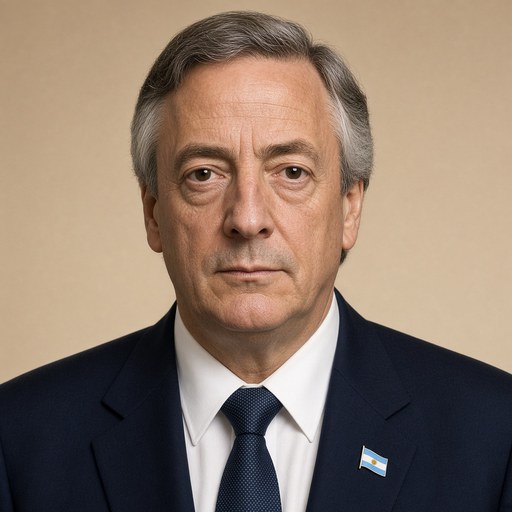
- Kirchner addressed the National Meeting of Militancy on March 11, 2004, the 31st anniversary of Argentina's 1973 democratic elections, calling for political renewal.
- Main themes
- Argentine democracy and political renewal, Peronist militancy and civic participation, memory and justice for the disappeared generation, political ethics and anti-corruption, national reconstruction after 2001 crisis, rejection of caudillismo and personality cults, inclusive and plural politics, accountability of past governments
- Duration
- ~35 min
- Words
- 4,218
- Sentences
- 124
- Readability
- 46
- Grade
- 15.2
- Syntax
- 3.42
- Vocabulary
- 1.99
Translated from Spanish
The broad sphere of national life a sentence belongs to. Every sentence has an Arena, so it is the denominator the other indices are read against.
Other124 sentences in 34 paragraphs
Dear friends; companions: I want to begin by expressing to you that exactly 31 years ago at this hour, a generation of Argentines saw and felt that democracy was returning to the Fatherland.
They asked me how I experienced March 11, 1973. I was the polling station prosecutor, and I remember to this day that there was so much fear of trickery and fraud that the order we had was to get on the trucks that transported the ballot boxes to protect them until the last vote was counted. It was March 11, 1973, a generation of Argentines was joining democratic life with the strength and desire to build a new country.
Then we had to live through so many things, we had to endure so much pain, we had to see that generation of Argentines who worked for an egalitarian, inclusive, different Fatherland decimated, a Fatherland where it is not a sin to think, a Fatherland with plurality and consensus like the one we have here today, where the fact of thinking differently would not confront us but, on the contrary, would help us build a different Argentina. I do not want to become nostalgic because it is true that one’s heart vibrates and one’s eyes fill with tears when seeing so many faces among you that are no longer here, but I also believe it is essential to build a Fatherland with a strong identity, with justice and memory, so that we can definitively create a solid country.
We must rebuild the space for militants, for the cadres; we must once again value politics, and we do not want the almost business-like mechanics of politics to repeat itself, which tends to remember friends and companions only to use them for electoral matters.
We do not want to help conjugate and have everyone tell us yes, to have “disciplined” troops, as is customary. We want to have companions who think, who tell us the truth, who have transgressive capacity, who help us make as few mistakes as possible. We no longer want the practice of a cult of individualism, of personality, and of the theory of the leader. Those theories have done so much damage to Argentine politics and have shattered its quality and even its own morality for those who tried to carry them out. We also do not want to generate that discouragement where companions, friends; wherever they act, whatever the force, go out to work politically and know that when the elections are over, the doors of the back-and-forth that must exist between those who are elected and those who help them get elected close.
We want to end the idea of the influencer, of “come with me because I have connections” to generate accommodation in history, because that too has broken the morality of politics, of practice, which has done so much harm. Also, when there is a critical mass that thinks, that elaborates, that participates, it prevents those of us who have to fulfill responsibilities from believing we are more than we are and forgetting where we come from and why we come.
And in this Argentina where we had to live through the year 2001, where we saw politics explode, where we witnessed the things we have seen throughout this time, it is essential to put all our strength into building spaces like the one that is beginning to be built here today. We did not come here with membership cards; we did not come to pass lists; we did not come to see who is present or who is absent; we came as Peronists and non-Peronists, people of all ideas and all forces who want to change Argentina to sit at a table to start discussing, to start thinking together, to qualify politics. We want once again for political venues not to be places of “trenzas,” or to be places – to define them accurately – where we gather only to drink some wine or eat barbecues. We want political places to be places of meditation, of formation, of civic consciousness, that tend to consolidate a different Argentina. We want the idea of the clandestinity of politics, of the things done in politics, to definitively end.
That is why when we are trying to lift this Argentina that was sunk and broken, when I have to endure being called verbose, being told that I overact simply for defending Argentina, for saying what I think and believing that we must lift this broken country, with dignity, with responsibility and rationality, I do not understand why I am attacked like this by those who led Argentina for so many years and took us to that economic project of hunger, exclusion, and unemployment. Why do they attack us as they do, why do they say what they say to me? Let them face the responsibility of history for the things they did, but let them understand that in Argentina there are new and good airs to create a different country!
In this country, things must be serious and clear to create a normal and serious country. Those who do things well must be absolutely encouraged; those who investigate, those who study, those who work, definitely the most decent and the most honest. And as in any serious country in the world, the criminal, the corrupt, the one who does not do what they are supposed to do must go to jail, as is appropriate, to build a different country.
These are values and issues that we must carry forward with all our strength. We must not fall into the short dispute of spaces; we must build Argentina. That is why the space and environment of today, in the diversity and plurality that has been generated here, does not seek to consolidate anyone's leadership, but rather the presence of Argentines who want to have a leading role in the construction of the new Argentina, in the construction of the Argentina that we all deserve.
That is why dear friends, companions, we must take the lesson of history; we must understand that the concept of solidarity and plurality is central, but we must also understand that we must inform ourselves and prepare ourselves to be able to lead this small country with all our strength and capacity. Of course, we come from a critical situation, but it is also time for us in Argentina to have a clear memory of the things that have happened to us, but not from empty patriotism, but from a sense of Fatherland, filled with dignity, justice, and inclusion, we can say that what Argentines want is to have a Fatherland, a home, and a flag that shelters us all and gives us at least a little bit of possibilities to realize ourselves.
We must stop feeling ashamed of the things we defend; they sometimes want to make us feel that these are positions that must be “revised” in the name of supposed rationality. What is rationality, friends, companions? Is rationality bowing our heads, agreeing to anything by negotiating disciplinedly and politely with certain interests, and adding and adding excluded people, adding and adding unemployed people, adding and adding Argentines who are left with no possibilities? Or is rationality working with responsibility, seriousness, with the strength to open the doors of production, work, and study for all Argentines? I want to adhere to this type of rationality; it is the only viable rationality we have to be able to realize ourselves.
Also, dear companions, we must make a very great effort, but I can assure you that it is absolutely possible to continue on the path of growth that Argentina has entered. Of course, we have seen and are in the second step of hell; I do not fall in love with the numbers, but it is also true that when we see unemployment decreasing, when we see Argentina growing, when we see consumption increasing, we begin to feel encouraged, and it is possible to build the country that we constantly dream of; we can turn it into reality. Of course, there are pending subjects everywhere, but let us also assume where we started, a country that was led to owe 174 billion dollars. There is no other country in the world that has been indebted like this. And those who indebted it, those who were intellectual symbols of that indebtedness still want to tell us what we should do. For God's sake, Argentines, let us react and have good memory!
When I see that some are desperate to try to show themselves and exist in political life or by making closed officialism or making opposition for opposition's sake to appear in the newspapers, I say, do they not realize, do they not walk Argentina? When we go from neighborhood to neighborhood, province to province, we see thousands and millions of companions, Argentine brothers and sisters who look at us with tears in their eyes, in the oblivion to which they have been subjected. Why do we not stop playing short politics and write the great history of an Argentina that contains us all?
We must be the turning point of that empty and contentless Argentina, of that Argentina where the one who triumphed the most was the most unscrupulous, and we must build the Argentina where the worker is once again the central respect of our actions, where the one who studies can be valued as they deserve, where the researcher can once again have the place they deserve. That we can, as when we were children, look at our parents and see the symbol of effort and work, and they feel proud that with their effort and work they achieved that the coming generation is better than the one that is leaving. That is when a country begins to change, not as has happened until now in Argentina and that we are trying to reverse, where the coming generation is worse and has to go curl up in the old person's house to survive and have a roof. We must turn history around, and I know that with you we will have the possibility to do it!
Of course, one can have positions and certain slogans that can be very nice, but what I have learned throughout my life as a militant is that what is important is to be able to carry our ideas step by step to be able to realize them. What I do not want is to lie to the Argentine people; I do not want to further manipulate the credibility of our Argentina, and I tell you step by step what we are doing, but you will not see me trying to present a grandiose project only to later disappoint everyone. I prefer to build with all of you day by day the new Argentina, but without falling into vain and empty promises. They told us when we began to govern: “ten days and it will fall, fifteen days and it will fall,” they prayed for us to fall and not be able to function. Now they say we will fall at the end of 2004 or 2005, and tomorrow I do not know when they will say. I ask why, if the success of Argentina will help shelter all Argentines.
The same goes for when we achieve actions, when we achieve investments, and they say “but there is no long-term project.” They come out with glasses, with serious faces, with ties, wanting to show themselves as if they were great thinkers of national life. How right Jauretche was in his book “Zonceras Argentinas”: they believe that because five of them get together, put on serious faces, wear glasses, look like thinkers, and say we must do this and that with Argentina. We know them because we have seen them; they told us throughout the 1990s: be patient, wait for the glass to overflow. It overflowed in hunger, in exclusion, in forgetfulness, dear friends. That is why we come from here to call for love, for coexistence; we must open all the floodgates and seek that Argentina, in diversity and plurality, can build the destiny we need. It is absolutely feasible; day by day we will continue to improve, day by day we will travel our country, day by day we will get closer and work hand in hand with those brothers and sisters who need it the most; day by day we will be building an Argentina where the possibilities of having absolutely mediated economic concentration and a different income distribution can be consolidated. But for that, we must build the country, and the country is not built only from a speech.
From a speech, intentions are expressed, but the country is built with actions that are implemented day after day, hour after hour, minute after minute to be able to change it. I want to tell you that I am neither euphoric nor depressed, but I feel optimistic and strong; I feel absolutely eager to advance and build a different country. I know that it is my turn to move forward because of the vote of all of you, because of the will of the Argentine people.
Do not have any doubt; I said it the day I took office, I did not come to leave my convictions at the door of the Government House, nor did I come to sit in an armchair to continue being there just to be, to try to be for being, or to try to make a protocol presidency as many like. I can assure you that I have come to put everything I have, with my successes and my mistakes, like all human beings; I came to play with all of you for a different country. I am not interested in lasting ten years of failure or four and a half years – as I have to – of failure; I prefer to live two years, one year, two hours, or one minute fully knowing that I have to do what our people need, and I can do it!
A few hours after starting the government, they told us that we were opening too many fronts, but we said, "We come to build an independent Justice in Argentina." When we began to build an independent Justice, and it is proven in the Supreme Court that is being established in our country, those who did not want to change anything appeared and showed their true face. You saw them; they said, "They are doing procedures that do not correspond," when we acted within the framework of the law. But we said that this country needs justice, and the doctors who go to the Supreme Court of the Nation of Argentina are absolutely independent; I barely know them. We created an independent Justice, and it is underway.
We said we came to put an end to impunity, that we wanted justice, truth, and memory, and they came out saying why I was removing the past. I thought, and I think, that it is not the past but the painful present of 30,000 Argentinians who were disappeared for thinking differently. We said we came to end the shame of the laws of Obedience Due and Final Point, and their nullity has been declared so that there can be true justice and true balance and responsibility in our country.
We said we came to build a country where the possibilities and defense of Argentine capital, national entrepreneurship, production, and Argentine work are priorities. In 9 months of government, we reduced unemployment in Argentina by 9 points; never before has unemployment dropped so much in such a short time. I estimate that when INDEC said there was 25 or 26% unemployment, some were raising it; now that it is at 14.5%, they will not say they disagree. This is the concrete reality, with those same figures it has been decreasing.
We said we came with all our strength to recover the possibility of national industry, of the necessary substitution that must be made, of the capacity for realization of our country, and it is already underway, with national production recovering strongly, even marking with reality the possibilities for economic growth that we have in this stage. But we also said we came to clarify attacks and we would open the right to truth and justice, and today, as we see so many problems and attacks like those in Spain happening around the world, we can say that we had the courage to open all the secret files to know the truth of those attacks that silenced Argentinians, such as those of AMIA and the Israeli embassy. We said we would strengthen the possibility of public investment in education and that we believed in public investment. They told me that public investment was unproductive spending; we are generating schools, roads, houses, investing throughout Argentina with the effort of all.
We said we would manage the country in an orderly manner, and we are doing a truly balanced administration, as in every management I have had to carry out. We said we came with all our strength to invest more in university education, to invest more in research, and the budgets are already marking that. Of course, much more is needed; of course, we need to invest more there, but we must see where we started, we must see where we were to understand how we have advanced and how we are trying to reach. And of course, we are determined to face problem after problem and situation after situation, to clarify and to strengthen, investing and generating the possibilities of that different country. We said we would renegotiate public service contracts with dignity, and we are doing so. We said that the increase in tariffs would not fall on the shoulders of the people but on the economic groups, mainly those who export in dollars and charge in pesos.
In other words, we are trying, with the mistakes that can be made, to fulfill what we say so that our society can believe again. We said we came with open arms to make no kind of partisan differentiation because we were tired of seeing this Argentina divided by political elites, who did not understand what was happening in the underground of the homeland, and I can assure you that we are making every effort to ensure that this is the case, absolutely open, willing to listen, willing to correct, willing to put all our effort so that Argentinians can converge on a common project. We must regain the desire for participation, but we ourselves must also engage in self-criticism; we must understand that politics cannot be a tool to seek only the improvement of our position and our lives. If militants and political leaders understand that they must be the ones to set the first example, I can assure you, dear friends, companions, that we will be making a qualitative leap. This is tremendously important; we must set that example and avoid temptations.
I honestly believe that we must move forward with all our strength, that we must put all our greatest capacity for creation, but I will tell you something that happens to me in private every morning: the indebtedness that Argentina has is such that to know and to give me strength to continue, I have to imagine it. Can you imagine 170 billion dollars of debt, 5 billion in BODEN maturing next year in dollars and another 5 billion in 2006? I did not create this debt, but I am willing to face it with all our strength to make a fair and dignified negotiation that allows us to get out! Neither did you. I have to imagine it, and they tell me: "We have to define the projection, the goals"; I say, why didn’t they think? We are defining goals and projections with seriousness and responsibility; those who say such things, why didn’t they think before indebting Argentina as they did? Or if you excuse me, how they almost put it up for auction behind the backs of all Argentinians.
Dear companions and friends: I want to be completely sincere; I do not have an imperative attitude when I say that we will pay 25 and make a cut of 75; it is not a virile, forceful attitude that I take; it is an attitude of the Argentine reality: gathering coins among all Argentinians, we cannot pay more than that. This is the effort that we must all make.
I say this through the media to all Argentinians who are at home, to those who are told that we must pay more because it is essential to look good and fulfill the commitment – those who took on the debt commitment – I ask them to tell the truth to all Argentinians. Do you know what it means to pay more? It is that which a minister promised us who was in Government for 15 days and had to run away quickly: paying more means taking money from universities, taking money from workers, taking money from social plans, taking money from Argentine education, taking money from investment in work, taking money from production, continuing to harm Argentinians. I prefer to be treated as I am treated but to know that at least with effort we prevent them from taking one more peso from this suffering Argentine people to feed the possibilities of a different future.
We must call things by their name; we all must be attentive because Argentinians will be direct victims of incorrect decisions, and we will not have any kind of intemperate or imperative attitude. We will be guided by the common sense and Argentine responsibility that we have always had because dignity is practiced with the actions of every day; dignity is practiced in deeds and not in slogans; dignity is practiced by taking actions every day that lead to defending the possibilities of a different country; dignity is practiced by not lying to people; dignity is practiced by working; dignity is practiced by doing; dignity is practiced by not stealing; dignity is practiced by doing work; dignity is practiced by generating social inclusion; dignity is practiced by opening arms and doors for a different country.
With Cristina, when we have critical problems - sometimes one comes with problems on their back - and even when situations get complicated and I see journalist friends asking me anxiously how each situation is, and one has to absorb the responsibility they have, I can assure you that we draw strength, we combine feeling with action, and it is what I was telling you: I then think how responsibilities can overwhelm me after so many people gave so much and so many people were left behind for a better country.
I feel very eager. Also, something I want to tell you here. When they say we come for revenge from the past, when we want there to be justice, memory, to definitively end the impunity of yesterday, today, and to generate the paths so that impunity does not exist anymore in Argentina, I can assure you that I do not come with any kind of revenge; I do not come with hatred because hatred builds nothing, but I believe that the will of Argentinians is to have a country where there is justice, truth, memory without impunity or hatred, but where there is justice. Now I ask myself, is justice synonymous with hatred, is justice synonymous with removing the past, or is justice justice regardless of the time? Or does the passage of time speak of no justice because a long time has passed? Justice must be applied always because it is the only way we can build a different country.
I deeply thank all of you; I thank everyone for the support you give us in every place in the country we go to, and I call on you, but through you to that Argentine and Argentine, to that worker and student, to those who can see and hear us through the different media, to come to work, to open the space where they believe, to practice the idea they want to practice, but to incorporate themselves into this Argentina where with the idea, with thought, with relative truth, we will be able to build the superior truth that allows all Argentinians to move forward.
I want to close this March 11 by remembering the radical youth of '73, the youth of the Alliance, Dr. Allende of '73, the youth of Christian democracy, the youth of the left parties, the youth of Justicialism who believed that a different country could be made. We believe it, and we will do it; we take on the challenge and the mandate of history. We count on all our strength, with the strength of independent youth, of professionals, of university students, of the people of Argentina, of Argentinians who believe that justice can be built.
Friends of all ideas: thank you very much, thank you for giving this example of coexistence, thank you for sharing this moment. God willing, we can write an important chapter in Argentine history. Thank you very much, thank you for sharing this moment.
The original Spanish. The tags above are read on the English translation's sentences.
Queridos amigos y amigas; compañeros y compañeras: quiero comenzar expresándoles que exactamente hace 31 años a esta hora una generación de argentinos veíamos y sentíamos que la democracia volvía a la Patria.
Me preguntaban cómo viví el 11 de marzo del 73. Me tocó ser el fiscal de mesa y recuerdo hasta hoy que había tanto miedo a la trampa y al fraude que la orden que teníamos era subirnos a los camiones que transportaban las urnas para cuidarlas hasta que se terminara de revisar el último voto. Era el 11 de marzo del 73, una generación de argentinos nos incorporábamos a la vida democrática con la fuerza y el deseo de construir un nuevo país.
Después nos tocó vivir tantas cosas, nos tocó pasar tantos dolores, nos tocó ver diezmada esa generación de argentinos que trabajaba por una Patria igualitaria, de inclusión, distinta, una Patria donde no sea un pecado pensar, una Patria con pluralidad y consenso como el que tenemos hoy aquí, que el hecho de pensar diferente no nos enfrentara sino por el contrario, nos ayudara a construir una Argentina distinta. No me quiero poner nostálgico porque es verdad que a uno le vibra el corazón y se le llenan los ojos de lágrimas cuando en ustedes ve tantos rostros que hoy no están, pero también creo que es fundamental construir una Patria con mucha identidad, con la justicia y con la memoria, para que definitivamente podamos hacer un país sólido.
Tenemos que volver a reconstruir el espacio de los militantes, de los cuadros, tenemos que volver a valorar la política y no queremos que se repita la mecánica casi empresaria de la política que tiende a acordarse de los amigos y de los compañeros para utilizarlos en cuestiones electorales.
No queremos ayudar a conjugar y a que todo el mundo nos diga que sí, a tener tropas “disciplinadas”, como se estila. Queremos tener compañeros que piensen, que nos digan la verdad, que tengan capacidad transgresora, que ayuden a equivocarnos lo menos posible. No queremos más la práctica de un culto al individualismo, a la personalidad y a la teoría del jefe. Esas teorías que tanto daño han hecho a la política argentina y han quebrado su calidad y hasta su propia moralidad los que quisieron llevarlas adelante. Tampoco queremos más generar ese desaliento de que los compañeros, los amigos; donde les toque actuar, sea la fuerza que sea, salen a trabajar políticamente y saben que cuando terminan las elecciones se cierran las puertas del ida y vuelta que deben tener aquellos que son elegidos y aquellos que ayudan a que sean elegidos.
Queremos terminar con la idea del influyente, del “vení conmigo que yo tengo conexiones” para generar el acomodo en la historia, porque eso también quebró la moral de la política, de la práctica, que tanto daño hizo. También cuando hay una masa crítica que piensa, que elabora, que participa, evita que aquellos que tenemos que ir a cumplir responsabilidades nos creamos más de lo que somos y nos olvidemos de dónde venimos y para qué venimos.
Y en esta Argentina en la que nos tocó vivir un año 2001, que nos tocó ver explotar la política, que nos tocó ver las cosas que vimos durante todo este tiempo, es fundamental poner todas nuestras fuerzas para construir ámbitos como el que hoy se empieza a construir aquí. Acá no vinimos con la ficha de afiliación, acá no vinimos a pasar listados, acá no vinimos a ver quién está presente o quiénes están ausentes, acá vinimos peronistas y no peronistas, gente de todas las ideas y de todas las fuerzas que quieren cambiar a la Argentina a sentarnos en una mesa para empezar a discutir, para empezar a pensar en conjunto, para calificar la política. Queremos nuevamente que los locales políticos no sean lugares de “trenzas”, o que no sean lugares -para definirlos con toda exactitud- donde nos juntemos solamente a tomar unos vinos o a comer asados. Queremos que los lugares políticos sean lugares de meditación, de formación, de conciencia cívica, que tiendan a consolidar una Argentina diferente. Queremos que definitivamente se termine la idea de la clandestinidad de la política, de las cosas que se hacen en la política.
Por eso cuando estamos tratando de levantar esta Argentina que fue hundida y quebrada, cuando tengo que soportar que me digan verborrágico, que me digan que sobreactúo por el sólo hecho de defender a la Argentina, de decir lo que pienso y pensar que hay que levantar este país quebrado, con dignidad, con responsabilidad y racionalidad, no entiendo por qué me agreden así aquellos que condujeron la Argentina durante tantos años y nos llevaron a ese proyecto económico de hambre, de exclusión y de desocupación. ¿Por qué nos atacan como nos atacan, porqué me dicen lo que me dicen? ¡Que afronten ante la responsabilidad de la historia las cosas que hicieron, pero que entiendan que en la Argentina hay nuevos y buenos aires para hacer un país distinto!
En este país las cosas tienen que ser serias y claras para hacer un país normal y serio. El que hace las cosas bien debe ser absolutamente estimulado; el que investiga, el que estudia, el que trabaja, definitivamente el más decente y el más honesto. Y como en cualquier país serio del mundo el delincuente, el corrupto, el que no hace las cosas que tiene que hacer debe ir a un calabozo, como corresponde, para construir un país distinto.
Son valores y cuestiones que tenemos que llevar con todas nuestras fuerzas adelante. No hay que caer en la disputa corta de espacios, hay que construir la Argentina. Por eso el ámbito y espacio de hoy, en la diversidad y la pluralidad que se ha generado aquí, no tiende a consolidar el liderazgo de nadie, sino la presencia de argentinos y argentinas que quieren tener un rol protagónico en la construcción de la nueva Argentina, en la construcción de la Argentina que nos merecemos todos.
Por eso queridos amigos, compañeros y compañeras, nosotros tenemos que tomar la lección de la historia, debemos entender que el concepto de solidaridad y pluralidad es central, pero también debemos entender que tenemos que informarnos y prepararnos para poder conducir con todas nuestras fuerzas y capacidad este pequeño país. Claro que venimos de una situación límite, pero es hora también de que en la Argentina tengamos clara memoria de las cosas que nos han pasado, pero no desde el patrioterismo vacío, sino que desde el sentido de Patria, lleno de dignidad, de justicia y de inclusión, podamos decir que lo que los argentinos pretendemos es tener una Patria, un hogar y una bandera que nos cobije a todos y nos dé aunque sea un poquitito de posibilidades para poder realizarnos.
Tenemos que dejar de sentir vergüenza de las cosas que defendemos, nos quieren hacer sentir a veces que son posturas que deben ser “revisadas” en nombre de la supuesta racionalidad. ¿Qué es la racionalidad, amigos y amigas, compañeras y compañeros? ¿La racionalidad es bajar la cabeza, acordar cualquier cosa pactando disciplinada y educadamente con determinados intereses, y sumar y sumar excluidos, sumar y sumar desocupados, sumar y sumar argentinos que van quedando sin ninguna posibilidad? ¿O la racionalidad es trabajar con responsabilidad, seriedad, con fuerzas para abrir las puertas de la producción, del trabajo y del estudio para todos los argentinos? Yo quiero adherir a este tipo de racionalidad, es la única racionalidad viable que nosotros tenemos para poder realizarnos.
También, queridos compañeras y compañeros, tenemos que hacer un esfuerzo muy grande pero les puedo asegurar que es absolutamente posible continuar en la senda de crecimiento que la Argentina ha entrado. Claro que vimos y estamos en el segundo escalón del infierno, yo no me enamoro de los números, pero también es cierto que cuando vemos que baja el desempleo, cuando vemos que crece la Argentina, cuando vemos que crece el consumo nos empezamos a estimular y es posible construir el país que nosotros soñamos permanentemente, lo podemos transformar en realidad. Claro que hay asignaturas pendientes por doquier, pero también asumamos de dónde partimos, un país que lo llevaron a deber 174 mil millones de dólares. No hay otro país en el mundo que lo hayan endeudado así. Y los que lo endeudaron, los que fueron símbolos intelectuales de ese endeudamiento todavía nos quieren decir qué es lo que tenemos que hacer. ¡Por Dios, argentinos y argentinas, reaccionemos y tengamos buena memoria!
Cuando veo que algunos se desesperan por tratar de mostrarse y existir en la vida política o haciendo oficialismo cerrado o haciendo oposición por oposición para figurar en los diarios, digo ¿no se dan cuenta, no caminan la Argentina? Cuando vamos barrio a barrio, provincia a provincia, vemos miles y millones de compañeros, de hermanos y hermanas argentinas que nos miran con lágrimas en los ojos, en el olvido a que han sido sometidos. ¿Por qué no dejamos de jugar a la política corta y escribimos la historia grande de una Argentina que nos contenga a todos?
Nosotros tenemos que ser el punto de inflexión de esa Argentina vacía y sin contenido, de esa Argentina donde el que más triunfaba era el más sinvergüenza y tenemos que construir la Argentina donde el obrero vuelva a ser el respeto central de nuestras acciones, el que estudia pueda ser valorado como corresponde, el que investiga – el investigador- vuelva a ser tener el lugar que merece. Que podamos, como cuando éramos chicos, mirar a nuestros padres y ver el símbolo del esfuerzo y del trabajo, y ellos sentirse orgullosos de que con su esfuerzo y trabajo lograron que la generación que viene esté mejor que la que se va. Eso es cuando un país empieza a cambiar, no como nos pasó hasta ahora en la Argentina y que estamos tratando de revertir, que la generación que viene está peor y se tiene que ir a acurrucar en la casa del viejo para poder sobrevivir y tener un techo. ¡Hay que dar vuelta a la historia y yo sé que con ustedes vamos a tener la posibilidad de hacerlo!
Claro que uno puede tener posturas y determinadas consignas que pueden ser muy lindas, pero lo que yo aprendí durante toda mi vida de militante es que lo importante es poder ir llevando paso a paso nuestras ideas para poder concretarlas. Yo lo que no quiero es mentirle al pueblo argentino, no quiero hacer un manoseo más de la credibilidad de nuestra Argentina y les voy diciendo paso a paso lo que vamos haciendo, pero no me van a ver a mí tratando de mostrar un proyecto grandioso para después defraudar a todos. Prefiero ir construyendo con todos ustedes día a día la nueva Argentina, pero sin caer en promesas vanas y vacías. Nos decían cuando nos tocó empezar a gobernar: “diez días y se cae, quince días y se cae”, rogaban que nos cayéramos y que no pudiéramos funcionar. Ahora dicen que nos vamos a caer a fines del 2004 o del 2005, y mañana no sé cuándo dirán. Yo digo por qué, si el éxito de la Argentina va a ayudar a cobijarnos a todos los argentinos.
Lo mismo cuando vamos logrando acciones, vamos logrando inversiones y dicen “pero no hay un proyecto a largo plazo”. Salen con lentes, con cara de serios, con corbata, queriendo mostrarse como si fueran grandes pensadores de la vida nacional. Qué razón tenía Jauretche en su libro “Zonceras Argentinas”: creen que porque se juntan cinco, ponen cara de serios, se colocan anteojos, cara de pensadores y dicen hay que hacer con la Argentina esto y esto. Nosotros los conocemos porque lo vimos, nos dijeron durante toda la década del 90: tengan paciencia, esperen que el vaso va a derramar. Derramó en hambre, en exclusión, en olvido, queridos amigos y amigas. Por eso nosotros desde acá venimos a convocar al amor, a la convivencia, hay que abrir todas las compuertas y hay que buscar que la Argentina en la diversidad y la pluralidad pueda construir el destino que necesitamos. Es absolutamente factible, día a día vamos a seguir mejorando, día a día recorreremos nuestro país, día a día nos arrimaremos y trabajaremos palmo a palmo con aquellos hermanos y hermanas que más necesitan; día a día iremos construyendo una Argentina donde se puedan ir consolidando las posibilidades de tener absolutamente mediatizada la concentración económica y una distribución del ingreso diferente. Pero para eso hay que ir construyendo el país y el país no se construye solamente desde un discurso.
Desde un discurso se expresan las intenciones pero el país se construye con acciones que se implementan día tras día, hora tras hora, minuto tras minuto para poder cambiarlo. Yo les quiero contar que no soy ni eufórico ni depresivo, pero que me siento optimista y con fuerza, me siento con absolutas ganas de avanzar y construir un país distinto. Yo sé que a mí por el voto de todos ustedes, por la voluntad del pueblo argentino me toca ir adelante.
No tengan ninguna duda, lo dije el día que me tocó asumir, no vine a dejar las convicciones en la puerta de la Casa de Gobierno ni vine a sentarme en un sillón para seguir estando por estar, para tratar de ser por ser o para tratar de hacer una presidencia de protocolo como les gusta a muchos. Les puedo asegurar que he venido a poner todo lo que tengo, con mis aciertos y mis errores, como todos los seres humanos; me vine a jugar con todos ustedes por un país distinto. ¡No me interesa durar 10 años de fracaso o cuatro años y medio –como me tocan- de fracaso, prefiero vivir dos años, un año, dos horas o un minuto a pleno sabiendo que tengo que hacer lo que nuestro pueblo necesita y lo puedo hacer!
A pocas horas de empezar el gobierno nos decían que estábamos abriendo muchos frentes, pero nosotros dijimos “venimos a construir una Justicia independiente en la Argentina”. Cuando empezamos a construir una Justicia independiente, y está probado en la Corte Suprema que se está constituyendo en nuestro país, aparecieron aquellos que no querían cambiar nada y entraron a mostrar su verdadera cara. Ustedes los vieron, decían “están haciendo procedimientos que no corresponden”, cuando nos movimos dentro del marco de la ley. Pero dijimos que este país necesita justicia y los doctores que van a la Corte Suprema de la Nación Argentina son absolutamente independientes, apenas los conozco, hicimos una Justicia independiente y está en marcha.
Dijimos que veníamos a terminar con la impunidad, que queríamos justicia, verdad y memoria, y salieron a decir que por qué removía el pasado. Yo pensaba y pienso que no es el pasado sino que es el presente doliente de 30.000 argentinos que fueron desaparecidos por pensar diferente. Dijimos que veníamos a terminar con la vergüenza de las leyes de Obediencia Debida y Punto Final, y se ha declarado la nulidad de las mismas, para que haya verdadera justicia y para que haya verdadero equilibrio y responsabilidad en nuestro país.
Dijimos que veníamos a construir un país donde las posibilidades y la defensa del capital argentino, el empresariado nacional, la producción y el trabajo argentino sean prioritarios. En 9 meses de gobierno bajamos 9 puntos la desocupación en la Argentina, nunca en tan poco tiempo, tan rápido, bajó tanto la desocupación. Calculo que cuando el INDEC decía que había 25 ó 26% de desocupación había algunos que lo levantaban, ahora que hay el 14,5% no van a decir que no están de acuerdo. Es la realidad concreta, con esas mismas cifras fue bajando.
Dijimos que veníamos con toda nuestra fuerza a recuperar la posibilidad de la industria nacional, de la sustitución necesaria que hay que hacer, de la capacidad de realización de nuestro país y ya está en marcha, recuperándose fuertemente la producción nacional, inclusive marcando con realidad las posibilidades de crecimiento económico que tenemos en esta etapa. Pero también dijimos que veníamos a esclarecer atentados e íbamos a abrir el derecho a la verdad y a la justicia, y hoy que vemos tantos problemas y atentados como el de España que pasan en el mundo, podemos decir que nosotros tuvimos el valor de abrir todos los archivos secretos para saber la verdad de esos atentados que enmudecieron a los argentinos, como fueron los de la AMIA y la embajada de Israel. Dijimos que íbamos a fortalecer la posibilidad de la inversión pública en educación y que creíamos en la inversión pública. Me decían que la inversión pública era un gasto improductivo, estamos generando escuelas, rutas, caminos, casas, invirtiendo en toda la Argentina con el esfuerzo de todos.
Dijimos que íbamos a administrar el país ordenadamente y estamos haciendo una administración realmente equilibrada, como en cada gestión que me tocó llevar adelante. Dijimos que veníamos con toda nuestra fuerza a invertir más en la educación universitaria, a invertir más en investigación, y ya los presupuestos lo van marcando. Claro que falta mucho más, claro que hay que invertir más allí, pero hay que ver de dónde partimos, hay que ver dónde estábamos para poder entender cómo hemos avanzado y cómo estamos tratando de llegar. Y claro, estamos decididos a ir afrontando problema tras problema y situación tras situación, para ir esclareciendo y para ir fortaleciendo, invirtiendo y generando las posibilidades de ese país diferente. Dijimos que íbamos a renegociar los contratos de servicios públicos con dignidad, y así lo estamos haciendo. Dijimos que no iba a caer sobre las espaldas de la gente el aumento de tarifas y cayeron sobre los grupos económicos, fundamentalmente los que exportan en dólares y cobran en pesos.
Es decir que estamos tratando, con los errores que se pueden cometer, de cumplimentar lo que decimos para que nuestra sociedad vuelva a creer. Dijimos que veníamos con los brazos abiertos a no hacer ningún tipo de diferenciación partidaria porque estábamos cansados de ver a esta Argentina partida por las cúpulas políticas, que no entendían lo que estaba pasando en el subsuelo de la patria, y les puedo asegurar que estamos haciendo todos los esfuerzos para que así sea, absolutamente abiertos, dispuestos a escuchar, dispuestos a corregir, dispuestos a poner todo nuestro esfuerzo para que los argentinos podamos converger en un proyecto común. Tenemos que volver a recuperar las ansias de la participación, pero nosotros mismos también tenemos que hacernos la autocrítica, debemos entender que la política no puede ser una herramienta para buscar solamente el mejoramiento de nuestra posición y nuestra vida. Si los militantes y los dirigentes políticos entienden que tienen que ser los que den el primer ejemplo, les puedo asegurar queridos amigos y amigas, compañeras y compañeros, que estaremos dando un salto cualitativo. Esto es tremendamente importante, tenemos que dar ese ejemplo y evitar las tentaciones.
Creo honestamente que tenemos que avanzar con todas nuestras fuerzas, que tenemos que poner toda nuestra mayor capacidad de creación, pero les voy a contar algo que me pasa en privado todas las mañanas: es tal el endeudamiento que tiene la Argentina que para saber y para darme fuerzas para seguir la tengo que imaginar. ¿Se imaginan ustedes 170.000 millones de dólares de deuda, 5.000 millones en BODEN que vencen el año que viene en dólares y 5.000 más en el 2006? ¡Yo no generé esta deuda pero estoy dispuesto a ponerle el pecho con toda nuestra fuerza para hacer una negociación justa y digna que nos permita salir! Ni ustedes. Tengo que imaginarla y me dicen: “hay que definir la proyección, las metas”, ¡yo digo por qué no pensaron! Nosotros vamos definiendo con seriedad y responsabilidad las metas y proyecciones, aquéllos que dicen esas cosas por qué no pensaron antes de endeudar a la Argentina como la endeudaron. O si me disculpan, cómo casi la pusieron a remate a espaldas de todos los argentinos.
Queridos compañeros y amigos: les quiero ser totalmente sincero, yo no tengo una actitud imperativa cuando digo que vamos a pagar el 25 y vamos a hacer un recorte del 75; no es una actitud viril, de fuerza la que hago, es una actitud de la realidad argentina: juntando monedas entre todos los argentinos no podemos pagar más que eso. Este es el esfuerzo que debemos hacer todos nosotros.
Se los digo a través de los medios a todos los argentinos y argentinas que están en sus casas, a aquéllos que les dicen que tenemos que pagar más porque es fundamental quedar bien y cumplir el compromiso –que son los que tomaron el compromiso de la deuda- yo les pido que digan la verdad a todos los argentinos. ¿Saben lo que significa pagar más? Es eso que nos prometió un ministro que estuvo 15 días en el Gobierno y tuvo que salir corriendo y rápidamente: pagar más es sacar plata de las universidades, sacarle plata a los trabajadores, sacarle plata a los planes sociales, sacar plata a la educación argentina, sacar plata de la inversión en el trabajo, sacar plata a la producción, seguir perjudicando a los argentinos. Yo prefiero que me traten como me tratan pero saber que por lo menos con esfuerzo impedimos que le quiten un peso más a este sufriente pueblo argentino para alimentarle las posibilidades de un futuro distinto.
Las cosas las tenemos que llamar por su nombre, todos tenemos que estar atentos, porque los argentinos seremos afectados directos de las decisiones incorrectas y no vamos a tener ningún tipo de actitud que sea intemperante o imperativa. Nos va a guiar el buen sentido y la responsabilidad argentina que tuvimos siempre porque la dignidad se practica con las acciones de todos los días, la dignidad se practica en los hechos y no en la consigna, la dignidad se practica tomando acciones todos los días que lleven a defender las posibilidades de un país distinto, la dignidad se practica no mintiéndole a la gente, la dignidad se practica trabajando, la dignidad se practica haciendo, la dignidad se practica no robando, la dignidad se practica haciendo trabajo, la dignidad se practica generando inclusión social, la dignidad se practica abriendo los brazos y las puertas para un país distinto.
Con Cristina cuando tenemos problemas límites -a veces uno viene con los problemas en la espalda- e inclusive cuando las situaciones se complican y veo a los amigos periodistas que me preguntan angustiados cómo está cada situación y uno tiene que absorber la responsabilidad que tiene, les puedo asegurar que tomamos fuerza, combinamos sentimiento con acción y es lo que yo les contaba a ustedes: pienso entonces cómo me pueden sobrepasar las responsabilidades después que tanta gente dio tanto y tanta gente quedó en el camino por un país mejor.
Me siento con muchas ganas. También algo que les quiero decir a ustedes aquí. Cuando dicen que venimos por el revanchismo del pasado, cuando queremos que haya justicia, memoria, que se termine definitivamente la impunidad de ayer, de hoy, y generar los caminos para que la impunidad no exista más en la Argentina, yo les puedo asegurar que no vengo con ningún tipo de revanchismo, no vengo con odios porque el odio no construye nada, pero creo que la voluntad de los argentinos es tener un país donde haya justicia, verdad, memoria sin impunidad ni odios, sino que haya justicia. Ahora me pregunto yo, ¿la justicia es sinónimo de odio, la justicia es sinónimo de remover el pasado o la justicia es la justicia sea en el tiempo que sea? ¿O el paso del tiempo habla de la no justicia porque pasó mucho tiempo? La justicia se debe aplicar siempre porque es la única forma en que podemos construir un país diferente.
Les agradezco a todos profundamente, les agradezco a todos el acompañamiento que nos hacen en cada lugar del país que vamos y los convoco a ustedes, pero través de ustedes a aquel argentino y argentina, a aquel trabajador y estudiante, a aquel que nos puede ver y escuchar a través de los distintos medios, que venga a trabajar, que abra el espacio donde crea, que practique la idea que quiera practicar, pero que se incorpore a esta Argentina donde con la idea, con el pensamiento, con la verdad relativa vamos a poder construir la verdad superadora que nos permita a todos los argentinos poder avanzar.
Yo quiero cerrar este 11 de marzo acordándome de los jóvenes radicales del 73, de los jóvenes de la Alianza, del doctor Allende del año 73, de los jóvenes de la democracia cristiana, los jóvenes de los partidos de izquierda, de los jóvenes del Justicialismo que creían que se podía hacer un país distinto. Nosotros creemos y lo vamos a hacer, tomamos el desafío y el mandato de la historia. Contamos con todas nuestras fuerzas, con las fuerzas de los jóvenes independientes, de los profesionales, de los universitarios, de la gente de Argentina, de argentinos que creemos que la justicia se puede construir.
Amigos y amigas de todas las ideas: muchísimas gracias, gracias por dar este ejemplo de convivencia, gracias por compartir este momento. Dios quiera que podamos escribir un tramo importante de la historia argentina. Muchísimas gracias, muchas gracias por compartir este momento.