




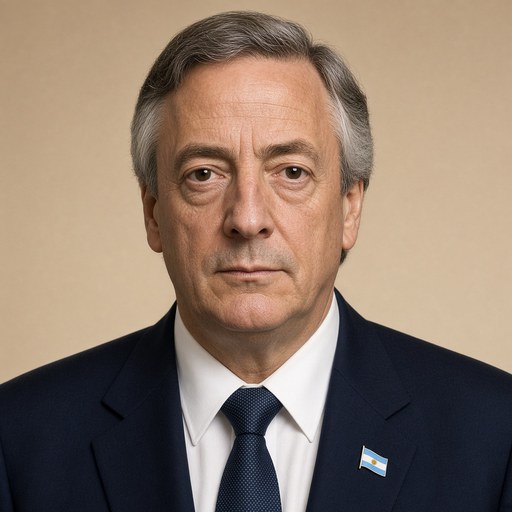
Debt relief: Néstor Kirchner at the Extraordinary Summit of the Americas in Monterrey
 Néstor Kirchner · President of Argentina
- Context
- Kirchner addressed the Extraordinary Summit of the Americas in Monterrey on January 13, 2004, advocating for debt relief and equitable development policies.
- Main themes
- Debt relief and economic reform, sustainable development, social inclusion and equity, democratic governance, fight against corruption, poverty reduction, new development paradigm, failure of neoliberal policies, hemispheric security, multilateral cooperation, distributive justice, public finance management
- Duration
- ~21 min
- Words
- 2,531
- Sentences
- 88
- Readability
- 26
- Grade
- 16.8
- Syntax
- 3.21
- Vocabulary
- 2.29
Translated from Spanish
The broad sphere of national life a sentence belongs to. Every sentence has an Arena, so it is the denominator the other indices are read against.
Other88 sentences in 28 paragraphs
We believe it is good to take advantage of these multilateral meetings to share our vision regarding the progress of the region. We agree that the greatest challenge facing this Summit, and one that we hope can later be realized in our country, is the creation of real opportunities for the people of our hemisphere to improve their quality of life. To achieve this, it is essential not to accept the double standard that the chronic duality between discourse and action, between what is planned and what is executed, implies. Improving the lives of our fellow citizens requires the implementation of means appropriate to the ends we advocate.
To have better democracy, more education, better health, more effectiveness in the fight against corruption, and more equity, we need to equip ourselves with appropriate tools and controls that allow us to measure real progress in specific cases and countries. Access to high-quality education, as well as having an adequate public health system, are necessary conditions for our peoples to achieve inclusion in the economy of this new millennium and thus realize the ideal of equal opportunities.
Without a frontal fight against corruption, the quality of our democracies cannot be increased. The fight against the scourge of corruption and tax evasion are two sides of the same coin that safeguard public funds to have the necessary means to address the problems posed by governance. A clear stance against international terrorism and the adoption of inclusion and development policies that we speak of are central to increasing hemispheric security.
On the other hand, it is no longer a matter of being satisfied with the consolidation of democratization that has spread throughout the hemisphere and distances us from the specter of dictatorial governments with their aftermath of criminal practices of state terrorism; the right to live in democracy has increasingly and irreversibly become part of the civic heritage of Americans. It is indeed a matter of achieving sustainable growth based on increased production, job growth, and employment within a framework of distributive equity, in a context of policies that internalize the need for responsible, efficient, and corruption-free management of public finances.
Recent history and the present day prove day by day, at a very high cost, the fragility of models that, dazzled by macroeconomic numbers, based on permanent adjustment and the concentration of income in a few, generate the social exclusion of millions of men and women in our continent.
If inequality wins the battle, there is no sustainable development. Without sustainable development, institutional crises and the fall of democratic governments will continue to be commonplace in our continent. Democratic governance is definitely linked to economic viability and social inclusion. We have learned through suffering that an economic program is not sustainable if it does not include the population. In no country can any program coexist for long with high rates of poverty, unemployment, and informality. The world needs a new paradigm of inclusive, equitable development. In summary, a fairer one. The 2.8 billion poor, more than half of the world's population, represent the most urgent demand that emerges before those who have government responsibility.
We must understand that the principles that were upheld rigorously in the 1990s, ranging from indiscriminate financial opening and the disappearance of the state to privatizations at any cost, were what consolidated a model of injustice, economic concentration, and the bankruptcy of our economies, deepening to extreme points the unjust distribution of income, exclusion, and corruption in our nations. The widening gap between rich and poor countries will not contribute to the sustainability of any global model.
The world cannot continue to bear the apparent paradox of a growing economy that simultaneously causes us to suffer from rising unemployment and inequality, with its result of unprecedented deepening of poverty and the condemnation of millions of human beings to social protection and exclusion. It is necessary to internalize a new paradigm that, recognizing that there is no sustained development without equity, values compliance with fiscal and economic goals differently. The only way to make the development process sustainable is through the permanent creation of wealth. It is necessary that in macroeconomic programs, the distributive variable is taken into account and is actively present. It is about increasing production, investment, and therefore the creation of wealth, and helping to better distribute the wealth that is created.
The trickle-down theory has not worked; multilateral organizations must take this into account. It is unacceptable, from the most objective rationality, to insist on recipes that have failed. It would be a formidable demonstration of institutional health and economic understanding to reformulate programs and instruments that replace those that have failed. The limitations of mere financial opening and integration have been demonstrated; therefore, correcting the problems of the insertion of developing countries into the international economy is a basic prerequisite for generating consensus and stability.
These are the indispensable elements to reduce the level of global conflict. The path of strengthening domestic consumption in developing countries and favoring a symmetrical opening of international markets will contribute to that goal. The new strategy for international insertion must be based on the process of productive integration with strong interaction among those nations that have mutual commercial complementarity. That is why we believe that not just any Free Trade Agreement of the Americas will suffice. Signing an agreement will not be an easy or direct path to prosperity. The possible agreement will be one that recognizes diversities and allows for mutual benefits. An agreement cannot be a one-way street, leading to prosperity in only one direction; an agreement that does not address or resolve the strong existing asymmetries will only deepen injustice and the breakdown of our economies. An agreement cannot result from an imposition based on relative positions of power.
On the contrary, as in other regions—there is the testimony of the European Union—trade integration agreements must include safeguards and compensations for those who suffer relative setbacks so that the agreement does not exacerbate their weaknesses. It should be noted that financial liberalization made developing economies more vulnerable to capital groups; their markets became volatile and prone to contagion. Direct investment funds did not compensate for the speculative movements of financial capital.
Moreover, the existence of tariff and non-tariff barriers, the policy of subsidies, and the protectionism of central countries pose obstacles to international trade. As a result of the above, many developing countries share a common diagnosis: we owe much and export little. It must be acknowledged that no one can honor their debts if they cannot grow and sell their products. Facilitating a non-traumatic and sustainable restructuring of sovereign debts, having early warning mechanisms about risk situations that prevent the over-indebtedness of countries, reducing barriers, and eliminating subsidies that allow for exports are pending tasks of the current world. Our country has sustainable development with production, work, and equity as a central objective.
We have embarked on a path that, placing the respect for human rights and human dignity in a prominent position and increasing the quality of our democracy, is directed towards achieving sustainable growth focused on productivity, employment, and equity in income distribution. Today we are growing at around 8 percent annually, with price stability, growth in consumption levels, exports, and imports, job creation, and an unprecedented primary fiscal surplus in our country. We are trying to close a historical cycle that culminated in the most colossal moral, cultural, political, social, and economic crisis, which dragged us to the bottom of a deep abyss.
Fiscal solvency, monetary prudence, exchange rate flexibility, strengthening domestic consumption, and social inclusion, along with an aggressive export policy, are the pillars of our economic program. However, we suffer from pressures, misunderstandings, indecisions, and delays from international organizations that seem not to understand our need to grow in order to resolve our debt problem effectively.
In our most recent agreement with the International Monetary Fund, we have agreed to conditions that we are fulfilling with utmost effort; however, new demands and new requirements continually arise that seem unwilling to acknowledge the critical situation of our country.
Assuming that our debt is a central problem, we maintain a position that we are interested in reaffirming here: we cannot pay in a way that undermines the prospects for economic growth and governance, generating more poverty, hunger, exclusion, and social conflict. This has already been done, and the result was to put the country on the brink of institutional breakdown and social disintegration. That is why we reaffirm the proposal made by our country in Dubai. The maximum possibilities of payment are those contained in the agreement with the International Monetary Fund, and that restructuring proposal would be a blatant deception, harmful to Argentina and to the international financial system, if we were to sign or promise something else in advance that was destined to fail due to impossibility of fulfillment.
No one will benefit if the growth of our economy is stifled. The lack of growth would make it impossible to pay even what is committed to multilateral organizations; the lack of growth would kill our hopes, and it is already known that no one can collect from the dead.
The specificity of the Argentine debt case indicates the need to analyze it from new perspectives without falling into the error of trying to analyze and resolve it with the traditional methodology of the 1990s. Two relevant facts must be highlighted to fully understand the situation; first: the excessive growth of that debt accelerated and was possible as a consequence of an unviable macroeconomic program, but because it was sustained and financed for many years by multilateral organizations; second: our case has not been the subject of any bailout from the organizations, as was usual in the previous decade, but rather faces the demand for repayment to those entities.
The absence of a bailout means that private creditors must assume that just as they once obtained very high interest rates, which covered them from losses of 30 percent annually, earning in one year what others earn in 30, they had assumed a significant risk that they must now face. Ultimately, it was the magnitude of the risk they assumed. It is a rule of serious capitalism that high interest rates relative to the international average indicate that the investor has opted for risk at the expense of security value.
During my country’s greatest crisis, I was governing the province of Santa Cruz, and I withdrew my country’s funds, taking them to the Federal Reserve of the United States at a rate of 1 percent per year, while there were people investing in my country at 30 percent per year, earning in one year what we aimed to earn in 30. When one has high-interest rates, one assumes risk as a goal and not the security of the investment. Under those conditions, it is neither immoral nor rational to protect those who managed their funds as if they were going to a gambling casino. The most reasonable path is to revalue growth to strategically resolve this very thorny issue.
In conclusion, we must rid ourselves of all hypocrisy and, in the attempt to build mature, rational, and mutually beneficial links, seek precision on another topic of hemispheric interest. We assume that the presence of the world’s leading power, part of our hemisphere, in our meeting has the purpose of channeling U.S. aid to its American neighbors in some way. Ultimately, the Monterrey Consensus is proposed as the search for financing for development.
We remember the great efforts that the people and government of the United States made for the reconstruction of Europe in the implementation of what became known as the Marshall Plan. Recent international expressions have sought to achieve forgiveness for the Iraqi debt on the grounds that it was credit obtained by a dictator. We want to recall here that the American continent, today with leaders elected by their people, has seen many dictatorships of all kinds and has suffered for it in its own flesh. In our case, just to recall one example, during the period from 1976 to 1983, there was the most accelerated and significant relative growth of our debt, which then increased by 364 percent. The only period that comes close to the growth rate of the debt is from 1989 to 1999, which placed it at 123 percent. It is obvious that this meeting brings together countries and realities that are very different, where some can contribute more than others.
The American continent needs the help of the United States for its development, for its growth, for the sustainability of its societies. It would be very good if the leaders of the United States were willing, together with us, with the spirit that inspired them to help Europe, with the criteria of compensation that is proposed for the forgiveness of debt in other latitudes, to help America grow with funds that lead to that destination and to obtain substantial reductions of its debts.
We need America to look at America. We believe that the principles contained in the Final Document of the International Conference on Financing for Development, known as the Monterrey Consensus, signed here on March 21 and 22, 2002, are a good basis to begin designing from here a true Marshall Plan with aid for the entire American continent.
Finally, I do not want to miss this opportunity, which also serves to invite you to continue these discussions in my homeland, the Republic of Argentina, to firmly condemn international terrorism, committing all the efforts of my country to the prevention, clarification, and punishment of any act of terrorism that attacks us. We have been attacked with bombings at the Israeli embassy and at the AMIA and DAIA headquarters in Argentina, as well as the tragic events of September 11, which devastated New York and the conscience of humanity.
In conclusion, we want to raise the need to adopt firm policies for the defense of human rights, of human dignity, alongside a fervent fight against impunity and corruption, as the safest path to promote the continuity and improvement of our democracies. Equitable integration and multilateralism are the keys to a future where the world is a balanced and safer place. If we work with courage and determination, if we turn our actions into reality, if we are capable of building coexistence and solidarity in America, and if we understand that we have common goals and paths, I know that all the presidents of this beloved America will reach the synthesis that will allow us to definitively build an alternative where justice, equity, coexistence, the fight against international terrorism, and social inclusion become common banners in our land.
That is why I make from here, from the very spirit of the Argentines, a strong call to have the decisive courage to build the new policies that the men and women of America need to see that social justice is not just a discourse, to see that social inclusion is not just a discourse, and to see that a new time and a new world are possible if we overcome corruption and despair.
Thank you very much.
The original Spanish. The tags above are read on the English translation's sentences.
Pensamos que es bueno aprovechar estos encuentros multilaterales para hacer conocer nuestra visión acerca de la marcha de la región. Compartimos que la mayor prueba que tiene que afrontar esta Cumbre y la que esperamos se pueda luego concretar en nuestro país es la creación de oportunidades reales para que la gente de nuestro hemisferio pueda mejorar su calidad de vida. Para ello es fundamental no aceptar el doble estándar que supone la dualidad crónica entre el discurso y la acción, entre lo que se programa y lo que se realiza. Mejorar la vida de nuestros conciudadanos requiere la puesta en práctica de medios adecuados a los fines que postulamos.
Para tener mejor democracia, más educación, mejor salud, más eficacia en la lucha contra la corrupción, más equidad, necesitamos dotarnos de herramientas apropiadas y controles que permitan ir midiendo los avances reales en casos y países concretos. El acceso a una educación de alta calidad, como el contar con un sistema de salud pública adecuado, resultan para nuestros pueblos condiciones necesarias parra lograr la inclusión en la economía de este nuevo milenio y con ello la concreción del ideal de la igualdad de oportunidades.
Sin una lucha frontal contra la corrupción no podrá incrementarse la calidad de nuestras democracias. El combate contra el flagelo de la corrupción y el de la evasión fiscal son caras de una misma moneda que pone a resguardo los fondos públicos para contar con los medios suficientes que permitan encarar la solución de los problemas que plantea la gobernabilidad. Un claro posicionamiento contra el terrorismo internacional y la adopción de políticas de inclusión y desarrollo de las que hablamos son centrales para incrementar la seguridad hemisférica.
Por otro lado, no se trata ya de conformarnos con el afianzamiento de la democratización que ha recorrido todo el hemisferio y aleja el fantasma de los gobiernos dictatoriales con sus secuelas de prácticas criminales de terrorismo de Estado, el derecho a vivir en democracia se ha ido integrando al patrimonio cívico de los americanos de modo creciente e irreversible. Se trata sí, en un marco de políticas que internalicen la necesidad de un manejo responsable, eficiente y sin corrupción de las finanzas públicas, de lograr un crecimiento sustentable en base a incremento de la producción, el crecimiento del empleo y de la ocupación en un marco de equidad distributiva.
El pasado reciente y la actualidad prueban día a día, a un altísimo costo, la fragilidad de los modelos que encandilados con los números de la macroeconomía, basados en el ajuste permanente y en la concentración del ingreso en unos pocos, generan la exclusión social de millones de hombres y mujeres de nuestro continente.
Si la desigualdad gana la batalla no existe desarrollo sustentable. Sin desarrollo sustentable las crisis institucionales y las caídas de gobiernos democráticos seguirán siendo moneda corriente en nuestro continente. Gobernabilidad democrática está definitivamente vinculado con viabilidad económica e inclusión social. Hemos aprendido con sufrimiento que un programa económico no es sostenible si no incluye a la población. En ningún país ningún programa puede convivir mucho tiempo con altas tasas de pobreza, desempleo e informalidad. El mundo necesita un nuevo paradigma de desarrollo inclusivo, equitativo. En síntesis, más justo. Los 2.800 millones de pobres, más de la mitad de la población mundial, son la demanda más urgente que emerge ante los que tienen responsabilidad de gobierno.
Debemos entender que los principios que fueron sostenidos a rajatabla en la década del 90, que van desde la apertura financiera indiscriminada y la desaparición del Estado a las privatizaciones a cualquier precio, fueron los que consolidaron un modelo de injusticia, de concentración económica, de quiebra de nuestras economías, profundizando hasta puntos extremos la injusta distribución del ingreso, la exclusión y la corrupción en nuestras naciones. La ampliación de la brecha entre países ricos y países pobres no contribuirá a la sustentabilidad de ningún modelo mundial.
El mundo no podrá seguir soportando la aparente paradoja de una economía en crecimiento que en paralelo nos haga sufrir el aumento del desempleo y la desigualdad, con su saldo de inédita profundización de la pobreza y la condena de millones de seres humanos a la desprotección social y a la exclusión. Es necesario internalizar un nuevo paradigma, que reconociendo que no existe desarrollo sostenido sin equidad valore de otro modo el cumplimiento de las metas fiscales y económicas. La única manera de hacer sustentable el proceso de desarrollo es el incremento de la creación permanente de riqueza. Hace falta que en los programas macroeconómicos la variable distributiva se tenga presente y lo esté activamente. Se trata de que se aumente la producción, la inversión y por ende la creación de riqueza, y de ayudar a distribuir mejor la riqueza que se crea.
La teoría del derrame o del goteo no ha funcionado, los organismos multilaterales deben tomar cuenta de ello. Resulta inaceptable, desde la más objetiva racionalidad, insistir con recetas que han fracasado. Sería una formidable demostración de salud institucional y comprensión económica reformular programas e instrumentos que reemplacen a los que fracasaron. Han quedado demostradas las limitaciones de la sola apertura e integración financiera, corregir entonces los problemas de inserción de países en desarrollo en la economía internacional es presupuesto básico para generar consenso y estabilidad.
Son esos elementos indispensables para reducir el nivel de conflictividad mundial. El camino del fortalecimiento del consumo interno de los países en desarrollo y el favorecimiento de una apertura simétrica de los mercados internacionales contribuirá a ese objetivo. La nueva estrategia de inserción internacional debe basarse en el proceso de integración productiva con fuerte interacción de aquellas naciones que poseen complementación comercial mutua. Por eso pensamos que no servirá cualquier Acuerdo de Libre Comercio de las Américas. Firmar un convenio no será un camino fácil ni directo a la prosperidad. El acuerdo posible será aquel que reconozca las diversidades y permita los beneficios mutuos. Un acuerdo no puede ser un camino de una sola vía, de prosperidad en una sola dirección; un acuerdo que no se haga cargo ni resuelva las fuertes asimetrías existentes no hará más que profundizar la injusticia y el quiebre de nuestras economías. Un acuerdo no puede resultar de una imposición en base a las relativas posiciones de fuerza.
Por el contrario, como en otras latitudes -está allí el testimonio de la Unión Europea- los acuerdos de integración comercial deben completar salvaguardas y compensaciones para los que sufren atrasos relativos de modo que el acuerdo no potencie sus debilidades. Cabe recordar que la liberación financiera tornó más vulnerables a las economías en desarrollo a los grupos de capitales, sus mercados se tornaron volátiles y proclives al contagio. Los fondos de inversión directa no alcanzaron a compensar los movimientos especulativos de los capitales financieros.
Para colmo, la subsistencia de las barreras arancelarias y para-arancelarias, la política de subsidios y el proteccionismo de los países centrales oponen trabas al comercio internacional. Como efecto de lo apuntado muchos países en desarrollo compartimos un diagnóstico común: debemos mucho y exportamos poco. Debe admitirse que nadie podrá honrar sus deudas si no puede crecer y vender sus productos. Facilitar la reestructuración no traumática y sostenible de deudas soberanas, contar con mecanismos de alerta temprana sobre situaciones de riesgo que eviten el sobrendeudamiento de los países, disminuir barreras y eliminar subsidios que permitan exportar, resultan asignaturas pendientes del mundo actual. Nuestro país tiene en el desarrollo sustentable con producción, trabajo y equidad un objetivo central.
Hemos iniciado un camino que poniendo en preponderante lugar el respeto de los derechos humanos y la dignidad del hombre e incrementando la calidad de nuestra democracia se dirige hacia el logro de un crecimiento sustentable con eje en lo productivo, el empleo y la equidad en la distribución del ingreso. Hoy crecemos en torno al 8 por ciento anual, con estabilidad de precios, crecimiento del nivel de consumo, de las exportaciones y de las importaciones, con creación de empleos y con un superávit fiscal primario sin precedentes en nuestro país. Intentamos clausurar un ciclo histórico que culminó en la más colosal crisis moral, cultural, política, social y económica, que nos arrastró hasta el fondo de un profundo abismo.
La solvencia fiscal, la prudencia monetaria, la flexibilización cambiaria, el fortalecimiento del consumo interno y la inclusión social, más una agresiva política exportadora, son pilares de nuestro programa económico. Sin embargo sufrimos presiones, incomprensión, indefiniciones y demoras de parte de los organismos internacionales que parecen no entender nuestra necesidad de crecer para resolver el problema de nuestra deuda de una manera eficaz.
En nuestro último y reciente acuerdo con el Fondo Monetario Internacional hemos acordado condiciones que estamos cumpliendo con esfuerzos límite, sin embargo surgen en forma permanente nuevas demandas y nuevas exigencias que parecen no querer ver la situación límite de nuestro país .
Asumiendo que nuestra deuda es un problema central mantenemos una posición que nos interesa aquí reafirmar: no podemos pagar de un modo que lesione las perspectivas de crecimiento económico y la gobernabilidad generando más pobreza, hambre, exclusión y conflictividad social. Esto ya se hizo y el resultado fue poner al país al borde de la ruptura institucional y la desintegración social. Por eso ratificamos la propuesta hecha por nuestro país en Dubai. Las máximas posibilidades de pago son las contenidas en el acuerdo con el Fondo Monetario Internacional y esa propuesta de reestructuración resultaría un burdo engaño, nocivo para la Argentina y para el sistema financiero internacional que firmáramos o prometiéramos otra cosa de antemano destinada a fracasar por imposibilidad de cumplir.
Nadie obtendrá beneficios si se ahoga el crecimiento de nuestra economía. La falta de crecimiento imposibilitaría pagar siquiera lo comprometido con los organismos multilaterales; la falta de crecimiento mataría nuestras esperanzas y ya se sabe que nadie puede cobrar de los muertos.
La especialidad del caso de la deuda argentina indica la necesidad de realizar los análisis desde nuevas perspectivas sin caer en el error de pretender analizarla y resolverla con la metodología tradicional de los 90. Dos datos relevantes deben resaltarse para comprender cabalmente la situación; primero: el crecimiento desmesurado de esa deuda se aceleró y fue posible como consecuencia de un programa macroeconómico inviable, pero porque fue sostenido y financiado durante muchos años por los organismos multilaterales; segundo: nuestro caso no ha sido objeto de ningún salvataje de los organismos, como era usual en la década anterior, sino que enfrenta la exigencia del repago a aquellas entidades.
La ausencia de salvataje hace que los acreedores privados deban asumir que así como en su momento obtuvieron altísimos intereses, que les cubrieron de pérdidas un 30 por ciento anual, ganando en un año lo que otros ganan en 30, habían asumido un fuerte riesgo que hoy deben afrontar. Era en definitiva la envergadura del riesgo que asumían. Es una regla del capitalismo serio que los altos intereses respecto de la media internacional indiquen que el inversor ha optado por el riesgo en detrimento del valor seguridad.
En la mayor crisis de mi país me tocaba gobernar la provincia de Santa Cruz y retiré los fondos de mi país llevándolos a la Reserva Federal de los Estados Unidos a una tasa de un 1 por ciento anual, mientras había gente que invertía en mi país al 30 por ciento anual, ganando en un año lo que nosotros nos proponíamos ganar en 30. Cuando uno tiene altas tasas de interés asume como meta el riesgo y no la seguridad de la inversión. En esas condiciones no resulta inmoral ni racional la protección que por allí se postula a favor de quien manejó sus fondos como si concurriera a un casino de juego. El camino más razonable es el de revalorizar el crecimiento para resolver de un modo estratégico este tema tan urticante.
Para finalizar, debemos despojarnos de toda hipocresía y en el intento de construir vínculos maduros, racionales y de mutua conveniencia buscar precisiones en otro tema de interés hemisférico. Descontamos que la presencia en nuestra reunión de la primera potencia mundial, parte de nuestro hemisferio, tiene el sentido de canalizar de algún modo la ayuda estadounidense a sus vecinos americanos. En definitiva, el Consenso de Monterrey se postula como la búsqueda del financiamiento para el desarrollo.
Recordamos los grandes esfuerzos que el pueblo y el gobierno de los Estados Unidos hicieron para la reconstrucción de Europa en la implementación de lo que se conociera como Plan Marshall. Son aun recientes las manifestaciones en el ámbito internacional en pos de concretar el perdón para la deuda iraquí en función de que habían sido créditos obtenidos por un dictador. Queremos entonces aquí recordar que el continente americano, hoy con gobernantes elegidos por sus pueblos, ha visto muchas dictaduras de toda especie y ha sufrido por ello en carne propia. En nuestro caso, sólo para recordar un ejemplo, durante el período 1976-1983 se concretó el más acelerado y significativo crecimiento relativo de nuestra deuda, que se incrementó entonces en un 364 por ciento. Sólo se le acerca al ritmo de crecimiento de la deuda el período de 1989 a 1999, que lo ubicó en un 123 por ciento. Es obvio que esta reunión agrupa a países y realidades muy diferentes, donde unos pueden aportar más que otros.
El continente americano necesita la ayuda de Estados Unidos para su desarrollo, para su crecimiento, para la sustentabilidad de sus sociedades. Sería muy bueno que los gobernantes de Estados Unidos se dispongan juntamente a nosotros, con el espíritu que le animó para ayudar a Europa, con el criterio de compensación que se postula el perdón de la deuda en otras latitudes, a ayudar a América a crecer con fondos que lleven a ese destino y a obtener sustanciales rebajas de sus deudas.
Necesitamos que América mire a América. Creemos que los principios contenidos en el Documento Final de la Conferencia Internacional sobre la Financiación del Desarrollo, conocido como el Consenso de Monterrey, suscrito aquí los días 21 y 22 de marzo de 2002, son una buena base para comenzar a diseñar desde aquí un verdadero Plan Marshall con ayuda para todo el continente americano.
Por último, no quiero dejar de pasar esta ocasión, que sirva además para invitarles a continuar estas discusiones en mi Patria, la República Argentina, para condenar con firmeza el terrorismo internacional, comprometiendo todo el esfuerzo de mi país para la prevención, el esclarecimiento y castigo de cualquier acción de terrorismo que nos agreda. Nos han agredido con atentados a la embajada de Israel y a la sede de la AMIA y la DAIA en la Argentina, como los trágicos sucesos del 11 de septiembre, que asolaron Nueva York y la conciencia de la humanidad.
Ya para finalizar queremos dejar planteada la necesidad de adoptar firmes políticas de defensa de los derechos humanos, de la dignidad del hombre, a la par de un ferviente combate contra la impunidad y la corrupción, como el sendero más seguro que propicie la continuidad y mejora de nuestras democracias. Integración equitativa y multilateralidad son las claves de un porvenir donde el mundo sea un lugar equilibrado y más seguro. Si trabajamos con coraje y decisión, si concretamos nuestras acciones y si nuestros discursos los transformamos en realidades, si somos capaces de construir la convivencia y la solidaridad en América y si entendemos que tenemos objetivos y caminos comunes, yo sé que todos los presidentes de esta querida América vamos a alcanzar la síntesis que nos permita definitivamente construir una alternativa donde la justicia, la equidad, la convivencia, el combate al terrorismo internacional y la inclusión social se conviertan en banderas corrientes en nuestra tierra.
Por eso hago desde aquí, desde todo el sentir del espíritu de los argentinos, una fuerte convocatoria a tener el coraje decisorio para construir las nuevas políticas que necesitan los hombres y las mujeres de América para ver que la justicia social no es un discurso, para ver que la inclusión social no es un discurso y para ver que un nuevo tiempo y un nuevo mundo es posible si vencemos la corrupción y la desesperanza.
Muchísimas gracias.