





- Context
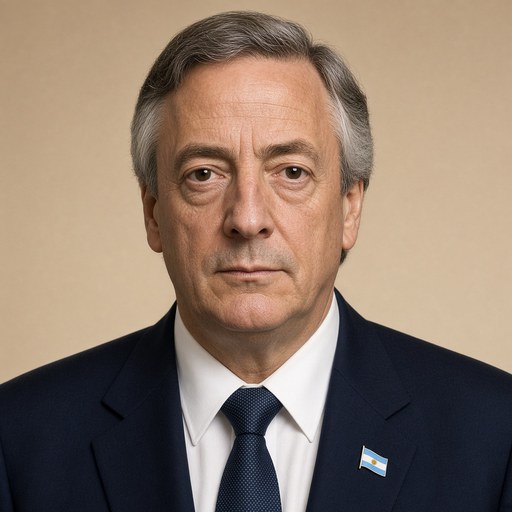
- Kirchner addressed a Peronist rally at Ferro on March 11, 2010, commemorating the 1973 electoral triumph and rallying support for President Cristina Fernández de Kirchner's government.
- Main themes
- Peronist movement and legacy, Cristina Fernández de Kirchner's presidency, national reconstruction and economic growth, human rights and end of impunity, media law and institutional reform, labor rights and collective bargaining, IMF debt renegotiation, social inclusion and justice, political militancy and courage, Argentine national identity
- Duration
- ~25 min
- Words
- 3,050
- Sentences
- 64
- Readability
- 33
- Grade
- 20.4
- Syntax
- 3.78
- Vocabulary
- 2.10
Translated from Spanish
The broad sphere of national life a sentence belongs to. Every sentence has an Arena, so it is the denominator the other indices are read against.
Other64 sentences in 29 paragraphs
First of all, I want to bring you a deep hug and a truly great thank you, with both arms and my heart, from our comrade President Cristina, who deeply appreciates you. She is with us here sharing this wonderful event, which I believe is very important in the framework of these tribunes, taking the message from that March 11 when many of us, who are here today and others who are not, accompanied with all love, with all loyalty in our struggle General Perón so that the Cámpora-Solano Lima formula would triumph for the good of Argentina, as we said back then.
Millions of workers, millions of comrades: students, university students, intellectuals, actors, people from science and technology, society as a whole bet on that return of the national and popular movement. That is why we, today, after having traveled the path we have taken since May 25, can look into the eyes of all Argentines who may think the same or differently than us, but no one can deny us the courage and the determination to defend the idea of Homeland, of people, and of Nation that we have.
We are not behind the easy discourse, or the discourse that those who study public opinion tell us what to say to each Argentine at every moment that they want to hear. That discourse is the discourse of Argentine frustrations; we must be cadres and militants with courage and we have to say what we think, even if some do not like it. In time, they will understand us, they will take our hand and accompany us in the construction of the Homeland for all, the Homeland of all Argentines.
We had to carry out the reconstruction of the Supreme Court of the Nation and we did so by seeking with all our effort – and God willing it will be so in the transcendence of time – to build a Court independent of all sectors of power and of the Government, a Court that gives the people peace in the administration of Justice, regardless of the pressures that may exist.
We did everything, we called for clear, open, and public competitions; we put all our strength to return and to achieve that in Argentina impunity would come to an end. Among all Argentines – but driven by us – the Law of Obedience Due, the Full Stop Law, and the pardon that shamed the conscience and history of all Argentines came to an end.
We returned to have collective bargaining in the Homeland, we returned to salary discussions; the deductions and freezing of pensions ended; we ended the subjugation to the International Monetary Fund and we made the most important debt renegotiation that Argentina has ever had, with a saving of 70 billion dollars; we marched in the construction of the most important economic growth in the last 200 years; we generated 5 million jobs; we recovered 2 million retirees who had been left on the street and opened the door to hope, to the dream and vision of new times for young Argentines so that they can think however they want and have the right to study, to work, to education, and to the freedom to think.
I can assure you that Daniel and I worked intensely, with the support of all of you, but I also want to tell you the truth so that we can fully take advantage of this historic time. I, who share with her a life of struggles and conviction, feel proud of the comrade I have and of the President that Argentines have: the comrade of courage. Yes, I shed tears, not only because I love her, but because I admire her and because she is showing that the Argentine woman is determined to build a different Homeland to end the obscurantist agreement of politics, which has done so much harm to all of us.
When she took office and swore in as President of the Argentines, she clearly said that she did not come to do more of the same, not even more of the same as what this former president had done, but that she came to deepen the model because what had been done was done and now what needed to be done was to end inequities, deepen Justice, and improve institutional quality. But what was improving institutional quality for some? For the concentrated media groups, improving institutional quality was to make excessive conservative institutionalism to prevent transformations; making institutional quality meant that there would be no Media Law, because the Media Law – which does improve democracy and institutions – for the concentrated media groups is institutional deterioration. And our President took up the banner, and they knew it would be so.
That is why they attacked her from day one, but there was Cristina courageously putting in what she has to put in every day, getting up in the morning to take on that role of leader of the Argentines that she has and always willing, often enduring the insults and ingratitude of those who benefited greatly from the model and went out to say that her dream, the dream of the generation of many who are no longer here, who accompanied her, was to build a Homeland with justice, with equity, with inclusion, with joy, where possibilities would once again become a reality. And she did it, she made transcendent decisions, decisions that perhaps, because we have to speak as leaders, we have to speak the truth and without hypocrisy, perhaps even taught me – do not doubt it – that one should never renounce courage, nor should one speculate on whether it is more convenient or not. She said: “It is essential that the money of our retirees returns to be the money of our retirees and all Argentines so that one of the greatest expropriations we had to endure comes to an end.” And Cristina achieved it, and that is why the fury of some, who were financed with the money of retirees, among them the concentrated media groups, who financed themselves and sold their shares there, when they saw that that money was returning to the Argentine people, that it was returning to the economy, that it was becoming part of Argentine growth, they evidently became very upset and immediately in the collective bargaining – together with comrade Hugo – they generated the most important minimum wage in all of Latin America and deepened collective bargaining and the income of all Argentines.
Right there, without resting, she made the decision that many talked about, that filled television programs, but they talked and talked and when they arrived at the Government, they forgot and not only did they not do it but they deducted from our retirees, from the universities, from the workers. And Cristina – history will take note of it as the social measure, as the measure of recovery of a space, of a place, as the most important social claim measure of the last 50 years – signed and made the decision that the Universal Child Allowance would be that: universal for all Argentines. Based on that money that was recovered, 3.5 million Argentine children returned to school, Argentine children who regained their smiles, children who returned to dream that there is a flag and a Homeland that can contain them. Cristina continued to advance, you know that we de-debt the Homeland and from 160 percent of the debt in relation to GDP that we had in 2003, in 2008 we were at 39 percent in relation to debt-GDP. And now Cristina, deepening this issue with determination, made another courageous decision in the face of the international crisis, in the face of the fall of the Washington Consensus, in the face of the collapse of the financial bubble, our President did not do as they did in 1988, our President did not do as they did in the neoliberal decade of the 90s, our President did not do as those who governed in 2001, who in order to try to meet international commitments said, “we have to reach zero deficit.” And there they lowered the salaries of retirees, took money from universities, took money from the provinces with fiscal pacts, lowered the salaries of active personnel, fired people, and closed companies, carried out the “corralito,” and shot down all the dreams of Argentines, who are the same faces we hear speaking today.
And our President said: “If this economic model had the virtuous capacity to gather sufficient reserves, almost 50 billion dollars, those reserves are not there to be adored or for the economic groups to just look at them; they are reserves so that the Argentine people can continue to grow, so that salaries can continue to grow, so that the economy can continue to grow, so that we can continue to de-debt ourselves, so that we do not pay interest rates of 15 percent, so that we do not pay shameful commissions – like those of Brady and the megacanje – so that we do not continue to submit ourselves.” And then, she made the historic decision, a national, popular, and strategic decision to de-debt by paying with the reserves, and it is the Argentine people who are supporting her.
However, those same people who squandered Argentine wealth, those same people who knelt every day before the Fund, those same people who did not dare to responsibly exit convertibility, those same people who were interested in a pseudo-progressivism or sometimes using the goodwill of well-intentioned comrades but who implemented projects that were truly lamentable for the Argentine people, those same people who created the corralito where we saw the elderly, the sick, those who had saved their money banging on the banks to get it back, today say and stand with an almost apostolic situation saying almost messianic or fundamentalist saying do not touch the reserves because the salary of workers is at stake, those reserves that were gathered are precisely for the reserves to definitively face Argentine de-debt, so that the salary of workers can grow and not be the salary of workers that pays the adjustment in the Homeland and in Argentina, that adjustment that they want to have and that I can assure you that while this project governs the Homeland, the word adjustment will be to adjust the weight, to adjust anything, a screw, but the Argentine people must be given tools so that they have the concrete possibility of gradually improving their distribution and participation in the Gross Domestic Product.
Yesterday, some wanted to mimic or confuse what we said and I before you, wanting an open and frontist Peronism, wanting an alliance with the national, popular, and progressive sectors for the construction of the space and the transformation of the Homeland, is not the property of anyone, but the property of all Argentines who based on our flag and our loyalty to the principles of realization of the people as a whole, we must carry forward.
Yesterday I said and I repeat it, we, the elections go and come, the candidacies are chosen at the moments and times that correspond, but we, comrades, Argentines, friends, those who accompany us and those who do not accompany us on this path of what we also try to persuade them to accompany us, we tell you that it is essential to build a strategic project, to build the necessary cadres to give sustainability.
To achieve that, you know that in 1983 the decade of the first stage of democratic recovery and the beginning of the recovery and the end of impunity was lived with ups and downs, with many more downs than ups, but with some historical events like the trial of the Juntas that we have no problem in reclaiming.
In the 1990s, unfortunately, the neoliberal night arrived. In that decade that we began in 2003, we started the process of reconstruction of the homeland, of rights, of human rights, of work, of permanent effort, and with the arrival of Cristina the model deepens that must carry forward the distribution of income, technological advancement, the construction of a country with equal opportunities, the possibilities of education for all, the possibilities of universities linked to the construction and the national project of the country that we need and not islands, we need to build spaces, forums, and others that determine an Argentina suitable for the evolution of the times.
And that evolution of the times, in the decade to come, from 2010 to 2020, must have as a central and joint fact the recovery of the participation of workers in the Gross Domestic Product so that it definitively reaches 50 percent of workers in the participation of that Gross Domestic Product.
And what I said, that it is also essential to understand that we are not eternal and not to confuse as many do what they do in front, that they make the machine of impediment. We know that we have a historic time to fulfill and then accompany in the framework of generational transfer, of opening to the new generations of Argentina so that the processes can be transformed. And there I said that I hoped that the President who started the process of income distribution, the deepening of that process in this historical stage that was Cristina, God willing that she is embraced in 2020 by a young person or a young woman, by one of you who is here and others, embracing because we have managed to achieve that greatness that all Argentines needed.
We are clear that there are no individual styles, but that we must return to the collective construction of politics, and we have the responsibility and humility to be in the place or trench that corresponds at each historical moment. But we also know that it is essential that this evolution, this evolutionary process that brings growth, that brings the formation of new thoughts, that brings the formation of new syntheses, that is oxygenated by people who come in truly young to contribute all their creative capacity and the understanding of the evolutionary capacity of the times, must have in that national and popular space, which has as its backbone the Peronism of Perón, of Eva, of our martyrs, of our disappeared, of our Grandmothers, of our Mothers, of our intellectuals, it must be the synthesis of the realization that we must carry forward.
And to conclude, if you allow me, I said it and I repeat it: I believed that they wanted a Parliament without majorities so that the Argentine people could witness a serious, responsible debate of different ideas but with intellectual quality and proposals; but it is clear, and this is what they criticized us for in terms of form, we are really in kindergarten next to these people with the forms they have. Those are the democratic forms they have, for God's sake!
To those who so much... Just look at what lessons for future generations. I sat down yesterday to watch, as an Argentine citizen, a debate between our colleague, the president of the Central Bank, and the Commission of Agreements. What did we get to see? Our president of the Central Bank explicitly explained with absolute intellectual quality the reasons for everything, and those who talked so much about form said, "We don't want to ask anything, just leave." That is the way that men and women of that supposed democratic scheme have. For God's sake!
We do not want to insult them, let us not insult anyone; we just ask that they reflect, that we have the debates that need to be had. Sometimes from debates, a truth emerges that helps to clarify and that leads to a superior synthesis.
But I ask here, with the history and suffering of 2001 of the Argentines, for the history of how hard it was to lift this Argentina... From here, we send a fraternal hug to all Argentines.
I can assure you that I believe that those of us who have the most responsibility must generate the silver bridges of coexistence in difference and without renouncing the idea or conviction, that truly help to demonstrate that politics can build the system that Argentines need, that ends these attitudes, this machine of obstruction, that if it weren't for Cristina's courage, the country would be paralyzed; if it weren't for our President's courage, millions of workers would be in trouble.
That is why from here, this March 11, we truly call on you to defend your ideas, not to get angry anymore, not to get nervous, and having talked so much about form, to recover the forms, and in that way, you will help the country to move forward much better.
And to you, I close with a message from Cristina: that you have the certainty, that you have the confidence, that she is here and will give everything to deepen the model, transform the homeland, lift with all our strength the smoking chimneys of industry and work, deepen educational, cultural, and labor reforms, and that she embraces you to carry forward the transformation of the homeland. She does not believe in anything else and in the deepening of income distribution.
Thank you very much, comrades, sing, dream, strength. We, who have militated since we were very young, know that the evolution of the times leads to thousands of young people in the country, millions who will lead Argentina in the coming years, in the coming decades, and it will be for the good of the homeland. Let us lay the foundations that we need to lay in this time.
Thank you very much, Daniel; thank you very much, Hugo; thank you very much, fellow deputies, senators, Emilio, Chino, a hug, thank you, all of you, I would like to hug you, let us dream, it is so beautiful to dream and work for a homeland for all, it is so wonderful to have dreams and it is so beautiful to remember our comrades who are not here, that we are here to fulfill the message for which they gave their lives.
Thank you very much, and as always, I embrace you from the heart.
The original Spanish. The tags above are read on the English translation's sentences.
En primer lugar, les quiero traer un abrazo profundo y un agradecimiento realmente muy grande, con los dos brazos y el corazòn, de nuestra compañera Presidenta Cristina, que les agradece profundamente. Ella está con nosotros acá compartiendo este maravilloso acto, en el cual creo que es muy importante en el marco de estas tribunas, tomando el mensaje de aquel 11 de marzo cuando muchos de nosotros, que hoy estamos aquí y otros que no están, acompañamos con todo amor, con toda lealtad en nuestra lucha al General Perón para que triunfara la fórmula Cámpora-Solano Lima por el bien de la Argentina, como decíamos nosotros en aquel tiempo.
Millones de trabajadores, millones de compañeros: estudiantes, universitarios, intelectuales, actores, gente de la ciencia y la tecnología, la sociedad toda apostó a aquel regreso del movimiento nacional y popular. Por eso nosotros, hoy, después de haber recorrido el camino que transitamos, desde el 25 de mayo, de poder mirar a los ojos de todos los argentinos se puede pensar igual o distinto que nosotros, pero nadie nos puede negar el coraje y la decisión de defender la idea de Patria, de pueblo y de Nación, que tenemos.
No estamos detrás del discurso fácil, o de discurso que aquel que estudia la opinión pública nos diga qué hay que decir a cada argentino en cada momento lo que quiere escuchar. Ese discurso es el discurso de las frustraciones argentinas, nosotros debemos ser cuadros y militantes con coraje y tenemos que decir lo que pensamos, así a algunos no les guste. Ya en el tiempo nos van a entender, nos van a tomar la mano y nos van a acompañar, para la construcción de la Patria de todos, la Patria de todos los argentinos.
Tuvimos que llevar adelante la reconstrucción de la Corte Suprema de la Nación y lo hicimos buscando con todos nuestros esfuerzo – y Dios quiera que así sea en la trascendencia de los tiempos – de construir una Corte independiente de todos los sectores de poder y del Gobierno, de una Corte que le de al pueblo una tranquilidad en la administración de Justicia, independientemente de las presiones que puedan existir.
Hicimos todo, convocamos a concursos claros, abiertos y públicos; pusimos toda nuestra fuerza para volver y para lograr que en la Argentina se termine la impunidad. Entre todos los argentinos – pero impulsados por nosotros – se terminó con la Ley de Obediencia Debida, con el Punto Final y con el indulto que avergonzaba la conciencia y la historia de todos los argentinos.
Volvimos a tener paritarias en la Patria, volvimos a la discusión salarial; se terminó con el descuento y el congelamiento de los jubilados; se terminó con el sometimiento al Fondo Monetario Internacional e hicimos la renegociación de deuda más importante que haya tenido la Argentina, con un ahorro de 70 mil millones de dólares; marchamos en la construcción del crecimiento económico más importante de los últimos 200 años; generamos 5 millones de puestos de trabajo; recuperamos a 2 millones de jubilados que habían quedado en la calle y le abrimos la puerta a la esperanza, al sueño y la visión de los nuevos tiempos a los jóvenes argentinos para que piensen como piensen tengan derecho al estudio, al trabajo y la educación y a la libertad de pensar.
Yo les puedo asegurar que con Daniel trabajamos intensamente, con el apoyo de todos ustedes, pero también les quiero decir la verdad para que aprovechemos a fondo este tiempo histórico, yo que comparto con ella una vida de luchas y de convencimiento, me siento orgulloso de la compañera que tengo y de la Presidenta que tienen los argentinos: la compañera coraje. Sí, se me caen lágrimas, no sólo porque la amo, sino porque la admiro y porque está mostrando que la mujer argentina está decidida a construir una Patria diferente para terminar el acuerdo oscurantista de la política, que tanto daño nos ha hecho a todos.
Ella, cuando tomó y juró como Presidenta de los argentinos, con claridad dijo que no venía a hacer más de lo mismo, ni siquiera más de lo mismo de lo que había hecho este ex presidente, sino que venía a profundizar el modelo porque lo hecho realizado estaba y ahora lo que había que hacer era terminar con las inequidades, profundizar la Justicia, mejorar la calidad institucional. ¿Pero qué era para algunos mejorar la calidad institucional? Para los grupos concentrados mediáticos mejorar la calidad institucional era hacer exceso de institucionalismo conservador para impedir las transformaciones; hacer calidad institucional era que no hubiera Ley de Medios, porque la Ley de Medios – que si mejora la democracia y las instituciones – para los grupos concentrados mediáticos es el desmejoramiento institucional. Y nuestra Presidenta tomó la bandera, y ellos sabían que iba a ser así.
Por eso la atacaron desde el primer día, pero ahí estuvo Cristina coraje poniendo lo que tiene que poner cada día, levantándose a la mañana para tomar como corresponde ese rol de conductora de los argentinos que tiene y dispuesta siempre, soportando muchas veces el agravio y la ingratitud de aquellos que mejoraron muchísimo con el modelo y salió a decir que el sueño de ella, el sueño de la generación de muchos que hoy no están, que la acompañaron a ella, era construir una Patria con justicia, con equidad, con inclusión, con alegría, donde las posibilidades vuelvan a ser una realidad. Y lo hizo, tomó decisiones trascendentes, decisiones que por ahí, porque tenemos que hablar los dirigentes, tenemos que hablar con la verdad y sin hipocresías, por ahí me enseñaron hasta mí – no tengan dudas- que nunca hay que renunciar al coraje, ni hay que estar especulando si es más conveniente o no. Ella dijo: “es fundamental que la plata de nuestros jubilados vuelva a ser de nuestros jubilados y todos los argentinos para que se termine una de las expoliaciones más grande que tuvimos que tener”. Y Cristina logró, y por eso la furia de algunos, que se financiaban con la plata de los jubilados, entre ellos los grupos concentrados mediáticos, que se financiaban y vendían sus acciones allí, cuando vieron que esa plata volvía al pueblo argentino, que volvía a la economía, que volvía a ser parte del crecimiento argentino, evidentemente se pusieron de muy mal humor e inmediatamente en las paritarias – junto al compañero Hugo – generaron el sueldo mínimo vital y móvil más importante de toda Latinoamérica y profundizaron las paritarias y el ingreso de todos los argentinos.
Allí no más, sin descansar, tomó la decisión de la que muchos hablaban, que llenaban los programas de televisión, pero hablaban y hablaban y cuando llegaron el Gobierno se olvidaron y no sólo no lo hicieron sino que le descontaban a nuestros jubilados, a las universidades, a los trabajadores. Y Cristina – la historia lo tendrá en cuenta como la medida social, como la medida de recuperación de un espacio, de un lugar, como la medida reinvidicativa social más importante de los últimos 50 años, firmó y tomó la decisión que la Asignación Universal por Hijo llegue a ser eso: universal para todos los argentinos. En base a ese dinero que se recuperó 3.500 mil argentinos, pibes argentinos que vuelven a las escuelas, pibes argentinos que recuperan la sonrisa, pibes que vuelven a soñar que hay una bandera y una Patria que lo puede contener. Cristina siguió avanzando, ustedes saben que nosotros desendeudamos la Patria y del 160 por ciento de la deuda producto, deuda que teníamos en el 2003, en el 2008 estábamos en el 39 respecto a la relación deuda-producto. Y ahora Cristina profundizando este tema con decisión toma otra decisión de gran coraje ante la crisis internacional, ante la caída del Consenso de Washington, ante la caída de la burbuja financiera nuestra Presidenta no hizo como hicieron en 1988, nuestra Presidenta no hizo como hicieron en la década neoliberal de los 90’, nuestra Presidenta no hizo como quienes gobernaron en el 2001, que para tratar de hacer frente a los compromisos internacionales dijeron. “tenemos que llegar al déficit cero”. Y allí le bajaron el sueldo a los jubilados, le quitaron la plata a las universidades, le quitaron la plata a la provincia con los pactos fiscales, le quitaron y bajaron los sueldos al personal activo, despidieron gentes y cerraron empresas, llevaron adelante el “corralito”, llevaron y fusilaron todos los sueños de los argentinos, que son las mismas caras que hoy escuchamos hablar.
Y nuestra Presidenta dijo: “si este modelo económico tuvo la capacidad virtuosa de juntar la suficiente reserva, casi 50 mil millones de dólares, esas reservas no las tendremos ahí para adorarlas o para que solamente la miren los grupos económicos, son las reservas para que el pueblo argentino pueda seguir creciendo, para que pueda seguir creciendo el salario, para que pueda seguir creciendo la economía, para que podamos seguir desendeudándonos, para que no paguemos tasas del 15 por ciento, para que no paguemos comisiones vergonzosas – como la del Brady y el megacanje -, para que no sigamos sometiéndonos”. Y entonces, tomó la decisión histórica, una decisión nacional, popular y estratégica de desendeudarse pagando con las reservas y es el pueblo argentino el que la está apoyando.
Sin embargo, los mismos que dilapidaron la riqueza argentina, los mismos que se arrodillaban todos los días ante el Fondo, los mismos que no se animaron a salir con responsabilidad de la convertibilidad, los mismos que le interesó con un pseudoprogresismo o utilizando a veces el pase de compañeros bien intencionados pero que implementaron proyectos que fueron realmente lamentables para el pueblo argentino, los mismos que generaron el corralito donde veíamos a los viejos, a los enfermos, a los que habían ahorrado su dinero golpeando los bancos para que se lo devuelvan hoy dicen y se paran con una situación casi apostólica diciendo casi mesiánica o fundamentalista diciendo no toquemos las reservas porque está en juego el salario de los trabajadores, esas reservas que se juntaron precisamente son para que las reservas hagan frente definitivamente al desendeudamiento argentino, para que crezca el salario de los trabajadores y no sea el salario de los trabajadores el que pague el ajuste en la patria y en la Argentina, ese ajuste que quieren tener ellos y que les puedo asegurar que mientras este proyecto gobierne la patria, la palabra ajuste será para ajustar el peso, para ajustar cualquier cosa, un tornillo, pero al pueblo argentino hay que darle herramientas para que tengan la posibilidad concreta de ir mejorando paulatinamente su distribución y participación en el Producto Bruto Interno.
En el día de ayer algunos quisieron mimetizar o confundir lo que dijimos y yo ante ustedes, queriendo un peronismo abierto y frentista, queriendo una alianza con los sectores nacionales populares y progresistas por la construcción del espacio y la transformación de la patria, no es patrimonio de nadie, sino es patrimonio de todos los argentinos que en base a nuestra bandera y nuestra lealtad con los principios de realización de pueblo en su conjunto, tenemos que llevar adelante.
Yo en el día de ayer dije y lo vuelvo a repetir, nosotros, las elecciones van y vienen, las candidaturas se eligen en los momentos y en los tiempos que corresponden, pero nosotros, compañeros, argentinos, amigos, quienes nos acompañan y quienes no nos acompañan por este camino de lo que también tratamos de persuadirlos para que nos acompañen, nosotros les decimos que es fundamental construir un proyecto estratégico, construir los cuadros necesarios para darle sustentabilidad.
Para poder lograr eso, ustedes saben que en el año ’83 se vivió la década de la primera etapa de la recuperación democrática y el inicio de la recuperación y el fin de la impunidad con idas y con vueltas, con muchas más vueltas que con idas, pero con algunos hechos históricos como el juicio a la Juntas que nosotros no tenemos problemas en reivindicarlos.
En la década del ’90, lamentablemente llegó la noche neoliberal. En esa década que iniciamos en el 2003, empezamos el proceso de reconstrucción de la patria, de los derechos, de los derechos humanos, del trabajo, del esfuerzo permanente y con la llegada de Cristina se profundiza el modelo que tiene que llevar adelante la distribución del ingreso, el avance tecnológico, la construcción de un país con posibilidades igualitarias, las posibilidades de la educación para todos, las posibilidades de universidades ligadas a la construcción y al proyecto nacional de país que nosotros necesitamos y no islas, necesitamos construir espacios, foros y demás que determinen una Argentina adecuada a la evolución de los tiempos.
Y esa evolución de los tiempos, en la década que viene, que va del 2010 al 2020, tiene que tener como hecho central y conjunto la recuperación de la participación de los trabajadores en el Producto Bruto Interno para que definitivamente llegue al 50 por ciento de los trabajadores en la participación de ese Producto Bruto Interno.
Y yo qué decía, que también es fundamental entender que nosotros no somos eternos y no confundir como se confunden muchos de lo que hacen frente, que hacen la máquina de impedir. Nosotros sabemos que tenemos un tiempo histórico que cumplir y después acompañar en el marco del trasvasamiento generacional, de la apertura a las nuevas generaciones de la Argentina para que los procesos se vayan tranformando. Y allí decía que esperaba que la Presidenta que empezó el proceso de la distribución del ingreso, la profundización de ese proceso en esta etapa histórica que era Cristina, Dios quiera que esté abrazada en el 2020 a una joven o a un joven, a alguno de ustedes que está acá y demás, abrazándose porque hemos logrado concretar esa grandeza que necesitaban todos los argentinos.
Nosotros tenemos en claro que no hay estilos individuales, sino que tenemos que volver a la construcción colectiva de la política y tenemos la responsabilidad y la humildad de estar en el lugar o la trinchera que toque en cada momento histórico. Pero también sabemos que es fundamental que esa evolución, ese proceso evolutivo que trae el crecimiento, que trae la formación de nuevos pensamientos, que trae la formación de nuevas síntesis, que se oxigena con gente que viene realmente joven a aporta toda su capacidad creativa y el entendimiento de la capacidad evolutiva de los tiempos, tiene que tener en ese espacio nacional y popular que tiene como columna vertebral al peronismo de Perón, de Eva, de nuestros mártires, de nuestros desaparecidos, de nuestras Abuelas, de nuestras Madres, de nuestros intelectuales, tiene que ser la síntesis de la realización que tenemos que llevar adelante.
Y para terminar, si ustedes me permiten, yo lo dije y lo vuelvo a repetir: yo creía que querían que haya un Parlamento sin mayorías para que el pueblo argentino pueda presenciar un debate serio, responsable, de ideas diferentes pero con calidad intelectual y con propuestas; pero está claro, y eso que a nosotros nos criticaban por la forma, somos realmente del jardín infantes al lado de esta gente con las formas que tienen. Esas son las formas democráticas que tienen, ¡por Dios!
A los que tanto…Fíjense ustedes qué enseñanzas para las futuras generaciones. Yo me senté ayer para ver como un ciudadano argentino más un debate entre nuestra compañero presidenta del Banco Central y la Comisión de Acuerdos. ¿Qué es lo que nos tocó ver? Explicitó, explicó con absoluta calidad intelectual nuestra presidenta del Banco Central del por qué de todo y los que hablaban tanto de las formas “no le queremos preguntar nada, váyase”. Esa es la forma que tienen los hombres y las mujeres de ese supuesto esquema democrático. ¡Por Dios!
Nosotros no los queremos insultar, no insultemos a nadie; nosotros le pedimos nomás que reflexionen, que demos los debates que haya que dar. A veces de los debates siempre sale una verdad que ayuda a esclarecer y que haya una síntesis superadora.
Pero les pido acá, con la historia y el sufrimiento del 2001 de los argentinos, por la historia de que nos costó tanto levantar esta Argentina…Desde acá, nosotros le mandamos un fraternal abrazo a todos los argentinos.
Yo les puedo asegurar que creo que los que más responsabilidad tenemos, tenemos que generar los puentes de plata de convivencia en la diferencia y sin renunciar a la idea ni a la convicción, que realmente ayuden a demostrar que la política puede construir el sistema que necesitan los argentinos, que terminen con estas actitudes, con esta máquina de impedir, que si no fuera por el coraje de Cristina, el país estaría paralizado, si no fuera por el coraje de nuestra Presidenta estarían millones de trabajadores en problemas.
Por eso de aquí este 11 de marzo, los llamamos realmente a que defiendan sus ideas, que no se enojen más, que no se pongan nerviosos y tanto hablaron de las formas que recuperen las formas y de esa manera van a ayudar a que el país pueda marchar muchísimo mejor.
Y a ustedes cerrarles con un mensaje de Cristina: que tengan la seguridad, que tengan la confianza, que ella está y va a dejar todo por profundizar el modelo, transformar la patria, levantar con todas nuestras fuerzas las chimeneas humeantes de la industria y el trabajo, profundizar las reformas educaciones, culturales y laborales y que los abraza para llevar adelante la transformación de la patria. No cree en otra cosa y la profundización de la distribución del ingreso.
Muchas gracias, compañeros, canten, sueñen, fuerza. Nosotros, que desde muy jóvenes militamos, sabemos que la evolución de los tiempos lleva a que hay miles de jóvenes en el país, millones que van a conducir la Argentina en los próximos años, en los próximos lustros y va a ser para bien de la patria. Nosotros hagamos las bases que tenemos que hacer en este tiempo.
Muchísimas gracias Daniel; muchísimas gracias Hugo; muchísimas gracias compañeros diputados, senadores, Emilio, Chino, un abrazo, gracias, todos ustedes, me gustaría abrazarlos, soñemos, es tan lindo soñar y trabajar por una patria de todos, es tan hermoso tener sueños y es tan hermoso recordar a nuestros compañeros que no están, que nosotros estamos acá para cumplir el mensaje por el cual ellos dejaron su vida.
Muchísimas gracias y como siempre los abrazo sobre el corazón.