




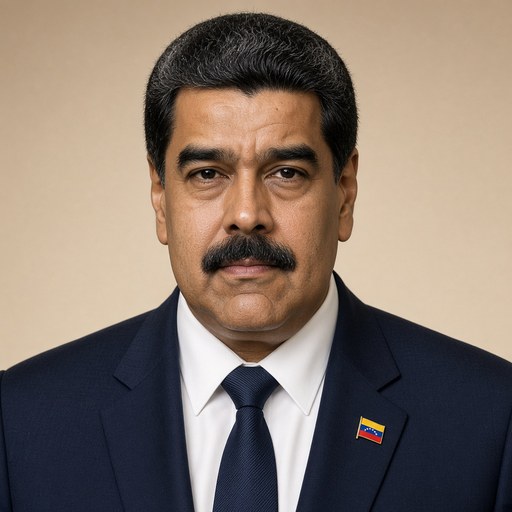
Intervention by President Nicolás Maduro at the Meeting of Heads of State and Government on the Architecture of International Debt and Liquidity.
 Nicolás Maduro · President of Venezuela
- Context
- Maduro addressed a UN-convened meeting of heads of state on international debt and liquidity architecture on March 30, 2021, advocating for debt relief and sanctions removal.
- Main themes
- International debt restructuring, COVID-19 pandemic economic impact, developing countries' vulnerability, neoliberalism critique, unilateral sanctions against Venezuela, global economic recovery, sovereignty and financial autonomy, poverty and inequality, G-20 debt moratorium, alternative financial architecture, solidarity and complementarity
- Duration
- ~5 min
- Words
- 619
- Sentences
- 27
- Readability
- 21
- Grade
- 15.9
- Syntax
- 2.97
- Vocabulary
- 2.32
Translated from Spanish
The broad sphere of national life a sentence belongs to. Every sentence has an Arena, so it is the denominator the other indices are read against.
Other27 sentences in 14 paragraphs
Mr. António Guterres, Secretary-General of the United Nations,
Excellencies, Heads of State and Government,
I participate today on this stage to highlight the importance that Venezuela places on building a joint path to face the extraordinary circumstances that humanity is experiencing.
For a year now, the world has been battling an unprecedented pandemic, the economic and social consequences of which are still unpredictable.
In the case of the Latin American and Caribbean region, a contraction of Gross Domestic Product (GDP) of 7.7% was recorded in 2020, while poverty and unemployment rates increased. Worldwide, about 131 million people have fallen into poverty. In the global north, the paralysis of production and consumption has pushed some of the world's most powerful economies into recession, while the social protection systems in those countries, due to neoliberalism, have proven to be a failure.
Mr. Secretary-General,
In the face of the pandemic, we are all vulnerable, but not in the same way, as the pre-existing asymmetries have only deepened further. Any exclusive advance of one country or region quickly loses ground with the advance of the disease in another. COVID-19 will not be overcome in wealthy countries until all countries in the world have overcome it; the same will happen in the economic aspect. There will be no global economic recovery until the last economy in the world has overcome this crisis, and this compels us to a profound review of the conditions of debt, not only for the recovery of economies but to ensure that it does not become a weapon of control, blackmail, and domination against our countries, through a new external debt that could prove eternal.
Likewise, it is important to take into account the particular conditions of developing countries, especially the smaller economies. More than a temporary suspension of debt, a comprehensive restructuring is needed; without this meaning the cession of their sovereignty.
At the beginning of the pandemic, there was an agreement among the G-20 for a moratorium on the debt service of the poorest countries for their official debt. However, the reluctance of private creditors to join this policy limited the scope of this initiative. We, from Venezuela, call for the strengthening of such initiatives, enhancing the global participation of all actors to alleviate the debt of developing countries.
For our part, I must say that Venezuela calls for an end to the perverse and manipulated use that some powers of the international financial system make to seize the assets of developing countries deposited in the banks of those countries. In this regard, Venezuela repudiates the imposition of unilateral, criminal, and illegal coercive measures against our country, which have resulted in a 99% decrease in national income.
These violations of international law are progressive and systematic; they affect the entire Venezuelan population indiscriminately, constituting a flagrant attack against humanity. For this reason, from Venezuela, we demand once again the cessation of economic, financial, and commercial blockades against our peoples.
Finally, Mr. Secretary-General, we believe that alternative solutions must be sought to the prevailing neoliberal model based on competition, exploitation, and the political ambitions of some powers. We must strengthen the course with initiatives based on solidarity and complementarity; for this, from Venezuela, we reaffirm our commitment to contribute all our work in the search for solutions to the current crisis, starting from the transformation of the financial system and moving towards the reduction of inequality.
It is urgent to create a different community of destiny, a common destiny for humanity. It is urgent to overcome the mistakes of neoliberalism that have ruined the world. We will not tire of saying it: Another world and another life are possible!
Thank you very much, excellencies, Heads of State and Government.
The original Spanish. The tags above are read on the English translation's sentences.
Señor António Guterres, Secretario General de la Organización de las Naciones Unidas,
Excelentísimos Jefes de Estado y de Gobierno,
Participo el día de hoy en este escenario para resaltar la importancia que Venezuela otorga a la construcción de un camino conjunto para enfrentar las extraordinarias circunstancias que enfrenta la humanidad.
Desde hace un año el mundo batalla contra una pandemia sin precedentes, cuyas consecuencias económicas y sociales son aún impredecibles.
En el caso de la región latinoamericana y caribeña, se ha registrado una contracción del Producto Interno Bruto (PIB) del 7,7% en el año 2020, a la vez que se incrementaron los índices de pobreza y desempleo. En el mundo, unos 131 millones de personas han caído en la pobreza. En el norte global, la parálisis de la producción y del consumo, ha puesto a algunas de las economías más poderosas del mundo en recesión, mientras que los sistemas de protección social que hay en esos países, por el neoliberalismo, han demostrado ser un fracaso.
Señor, Secretario General
Frente a la pandemia todos somos vulnerables, pero no de igual manera, pues las asimetrías precedentes no han hecho sino ahondarse más y más. Cualquier avance exclusivo de un país o región, enseguida pierde con el avance de la enfermedad en otro. No se va a superar el COVID-19 en los países ricos hasta tanto todos los países del mundo lo hayan superado; lo mismo va a pasar en el aspecto económico. No va a haber una recuperación económica global, hasta que la última economía del mundo haya superado esta crisis, y eso nos obliga a una revisión profunda de las condiciones de la deuda, no solo para la recuperación de las economías, sino para que ésta no se vaya a convertir en un arma de control, chantaje y dominación contra nuestros países, a través de una nueva deuda externa, que pudiera resultar eterna.
De igual manera, es importante que se tome en cuenta las condiciones particulares de los países en desarrollo, en especial de las economías más pequeñas. Más que una suspensión temporal de la deuda, se necesita una reestructuración integral; sin que ello signifique la cesión de su soberanía.
Al principio de la pandemia hubo un acuerdo entre el G-20 para una moratoria del servicio de la deuda de los países más pobres para su deuda oficial. Sin embargo, la reticencia de los acreedores privados para sumarse en esta política hizo que esta iniciativa tuviera un alcance muy limitado. Hacemos desde Venezuela un llamado a reforzar este tipo de iniciativas, fortaleciendo la participación global de todos los actores para aliviar la deuda de los países en desarrollo.
Por su parte, tengo que decir que Venezuela hace un llamado a cesar la utilización perversa y manipulada que hacen algunas potencias del sistema financiero internacional para hacerse, para secuestrar los activos de los países en desarrollo, depositados en los bancos de esos países. En ese sentido, Venezuela repudia la imposición de las medidas coercitivas unilaterales, criminales e ilegales, en contra de nuestro país, las cuales han traído consigo la disminución del ingreso nacional en un 99%.
Estas medidas violatorias del derecho internacional son progresivas y sistemáticas; afectan a toda la población venezolana de forma indiscriminada, constituyendo un atentado flagrante contra la humanidad. Por esta razón, desde Venezuela exigimos, una vez más, el cese de los bloqueos económicos, financieros y comerciales contra nuestros pueblos.
Finalmente, Señor Secretario General, creemos que se deben buscar soluciones alternativas al modelo neoliberal imperante basado en la competencia, en la explotación y en las ambiciones políticas de algunas potencias. Hay que fortalecer el curso con iniciativas basadas en la solidaridad, en la complementariedad; para ello, desde Venezuela reafirmamos nuestro compromiso con aportar todo nuestro trabajo en la búsqueda de soluciones a la crisis actual, partiendo de la transformación del sistema financiero y avanzando hacia la reducción de la desigualdad.
Es urgente crear una comunidad de destino diferente, de destino común de la humanidad. Es urgente superar los errores del neoliberalismo que han arruinado al mundo. No nos cansaremos de decirlo: ¡Otro mundo y otra vida son posibles!
Muchas gracias, excelentísimos Jefes de Estado y de Gobierno.