




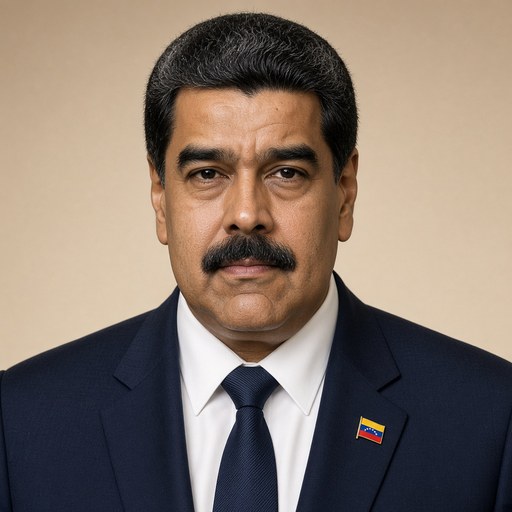
Intervention by President Nicolás Maduro at the 46th session of the UN Human Rights Council.
 Nicolás Maduro · President of Venezuela
- Context
- Maduro addressed the 46th session of the UN Human Rights Council on February 22, 2021, defending Venezuela's human rights record and condemning Western sanctions.
- Main themes
- Unilateral coercive measures and sanctions against Venezuela, human rights, COVID-19 pandemic response, multilateralism, Bolivarian Revolution and social welfare state, UN Human Rights Council cooperation, humanitarian crisis, health as a fundamental right, UN Special Rapporteur findings, regime change interference, Venezuelan assets abroad, international law violations
- Duration
- ~9 min
- Words
- 1,039
- Sentences
- 33
- Readability
- 21
- Grade
- 18.0
- Syntax
- 3.46
- Vocabulary
- 2.32
Translated from Spanish
The broad sphere of national life a sentence belongs to. Every sentence has an Arena, so it is the denominator the other indices are read against.
Other33 sentences in 19 paragraphs
I am pleased to attend this important session of the Human Rights Council on behalf of the people of Venezuela. The serious and unexpected circumstances of COVID-19 that humanity faces demand greater commitment from world leaders in the work for a better, common, and shared destiny.
The COVID-19 pandemic has claimed the lives of 2 million 400 thousand people and has infected more than 109 million worldwide, exacerbating social injustices and inequalities. An emergency of such magnitude has highlighted the need to recognize health as a fundamental human right. Multilateralism is proving to be the only possible way to overcome global difficulties and build better living conditions for peoples. In this regard, we want to acknowledge the guiding work of the WHO, which has achieved coordination among states to prevent an even greater tragedy.
Venezuela, for its part, has managed to mitigate and control the pandemic thanks to a pre-existing social policy of public health, quality, and social security, and to the implementation of biosafety methodologies based on citizen participation, as well as the application of complementary scientific treatments that we offer to member states, with the utmost humility.
It has not been easy. Our homeland faces a multidimensional war aimed at destroying the inclusive social model of the Bolivarian Revolution. Actions of excessive pressure and persecution against our country, through the imposition of more than 450 unilateral and illegal coercive measures, have resulted in a blockade and an obsessive pursuit against the capacities of the state and Venezuelan society.
Through the so-called sanctions, Venezuela has been deprived of at least 30 billion dollars in cash, which are part of the Republic's assets abroad, resources that should have been, and must be, used to address health, food, and the comprehensive rights of our people. The kidnappers of the assets and resources of the Venezuelan state have shown great cruelty, even in pandemic circumstances, highlighting and disregarding the calls of the Secretary-General of the United Nations, the High Commissioner, and especially the Venezuelan people, and have increased economic aggression, generating a humanitarian crisis in a treacherous and premeditated manner.
Even in these hostile circumstances, we have made great efforts to guarantee the Bolivarian Social Welfare State, which has been deeply undermined by coercive, illegal, and unilateral sanctions. However, we will not stop the progress of programs aimed at ensuring the social security of the Venezuelan people. To this end, we have strengthened our cooperation with the United Nations System in an integrated manner, with all its specialized agencies, programs, and funds.
The Venezuelan government renewed in September 2020, for one more year, the Memorandum of Understanding with the Office of the High Commissioner for Human Rights to continue strengthening the ties of cooperation and technical assistance in the promotion and protection of human rights in Venezuela.
I reiterate that the Venezuelan state will work decisively with the actors of this Human Rights Council, and I also reaffirm that we will not accept the interference or intervention of any inquisitorial mechanism against our homeland Venezuela, which seeks to use the just political cause for a regime change by force in our country.
Those who believe that Venezuela will diminish the cooperation achieved with the Office of the High Commissioner for Human Rights as a consequence of these ideologized provocations from a group of governments are mistaken.
I would like to inform member states that just a few days ago, the visit of Dr. Alena Douhan, the UN Special Rapporteur on the negative impact of Unilateral Coercive Measures systematically applied against the Venezuelan people, concluded.
Dr. Alena Douhan carried out an extensive agenda of meetings that allowed her to dialogue with various political, business, and social actors about the reality of Venezuela. The conclusions of her preliminary report are compelling, demonstrating that the sanctions and unilateral coercive measures imposed by the US and the EU, as a deliberate tool to achieve regime change in Venezuela, flagrantly violate international law and all universal and regional human rights instruments.
The report specifically recognizes that these extraterritorial actions threaten the lives of the Venezuelan people and the full enjoyment of the economic and social rights democratically achieved in the last two decades.
The Rapporteur demanded the lifting of sanctions against Venezuela, the return of its assets, and guarantees for the Venezuelan state’s access to resources that have been illegally frozen worldwide, as well as access to the global financial system.
This is the cry of almost 30 million Venezuelans who are victims of these unilateral and illegal coercive measures, of this multidimensional economic aggression.
Despite the campaign against Venezuelan democracy and the boycotts orchestrated from Washington and Bogotá, on December 6, the Venezuelan people elected their new National Assembly, their new Legislative Power from among nearly 14 thousand candidates, belonging to 107 political organizations representing all ideological and political trends in the country. The day went peacefully, and the new parliamentary body is already legislating to further safeguard the political guarantees of the people of Venezuela.
In this sense, we reiterate our call for respect for the self-determination of peoples and join efforts to strengthen multilateralism, the conception of a multipolar world, free from hegemonies, while reaffirming our commitment to the fulfillment of the Sustainable Development Goals 2030. No aggression will divert our country from this noble purpose.
The Liberator Simón Bolívar, Liberator of America, stated 200 years ago that the most perfect system of government is one that provides its citizens with the greatest sum of possible happiness, the greatest sum of social security, and the greatest sum of political stability. This is what we believe, and we are here so that all actors of the Human Rights Council and the United Nations System can make these our principles in the United Nations System and jointly guarantee the security and stability of humanity.
Let us change the predatory capitalist system that has generated so much pain, death, and misery. Thinking about the future of the species, nothing is impossible; let us be capable of creating a system of justice and equity based on the pillars of respect for Human Rights, Social Rights, and International Law.
Thank you very much, ladies and gentlemen members of the Human Rights Council, Madam President, thank you very much.
The original Spanish. The tags above are read on the English translation's sentences.
Asisto en esta oportunidad con beneplácito y en nombre del pueblo de Venezuela a esta importante sesión del Consejo de Derechos Humanos. Las graves e inesperadas circunstancias del COVID-19 que enfrenta la humanidad exigen de los líderes mundiales mayor compromiso en el trabajo por un destino mejor, común y compartido.
La pandemia del COVID-19 ha cobrado la vida de 2 millones 400 mil personas y ha infectado a más de 109 millones en el mundo, exacerbando las injusticias y desigualdades sociales. Una emergencia de tal magnitud ha puesto en evidencia la necesidad de asumir la salud como un derecho humano fundamental. El multilateralismo está demostrando que es la única vía posible para superar las dificultades globales y construir mejores condiciones de vida para los pueblos. En este sentido, queremos reconocer el trabajo orientador de la OMS, que ha logrado las coordinaciones entre los Estados para evitar una tragedia aún mayor.
Venezuela, por su parte, ha logrado mitigar y controlar la pandemia gracias a una política social preexistente de salud pública, de calidad y de seguridad social, y a la implementación de metodologías de bioseguridad fundamentadas en la participación ciudadana, así como en la aplicación de tratamientos científicos complementarios que ponemos a la orden de los Estados miembros, con la mayor humildad.
No ha sido fácil. Nuestra Patria enfrenta una guerra multidimensional, orientada a acabar con el modelo social inclusivo de la Revolución Bolivariana. Acciones de presión desmedida y de persecución contra nuestro país, a través de la imposición de más de 450 medidas coercitivas unilaterales e ilegales, que han resultado en un bloqueo y una obsesiva persecución contra las capacidades del Estado y de la sociedad venezolana.
Por medio de las mal llamadas sanciones, Venezuela ha sido privada de al menos 30 mil millones de dólares en efectivo, que forman parte de los activos de la República en el exterior, recursos que debieron, y deben ser, utilizados para atender la salud, la alimentación y los derechos integrales de nuestro pueblo. Los secuestradores de los activos y recursos del Estado venezolano han demostrado una gran crueldad, incluso en circunstancias de pandemia, destacando y desacatando los llamados del Secretario General de Naciones Unidas, de la Alta Comisionada y, especialmente del pueblo venezolano, y han incrementado las agresiones económicas, generando una crisis humanitaria de manera alevosa y premeditada.
Aún en estas circunstancias hostiles, hemos hecho grandes esfuerzos para garantizar el Estado de Social de Bienestar Bolivariano, que hoy se ha visto profundamente vulnerado por las sanciones coercitivas, ilegales y unilaterales. No detendremos, sin embargo, la marcha de los programas dirigidos a garantizar la seguridad social del pueblo venezolano. Con este fin, hemos fortalecido nuestra cooperación con el Sistema de Naciones Unidas de manera integrada, con todos sus organismos especializados, programas y fondos.
El Gobierno venezolano renovó en septiembre del 2020, por un año más, el Memorando de Entendimiento con la Oficina de la Alta Comisionada de Derechos Humanos para continuar fortaleciendo los vínculos de cooperación y asistencia técnica en materia de promoción y protección de los derechos humanos en Venezuela.
Reitero que el Estado venezolano trabajará decididamente con los actores de este Consejo de Derechos Humanos, así como también ratifico que no aceptaremos la injerencia o intervención de ningún mecanismo inquisidor contra nuestra Patria Venezuela, que pretendan usar la justa causa política para un cambio de régimen por la fuerza en nuestro país.
Están equivocados quienes creen que Venezuela disminuirá la cooperación alcanzada con la Oficina de la Alta Comisionada de Derechos Humanos, como consecuencia de estas provocaciones ideologizadas de un grupo de gobiernos.
Me permito informar a los Estados miembros que hace pocos días culminó la visita de la Dra. Alena Douhan, Relatora Especial del Sistema de Naciones Unidas sobre las repercusiones negativas de las Medidas Coercitivas Unilaterales aplicadas sistemáticamente contra el pueblo venezolano.
La Dra. Alena Douhan realizó una amplia agenda de reuniones que le permitió dialogar con diversos actores políticos, empresariales y sociales sobre la realidad de Venezuela. Las conclusiones de su informe preliminar son contundentes, al demostrar que las sanciones y medidas coercitivas unilaterales aplicadas por EEUU y la UE, como herramienta deliberada para alcanzar un cambio de régimen en Venezuela, violan flagrantemente el derecho internacional y todos los instrumentos universales y regionales de derechos humanos.
El informe reconoce, concretamente, que estas acciones extraterritoriales atentan contra la vida del pueblo venezolano y contra el disfrute pleno de los derechos económicos y sociales conquistados democráticamente en las últimas dos décadas.
La Relatora exigió el levantamiento de las sanciones contra Venezuela, la devolución de sus activos y las garantías de acceso del Estado venezolano a los recursos que han sido ilegalmente congelados en el mundo, así como el acceso al sistema financiero mundial.
Este es el clamor de casi 30 millones de venezolanos y venezolanas víctimas de estas medidas coercitivas unilaterales e ilegales, de esta agresión económica multidimensional.
A pesar de la campaña contra la democracia venezolana y los boicots orquestados desde Washington y Bogotá, el pasado 6 de diciembre el pueblo venezolano eligió su nueva Asamblea Nacional, su nuevo Poder Legislativo de entre casi 14 mil candidatos y candidatas, pertenecientes a 107 organizaciones políticas representativas de todas las tendencias ideológicas y políticas del país. La jornada transcurrió en paz y el nuevo cuerpo parlamentario ya se encuentra legislando para blindar aún más las garantías políticas al pueblo de Venezuela.
Reiteramos, en ese sentido, nuestro llamado al respeto a la autodeterminación de los pueblos y sumamos esfuerzos para el fortalecimiento del multilateralismo, de la concepción de un mundo multipolar, sin hegemonismos, al tiempo que reafirmamos nuestro compromiso con el cumplimiento de los Objetivos de Desarrollo Sostenible 2030. Ninguna agresión desviará a nuestro país de este noble propósito.
El Libertador Simón Bolívar, Libertador de América, afirmó hace 200 años que el sistema de gobierno más perfecto es aquel que brinda a sus ciudadanos la mayor suma de felicidad posible, la mayor suma de seguridad social y la mayor suma de estabilidad política. Así lo creemos y estamos para que todos los actores del Consejo de Derechos Humamos y del Sistema de Naciones Unidas hagamos de estos nuestros principios en el Sistema de Naciones Unidas y garanticemos en conjunto la seguridad y la estabilidad de la humanidad.
Cambiemos el sistema capitalista depredador que tanto dolor, muerte y miseria ha generado. Pensando en el futuro de la especie nada es imposible, seamos capaces de crear un sistema de justicia y equidad sobre los pilares del respeto de los Derechos Humanos, de los Derechos Sociales y del Derecho Internacional.
Muchas gracias, señoras y señores miembros del Consejo de Derechos Humanos, señora Presidenta, muchas gracias.