




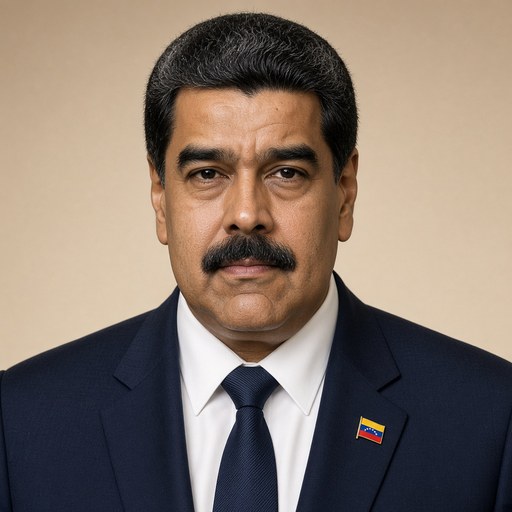
Speech by President Nicolás Maduro at the VI Summit of Heads of State of CELAC.
 Nicolás Maduro · President of Venezuela
- Context
- Maduro addressed the VI CELAC Heads of State Summit on September 18, 2021, urging Latin American unity, institutional renewal, and cooperative action on shared regional challenges.
- Main themes
- CELAC regional unity, Latin American and Caribbean integration, institutional reform of CELAC, pandemic response, climate change crisis, democracy and political dialogue, Hugo Chávez legacy, multilateralism, rejection of ideological division, council of ministers proposals, Bolivarian Revolution, neoliberalism
- Duration
- ~10 min
- Words
- 1,224
- Sentences
- 46
- Readability
- 35
- Grade
- 15.0
- Syntax
- 3.21
- Vocabulary
- 2.38
Translated from Spanish
The broad sphere of national life a sentence belongs to. Every sentence has an Arena, so it is the denominator the other indices are read against.
Other46 sentences in 16 paragraphs
The negotiation and discussion of these important documents, which in themselves reflect a good part of the concerns, anxieties, and proposals that have been made in today's dialogue, truly need to be reviewed and seen. And our constant concern is how to turn them into actions, how to convert them into common policies for Latin America and the Caribbean, into public policies that each manifestation of unitary will must convey to our peoples, which are collected in the central declaration, 44 items with substantial elements regarding the situation of the climate change crisis, the pandemic, and the social crisis. Likewise, with the special declarations.
I believe that the preparation process for this Summit has been extraordinary. I was fortunate in life to have been the chancellor of Commander Hugo Chávez and to have participated since 2008 in the steps that resulted in the construction of the first foundations of the Community of Latin American and Caribbean States. It was President Lula da Silva of Brazil. It is very unfortunate that President Jair Bolsonaro, with a denialist and divisive vision, withdrew Brazil from this Community that Brazil so desperately needs.
It was President Lula da Silva who called us together on December 17, 2008, in Bahia, Salvador de Bahia, and there the first step was taken at the Summit of Latin America and the Caribbean, called the CAL. It was President Felipe Calderón of Mexico, who, being from the Mexican and Latin American right, called us all together on February 23, 2010, in Cancun. And it was in Caracas, on December 2 and 3, 2011, under the presidency of Commander Hugo Chávez, revolutionary and Bolivarian Commander, that CELAC was founded in the greatest ideological diversity known, on that December 2 and 3, 2011, in Caracas. Then came the summits in Chile, Cuba, Costa Rica, Ecuador. But we had gone 4 years without a Summit. And CELAC began to wane. Unfortunately, once again in Latin America and the Caribbean, the unitary effort began to diminish. The liberators of our America lived through this 200 years ago, witnessing the decline of their unitary and emancipatory project.
It was Liberator Simón Bolívar who called us all together, what was then Southern America, before a colony of Spain, in June 1826 in Panama. In a few years, we will be commemorating the 200th anniversary of the Congress of Panama. And then came the division, the decline almost two centuries ago, until the path was resumed through this instrument: CELAC.
We deeply believe in the dialogue of the diverse, and I tell the President of Paraguay, you set the date, the place, and the time for a debate on democracy, in Paraguay, in Venezuela, and in Latin America, and we are ready to engage, you set the place. Or I say a little more, if you allow me the passion, you set the date, the place for a debate, President Lacalle; or you set it, President López Obrador, and Venezuela is ready to debate democracy, freedoms, resistance, revolution, and whatever needs to be debated, neoliberalism; in front of the peoples, in live and direct transmission, in private, however you want, with respect, without exclusions.
I really liked a phrase that one of you said, that we should not constitute ideological clubs. We should not ideologize international policies, I learned that as a chancellor, and do you know who taught me? Hugo Rafael Chávez Frías. International politics must serve International Law, the great interests of humanity, the great interests of the region, and we must turn the page on the divisionism that has taken root in Latin America, the harassment of the Bolivarian Revolution, and now the incessant harassment of the Cuban Revolution and the Nicaraguan Revolution. That is not the way. We would have enough stones to throw at some of you, but we do not come to throw stones; we come to extend a hand for work, for dialogue, and for unity in the great events.
We must take action steps; all of us here are heads of government, we are heads of state, and we live with the permanent anguish of what to do in time to save our peoples, to attend to our peoples, what do we do with this baggage of decisions, with this common doctrine that we are generating in diversity?
I reaffirm the proposal I sent you in writing and that I made publicly upon my unexpected arrival in Mexico yesterday: I believe we must go towards the construction of a new institutional framework for CELAC, we must resume what was started to be built, because here an institutional framework began to be constructed that was starting to function, the Council of Ministers of Economy, the Council of Ministers of Social Affairs, the Council of Ministers of Politics, existed, functioned, made proposals, there was very valuable interregional dialogue.
I propose that we immediately resume the three most important councils of ministers: the Social Council of Ministers to immediately address the agenda of the pandemic and climate change; the Economic Council of Ministers to address the proposals made here regarding trade integration, regarding a Treaty of Economic Development. And well, the chancellors maintain the course, the rhythm of the Council of Ministers of Politics.
I also propose, why not, of course there is a contradiction, President Lacalle, between the OAS and CELAC, it is the old contradiction of Monroeism and Bolivarianism, America for the Americans, who consider us their backyard, that remains intact, it remains so, beyond what can be said today. And Bolivarianism, Latin Americanism, unionism. And CELAC is our path, that is why I propose that we evaluate with a cool mind, with balance, the constitution of a General Secretariat of the Community of Latin American and Caribbean States, that we endow it with sufficient power so that this General Secretariat can take the reins of the construction of what is the dream that some of you have mentioned.
Some dream of the European Union, very well, excellent, but there are good experiences in the African Union, in ASEAN. So it seems important to us to take those steps in the development of a new institutional framework for our countries.
I want to publicly thank the government of Mexico for all the support they are giving to Venezuela in the peace and sovereignty dialogues that are taking place. I ask for the support of all the governments of Latin America and the Caribbean, because the only path Venezuela can take is dialogue, is peace, is reunion, is reconciliation, and I appreciate the majority support we have received here in favor of that dialogue.
Venezuela has elections this year, a mega-election on November 21. I invite you, come, to see the electoral campaign, to see the elections, to see how dictator Maduro calls for election number 29. We have had 28 elections. We have won 26 with votes, now we are going to election 29. The entire opposition has registered, well, welcome, may the one who has to win win.
So I greatly appreciate the support for all this effort of democracy, of dialogue, and I celebrate the spirit of debate, the unionist spirit, that despite some marked differences, sometimes hurtful, is manifesting itself here today. I congratulate you, Mr. President, thank you very much.
National Palace of Mexico City
Saturday, September 18, 2021
The original Spanish. The tags above are read on the English translation's sentences.
La negociación y discusión de estos importantes documentos que en sí recogen buena parte de las preocupaciones, de las inquietudes y las propuestas que se han hecho en el diálogo de hoy, verdaderamente hay que revisarlos, verlos. Y la preocupación siempre nuestra es cómo convertirlos en acciones, cómo convertirlos en políticas comunes de América Latina y el Caribe, en políticas públicas cada una de las manifestaciones de voluntad unitaria que deben saber nuestros pueblos, se recogen en la declaración central, 44 numerales con elementos sustanciales de la situación de la crisis del cambio climático, de la pandemia, de la crisis social. Igualmente con las declaraciones especiales.
Creo que ha sido extraordinario el proceso de preparación de esta Cumbre. Tuve la fortuna, en la vida, de haber sido canciller del comandante Hugo Chávez y haber participado desde el año 2008 en los pasos que dieron como resultado la construcción de estos primeros cimientos de la Comunidad de Estados Latinoamericanos y Caribeños. Fue el presidente Lula da Silva, de Brasil. Muy lamentable que el presidente Jair Bolsonaro, en una visión negacionista, divisionista, haya retirado a Brasil de esta Comunidad que tanto necesita a Brasil.
Fue el presidente Lula da Silva quien nos convocó el 17 de diciembre del año 2008 en Bahías, Salvador de Bahías, y allí se dio el primer paso en la Cumbre de América Latina y el Caribe, llamada la CAL. Fue el presidente Felipe Calderón, de México, quien nos convocó, siendo de la derecha mexicana y latinoamericana, quien nos convocó a todos, 23 de febrero de 2010 en Cancún. Y fue en Caracas, el 2 y 3 de diciembre del año 2011, con la presidencia del comandante Hugo Chávez, Comandante revolucionario, bolivariano, que se fundó (la CELAC) en la mayor diversidad ideológica que se conozca, aquel 2 y 3 de diciembre del 2011, en Caracas. Luego vinieron las cumbres de Chile, Cuba, Costa Rica, Ecuador. Pero teníamos 4 años sin Cumbre. Y la Celac empezó a menguar. Lamentablemente, una vez más en América Latina y el Caribe, comenzó a menguar el esfuerzo unitario. Ya le tocó vivir a los libertadores y libertadoras de nuestra América hace 200 años, ver la mengua de su proyecto unitario y emancipador.
Fue el Libertador Simón Bolívar quien nos convocó a todos, lo que era la América Meridional, antes colonia de España, en junio del año 1826 a Panamá. Dentro de unos años se estarán conmemorando los 200 años del Congreso de Panamá. Y luego vino la división, la mengua hace casi dos siglos, hasta que se retomó el camino a través de este instrumento: la CELAC.
Nosotros creemos profundamente en el diálogo de diversos y le digo al presidente de Paraguay, ponga usted la fecha, el lugar y la hora para un debate sobre democracia, en Paraguay, en Venezuela y en América Latina, y estamos listos para darlo, ponga usted el lugar. O lo digo un poco más, si me permite la pasión, ponga usted presidente Lacalle, la fecha, el lugar para un debate; o ponga usted presidente López Obrador, y Venezuela está lista para debatir de democracia, de libertades, de resistencia, de revolución y de lo que haya que debatir, de neoliberalismo; de cara a los pueblos, en transmisión en vivo y directo, en privado, como ustedes quieran, con respeto, sin exclusiones.
Me gustó mucho una frase que dijo uno de ustedes, que no debemos constituir club ideológicos. No debemos ideologizar las políticas internacionales, lo aprendí como canciller ¿y ustedes saben quién me lo enseñó? Hugo Rafael Chávez Frías. La política internacional debe estar al servicio del Derecho Internacional, de los grandes intereses de la humanidad, de los grandes intereses de la región, y debemos pasar la página del divisionismo que se insertó en la América Latina, del acoso a la Revolución Bolivariana, y ahora del acoso incesante de la revolución cubana y de la revolución nicaragüense. Ese no es el camino. Tendríamos suficientes piedras que tirar contra algunos de ustedes, pero no venimos a tirar piedras, venimos a tender la mano para el trabajo, para el diálogo y para la unión en los grandes aconteceres.
Hay que dar pasos de acción, todos los que estamos aquí somos jefes de gobierno, somos jefes de Estado y vivimos de la angustia permanente del qué hacer a tiempo para salvar a nuestros pueblos, para atender a nuestros pueblos, ¿qué hacemos con este bagaje de decisiones, con esta doctrina común que en la diversidad estamos generando?
Le ratifico la propuesta que le envié por escrito y que ayer hice en mi llegada intempestiva a México, hice públicamente: Creo que hay que ir a la construcción de una nueva institucionalidad de la CELAC, hay que retomar la que se empezó a construir, porque aquí se empezó a construir una institucionalidad que empezaba a funcionar, el Consejo de Ministros de Economía, el Consejo de Ministros de lo social, el Consejo de Ministros de la política, existía, funcionaban, hacían propuestas, había un diálogo interregional muy valioso.
Propongo que retomemos, en términos inmediatos, los tres consejos de ministros más importantes: el Consejo de Ministros social para que aborde de inmediato al agenda de la pandemia y del cambio climático; el Consejo de Ministros de lo económico para que aborde los planteamientos que se han hecho aquí sobre la integración comercial, sobre un Tratado de Desarrollo Económico. Y bueno, los cancilleres mantengan el rumbo, el ritmo del Consejo de Ministros de lo político.
También propongo, por qué no, claro que hay una contradicción, presidente Lacalle, entre la OEA y la CELAC, es la vieja contradicción del monroísmo y el bolivarianismo, América para los americanos, que nos consideran patrio trasero, eso sigue intacto, sigue así, más allá de lo que hoy se pueda decir. Y el bolivarianismo, el latinoamericanismo, el unionismo. Y la CELAC es nuestro camino, por eso propongo que se evalúe con mente fría, con equilibrio, la constitución de una Secretaría General de la Comunidad de Estados Latinoamericanos y Caribeños, que la dotemos de suficiente poder para que esa secretaría general lleve las riendas de la construcción de lo que es el sueño que algunos de ustedes han dicho.
Algunos sueñan con la Unión Europea, muy bien, excelente, pero hay buenas experiencias en la Unión Africana, en la ASEAN. Así que nos parece importante dar esos pasos en el desarrollo de una nueva institucionalidad de nuestros países.
Quiero agradecer públicamente al gobierno de México por todo el apoyo que le están dando a Venezuela en los diálogos de paz y soberanía que se están desarrollando. Pido el apoyo de todos los gobiernos de América Latina y el Caribe, porque el único camino que puede tener Venezuela es el diálogo, es la paz, es el reencuentro, es la reconciliación, y agradezco el apoyo mayoritario que aquí hemos recibido en función de ese diálogo.
Venezuela este año tiene elección, una megaelección el 21 de noviembre. Los invito, vayan, para que vean la campaña electoral, para que vean las elecciones, para que vean al dictador Maduro como convoca la elección número 29. Hemos tenido 28 elecciones. Nosotros hemos ganado 26 con votos, ahora vamos a la elección 29. Toda la oposición se ha inscrito, bueno, bienvenidos, que gane el que tiene que ganar.
Así que agradezco mucho el apoyo a todo este esfuerzo de democracia, de diálogo, y celebro el espíritu de debate, el espíritu unionista, que a pesar de algunas diferencias marcadas, a veces hirientes, se está manifestando el día de hoy aquí. Lo felicito, Presidente, muchas gracias.
Palacio Nacional de Ciudad de México
Sábado 18 de septiembre de 2021