




- Context
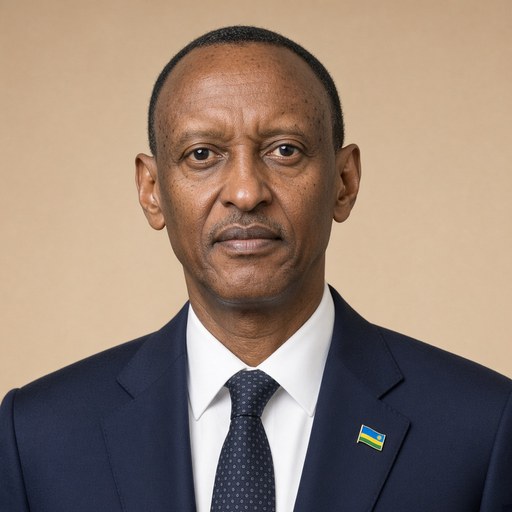
- Kagame addressed a World Economic Forum session in Davos on January 23, 2019, urging Africa to shape its own global agenda amid rising integration and multilateral reform.
- Main themes
- African agency and self-determination, African continental integration, African Continental Free Trade Agreement, Fourth Industrial Revolution, multilateralism reform, digital identity and technology, private sector investment, migration and security challenges, climate change, Africa-China-Europe partnerships, geopolitical equity
- Duration
- ~4 min
- Words
- 472
- Sentences
- 29
- Readability
- 39
- Grade
- 11.9
- Syntax
- 2.79
- Vocabulary
- 2.19
The broad sphere of national life a sentence belongs to. Every sentence has an Arena, so it is the denominator the other indices are read against.
Other29 sentences in 22 paragraphs
Davos, 23 January 2019
Good morning. Thank you, Winnie and Elsie, for the kind welcome.
I appreciate so many of you making time for this important conversation, most especially the Heads of State and Government here with us.
This session is timely. The conditions have never been so favourable for Africa, to take the lead in shaping its own global agenda.
For too long, we ceded responsibility for Africa’s agenda to others, with some individuals even benefitting.
But challenges relating to migration, security, and climate change, among others, mean there is no longer any actor who sees an advantage in an Africa that is institutionally weak, and economically stagnant.
Put differently: Everyone benefits from a stronger, more united Africa. This is reflected in the more constructive tone of Africa’s partnerships with China, Europe, and others.
But no one is going to transform Africa on our behalf. It is up to us.
However, today, the pace and quality of integration in Africa is increasing noticeably, and this is very significant.
Last year, for example, the African Continental Free Trade Agreement was adopted, and it is likely to come into force this year.
We also agreed on a timetable for the free movement of people, and on the establishment of a single African air transport market.
At the next African Union Summit, we expect to consider an innovative proposal to harmonise digital identity platforms across Africa, with common technical standards and data protection norms. The goal is to bring all Africans into productive, knowledge-based economic activity.
This is an example of how Africa can work together, to prepare for the Fourth Industrial Revolution.
This dynamism is consequential for the future. After all, it is no easy matter, to forge consensus in a union composed of more than 50 countries, and several interlocking regional economic communities.
International cooperation is indispensable.
It was the brutality of the two World Wars that gave rise to the multilateral system, which lately seems to be in crisis, as the World Economic Forum has been highlighting.
But reforming the system should not mean a return to the status quo. For many of us, it was hardly a golden age.
Rule-making was not inclusive, and the balancing of geopolitical interests among major powers often came at a very high price for those on the periphery.
For Africa, the most important thing is to adopt a posture of active responsibility toward shaping our place in the world.
In the multi-stakeholder spirit of this gathering, this also requires strategic leadership and investment from the private sector, particularly in terms of technology and industrialisation.
Perhaps the question we should be looking to answer is: Are there any common interests that we can define together, to restore a moral centre to multilateralism?
I thank you for your attention, and look forward to our roundtable discussions.