




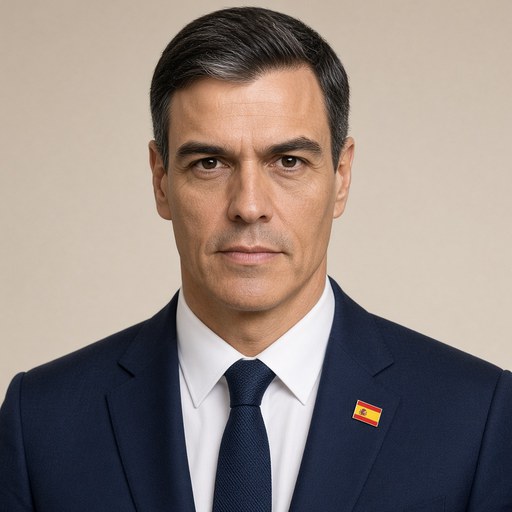
Appearance of the President of the Government National Cybersecurity Forum Palace of Moncloa
 Pedro Sánchez · Prime Minister of Spain
- Context
- Sánchez addressed the National Cybersecurity Forum at the Palace of Moncloa on March 9, 2022, highlighting Spain's cybersecurity model and public-private collaboration.
- Main themes
- National cybersecurity strategy, public-private collaboration, critical infrastructure protection, cybersecurity culture, Russia-Ukraine war cyber threats, national security, essential services resilience, cybersecurity industry and R&D, pandemic lessons, National Cybersecurity Forum, civil society engagement
- Duration
- ~15 min
- Words
- 1,741
- Sentences
- 69
- Readability
- 26
- Grade
- 15.9
- Syntax
- 3.16
- Vocabulary
- 2.18
Translated from Spanish
The broad sphere of national life a sentence belongs to. Every sentence has an Arena, so it is the denominator the other indices are read against.
Other69 sentences in 30 paragraphs
Welcome to the Palace of Moncloa. You will allow me to address you informally.
I was just mentioning that the culture of cybersecurity has not yet permeated the industry, the Spanish economy in its fullest extent, and also the entire citizenry by extension. And I believe that precisely on one hand, public-private collaboration and on the other hand, events like this, where we highlight and value what we are doing together, is very important.
For this reason, I would like to congratulate the Secretary of State, Carme, the director of the National Intelligence Center, Paz, and of course also General Ballesteros, for their leadership, along with the other experts and institutions that are present here.
I believe that this National Cybersecurity Forum represents the spirit of collaboration, cooperation, and coordination among all the actors that make up Spain's cybersecurity model.
A model that I think we can qualify as highly specialized, I would also say regulated, that understands cybersecurity as a state policy, a state policy under the umbrella of national security, and whose initial work we want to recognize and I also want to thank with my presence and participation in the event that brings us together today.
As General Ballesteros, director of the National Security Department, mentioned earlier, the National Cybersecurity Strategy of 2019 already pointed out the characteristics we had discussed regarding public-private collaboration as a key element. And for this reason, it promoted this National Cybersecurity Forum as a space for understanding, consensus, and dialogue in which representatives of civil society, independent experts, the private sector, academia, associations, and think tanks are integrated, which can surely contribute a lot to this debate in order to enhance and create those public-private synergies.
I want to remind you that the National Cybersecurity Forum was established precisely on July 22, 2020, that is, in the midst of the pandemic, which added no small difficulties to the challenge of launching this important and novel initiative.
I remember that we had to hold many Cabinet meetings during the pandemic in the famous space of the National Security Department. We realized that we were not prepared to hold conversations and conduct meetings telematically with the necessary security in such important decision-making spaces, precisely at that moment, even more so like the Cabinet, and therefore, all of this added much more difficulty to launching this National Forum.
But it was launched in July 2020, and precisely one of the lessons identified during that extraordinary health crisis, from which we unfortunately have not yet emerged, was the importance of preserving the proper functioning of essential services and critical infrastructures.
Ensuring the supply of basic resources contributed, I believe decisively, to achieving high levels of resilience and consequently maintaining national security.
And again, as the director of the National Intelligence Center mentioned earlier, in light of the war unleashed by Putin in Ukraine, we are fully aware of the need to guarantee cybersecurity, the functioning of essential services, and the integrity of critical infrastructures through public-private collaboration, which is especially evident in this National Cybersecurity Forum.
And for this same reason, the situation committee activated to monitor the war in Ukraine has launched a working group led precisely by the National Cryptologic Center, responsible for our cybersecurity against potential risks, as previously indicated.
It is evident that social well-being, economic well-being, the health of our society in a broad spectrum, in a wide perspective, or even the effective functioning of the public sector, represent key axes for the country's progress. Any security failure, the interruption of these functions, as we saw during the pandemic, we can suffer in this war crisis from Russia, would have very serious consequences for the preservation of general public security.
Most of these infrastructures that face numerous challenges and undoubtedly many threats belong to the private sector. Therefore, I believe it is essential to work together to enhance public-private collaboration. I think it is the term that we have used the most among all the speakers, seeking the harmonization of objectives, resources, and policies that reinforce the integration and coordination of all actors under the framework of national security.
And in these years, we have developed, in my opinion, an intense effort to promote and implement the National Cybersecurity Strategy in order to ensure the safe and reliable use of cyberspace, protect the rights and freedoms of citizens, and promote socio-economic progress.
And this work, as has been well discussed, has focused on three key aspects. The first, the culture of cybersecurity in Spain. Secondly, support for the industry and R&D in cybersecurity. And thirdly, something that seems important to me is the definition of a national certification scheme for cybersecurity leaders.
The Forum, I believe we can all agree, as has been mentioned, is a success story. It is. Recognized nationally, we are doing this precisely in this event, but also internationally, as a good practice that I believe we could extrapolate to some parts of other areas of social and institutional political life and also to other countries, many of which have already shown interest in this initiative.
I want to highlight the presentation made about the national cybersecurity structure and the role of the Forum within the international initiative against Ransomware led by the United States. This has made it possible for Spain to be designated to lead one of the working groups of this initiative. And I think this places us precisely at the forefront of what was previously referred to by the Secretary of State, Carme, that we are also becoming a reference in the field of cybersecurity at a global level.
The National Cybersecurity Forum has also just been presented at the Bilateral Seminar on Cybersecurity between the United States and Spain, which took place a few days ago here in Madrid, organized by the Ministry of Foreign Affairs and the European Union. I think this is of extraordinary importance. It has qualitative value because it positions Spain as one of the leading countries, and I believe this should also be celebrated and recognized by its promoters. All public cybersecurity actors participated on the Spanish side, as well as a strong representation from the Spanish private sector; some of those present here were at that Forum.
Well, what are the next steps? They have been indicated here. I believe the Forum must continue to work intensively through the working groups. For this reason, I think the National Security Council has already established new lines of work in which many debates are currently being developed, directed in different directions. Here it has been mentioned, increasing citizen awareness in cybersecurity by promoting their necessary co-responsibility. This seems basic and essential to me, to incorporate, to have citizens as allies, to understand precisely what the risks are in cyberspace.
Secondly, incorporating cybersecurity into good corporate governance of companies, something in which it has been pointed out, we still have a lot of ground to cover. Internationalizing our cybersecurity industry. This is also a great opportunity to position Spain from an industrial and economic perspective on the international stage. Analyzing existing training proposals to promote higher quality training and education. I believe that in this regard, having the CRU here is fundamental. We have extraordinary telecommunications engineers; we need to adapt much of their university and degree curriculum precisely to these new training and education demands in cybersecurity.
Fifthly, analyzing current capabilities against the needs of the cyber defense industry. And sixthly, improving public-private collaboration in the regulatory field of cybersecurity. And in this regard, I think it is very important that we can converse, that we can understand from the public sector what the impact, scope, and dimension of what the private sector needs is when it comes to regulation.
Often, from the private sector, the public sector is seen not as an ally, but rather as an obstacle. And I think it is also important for you to know that this is not the case, that we are allies, that we have a common cause, which is precisely to make cybersecurity a state policy and that often our problem probably has more to do with a lack of knowledge and not being as up to date on these matters as the private sector might be, for example.
And obviously, also in such a dynamic field as cyberspace, sometimes regulation can become obsolete in record time, and in that sense, it is also important to be aware that there are no obstacles, there are no difficulties. What there are are perhaps problems of lack or simply ignorance, and that is why it is very important to reinforce that dialogue.
In short, I believe that as we have announced, the Government plans to approve a National Cybersecurity Plan soon. This Plan, the most ambitious that has been developed in recent years, includes more than 100 essential actions to guarantee national cybersecurity. The Plan includes, among other actions, the creation of an integrated system of cybersecurity indicators at the state level.
The establishment of the Cybersecurity Operations Center of the General State Administration with its public bodies. Many times we forget that there is a constellation of entities, of very important public institutions, not exempt, as Paz mentioned earlier, from this cybersecurity risk. And finally, implementing the National Platform for Reporting and Monitoring Cyber Incidents and Threats.
I want to conclude with two acknowledgments. The first to the public sector represented here. But as I did earlier in the brief meeting we had with some representatives of the private sector, I want to thank the 117 experts from both the public and private sectors, many of whom are present here, for your work, the selfless work you have contributed, your experience that you have shared with us.
I am very aware of the effort this has entailed, and I extend this gratitude to the private organizations to which these experts belong for their understanding, for their selfless awareness in favor of the country's cybersecurity, which ultimately is the security of all.
This event, I believe, serves to recognize your contribution, your work, your commitment to the country, and also to renew the energies that have brought us here with a very clear, firm, and resolute purpose, which is to consolidate the Forum. I believe it is essential to continue advancing. I will say it once again in that public-private collaboration to enhance cybersecurity in our country.
Thank you very much.
The original Spanish. The tags above are read on the English translation's sentences.
Bienvenidos al Palacio de la Moncloa. Me vais a permitir que os tutee.
Antes comentaba precisamente que la cultura de la ciberseguridad aún no impregna a la industria, a la economía española en su máxima plenitud y también al conjunto de la ciudadanía por extensión. Y creo que precisamente por un lado, la colaboración público-privada y por otro lado también actos como este, donde ponemos de relieve y en valor lo que estamos haciendo conjuntamente, es muy importante.
Por eso quisiera felicitar a la Secretaria de Estado, a Carme, a la directora del Centro Nacional de Inteligencia, a Paz y por supuesto también al general Ballesteros, por su liderazgo, junto con el resto de expertos y expertas y el resto de instituciones que estáis aquí presentes.
Creo que este Foro Nacional de Ciberseguridad pues representa el espíritu de colaboración, de cooperación y de coordinación entre todos los actores que conforman el modelo de ciberseguridad de España.
Un modelo que creo que podemos calificar como ampliamente especializado, diría también que regulado, que entiende la ciberseguridad como una política de Estado, una política de Estado bajo el paraguas de la seguridad nacional y cuyos primeros trabajos queremos reconocer y quiero agradecer también con mi presencia y participación en el acto que hoy nos reúne.
Bien lo comentaba antes el general Ballesteros, director del Departamento de Seguridad Nacional, la Estrategia Nacional de Ciberseguridad de 2019 ya apuntaba precisamente las características que habíamos comentado de colaboración público- privada como un elemento clave. Y por ello impulsó este Foro Nacional de Ciberseguridad como un espacio de entendimiento, de consenso, de diálogo en el que se integran representantes de la sociedad civil, expertos independientes, el sector privado, la academia, las asociaciones, centros de pensamiento que seguro que pueden aportar muchísimo a este debate con el fin de potenciar y crear esas sinergias público privadas.
Quiero recordar que el Foro Nacional de Ciberseguridad se constituyó precisamente el 22 de julio del año 2020, es decir, en plena pandemia, lo que añadió no pocas dificultades al reto que supuso poner en marcha esta importante y novedosa iniciativa.
Recuerdo que, en fin, tuvimos que celebrar muchos Consejos de ministros en plena pandemia en el famoso espacio del Departamento de Seguridad Nacional. Nos dimos cuenta de que no estábamos preparados para poder mantener conversaciones y celebrar de manera telemática con las debidas seguridades pues, en fin, espacios tan importantes de decisión, precisamente en ese momento, incluso más como es el Consejo de Ministros y por tanto, en fin, todo esto añadió muchísima más dificultad para poder poner en marcha este Foro Nacional.
Pero se puso en marcha en julio de 2020 y precisamente una de las lecciones que se identificó durante esa crisis sanitaria tan extraordinaria, de la cual aún por desgracia no hemos salido, fue la importancia de preservar el correcto funcionamiento de los servicios esenciales y las infraestructuras críticas.
Garantizar el suministro de recursos básicos contribuyó, creo que de forma decisiva, a lograr unas elevadas cotas de resiliencia y de mantenimiento en consecuencia de la seguridad nacional.
Y de nuevo, como bien comentaba antes la directora del Centro Nacional de Inteligencia, con ocasión de la guerra desatada por Putin en Ucrania, somos plenamente conscientes de la necesidad de garantizar la ciberseguridad, el funcionamiento de los servicios esenciales, la integridad de las infraestructuras críticas a través de la colaboración público-privada, que se pone especialmente de manifiesto en este Foro Nacional de Ciberseguridad.
Y por esta misma razón, el Comité de situación activado para el seguimiento de la guerra en Ucrania ha puesto en marcha un grupo de trabajo liderado precisamente por el Centro Criptológico Nacional, encargado de nuestra ciberseguridad ante potenciales riesgos, como previamente se han señalado.
Es evidente que el bienestar social, el bienestar económico, la salud de nuestra sociedad en un amplio espectro, en una amplia perspectiva o incluso también el eficaz funcionamiento del sector público, representan ejes clave para la marcha del país. Cualquier fallo de seguridad, la interrupción de estas funciones, lo hemos visto durante la pandemia, lo podemos sufrir en esta crisis bélica de Rusia, tendrían consecuencias muy graves en la preservación de la seguridad pública general.
La mayoría de estas infraestructuras sobre las que se ciernen no pocos desafíos y sin duda alguna muchísimas amenazas, pertenecen al sector privado. Por ello, creo que resulta imprescindible trabajar de forma conjunta potenciando la colaboración público-privada. Creo que es el término que más hemos utilizado todos los intervinientes, buscando la armonización de objetivos, recursos, políticas que refuercen la integración, la coordinación de todos los actores bajo el marco de la seguridad nacional.
Y en estos años hemos desarrollado, a mi juicio, un intenso trabajo para impulsar e implementar la Estrategia Nacional de Ciberseguridad con el fin de garantizar el uso seguro y fiable del ciberespacio, proteger los derechos, las libertades de la ciudadanía y promover el progreso socio económico.
Y estos trabajos, como bien se han comentado, se han centrado en tres aspectos claves. El primero, la cultura de la ciberseguridad en España. En segundo lugar, el apoyo a la industria y la I+D+i en ciberseguridad. Y en tercer lugar, algo que me parece importante y es la definición de un esquema nacional de certificación para responsables de ciberseguridad.
El Foro creo que podemos entre todos convenir, como bien se comentaba, creo que por méritos propios, es un caso de éxito. Lo es. Reconocido a nivel nacional, lo estamos haciendo precisamente en este acto, pero también a nivel internacional, como una buena práctica que creo que podríamos extrapolar a alguna parte de otros ámbitos de la vida social y política institucional y también de otros países, muchos de los cuales ya se han interesado precisamente por esta iniciativa.
Quiero destacar la exposición que se hizo de la estructura de ciberseguridad nacional y del papel del Foro en el marco de la iniciativa internacional contra el Ransomware que lidera Estados Unidos. Ello ha hecho posible que España haya sido designada para liderar uno de los grupos de trabajo de esta iniciativa. Y a mí esto me parece que nos sitúa precisamente a la vanguardia de lo que antes se refería por parte de la Secretaria de Estado, de Carme, de que estamos siendo una referencia también en el ámbito de la ciberseguridad a nivel global.
El Foro Nacional de Ciberseguridad se acaba de presentar también en el Seminario Bilateral sobre Ciberseguridad Estados Unidos España, que ha tenido lugar hace pocos días aquí precisamente en Madrid, organizado por el Ministerio de Asuntos Exteriores y la Unión Europea. Me parece que es de una extraordinaria importancia. Tiene un valor cualitativo porque sitúa a España en uno de los países referentes y creo que esto también hay que felicitarse por ello y reconocerlo a sus impulsores. Allí participaron por la parte española todos los actores ciberpúblicos, así como una nutrida representación de la empresa privada española, algunos de los aquí presentes estuvieron en ese Foro.
Bueno, ¿cuáles son los próximos pasos? Aquí se han indicado. Yo creo que el Foro debe continuar trabajando intensamente a través de los grupos de trabajo. Por este motivo, creo que el Consejo Nacional de Seguridad ya ha establecido las nuevas líneas de trabajo en las que actualmente se están desarrollando muchísimos debates, dirigidas en distintas direcciones. Aquí se han comentado, aumentar la concienciación del ciudadano en ciberseguridad fomentando su necesaria corresponsabilidad. A mí esto me parece básico, esencial, el incorporar, el tener como aliados precisamente la ciudadanía, que comprenda precisamente cuáles son los riesgos que se tienen en el ciberespacio.
En segundo lugar, incorporar la ciberseguridad en el buen gobierno corporativo de las empresas, algo en lo cual se ha señalado, tenemos todavía muchísimo campo que recorrer. Internacionalizar nuestra industria de la ciberseguridad. Esto también es una gran oportunidad para posicionar a España desde el punto de vista industrial y económico en el ámbito internacional. Analizar las propuestas formativas existentes para fomentar una formación y capacitación de mayor calidad. Yo creo que en este sentido, precisamente el que esté aquí la CRU es fundamental. Tenemos extraordinarios ingenieros de telecomunicaciones, necesitamos adaptar mucho de su currículum universitario y de grado precisamente a estas nuevas demandas de formación y de capacitación en ciberseguridad.
En quinto lugar, analizar las capacidades actuales ante las necesidades de la industria de la ciberdefensa. Y en sexto lugar, mejorar la colaboración público- privada en el ámbito regulatorio de la ciberseguridad. Y en este sentido, creo que es muy importante que el que podamos conversar, el que podamos conocer desde el sector público cuál es el impacto, el alcance, la dimensión de lo que necesita el sector privado a la hora de la regulación.
En muchas ocasiones, desde el sector privado se ve al sector público no como un aliado, sino como en fin, como un obstáculo. Y creo que es importante también que conozcáis que no es así, que somos aliados, que tenemos una causa común, que es precisamente convertir a la ciberseguridad en una política de Estado y que en muchas ocasiones nuestro problema probablemente tenga más que ver con la falta de conocimiento y en no estar tan al día a día de estas materias como lo pueda estar, por ejemplo el sector privado.
Y evidentemente también en un ámbito tan dinámico como es el ciberespacio, algunas veces la regulación puede quedar obsoleta en un tiempo récord y en ese sentido es importante también que seamos conscientes de que no hay obstáculos, no hay dificultades. Lo que hay es precisamente a lo mejor problemas de carencia o simplemente de desconocimiento, y por eso es muy importante reforzar ese diálogo.
En fin, yo creo que como hemos anunciado próximamente, el Gobierno tiene previsto aprobar un Plan Nacional de Ciberseguridad. Dicho Plan, el más ambicioso que se ha elaborado durante estos últimos años, contempla más de 100 actuaciones esenciales para garantizar la ciberseguridad nacional. El Plan contempla, entre otras acciones, la creación de un sistema integrado de indicadores de ciberseguridad a nivel estatal.
La constitución del Centro de Operaciones de Ciberseguridad de la Administración General del Estado con sus organismos públicos. Muchas veces nos olvidamos de que ahí hay una constelación de entidades, de instituciones públicas muy importantes, no exentas, como bien comentaba antes Paz, de este riesgo de la ciberseguridad. Y finalmente implementar la Plataforma Nacional de Notificación y seguimiento de ciberincidentes y de amenazas.
Quiero terminar con dos agradecimientos. El primero al sector público que está aquí representado. Pero como hacía antes en el breve que hemos tenido encuentro con algunos de los representantes del sector privado, quiero agradecer a los 117 expertos y expertas tanto del sector público como del sector privado, muchos de ellos aquí presentes, vuestro trabajo, el trabajo desinteresado que habéis aportado, vuestra experiencia que habéis compartido con nosotros y con nosotras.
Yo soy muy consciente del esfuerzo que ello ha supuesto y hago extensivo este agradecimiento a las organizaciones privadas a las que dichos expertos pertenecen por su comprensión, por su concienciación desinteresada en favor de la ciberseguridad del país que en definitiva no es sino la seguridad de todos y de todas.
Este acto creo que sirve para reconocer vuestra aportación, vuestro trabajo, vuestro compromiso con el país y también para renovar las energías que nos han traído hasta aquí con un propósito muy claro, muy firme, rotundo, que es consolidar el Foro. Creo que es fundamental seguir avanzando. Lo volveré a decir una vez más en esa colaboración público-privada para potenciar la ciberseguridad en nuestro país.
Muchas gracias.