




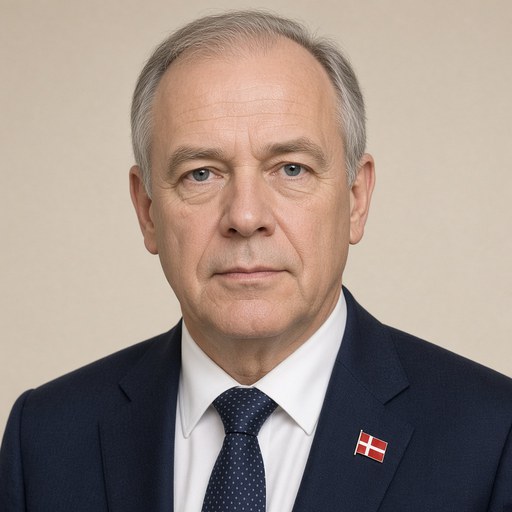
Denmark as the world's best IT nation - vision or reality? Prime Minister Poul Nyrup Rasmussen's speech at the IT Industry Association's annual meeting on March 7, 2001.
 Poul Nyrup Rasmussen · Prime Minister of Denmark
- Context
- Rasmussen addressed the IT Industry Association's annual meeting in Denmark on March 7, 2001, presenting his vision for Denmark becoming the world's best IT nation.
- Main themes
- Denmark as a leading IT nation, digital economy and e-commerce, public-private partnership, knowledge economy, IT infrastructure and internet access, education and human capital, innovation capacity, Danish national identity and ambition, business-to-business digital transformation, welfare state and competitiveness
- Duration
- ~25 min
- Words
- 2,967
- Sentences
- 187
- Readability
- 50
- Grade
- 9.5
- Syntax
- 2.71
- Vocabulary
- 1.99
Translated from Danish
The broad sphere of national life a sentence belongs to. Every sentence has an Arena, so it is the denominator the other indices are read against.
Other187 sentences in 105 paragraphs
Thank you for the invitation to come to your annual meeting here today. And why am I actually standing here? As Ulf Pilgaard aptly asked when he performed in my place!
The answer is quite simple. You have done your part to put IT on the agenda. I have done mine – and will continue to do so. You will too.
Too late, some say. Too little, say others. Judge us by the future, I say.
We have never been blind to the fact that new technology opens up a multitude of new opportunities for all Danes – whether they have lived here for 10, 15, or 200 years.
Isn't the economy doing well in Denmark?
Isn't Denmark one of the countries in the world where the most people receive a qualifying education?
Isn't Denmark one of the countries with the least conflict among people?
Isn't Denmark one of the countries in the world with the most developed welfare and public services?
Are we not, in short, a country with plenty of opportunities?
Should we not then take advantage of the great potential that we obviously have – not just as a country but also as people? As individuals, where we put people – and human capability – first.
It resembles a repetition of history, according to Swedish professor of economics – Gunnar Myrdahl, "the only miracle I wish to talk about."
My starting point is clear:
We have always invested in people – in jobs and education in Denmark. That is where our wealth and welfare come from. High employment rates – great engagement – dynamic education policy. It fits like a glove in the new knowledge economy.
Now that we know how great our chances are, it would, in my best conviction, be foolish not to take advantage of them. One can be first without being the largest.
* * *
The future starts right now and here. And I must say that I am deeply engaged in it, as I, like everyone else, will spend the rest of my time in it!
You have formulated the headline for this annual meeting as a question: "Denmark as the world's best IT nation – vision or reality?"
One can approach the question in two different ways.
The first – typically Danish: Nooo, that’s too much. "We just need to keep up a little. We are a modest people – but we are better at it than anyone else in the world" – as it has been said. There is also something Jante Law-like about that attitude – not to put ourselves too much forward.
Our Lutheran soul tells us that first we must prove that we are skilled – and only then do we dare to set ambitious goals.
The second approach is mine – and it is simple: We can do it! I dare to set the ambitious goal and the risk of questions from the press: And what do you mean by that, concretely? And why is it – two months later – not implemented yet?
What we are talking about – is a vision that we can and must make a reality together. We all have a responsibility to ensure that the dream or vision becomes a reality. I am convinced that each of us in our respective fields can go far, but that we can go even further if we work together. Make a common difference. And we have, as mentioned – the special prerequisites – that are needed.
We have placed IT high on the political agenda. We now have a unique opportunity to lift Danish IT development together.
* * *
But what specifically is needed for us to be among the best?
In the future, we should measure ourselves on, for example, access to and use of the Internet, our innovation capacity, our spread and use of electronic commerce, both B2B (Business to Business), B2C (Business to Consumer), and B2G (Business to Government).
And in all three areas, we have good opportunities:
Business to business: Brand new alliances are emerging in the business world. Between telecommunications companies, traditional media companies, banking companies, postal services, data companies, etc. – all to meet the future consumers' digital demands.
E-commerce is growing rapidly! I have seen estimates of trade, indicating that 11,000 Danes are now shopping online. Today, trade amounts to 12-14 billion – optimists expect 200 billion in 5 years – which will have a significant impact on how companies organize themselves optimally. We have not seen most of it yet.
B2B: The biggest change may happen here. Brand new, intense forms of communication, choices – and demands for transparency, comparability, and quality from the consumer side. Rest assured of one thing: New technology breeds new quality demands.
* * *
Overall, it is about Denmark's ability to develop, participate in, and embrace the new. Denmark's adaptability. These are the new competitive parameters in the knowledge economy and in the network society. This is where we need to be the best.
This is where partnership becomes crucial.
We need a partnership with the business community if the vision is to become a reality. A collaboration where the public and private Denmark join forces for the common goal: to make Denmark the world's best IT-based nation.
Partnership makes us strong. Let me mention two examples:
Digital North Jutland is a large-scale experiment where technological possibilities are tested in practice. It is a success and a model example of what we can achieve when we collaborate.
In a newspaper from a few days ago, the reason why "things are taking off" for the North Jutlanders is stated:
"There is collaboration across sectors. The universities have no qualms about working with the business community. Public institutions collaborate with traditional businesses, the research park MOVI has opened not just phone lines and cafeterias, but also for consulting for new companies. Finally, competing companies dare to acknowledge that they actually have a common interest, now that they have positioned themselves in the outer row of dunes in Europe."
With investments from both the public and private sectors, more than half a billion kroner has been allocated to Digital North Jutland.
The experiences from North Jutland can hopefully make us all wiser about the organization of Digital Denmark.
We will gain practical experience with the transition to the network society, and the initiative will contribute to further enhancing IT readiness in Denmark.
* * *
Another example of partnerships is from Ringkøbing County.
Here, the county and Tele Danmark have literally been the first to follow up on the government's wish with a practical example of partnership. Here, it is about ensuring fast Internet connections in one of the country's sparsely populated areas.
This is a public/private partnership, without the county paying for the expansion of infrastructure. It illustrates that it can pay off for the private sector to invest in broadband infrastructure even in less populated areas.
The initiative benefits both citizens, businesses, and public authorities.
Digital North Jutland and Ringkøbing County are good examples that we are already well on our way – and that partnership between the public and private sectors shows the way to the top.
* * *
But the government has more on the agenda when we talk about partnership. We will strengthen the direct dialogue with the business community. We will exchange ideas. We will brainstorm. We will find out if there are areas where the shoe pinches. Areas where we can promote a desired development from a central level.
Therefore, the government is now establishing an IT Task Force with the Minister of IT and Research at the helm. The group will consist of individuals from both public Denmark and the private sector – polished as well as unpolished – and ordinary Denmark. They will hold their first meeting in April, I have heard a little bird sing.
I have emphasized that our major industry associations are represented in the new IT Task Force. You can of course always ask why this and that person is included and not the one you think would be the best? I hope you will welcome the new group and see it in the positive light in which it has been established!
The main task of the task force will be, in collaboration with the government, to formulate a number of concrete goals for IT-Denmark. The IT group will focus on the future. It will set goals and areas of effort that will inspire and spur further efforts. The goals should support Danish IT policy and serve as the foundation for the government's annual network report to the Parliament.
The IT group will first identify areas where Denmark has particularly good prerequisites for positioning itself among the world's leading IT nations. Experiences will be collected, and they will be systematized to identify best practice examples.
The government, with the Minister of IT and Research at the forefront, will annually hold a conference on Danish IT goals: How far have we come? How can we improve, and how do we turn words into action in the network society?
We will not become the best in the world individually. We will only do so through binding partnership models between the public sector and the business community.
But partnership is not the only element in the government's IT strategy. We have more in the pipeline.
* * *
There are several areas where the Danish effort must be top-notch for the vision to become a reality.
Our infrastructure in the IT and telecommunications sector must, through real competition, have a quality and price level that promotes the use of IT tools in everyday life.
The Danish IT industry must be strong in IT – industry and IT services and provide good IT solutions to private companies and the public sector.
The public sector must lead the way in the introduction and use of new technology by offering and demanding digital services in the private sector and by setting standards that make it simple and secure to communicate online.
A lot is happening – let me just mention a few examples:
Broadband plan
Convergence report
Action plan for the education system
Partnership (as I have already mentioned)
Milestones for the world's best IT nation
UMTS auction – [which I expect will be held earlier than we initially announced]
Digital administration – which will entail colossal reliefs and changes for the benefit of both citizens and employees.
* * *
I would like to say a few words about the IT action plan for the education sector and the broadband plan.
When there is talk of a lack of qualified employees in the IT industry – as the industry itself has pointed out – I believe it is important to clarify several things:
We have an obligation to give those who are ready a chance.
I am thinking here of both engineers, technicians, and other highly educated individuals who are ready for a job in IT. But also of other professional groups that have a more "skewed" educational background and who have different entry points to IT. Here, you as IT companies also have a responsibility, just as other public and private companies do.
An exciting new development is underway. The number of students enrolled in IT-related higher education is rising sharply from just over 1,750 five years ago to 5,500 last year.
since 1997, more than 50,000 PC driving licenses have been issued and the IT continuing education at Open Education at vocational schools is also developing strongly: These are students who have completed or passed courses in IT programs such as data technician, computer scientist, IT assistant, computer assistant, and PC user. This group's share of all students has increased from 9.5% in 1992/1993 to 70% in 1998/1999.
Following the Finance Agreement for 2001, a special flexible arrangement for cases concerning residence and work permits for foreign IT specialists has been established.
According to my information, there is a shortage of about 1,900 IT personnel in private companies. At the same time, there were 4,000 unemployed members of the Academics, Civil Economists, IT professionals, and Business Economists' unemployment funds. Some of these will immediately or through further education and training be able to take over jobs as IT personnel.
We are facing a complex societal process where knowledge, communication, and technology merge into entirely new perspectives and networks for people and society.
If we are to lead Denmark safely into the knowledge economy, one of the fundamental prerequisites is education. All Danes must have the necessary IT skills.
Education is Denmark's most important resource. Competence, knowledge, and human creativity are, along with technological development, the driving forces in today's network society, where we both collaborate closely and compete fiercely with the whole world.
In April, the Minister of Education will launch a new strategy for the education sector and the development of its necessary IT competence. This will be achieved through special IT subjects and IT programs, but also by making IT a natural element in all subjects from 1st grade to university. Not as a separate box, but precisely integrated into dialogue and teaching.
I also hope that a good interplay can be created between educational institutions and the IT industry and specifically, that we can establish a couple of growth clusters around the two new IT colleges in Ørestaden and Aarhus, where we can jointly initiate an offensive growth spiral.
* * *
The spread of broadband is absolutely central because strong telecommunications connections are an important strategic piece in the ambition to fully exploit the advantages of a network society that provides opportunities for everyone.
The formulation of a broadband plan is therefore one of the initiatives that will form the foundation for IT development in Denmark.
The plan must be developed in collaboration between ministries, counties, municipalities, and the private sector, that is, the IT and telecommunications industry.
The government is focusing on a demand-driven strategy, where the interplay between a competition-driven telecommunications market and useful public content services stimulates development.
The IT industry association has, among others, been a very active player in the previous work – namely by focusing on the societal value of broadband and broadband services rather than technology. This is incredibly important in a process where there is otherwise a risk of putting technology and not people and society at the center.
I would like to thank the IT industry association for that.
Your Broadband Report is a positive and constructive contribution to the debate. It signals that you are willing to collaborate. And those who are willing to collaborate are helping to shape Denmark's future.
It is my hope that the overall broadband plan can be formulated and implemented in the same spirit.
The demonstration conference yesterday at the House of Industry on broadband and fast Internet connections is an excellent example of a good partnership between the Ministry of IT and Research, the Danish Telecommunications Agency, ITEK, and the IT industry association.
The conference showed that much is on the way and that the development is moving towards an Internet that is easy to use. With broadband, images and films will become the norm online. This gives us the opportunity to connect more with a segment of the population that is otherwise not IT-savvy.
I actually believe that we are very good at delivering internet services in Denmark. We have the creative forces, the competencies, and the abilities for the rapid transformation that the internet demands.
I would also like to acknowledge the positive initiatives that Sonofon and TeleDanmark have put forward regarding expansion. By the middle of 2002, 95% of Danes should have access to 256 kbit. That is impressive! Now we – the public and the private sector together – need to get started on the content side, so we can ensure that expansion also means actual access and usage.
* * *
We have a good grip on IT development.
To the critical faction that does not believe we can become the best in the world, I would say that with a constructive, qualified, and targeted effort from all sides, it is not so insurmountably far from vision to reality.
Not long ago, one could read in Børsen that Denmark, along with Sweden and Norway, constitutes a European avant-garde. A new study shows that the Nordic countries, together with the USA, have in just a few years overtaken and thus distanced themselves from many other European countries when it comes to globalization and the new economy. The Nordic countries are among the world's leading IT nations. This applies, for example, in mobile telephony, Internet access, electronic commerce, and innovation capacity.
Last month, the Financial Times reported that Copenhagen ranks a commendable first place ahead of European metropolises such as London, Berlin, and Amsterdam as the best cities in Europe for companies establishing e-business centers in a benchmark analysis.
In the latest benchmarking conducted in Europe based on the action plan eEurope, Denmark ranks third in the category of Internet penetration in homes – the path to the top step of the podium is not long – but it requires that we adjust our steps – and that is precisely what the government has begun to address.
I am not saying it will happen by itself. I also do not think it is easy. I am simply saying that the goals we have set for ourselves – we can achieve. Not today, not tomorrow – but we will reach them, as has happened in the past years.
Vision or not. We are well on our way to reality – IT-Denmark – and that is not so bad after all, is it?
I look forward to an even stronger collaboration with Danish IT companies.
The original Danish. The tags above are read on the English translation's sentences.
Tak for invitationen til at komme til jeres årsmøde her i dag. Og hvorfor står jeg så egentlig her? Som Ulf Pilgaard rammende har spurgt, når han optræder i mit sted!
Svaret er ganske enkelt. I har gjort jeres til at få sat IT på dagsordenen. Jeg har gjort mit – og vil fortsætte dermed. Det vil I også.
For sent, siger nogle. For lidt siger andre. Vurder os på fremtiden, siger jeg.
Vi har aldrig været blinde for, at den nye teknologi åbnede for en masse nye muligheder for alle danskere – hvad enten man har boet her i 10, 15 eller 200 år.
Går det ikke økonomisk godt i Danmark?
Er Danmark ikke et af de lande i verden, hvor flest får en kompetencegivende uddannelse?
Er Danmark ikke et af de lande med de mindste konflikter mennesker imellem?
Er Danmark ikke et af de lande i verden med den mest udbyggede velfærd og offentlige service.
Er vi kort sagt ikke et land med masser af muligheder?
Skal vi så ikke tage og udnytte det store potentiale, som vi åbenlyst har - ikke bare som land men også som mennesker. Som enkeltpersoner, hvor vi sætter mennesker- og menneskets kunnen – først.
Ligner historiens gentagelse, jf. svensk professor i økonomi – Gunnar Myrdahl 'det eneste mirakel, jeg ønsker at tale om'.
Mit udgangspunkt er klart:
Vi har altid satset på mennesker – i job og uddannelse i Danmark. Derfor kommer vores rigdom og velfærd. Høj erhvervsfrekvens – stort engagement – dynamisk uddannelsespolitik. Det passer som fod i hose til den ny vidensøkonomi.
Når vi nu ved, hvor store chancer vi har, vil det, efter min bedste overbevisning, være hul i hovedet ikke at udnytte dem. Man kan godt være først uden at være størst.
* * *
Fremtiden starter lige nu og her. Og jeg må sige, at jeg er dybt optaget af den, da jeg, som alle andre, skal tilbringe resten af min tid i den!
I har formuleret overskriften for dette årsmøde som et spørgsmål: 'Danmark som verdens bedste IT-nation – vision eller virkelighed ?'
Man kan forholde sig til spørgsmålet på 2 forskellige måder
Den ene – typisk danske: Neeej, det er for meget. 'Vi skal bare ku’ følge sådan lidt med. Vi er et beskedent folk – til gengæld er vi bedre til det end alle andre i verden' – som det er sagt. Der er også noget Jantelov-agtigt over den holdning – ikke føre os for meget frem.
Vor lutheranske sjæl siger os, at først skal vi
bevise, at vi er dygtige – og først dernæst tør vi sætte os ambitiøse mål.
Den anden tilgang er min – og den enkel: Vi kan godt! Jeg tør godt sætte det ambitiøse mål og risikoen for spørgsmål fra pressen: Og hvad mener du så med det, sådan helt konkret? Og hvorfor er det – der 2 måneder efter – ikke gennemført endnu?
Det vi taler om – det er en vision vi i fællesskab kan og skal gøre til virkelighed. Vi har alle sammen et ansvar for, at drømmen eller visionen bliver til virkelighed. Jeg er overbevist om, at vi hver for sig på hver vores felt kan komme langt, men at vi kan nå endnu længere, hvis vi i fællesskab gør en indsats. Gøre en fælles forskel. Og vi har som nævnt – de særlige forudsætninger – der skal til.
Vi har sat IT højt på den politiske dagsorden. Vi har nu en unik chance for at løfte den danske IT-udvikling i fællesskab.
* * *
Men hvad skal der helt konkret til, for at vi bliver blandt de bedste?
Vi skal fremover måle os på eksempelvis adgangen til og brugen af Internet, vores innovationsevne, vores udbredelse og brug af den elektroniske handel, både BtB (Business to Business), BtC (Business to Consumer) og BtG (Business to Government).
Og på alle tre felter har vi gode muligheder:
Business to business: Helt nye alliancer ser dagens lys i erhvervslivet. Mellem teleselskaber, traditionelle medievirksomheder, bankvirksomheder, post, datavirksomheder, osv. = alt sammen for at imødekomme fremtidige forbrugeres digitale krav.
E-handel i hastig vækst! Jeg har set skøn over handel, som peger på, at 11.000 af danskerne nu handler på nettet. I dag handel for 12-14 mia. – optimister regner med 200 mia. om 5 år – vil få stor indflydelse på hvordan virksomhederne organiserer sig optimalt. Vi har ikke set det meste endnu.
BtB: Den allerstørste forandring kommer måske til at ske her. Helt nye, intense kommunikationsformer, valgmuligheder – og krav til gennemskuelighed, sammenlignelighed og kvalitet fra forbrugerside. Vær sikker på en ting: Ny teknik avler nye kvalitetskrav.
* * *
Helt overordnet handler det om Danmarks evne til at udvikle, deltage og favne det nye. Danmarks omstillingsevne. Det er de nye konkurrenceparametre i videnøkonomien og i netværkssamfundet. Det er her, vi skal være bedst.
Det er her partnerskabet bliver helt afgørende.
Vi har brug for et partnerskab med erhvervslivet, hvis visionen skal gøres til virkelighed. Et samarbejde, hvor det offentlige og private Danmark forener kræfterne om det fælles mål: at gøre Danmark til verdens bedste IT-baserede nation.
Partnerskab gør stærk. Lad mig nævne to eksempler:
Det Digitale Nordjylland er et storskalaforsøg, hvor de teknologiske muligheder prøves af i praksis. Det er en succes og et mønstereksempel på, hvad vi kan udrette, når vi samarbejder.
I en avis fra forleden fremgår årsagen til, at det 'flyver' for Nordjyderne:
'Der samarbejdes på tværs. Universiteterne har ingen berøringsangst over for erhvervslivet. Offentlige institutioner samarbejder med traditionelle erhvervsvirksomheder, forskerparken MOVI har som faglig sparringspartner åbnet ikke bare telefonlinier og kantine, men også for rådgivning til nye virksomheder. Endelig tør konkurrerende virksomheder erkende, at de faktisk har en fælles interesse, når de nu engang har placeret sig i Europas yderste klitrække'.
Med investeringer fra både offentlig og privat side er der afsat mere end en halv milliard kroner til Det Digitale Nordjylland.
Erfaringerne fra Nordjylland kan forhåbentlig gøre os alle klogere på indretningen af Det Digitale Danmark.
Vi vil få praktisk erfaring med omstillingen til netværkssamfundet og initiativet vil bidrage til i endnu større omfang at højne IT-paratheden i Danmark.
* * *
Et andet eksempel på partnerskaber er fra Ringkøbing amt.
Her har amtet og Tele Danmark bogstavlig talt som de første fulgt op på regeringens ønske med et praktisk eksempel på partnerskab. Her gælder det om at sikre hurtige Internetforbindelser i et af landets tyndtbefolkede områder.
Der er her tale om et offentligt/privat partnerskab, uden at amtet betaler for udbygningen af infrastruktur. Det illustrerer, at det kan betale sig for den private sektor at investere i bredbåndsinfrastrukturen også i tyndere befolkede områder.
Initiativet gavner både borgere, virksomheder og offentlige myndigheder.
Det Digitale Nordjylland og Ringkøbing Amt er gode eksempler på, at vi allerede er godt på vej – og at partnerskab mellem det offentlige og det private erhvervsliv viser vejen til tops.
* * *
Men regeringen har mere på tapetet, når vi taler partnerskab. Vi vil styrke den direkte dialog med erhvervslivet. Vi vil udveksle ideer. Vi vil brainstorme. Vi vil finde ud af om der er steder, hvor skoen trykker. Områder, hvor vi fra centralt hold kan fremme en ønsket udvikling.
Derfor nedsætter Regeringen nu en IT Task force med IT-og Forskningsministeren for bordenden. Kredsen skal bestå af personer fra både det offentlige Danmark, det private erhvervsliv – det polerede som det upolerede - og det helt almindelige Danmark. De holder deres første møde i april, har jeg hørt en lille fugl synge om.
Jeg har lagt vægt, at vores store brancheforeninger er repræsenteret i det nye IT Task Force. I kan selvfølgelig altid spørge om, hvorfor den og den er med og ikke den, I mener ville være allerbedst? Jeg håber, I vil tage vel imod den nye gruppe og se den i det positive lys, den er nedsat i!
Hovedopgaven for task-forcen bliver, i samarbejde med regeringen, at formulere en række konkrete mål for IT-Danmark. IT-kredsen skal rette kikkerten mod fremtiden. Den skal udstikke mål og indsatsområder som skal inspirere og anspore til en yderligere indsats. Målene skal understøtte den danske IT-politik og være fundament for regeringens årlige netværksredegørelse til Folketinget.
IT-kredsen skal som det første udpege områder, hvor Danmark har særligt gode forudsætninger for at placere sig blandt verdens absolut førende IT-nationer. Der skal indsamles erfaringer, og de skal systematiseres med henblik på at identificere best practice-eksempler.
Regeringen vil med IT- og Forskningsministeren i spidsen årligt afholde en konference om de danske IT-mål: Hvor langt er vi nået? Hvordan kan vi blive bedre, og hvordan gør vi ord til handling i netværkssamfundet ?
Vi bliver ikke verdens bedste hver for sig. Det bliver vi kun via forpligtende partnerskabsmodeller mellem den offentlige sektor og erhvervslivet.
Men partnerskab er ikke det eneste element i regeringens IT-strategi. Vi har mere undervejs.
* * *
Der er en række områder, hvor den danske indsats skal være helt i top for at visionen kan blive til virkelighed.
Vores infrastruktur på IT- og teleområdet skal via reel konkurrence have en kvalitet og et prisniveau, som fremmer brugen af IT-værktøjer i hverdagen.
Det danske IT-erhverv skal være stærkt inden for IT – industri og IT-service og levere gode IT-løsninger til private virksomheder og den offentlige sektor.
Den offentlige sektor skal gå foran i indførelsen og anvendelsen af ny teknologi ved at udbyde og efterspørge digitale tjenester i den private sektor og ved at sætte standarder, som gør det enkelt og sikkert at kommunikere på nettet
Der er gang i meget – lad mig blot nævne nogle eksempler:
Bredbåndsplan
Konvergensredegørelse
Handlingsplan for uddannelsessystemet
Partnerskab (som jeg allerede har omtalt)
Pejlemærker for verdens bedste IT-nation
UMTS-auktionen – [som jeg forventer bliver afholdt tidligere, end vi først har meldt ud]
Digital forvaltning – som vil indebære kolossale lettelser og forandringer til gavn for både borgerne og de ansatte.
* * *
Jeg vil gerne knytte et par ord til IT - handlingsplanen for uddannelsessektoren, og til bredbåndsplanen.
Når der tales om mangel på kvalificerede medarbejdere i IT-branchen – som branchen selv har været inde på – tror jeg, det er vigtigt at gøre sig flere ting klart:
Vi har en forpligtigelse til at give dem, der står på spring en chance.
Jeg tænker her både på ingeniører, teknikere og andre højtuddannede, som står parate til et job inden for IT. Men også på de andre faggrupper, som har en mere 'skæv' uddannelsesmæssig baggrund, og som har andre indgangsvinkler til IT. Her har I som IT-virksomheder også et ansvar, lige så vel som andre offentlige og private virksomheder.
En ny spændende udvikling er i gang. Antallet af optagne på IT-relaterede videregående uddannelser er stærkt stigende
fra godt 1750 for 5 år siden til 5500 sidste år.
siden 1997 er der blevet udstedt mere end 50.000 PC-kørekort
også IT-efteruddannelsen på Åben uddannelse ved erhvervsskolerne udvikler sig stærkt: Det er kursister, der har fuldført eller bestået kurser på IT-uddannelserne datanom, datamatiker, informatik-assistent, edb-assistent og pc-bruger. Denne gruppes andel af samtlige kursister er steget fra 9,5% i 1992/1993 til 70% i 1998/1999.
I forlængelse af Finanslovaftalen for 2001 er etableret en særlig smidig ordning for sager om opholds- og arbejdstilladelser til udenlandske IT-specialister.
Ifølge mine oplysninger er der mangel på ca. 1900 IT-personer i de private virksomheder. Samtidig var der 4.000 ledige medlemmer af Akademikernes, Civiløkonomernes, Edb-faget og Merkonomernes a-kasser. Dele heraf vil umiddelbart eller gennem efteruddannelse og oplæring kunne overtage job som IT-personale.
Vi står overfor en kompleks samfundsproces, hvor viden, kommunikation og teknologi smelter sammen til helt nye perspektiver og netværk for mennesker og samfund.
Hvis vi skal føre Danmark sikkert ind i vidensøkonomien er en af de helt grundlæggende forudsætninger uddannelse. Alle danskere skal have de nødvendige IT-kompetencer.
Uddannelse er Danmarks vigtigste ressource. Kompetence, viden og den menneskelige kreativitet er sammen med den teknologiske udvikling drivkræfterne i dagens netværkssamfund, hvor vi både samarbejder tæt og konkurrerer benhårdt med hele verdenen.
Til april lancerer Undervisningsministeren en ny strategi for uddannelsessektoren og opbygning af dets nødvendige IT-kompetance. Det skal ved hjælp af særlige IT-fag og IT-uddannelser men også ved, at IT bliver et naturligt element i alle fag fra 1. klasse til universitetet. Ikke som en særskilt kasse, men netop integreret i dialog og undervisning.
Jeg håber også, at der kan skabes et godt sammenspil mellem uddannelsesinstitutioner og IT-branchen og konkret, at vi omkring de 2 nye IT-højskoler i Ørestaden og ved Århus kan få etableret yderligere et par vækstklynger, hvor vi i fællesskab kan få sat en offensiv vækstspiral i gang.
* * *
Udbredelsen af bredbånd er helt central, fordi kraftige teleforbindelser er en vigtig strategisk brik i ambitionen om fuldt ud at udnytte fordelene i et netværkssamfund, der giver udfoldelsesmuligheder for alle.
Formuleringen af en bredbåndsplan er derfor et af de initiativer, der skal danne fundamentet for IT-udviklingen i Danmark.
Planen skal udarbejdes i et samarbejde mellem - ministerier, amter, kommuner og den private sektor, det vil sige IT- og telebranchen.
Regeringen satser på en efterspørgselsbaseret strategi, hvor det er samspillet mellem et konkurrencedrevet telemarked og nyttige offentlige indholdstjenester der stimulerer udviklingen.
IT-brancheforeningen har blandt andre været en meget aktiv medspiller i det hidtidige arbejde – nemlig ved at sætte fokus på samfundsværdien af bredbånd og bredbåndstjenester fremfor teknik. Det er utroligt vigtigt i en proces, hvor der ellers er risiko for at sætte teknikken og ikke mennesket og samfundet i centrum.
Det vil jeg gerne takke IT-brancheforeningen for.
Jeres Bredbåndsrapport er et positivt og konstruktivt indslag i debatten. I signalerer, at I vil samarbejdet. Og de, der vil samarbejde, er med til at forme Danmarks fremtid.
Det er mit håb, at den samlede bredbåndsplan kan formuleres og føres ud i livet i samme ånd.
Demonstrationskonferencen i går i Industriens Hus om bredbånd og kvikke Internetforbindelser er et glimrende eksempel på et godt partnerskab mellem IT- og Forskningsministeriet, Telestyrelsen, ITEK og IT- brancheforeningen.
Konferencen viste, at meget er på vej og at udviklingen går mod et Internet der er nemt at bruge. Med bredbånd bliver billeder og film normen på nettet. Det giver os mulighed for i højere grad at komme i kontakt med en gruppe af befolkningen der ellers ikke er IT -vante.
Jeg tror faktisk, at vi er rigtig gode til at levere netydelser i Danmark. Vi har de kreative kræfter, kompetencerne og evnerne til den lynhurtige omstilling som nettet fordrer.
Jeg vil også kvittere for de positive udspil som Sonofon og TeleDanmark er kommet med på udbredelsessiden. I midten af 2002 skulle 95 % af danskerne have adgang til 256 kbit. Det er flot ! Nu skal vi – det offentlige og det private i fællesskab- i gang på indholdssiden, så vi kan sikre os at udbredelse også betyder faktisk adgang og anvendelse.
* * *
Vi har et godt tag i IT-udviklingen.
Til den kritiske fløj, der ikke tror på, at vi kan blive verdens bedste, vil jeg sige, at med en konstruktiv, kvalificeret og målrettet indsats fra alle sider, er der ikke så uoverkommeligt langt fra vision til virkelighed.
For ikke så lang tid siden kunne man læse i Børsen, at Danmark sammen med Sverige og Norge udgør en europæisk avantgarde. En ny undersøgelse viser, at Norden sammen med USA på ganske få år har overhalet og dermed distanceret sig fra mange af de øvrige europæiske lande, når det gælder globalisering og den ny økonomi. Norden er blandt verdens absolut førende IT-nationer. Det gælder eksempelvis inden for mobiltelefoni, Internetadgang, elektronisk handel og innovationsevne.
I sidste måned meldte Financial Times, at København kommer ind på en flot førsteplads foran europæiske storbyer som London, Berlin, og Amsterdam som Europas bedste byer, når det gælder virksomhedernes etablering af e-business centres i en benchmarkanalyse.
Danmark ligger i den sidste benchmarking foretaget i Europa på baggrund af handlingsplanen eEurope, som nummer tre i kategorien Internetudbredelse i hjemmene – vejen til øverste trin på podiet er ikke lang – men det kræver, at vi tilpasser vores skridt – og det er lige præcist det, regeringen har taget fat på.
Jeg siger ikke det kommer af sig selv. Jeg synes heller ikke det er let. Jeg siger blot, at de mål vi har sat os – kan vi nå. Ikke i dag, heller ikke i morgen – men vi når dem, som det er sket i de forgangne år.
Vision eller ej. Vi er godt på vej mod virkeligheden – IT-Danmark – og det er vel i grunden ikke så ringe endda?
Jeg glæder mig til et endnu stærkere samarbejde med danske IT-virksomheder.