




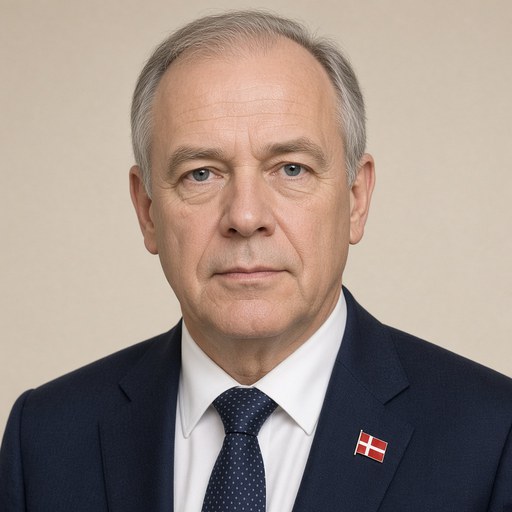
Speech at the Danish Industry and COIndustry conference on "Denmark's Future European Policy Agenda - On the Way to the Presidency 2002"
 Poul Nyrup Rasmussen · Prime Minister of Denmark
- Context
- Rasmussen addressed a Danish Industry and COIndustry conference in March 2001, outlining Denmark's preparations and key priorities for its upcoming 2002 EU Council Presidency.
- Main themes
- Danish EU presidency 2002, presidency preparation and organization, European Parliament engagement, ministerial coordination, EU policy agenda, public engagement and European debate, Denmark's role in EU, euro referendum aftermath, EU cooperation visibility, resource planning for presidency
- Duration
- ~47 min
- Words
- 5,638
- Sentences
- 293
- Readability
- 51
- Grade
- 10.8
- Syntax
- 3.01
- Vocabulary
- 2.03
Translated from Danish
The broad sphere of national life a sentence belongs to. Every sentence has an Arena, so it is the denominator the other indices are read against.
Other293 sentences in 65 paragraphs
'The Circle Closes in Copenhagen'
The government has, as its very first task, organized a quite extensive preparation process for our EU presidency. The worst thing that could happen at this stage would be to say: 'Oh well, that only takes a couple of months.' But the truth is that if we remember our presidency in the spring of 1993 and look at the Swedish preparations, we must say that it is a very large task we have ahead of us. It is a very resource-intensive task. It is a task that places very high demands on the government - the parliament - also here in the country.
The truth is that since the spring of 1993, quite significant changes have occurred in the way we work in the EU. May I mention one example, which I believe many do not consider or underestimate. It is the increasing role of the European Parliament.
I believe we must prepare for the fact that almost all of the government’s ministers, with a few exceptions, will be busy participating in the dialogue in the European Parliament. I even think it will require so much work that we will have to talk to the Folketing about whether it is feasible. That we should not be in two places at the same time. I hope the Folketing will understand this.
This is a presidency that effectively starts around September 1 and ends at the turn of the year. I would like to already suggest today that we plan, in terms of the Folketing's work and the EU presidency, so that we do not expose ourselves to unnecessary criticism from the European Parliament for not being present.
There has been – and in a way rightly so – a stronger awareness and self-awareness in the European Parliament. This means that it is expected that for the crucial debates, and even the less crucial ones, a minister is present. Even the Swedish presidency, which has been among the most diligent in attending the European Parliament, has faced an expectation that being present at the level of deputy ministers or at non-elected levels is no longer sufficient. So we must face the fact that we need to be there. We must face the fact that we need to plan – which is also absolutely necessary.
I have therefore agreed with the foreign minister that all of the government’s ministers are now starting – each in their own department – to prepare very carefully what they will deliver for the presidency. I have told them that if the permanent secretary says to you as a minister that first we need the money. I have then said that it is not forbidden to think, before you can get the money – perhaps you even need to qualify for it. For it is clear that a presidency will also cost resources and money. But we must start by looking at what tasks we need to solve. What administrative and political tasks each individual minister must take on? How should the tasks be organized, and how should we involve industry, trade unions, interest organizations, and all parties in our society?
I also believe that the presidency can become a new basis for revitalizing our European debate. I can see from our experiences in Sweden that there is much to suggest that there is a certain correlation between having a presidency and having a certain increasing awareness that even a smaller country can assert its influence if it does it well. Therefore, I see the presidency in several different dimensions. Firstly, that Denmark must show that we can do this. Secondly, that people should be able to see that Denmark can make a difference, and thirdly, that we politically must set ourselves some key issues. We must, of course, also be aware that when we have a presidency, we are the servants of European cooperation. One does not expect a presidency to place its own interests at the top. I certainly do not mean that one should be critical of a country looking after its own interests, but my point is that we, as the presiding country, must also naturally think of the whole.
We must make cooperation visible. We must contribute to demystifying cooperation, and we must contribute to nuance cooperation. We may also have a chance to show the population in Denmark how many threads – how many direct and indirect influences there actually are between Denmark and the surrounding European community. Examples upon examples can arise. And who knows? Even though the Danes sometimes say no when they could say yes and say yes when they could say no! I believe that many Danes in the referendum on September 28 actually sent us the main signal: 'It is just a bit too early.' I must also confess to myself today that it was a very difficult exercise. I still remember it: Standing there and saying that the euro is strong – it is rock solid. And ten seconds later on the TV screen, it says that the euro's exchange rate against the dollar has fallen. It was not an easy pedagogical task. I can understand that the Danes said: 'That won't do. Shouldn't we just wait and see…'
Everyone who knows me knows that it was not due to a lack of personal, political, and physical effort. Many of you here have similarly worked hard on the matter. That is not what I am talking about. I am talking about how important it is that we rediscover a dialogue between those who said yes and those who said no.
It is incredibly important, and I believe that we have good opportunities to do this if we organize our presidency wisely.
I would also like to compliment Dansk Industri and COIndustri for this event and for your persistence in the debate. I am pleased with the survey that you are also publishing today. It is gratifying to confirm that the Danes on September 28 indeed voted no by a majority. But the Danes did not turn their backs on Europe. The Danes do not want an isolated Denmark. The Danes want to see a country and a government and a Folketing that are active in European cooperation.
Let me take the ball on the debate theme today and talk about three major challenges that I believe we can contribute a little to.
First, to continue the work to establish and secure peace and stability in Europe. Second, to seize the opportunities of globalization, and third, to ensure and expand the popular anchoring that European cooperation must necessarily be based on.
First, peace, stability, and security in Europe. There is one major headline for the Danish presidency that is more important than the others: It is the EU's expansion to the East. I feel a special obligation to this because it was during the Danish presidency – in the spring of 1993 – that the so-called Copenhagen criteria were defined for the EU's expansion. Our vision, in the Danish government, is that during the second half of 2002 of the Danish presidency, we can close the circle. We can complete the crucial negotiations with a large number – hopefully most and hopefully all, but let us be realistic and say – with a large number of applicant countries. Thus, we can operate with a historical circle that finds its end in Copenhagen. From Copenhagen to Copenhagen. An almost 10-year period that will be a decisive breakthrough for the peace that must follow – and follows – the Cold War and the fall of the Berlin Wall.
We have seen new nations being born. We have seen new democracies emerging. We see economic and social development making its way, but we also see very significant human and personal costs following in its wake. We see disappointed expectations among broad segments of the population in the new democracies. Why is my real income, income, and employment not improving faster? Why are there not more jobs coming more quickly? The whole process from the old top-down communist dictatorship to the free market economy combined with democracy and a budding welfare state thinking takes time.
We have a deep obligation to help ensure that the disappointment that exists does not turn into a negative attitude towards Europe. I do not believe it needs to do so if we are persistent.
I believe we have a multidimensional task to lift. First, we must make it completely clear to ourselves – also in relation to the Danish population – that the EU's expansion is a win-win situation. Even from a small Danish perspective, it is advantageous to strongly support the EU's expansion. For Dansk Industri, for Danish jobs, for Danish exports, for Danish welfare, it is absolutely a winning situation. Then it is always a bit easier to be particularly idealistic. I believe that then we can advocate for the EU's expansion with even greater voice - also in the practical work. Ensure that our bilateral assistance, technically, politically, and economically, is top-notch in relation to the three Baltic countries, in relation to the other applicant countries. Ensure that the EU's budgets contain the necessary resources allocated for this and ensure that we continue our ongoing work for the renewal of the agricultural policy in the EU and create room to further support the expansion and the applicant countries.
I see a direct connection between the EU's future agricultural policy on one side and the expansion process on the other. Both in terms of the future of food prices. In terms of competition in the global markets, but also in terms of the possibilities for the EU's budget to lift the support tasks as strongly as possible in relation to the applicant countries.
It is clear that the new applicant countries will be the ones who will have to take on the largest part of the adjustment tasks. We place very high demands on them. They know it, and we know it, and they are doing what they can to meet them. I am pleased to see how many times the pessimists have been disappointed in their predictions about how long it would take for the applicant countries to meet the criteria and the demands we place on them.
Take Estonia, Latvia, Lithuania, or Poland: Just 5-6 years ago, most well-educated and smart economists believed that Polish society would be an agricultural economy for many years. Today we must say that everyone is deeply impressed by the Polish economic development. The same goes for the three Baltic countries. I think this is a strong emphasis that when we unleash democracy and economy, and when we develop a close cooperation between the European Union and the applicant countries, we see results. Estonia and Slovenia are now on par with each other and are the two societies that, measured against the Copenhagen criteria, measured against the economic opportunities, measured against the adjustments, have progressed the furthest.
I therefore believe that the first round of expansion can take place quite shortly after the end of the Danish presidency. I also believe we have a few things from previous expansions that we can learn from. If we take Spain, Portugal, and Greece, many of you may remember that there were indeed different transition periods, but for some of the countries, there were also common accession periods and common accession dates. Therefore, it is quite conceivable that the new group of countries, which will be the first group to become members of the EU, may have differences in their transition periods while joining at the same time and participating at the same time.
I consider it absolutely crucial that such a large group of countries joins in the first round. It will be the clear political line of the Danish government that the three Baltic countries join in the first round along with as many as possible – including Poland. I believe there are good opportunities for that. I believe the EU can lift the task. We have prepared ourselves with the Nice Treaty. One can have many opinions about the formulation of the Nice Treaty, but one cannot take away from it that it has established the foundation for the EU's expansion to now become a reality. This applies to the voting rules. This applies to the adaptation of the institutions – it is all set up.
The Danish presidency and the Commission have a long-standing good acquaintance with each other. I feel that the commissioner – Verheugen – who has the main responsibility for the negotiations has already demonstrated his professional expertise, his political commitment, and his strong ambition in the EU's expansion. Our good cooperation with the Commission from the government's side bodes well for us to achieve good results in the Danish summit round.
Stockholm on March 22-23, 2001, will be the first stop on that journey. I had a meeting with my colleague, Prime Minister Göran Persson, the other day. The Swedish presidency confirms to us that the pace is being maintained in the applicant countries, that we will have the opportunity in Stockholm to take a brief status check. We will not receive a new report from the Commission, but we have a new report that documents that the ambition I have outlined here will hold.
We will also have another dimension in Stockholm. We will be visited by Russia's new president, Putin, and will have the opportunity to add an extra dimension to the EU's expansion. We must not forget that the expansion should and must also lead to greater cooperation and freer cooperation with Russia and Ukraine. Two very large societies that are of absolutely crucial interest to us in terms of security policy, economic, trade, and peace policy. Here too, the Danish government, together with colleagues in Europe, will be frontrunners when it comes to renewal, opening up markets, and expanding cooperation with, among others, Russia. Such cooperation naturally also includes speaking frankly about each other's foreign policy. Both in terms of the critical situation regarding Chechnya, and in terms of the economic and employment aspects concerning the development of our societies.
The second major challenge facing the Danish EU presidency is globalization. A complex process. I would warn against - as I will do in relation to enlargement - falling into the trap of thinking that it is either something one supports or something one opposes. When it comes to globalization, one can at least state one thing, and that is that regardless of whether one supports globalization or opposes it – it is there. You cannot actually pull down the curtains on it, it is there. In all or most of what we do, the effects of globalization are visible. Therefore, we must relate to it.
Globalization affects our societies and populations in many ways. On the one hand, globalization is driven by a new IT technology and a new knowledge economy that we have never known before. On the other hand, globalization is also characterized by a number of old, familiar phenomena; tourism, trade with countries. The intensity has increased, and new technology has amplified the effects.
Globalization is propelled by a significant development that allows us today to speak of a new global marketplace. Globalization is also a consequence of political decisions regarding market openings, exchanges on the internet. Decisions that have been made because we were in no doubt that the free exchange of goods and markets is a crucial contribution to welfare – also for a society like the Danish.
On a more abstract level, globalization offers new opportunities that, if we understand how to exploit them, can be of great benefit to Danish society. The exchange of knowledge, the exchange of culture, the exchange of art is crucial for our own self-awareness and for our own dynamism.
But there are also problems.
Let me try to list them. First, there are the hard problems that are becoming much more visible now than they were before – and much more extensive: Human trafficking, money laundering, drug trade, and crime. All these phenomena – some of them have been with us for better or worse for a longer period, others have become clearer and more extensive – all these phenomena are also elements in the wake of the new globalization, which places increasing demands on us for effective European and international cooperation. We have taken strong action on this in Europe. We have followed up strongly in the Baltic Sea cooperation, and it must continue to be followed up effectively.
There is no doubt that the free exchange of goods, services, and capital is crucial for the conditions of our economic growth, but there is also no doubt that other risks are emerging. The technological development globally also means that the contrasts in our societies can become greater if we do not address it directly. The division in our society between those who have and those who do not have access to the new knowledge economy is something we should avoid. It requires an offensively formulated policy – both in Denmark and at the European level, and it is something we are extraordinarily active in. I believe those present are aware of this.
Another aspect of the issue is the environmental side. There is no doubt that if we do not provide a national and European response here, competition based on poor environmental standards or unregulated conditions will mean that our own environmental ambitions cannot be realized. Also, competition based on the lowest taxation can undermine our revenue sources for the modern welfare state in an unfortunate and unacceptable way. So there is much that needs to be initiated as a result of globalization if we are to reap its benefits and ensure that the negative effects are kept down and away.
I naturally wish for us to fully benefit from the welfare gains of globalization, but I also say that there is a need for more policy in relation to the unregulated behavior of market forces across the globe.
Market forces can create economic growth, but economic growth is not enough. We want it to go further. We want more policy in Europe and globally so that people can reap the full benefits.
I would also like to conclude this aspect by pointing to a new phenomenon that I believe we will need to analyze and relate to more clearly and increasingly. It is the digital economy, which one could call the knowledge economy.
I believe we will have to live with the fact that fluctuations in our new economy will occur more frequently and more extensively than we have been used to in the past. The 0-1 economy, one might call it. We know that in the American economy, the new IT-based industry accounts for up to 15-20% – depending on how one measures it – of the total American growth contribution. And I think we have seen signs that the discussion about sudden swings in the U.S. economy is now reflected not only in the financial markets but also in the growth rates of the American economy. One can choose to regard it as a purely short-term cyclical phenomenon. I believe it is wise not to settle for that, but also to regard it as a new structural phenomenon.
Denmark and Sweden are among the most developed IT nations in the world. We expect that in Denmark, the use of IT and IT-based industries will contribute a larger share of growth than what we see in the U.S. today. And in a few years, we will be at a turning point with Sweden, where up to a third – as the Swedes themselves say – of their total economic growth can be related to the new knowledge economy. It is clear that this is a development that will be reinforced in the coming years: Therefore, I also believe that we need to get used to thinking strategically about how we will relate to fluctuations that will come more frequently and perhaps also with shorter notice than we were used to before.
This requires persistence in economic policy in each of our countries. It requires a strong pull. A rejection of short-term temptations to deviate from the economic-political line in Denmark, just as it does in the rest of Europe.
Another aspect that is part of the globalization work is international trade. It is important that Denmark and Europe take the lead in the next WTO round. It is important that the arrangement is well-prepared. It is important that, unlike Seattle, it is based on a new mutual, respectful dialogue between the developing world, Europe, and the U.S. It is important that Europe does not only deal with the WTO as an extension of free trade but also adds new dimensions to trade. It is important that it is a broad agenda. That we do not only talk about the liberalization of world trade, but that we also link demands for the protection of workers' rights, the right to organize to these discussions. That we similarly move demands for environmental standards to these discussions, and that we likewise link demands for the protection of children and other forms of human rights abuses to our discussions.
And speaking of another major area, the environment, which will characterize the Danish presidency. Under the Danish EU presidency, a major UN environmental conference is likely to be held – a major summit – to mark the 10th anniversary of the Rio Summit on environment and development. The environmental summit will take place in South Africa, but it will be the Danish presidency that will take on the task in relation to the developing world and our African hosts. A huge task that I feel we are equipped for both through Danish experiences and the Danish commitment we have.
This EU presidency will thus have a very strong environmental dimension.
Another strong dimension is ASEM 4, which will also take place during the Danish presidency. This is cooperation between the European Union and the Southeast Asian countries, including China and Japan. The last summit took place – as many will remember – in Seoul, South Korea. Things are now arranged so that expectations for a tighter agenda, a more binding agenda at ASEM 4 in Copenhagen, are very high.
Many of my colleagues in Europe – I know that we are also working at the official level to organize the work – have high expectations for this summit. It will take place in September 2002 here in Denmark – in Copenhagen. It is an incredibly important summit. It will be a summit that must address the negative sides of globalization, as I mentioned. A summit that will have great significance also in relation to the WTO. A summit that will have great significance in relation to environmental issues. Therefore, I hope that you will receive it well. We will do everything we can to create the right and effective framework.
Then there is the internal market, which is of course the real European dimension in the discussion of globalization in economics and trade. We will never be finished with the internal market.
The internal market is an ongoing process, as Dansk Industri and CO-Industri correctly describe it. I believe that we should also invest considerable effort in it, because new dimensions are also emerging in the internal market. Trade via the Internet, to mention one example. We must ensure that companies do not face unfair competition when they sell their goods. Therefore, we must have common binding EU rules in the internal market – for example, on consumer protection for online trade. We see new circumvention opportunities that we can neither accept nor should accept. For example, the tendency towards unfair competition in taxation, as I mentioned earlier – in labor conditions and the environment. I believe that we should continue the work to establish minimum requirements in a number of taxation areas. Not least in the area of corporate taxation, I believe we have an important theme to address. There should certainly be no lack of Danish efforts in this area.
In the area of labor conditions and the environment, we must constantly – through our practical presentation of proposals – also illustrate to the Danish population that it is in their interest to create common minimum rules. Not to harmonize the level but to ensure protection against dumping.
Then there are other areas where we do not need binding common EU rules. These are areas that the Lisbon Summit identified as new, important additional dimensions to EU work. I believe it is very important to make it clear that what is happening in Europe right now is something that actually fits well with the Danish mentality. In Europe, we should not only talk about economic policy, about market forces. It is clear that economic development is a very important foundation. But we should also think about incorporating a labor market and social dimension as a balance in relation to the economy alone. This is precisely what we have taken on under the Lisbon Summit in March last year, where the heads of state and government decided, as a new strategic goal for the next 10 years, to say. I quote: 'To become the most competitive and dynamic knowledge-based economy in the world. An economy that must create sustainable economic growth with more and better jobs and greater social cohesion.' And a little further down in the same text, the term 'welfare state' is used as the foundation for the new European dimension.
I think it is important that we are frontrunners here. I would like to say that I consider it a main task also for the summit in Stockholm to contribute offensively and actively to this line. It is also important to convey to the Danish population that it is a special type of new cooperation, the new dimension that is now being added. The so-called open coordination method, the so-called best practice method, which does not aim to harmonize but aims to set common goals. Where it is then up to each country – through its own methods and tools – to achieve the common goal. First, that we reach an employment rate, an employment level for women as close to men as possible within a few years. For us, it is a natural goal and a reality. But for many other European societies, it is a very ambitious goal to realize. Second, to effectively combat social exclusion in our societies. This is not something the EU should dictate, but something we can all define as common goals. Once we have defined them as common goals, we will all benefit from it as we move towards them.
Third, in Stockholm, as a lead-up to the Danish presidency, two additional dimensions have been pointed out in the continuation of the Lisbon process. One is education. One might ask, why should the EU now get involved in that? The EU should not, in principle, but on the other hand, one must say that just as naturally as it is for the Danish government, for the Danish Parliament, for all of us, to be fully aware of how crucial education is as a foundation for economic growth, I can assure you that just as surely, we will be affected if other countries in Europe do not also define an advanced educational effort as a dynamic part of their economic growth. One could say that our interest is also that other societies prioritize education and thus competitiveness at the top of their agendas.
Another key element we will discuss in Stockholm and beyond, also under the Danish presidency, will be the issue of pensions and demographics. One might ask, why on earth?! Well, because if other countries do not, in line with us, address these problems, they will face economic setbacks, and we will be affected.
Let me illustrate this: The discussion we are having in Danish political life right now about the future development of an increasing number of elderly people in our society and a decreasing number of people in the labor market. This discussion is taking place in every EU country. It is incredibly important that each country also develops responses to this. The answers are different. We are in a special situation together with Sweden, Norway, and Finland, because we have such a high employment rate for men and women and therefore must find the answers in a slightly different way – an even more demanding way. In the central southern European societies, one can find the answers through a higher employment rate, as you are all aware. But the issue must be resolved, and it must be resolved in each individual society. A common goal and national tools.
Then there are other elements of free economic cooperation that also relate to both the national strategy and the EU strategy. Let me again mention the IT economy and let me mention how important it is that the free telecommunications market in Europe becomes a reality. Here, Denmark is among the countries that are actively working to finalize the directives that presuppose the liberalization of telecommunications regulation in the EU. I believe that this is in our interest, and I believe that it is a very dynamic part of our IT strategy.
Consumer protection, biotechnology, employment. The list is long in the areas where we have a number of common interests.
Let me conclude with my third area: To ensure – as best we can – a stronger interaction between ordinary people in their daily lives and in the EU. After Nice, what we do will be absolutely crucial for this stronger popular change.
We must try to see if we can reach a new fundamental treaty in the EU. I am in favor of having a simpler treaty. But I can also promise and assure that it is easier said than done. Many of those present who have worked with the EU over the years know this, and I know it especially well myself. I believe that the goal is worth pursuing. I hope a fundamental treaty can be part of the answer to bridge the Danish population up in Europe for that matter.
By a fundamental treaty, I mean a simpler treaty. And by a fundamental treaty, I also mean a treaty that, in a way, draws the line more clearly, as Max Bæhring pointed out. I would also caution against simply jumping on board the so-called competence catalog.
This is an issue that especially the German government has been working on since 1992. On the one hand, I can understand the attraction of a competence catalog, where one has very precisely described what is included and what is excluded. I must say: Be careful! There may be tasks that we do not foresee today, and that we will blame ourselves for not being able to handle because we drew a very precise catalog of what should be included and what should not.
Conversely, I believe it is absolutely necessary that we draw a line that is clearer in relation to the population. Knowledgeable EU people here in the room will say that we already have a line – and that is essentially true. The problem is that it is not clear enough. The problem is that there is concern in large parts of the Danish population, but there is also concern in other parts of the populations in Europe, I can assure you. There is a concern for: What about my identity, what about my country, what about my nation: Therefore, I believe that this is a task we must invest an incredible amount of thought into. The principle of proximity will be one of the methods, but other lines and methods must certainly be considered thoroughly. I am in favor of the line, and that it becomes clearer. I believe that it will benefit the public's sense of security regarding European cooperation. I just say at the same time that we must do it wisely, and we must do it with historical reach, then we can also find the solution.
The Charter of Fundamental Rights must also be clarified in terms of how it will be positioned in relation to the new treaty. I find that this charter is so promising and has so many positive elements in it that it will be natural for us to work on how the content of the charter can be placed in the new European treaty.
As you can hear, I believe the keys to rediscovering a broad public understanding of European cooperation lie in transparency, clarity, and simplification. It also lies in a European vision of a broad, peacefully anchored Europe from the Atlantic Ocean to the Ural Mountains. It lies in a demystification of what the EU is and what the EU is not. And it lies in a clarification of how much and how significant the EU is for Denmark and Denmark's future.
If we can do this, then we have done what we should do: Contribute to a peaceful, visionary European development perspective for the Danish population, for the Danish government, even though it may be the least important of all – but for Danish society as a whole.
That will be the ambition! Three important summits: An environmental summit, a summit with ASEM countries, a summit in December that will follow up on the overall enlargement. If we can achieve that, then we can also show that we can in Europe. It will create respect for us. Let us unite our efforts to achieve the results.
Thank you for the word.
The original Danish. The tags above are read on the English translation's sentences.
'Ringen sluttes i København'
Regeringen som det allerførste nu har tilrettelagt en ganske omfattende forberedelsesproces til vores EU-formandskab. Det værste der kunne ske i nuværende fase var, at man sagde: 'Nå ja, det behøver man vel kun et par måneder til'. Men sandheden er, at hvis vi både husker vort formandskab i foråret 1993 og ser på de svenske forberedelser må vi sige, at det er et meget stort arbejde, vi har foran os. Det er et meget ressourcekrævende arbejde. Det er et arbejde, der stiller meget store krav til regeringen - parlamentet - også her i landet.
Sandheden er jo den, at der siden foråret 1993 er sket ganske vigtige ændringer i måden at arbejde på i EU. Må jeg nævne ét eksempel, som jeg tror, at ganske mange ikke skænker en tanke eller undervurderer. Det er Europa-parlamentets stigende rolle.
Jeg tror, at man skal indstille sig på, at stort set samtlige regeringens ministre med enkelte undtagelser vil være travlt beskæftiget med at deltage i dialogen i Europa-parlamentet. Jeg tror endda det kommer til at kræve så meget arbejde, at vi kommer til at tale med Folketinget om, hvorvidt det kan lade sig gøre. At vi ikke skal være to steder på samme tid. Jeg håber, at Folketinget vil have forståelse for det.
Det er jo et formandskab, der starter reelt omkring 1. september og slutter ved årsskiftet. Jeg vil godt i dag allerede lægge op til, at vi planmæssigt når det gælder Folketingets arbejde og når det gælder EU-formandskabet, tænker det igennem, således at vi ikke udsætter os for unødig kritik fra Europa-parlamentet om, at vi ikke er der.
Der er sket – og på en måde med rette – en stærkere bevidstgørelse og selvbevidsthed i Europa-parlamentet. Det betyder, at man forventer at der til de afgørende debatter og også de mindre afgørende, er en minister til stede. Selv det svenske formandskab, som har været nogen af de flittigste til at møde op i Europa-parlamentet, har mødt en forventning om, at det at være til stede på viceminister-niveau eller på ikke-valgt niveau ikke længere er tilstrækkeligt. Så vi skal se i øjnene, at vi skal være der. Vi skal se i øjnene, at vi skal planlægge – hvad der også er helt nødvendigt.
Jeg har derfor aftalt med udenrigsministeren, at alle regeringens ministre nu er gået i gang med – hver i deres departement – at forberede meget nøje, hvad de skal levere til formandskabet. Jeg har sagt til dem, at hvis departementschefen siger til dig som minister, at først må vi have pengene. Jeg har så sagt, at det er ikke er forbudt at tænke,
før
man kan få pengene – måske skal man endda også kvalificere sig til dem. For det er klart, at et formandskab kommer også til at koste ressourcer og penge. Men, vi skal starte med at se på, hvad er det for opgaver vi skal løse. Hvad er det for administrative og politiske opgaver hver enkelt minister skal tage på sig? Hvordan skal opgaverne tilrettelægges, og hvordan skal vi inddrage industrien, fagbevægelsen, interesseorganisationerne og alle parter i vores samfund?
Jeg tror også, at formandskabet kan blive en ny basis for en revitalisering af vores europadebat. Jeg kan se på vores erfaringer i Sverige at meget tyder på, at der er en vis sammenhæng imellem det at have et formandskab og have en vis stigende bevidsthed om, at selv et mindre land kan gøre sin indflydelse gældende, hvis man gør det godt. Jeg ser derfor formandskabet i flere forskellige dimensioner. Dels at Danmark skal vise, at vi kan det dér. Dels at folk skal kunne se, at Danmark kan gøre en forskel, og dels at vi politisk skal sætte os nogle mærkesager. Vi skal selvfølgelig også være bevidste om, at når vi har et formandskab, er vi det europæiske samarbejdes tjenere. Man forventer ikke, at et formandskab sætter egne interesser øverst. Jeg mener selvfølgelig ikke, at man skal være kritisk indstillet over for, at et land varetager sine interesser, men min pointe er, at vi som formandskabsland også naturligvis skal tænke på helheden.
Vi skal gøre samarbejdet synligt. Vi skal bidrage til at afmytologisere samarbejdet, og vi skal bidrage til at nuancere samarbejdet. Vi har måske også en chance for at vise befolkningen i Danmark, hvor mange tråde – hvor mange direkte og indirekte påvirkninger, der i virkeligheden er imellem Danmark og det omkringliggende europæiske samfund. Eksempler på eksempler kan komme op. Og hvem ved? Selv om danskerne af og til siger nej, når de kunne sige ja og siger ja, når de kan sige nej! Jeg tror, at mange danskere til folkeafstemningen den 28. september i virkeligheden sagde, som hovedsignal til os: 'Det er lige tidligt nok'. Jeg må da også bekende ved mig selv i dag, at det var en meget svær øvelse. Jeg kan huske det endnu: At stå der og sige, at euroen er stærk – den er bomstærk. Og ti sekunder efter på tv-skærmen står, at euroens kurs i forhold til dollar’en er faldet. Det var ikke nogen nem pædagogisk opgave. Jeg kan sådan set godt forstå, at danskerne sagde: 'Den går ikke. Skal vi ikke lige vente og se…'
Alle der kender mig ved, at det ikke var manglen på personlig, politisk og fysisk indsats. Mange af jer her har jo tilsvarende arbejdet hårdt på sagen. Det er ikke det, jeg taler om. Jeg taler om, hvor vigtigt det er, at vi genfinder en dialog mellem dem, der sagde ja og dem der sagde nej.
Det er utroligt vigtigt og jeg tror, at vi har gode muligheder for at gøre det hvis vi tilrettelægger vort formandskab klogt.
Jeg vil også gerne komplimentere Dansk Industri og COIndustri for dette arrangement og for jeres vedholdenhed i debatten. Jeg glæder mig over den undersøgelse, som I i dag også offentliggør. Det er glædeligt at få bekræftet, at danskerne den 28. september ganske vist stemte nej ved et flertal. Men danskerne vendte ikke ryggen til Europa. Danskerne ønsker ikke et isoleret Danmark. Danskerne ønsker at se et land og en regering og et Folketing, der er aktive i det europæiske samarbejde.
Lad mig tage bolden op på debat-temaet i dag og tale om tre store udfordringer, som jeg tror, at vi kan bidrage et lille stykke med.
For det første at videreføre arbejdet for at fundere og sikre freden og stabiliteten i Europa. For det andet at gribe globaliseringens muligheder, og for det tredje at sikre og udbygge den folkelige forankring, som det europæiske samarbejde nødvendigvis må bygge på.
Først freden, stabiliteten og sikkerheden i Europa. Der er én stor overskrift for det danske formandskab, som er vigtigere end de andre: Det er EU's udvidelse mod Øst. Jeg føler en særlig forpligtelse dertil, fordi det jo var i det danske formandskab – foråret 1993 – at de såkaldte Københavner-kriterier blev defineret for EU's udvidelse. Vores vision, i den danske regering, er at vi under det danske formandskabs andet halvår 2002 kan slutte cirklen. Kan færdiggøre de afgørende forhandlinger hos et stort antal – forhåbentlig de fleste og forhåbentlig alle, men lad os nu være realistiske at sige – hos et stort antal ansøgerlande. Således at vi kan operere med en historisk cirkel der finder sin slutning i København. Fra København til København. En næsten 10-årig periode, der vil være et afgørende gennembrud for den fred, der skal følge efter – og følger efter – den kolde krig og Berlinmurens fald.
Vi har set de nye nationer blive født. Vi har set de nye demokratier vokse frem. Vi ser den økonomiske og sociale udvikling bane sig vej, men vi ser også meget betydelige menneskelige og personlige omkostninger følge i kølvandet. Vi ser skuffede forventninger hos brede befolkningslag i de nye demokratier. Hvorfor går det ikke stærkere med min realløn, indkomst og beskæftigelse? Hvorfor kommer der ikke flere arbejdspladser hurtigere? Hele processen fra det gamle topstyrede kommunistiske diktatur og til den frie markedsøkonomi kombineret med demokrati og en gryende velfærdsstats-tænkning tager jo tid.
Vi har en dyb pligt til at hjælpe til, at den skuffelse, der er der, ikke slår over i en negativ holdning til Europa. Det tror jeg heller ikke, at den behøver at gøre, hvis vi er vedholdende.
Jeg mener, at vi har en flerdimensionel opgave at løfte. For det første skal vi gøre det fuldstændig klart med os selv – også i forhold til den danske befolkning – at EU's udvidelse er en win-win situation. Selv set med små danske sko er det en fordel at gå kraftigt ind for EU's udvidelse. For Dansk Industri, for danske arbejdspladser, for dansk eksport, for dansk velfærd er det absolut en vindersituation. Så er det altid lidt lettere at være særdeles idealistiske. Jeg mener, at så kan vi med endnu større stemmekraft gå ind for EU's udvidelse -også i det praktiske arbejde. Sørge for at vores bilaterale bistand teknisk, politisk og økonomisk er på toppen i forhold til de tre baltiske lande, i forhold til de andre ansøgerlande. Sørge for at EU's budgetter rummer de fornødne ressourcer, der er afsat dertil og sørge for, at videreføre vores bestandige arbejde for fornyelsen af landbrugspolitikken i EU og skaber rum til at støtte udvidelsen og ansøgerlandene yderligere.
Jeg ser en direkte sammenhænge mellem EU's fremtidige landbrugspolitik på den ene side og udvidelsesprocessen på den anden. Både når det gælder fødevareprisernes fremtid. Når det gælder konkurrencen på de globale markeder, men også når det gælder mulighederne for, at EU's budget kan løfte støtteopgaverne så kraftigt som overhovedet muligt i forhold til ansøgerlandene.
Det er klart, at de nye ansøgerlande vil være dem, der skal løfte den største del af tilpasningsopgaverne. Vi stiller meget store krav til dem. De ved det, og vi ved, og de gør, hvad de kan for at leve op til dem. Jeg glæder mig over at se hvor mange gange pessimisterne er blevet skuffet i deres forudsigelser om, hvor lang tid det ville tage for ansøgerlandene at nå til de kriterier og de krav, vi stiller til dem.
Tag Estland, Letland, Litauen eller Polen: For blot 5-6 år siden var de fleste veluddannede og kloge økonomer af den opfattelse, at det polske samfund i mange år ville være et landsbrugsøkonomisk samfund. I dag må vi jo sige, at alle er dybt imponerede af den polske økonomiske udvikling. De tre baltiske landes med. Det synes jeg er en kraftig understregning af, at når vi slipper demokrati og økonomi løs, og når vi udvikler et tæt samarbejde mellem den Europæiske Union og ansøgerlandene, så ser vi resultater. Estland og Slovenien er jo på højde med hinanden nu og er jo de to samfund, som målt i forhold til Københavner-kriterierne, målt i forhold til de økonomiske muligheder, målt i forhold til tilpasningen er nået allerlængst.
Jeg er derfor af den opfattelse, at den første udvidelsesrunde kan finde sted ret kort tid efter det danske formandskabs udløb. Jeg mener også, vi har nogle enkelte ting fra tidligere udvidelser, vi kan lære af. Hvis vi tager Spanien, Portugal og Grækenland, så husker mange af jer måske, at man der ganske vist havde forskellige overgangsperioder, men man havde for nogle af landenes vedkommende også fælles tiltrædelsesperioder og fælles tiltrædelsestidspunkter. Man kan derfor udmærket forestille sig, at den nye gruppe af lande, som vil være den første gruppe der vil blive medlemmer af EU, kan have forskelligheder i deres overgangsperioder med tiltrædelse på samme tidspunkt og deltagelse på samme tidspunkt.
Jeg anser det for helt afgørende, at så stor en gruppe af lande kommer med i første runde. Det vil være den danske regerings klare politiske linie at de tre baltiske lande kommer med i første runde sammen med så mange som muligt – Polen inklusive. Jeg tror, at der er gode muligheder derfor. Jeg tror, at EU kan løfte opgaven. Vi har gjort os klar med Nice-traktaten. Man kan mene meget om Nice-traktatens udformning, men man kan ikke tage fra den, at den har etableret baggrunden for, at EU's udvidelse nu kan blive en realitet. Det gælder stemmereglerne. Det gælder institutionernes tilpasning – det er lagt til rette.
Det danske formandskab og Kommissionen har et årelangt godt kendskab til hinanden. Jeg føler, at den kommissær – Verheugen – som har hovedansvaret for forhandlingerne allerede nu har dokumenteret sin faglige ekspertise, sit politiske engagement og sin stærke ambition i EU's udvidelse. Vores gode samarbejde med Kommissionen fra regeringens side lover godt for at vi kan komme igennem med gode resultater i den danske topmøde-runde.
Stockholm den 22. – 23. marts 2001 vil være den første mellemstation på den vej. Jeg havde møde med min kollega, statsminister Göran Persson forleden. Det svenske formandskab bekræfter os i, at tempoet holdes i ansøgerlandene, at vi i Stockholm får lejlighed til lige at gøre en kort status. Vi får ikke en ny rapport fra Kommissionen, men vi har en ny rapport, der dokumenterer, at den ambition, jeg her har skitseret, den vil holde.
Vi får også en anden dimension i Stockholm. Vi får besøg af Ruslands nye præsident Putin og får der mulighed for at lægge en ekstra dimension til EU's udvidelse. Vi må ikke glemme, at udvidelsen også skal og bør trække et større samarbejde og et friere samarbejde med Rusland og Ukraine . To meget store samfund, som sikkerhedspolitisk, økonomisk, handelsmæssigt og fredspolitisk er af fuldstændig afgørende interesse for os. Også her vil den danske regering sammen med kollegerne i Europa være frontløbere, når det gælder fornyelse, åbning af markederne, udbygning af samarbejdet med bl.a. Rusland. Til et sådant samarbejde hører naturligvis også at vi taler rent ud af posen om hinandens udenrigspolitik. Både når det gælder det kritiske i forhold til Tjetjenien, og når det gælder det økonomiske og det beskæftigelsesmæssige i forhold til vores samfunds udvikling.
Den anden store udfordring, som det danske EU-formandskab står over for, er globaliseringen. En kompleks proces. Jeg vil advare mod - at vi forfalder til - på samme måde som jeg vil gøre det i forhold til udvidelsen - at det enten er noget man går ind for, eller noget man er imod. Når det gælder globaliseringen, kan man i hvert fald fastslå én ting og det er, at uanset om man går ind for globalisering eller er imod den – så er den der. Man kan faktisk ikke rulle gardinerne ned for den, den
er
der. I alt eller det meste af det, vi foretager os er globaliseringens effekter synlige. Derfor må vi forholde os til den.
Globaliseringen påvirker vores samfund og befolkninger på mange måder. På den ene side er globaliseringen drevet frem af en ny IT-teknologi og en ny videnøkonomi, som vi aldrig før har kendt. På den anden side karakteriseres globaliseringen også ved en række gamle, kendte fænomener; turisme, handel med lande. Intensiteten er øget, og ny teknologi har forstærket effekterne.
Globaliseringen er båret frem af en markant udvikling der gør, at vi i dag kan tale om en ny global markedsplads. Globaliseringen er også en konsekvens af politiske beslutninger om åbninger af markeder, udveksling på internettet. Beslutninger som er truffet, fordi vi ikke var i tvivl om, at den fri udveksling af varer og markeder er et afgørende velfærdsbidrag – også til et samfund som det danske.
På det mere abstrakte plan giver globaliseringen nye muligheder, som hvis vi forstår at udnytte dem, kan være til stor gavn for det danske samfund. Udveksling af viden, udveksling af kultur, udveksling af kunst er afgørende for vores egen selvbevidsthed og for vores egen dynamik.
Men der er også problemer.
Lad mig prøve at liste dem op. Det er for det første de hårde problemer, som bliver meget mere synlige nu, end de var før – og meget mere omfangsrige: Menneskehandel, sorte penge, der skal vaske hvide, handel med narkotika og kriminalitet. Alle disse fænomener – nogen af dem har været hos os på godt og ondt i en længere årrække andre er blevet tydeligere og mere omfangsrige – alle disse fænomener er også elementer i kølvandet af den ny globalisering, som stiller stigende krav til os som et europæisk og internationalt effektivt samarbejde. Vi har taget stærkt fat på det i Europa. Vi har fulgt stærkt op på det i Østersøsamarbejdet, og det skal fortsat følges effektivt op.
Der er ingen tvivl om, at den fri udveksling af varer, tjenester og kapital er afgørende for vores økonomiske væksts betingelser, men der er heller ingen tvivl om, at andre risici melder sig. Den teknologiske udvikling globalt set gør også, at kontrasterne i vores samfund kan blive større, hvis vi ikke tager direkte fat på det. Opdelingen i vores samfund mellem dem, der har, og dem der ikke har adgang til den ny vidensøkonomi, er noget, vi bør undgå. Det kræver en offensiv formuleret politik – både i Danmark og på europæisk plan, og det er noget vi er overordentlig aktive inden for. Det tror jeg, de tilstedeværende er bekendt med.
En anden side af sagen er miljøsiden. Der er ingen tvivl om, at hvis vi ikke her leverer et nationalt og europæisk svar, så vil konkurrence på dårligt miljø eller uregulerede forhold betyde, at vores egne miljøambitioner ikke kan realiseres. Også konkurrence på laveste beskatning kan udhule vores indtægtskilder til det moderne velfærdssamfund på en uheldig og uacceptabel måde. Så der er meget, der skal igangsættes som følge af globaliseringen, hvis vi skal nyde godt af dens frugter og sørge for, at de negative virkninger holdes nede og væk.
Jeg ønsker naturligvis, at vi får fuldt udbytte gennem velfærdsgevinsterne af globaliseringen, men jeg siger også, at der er brug for mere politik i forhold til markedskræfternes uregulerede adfærd over kloden.
Markedskræfterne kan skabe økonomisk vækst, men økonomisk vækst er ikke nok. Vi ønsker, at det skal gå videre. Vi ønsker mere politik i Europa og på globalt plan, så mennesker kan få det fulde udbytte.
Jeg vil også gerne afrunde den side af sagen med at pege på et nyt fænomen, som jeg tror vi får brug for at analysere og forholde os tydeligere og tydeligere til. Det er den digitale økonomi, som man kunne kalde videnøkonomien.
Jeg tror, at vi kommer til at leve med, at udsvingene i vores ny økonomi kommer til at forekomme hyppigere og mere omfattende, end vi har været vant til tidligere. 0-1-økonomien, kunne man kalde det. Vi ved, at i den amerikanske økonomi udgør den ny IT-baserede industri op til 15-20 % - lidt afhængigt af hvordan man måle den – af det samlede amerikanske vækstbidrag. Og jeg synes, at vi har set tegn på, at diskussionen om pludselige sving i USA's økonomi også nu afspejles ikke alene på de finansielle markeder men også i vækstprocenterne i amerikansk økonomi. Man kan vælge at forholde sig til det som et rent kortsigtet konjunkturfænomen. Jeg tror det er klogt ikke at nøjes med det, men også at forholde sig til det som et nyt strukturelt fænomen.
Danmark og Sverige er jo nogle af de mest udviklede IT-nationer i verden. Vi regner med, at vi i Danmark vil se, at anvendelsen af IT og de IT-baserede erhverv vil bidrage med en større andel af væksten, end det vi ser i USA i dag. Og om få år vil vi være på omdrejningshøjde med Sverige, hvor op imod en trediedel – siger svenskerne selv – af deres samlede økonomiske vækst kan relateres til den ny videnøkonomi. Det er klart, at det er en udvikling, der vil blive forstærket i de kommende år: Derfor tror jeg også, at vi skal vænne os til at tænke strategisk på, hvordan vi vil forholde os til svingninger, der vil komme hyppigere og måske også med kortere varsel, end vi var vant til det tidligere.
Det kræver vedholdenhed i den økonomiske politik i hvert af vore lande. Det kræver et sejt træk. En afvisning af kortsigtede fristelser til at fravige den økonomisk-politiske linie i Danmark, ligesom det gør i resten af Europa.
Et andet aspekt, som hører med i globaliseringsarbejdet er den internationale handel. Det er vigtigt at Danmark og Europa stiller sig i spidsen for den næste WTO-runde. Det er vigtigt, at ordningen bliver velforberedt. Det er vigtigt at den i modsætning til Seattle bygger på en ny gensidig, respektfyldt dialog mellem den tredje verden, Europa og USA. Det er vigtigt at Europa ikke alene beskæftiger sig med WTO som en udvidelse af frihandelen, men også lægger nye dimensioner til handelen. Det er vigtigt, at det er en bred dagsorden. At vi ikke alene taler om liberalisering af verdenshandelen, men at vi også knytter ønsker om varetagelsen af arbejdstagerrettigheder, retten til at organisere sig til disse drøftelser.At vi tilsvarende flytter ønsker om miljøstandarder til disse drøftelser, at vi tilsvarende knytter ønsker om beskyttelse af børn og anden form af tendens til misbrug af mennesker til vores drøftelser.
Og apropos et andet stort felt, miljøområdet, som kommer til at præge det danske formandskab. Under det danske EU-formandskab afholdes formentlig en stor FN-miljøkonference – et stort topmøde – i anledning af 10-året for Rio-topmødet for miljø og udvikling. Miljøtopmødet finder sted i Sydafrika, men det vil være det danske formandskab, der skal løfte opgaven i forhold til den 3. verden og vores afrikanske værter. En kæmpe opgave som jeg føler, vi er rustet til både gennem de danske erfaringer, og det danske engagement, vi har.
Dette EU-formandskab får altså en meget stærk miljømæssig dimension.
En anden stærk dimension er ASEM 4, som også kommer til ligge i det danske formandskab. Det er jo samarbejde mellem den Europæiske Union og de syd-østasiatiske lande inkl. Kina og Japan. Det sidste topmøde fandt sted – som mange vil kunne erindre det – i Seoul i Sydkorea. Tingene er nu lagt til rette sådan, at forventningerne til en strammere dagsorden, en mere forpligtende dagsorden på ASEM 4 i København, er meget store.
Mange af mine kolleger i Europa – jeg ved også at vi på embedsmandsplan er i gang med at tilrettelægge arbejdet – har store forventninger til det topmøde. Det vil finde sted i september måned 2002 her i Danmark –i København. Det er et utroligt vigtigt topmøde. Det vil være et topmøde, der både skal forholde sig til de negative sider af globaliseringen, som jeg var inde på. Et topmøde, der vil få stor betydning også i forhold til WTO. Et topmøde, der vil få stor betydning i forhold til miljøproblemerne. Derfor håber jeg, at I vil tage vel imod. Vi vil gøre alt, hvad vi kan for at kreere den rigtige og effektfulde ramme.
Så er der det indre marked, som selvfølgelig er den egentlige europæiske dimension i diskussionen om globaliseringen på økonomi og på handel. Vi bliver aldrig færdige med det indre marked.
Det indre marked er en fortløbende proces, som Dansk Industri og CO-Industri korrekt beskriver det. Jeg mener, at vi også her skal investere ganske megen kraft i det, fordi der også kommer nye dimensioner til det indre marked. Handel via Internet for at nævne et eksempel. Vi må sikre, at virksomhederne ikke støder på unfair konkurrence, når de skal sælge deres varer. På det indre marked må vi derfor have fælles forpligtende EU-regler – f.eks. om forbrugerbeskyttelse for handel på Internet. Vi ser nye omgåelsesmuligheder, som vi hverken kan eller skal acceptere. F.eks. tendensen til unfair konkurrence på beskatning, som jeg nævnte før – på arbejdsmiljø og miljø. Jeg tror, at vi skal videreføre arbejdet med at få etableret mindstekrav på en række beskatningsområder. Ikke mindst på selskabsbeskatningsområdet, tror jeg, vi har et vigtigt tema at tage op. Der skal i hvert fald ikke mangle dansk indsats på dette felt.
På arbejdsmiljø- og miljøområdet skal vi hele tiden – gennem vores praktiske fremlæggelse af forslag - illustrerer også for den danske befolkning at det er i jeres interesse, at der skabes fælles minimumsregler. Ikke for at harmonisere niveauet men for at sikre beskyttelse mod dumping.
Så er der andre områder, hvor vi ikke har behov for forpligtende fælles EU-regler. Det er områder, som Lissabon-topmødet udpegede som nye, vigtige ekstra dimensioner til EU-arbejdet. Jeg tror, det er meget vigtigt at gøre sig klart at det der sker i Europa lige nu er noget, der i virkeligheden passer godt til dansk mentalitet. I Europa skal vi ikke alene tale om økonomisk politik, om markedskræfter. Det er klart, at den økonomiske udvikling er en meget vigtig grundstamme. Men vi skal også tænke i at få en arbejdsmarkeds- og social dimension ind som en balance i forhold til økonomien alene. Det er præcis det, vi i virkeligheden har taget på os under Lissabon-topmødet i marts sidste år, hvor stats- og regeringscheferne besluttede, som et nyt strategisk mål for de næste 10 år at sige. Jeg citerer: 'At blive den mest konkurrencedygtige og dynamiske videnbaserede økonomi i verden. En økonomi der skal skabe en holdbar økonomisk vækst med flere og bedre jobs og større social samhørighed.' Og lidt længere ned i samme tekst bruger man udtrykket 'velfærdsstaten' som fundamentet for den nye europæiske dimension.
Jeg synes, det er vigtigt, at vi er frontløbere her. Jeg vil gerne sige, at jeg anser det som en hovedopgave også til topmødet i Stockholm at bidrage offensivt og aktivt til denne linie. Det er også vigtigt at få sagt til den danske befolkning, at det er en særlig type nyt samarbejde, den nye dimension, der nu bliver lagt til. Den såkaldte åbne koordinationsmetode, den såkaldte best practice metode, som altså ikke handler om at harmonisere, men handler om at sætte sig fælles mål. hvor det så er op til det enkelte land – via egne metoder og værktøjer – at nå det fælles mål. For det første, at vi i løbet af en årrække når en erhvervsfrekvens, beskæftigelsesgrad for kvinder så tæt på mændene som overhovedet muligt. For os er det en naturlig målsætning og en realitet. Men for mange andre europæiske samfund er det en meget stor målsætning at realisere. For det andet at gå effektivt op imod effektivt social udstødelse i vores samfund. Det er ikke noget EU skal diktere, men noget vi allesammen kan definere som fælles mål. Når vi har defineret dem som fælles mål, så får vi alle gavn af det efterhånden, som vi bevæger os derhen.
For det tredje har man i Stockholm som opspil, også til det danske formandsskab, peget på to ekstra dimensioner i videreførelsen af Lissabon-processen. Den ene er uddannelse. Man kan sige, at hvorfor skal EU nu blande sig i det? Det skal EU i og for sig heller ikke, men omvendt må man jo sige, at lige så naturligt det er for den danske regering, for det danske Folketing, for os alle sammen, at vi er fuldstændig klar over, hvor afgørende uddannelsen er som fundament for den økonomiske vækst, da kan jeg love jer, at lige så sikkert er det, at vi vil blive ramt hvis de andre lande i Europa ikke også definerer en avanceret uddannelsesindsats som en dynamisk del af deres økonomiske vækst. Man kan sige, at vores interesse også er, at de andre samfund sætter uddannelse og dermed konkurrencekraft øverst på dagsordenen.
Et andet hovedelement vi kommer til at diskutere i Stockholm og videre frem, også under det danske formandskab, bliver pensionsspørgsmålet og demografispørgsmålet. Man kunne sige, hvorfor i alverden det?! Jo, for hvis de andre lande ikke, på linie med os, tager fat om de problemer, så får de økonomiske tilbageslag, og så bliver vi ramt.
Lad mig illustrere det: Den diskussion vi har i det danske, politiske liv lige nu om den fremtidige udvikling af, at vi bliver flere ældre i vores samfund og at vi bliver færre på arbejdsmarkedet. Den diskussion har man i hvert eneste EU-land. Det er utroligt vigtigt, at hvert land også udvikler svar derpå. Svarene er forskellige. Vi er i en særlig situation sammen med Sverige, Norge og Finland, fordi vi har så høj en erhvervsfrekvens for mænd og kvinder og derfor må finde svarene på en lidt anden måde – en endnu mere krævende måde. I de centrale sydeuropæiske samfund kan man finde svarene ved en højere beskæftigelsesgrad, som I alle er klar over. Men sagen skal løses, og den skal løses i hvert enkelt samfund. Et fælles mål og nationale værktøjer.
Så er der andre elementer af det frie, økonomiske samarbejde, som også har at gøre med både den nationale strategi og EU-strategien. Lad mig igen nævne IT-økonomien og lad mig nævne, hvor vigtigt det er, at det frie telemarked i Europa bliver en realitet. Her er Danmark med blandt de lande, som aktivt arbejder på at få færdiggjort de direktiver, der forudsætter liberaliseringen af telereguleringen i EU. Jeg tror, at det er i vores interesse, og jeg tror, at det er en meget dynamisk del af vores IT-strategi.
Forbrugerbeskyttelse, bioteknologi, beskæftigelse. Listen er lang på de områder, hvor vi har en række fælles interesser.
Lad mig runde af med mit tredje felt: At sikre – så godt vi nu kan – et stærkere samvirke mellem almindelige mennesker i deres dagligdag og i EU. Efter Nice vil det, vi foretager os, være fuldstændig afgørende for denne stærkere folkelige forandring.
Vi skal prøve at se, om vi kan nå frem til en ny grundtraktat i EU. Jeg er tilhænger af, at vi får en enklere traktat. Men jeg kan også godt love og forsikre, at det er lettere sagt end gjort. Det ved mange af de tilstedeværende, der har arbejdet med EU igennem årene, og det ved ikke mindst jeg selv. Jeg mener, at målet er værd at gå efter. Jeg håber, en grundtraktat kan blive en del af svaret på at bygge bro i den danske befolkning op i Europa for den sags skyld.
Med en grundtraktat mener jeg en enklere traktat. Og med en grundtraktat mener jeg også en traktat, der på en måde trækker stregen tydeligere, som Max Bæhring var inde på. Jeg vil til gengæld også advare mod, at vi uden videre kaster os ombord i det såkaldte kompetencekatalog.
Det er jo en sag som især den tyske regering har arbejdet med siden 1992. Jeg kan på den ene side godt forstå attraktionen i et kompetencekatalog, hvor man meget nøje har beskrevet ud med det ene og ind med det andet. Jeg må sige: Pas nu på! Der kan komme opgaver, som vi ikke forudser i dag, og som vi vil bebrejde os selv, vi ikke kan løfte, fordi vi tegnede et meget præcis katalog om, hvad skal de, og hvad skal de ikke.
Omvendt tror jeg, at det er helt nødvendigt at vi får trukket en streg, der er klarere i forhold til befolkningen. Kyndige EU-folk her i salen vil sige, at vi allerede har en streg – og det er sådan set også rigtig nok. Problemet er, at den ikke er tydelig nok. Problemet er, at der i store dele af den danske befolkning er en bekymring men det er der også i andre dele af befolkningerne i Europa, kan jeg forsikre jer for. Der er en bekymring for: Hvad med min identitet, hvad med mit land, hvad med min nation: Derfor tror jeg, at det er et arbejde, vi skal investere utrolig megen tankekraft i. Nærhedsprincippet vil være en af metoderne, men andre streger og metoder skal bestemt overvejes grundigt. Jeg er tilhænger af stregen, og at den bliver tydeligere. Jeg tror, at det vil gavne den folkelige tryghed ved det europæiske samarbejde. Jeg siger bare samtidig, at vi skal gøre det klogt, og vi skal gøre det med historisk rækkevidde, så kan vi også finde løsningen.
Chartret for grundlæggende rettigheder skal vi også have gjort klart, hvordan det skal placeres i forhold til den nye traktat. Jeg finder, at det charter er så løfterigt og har så mange positive elementer i sig, at det for os vil være naturligt at arbejde for, hvordan chartrets kan indhold blive placeret i den europæiske nye traktat.
Som man kan høre, tror jeg, nøglerne til at genfinde en bred folkelig forståelse for det europæiske samarbejde ligger i gennemsigtighed, klarhed, forenkling. Det ligger også i en europæisk vision om et bredt, fredeligt forankret Europa fra Atlanterhavet til Uralbjergene. Det ligger i en afmytologisering om, hvad EU er og hvad EU ikke er. Og det ligger i en tydeliggørelse af, hvor meget og hvor stor betydning EU har for Danmark og Danmarks fremtid.
Kan vi gøre det, så har vi gjort det, vi skulle gøre: At bidrage til et fredeligt, et visionært, europæisk udviklingsperspektiv for den danske befolkning, for den danske regering, selvom det måske er det mindst vigtige af det hele – men for det danske samfund som helhed.
Det vil være ambitionen! Tre vigtige topmøder: Et miljø-topmøde, et topmøde med ASEM-landene, et topmøde i december som skal samle op på den samlede udvidelse. Kan vi præstere det, så kan vi også vise, at vi kan i Europa. Det vil skabe respekt om os. Lad os forene vore kræfter om at nå de resultater.
Tak for ordet.