




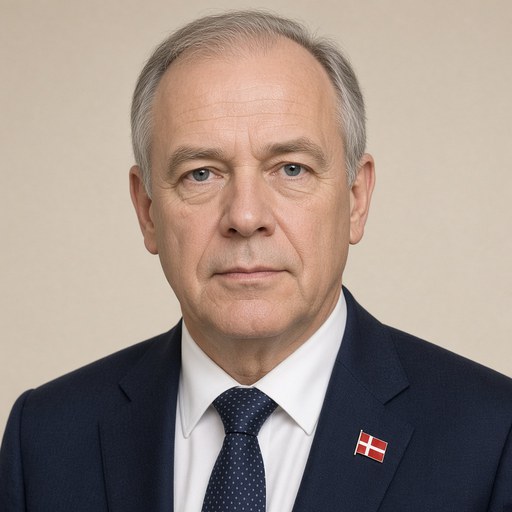
"I MAKE A DIFFERENCE." Prime Minister Poul Nyrup Rasmussen's speech at the Night Owls' annual meeting on March 31, 2001, in Odense.
 Poul Nyrup Rasmussen · Prime Minister of Denmark
- Context
- Rasmussen addressed the Night Owls' annual meeting in Odense on March 31, 2001, praising their voluntary street patrol work and social responsibility efforts.
- Main themes
- Social responsibility, voluntary community work, night owls movement, Danish welfare society, community bonds, crime and violence prevention, human dignity and equality, public sector safety net, integration and immigrant communities, listening and empathy, civic engagement
- Duration
- ~30 min
- Words
- 3,632
- Sentences
- 224
- Readability
- 68
- Grade
- 7.8
- Syntax
- 2.81
- Vocabulary
- 1.85
Translated from Danish
The broad sphere of national life a sentence belongs to. Every sentence has an Arena, so it is the denominator the other indices are read against.
Other224 sentences in 35 paragraphs
There is a difference between ravens and night owls. The night owls are indispensable. The night owls have the yellow trait, like you. The night owls are nice people who, in reality, thrive in community, as it turns out upon closer study. We really need you – all night owls in modern society. In a society where the bonds between people are not what they used to be. In a society where communities, in a way, need to be strengthened. I am not saying that there are no communities, but I am saying they are smaller than they were before, and they have fewer connections with each other than they had before. We need each other, and you are doing a tremendous job. I am grateful for the invitation, and I am happy to have the opportunity to support you as best I can.
Social responsibility is the title of my speech here today. But what can I tell you about social responsibility? You know it well. You are it. You are a picture of it in practice and in attitudes. To make a voluntary and local effort and create safety in our local communities and contribute to preventing violence and crime. To spend your Friday and Saturday evenings and nights walking around the streets and alleys of the cities – yes, that is a testament to true commitment, to social responsibility and the will, as it beautifully states, to make a difference. I believe that it is part of life to use it actively and to use it in a way that makes a difference.
There is no doubt that a lot has been achieved in Denmark. We are a country that has the highest quality of life in the world, if international measurements are to be believed. And perhaps on that point, there is some truth to it. But still, there is something that has not kept up and in any case, something we have not maintained.
I have always believed that what should bind us together is a common recognition that each and every one of us has value. Not by virtue of who has given birth to us or by virtue of what we have inherited, but solely by virtue of the fact that we are human. And I sometimes feel that I miss the full consequence of that recognition and that value being taken. Therefore, I would like to see more night owls. And I know you can show very impressive results in that regard. But also that the inner value on which you build – that it spread more clearly. We should be a country that shows the way forward to welfare and quality of life and that is based on helping each other. No one does well completely alone.
For me, the Danish responsible society is built on very clear values. Responsibility for each other – a special responsibility for the weakest, and that we must take good care of what cannot be measured in money. In a country like ours, the public sector must ensure that there is room for all of us. That no one falls through – at least not completely through. That even if you have lost once, you are not lost. The public sector is, in short, a kind of foundation for everyone in Denmark to have the right to a good life. A foundation where we can each, figuratively speaking, build our little house or perhaps find our way to a whole and decent life, but where it is social responsibility – the desire to be something for others – that ultimately holds it all together. It is the cement between the bricks in the houses we are now building.
And again, I will say that one might think that your birth as night owls perhaps did not quite fit into the usual pattern in the Danish welfare society's perception. But you are beautiful. You are skilled. And you are making a fantastic effort. I believe that. The entire government believes that. And fortunately, more and more people believe that. Therefore, you are making a difference. Extending a helping hand. Supplementing the system when the system has closed, and Johnny has left the social office after 4 PM. When the social army has gone home, there must be some to receive – to have a conversation.
And when Archmed from the Palestinian refugee camp, who may not have experienced anything other than first tents in the 50s, then single-story concrete houses, then two-story – which were built further out and then three-story, which shut down the last light to the alleys. And then neighbors who did not understand that peace is not made by encircling and by emphasizing. That peace is made by creating progress. We must understand that if we do not understand people's backgrounds, we do not understand how to prevent violence. Then it can go terribly wrong. I believe that you show, through your activity, that you understand people, their backgrounds, and thus also understand how important it is to listen. Just listening. Just being interested in people who are in trouble and who in desperation can therefore do something they bitterly regret afterwards – not to mention those who are unfairly affected – just being interested in people – that is a breakthrough that is so significant in the 21st century.
This society is really about – should we go the way that individuality turns into egoism? Or should we go the way that individuality turns into an even stronger community? That individuality and community are not opposites, but prerequisites for each other? That would be incredibly exciting. And that is what the night owls, and you in reality, contribute to. I am convinced that most people here in the country are aware that if we are to continue to have a whole society that does not break in half, we need to stick together, and that each of us does something.
Politics and life are about doing something. But politics and life and daily work are also about doing something for each other. I am sure you can feel it, you night owls, that when you have been there this night, and you have had that conversation with the Palestinian boy, taken the lad by the collar and said, 'you know what my friend, why don’t we talk together instead of letting your inner anger explode into something you will bitterly regret?'
There is no stronger feeling inside: A feeling of having made a small difference. When we add up all those differences, they make a big difference.
You are part of something that is fantastic in Denmark. Denmark is the land of voluntary organizations. Did you know that about 1.2 million people regularly perform voluntary work, unpaid work in Denmark? Up to 300,000 people in Denmark perform voluntary work. One can become a little proud of that.
The UN has declared the year 2001 as the Year of Volunteering. I would say that if we were to illustrate how much voluntary work really means in Denmark, just imagine if the entire sports sector did not have sports organizations – they would disappear. The entire scouting sector would come to a standstill. Where would the holiday camps for the disabled be, for example, where would the women affected by violence go? What about the Nikolaj service, the AIDS line, the visiting friends, etc.? We would lack an important part of society. We would lack community.
There is no doubt that most Danes value voluntary work. The Social Research Institute has conducted a study. More than 3/4 of people strongly agree that voluntary social work helps promote people's understanding and responsibility for each other.
The government also recognizes the great effort made by our volunteers. Former Social Minister Karen Jespersen implemented a law change a couple of years ago that aims to strengthen voluntary social work locally in municipalities and counties. Municipalities and counties were required to collaborate with voluntary organizations and provide them with financial support. It is my impression that this has significance for the expansion of that work in many places in the country, and Henrik Dam will now follow up on that. In the UN's Year of Volunteering, the government will again focus on voluntary work.
In the Year of Volunteering, we will focus on three things:
First, the values in voluntary work. What qualities does voluntary work build on? I have mentioned some of them today. And how do we improve the interaction between voluntary efforts on one side and the public sector on the other side? For both are supplements to each other. We do not replace each other – at least we should not. We should not step on each other's toes or get in the way when we are to supplement each other.
Secondly, the UN's Year of Volunteering is an opportunity to involve new groups in voluntary work, so we ensure the coherence of the work as best as possible. The group of voluntary enthusiasts must be made even broader, even stronger so that children and young people, especially from other ethnic backgrounds, experience that there is also care and a future for them.
And thirdly, there should be heightened attention in the Year of Volunteering regarding the collaboration between the voluntary sector and the public sector – especially counties and municipalities. This year, we will carry out a number of events. And therefore, it fits so well with your annual meeting here, which is to make voluntary work visible. We in the government will come up with two larger initiatives here in the spring.
Next month, we will present a mapping of what barriers there may be to voluntary efforts. Here we will simply look at what rules we have that were introduced in the 90s. Can they be improved? Can they be adjusted? Are there some that should be removed?
If I mention taxation and local grants, I believe you understand what I mean. During the spring, the government will also invite voluntary organizations to jointly develop what I would call a charter for future collaboration between Association Denmark and the public sector. A charter that should clearly emphasize what values we want to build on. What values should be fundamental in the future? A partnership that on one side ensures the independence of the associations and on the other side incorporates the voluntary effort in the development of the overall welfare of society.
I want to emphasize that we in the government see the voluntary effort and the public, social services as two cornerstones in our society, which live side by side and precisely in a hopefully better and better interaction.
I will mention a couple of specific areas regarding the night owls and the interaction with the social initiatives we have taken in the government and that are being implemented around municipalities and counties. Three areas that I think are important:
But before I get to all the formalities, I have good reason to emphasize how central it is that we understand each other. That we build on tolerance. That we reach the boys before it goes completely wrong. I have mentioned the Palestinian boy, and there are others that could similarly be told about. But I would also like to emphasize the attitudes. A few years ago, there was a campaign in the public school where young boys talked about this violence, and they said, 'it should not be cool to carry a knife, it should be cowardly.' I believe that by talking together. By discussing it, telling how bad it can go, but also telling how well it can go, attitudes can be changed.
Attitudes, care, conversation, and listening to each other are a very, very crucial part. You know much better than I do how easy it is, and yet I believe I understand you. How easy it is to lose your footing when you are young and have a tough background and perhaps have built up aggression, frustration towards your surroundings. It is so easy to lose your footing in those vulnerable young years. It is so important to catch someone before they completely lose their footing and become a revolving door person between institutions in Denmark and worst of all end up going in and out of prisons.
Let me briefly mention three areas where the public effort must go hand in hand with local voluntary efforts if it is to succeed. One is the effort against youth and crime in local communities. The foundation for a successful crime prevention effort regarding the young – yes, we know, requires a very, very close collaboration locally. Therefore, it is also in that area that your and others' local active voluntary efforts are completely central. It is you who have the feel as parents, as sports coaches, as club workers, etc. You know something about it by virtue of the night owls you are. You know that the young perhaps most need to listen to some adults. To some adults who are wise enough and big enough to tell what is right and what is wrong. But perhaps above all radiate to the young that you understand a bit of how they feel. We also create calm in local communities by virtue of the signal you send through your yellow shirts and jackets. And again, the fact that you are willing to spend your time on that in the streets and alleys means something. For the streets and alleys and local people and for you. They count on you being there. They know that each of you makes a difference. You also radiate something that is very fundamental in Denmark. At least as I see it. Rights and duties. For indifference is the worst. Letting them just take care of themselves – that is the worst. You are the opposite of indifference.
I think I will say to you that I hope we can strengthen the collaboration between the SSP effort, the SSP collaboration, schools, social authorities, police, local communities, and the night owls. The SSP collaboration is precisely the local preventive effort that is so important. All experiences show that when that collaboration works across, it works. Then it makes a difference. But we must also acknowledge that the broad preventive effort cannot stand alone when it comes to combating youth crime. It is inextricably linked to a clear, consistent effort, which the government has also focused on with the violence packages and the intensified effort towards the maladjusted youth.
You know the latest initiative. It goes by the name 'the lout package', where we have established a number of secured institutional placements. And we are now in the process of looking at the next level – so to speak – the open institutional placements, where one might need to be for a short period. But again, this is about what happens when things have gone wrong. If we can reach the young people before institutional placement. Pick them up before the outbreak of violence and get them moving before it happens. Then you really make a decisive difference. Get them into sports clubs, where they can use their energy and sweat, instead of running around at night on the streets. Get them into work, get them into education. That brings me to the second point I would like to emphasize.
Thorkild Simonsen, the then Minister of the Interior, once said: 'What is needed is that they should have a job' - as he said. That is what they say in Aarhus. A job - I agree with him on that. I have felt the same way myself; when you were a bit young and out of place, what was needed was to have a job. We are even in the situation right now that we need the young people to get into work now. I was over in Brande on Monday, where there was a young Sri Lankan girl who said, 'I am 16 years old now. I am in high school.' She has been in Denmark since she was 2-3 years old, speaks fluent Danish, very capable. I would really like to have a small job on the side, she says. 'I will finish high school in 1 year. I also hope I can earn some money before I start studying. But when I call around to employers and ask if I can get a job there in the afternoon at the gas station or in the store – they start by saying, 'You can certainly believe you can – that sounds good, how old are you?' Yes, I am this and that – ok, what is your name? And when I then tell them that my name is Nuscha and give my last name – there is a pause on the phone. Then they say: 'You know what, I am a bit busy right now, I will probably call back.' They do not call back. And that is why I hope that with this annual meeting we can collectively change those attitudes. As I said at the beginning: Every single person has value simply by virtue of being a human being in this country. If we are to get people into work – the young boys and girls. Then we also need to open our workplaces to them. Because they want exactly the same as all the rest of us do. And there is no them and us. There is only us.
I walked through the stalls here on my way into the congress center. There you stand and shout a bit among each other: Here are both bananas - and here are apples, and here are flowers. And there are people of one, the other, and the third ethnic background, and it goes just fine. By the way, I have no idea how those stalls would function if there were not so many of different ethnic backgrounds. And you know it too, who fills many of our job functions in Danish society? It is also the case that if we are to get really close, there are parts of Danish society that simply could not function if we did not have people of another ethnic background in work who want to make a difference.
Did you know that there are at least 2000 people who have an engineering background but are just not in work because they have a different name than Rasmussen? I am not saying they all need to be named Rasmussen. Two - that is more than enough! But I am saying that you are what you can do, and what you want.
Where the barriers are effectively broken down, it is not inside the Parliament. We can create some frameworks. But where the barriers, the attitudes change and the barriers are broken down, it is in the local community. It is the human contact, the local shopkeeper. The stalls out here on Saturday morning. When the daughter has a visit from her schoolmate from Pakistan, or when you have lunch with a colleague from Somalia. There is no doubt that the key to a successful integration effort happens through involvement in the local community.
When the raven flies towards the evening and becomes the night raven, it is a very beautiful bird. We have it especially in the coniferous plantations of West and North Jutland, I have read. It is active at night, where it sings with a beautiful croaking sound. It is fast and it is an active bird that flies lightly and effortlessly and which, by the way, is not at all related to the raven, I would say. There was nothing mentioned about whether the night raven like you has a yellow overcoat, but it is good enough. Most of the other characteristics seem to also apply to you night ravens. I would like to conclude by saying thank you to all of you for the effort you are making for our young people, and I say our young people – you are present – you listen – you engage – you tell each one of them 'you are not insignificant – you matter – we care about you'. The boys who for a moment have lost their footing and risk losing everything. If you and all the others were not there, then this society would not be as good as we all want it to be.
I have looked a bit in the literature, as they say, and seen that since you started in Helsingør a couple of years ago, you are now in about 40 cities. That is impressive, and it shows that a private initiative can easily complement public offerings – without anyone taking anything from each other. It is a win-win situation we have here, and you are a symbol that each of you can do something. But together, you can do much more.
William Penn, one of the many authors who have said a few wise words, which I noted in connection with my little speech here today. He actually also says something about your 'flying' efforts: 'I do not expect to go through life more than once. So if I can show some people kindness or do something good for them, let me do it now, for I will never pass this way again.'
I wish you a really good day. And remember: Today is the first day of the rest of a pretty fine life – not least thanks to the fact that you are making a difference. Have a continued good annual meeting. Hang in there - you will be more. There is a need for you. Thank you.
The original Danish. The tags above are read on the English translation's sentences.
Der er forskel på ravne og natteravne. Natteravnene er uundværlige. Natteravnene har det gule træk, som I. Natteravnene er hyggelige folk, som i virkeligheden trives i fællesskab viser det sig ved et nærmere studie. Vi har ret hårdt brug for jer – alle natteravne i det moderne samfund. I et samfund, hvor båndene mellem mennesker ikke er, hvad de har været. I et samfund, hvor fællesskaberne på en måde har brug for at blive styrket. Jeg siger ikke, at der ikke er fællesskaber, men jeg siger, de er mindre end de var før, og de har færre forbindelser med hinanden, end de havde før. Vi har brug for hinanden og I gør et knagende godt stykke arbejde. Jeg er glad for invitationen, og jeg er glad for at få lejlighed til at bakke jer op, så godt jeg nu kan.
Social ansvarlighed står der, som overskrift på min tale her i dag. Men hvad kan jeg fortælle jer om social ansvarlighed? I kender den jo. I er det jo. I er et billede derpå i praksis og i holdninger. At yde en frivillig og lokal indsats og skabe tryghed i vores lokalsamfund og bidrage til at forebygge vold og kriminalitet. At bruge sin fredag og lørdag aften og nat med rundt om på gader og stræder i byerne - ja det vidner om sandt engagement, om social ansvarlighed og vilje til, som der står så smukt, at gøre en forskel. Jeg mener jo, at det er en del af livet, at bruge det aktivt og bruge det, så man gør en forskel.
Der er ikke tvivl om, at man er nået langt i Danmark. Vi er et land, som har verdens højeste livskvalitet, hvis man skal tro internationale målinger. Og måske på det punkt, er der noget om snakken. Men dog alligevel er der noget, der ikke er fulgt med og i hvert tilfælde som vi ikke har holdt på.
Jeg har altid ment, at det, der skulle binde os sammen, var en fælles erkendelse af, at hver eneste menneske af os har værdi. Ikke i kraft af, hvem der har født os eller i kraft af hvad vi har arvet, men alene i kraft af, at vi er mennesker. Og jeg synes egentlig en gang imellem, at jeg savner, at man tager den fulde konsekvens af den erkendelse og den værdi. Derfor ville jeg gerne se, at natteravnene blev flere. Og det ved jeg I kan fremvise meget flotte resultater på. Men også at den indre værdi, som I bygger på – at den spredte sig tydeligere. Vi skal være et land, der viser vejen frem til velfærd og livskvalitet og som bygger på, at vi hjælper hinanden. Ingen klarer sig helt godt alene.
For mig bygger det danske ansvarssamfund på meget klare værdier. Ansvar for hinanden – et særligt ansvar for de svageste, og at vi skal passe godt på det, som ikke kan måles i penge. I et land som vores skal det offentlige sikre, at der er plads til os alle sammen. At ingen falder igennem – i hvert tilfælde ikke helt igennem. At selvom du har tabt en gang, er du ikke fortabt. Det offentlige er kort sagt et slags fundament for, at alle i Danmark har retten til et godt liv. Et fundament, hvor vi billedligt talt, hver kan bygge vores lille hus eller måske finde vej til et helt og ordentligt liv, men hvor det er den sociale ansvarlighed - lysten til at være noget for andre - der til syvende og sidst holder sammen på det hele. Er cementen mellem murstenene i de huse, vi nu bygger.
Og igen vil jeg sige, at man kan mene, at jeres fødsel som natteravne måske ikke passede helt ind i det vante mønster i det danske velfærdssamfunds opfattelse. Men I er smukke. I er dygtige. Og I gør en fantastisk indsats. Det mener jeg. Det mener hele regeringen. Og det er der heldigvis også flere og flere, der mener. Derfor gør I en forskel. At række en hjælpende hånd frem. At supplere systemet, når systemet har lukket, og Johnny har forladt socialkontoret efter kl. 16.00. Når den sociale armé er taget hjem, skal der være nogle til at tage imod - til at tage en snak.
Og når Archmed fra den palæstinensiske flygtningelejr, som måske ikke har oplevet andet end først telte i 50’erne, så en-etagers betonhuse, så toetagers – der blev bygget længere ud og så treetager, der lukkede det sidste lys ned til gyderne. Og så naboer, der ikke forstod, at man ikke stifter fred ved at indkredse og ved at indskærpe. At man stifter fred ved at skabe fremgang. Vi skal forstå, at hvis vi ikke forstår folks baggrund, så forstår vi ikke, hvordan man forebygger vold. Så kan det gå grueligt galt. Jeg mener, at I viser, ved jeres aktivitet, at I forstår mennesker, deres baggrund og forstår dermed også, hvor vigtigt det er at lytte. Bare det at lytte. Bare det at interessere sig for mennesker, som er i knibe og som i desperation derfor kan gøre noget, som det så bitterligt fortryder bagefter – for slet ikke at tale om dem, det uforskyldt går ud over – bare det at interessere sig for mennesker – det er et gennembrud, der er så væsentligt i det 21. århundrede.
Det her samfund drejer sig i virkeligheden om – skal vi gå den vej, der hedder, at individualiteten slår over i egoismen? Eller skal vi gå den vej, der hedder, at individualiteten slår over i et endnu stærkere fællesskab? At individualiteten og fællesskab ikke er modsætninger, men forudsætninger for hinanden? Det ville være fantastisk spændende. Og det er natteravnene, og det er I i virkeligheden et bidrag til. Jeg er overbevist om, at de fleste her i landet er klar over, at hvis vi fortsat skal have et helt samfund, som ikke skal brække over på midten, så har vi brug for, at vi holder sammen, og at vi gør noget hver af os.
Politik og liv er at gøre noget. Men politik og liv og dagligt arbejde er også at gøre noget for hinanden. Jeg er sikker på, at I kan mærke det, jer natteravne, at når man så har været der den her nat, og man har fået den snak med den palæstinenser-dreng, taget knægten i kraven og sagt 'ved du hvad min ven, skal vi ikke snakke sammen, i stedet for du lader din indre vrede slå ud i noget, du vil fortryde bitterligt?'.
Der er ikke nogen stærkere fornemmelse i ens indre: En fornemmelse af at have gjort en lille forskel. Når vi lægger alle de forskelle sammen, gør de en stor forskel.
I er en del af noget, der er fantastisk i Danmark. Danmark er de frivillige organisationers land. Vidste I, at ca. 1.2 mio. mennesker udfører jævnligt frivilligt arbejde, ulønnet arbejde i Danmark? Op imod 300.000 mennesker i Danmark udfører frivilligt arbejde. Man kan godt gå hen og blive lidt stolt over det.
FN har i år udråbt året 2001 til Frivillighedsåret. Jeg vil sige, at hvis vi skulle illustrere, hvor meget det frivillige arbejde i Danmark egentlig betyder, så forstil jer, hvis hele idrætsområdet ikke havde idrætsorganisationerne - så ville de forsvinde. Hele spejderområdet ville gå i stå. Hvor var ferielejrene f.eks. for de handicappede, hvor skulle de voldsramte kvinder gå hen? Hvad med Nikolaj-tjenesten, aids-linien, besøgsvennerne o.s.v.? Vi ville mangle en vigtig del af samfundet. Vi ville mangle fællesskabet.
Der er ikke tvivl om, at de fleste danskere værdsætter det frivillige arbejde. Socialforskningsinstituttet har lavet en undersøgelse. Mere end 3/4 af folk er meget enige i, at det frivillige sociale arbejde er med til at fremme folks forståelse og ansvar for hinanden.
Regeringen anerkender også den store indsats, som ydes af vores frivillige. Tidligere socialminister Karen Jespersen gennemførte for et par år siden en lovændring, som skal styrke det frivillige sociale arbejde lokalt i kommuner og amter. Kommuner og amter fik pligt til at samarbejde med de frivillige organisationer og yde dem økonomisk støtte. Det er mit indtryk, at det har betydning for udbygningen af det arbejde mange steder i landet, og det vil Henrik Dam nu følge op. I FN’s Frivillighedsår vil regeringen igen sætte særlig fokus på det frivillige arbejde.
I Frivillighedsåret vil vi blandt andet koncentrere os om 3 ting:
For det første værdierne i det frivillige arbejde. Hvad er det for kvaliteter, som det frivillige arbejde bygger på? Jeg har nævnt nogle af dem i dag. Og hvordan forbedrer vi samspillet mellem den frivillige indsats på den ene side og det offentlige på den anden side. For begge er vi jo supplementer til hinanden. Vi træder ikke i stedet for hinanden – det skal vi i hvert tilfælde helst ikke. Vi skal heller ikke træde hinanden over tæerne eller gå i vejen, når vi skal supplere hinanden.
For det andet er FN’s Frivillighedsåret en mulighed for at inddrage nye grupper i det frivillige arbejde, så vi sikrer sammenhængen i arbejdet bedst muligt. Gruppen af frivillige ildsjæle skal gøres endnu bredere, endnu stærkere så børn og unge ikke mindst af anden etnisk baggrund oplever, at der også er omsorg og fremtid for dem.
Og for det tredje skal der i frivillighedsåret skærpet opmærksomhed omkring samarbejdet mellem de frivillige og det offentlige - især amter og kommuner. Vi vil i år gennemføre en række arrangementer. Og derfor falder det så fint med jeres årsmøde her, som skal synliggøre det frivillige arbejde. Vi vil i regeringen komme med to større initiativer her i foråret.
I næste måned kommer vi med en kortlægning af, hvilke barrierer der kan være for den frivillige indsats. Her vil vi simpelthen se på, hvad er det for regler vi har, som er indført i 90’erne. Kan de gøres bedre? Kan de tilpasses? Er der nogle, der skal fjernes?
Hvis jeg nævner beskatning og lokaletilskud, så tror jeg, at I forstår, hvad jeg mener. I løbet af foråret vil regeringen også indbyde de frivillige organisationer til, at vi i fællesskab udarbejder, hvad jeg vil kalde et charter for fremtidens samarbejde mellem Forenings-Danmark og det offentlige. Et charter, der klart skal understrege, hvad det er for værdier vi ønsker at bygge på. Hvad det er for værdier, der skal være bærende i fremtiden? Et partnerskab, som på den ene side sikrer, foreningernes uafhængighed og som på den anden side indtænker den frivillige indsats i udviklingen af samfundets samlede velfærd.
Jeg vil godt understrege, at vi i regeringen ser den frivillige indsats og de offentlige, de sociale tilbud som to grundpiller i vores samfund, der lever side om side og netop i et forhåbentligt bedre og bedre samspil.
Jeg vil omkring natteravnene og samspillet med de sociale initiativer, vi i øvrigt har taget i regeringen og som tages rundt om i kommuner og amter, nævne et par enkelte. Tre områder, som jeg synes er vigtige:
Men før jeg kommer til alt det formelle er der for mig god grund til at understrege, hvor centralt det er, at vi forstår hinanden. At vi bygger på tolerance. At vi får fat i de knægte, før det går helt galt. Jeg har nævnt palæstinenser-knægten, og der er andre, man tilsvarende kunne fortælle om. Men jeg vil da også gerne understrege det med holdningerne. Der var for nogle år tilbage en kampagne i gang i Folkeskolen, hvor der var unge knægte, der fortalte om den her vold, og hvor de sagde 'det skal ikke være sejt at gå med kniv, det skal være fejt'. Jeg tror på, at man ved at snakke sammen. Ved at snakke det igennem, fortælle om, hvor galt det kan gå, men også fortælle om hvor godt det kan gå, kan ændre holdningerne.
Holdninger, omsorg, samtale og det at lytte til hinanden er en meget, meget afgørende del. I ved meget bedre end jeg, hvor let det er og dog måske tror jeg nok, jeg forstår jer. Hvor let det er at miste fodfæstet, når man er ung og har en hård baggrund og man måske har opbygget aggressioner, frustration i forhold til omgivelserne. Det er så let at miste fodfæstet i de sårbare unge år. Det er så vigtigt at få fat, før man helt mister fodfæstet og bliver svingdørs-menneske mellem institutioner i Danmark og allerværst ender med at gå ud og ind af fængsler.
Lad mig kort nævne 3 områder, hvor det offentliges indsats må gå hånd i hånd med lokal frivillig indsats, hvis det skal lykkes. Det ene er indsatsen mod unge og kriminalitet i lokalsamfundet. Fundamentet for en vellykket kriminalpræventivindsats i forhold til de unge – ja, det, ved vi, forudsætter et meget, meget tæt samarbejde lokalt. Derfor er det også på det område jeres og andres lokale aktive frivillige indsats er helt central. Det er jer, der har følingen som forældre, som sportstrænere, som klubmedarbejdere o.s.v. I ved noget om det i kraft af de natteravne, I er. I ved, at de unge måske allermest har brug for at lytte til nogle voksne. Til nogle voksne der er kloge nok og store nok til at fortælle, hvad der er ret og hvad der vrang. Men måske frem for alt udstråle til de unge, at I godt fatter lidt af, hvordan de har det. Vi skaber også ro i lokalsamfundet i kraft af det signal, I sender i kraft af jeres gule trøjer og jakker. Og igen, det at I orker at bruge jeres tid på det på gader og stræder betyder noget. For gader og stræder og lokale folk og for jer. De regner med, I er der. De ved, at hver enkelt af jer gør en forskel. I udstråler også noget, der er meget fundamentalt i Danmark. I hvert tilfælde, som jeg ser det. Rettigheder og pligter. For ligegyldighed er det værste. Det at lade dem bare passe sig selv - det er det værste. I er det modsatte af ligegyldighed.
Jeg synes, jeg vil sige til jer, at jeg håber vi kan forstærke samarbejdet mellem SSP-indsatsen, SSP-samarbejdet, skoler, sociale myndigheder, politi, lokalsamfundet og natteravnene. SSP-samarbejdet er jo netop den lokale forebyggende indsats, som er så vigtig. Alle erfaringer viser, at når det samarbejde fungerer på tværs, så virker det. Så gør det en forskel. Men vi må også erkende, at den brede forebyggende indsats ikke kan stå alene, når det gælder at bekæmpe ungdomskriminalitet. Det hænger uløseligt sammen med en klar konsekvent indsats, som regeringen også har sat fokus på med voldspakkerne og den intensiverede indsats overfor de utilpassede unge.
Det seneste initiativ kender I. Det går under betegnelsen 'lømmelpakken', hvor vi har fået oprettet en række sikrede institutionspladser. Og vi er nu i gang med at se på næste niveau – om jeg så må sige - de åbne institutionspladser, hvor man måske har brug for i en kort periode at være. Men igen er der tale om, at det sker, når det er gået galt. Hvis vi kan nå at få fat i de unge før institutionsanbringelsen. Samle dem op før voldsudbruddet og få dem i sving før det sker. Så gør man virkelig den afgørende forskel. Få dem ind i sportsklubberne, hvor de kan bruge deres kræfter og svede, så det driver, i stedet for at rende rundt om natten på gader og stræder. Få dem i arbejde, få dem i uddannelse. Det bringer mig over i det andet, jeg godt vil understrege.
Thorkild Simonsen, den daværende indenrigsminister, sagde engang: 'Det der skal til, det er, at de skal have et stykke arbejde' - som han sagde. Det siger man i Århus. Et stykke arbejde - det er jeg enig med ham i. Jeg har selv haft det sådan, når man var lidt ung og utilpasset, så var det, der skulle til, at man skulle have et stykke arbejde. Vi er oven i købet i den situation lige nu, at vi har brug for at de unge kommer i arbejde nu. Jeg var ovre i Brande i mandags, hvor der var en ung srilankansk pige, som sagde 'jeg er 16 år nu. Jeg går i gymnasiet'. Hun har været i Danmark, siden hun var 2-3 år, taler naturligvis flydende dansk, branddygtig. Jeg ville jo frygtelig gerne have et lille job ved siden af, siger hun så. 'Jeg bliver færdig med gymnasiet om 1 år. Jeg håber også, jeg kan tjene nogle penge, inden jeg skal begynde at studere. Men når jeg så ringer rundt til arbejdsgiverne og spørger om jeg ikke kan få et job der om eftermiddagen på tankstationen eller i butikken – så starter de med at sige 'det kan du sørme tro du kan – det lyder vel nok godt, hvor gammel er du'. Ja, jeg er sådan og sådan – ok, hvad hedder du? Og når jeg så fortæller at jeg hedder Nuscha og siger mit efternavn – så bliver der en pause i telefonen. Så siger de: 'Ved du hvad, jeg har dårligt tid lige nu, jeg ringer nok tilbage' Der bliver ikke ringet tilbage. Og derfor håber jeg også, at med årsmødet her og i fællesskab kan få ændret de holdninger. Som jeg sagde i starten: Hvert eneste menneske har værdi alene i kraft af, at det er et menneske i det her land. Hvis vi skal have mennesker i arbejde – de unge knægte og pigerne. Så skal vi også åbne vores arbejdspladser for dem. For de vil nøjagtig det samme, som alle vi andre vil. Og der er ikke dem og os. Der er kun os.
Jeg gik igennem boderne her på vej ind til kongrescentret. Der står man jo og råber sådan lidt imellem hinanden: Her er både bananer - og her er æbler, og her er blomster. Og der er både folk af den ene, den anden og den tredje etniske baggrund, og det går jo fint. Jeg ved i øvrigt slet ikke, hvordan de boder skulle fungere, hvis der ikke var så mange af forskellig etnisk baggrund. Og I ved det jo også godt, hvem passer mange af vores job-funktioner i det danske samfund? Det er vel også sådan, hvis vi nu skal gå sådan helt tæt på, at der er dele af det danske samfund, der simpelthen ikke kunne fungere, hvis vi ikke havde mennesker i arbejde af en anden etnisk baggrund, som gerne vil gøre en forskel.
Vidste I, at der er 2000 mennesker mindst, som har en ingeniørmæssig baggrund, men som bare ikke er i arbejde, fordi de hedder noget andet end Rasmussen. Jeg siger ikke, de alle sammen skal hedde Rasmussen. To - det er mere end rigeligt! Men jeg siger, at du er det, du kan, og det du vil.
Der, hvor barriererne for alvor nedbrydes effektivt, det er jo ikke inde i Folketinget. Vi kan skabe nogle rammer. Men der hvor barriererne, holdningerne ændres og barriererne nedbrydes, det er i det lokale samfund. Det er den medmenneskelige kontakt, den lokale købmand. Boderne herude lørdag formiddag. Når datteren har besøg af sin skolekammerat fra Pakistan, eller man spiser frokost med kollegaen fra Somalia. Der er ingen tvivl om, at nøglen til en vellykket integrationsindsats sker gennem inddragelse i lokalsamfundet.
Når ravnen flyver mod aftenen og bliver til natteravn, så er det en meget smuk fugl. Vi har den især i Vest- og Nordjyllands nåletræsplantager har jeg læst. Den er aktiv om natten, hvor den synger med en smuk knurrende lyd. Den er hurtig og det er en aktiv fugl, som flyver let og ubesværet og som i øvrigt slet ikke er i familie med ravnen, vil jeg sige. Der stod ikke noget om, hvorvidt natteravnen som jer har en gul overfrakke, men den er god nok. De fleste af de øvrige karakteristika ser ud til også at gælde for jer natteravne. Jeg vil godt slutte med at sige tak til jer alle sammen, for den indsats I yder for vores unge og jeg siger vores unge – I er til stede – I lytter – I tager fat – I siger til hver enkelt af dem 'du er ikke ligegyldig – du betyder noget – vi kærer os om dig'. De knægte, som for en stund har mistet fodfæstet og risikerer at miste det hele. Hvis I og alle de andre ikke var der, så var det her samfund ikke så godt, som vi alle sammen ønsker, det skal være.
Jeg har slået lidt op i litteraturen, som det hedder, og set at siden I startede i Helsingør for et par år siden nu er ude i ca. 40 byer. Det er flot, og det viser, at et privat initiativ sagtens kan supplere de offentlige tilbud – uden at nogle tager noget fra hinanden. Det er en win-win situation, vi her har med at gøre, og I er et symbol på, at man hver for sig kan gøre noget. Men i fællesskab kan man gøre meget mere.
William Pen, en af de mange forfattere, der har sagt et par kloge ord, som jeg noterede mig i forbindelse med at jeg skulle holde en lille tale her i dag. Han siger i virkeligheden også noget om jeres 'flyvende' indsats: 'Jeg regner ikke med at gå gennem livet mere end én gang. Så hvis jeg kan vise nogle mennesker venlighed eller gøre noget godt for dem, så lad mig gøre det nu, for jeg kommer aldrig til at passere den vej igen'.
Jeg vil ønske jer en rigtig god dag. Og husk: Dagen i dag er den første i resten af et ret fint liv – ikke mindst takket være, at I gør en forskel. Fortsat godt årsmøde. Hold ud - I bliver flere. Der er brug for jer. Tak skal I have.