




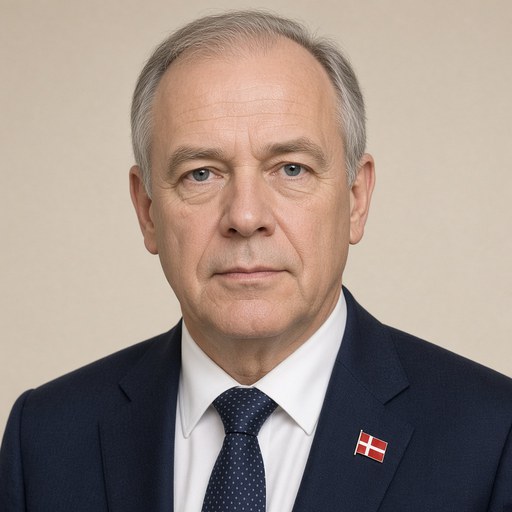
Prime Minister Poul Nyrup Rasmussen's speech on March 26, 2001, at the anniversary conference on 25 years of psychiatry in the counties.
 Poul Nyrup Rasmussen · Prime Minister of Denmark
- Context
- Rasmussen addressed a conference marking 25 years of psychiatry in Danish counties on March 26, 2001, reflecting on progress and ongoing challenges in mental health care.
- Main themes
- Mental health advocacy, psychiatry reform in Denmark, welfare state responsibility, dignity and rights of mentally ill persons, government prioritization of psychiatry, county-level psychiatric services, deinstitutionalization progress, inclusion and social participation, long-term commitment to care quality
- Duration
- ~39 min
- Words
- 4,663
- Sentences
- 253
- Readability
- 62
- Grade
- 9.1
- Syntax
- 2.96
- Vocabulary
- 1.91
Translated from Danish
The broad sphere of national life a sentence belongs to. Every sentence has an Arena, so it is the denominator the other indices are read against.
Other253 sentences in 47 paragraphs
It was a good speech, Kresten. You can feel the pipe-smoking calm, and you can sense that the collaboration with the Chairman of the Health Committee, Bent Hansen, is good. It is close. It is engaged. An exemplary collaboration, which, no, it may not be the case nationwide, but still! Let me stay there for a moment. For who are actually the representatives of the mentally ill in this country? Precisely one of the groups that cannot shout loudly – that actually cannot shout, that cannot catch the eye. All the other groups can. I am not saying that we should not also fight for the other groups: cancer patients, heart patients, hip patients. But here I also know that we are dealing with groups that can rightly say to us: 'Now there is a need to do this and that.' But who are actually the representatives of the mentally ill?
Thank you for your taking on – for being representatives for the mentally ill. I feel that I belong to that category myself, but I also feel that we must qualify ourselves every day to stay there. Maintain our commitment, talk about it, and act accordingly. I want to say to you that I think the hardest part is that it takes time. The hardest part is that things take time. In politics and in practical work, and especially concerning our mentally ill people, because we have been behind for quite some time.
A 25-year anniversary gives cause for reflection, and let me start by expressing my gratitude to you. We have come a long way. We have come a really, really good way. Thank you to every single county mayor, every single county council member, every single management, and perhaps most importantly, every single employee in all of Denmark and your care for the mentally ill. You have helped to put words and actions behind the treatment of the silent disease.
That said, we must also maintain the true picture. Today, as Kresten Philipsen said, there are about 50,000 Danes who have severe mental illnesses. The majority are schizophrenia or similar disorders in relation to our diagnoses. Many, many more are of course also struggling along the way, just in a different way. I still have to mention them: those with depression, which also partially overlaps with the group of patients I am talking about here, anxiety disorders, eating disorders, substance abuse problems. Many Danes have problems along the way in their lives. So there is still a long way to go, but there is also a need to maintain how we should approach this from each of our starting points and in relation to the different diseases.
We have much to achieve after the first 25 years, and we have made good progress. I have never hidden the fact that the government and I place an extraordinarily high emphasis on the efforts concerning our mentally ill people in Denmark. It is simple for me. We cannot talk about a society – a welfare society – without being the representatives for the mentally ill. And here I am not only talking about offers of a classic nature, but in reality also offers that extend beyond words and paragraphs. The government's goal is very simple, and quite ambitious: that we should be able to offer quality and care for each individual in this country with respect and insight into each individual's own everyday life. We will not give up a single one of those people. We will not leave anyone on the sidelines. We will not leave anyone outside.
Realistic or unrealistic. We intend to achieve it – if not tomorrow, then the day after tomorrow. And we believe, as you do, that those who do not set strong goals do not move anything either. But the hardest part is that things take time. Psychiatry was an area that was not prioritized as much as it should have been until the beginning of the 1990s, in my opinion. And psychiatry became from the very beginning one of the government's highest priority goals – I can hardly recall a single opening speech where that topic was not mentioned. Therefore, I am also particularly pleased that, in collaboration with counties and municipalities, it has been possible to implement a significant prioritization of psychiatry. The prioritization of the area is also clearly reflected in the publications of the Association of County Councils, where the curves, as Kresten indirectly mentioned, point in the right direction. I want to emphasize that we recognize the great effort that the counties have made over the years. You have done a great job, and an important step forward has been taken. The anniversary we are celebrating today is not only an emphasis on a changed political and administrative placement of responsibility for psychiatric treatment in the healthcare system. It is just as much an anniversary of a period where we took the consequence of the fact that people who have a mental illness are people on par with all of us. They need to be with others, they need to feel respect, they need to be able to live a dignified life, they need to be able to glimpse hope out of the paralysis that is one of the most difficult things a mentally ill person can face.
And fortunately, the previous isolation of the mentally ill with often lifelong admissions to large psychiatric hospitals has been replaced by efforts to provide a decent and dignified life, as it is so beautifully described by Kresten. A life in dignity and a life in respect, and a life with hope.
This demands an effort on many, many fronts. It requires openness, information, acceptance, and tolerance from society if we are to ensure that mental illness is regarded as an illness on par with all other illnesses. And we must still say that having pain in the mind and psyche is a topic that has its taboos. It is still a taboo-laden topic in Denmark, I feel. There is still much to be done to remove the myths, and above all, there is still much to be done to talk about it. For the more we talk about it, the more we break down the fear of addressing it, and the better we become at tackling the task.
We all know the story. It has not been a painless process to reach where we are today. It went quickly to close the beds, almost too quickly. However, it did not go as quickly to establish district and social psychiatry. A process that we are not finished with. But I am glad, as the county politicians have also expressed, that we held firm. I am convinced that it was the right thing to do. I am convinced that as a consequence of the goals I have just mentioned, district psychiatry follows, decentralization follows.
Bringing the mentally ill away from the large institutions and closer to society is the right thing to do. Our goal, the government's goal, has been to strengthen the efforts and give the mentally ill the opportunity to live a life of their own choosing with as few restrictions as possible. You know, and I will not go into the results much, the numbers are, as Kresten shows, well documented. I will just mention that in the psychiatric agreement for the next few years, a total of 750 million kroner has been allocated to improve the offers for the mentally ill. And this is, mind you, extra state money on top of the funds that counties and municipalities themselves use.
A book has come out about the numbers from the Association of County Councils, which shows how far we have come – somewhat. We do not see in the numbers whether we have changed attitudes. We do not see in the numbers whether the shared responsibility is greater than it was before. And the numbers do not clearly show whether the needs that exist now also meet the answers they should have and the capacity that is needed. The numbers also do not show whether we have understood how important it is to be able to prevent the way of thinking, the way we organize ourselves. The way we live. We can see that the number of young people with mental illness is growing. The pressure, the role models, young people who cannot create an identity by looking at themselves in the mirror, or being with others. The way we live, the way our families function, there are some things we must discuss.
If self-esteem is hit in a young person and replaced by bullying and loneliness, then we have the first signs. Is there anyone who hears it? Is there anyone who picks it up? Is there anyone who intervenes sufficiently early?
I simply want to start today where all the legislation we have, our circulars, our announcements must just wait. I want to start where all parties fall short. Where we actually only have the bonds between us as human beings, the interpersonal relationships that can make a decisive difference. Where it is about care, about security, about the little glance, about contact, about presence, and about respect. And simply and fundamentally about being something for each other.
We are so busy, and we live in a society where we hear almost every day that if something is broken, it must either be repaired, fixed, sorted out, or it must be thrown away. And that is what happens. When we break a leg, it must be fixed. When something breaks, it is, as mentioned, sorted out, and preferably as quickly as possible. And should we then see to move on? And what will you do about it, in concrete terms? We all know the questions from the press, from our surroundings. But there is something that cannot be sorted out so concretely, fixed, and repaired.
When we encounter what cannot be felt and cannot really be seen or understood at first glance, we are truly on the edge of what modern humans can comprehend. Therefore, I believe deeply that only those who have had the illness very close to their lives truly understand what it is about. The silence, the one-word answers, the introversion, the resounding silence. The look that, if you know that person, reveals what enormous energy it takes just to keep track of the inner forces.
If I were to put into words what it is like for relatives, which I believe is absolutely crucial to prioritize in our entire picture of what should happen in the next 25 years. Then it is relatives, people, and surroundings who feel one thing quite quickly. It is the powerlessness, it is the self-blame, it is the often-repeated state of why has it not been resolved yet? What do you do? How do you do it? That feeling is the same, whether you are a parent of a child who is affected by the illness or you are, yes, an adult child whose father or mother is affected by the illness. The fact that a person you care about is in a dark place where you cannot really penetrate, where the only thing you can do is to be there, and where you cannot really feel that it makes a difference.
In that situation, it is important for all of us to understand that loneliness is the strongest and worst ally of the illness. When a person is struck by that illness, presence and human contact are absolutely crucial.
This is where the laws, rules, and circulars fall short. That is why we must help each other to help people ensure that there are networks around all of us. That is why I am also so engaged with the many voluntary organizations that make a huge effort, the Psychiatric Foundation, Sind, relatives of the mentally ill, visiting friends, neighbors, the locals. I cannot imagine a modern welfare society without all those many people. Not because they should replace the welfare society's offers, but to supplement them, and relatives are first and foremost a crucial pivot if we are to succeed in providing the necessary care. I say this because we must really say that this is the foundation.
Let me mention the 10 points that I believe we should continue to work on. First, as Kresten said, 'everything must hang together.' It must especially be the case for people whose lives do not hang together. The silos must be broken down, the systems must establish contact across even more than before. In psychiatry, where many patients must struggle with their illness throughout their lives, the coherence in treatment and support offers is absolutely crucial. We cannot have patients ending up in long-term stays in psychiatric hospitals or as revolving door patients with far too frequent readmissions.
I know it is difficult. It is not only in this area that we must make progress, but perhaps especially in this area. A close collaboration with the health and social sectors and a targeted coordination of the offers. I think it is fair to say that it does not always work as well as it should. I also noticed that at the government's public hearings for the mentally ill last year, part of the criticism gathered here was that there was a lack of coherence between the healthcare treatment offers and the social sector's support offers. The county does everything it can, the hospital departments and the psychiatric departments, the district psychiatric centers, the emergency centers, contact persons. The municipalities are investing a lot in these years in housing and activity centers, contacts, primary care physicians, conversations, the volunteers. All of this we must gather. All of this we must get to function better together. Value-based leadership is talked about. Why not use the values to connect the threads between the many, many people who fundamentally want the same thing? And forget all about rigid rules and bent paragraphs. It is about people, and it is about getting all those people who want to make a difference to talk to each other.
I would like to set the most ambitious goal of all as the first of my 10 points. There should not be a single situation anywhere in the country in the future where one is not aware of what happens when the patient says goodbye and walks out the door after being discharged from a psychiatric department. There must be complete clarity about who is on the other side of that door. And what will happen the week after and the month after. You are close in some places in the country, but you are very far in other places in the country. And here I must say that where you are farthest away is in the Capital Region. That is where we are farthest from the overarching goal.
I am not saying this to criticize anyone. I am saying it because I feel, on behalf of the government, a great obligation to analyze it together with you. And I say that there are still people at the Main Train Station around midnight who are doing poorly, and the very last person to talk to is a wise policeman who helps a little. I am not saying that this is the case everywhere, but I am saying that sometimes it is also like that.
Secondly, as Kresten has said, it is absolutely crucial that we have sufficient and skilled staff. I am a great admirer of the staff – as we say in Jutland – who make a huge effort in the district psychiatry and the psychiatric departments. It is alpha and omega. We must ensure that more are trained. That they receive the recognition they rightly deserve for their great work. Working and providing care for people with vulnerable minds is one of the most precious jobs that exist in this society.
And again, we must say that much has happened – but much more needs to happen. This is especially true in child and adolescent psychiatry. There are departments that are understaffed. There are departments that lack conversation and contact opportunities. Remember that the answer to the confinement that many psychiatric young people, in particular, find themselves in – and cannot get out of – is, for their part, restlessness, ambivalence, to mention just a couple of examples. In that situation, one needs calm care, so that the day is filled out.
Again, I must say that I deeply admire the figures that can be shown, and I am very pleased that the number of single rooms is strongly increasing in the counties, and I wave the flag over the enormous progress that has been made. I believe that up to two-thirds of admissions over the course of a year can take place in single rooms – you have made great strides.
But, I must say that in these times, when we talk about geographical disparities in Denmark – it is something about 'The Skewed Denmark' – it is the opposite in these fields here. Perhaps there is nothing strange about it, because the Capital Region tends to have more of the vulnerable minds. We see this in Denmark, and we see it elsewhere. There is a need for us to make a stronger effort.
My third objective is to strengthen guidance and counseling for relatives. I believe that one must – as I said before – be completely clear that the relatives are not a burden for the caregivers. The relatives are a completely crucial prerequisite for the help to the vulnerable people to be good and lasting. The relatives become better at helping and feel much better about the care they wish to provide if they know how to help, if they know how long it takes, if they understand that visible improvements are not what one can see.
As a relative, one needs to know that others before oneself have experienced the same: That one is good enough and that there is help to be had, not only for the sick person but also for the family, for the mother, father, partner, and friends.
My fourth point must be that help must be accessible when it is needed. One does not stop being mentally ill after 4:00 PM or before the weekends. What does one do after 4:00 PM or on weekends when it is the acute need and the anxiety overwhelms one? The relatives become uncertain – what to do? I believe that there is a great need for stronger measures to be taken.
Thus, my fifth point: We must offer decent physical conditions for the mentally ill. Great praise for the single rooms, as I said before. 2 or 3 admitted patients – is the goal by the end of 2002 – should today be able to be offered single rooms. But, as I said, that does not change the fact that the open and closed departments in many places in the Capital Region are not as they should be. It does not change the fact that there is a need to fill the day in a good way. That is how it is.
Sometimes I have a feeling that on one side we have our pearls that we show off. Lots of centers with single rooms that are very beautiful and very forward-looking. I am so pleased every time and feel that it is a great privilege to be allowed to inaugurate some of them. On the other hand, I cannot escape the fact that there are very large needs in the Capital Region, as I said before. There are a lack of places to stay and housing, as there are in some other parts of the country. There are great needs here!
Thus, we come to the sixth point, which I also think is important to emphasize today: That we do not necessarily have to find uniform solutions across the country today, nor uniform solutions for each individual patient. Mentally ill people are as different as we humans are. Beware of standard solutions. Beware of uniformity in medication. Take into account, as I was glad that the chairman of the County Council Association emphasized in his speech, the ethnic minorities, our refugees, and the substance abusers in future priorities. I believe that we also need to discuss the examples I have been told and can also see, whether the particularly vulnerable people who end up in crime and ultimately are imprisoned with others and thereby get even worse.
We must ensure that the relevant offers are available to the vulnerable people and not refer those people to unacceptable alternatives.
My seventh point is that I would like to emphasize the importance of intervening as early as possible. When we can read and note that the number of suicide attempts among young girls has tripled in recent years, then in my opinion, there is good reason to raise the alarm. We must act consistently, quickly, and early, and again, outreach work is very important. The Opus projects sound exciting – the relatives are an important ally.
Then I would like to emphasize as my eighth point that we continue to prioritize research and scientific documentation very highly. Let us especially make an effort to ensure that the new research results and the use of the latest medication with the fewest side effects – there are also great advances in that area – reach our departments and our district psychiatry as quickly as possible. I can see that it sometimes struggles, and I can see and sense that there are great differences in the degree of use of the most modern, accepted, and documented medication, with the fewest side effects. We must ensure the right treatment and therapy for the right patient group, so effective and gentle treatments as possible are the key words. Across different professional approaches, biological, psychological, and social, where the unbiased discussion asks the question: What helps best? Is it the medical treatment, is it psychotherapy, or is it just even more care and conversation that is needed? Experiences, experiences, experiences! Systematized, quickly exchanged, and quickly put into use – that is important!
Right now, there is a discussion about electroconvulsive therapy for mentally ill people. I understand it and have been involved in that question. Many believe that it is used to a greater extent here than in other countries. If that is the case, I think it is justified to ask why? I believe we should have a debate about it, evaluate it, before a majority in the Parliament decides that it should just be done differently than it is today. I have always believed that our starting point must be knowledge, medical expertise, experience, and our own human instinct in thoughtful conjunction. I would therefore just encourage that we debate it thoroughly before we go in and make new decisions in the Parliament. I think it is wise that we also talk about this in a proper, direct, and well-documented way.
I have no recipe. I have only one wish – and I believe I share this with everyone in the Parliament, without exception: It is that we approach this field as correctly as possible. Before decisions are made, let us discuss it and illuminate it thoroughly with our colleagues in the counties, with our expertise and our medical insight and experience.
I would like to show an open mind here and appeal to all of us to do so.
My ninth point is also a point that I was glad that Kresten brought up. It is that we must find new ways, try new methods, and I am glad for the two examples that were mentioned, and I would like to support them. The trial with medication-free departments – the R-recovery trial. But again, I would like to say that the path to recovery – to get out of one’s illness – is activity, it is wise conversations. The way out of confinement is alternatives to ambivalence, to doubt, and to lack of self-esteem.
Nine points – and I can see on my two good acquaintances, Kresten Philipsen and Bent Hansen, and also on Karen, the mayor of Funen County: 'Where is the money then'?
I think I must say about that, that we have been very aware, in the negotiations with the County Council Association over the years, that of course there must be resources for it. I am not coming today with a big bag of money – you know us well enough for that. But we know that things also cost. I would say that you can count on us in the government prioritizing this work very highly, also in the coming years.
Figures are so much, but I have not been entirely unhappy that the state’s efforts in this area have been one of the areas, or one of the areas, that has had the highest expenditure growth, also measured in constant prices over the past 8 years. I think that can be said. Therefore, you can count on concrete, realistic, decent, but also helpful negotiations when we continue this work.
This brings me to my tenth and final point: When all this is said, my most crucial point is that the most important thing lies before the economy and the circulars. There, where it is really only us humans, the human relationships that count, where it is about care, security, and presence. The one with the strong human being, who triumphantly goes through life, filled with the supermarket's latest offers of eternal life and happiness – I do not believe much in that. I believe that each and every one of us knows it deep down – without exception, it applies that life is not a long string of happy moments, but ups and downs for all of us. Therefore, the answer is fundamentally, as my tenth point, completely fundamental, where we are something for each other. Where we are something for each other regardless of whether it is when we have broken a leg, or a mental illness breaks out.
The eternal old young debate ultimately concerns the community versus the individual. We need a society that is built on that community and has the shared responsibility for the networks that are professional as well as voluntary, that bind Denmark together in counties, municipalities, workplaces, homes, and presence. People come first, we need each other enormously in the 21st century as well. We humans are not at all created to manage alone. Therefore, I am glad that you are meeting today, and I am glad to have the privilege of telling a little about the government's priorities. We have a shared responsibility, we must strengthen our sense of community and our sense of responsibility for all of us. We must take care of the most vulnerable, we must ensure that for them there is also a tolerable life, as for the rest of us.
Yes – there is plenty to tackle. The first 25 years were good. The next 25 years must also be at least as good. 10 points, remember them now: Our shared responsibility, it must hold together for the people who cannot make their lives work without staff, the relatives must have advice and guidance, there must be an offer after 4:00 PM, decent physical conditions, remember they are different, the mentally ill, you know that well, I just want to emphasize it, intervene early. Research, education, documentation, and exchange of knowledge, updating of new medication and treatment methods, new ways, and last but not least, we need each other. We need you in the government, and we hope that you will also be able to confirm over the coming negotiations that you need us.
Have a great conference for all of us.
Thank you.
The original Danish. The tags above are read on the English translation's sentences.
Det var en god tale, Kresten. Man mærker den piberygende ro og man mærker, at samarbejdet med Sundhedsudvalgets formand Bent Hansen er godt. Er tæt. Er engageret. Et forbilledligt samarbejde, som nej det går nok ikke på landsplan, men alligevel! Lad mig lige et øjeblik blive der. For hvem er egentlig de sindslidendes tillidsrepræsentanter her i landet? Lige præcis en af de grupper som ikke kan råbe højt – som faktisk ikke kan råbe, som ikke kan fange blikket. Det kan alle de andre grupper. Jeg siger ikke, at vi ikke også skal kæmpe for de andre grupper: Kræftpatienterne, hjertepatienterne, hoftepatienterne. Men her ved jeg også, at her har vi med grupper at gøre, som berettiget kan sige til os: 'Nu er der altså behov for at gøre det her og det der'. Men hvem er egentlig de sindslidendes tillidsrepræsentanter?
Tak for jeres tagen-jer-på – at være tillidsrepræsentanter for de sindslidende. Jeg føler selv, jeg hører til kategorien, men jeg føler også, at vi hver dag skal kvalificere os til at blive der. Fastholde vores engagement, tale om det og handle efter det. Jeg vil sige til jer, at jeg synes, at det sværeste, det er, at det tager tid. Det sværeste er, at ting tager tid. I politik og i praktisk arbejde og specielt omkring vores psykisk syge mennesker, fordi vi har været bagud i en del tid.
25 års jubilæum giver anledning til eftertanke og lad mig starte med at kvittere overfor jer. Vi er nået langt. Vi er nået et rigtigt, rigtigt godt stykke. Tak til hver eneste amtsborgmester, hver eneste amtsrådsmedlem, hver eneste ledelse og måske ikke mindst hver eneste medarbejder i hele Danmark og jeres omsorg for de sindslidende. I har været med til at sætte ord og handling bag behandlingen af den tavse sygdom.
Når jeg så har sagt det, er vi selvfølgelig også nødt til at fastholde det egentlige billede. I dag er der jo, som Kresten Philipsen sagde det, ca. 50.000 danskere som har svære sindslidelser. Hovedparten skitzofreni eller dertil sidestillede lidelser i forhold til vores diagnoser. Mange, mange flere har det selvfølgelig også svært undervejs bare på en anden måde. Jeg skal alligevel nævne dem: Dem med depressionerne, som jo også delvist overlapper den gruppe af patienter, jeg her taler om, angsttilstandene, spiseforstyrrelserne, misbrugsproblemerne. Mange danskere har problemer undervejs i deres liv. Så der er stadigvæk lang vej at gå, men der er også behov for at fastholde, hvordan vi skal gribe det an med hver vores udgangspunkt og i forhold til de forskellige sygdomme.
Vi skal nå meget efter de første 25 år, og vi er kommet godt i vej. Jeg har aldrig lagt skjul, at regeringen og jeg selv lægger overordentlig stor vægt på indsatsen i forhold til vores psykisk syge mennesker i Danmark. Det er enkelt for mig. Vi kan ikke tale om et samfund - et velfærdssamfund – uden at vi er de psykisk syge menneskers tillidsrepræsentanter. Og her taler jeg ikke alene om tilbud af klassisk karakter, men i virkeligheden også tilbud, der rækker ud over tal og paragraffer. Regeringens mål er meget enkelt, og ret ambitiøst: At vi skal kunne tilbyde kvalitet og omsorg for hvert enkelt menneske i dette her land med respekt og indsigt i hvert enkelt menneskes egen hverdag. Vi vil ikke opgive et eneste af de mennesker. Vi vil ikke efterlade nogen på sidesporet. Vi vil ikke efterlade nogen udenfor.
Realistisk eller urealistisk. Vi har tænkt os at nå det – om ikke i morgen, så i overmorgen. Og vi mener som I, at den der ikke sætter sig stærke mål, flytter heller ikke noget. Men det sværeste er, at ting tager tid. Psykiatrien var et område, der ikke var tilgodeset så meget som det burde frem til starten af 1990’erne, synes jeg. Og psykiatrien blev lige fra begyndelsen et af regeringens højst prioriterede mål – jeg tror næsten ikke, at jeg har holdt en åbningstale, hvor ikke lige præcis det emne blev omtalt. Derfor er jeg også ekstra glad for, at det i samarbejde med amter og kommuner er lykkedes at gennemføre en markant opprioritering af psykiatri. Prioriteringen af området fremgår også klart af Amtsrådsforeningens publikationer, hvor kurverne jo, som Kresten indirekte sagde det, peger i den rigtige retning. Jeg vil gerne slå fast, at vi anerkender den store indsats, som amterne har leveret igennem årene. I har gjort et stort arbejde, der er taget et vigtigt skridt fremad. Det jubilæum vi holder i dag, er jo ikke kun en understregning af en ændret politisk og administrativ placering af ansvaret for psykiatrisk behandling i sundhedsvæsenet. Det er i lige så høj grad et jubilæum om en periode, hvor vi tog konsekvensen af, at mennesker, der har en psykisk sygdom, er mennesker på linie med alle os andre. Der har brug for at være sammen med andre, brug for at mærke respekt, brug for at kunne leve et værdigt liv, brug for at kunne øjne håb ud af fastlåsheden som er et af de vanskeligste ting en psykisk syg kan være op mod.
Og heldigvis er tidligere tiders isolation af sindslidende med ofte livslange indlæggelser på store psykiatriske hospitaler afløst af de bestræbelser for at give et ordentligt og et værdigt liv, som det så smukt bliver omtalt af Kresten. Et liv i værdighed og et liv i respekt, og et liv med håb.
Det stiller krav om en indsats på mange, mange leder og kanter. Det kræver åbenhed, information, accept og tolerance fra samfundet, hvis vi skal sikre, at psykisk sygdom betragtes som en sygdom på linie med alle andre sygdomme. Og vi er nødt til stadigvæk at sige, at det at have ondt i sindet og psyken er et emne, der har sine tabuer. Det er stadig et tabu belagt emne i Danmark, føler jeg. Der er stadig meget at gøre for at få fjernet myterne, og der er fremfor alt stadig meget at gøre for at tale om det. For jo mere vi taler om det, jo mere nedbryder vi angsten for at komme ind på det, og jo bedre bliver vi til at løfte opgaven.
Vi kender alle historien. Det har ikke været den smertefri proces at nå dertil, hvor vi er i dag. Det gik hurtigt med at få nedlagt sengene, næsten for hurtigt. Det gik derimod ikke så hurtigt med at få oprettet distrikts- og socialpsykiatrien. En proces, som vi ikke er færdige med. Men jeg er glad for, som også amtspolitikerne har givet udtryk for, at vi holdt fast. Jeg er overbevist om, at det var det rigtige. Jeg er overbevist om, at der i konsekvens af de mål, jeg netop har nævnt, følger distriktspsykiatri, følger decentralisering.
At bringe de sindslidende væk fra de store institutioner og tættere på samfundet er det rigtige. Vores mål, regeringens mål har været at styrke indsatsen og give de sindslidende mulighed for at leve en tilværelse efter eget valg med så få begrænsninger som muligt. I ved, og jeg skal som ikke gå meget ind på resultaterne, tallene er jo som Kresten viser det, godt dokumenteret. Jeg skal bare nævne, at i psykiatriaftalen for de næste par år er der afsat i alt 750 mio. kr. til forbedring af tilbudene til sindslidende. Og det er vel at mærke ekstra statspenge oveni de midler amter og kommuner selv anvender.
Der er kommet en bog om tallene fra Amtsrådsforeningen, som viser hvor langt vi er nået – sådan da. Vi ser jo ikke i tallene, om vi fik forandret holdningerne. Vi ser heller ikke i tallene, om det fælles ansvar er der i højere grad, end det var før. Og tallene viser os heller ikke krystalklart om, de behov der er nu, også møder de svar, de skal have og den kapacitet, der er brug for. Tallene viser heller ikke, om vi har forstået, hvor vigtigt det er at kunne forebygge måden at tænke på, måden at indrette os på. Måden at leve på. Vi kan se, at antallet af mennesker blandt unge psykisk syge vokser. Presset, forbillederne, unge som ikke kan skabe identitet ved at se sig selv i spejlet, eller være sammen med andre. Den måde vi lever på, den måde vores familier fungerer på, her er der nogle ting vi må diskutere.
Hvis selvværdet rammes hos et ungt menneske og afløses af mobning og ensomhed, så har vi de første tegn. Er der nogen, der hører det? Er der nogen, der samler op? Er der nogen, der griber tilstrækkelig tidligt ind?
Jeg vil simpelthen gerne i dag starte der, hvor alt det vi lovgiver om, vores cirkulærer, vore bekendtgørelser lige må vente. Jeg vil starte der, hvor alle parter kommer til kort. Der hvor vi i virkeligheden kun har båndene mellem os mennesker, de medmenneskelig relationer, der kan gøre en afgørende forskel. Der hvor det handler om omsorg, om tryghed, om det lille blik, om kontakt, om nærværd og om respekt. Og ganske enkelt og fundamentalt om det at være noget for hinanden.
Vi har så travlt, og vi lever i et samfund, hvor vi hører næsten hver dag, at hvis der er noget der er gået i stykker så skal det enten repareres, ordnes, klares eller også skal det smides væk. Og det bliver det så. Når vi har brækket et ben, så skal det ordnes. Når der er noget der går i stykker, så bliver det som sagt klaret og helst så hurtigt som overhovedet muligt. Og skal vi så se at komme videre? Og hvad vil du så gøre ved det, sådan helt konkret? Vi kender jo godt alle spørgsmålene fra pressen, fra vores omgivelser. Men der altså noget, der ikke kan klares sådan helt konkret, ordnes og repareres.
Når vi møder det, der ikke kan mærkes og heller egentlig ikke rigtig i første blik kan ses eller forstås, så er vi virkelig på kanten af det, som det moderne menneske overhovedet kan indse. Derfor tror jeg dybest set, at kun dem der har haft sygdommen meget tæt ind på livet dybest set forstår, hvad det drejer sig om. Tavsheden, enstavelsessvarene, indadvendtheden, den rungende tavshed. Det blik som, hvis man kender det menneske, afslører, hvilken enorm energi, der skal til bare for at holde styr på de indre kræfter.
Hvis jeg skal sætte ord på, hvordan det er for pårørende, som jeg tror er fuldstændig afgørende at få opprioriteret i hele vores billede af, hvad der skal ske de næste 25 år. Så er det pårørende, mennesker og omgivelser som føler én ting ret hurtigt. Det er afmagten, det er selvbebrejdelserne, det er den ofte gentagne tilstand af, hvorfor er det ikke klaret endnu? Hvad gør man? Hvordan gør man det? Den følelse er den samme, hvadenten man er forældre til et barn, der rammes af sygdommen eller man er ja et voksent barn, hvis far eller mor rammes af sygdommen. Det at et menneske, man holder af befinder sig i mørkeland, hvor man ikke rigtig kan trænge ind, hvor det ene man kan gøre, er at være der og hvor man ikke rigtig kan mærke at det nytter.
I den situation er det vigtigt for alle os andre at forstå, at ensomheden er sygdommens stærkeste og værste allierede. Når et menneske rammes af den sygdom, så er nærvær og menneskelig kontakt fuldstændig afgørende.
Det er så dér lovene, reglerne og cirkulærerne kommer til kort. Det er derfor vi skal hjælpe hinanden med at hjælpe mennesker med at sikre, at der er netværk omkring os alle sammen. Derfor er jeg også så optaget af de mange frivillige organisationer, som gør en kæmpeindsats, Psykiatrifonden, Sind, pårørende til sindslidende, besøgsvennerne, naboerne, de lokale. Jeg tror ikke jeg kan forestille mig et moderne velfærdssamfund uden alle de mange mennesker. Ikke fordi de skal træde i stedet for velfærdssamfundets tilbud, men for at supplere det og pårørende først og sidst er en afgørende omdrejningsfaktor, hvis vi skal få held med at levere den nødvendige omsorg. Jeg siger det, fordi vi i virkeligheden her må sige, at det er fundamentet.
Lad mig nævne de 10 punkter, jeg mener, vi skal arbejde videre med. For det første, som Kresten sagde, 'skal det hele hænge sammen'. Det skal det selvfølgelig især hos mennesker, hvis liv ikke hænger sammen. Båsene skal brydes ned, systemerne skal etablere kontakt på tværs i endnu højere grad end før. I psykiatrien, hvor mange patienter livet igennem må kæmpe med deres sygdom er den sammenhæng i behandling og et støttetilbud fuldstændig afgørende. Vi kan ikke have, at patienter havner i langvarige ophold på psykiatriske sygehuse eller som svingdørspatienter med alt for hyppig genindlæggelse.
Jeg ved godt det er svært. Det er ikke alene på det her område vi skal gøre fremskridt, men måske især på det her område. Et tæt samarbejde med sundheds- og socialsektoren og en målrettet koordination af tilbuddene. Jeg tror det er fair at sige, at det ikke er altid det fungere lige godt. Jeg har også lagt mærke til på regeringens folkehøringer for sindslidende sidste år var en del af kritikken samlet herom, at der manglede sammenhæng mellem sundhedsvæsenet behandlingstilbud og den sociale sektors støttetilbud. Amtet gør alt hvad det kan, sygehusenes afdelinger og de psykiatriske afdelinger, de distriktspsykiatriske centre, akutcentrene, kontaktpersoner. Kommunerne satser meget i de her år på bo- og værestederne, kontakterne, primærlægen, samtalerne, de frivillige. Alt det skal vi samle. Alt det skal vi have i gang med at fungere bedre i fællesskab. Værdibaseret ledelse taler man om. Hvorfor ikke benytte værdierne til at knytte trådene sammen mellem de mange, mange mennesker der i grunden vil det samme? Og glem så alt om stive regler og bøjede paragraffer. Det handler om mennesker, og det handler om at få alle de mennesker, der gerne vil gøre en forskel til at tale sammen.
Jeg vil gerne sætte det mest ambitiøse mål af de alle, som det første af mine 10 punkter. Der bør ikke fremover på et eller andet tidspunkt i hele landet være en eneste situation, hvor man ikke er klar over, hvad der sker, når patienten efter endt indlæggelse på en psykiatrisk afdeling siger farvel og går ud af døren. Der skal være fuldstændig klarhed over, hvem står så på den anden side af den dør. Og hvad skal der ske ugen efter og måneden efter. Man er tæt på nogle steder i landet, men man er meget langt fra andre steder i landet. Og her er jeg nødt til at sige, at der hvor man er længst fra er i Hovedstadsområdet. Det er der vi er længst væk fra den overordnede målsætning.
Jeg siger det ikke for at kritisere nogle. Jeg siger det, fordi jeg føler, på regeringens vegne, en stor pligt til at analysere det sammen med jer. Og jeg siger, at der stadigvæk på Hovedbanegården der hen ad mod midnat kan findes mennesker der har det dårligt og hvor den allersidste der er at snakke med er en klog politimand, som hjælper lidt. Jeg siger ikke, at det er sådan alle steder, men jeg siger, at nogle gange er det også sådan.
For det andet er det jo som Kresten har sagt det fuldstændig afgørende, at vi har tilstrækkeligt og dygtigt personale. Jeg er en stor beundrer af de personaler – som vi siger på jysk – som gør en kæmpe indsats på distriktspsykiatrien og de psykiatriske afdelinger. Det er alfa-omega. Vi skal sikre at flere bliver uddannet. At de får den anerkendelse, som de med rette fortjener for deres store arbejde. At arbejde og yde omsorg for mennesker med sårbare sind, er et af de mest dyrebare job, der findes i dette samfund.
Og igen er vi nødt til at sige, at meget er der sket – men meget er der yderligere behov for skal ske. Det gælder især på børne- og ungdomspsykiatrien. Der er afdelinger, som er undernormeret. Der er afdelinger, der mangler samtale- og kontaktforhold. Husk at svaret på fastlåshed, som mange psykiatriske unge især befinder sig i – og ikke kan komme ud af - det er for deres eget vedkommende rastløsheden, ambivalensen for at nævne et par enkelte eksempler. Netop i den situation har man brug for den rolige omsorg, at dagen bliver fyldt ud.
Igen er jeg nødt til at sige, at jeg dybt beundrer de tal, man kan vise, og jeg er meget glad for, at antallet af enestuer er stærkt stigende i amterne og jeg kipper med flaget over det enorme fremskridt der er gjort. Jeg tror, at det er op imod 2/3 dele af indlæggelserne i løbet af et års tid, kan foregå på enestuer – I har gjort store fremskridt.
Men, jeg må sige, at i disse tider, hvor vi taler om geografiske, skæve forhold i Danmark – det er vist noget med 'Det skæve Danmark' – så gælder det igen omvendt på disse felter her. Det er der måske heller ikke noget underligt i, fordi Hovedstadsområdet har det med også at have flere af de sårbare sind. Det ser vi i Danmark, og det ser vi andre steder. Der er brug for, at vi gør en stærkere indsats.
Min tredje målsætning er at styrke vejledningen og rådgivningen til de pårørende. Jeg tror, at man skal – som jeg sagde det før – have gjort sig fuldstændig klart, at de pårørende ikke er en klods om benet for behandlerne. De pårørende er en fuldstændig afgørende forudsætning for, at hjælpen til de udsatte mennesker kan blive god og varig. De pårørende bliver bedre til at hjælpe og får det meget bedre med den omsorg de ønsker at give, hvis de ved, hvordan man hjælper, hvis de ved, hvor lang tid, det tager, hvis de forstår, at synlige forbedringer ikke er det man kan se.
Som pårørende har man brug for at vide, at andre før én har oplevet det samme: At man er god nok og at der er hjælp at hente, ikke kun for den, der er syg men også for familien, for moderen, faderen, kæresten og vennerne.
Mit fjerde punkt skal være, at hjælpen skal være til at få fat på, når man har brug for den. Man ophører altså ikke med at være sindslidende efter kl. 16:00 eller op til weekenderne. Hvad gør man efter kl. 16:00 eller i weekenderne når det er det akutte behov og angsten vælter ind over én? De pårørende kommer i tvivl – hvad gør man? Jeg mener, at der er stort behov for, at der sættes stærkere ind.
Dermed mit femte punkt: Vi skal tilbyde anstændige, fysiske rammer for de sindslidende. Stor ros til enestuerne, som jeg sagde det før. 2 eller 3 indlagte patienter - er jo målsætningen med udgangen af 2002 – skal i dag kunne få tilbud om enestuer. Men, det ændrer som sagt ikke ved, at de åbne og lukkede afdelinger en del steder i Hovedstadsområdet ikke er som de skal være. Det ændrer ikke ved, at der er behov for at få fyldt dagen ud på en god måde. Sådan er det også.
Jeg står sommetider med en fornemmelse af, at på den ene side har vi vores perler vi viser frem. Masser af centre med enestuer, der er meget smukke og meget fremadrettede. Jeg glæder mig så meget hver gang og føler, at det er et stort privilegium at få lov at være med til at indvie nogle af dem. På den anden side kan jeg ikke komme væk fra, at der i Hovedstadsområdet, som jeg sagde det før, er meget store behov. Der mangler væresteder og bosteder, som der også gør visse andre steder i landet. Der er store behov her!
Derved er vi ved det sjette punkt, som jeg også synes er vigtigt at få understreget i dag: At vi ikke i dag nødvendigvis skal finde ens løsninger over hele landet, ej heller ens løsninger for hver enkelt af patienterne. Sindslidende er lige så forskellige som vi mennesker i øvrigt er. Pas på standardløsningerne. Pas på medicineringsensartethed. Tag hensyn til, som jeg var glad for, at Amtsrådsforeningens formand understregede i sin tale, i prioriteringerne fremover, de etniske minoriteter, vores flygtninge, misbrugerne. Jeg tror, at vi er nødt til også at diskutere de eksempler jeg har fået fortalt og jo også kan se, om de særskilt, udsatte sårbare mennesker, som ryger ud i kriminalitet og i yderste fase bliver sat i fængsel sammen med andre og derigennem får det endnu værre.
Vi skal sikre, at de relevante tilbud er til de sårbare mennesker og ikke henvise de mennesker til uacceptable alternativer.
Mit syvende punkt er, at jeg gerne vil understrege vigtigheden af, at vi sætter så tidligt ind som overhovedet muligt. Når vi kan læse og notere os, at antallet af selvmordsforsøg blandt unge piger er tredoblet i de senere år, så er der efter min mening god grund til at råbe vagt i gevær. Vi skal skride konsekvent, hurtigt og tidligt ind og igen er det opsøgende arbejde meget vigtigt. Opus-projekterne lyder spændende – de pårørende er en vigtig allieret.
Så vil jeg gerne som mit ottende punkt understrege, at vi fortsat prioriterer forskningen og den videnskabelige dokumentation meget højt. Lad os især gøre en indsats for, at de nye forskningsresultater og den anvendelse af det nyeste medicin med de færreste bivirkninger - der sker jo store fremskridt på det område også – når så hurtigt ud til vores afdelinger og vores distriktspsykiatriske som overhovedet muligt. Jeg kan se, at det en gang i mellem kniber og jeg kan se og fornemme, at der er store forskelle også i graden af anvendelsen af det mest moderne, accepterede og dokumenterede medicin, med de færreste bivirkninger. Vi skal sikre den rigtige behandling og terapi til den rigtige patientgruppe, så effektive og skånsomme behandlinger som muligt, er nøgleordet. På tværs af faglige forskellige tilgange, biologiske, psykologiske og sociale, hvor den fordomsfri diskussion stiller spørgsmålet: Hvad hjælper bedst? Er det den medicinske behandling, er der psykoterapien eller blot endnu mere omsorg og samtale, der er brug for? Erfaringer, erfaringer, erfaringer! Systematiseret, hurtigt udvekslet og hurtigt bragt i anvendelse – det er vigtigt!
Lige nu er der en diskussion elektrobehandling for psykisk syge mennesker. Jeg forstår det og har været inde i det spørgsmål. Mange mener, at det anvendes i større udstrækning hos os end i andre lande. Hvis det er tilfældet, synes jeg, at det er berettiget at spørge hvorfor? Jeg synes, at vi skal tage en debat om det, vurdere det, før et flertal i Folketinget beslutter, at det skal bare være på en anden måde, end det er i dag. Jeg har altid ment, at vores udgangspunkt må være viden, lægelig ekspertise, erfaring og vores eget menneskelige instinkt i en tænksom forening. Jeg vil derfor bare opfordre til, at vi debatterer det grundigt, inden vi går ind og træffer nye beslutninger i Folketinget. Jeg tror, at det er klogt, at vi også taler om dette på en ordentlig, direkte og veldokumenteret måde.
Jeg har ingen opskrift. Jeg har kun eneste ønske – og det tror jeg til gengæld, jeg deler med alle i Folketinget, uden undtagelse: Det er, at vi griber også dette felt an så rigtigt som overhovedet muligt. Inden der træffes beslutninger, så lad os diskutere det og belyse det grundigt med vores kolleger i amterne, med vores ekspertise og vores lægelige indsigt og erfaring.
Jeg vil gerne vise et åbent sind her og appellere til at vi alle gør det.
Mit niende punkt er også et punkt, som jeg var glad for, at Kresten tog op. Det er at vi må gå nye veje, prøve nye metoder og jeg er glad for de to eksempler, der blev nævnt, og vil gerne bakke op om dem. Forsøget med medicinfri afdelinger – R-recovery-forsøget. Men igen vil jeg gerne sige, at vejen til recovery – at komme ud af sin sygdom – det er aktivitet, det er kloge samtaler. Vejen ud af fastlåsheden er alternativerne til ambivalensen, til tvivlen og til manglen på selvværd.
Ni punkter – og jeg kan se på mine to gode bekendte, Kresten Philipsen og Bent Hansen og også på Karen, Fyns Amts borgmester: 'Hvor er så pengene'?
Jeg synes, at jeg må sige om det, at vi har jo været meget bevidste om, i forhandlingerne med Amtsrådsforeningen gennem årene, at selvfølgelig skal der være ressourcer til det. Jeg kommer ikke i dag med en stor pose penge – det kender I os jo godt nok til. Men vi ved godt, at ting også koster. Jeg vil sige, at I kan regne med at vi også i regeringen prioriterer dette arbejdet meget højt, også i de kommende år.
Tal er jo så meget men jeg har nu alligevel ikke været helt ked af, at statens indsats på dette område, har været det område, eller ét af de områder, som har haft den allerhøjeste udgiftsvækst, også målt i faste priser i de seneste 8 år. Det synes jeg godt kan siges. Derfor kan I regne med konkrete, realistiske, ordentlige, men også hjælpsomme forhandlinger, når vi skal føre dette arbejde videre.
Det fører mig over i mit tiende og sidste punkt: Når alt dette er sagt, er min helt afgørende pointe, at det allervigtigste ligger før økonomien og cirkulærerne. Der, hvor det i virkeligheden kun er os mennesker, de medmenneskelige relationer der tæller, der hvor det handler om omsorg, tryghed og nærvær. Den med det stærke menneske, som går sejrrigt igennem tilværelsen, fyldt med supermarkedets seneste tilbud om evig liv og lykke – den tror jeg ikke meget på. Jeg tror, at hver eneste af os godt ved det inderst inde – uden undtagelse gælder det jo at tilværelsen ikke er en lang perlekæde af lykkelige øjeblikke, men op- og nedture for os alle sammen. Derfor er svaret grundlæggende, som mit tiende punkt, helt fundamentalt, der, hvor vi er noget for hinanden. Der hvor vi er noget for hinanden uanset det nu er når vi har brækket et ben, eller en sygdom i sindet bryder ud.
Den evige gamle unge debat handler det til syvende og sidst om fællesskabet overfor individet. Vi har brug for et samfund der bygger på det fællesskab og har det fælles ansvar for de netværk der er professionelle såvel som frivillige, der binder Danmark sammen i amter, kommuner, arbejdspladser, hjem og nærvær. Mennesker kommer først, vi har enormt brug for hinanden også i det 21. århundrede. Vi mennesker er slet ikke skabt til at klare os alene. Derfor er jeg glad for, at I mødes i dag og jeg er glad for at få privilegiet til at fortælle lidt om regeringens prioriteter. Vi har et fælles ansvar, vi skal forstærke vores fællesskabs og vores ansvarsfølelse for os alle sammen. Vi skal holde hånd over de mest udsatte, vi skal sikre, at for dem er der også et tåleligt liv, som for os andre.
Ja – der er nok at tage fat på. De første 25 år var gode. D næste 25 år skal også blive mindst lige så gode. 10 punkter husk det nu: Vores fælles ansvar, det skal hænge sammen for de mennesker, der ikke kan få deres liv til at hænge sammen, uden personale går det ikke, de pårørende skal have råd og vejledning, der skal være et tilbud efter kl. 16.00, anstændige fysiske rammer, husk de er forskellige de sindslidende I ved det godt, jeg vil bare understrege det, sætte tidligt ind. Forskningen, uddannelse, dokumentation og udveksling af viden opdatering af ny medicin og behandlingsmetoder, nye veje og først som sidst vi har brug for hinanden. Vi har brug for jer i regeringen og vi håber også I vil kunne få bekræftet over de kommende forhandlinger, at I har brug for os.
Rigtig god konference for os alle.
Tak skal I have.