




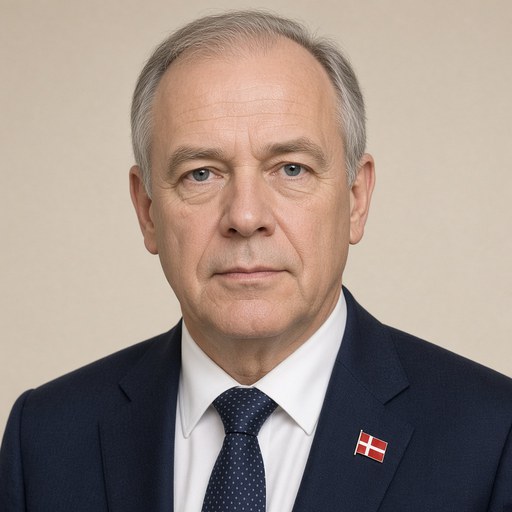
Prime Minister Poul Nyrup Rasmussen's speech at the conference "The Difference is Not So Small After All" on February 5, 2001, at Børsen.
 Poul Nyrup Rasmussen · Prime Minister of Denmark
- Context
- Rasmussen addressed a conference on gender pay equality at Børsen, Copenhagen, marking 25 years of Denmark's equal pay law on February 5, 2001.
- Main themes
- Gender pay gap, equal pay legislation, women in the labor market, wage transparency, gender equality, Danish welfare state, employment rates, labor market reform, pay discrimination, European employment goals, collective bargaining
- Duration
- ~10 min
- Words
- 1,211
- Sentences
- 67
- Readability
- 55
- Grade
- 9.9
- Syntax
- 2.75
- Vocabulary
- 1.89
Translated from Danish
The broad sphere of national life a sentence belongs to. Every sentence has an Arena, so it is the denominator the other indices are read against.
Other67 sentences in 19 paragraphs
Yes, I am in the same situation as Lone. That is, Lone Kühlmann (the moderator at the conference). There is something special about standing here and talking about equal pay in the prestigious building of Børsen. I mean, is there anyone here today who wouldn’t like to be a millionaire? Over the last 25 years, the chances of becoming a millionaire for women have, quite frankly, been greater in the lottery than by achieving equal pay compared to men.
I think we might as well say it as it is. Not that there hasn’t been progress – there has – but it could certainly be better.
The lack of equal pay between men and women means, according to the Ministry of Employment and the speech by the Minister for Gender Equality, that, for example, women with medium-length education miss out on a total of about 2.8 million kroner over a lifetime compared to what their male colleagues earn in salary. I have, of course, taken the average life expectancy into account, I would like to emphasize.
But the short of it is that what we have achieved in the name of equality is much, which I will come to. But we still have not come far enough. Not even when it comes to equal pay. Therefore, we should use today to think about what results we have achieved over the 25 years that the equal pay law has existed. And also to spend time collectively exchanging experiences and perhaps also suggesting how we can eliminate the pay gap. It is clear that today also offers an opportunity to wave the flag over the results we have achieved. There is usually good reason to state that things are better for us than for most other countries.
If we were to point to a single event that has had the greatest significance for society in the welfare construction of the 20th century, I have no doubt that it is the entry of women into the labor market in the 1960s and 1970s. The massive welfare boost that Denmark has experienced from the early 1960s to today would not have been possible without the massive entry of women into the labor market. Equality, employment, and welfare are interconnected in a higher unity, which is the central explanation of how it has actually succeeded in our country.
In Denmark, we may not think it is anything special when women and men have almost identical employment rates. We have gotten used to it being that way. But we have not seen a similar development at the same pace in any other country in the world. Not even in the Nordic countries, except for Iceland, is the proportion of full-time working women as high as in Denmark. It also resonates throughout the rest of Europe. And last year, we were in the fortunate position that we set a number of common goals at the European summit in Lisbon, which actually resemble much of what we have realized in Denmark: a very high employment rate, preferably the same for men and women.
The European Commission has adopted those goals and is now systematically working on them in harmony with us and with all countries in Europe. This is important. And it again expresses that if you can show that something works in practice, you are also stronger in the theoretical argumentation. But precisely when we in Denmark have done well regarding women in the labor market and regarding equality in general, it is particularly regrettable that we still have to acknowledge that we also have problems with equal pay. Perhaps we are actually too blind to the fact that we have a task here that we need to solve.
It seems blatantly obvious that there should be no pay difference between women and men performing the same work. Perhaps we do not follow up sufficiently on the difference that we actually sense is there. We must unfortunately acknowledge that pay, to a large extent, follows gender. The equal pay law states that equal pay must be paid for work that is assigned the same value. The question is simply when something is assigned the same value?
Today, for example, it is typical that companies in many places pay personal allowances based on employees’ own descriptions of the job. That seems fair enough, but I have heard that there is a Swedish study where women typically use 7 pages to describe how important their job is, while men use 26 pages! I am not saying that this is the entire background for the difference in pay and allowances, but it can have an impact. And there is no doubt that men put more effort into describing their own job.
We need openness. We need transparency when it comes to salary negotiations. We need to be able to compare more directly and more concretely than we could and can today. The individual employee has no chance of knowing what they are worth if only the other party, i.e., the employer, holds all the cards. While the employee negotiates more or less on a basis that is not sufficiently illuminated.
To eliminate the pay gap between women and men, I personally believe that all parties involved in the labor market need to bury the hatchet. We are not getting anywhere by continuing to discuss who is to blame. But we can make progress by discussing how we can come together to make a new and extra effort.
Therefore, it is about taking responsibility for the development going forward. Let us take the parties one by one.
In our government, we are fully aware that we also have a responsibility to create equal pay. Both the Minister of Employment and the Minister for Gender Equality will today address the thoughts the government has.
But the government is, as you know, not alone in the responsibility, and certainly not in Denmark with the Danish model. The trade unions, both on the employee and employer side, have a huge responsibility. Both in relation to the agreement system and in relation to their members.
Companies have a responsibility. For it is in companies that pay differences arise. Companies need to have openness about wage formation. They must be able to argue for the reasons why employees receive this or that specific salary.
Finally, employees also have a responsibility. Here, I am especially thinking of the union representatives and other employees who are involved in negotiating pay. Both companies and employees must ensure that salaries and allowances are paid based on objective, gender-neutral criteria. If we can mobilize individual companies – which I hope this conference will help with – then I have no doubt that we can significantly reduce the pay gap between women and men. We will not achieve it overnight, but we will get there if we join forces and resolutely stay the course.
The government’s proposal on how we achieve equal pay has received, I think, a generally positive reception everywhere. I believe that this conference can help further focus on what we can do and, not least, mutually commit and hold each other accountable to the goal: Equal pay in Denmark.
We can hardly be anything else.
Have a great conference.
The original Danish. The tags above are read on the English translation's sentences.
Ja, jeg er i samme situation som Lone. Altså Lone Kühlmann (ordstyrer ved konferencen). Der er nu noget særligt ved at stå her og tale om ligeløn i Børsens fornemme bygning. Jeg mener, er der nogen her i dag som ikke gerne vil være millionær. I løbet af de sidste 25 år har chancerne for at blive millionær for kvindernes vedkommende groft sagt været større i Lotto end ved at opnå ligeløn i forhold til mændene.
Jeg mener, vi kan lige så godt sige det, som det er. Ikke sådan, at der ikke er sket fremskridt – det er der – men det kunne godt gøres bedre.
Den manglende ligeløn mellem mænd og kvinder betyder ifølge Arbejdsministeriet og ligestillingsministerens tale, at fx kvinder med mellemlange uddannelser gennem et helt arbejdsliv går glip af sammenlagt ca. 2,8 mill. kr. holdt op imod hvad de mandlige kolleger får i løn. Så har jeg altså regnet med den gennemsnitlige levealder, vil jeg gerne understrege.
Men det korte er vel, at det vi har nået i ligestillingens navn er meget, som jeg skal komme til. Men vi er stadigvæk ikke nået langt nok. Heller ikke når det kommer til ligelønnen. Vi skal derfor bruge dagen i dag til dels at tænke på, hvad det er for resultater, vi har nået, igennem de 25 år, ligelønsloven har eksisteret. Dels at bruge tiden på i fællesskab at udveksle erfaringer og måske også give bud på, hvordan vi kommer uligelønnen til livs. Det er klart, at dagen i dag rummer også en mulighed for at kippe med flaget over de resultater, vi har nået. Der er som oftest god grund til at konstatere, at det står bedre til hos os end hos de fleste andre lande.
Hvis vi skulle pege på en enkeltstående begivenhed, der har haft størst betydning for samfundet i det 20. århundredes velfærdsopbygning, ja så er jeg ikke i tvivl om, at det er kvindernes indtog på arbejdsmarkedet i 1960’erne og i 1970’erne. Det kæmpemæssige velfærdsløft, som Danmark har oplevet fra starten af 1960’erne og frem til i dag, havde ikke været muligt uden kvindernes massive indtræden på arbejdsmarkedet. Ligestilling, beskæftigelse og velfærden hører sammen i en højere enhed, som den centrale forklaring på, hvordan det egentlig lykkes i vores land.
I Danmark synes vi måske ikke, at det er noget særligt, når kvinder og mænd har stort set identisk erhvervsfrekvens. Vi har vænnet os til, at sådan er det bare. Men en anden tilsvarende udvikling af samme fart har vi faktisk ikke set i noget andet land i verden. Ikke engang i de nordiske lande, på nær Island, er andelen af fuldtidsarbejdende kvinder så høj som i Danmark. Det giver også ekkoer rundt om i resten af Europa. Og sidste år var vi i den gode situation, at vi i Lissabon under det europæiske topmøde satte os en række fælles mål, som faktisk ligner meget af det vi har realiseret i Danmark: En meget høj erhvervsfrekvens, helst den samme for mænd og for kvinder.
EU-kommissionen har taget de målsætninger til sig og arbejder nu systematisk med det i samklang med os og med alle lande i Europa. Det er vigtigt. Og det er igen udtryk for, at hvis man kan vise, at noget fungerer i praksis, står man også stærkere i den teoretiske argumentation. Men netop når vi i Danmark har gjort det godt med hensyn til kvinder på arbejdsmarkedet og med hensyn til ligestillingen i al almindelighed, er det ekstra ærgeligt, at vi stadigvæk må konstatere, at også vi har problemer med ligelønnen. Måske er vi i virkeligheden i for høj grad blinde for, at her har vi en opgave, vi skal løse.
Det virker jo åbentlyst indlysende, at der ikke skal være lønforskel mellem kvinder og mænd, der udfører det samme arbejde. Måske følger vi ikke tilstrækkeligt meget op på den forskel, som vi i virkeligheden aner er der. Vi må desværre konstatere, at løn i al for høj grad følger kønnet. Ligelønsloven siger, at der skal betales lige løn for arbejde, der tillægges samme værdi. Så er spørgsmålet blot, hvornår man tillægger noget samme værdi?
I dag er det for eksempel typisk, at virksomhederne mange steder udbetaler personlige tillæg på baggrund af medarbejdernes egne beskrivelser af jobbet. Det virker jo fair nok, men jeg har hørt, at der findes en svensk undersøgelse, hvor kvinder typisk bruger 7 sider på at beskrive, hvor vigtigt deres job er, mens manden bruger 26 sider! Jeg siger ikke, at det er hele baggrunden for forskellen i løn og tillæg, men det kan have en betydning. Og der er ikke tvivl om, at mændene gør mere ud af at beskrive deres eget job.
Vi har brug for åbenhed. Vi har brug for gennemsigtighed, når det gælder lønforhandlinger. Vi har brug for at kunne sammenligne mere direkte og mere konkret, end vi kunne og kan i dag. Den enkelte medarbejder har jo ingen chance for at vide, hvad man er værd, hvis det kun er modparten d.v.s. arbejdsgiveren, der sidder med samtlige kort på hånden. Mens medarbejderen forhandler mere eller mindre på et grundlag, der ikke er tilstrækkeligt belyst.
For at fjerne lønforskellen mellem kvinder og mænd tror jeg personligt, at alle involverede parter på arbejdsmarkedet er nødt til at begrave stridsøksen. Vi kommer ingen vegne ved at blive ved med at diskutere, hvem der har skylden. Men vi kommer nogen vegne ved at drøfte, hvordan vi kan samles om at gøre en ny og en ekstra indsats.
Derfor handler det fremover om at tage ansvar for udviklingen. Lad os tage parterne én for én.
Hos os i regeringen er vi fuldt bevidste om, at vi også har et ansvar i forhold til at skabe ligeløn. Både arbejdsministeren og ligestillingsministeren vil i dag komme ind på, hvilke tanker regeringen gør sig.
Men regeringen er jo som bekendt ikke alene om ansvaret og slet ikke i Danmark med den danske model. De faglige organisationer både på lønmodtager- og på arbejdsgiverside har et stort, stort ansvar. Både i forhold til aftalesystemet og i forhold til medlemmerne.
Virksomhederne har et ansvar. For det er jo i virksomhederne, at lønforskellene opstår. Virksomhederne er nødt til at have åbenhed om løndannelsen. De skal kunne argumentere for årsagerne til, at medarbejderne får den og den konkrete løn.
Endelig har medarbejderne også et ansvar. Her tænker jeg især på tillidsrepræsentanterne og andre ansatte, som er med til at forhandle løn. Både virksomhederne og medarbejderne skal sikre, at der udbetales løn og tillæg på baggrund af objektive kønsneutrale kriterier. Hvis vi nu kan få de enkelte virksomheder mobiliseret - hvad jeg håber denne konference vil være med til - så er der for mig ikke tvivl om, at vi kan få reduceret lønforskellen mellem kvinder og mænd betydeligt. Vi når det ikke fra den ene dag til den anden, men vi skal nok nå det, hvis vi samler kræfterne og beslutsomt holder fast i kursen.
Regeringens udspil om, hvordan vi opnår ligeløn har fået, synes jeg, gennemgående en positiv modtagelse rundt omkring. Jeg tror, at denne konference kan være med til at sætte yderligere fokus på, hvad vi kan gøre og ikke mindst gensidigt forpligte og holde hinanden fast på målet: Ligeløn i Danmark.
Vi kan dårligt være andet bekendt.
Rigtig god konference.