




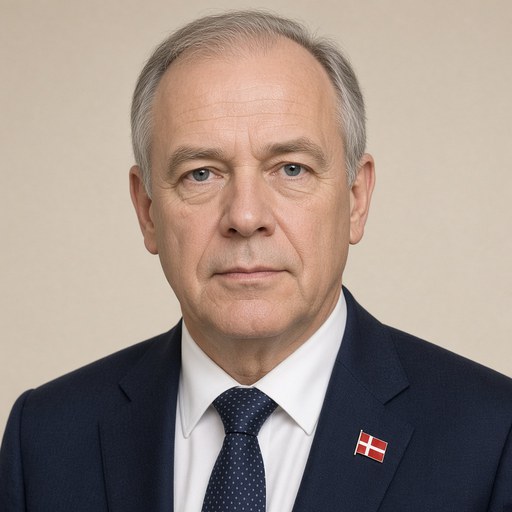
Prime Minister Poul Nyrup Rasmussen's speech at the conference "Future Forum Denmark 2001" at the Bella Center on February 2, 2001.
 Poul Nyrup Rasmussen · Prime Minister of Denmark
- Context
- Rasmussen addressed the Future Forum Denmark 2001 conference at the Bella Center in Copenhagen on February 2, 2001, outlining his vision for Denmark as a world-leading IT nation.
- Main themes
- IT and digital society, public-private partnership, Denmark as world-leading IT nation, knowledge economy, innovation and competitiveness, social welfare and inclusion, wind energy analogy, talent and human capital, Law of Jante, collaboration between sectors
- Duration
- ~29 min
- Words
- 3,445
- Sentences
- 175
- Readability
- 56
- Grade
- 10.3
- Syntax
- 2.99
- Vocabulary
- 1.91
Translated from Danish
The broad sphere of national life a sentence belongs to. Every sentence has an Arena, so it is the denominator the other indices are read against.
Other175 sentences in 25 paragraphs
Thank you for the invitation. Much can be accomplished with IT, but apparently, a temporary cold on the vocal cords is not one of them. I therefore ask the assembly today to have a little understanding that even a Danish Prime Minister can encounter something that takes him by surprise. But I promise you one thing, it is certainly temporary. That it should hit me today, one can become quite philosophical about.
But as I said, now that Bill Gates himself refers to our little meeting here before our joint meeting today, I can say that while Denmark and the USA may be far apart in a physical sense, it seems to me through our conversation that the visions and thoughts about what a society can contribute and what society's expectations can manifest in relation to IT are actually not so far apart.
I believe that IT can become one of the fundamental answers to the dilemmas and contradictions we also have in modern Danish society. I hear what you say, Finn Morsing, about politicians and our previous failure to focus on IT. I take that to heart. And there is probably some truth to it. On the other hand, it is also permissible for us - even us, Finn - to become wiser, and that is what we have now taken into account. In other words: Do not judge us by the past, but assess us by the future. I am not one who dreams of bytes or bits. Many of you here today know far, far more about it than I will probably ever have the opportunity to learn. But my message to you today is actually simple: The question is whether you will join in writing a new chapter for our society. A society where we can, through joint effort, become the best. I cannot present a whole series of golden nuggets, green forests in IT terms, but I believe that with our collective help we can initiate something that not many others can. For me, the investment in IT is not just a clever idea; it is sheer necessity if we are to have a chance to succeed in the future – competitively and ideologically. And I believe that it can give Denmark an enormous qualitative boost and an enormous service boost for all Danish citizens.
Let me immediately make one thing clear: We need a completely new partnership. A partnership and collaboration between the public and private sectors. We must unite our efforts around the common goal that I mentioned in my New Year’s speech. We must be the world's best IT-based nation. We must create a partnership that few other countries can achieve. I heard that you had a little referendum here in the hall about a slightly less ambitious goal: that we should be among the best. It did not gain much support, I can see. On the other hand: Remember what is often said about the Danes. We Danes are world champions as the world's most modest people – but we are better at it than anyone else. I believe that IT and the Law of Jante do not thrive well together. And I do not think it is a wise starting point to have that we are not particularly good. I believe that this society has always built its idea on trying to contribute to each individual in Denmark developing their talent based on the premise that every single person has a talent. On the other hand, I also do not believe that we can sit in Christiansborg or, for that matter, out in the new IT companies or in the old industrial enterprises and provide a raw answer. We believe that we must find the answer in collaboration – collaboration and partnership are the keywords.
I would like to give a handshake today that the public sector will take the lead in a number of areas as the largest demander we have in Danish society. I am sure that many of you can remember the initiatives and strategies we took when we set out to make a difference in wind energy, in wind farms. Today, it is the case, according to my information, that Denmark has over half of the world market in wind energy. And I firmly believe that we would not have reached this point if the public and private sectors had not started in a good and exciting partnership.
We have moved from an agricultural to an industrial society. It took many years. We are well on our way into the knowledge economy. It takes far, far less time. I am completely confident that Denmark has a number of fundamental prerequisites to become a leading nation in the knowledge economy. And I believe that I can base this on a number of historical experiences. One of the previous Nobel Prize winners in economics, Gunnar Myrdahl, once said: The only miracle he really wants to talk about, in terms of social economics, is Denmark. This country, which over a couple of centuries lost three-quarters of its industrial and agricultural land, still became one of the world's richest welfare societies – a country that Gunnar Myrdahl has said is almost entirely made up of fog and poor soil. How could that even happen? And I believe that he provided the answer, and I certainly have it. It is because we from the start focused on utilizing all people in Denmark, recognizing that everyone has potential. To build our educational policy on that basis. And that also means that the answer to leading Denmark into the knowledge economy in earnest is education, education, education. Education is our greatest wealth; the well-educated person is our greatest resource. It has never made more sense than now. For the key word in the knowledge economy is the combination of education and fundamental human creativity. Competence and knowledge, along with technological development, are the driving forces in the society of the future. We must make a good Denmark even better. We must sharpen our ambitions, also when it comes to IT. Now we are putting action behind the words. My goal is for IT to be a completely natural part of everyone's everyday life – to be integrated as naturally as other parts of our daily lives. Not something one thinks about, but something one simply uses. That is already the case for many Danes, but we need to include all Danes.
I know that we will not achieve this in one day, but we will achieve it when we set our minds to it. Then I believe that IT will first become commonplace when one no longer has to think in terms of PCs and lots of cables, but can access information and engage in active dialogue just as easily and simply as it is to press the remote control on the TV set. I hope that the government's convergence report will establish some clear guidelines for where we want to go when TV, telephone, and Internet work together. For Mrs. Hansen, it should be just as natural to access a TV program as it should be to use the same means of communication directly with her family, her daughter, her son, or to communicate with the Elderly Center: 'What is on the menu today?' or, for that matter, to participate in a direct virtual evening class. I believe that we are already well on our way. Two out of three Danish homes today have at least one PC. Almost half of families have access to the Internet, and six out of ten Danes have a mobile subscription. While over 2 million Danes have used the Internet to send or receive emails or similar.
I also noticed that yesterday the Financial Times reported that Copenhagen ranks impressively first ahead of major cities like London, Berlin, and Amsterdam in a brand new benchmarking analysis that names Copenhagen as the best city in Europe for companies establishing e-business centers. Another new comprehensive globalization index, which many of us are probably familiar with, places Denmark ahead of countries like the USA, Germany, and France. And I particularly note that the study points out that Scandinavia is the region in the world that has most clearly demonstrated how much information technology contributes to driving and transforming the globalization process. I simply believe that here in Scandinavia we are doing what we do best, namely that the traditional technological competencies' ability to adapt to the new age of technology has the best conditions here.
In reality, we Danes, as Finn suggested, may be best in the second wave of technology. In the phase where things need to be applied, improved, and combined. We have not had the big IT locomotives like Microsoft, Nokia, or Ericsson. We are better in the phase where things need to be interconnected and improved. I am not saying that it should always be this way, but I note where our fundamental strengths and positions lie. For we must remember that even in our industrial history, we have good examples of starting in the garage or basement, and it led to Giga. By offering competence and highly skilled employees, we have the opportunity to attract global locomotives like Ericsson, Siemens, Nokia, Microsoft, and others. I also received confirmation of this in my conversation with Bill Gates. I believe that Denmark can become one of the most attractive investment countries if we are ambitious in our educational programs and our educational activities. There are already 3,000 engineers employed in the aforementioned three companies in Denmark, and thus we are placing a significant part of their development in Denmark.
In other words, the locomotives grow where the competencies are best. And we must create the foundation to continue developing the competencies that are in demand. So how does our IT potential look? I believe that our IT potential is very close to 'second to none'. The engines are running. The IT colleges in East and West Denmark have become a great success; a new IT college is now ready to be built in Copenhagen, and alongside it, an IT research park is being offered, where researchers and business people will find each other in good, dynamic partnerships door to door. I also believe that we can allow ourselves to say that with the digital North Jutland, we are approaching something – in Jutland at least – that could resemble Denmark's Silicon Valley. Precisely because an attractive environment is created in interaction between research and business, and private companies. I hope that through some of these initiatives and more, we can initiate an offensive growth spiral. And at the same time, we have agreed on quite a bit of money for a new offensive and massive investment in primary schools, including for the further education of teachers in primary schools and at seminaries. When it comes to content, I would like to emphasize that for the government and for me, the IT highway is not just a question of getting as much as possible, as quickly as possible, between us, and also over longer distances. It is at least as much about content, content, and content. Denmark cannot, of course, become a world champion in all IT disciplines, but we must target and focus our efforts so that we get all Danes on board. In reality, I am not so worried that we cannot avoid a technological division between so-called A and B teams in Denmark. I believe that we can include all people. If we just make it attractive and exciting enough, and if we focus on education, education, and education.
I can inform you that in April, the Minister of Education will present a new strategy for the education sector, which through a focused effort will ensure that all Danes acquire the necessary IT competencies through special IT subjects and IT education, but also that IT becomes an integrated, natural element from the first grade to university level. I believe that Bill Gates is very right in saying that at the university level, we must acknowledge that it is probably there that most of Europe is lagging behind the USA. It is costly, but investments must be made, and they must be targeted, and I believe that here too we have a number of common interests.
I also believe that the way Danish society functions does not contradict the fundamental values of the new economy. On the contrary. Good educational opportunities, high social security that provides a basis for daring new things for a large part of the population, gives us a dynamic starting point. The government has just presented, as you know, an investment plan 'Investments in Denmark's Future'. If we continue with a sensibly organized economic policy, you could hear what was implied in that remark, then I believe that we can say that the state and municipalities together have an investment capacity over the next ten years of about 100 billion Danish kroner. I am not saying that all of it will be invested in IT, but I am saying that if you read through our investment report, you will see that the top priority is IT. IT is at the top of the list. The focus – yes, it will be directed towards the demand for IT services and less towards cables, masts, and wires.
Let me try to summarize what the government's IT strategy is based on. On five main points:
First – investments in the expansion of broadband and networks should, in principle, be made in the private sector. We have now begun to formulate an ambitious broadband plan. My own county, Ringkøbing County, has already decided that they will be the first where broadband is reached, can be reached, and everyone has access to broadband. The broadband plan we are presenting here should be completed by summer. It should be created in collaboration, mind you, with all relevant actors, both on the technical, content, and user sides.
Second – as I have said: The public sector has a completely crucial role in the development of IT in Denmark. And this also applies when it comes to framework conditions and high competition in the IT field. The goal is for the new technology to quickly become available throughout the country, and at a price, mind you, that allows everyone to participate.
And for the third – the public sector must stimulate demand through direct investments in IT and through IT-based services. Everyone talks, for example, about electrifying procurement, but only a few have actually turned words into action, despite the fact that Denmark is in a particularly good position for the future of e-commerce, because we are one of the leading countries in the use of wireless technology. I can tell you that in mid-May of this year, the state will be ready with a first version of a public procurement portal, and we will thus become one of the first countries with a national procurement strategy and a national procurement portal online. It is therefore my hope that we can also show the way for more electronics and more electronic commerce in Denmark.
For the fourth – I feel a great obligation for the Danish government to lead in content, content, and content. I have agreed with the Minister of Culture that our cultural heritage should be communicated on the Internet. It is equally clear that universities must meet over the years an Internet system that is their loyal servant in the educational process and in the research process. It is equally clear that our history must be able to be written and read also on the Internet, and it is equally clear that libraries, as was also mentioned by Bill Gates, must be in direct contact online.
And finally for the fifth – the Internet, the public sector, and citizens must be in concrete and direct contact. I believe that the Internet can be used and IT can be used so that citizens will experience a public sector that is much more open, much easier to access, and much easier to get answers from.
But when we talk about e-commerce, I must express a small lament. We really need to get e-commerce going. According to Statistics Denmark, Internet sales account for only about 1% of the total revenue of Danish companies. The biggest barriers are apparently that the goods are not suitable for the Internet or are they? And in any case, there is a barrier called uncertainty about payment and uncertainty about security. But I know that you have already discussed this extensively today. Here too, I would say: Let us be ambitious. We have the technology for it, and let us get it implemented. There is enormous potential. Even potential in the public sector. Yes, if one moment thinks about how many resources we use on communication and information from the public sector to citizens, and citizens' needs the other way, then I have no doubt that IT will give us a new revolution in the enhancement of service and speed in relation to citizens.
When I compare Denmark right now with other countries, I can see that the digital administration we are in the process of creating gives us some advantages. We must of course take into account citizens' information and needs, and I already believe that Customs and Tax have shown the way to how one can quickly, simply, and effectively create a system that saves time, money, and increases service. As I said, many municipalities are now underway. There is a great difference in the municipalities' design of both websites and portals. We must collectively contribute to raising quality and reducing differences. I would therefore also like to encourage both counties and municipalities today to set themselves a number of concrete goals and, importantly, to set themselves ambitious goals. I know that there is currently intense work on having IT included as part of this year's municipal agreements this summer.
Let me conclude by emphasizing that we must be ready – also in the government and you must be the same – to think differently, creatively, bigger, and new. In discussions with Bill Gates earlier, I also understood that if Denmark can become the country where half of the population, just half, has access to broadband networks. Then we are the first. Then we are the interesting ones. Then we have initiated the self-reinforcing process that I am so passionate about. But this is especially true if we are to do it; it must be based on a new partnership between public and private enterprises. We need, for example, to systematize 'best practices', to gather ideas and experiences, and translate them into concrete initiatives for the benefit of all of Denmark.
The government has therefore decided to establish a task force group, which in the best spirit of partnership will invite businesses and representatives of the public sector to combine experiences and ambitions. The task will be that we each month get two concrete IT goals that Denmark must work on for this new task force.
In addition to the task force group, the Minister of IT and Research is preparing a conference where we will discuss how to make the new partnership work even better. And preferably in collaboration with some of the financial, institutional financial investors: pension funds, pension companies, LD, and many, many more. All those who want to help shape Denmark's future. The philosophy is simple: The public sector can go a long way in leading and being the driving force. But we simply cannot solve the task alone. We need investments that come not only from the government but also from private investors. Who in turn will receive education, research, and the public sector as the largest demanders.
In short: What are we really waiting for? There are colossal opportunities. I know well that Denmark is not a world champion yet, but the Danish IT effort will be high on the government's political agenda. We will compare our IT development with the development in other leading IT countries. This is not a solo project; things require partnership. I am not saying that we will achieve everything tomorrow, but we will achieve it. Because we have set ourselves some goals. For those who do not know where they are going, all roads are equally good. They are not, as is well known, for us. A very well-known person has said: Content is King, and where is the Kingdom? And my answer is: Right here, the Kingdom of Denmark.
Thank you all very much.
The original Danish. The tags above are read on the English translation's sentences.
Tak for invitationen. Meget kan IT klare, men en forbigående forkølelse på stemmebåndet, det går åbenbart ikke. Jeg beder derfor om, at forsamlingen i dag har en lille smule forståelse for, at selv en dansk statsminister kan komme ud for noget, der kommer bag på ham. Men jeg lover jer en ting, den er i hvert fald forbigående. At den så lige skulle ramme mig i dag, det kan man godt blive helt filosofisk indstillet overfor.
Men som sagt når nu Bill Gates selv refererer til vores lille møde her før vores fælles møde her i dag, kan jeg sige, at nok kan Danmark og USA være langt fra hinanden i et fysisk henseende, men det forekommer mig igennem vores samtale, at visionerne og tankerne om, hvad et samfund kan bidrage til og hvad samfundets forventninger kan udmøntes i, i forhold til IT egentlig ikke er så langt fra hinanden.
Jeg tror på, at IT kan blive et af de fundamentale svar på de dilemmaer og de modsætninger, vi har også i det moderne danske samfund. Jeg hører godt hvad du siger, Finn Morsing, om politikerne og vores tidligere mangel på at sætte fokus på IT. Det tager jeg til mig. Og der er nok noget om snakken. På den anden side, det er også tilladt for os -selv os Finn - at blive klogere, og det er det, vi nu har taget konsekvensen af. Med andre ord: Døm os ikke på fortiden, men vurder os på fremtiden. Jeg er ikke den, der drømmer bytes eller bits. Mange af jer her i dag ved langt, langt mere om det end jeg formentlig nogensinde får mulighed for at lære. Men mit budskab til jer i dag er egentlig enkelt: Spørgsmålet er om I vil være med til at skrive et nyt kapitel for vores samfund. Et samfund, hvor vi ved fælles kraft kan blive de bedste. Jeg kan ikke sætte en hel række guldklumper frem, grønne skove i IT forstand, men jeg tror på, at vi ved fælles hjælp kan sætte noget i gang som ikke mange andre kan. For mig er satsningen på IT ikke bare en fiks idé, det er ren og skær nødvendighed, hvis vi også i fremtiden skal have en chance for at klare os – konkurrencemæssigt og idémæssigt. Og jeg tror på, at det kan give Danmark et enormt kvalitativt løft og et enormt serviceløft for alle danske borgere.
Lad mig med det samme slå én ting fast: Vi har brug for et helt nyt partnerskab. Et partnerskab og et samarbejde mellem den offentlige og den private sektor. Vi skal forene vores kræfter omkring det fælles mål, som jeg nævnte i min nytårstale. Vi skal være verdens bedste IT-baserede nation. Vi skal skabe et partnerskab, som få andre lande kan gøre. Jeg hørte, at I har haft en lille folkeafstemning her i salen om en lidt mindre ambitiøs målsætning: At vi skulle være blandt de bedste. Det vandt ikke stor tilslutning, kan jeg se. På den anden side: Husk hvad man plejer at sige om danskerne. Vi danskere er verdensmestre som verdens mest beskedne folk – til gengæld er vi bedre til det end nogen anden. Jeg tror, at IT og Jantelov trives dårligt i fællesskab. Og jeg tror ikke, at det er et klogt udgangspunkt at have, at vi ikke er særligt gode. Jeg tror på, at dette her samfund altid har bygget sin idé på at prøve at være et bidrag til, at hvert enkelt menneske i Danmark kan udvikle sit talent ud fra den basis, at hvert enkelt menneske har et talent. Jeg tror på den anden side heller ikke på, at vi kan sidde på Christiansborg eller for den sags skyld ude i de nye IT-virksomheder eller i de gamle industriforetagender og give et svar råt. Vi tror på, at vi skal finde svaret i et samarbejde - samarbejde og partnerskab er kodeordet.
Jeg vil gerne give håndslag på i dag, at den offentlige sektor skal gå foran på en række områder som den største efterspørger, vi har i det danske samfund. Jeg er sikker på, at mange af jer kan huske de initiativer og de strategier vi tog, da vi i sin tid satte os for, at vi ville gøre en forskel i vindenergi, i vindmølleparker. I dag er det jo sådan efter mine informationer, at Danmark har over halvdelen af verdensmarkedet i vindenergi. Og jeg har den faste opfattelse, at det var vi ikke nået til, hvis det offentlige og det private ikke havde startet i et godt og spændende partnerskab.
Vi har bevæget os fra landbrugs- til industrisamfund. Det tog mange år. Vi er godt i gang med rejsen ind i vidensøkonomien. Det tager langt, langt kortere tid. Jeg er fuldstændig sikker på, at Danmark har en række grundlæggende forudsætninger for at blive en ledende nation i vidensøkonomi. Og jeg mener, at jeg kan bygge det på en række historiske erfaringer. Én af de tidligere Nobelpristagere i økonomi Gunnar Myrdahl har en gang sagt det: At det eneste mirakel han egentlig ønsker at tale om, hvad samfundsøkonomi angår, er Danmark. Dette land som igennem et par århundreder mistede 3⁄4 af sin industri- og landbrugsjord, blev alligevel et af verdens rigeste velfærdssamfund – et land som Gunnar Myrdahl har sagt det: Der stort set kun består af tåge og dårlig jord. Hvordan kunne det overhovedet gå til? Og jeg mener selv, at han gav svaret, og jeg har det i hvert fald. Det skyldes, at vi fra starten satsede på at bruge alle mennesker i Danmark, at indse at alle har et potentiale. At bygge vores uddannelsespolitik op derpå. Og det betyder selvfølgelig også, at svaret på at føre Danmark ind i vidensøkonomi for alvor er uddannelse, uddannelse, uddannelse. Uddannelse er vores største rigdom, det veluddannede menneske er vores største ressource. Det har aldrig givet mere mening end nu. For nøgleordet i vidensøkonomien er jo kombinationen af uddannelse og det fundamentale menneskelige kreativitet. Kompetence og viden er sammen med den teknologiske udvikling drivkræfterne i fremtidens samfund. Vi skal gøre et godt Danmark endnu bedre. Vi skal skærpe vores ambitioner, også når det gælder IT. Nu sætter vi handling bagved ordene. Mit mål er, at IT skal være en ganske naturlig del af alles hverdag – skal integreres ligeså naturligt som andre dele af vores hverdag. Ikke noget man tænker over, men noget man bare bruger. Sådan er det allerede for mange danskere, men vi skal have alle danskere med.
Jeg ved godt, at vi ikke når det på én dag, men vi når det, når vi har sat os det for. Så tror jeg, at IT først bliver hvermandseje, når man ikke længere skal tænke i pc’ere og masser af kabler, men kan hente sine informationer og sin aktive dialog ligeså enkelt og let som det er at trykke på fjernbetjeningen ved TV-apparatet. Jeg håber, at regeringens konvergensredegørelse bliver opstillet nogle klare sigtelinier for, hvor vi vil hen, når TV, telefon og Internet spiller sammen. For fru Hansen skal det være ligeså naturligt at trykke sig ind på et TV-program, som det skal være at benytte samme adgang til kommunikation direkte med hendes familie, hendes datter, hendes søn eller kommunikere med Ældrecentret: 'Hvad er der på menuen i dag'? eller for den sags skyld deltage i et direkte virtuelt aftenundervisningsprogram. Jeg mener, at vi er godt på vej allerede. To ud af tre danske hjem har i dag mindst én pc’er. Knap hver anden familie har adgang til Internettet og seks ud af ti danskere har et mobilabonnement. Mens over 2 mio. danskere har brugt Internettet til at sende eller modtage e-mails eller lignende.
Jeg lagde også mærke til, at i går kunne Financial Times fortælle, at København kommer ind på en flot førsteplads foran storbyer som London, som Berlin, Amsterdam i en splinterny benchmarking analyse, der udnævner København som Europas bedste by, når det gælder virksomhedernes etablering af e-business centres. Et andet nyt omfattende globaliseringsindeks, som mange af os sikkert kender, placerer Danmark foran lande som USA, Tyskland og Frankrig. Og jeg hæfter mig især ved, at undersøgelsen peger på, at Skandinavien er den region i verden, der tydeligst har demonstreret, i hvor høj grad informationsteknologien er med til at drive og forandre globaliseringsprocessen. Jeg tror simpelthen, at vi her i Skandinavien gør det, vi er bedst til, nemlig at de traditionelle, teknologiske kompetencers evne til at omstille os til teknologiens nye tidsalder får de bedste betingelser her.
I virkeligheden er vi danskere som Finn antydede det, måske nok allerbedst i teknologiens anden bølge. I den fase, hvor tingene skal anvendes og forbedres og kombineres. Vi har ikke haft de store IT-lokomotiver som Microsoft, Nokia eller Ericsson. Vi er bedre i den fase, hvor tingene skal sammenkobles og forbedres. Jeg siger ikke, at det fortsat skal være sådan, men jeg konstaterer, hvor vores grundlæggende styrker og positioner ligger. For vi skal jo huske, at vi også i vores industrihistorie har gode eksempler på, at man startede i garagen eller kælderen, og det blev til Giga. Ved at tilbyde kompetence, knalddygtige medarbejdere har vi mulighed for at tiltrække globale lokomotiver, som Ericsson, Siemens, Nokia, Microsoft, andre. Det fik jeg også bekræftet i samtalen med Bill Gates. Jeg tror, at Danmark kan blive et af de mest attraktive investeringslande, hvis vi er ambitiøse i vores uddannelsesprogrammer og vores uddannelsesaktivitet. Der er jo allerede 3.000 ingeniører ansat i de førnævnte tre virksomheder i Danmark, og dermed får vi lagt en væsentlig del af deres udvikling i Danmark.
Sagt med andre ord, lokomotiverne vokser dér, hvor kompetencerne er bedst. Og vi skal skabe grobund for også fremover at udvikle de kompetencer som efterspørges. Hvordan ligger det så med vores IT-potentiale? Jeg mener, at vores IT-potentiale er meget tæt på 'second to none'. Der er gang i kedlerne. IT højskolerne i Øst- og Vestdanmark er blevet en stor succes, en ny IT-højskole er nu klar til at blive bygget i København, og ved siden af den udbydes en IT-forskerpark, hvor forskere og erhvervsfolk skal finde hinanden i gode, dynamiske partnerskaber dør om dør. Jeg tror også, at vi kan tillade os at sige med det digitale Nordjylland nærmer vi os noget – på jysk i hvert fald – der kunne ligne Danmarks Sillicon Valley. Netop fordi man skaber et attraktivt miljø i samspil mellem forskning og erhverv, og private virksomheder. Jeg håber, at vi ved nogen af de her initiativer og flere, kan sætte en offensiv vækstspiral i gang. Og samtidig har vi aftalt ganske mange penge til en ny offensiv og massiv satsning i folkeskolen bl.a. til efteruddannelsen af lærere i Folkeskolen og på seminarierne. Når det indhold vil jeg gerne sætte en ekstra streg under, at for regeringen og for mig er IT-highway ikke alene et spørgsmål om hurtigst muligt, mest muligt der kan bringes frem mellem os, og også på fjernere distancer. Det er mindst i ligeså høj grad også indhold, indhold og indhold. Danmark kan naturligvis ikke blive verdensmester i alle IT-discipliner, men vi skal målrette og fokucere indsatsen, så vi få alle danskere med på banen. Jeg er i virkeligheden ikke så bekymret for, at vi ikke kan klare at undgå en teknologiopdeling mellem såkaldte A- og B-hold i Danmark. Jeg tror nok, at vi kan få alle mennesker med. Hvis vi blot gør det attraktivt og spændende nok, og hvis vi satser på uddannelse, uddannelse og uddannelse.
Jeg kan nævne for jer, at til april vil undervisningsministeren præsentere en ny strategi for uddannelsessektoren, som via en fokuseret indsats skal sørge for, at alle danskere får de nødvendige IT-kompetencer ved hjælp af særlige IT-fag og IT-uddannelser, men også at IT bliver et integreret, naturligt element fra første klasse til universitetsniveauet. Jeg tror på, at Bill Gates har meget ret i, at på universitetsniveauet må vi sige, at det er nok der, det meste af Europa er mest bagud i forhold til USA. Det er kostbart, men der skal investeres og der skal målrettes, og jeg tror i virkeligheden også her vi har en række fælles interesser.
Jeg mener også, at den måde det danske samfund fungerer på, ikke strider mod grundværdierne i den nye økonomi. Tværtimod. Gode uddannelsesmuligheder, høj social tryghed der giver basis for at turde nye ting for en stor del af befolkningen, giver os et dynamisk afsæt. Regeringen har netop fremlagt, som I ved det, en investeringsplan 'Investeringer i Danmarks fremtid'. Hvis vi nu fortsætter med en fornuftig tilrettelagt økonomisk politik, I kunne godt høre, hvad der lå i den bemærkning, så tror jeg, at vi kan sige, at staten og kommunerne tilsammen har et investeringsråderum de næste ti år på ca. 100 mia. danske kroner. Jeg siger ikke, at de alle sammen vil blive investeret i IT, men jeg siger, at hvis man læser vores investeringsredegørelse igennem vil man se, at førsteprioriteten er IT. IT står øverst på listen. Fokus – ja, det vil være rettet mod efterspørgsel af IT ydelser og mindre mod kabler, master og ledninger.
Lad mig prøve at sammenfatte, hvad regeringens IT-strategi så bygger på. På fem hovedpointer:
For det første - skal investeringer i udbygningen af bredbånd og netværk i princippet ske i privat regi. Vi har nu taget hul på at formulere en ambitiøs bredbåndsplan. Mit eget amt, Ringkøbing amt, har allerede besluttet, at de vil være det første, hvor bredbåndet nås, kan nås og alle har adgang til bredbånd. Den bredbåndsplan vi her lægger frem skal være færdig til sommer. Den skal skabes i samarbejde vel at mærke med alle relevante aktører, både på teknik, på indhold og på brugersiden.
For det andet – som jeg har sagt det: Det offentlige har en fuldstændig rolle for IT-udviklingen i Danmark. Og det gælder også, når der tales om rammebetingelser og høj konkurrence på IT-området. Målet er, at den ny teknik og teknologi hurtigt vil blive tilgængelig i hele landet, og til en pris vel at mærke, der giver alle mulighed for at være med.
Og for det tredje – skal det offentlige stimulere efterspørgslen via direkte investeringer i IT og gennem IT-baserede ydelser. Alle taler fx om at sætte strøm til indkøbene, men kun få har egentlig gjort ordet til handling, på trods af at Danmark er i en særlig god position til fremtidens e-handel, fordi vi er et af de førende lande i trådløs teknologianvendelse. Jeg kan sige jer, at i midten af maj måned i år er staten klar med en første version af offentlig indkøbsportal, og vi bliver dermed et af de første lande med en national indkøbsstrategi og national indkøbsportal på nettet. Det er dermed mit håb, at vi dermed også kan vise vejen for mere elektronik og mere elektronisk handel i Danmark.
For det fjerde – jeg føler en stor pligt til, at den danske regering står i spidsen for indhold, indhold og indhold. Jeg har aftalt med kulturministeren, at vores kulturarv skal formidles på Internettet. Det er ligeså klart, at universiteterne skal møde over årene et Internet system, som er deres tro tjener i uddannelsesprocessen og i forskningsprocessen. Det er ligeså klart vores historie skal kunne skrives og læses også på Internettet, og det er ligeså klart, at bibliotekerne, som det vist også blev nævnt af Bill Gates, skal være i direkte kontakt på nettet.
Og endelig for det femte – nettet og den offentlige sektor og borgerne skal være i konkret og direkte kontakt. Jeg tror på, at nettet kan bruges og IT kan bruges til at borgerne vil opleve en offentlig sektor meget mere åben, meget nemmere at få adgang til og meget nemmere at få svar fra.
Men når vi nu taler om e-handel, bliver jeg nødt til at gøre et lille hjertesuk. Vi skal altså have gang i den e-handel. Ifølge Danmarks Statistik udgør Internet salg kun ca. 1% af danske virksomheders samlede omsætning. De største barrierer er tilsyneladende, at varerne ikke egner sig til nettet eller gør de? Og i hvert fald er der en barriere, der hedder usikkerhed omkring betaling og usikkerhed omkring sikkerhed. Men det ved jeg, at I allerede har drøftet omfattende i dag. Også her vil jeg sige: Lad os være ambitiøse. Vi har jo teknologien til det, og lad os få det omsat. Der er et enormt potentiale. Selv et potentiale i den offentlige sektor. Ja, hvis man et øjeblik tænker på, hvor mange kræfter vi bruger på kommunikation og information fra det offentlige til borgerne, og borgernes behov den anden vej, så er jeg slet ikke i tvivl om, at IT vil give os en ny revolution i løftet af service og hastighed i forhold til borgerne.
Når jeg sammenligner Danmark lige nu med andre lande kan jeg se, at den digitale forvaltning, vi er i gang med at skabe, giver os nogle forspringsmuligheder. Vi skal selvfølgelig tage højde for borgernes informationer og behov, og jeg mener allerede, at Told og Skat har vist vejen til, hvordan man hurtigt, enkelt og effektivt kan skabe et system, der sparer tid, penge og forøger service. Som sagt mange kommuner er nu i gang. Der er stor forskel i kommunernes indretning både af web-side og af portal. Vi skal bidrage i fællesskab til, at vi løfter kvalitet og vi mindsker forskel. Jeg vil derfor også i dag meget gerne opfordre både amter og kommuner til at sætte sig en række konkrete mål og til vel at mærke at sætte sig ambitiøse mål. Jeg ved, at man for øjeblikket arbejder heftigt derpå, at IT indgår som en del af dette års kommuneaftaler her til sommer.
Lad mig slutte med at understrege, at vi skal være parate til – også i regeringen og I skal være det samme – at tænke anderledes, skævt, større og nyt. I drøftelserne med Bill Gates før forstod jeg også, at hvis nu Danmark kan blive det land, hvor halvdelen af befolkningen, bare halvdelen, har adgang til bredbåndsnettet. Men så er vi de første. Så er vi de interessante. Så har vi igangsat den selvforstærkende proces, som jeg er så optaget af. Men det gælder måske især, hvis vi skal gøre det, så skal de ske på grundlag af et nyt partnerskab mellem offentlige og private virksomheder. Vi har brug fx for at systematisere 'best practises', at få samlet idéer og erfaringer op, og omsat det til konkrete initiativer til gavn for hele Danmark.
Regeringen har derfor besluttet at nedsætte en task force gruppe, som i bedste partnerskabsånd vil invitere erhvervsliv, repræsentanter for det offentlige til at lægge erfaringer og ambitioner sammen. Opgaven vil være, at vi hver måned får to konkrete IT-mål, som Danmark skal arbejde på for denne nye task force.
Udover task force gruppen er IT og forskningsministeren på vej med en konference, hvor vi skal diskutere, hvordan får vi det nye partnerskab til at fungere endnu bedre. Og helst i samarbejde med nogen af de finansielle, institutionelle finansielle investorer: Pensionskasser, Pensionsselskaber, LD og mange, mange flere. Alle dem der vil være med til at forme Danmarks fremtid. Filosofien er enkel: Det offentlige kan et langt stykke af vejen gå forrest og være primus motor. Men vi kan ganske enkelt ikke løse opgaven alene. Vi har brug for investeringer, der ikke kun kommer fra regeringen, men også fra private investorer. Som så til gengæld 'on their hand' får uddannelse, forskning og de offentlige som de største efterspørgere.
Kort sagt: Hvad venter vi egentlig på? Der er så kolossale muligheder. Jeg ved godt, at Danmark ikke er verdensmester endnu da, men den danske IT-indsats vil stå højt på regeringens politiske dagsorden. Vi vil sammenligne vores IT-udvikling med udviklingen i de andre førende IT-lande. Det er ikke noget solo-projekt, ting kræver partnerskab. Jeg siger ikke, at vi når det hele i morgen, men vi når det. Fordi vi har sat os nogle mål. For den der ikke ved, hvor man skal hen, er alle veje lige gode. Det er de som bekendt ikke for os. Et meget kendt menneske har sagt: Content is King, and where is the Kingdom? Og mit svar er: Right here, the Kingdom of Denmark.
Tak skal I have alle sammen.