




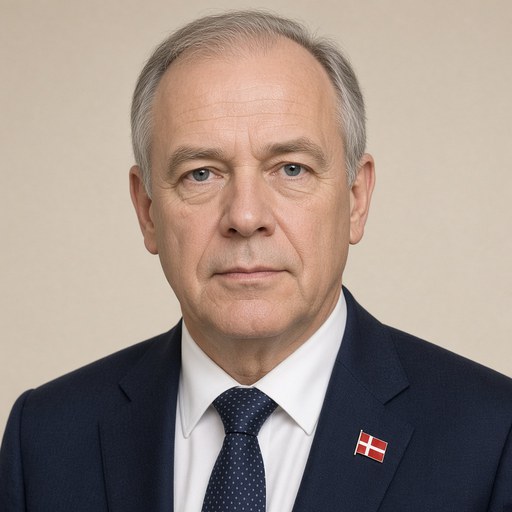
"To do something is to be something..." The Prime Minister's speech at the inauguration of Ikast Seminar on August 19, 1999.
 Poul Nyrup Rasmussen · Prime Minister of Denmark
- Context
- Rasmussen addressed the inauguration ceremony of Ikast Seminar on August 19, 1999, celebrating the school's new building and emphasizing education's role in Danish society.
- Main themes
- Education and skill development, social inclusion and disadvantaged children, Danish society and prosperity, pedagogy and human development, community and collective effort, dreams and perseverance, ecology and architecture in education, tolerance and open-mindedness, Denmark's historical resilience
- Duration
- ~19 min
- Words
- 2,279
- Sentences
- 144
- Readability
- 56
- Grade
- 8.6
- Syntax
- 2.79
- Vocabulary
- 2.00
Translated from Danish
The broad sphere of national life a sentence belongs to. Every sentence has an Arena, so it is the denominator the other indices are read against.
Other144 sentences in 54 paragraphs
To do something is to be something. To use one's life for something is a great satisfaction for oneself. But it is also of a very special value.
I have always believed that it is important to use one's life where one can do so - for the benefit of others. Of course, for the benefit of one's own future, but also for one's family and for the community. For the 'project' one dreams of realizing.
It is a great joy for me to be here today because the great dream you have fought for all these many years is finally being fulfilled. Not all dreams come to fruition like this.
The prerequisite for a dream to become reality is clear. That one has will, that one is persistent, that one stands together, that one has a very exciting vision, that one has a new message. A project that also has common values within it, so that others besides oneself, who are convinced of the idea's sustainability, also find it good.
I owe a great debt of gratitude for your dream, for your persistence, for your struggle.
A big thank you to everyone who has supported, who has had patience, who has stood together. This includes the seminar's teaching staff. This includes the mayor, who has not failed along the way, when we met here and there, to draw attention to the project. This includes the local community, the municipality, the politicians - it also includes the students!
We can just look at them today. As they stand there - the students - and remind us of the old wisdom: To speak has a certain value, which one measures in silver, but silence - that is measured in gold! I take it as a critical contribution on a lovely, joyful expansion day!
* * *
Ikast Seminariet saw the light of day in 1965, so it is quite appropriate after nearly 35 years to get good stable frameworks for continued development in the coming decades. It is a very big and very significant leap to go from a situation with many, differently located leases in outdated premises - to having one's own building. It is a new beginning. It is also a new beginning for the attitudes that pedagogy, ecology, architecture, art, and understanding of humanity are interconnected. Just as you have wished it, and have seen it, before it was put into words, but perhaps have sensed it and felt it.
It is a unique opportunity to breathe new life into the school - to think anew and change in interaction with the surrounding community. For here, the same applies as in many other places. It should not be a strange unnamed inhumane 'development' that comes from outside, that determines the development of this community. It should be us who can define the answer to changes - the global and the regional.
It is us humans who must decide. It is an opportunity, it is a challenge, it is a boldness. I am sure that you, with commitment and a desire to realize, will fully utilize and make use of the new opportunities.
Denmark is not built on wealth in the subsoil. The essential thing is the people - skilled people. It has always been that way.
Gunnar Myrdahl, an old Swedish Nobel laureate in economics, once said: 'The only social miracle I want to talk about is Denmark!'. I think that was exceptionally well said. But it is actually also true.
This country, Denmark, is a miracle. A few hundred years ago, we lost over 2/3 of our total territory. At that time, we lost large parts of production. Very large parts of our agricultural land went to other countries.
Yet this country is one of the world's richest societies. A wealth that benefits most people.
A wealth that is more evenly distributed than in other places.
* * *
Education and skill development are a completely natural prerequisite for society.
It
is our secret. It is our fundamental value, it is our sustainability. That is why it is so important for me to emphasize what this seminar also works for.
A seminar is one of the most important things one can have in Danish society. Because the wealth of Danish society is educated people. It is the raw material, it is the secret - neither more nor less.
To learn is to want. To educate and develop oneself is to find one's own self-worth, to be able to take the leap into tolerance, into open-mindedness and not narrow-mindedness. It is also to address the prerequisites for the marginalized and those who never believed there was hope for them, to now see hope!
Together with 31 other seminaries, you solve one of the most important tasks: To qualify students for pedagogical work with children, young people, and adults, including something that is closest to my heart - children, young people, and adults who did not just receive it as a gift, who were not just born with a silver spoon in their mouth, but perhaps often with a burden on their neck.
Socially disadvantaged children. What we do here is a miracle. It is the prerequisite for us to correct things. To tell those children that they are not lost, because they may feel they have lost once. To tell those children that they will no longer automatically have the same fate as their parents.
It is so important. I am so glad that your concept of sustainability here at this seminar is not only ecologically determined, but even broader - it is also humanly determined. That the concept of sustainability encompasses nature and people in a new union.
The competencies that the students are given here with you - theoretical knowledge, practical experience, and contributions to the promotion of the students' personal development - are of crucial importance for society as a whole.
* * *
We will never give up on anyone. Every human being has value. Community is the prerequisite for it to unfold. It is central. It is the focus of pedagogical work. It is good, and it is important.
And remember that hundreds of thousands of parents every day entrust their most precious possession - their children - safely into your care. They do so, in the firm belief that you provide our children and thus Denmark with a safe, meaningful, and developing everyday life during the daytime. That is why it is so important that the frameworks are there. That is why it is so important that there are persistent people like you, who are gathered here today.
It is a great responsibility that educators carry. It has far-reaching influence on how future generations of citizens develop.
Can we not also become wiser here?
Many know the story of little Peter, who reliably shows up at school every morning on time. Then there are a few days where the teacher - he could well have come from Ikast Seminariet - has noticed that Peter arrives about 10 minutes, 20 minutes late. Well, that can happen to all of us. But in Peter's case, it repeats itself for quite a while, and it goes on for about 14 days. The teacher calls the parents. They cannot understand it because Peter has left home exactly on time, and it takes about 20 minutes to walk to school. So one day, the teacher calls little Peter: Peter, why are you actually coming late? I have talked to your father and mother, and they say you leave home on time. Then little Peter lets out a deep sigh and says: You know what, could
I
not also just get a little break sometimes?
I thought of that story because we now also have the first generation of 'institution children', who today have reached their young adult years. I think Sigsgaard has grasped something of what little Peter is talking about. Identity, self-worth, and respect! I do not believe that children should return to the conditions we knew 10, 20, 30, or 40 years ago. I believe that children - through interaction with educators - can also gain the extra dimension that little Peter talks about.
Imagine that the educator says to all the children: 'So, now we all go out into the lovely nature', and then there is a little boy who says 'Can I not just take a little break for a moment?' The typical educator's reaction would be: 'No, you may not, you just have to go along with everyone else'. It could well be - you know it yourself - that such a little guy there, he might just 'want to take a little break'.
I am not saying it should always be like that. I am just saying that I am full of faith that within the institution's framework, there is also a heart, openness, flexibility, and individuality in the future.
Thus, we get independent - and we do have them - thoughtful people with a good sense of group, strong personal identity, and the natural touch of diversity. The pedagogical work here at Ikast Seminariet has taken a good leap forward.
I still say: We must remember the weaker children. Remember that they should have just as good chances as the others: I have a strong belief that today's youth have opportunities. I have a strong belief that their commitment is strong and great to maintain this care.
* * *
You - the students - are something quite special here at Ikast Seminariet. Within the frameworks that are centrally established for pedagogical education, Ikast Seminariet has given the education this beautiful ecological dimension.
You have chosen a standpoint. You have chosen an emphasis in the great pedagogical world choir. A tone that makes your pedagogical work stand out and leave a mark. Not in contrast to others, but in an extra dimension in relation to others. You have seen that the awareness that generations of pedagogical work have created - that awareness includes a good environment as a fundamental condition for a sustainable society.
Let us take a moment to hold the 'timeline' of history in our hands: In ancient Greece, one could participate in democracy if one was not a slave. In Florence, during the Renaissance, one could participate in democracy if one was not unemployed.
In modern society, one can of course participate in democracy regardless of whether one feels like a slave or unemployed - certainly! - but there is an additional dimension: If we now hold on to the 'timeline' and continue the journey up to Greenland to Ilulissat - and for a moment see from a helicopter what is happening below: The blue icebergs are lined up to push themselves out into the great ocean in Diskobugten and thus be part of the food chain in the North Atlantic. A beautiful message to us humans about the immense sensitivity and vulnerability with which humans and nature are interconnected.
If we remember that, we also remember how important it is that ecology, human knowledge, and democracy are in a way born and survive in a strongly interconnected, mutually dependent manner.
* * *
With the inauguration of the new building today, you gain new opportunities to realize what we dream of. What we have wished for. And suddenly I see it - 'The pedagogical-ecological seminar' gets a physical framework, substance, and becomes beautiful. The students' own conditions for awareness of environmental and ecological connections receive optimal conditions. With the new Ikast Seminariet, modern building technology, as the mayor beautifully emphasizes, is truly utilized fully and completely.
* * *
And then there is the art. Majalisa Engelhardt said that the message in the art that is hung up here - and that characterizes the place - may also be about the free flight of birds and the angels' message to us.
I was reminded of the seagulls in Esbjerg, my hometown. They had a general meeting some years ago, the seagulls. I remember it clearly: It was ... a rather boring lecture I was obliged to listen to. Fortunately, I could look out at the seagulls - they were having a great commotion. A Danish author has also felt inspired and guessed what the discussion among the seagulls was about: Especially whether the seagulls could also gain access to the fish boxes on the boats when they were docked. And who should fly first. In the end, this old silver gull created calm in the proceedings by saying something along the lines of the following: 'Listen now, I think we should all fly away, and then I think we should for a moment give our fishermen this song: Everyone should have all the freedom there is in the world, and everyone should have it completely, and no one should have more than others'.
In a way, that is for me the seed for the future of the pedagogical ecological seminar: Freedom and community are each other's prerequisites - only then does freedom have beautiful content. One can unfold, yes, but not at the expense of others.
I wish you all a heartfelt congratulations and will once again take the opportunity to thank all good parties for endurance, persistence, and vision. Thank you to the seminar, the staff, Ikast municipality, architects, contractors, and craftsmen. I have followed you over the years. I have also visited you a few times. I am happy to be here today and hope I can come again.
With these words, I hereby inaugurate the new Ikast Seminariet for the benefit and joy of all.
Congratulations and good luck in the future!
The original Danish. The tags above are read on the English translation's sentences.
At gøre noget er at være noget. At bruge sit liv til noget, er en stor tilfredsstillelse for én selv. Men også af en helt særlig værdi.
Jeg har altid ment, at det gælder om at bruge sit liv, der hvor man nu kan gøre det - til gavn. Selvfølgelig til gavn for ens egen fremtid, men også for ens familie og for fællesskabet. For det 'projekt' man drømmer om at realisere.
Det er en meget stor glæde for mig at være her i dag, fordi den store drøm, I har kæmpet for i alle de mange år, omsider bliver opfyldt. Det er ikke alle drømme, det går sådan.
Forudsætningen for, at en drøm kan blive virkelighed, er klart. At man har vilje, at man er vedholdende, at man står sammen, at man har en meget spændende vision, at man har et nyt budskab. Et projekt, som også har fælles værdier i sig, således at andre end én selv, som er overbevist om idéens bæredygtighed, også synes den er god.
Jeg skylder stor tak for jeres drøm, for jeres vedholdenhed, for jeres kamp.
Stor tak til alle, der har båret, der har haft tålmodighed, der har holdt sammen. Det gælder seminariets lærekræfter. Det gælder borgmesteren, som ikke har undladt undervejs, når vi mødtes her og der, at gøre opmærksom på projektet. Det gælder lokalsamfundet, kommunen, politikerne - det gælder også eleverne!
Vi kan jo bare se dem i dag. Som de står der - eleverne - og minder os om den gamle visdom: At tale, det har en vis værdi, som man måler i sølv, men tavshed - det måles i guld! Jeg tager det som et kritisk indlæg i en dejlig, glad udvidelsesdag!
* * *
Ikast Seminariet så dagens lys i 1965, så det er ganske på sin plads efter snart 35 år, at få gode stabile rammer for fortsat udvikling de næste årtier. Det er et meget stort og meget betydningsfuldt spring at gå fra en situation med mange, forskelligt beliggende lejemål i utidssvarende lokaler - og til at få egen bygning. Det er en ny start. Det er også en ny start for de holdninger, at pædagogik, økologi, arkitektur, kunst og menneskeforståelse hænger sammen. Sådan som I selv har ønsket det, og har set det, før der blev sat ord på, men måske har fornemmet det og følt det.
Det er en enestående chance for at puste nyt liv i skolen - tænke nyt og forandre i samspil med det omgivende samfund. For her gælder jo det samme som så mange andre steder. Det skal ikke være en mærkelig unavngiven umenneskelig 'udvikling', der kommer udefra, der skal bestemme dette samfunds udvikling. Det skal være os selv, der kan definere svaret på forandringer - de globale og de regionale.
Det er os mennesker, der skal bestemme. Det er en chance, det er en udfordring, det er en dristighed. Jeg er sikker på, at I med engagement og virkelyst vil udnytte og bruge de nye muligheder fuldt og helt.
Danmark bygger ikke på rigdom i undergrunden. Det væsentligste er menneskene - dygtige mennesker. Sådan har det altid været.
Gunnar Myrdahl, en gammel svensk nobelpristager i økonomi har engang sagt: 'Det eneste samfundsmæssige mirakel jeg ønsker at tale om, det er Danmark!'. Det synes jeg selvfølgelig var usædvanligt godt sagt. Men det er faktisk også rigtigt.
Dette land, Danmark, er et mirakel. For nogle hundrede år siden mistede vi over 2/3 af vores samlede territorium. Dengang tabte vi store dele af produktionen. Meget store dele af vores landbrugsjord gik til andre lande.
Alligevel er dette land et af verdens rigeste samfund. En rigdom som kommer de fleste til gode.
En rigdom, der er mere ligelig fordelt end andre steder.
* * *
Uddannelse og dygtiggørelse er en helt naturlig forudsætning for samfundet.
Det
er vores hemmelighed. Det er vores grundlæggende værdi, det er vores bæredygtighed. Derfor er det så vigtigt for mig, at understrege det, som dette seminarium også arbejder for.
Et seminarium er noget af det vigtigste man kan have i det danske samfund. Fordi det danske samfunds rigdom er uddannede mennesker. Det er råstoffet, det er hemmeligheden - hverken mere eller mindre.
At lære er at ville. At uddanne og dygtiggøre sig er at finde sit eget selvværd, at kunne tage springet ind i tolerancen, i vidsynets og ikke snæversynets tilstand. Det er også at tage fat på forudsætningerne for, at de udstødte og dem, der aldrig mente, der var håb for dem, nu kan se håbet!
Sammen med 31 andre seminarier løser I en af de vigtigste opgaver: At kvalificere de studerende til pædagogisk arbejde med børn, unge og voksne og heriblandt noget, som ligger mit hjerte aller nærmeste - børn, unge og voksne, som ikke bare fik det forærende, som ikke bare var født med en sølvske i munden, men måske ofte med et drag over nakken.
Socialt svage børn. Det vi gør her, er et mirakel. Det er forudsætningen for, at vi kan rette op. Fortælle de børn, at de er ikke tabt, fordi de måske føler de har tabt en gang. Fortælle de børn, at de ikke længere automatisk får samme skæbne, som deres forældre.
Det er så vigtigt. Jeg er så glad for, at jeres bæredygtighedsbegreb her på dette seminarium i virkeligheden ikke alene er økologisk bestemt, men endnu bredere - det er også menneskeligt bestemt. At bæredygtighedsbegrebet omfatter natur og mennesker i en ny forening.
De kompetencer, som de studerende gives her hos jer - teoretisk viden, praktisk erfaring og bidrag til fremme af de studerendes personlige udvikling - er af helt afgørende betydning for samfundet som helhed.
* * *
Vi vil aldrig opgive nogen. Ethvert menneske har værdi. Fællesskab er forudsætningen for, at det kan udfolde sig. Det er det centrale. Det er fokus i det pædagogiske arbejde. Det er godt, og det er vigtigt.
Og husk, at hundredtusindvis af forældre hver dag overlader det aller dyrebareste de overhovedet har - deres børn - trygt i jeres varetægt. Det gør de, i sikker forvisning om, at I giver vores børn og dermed Danmark en tryg, meningsfuld og udviklende hverdag i dagtimerne. Derfor er det så vigtigt, at rammerne er der. Derfor er det så vigtigt, at der er vedholdende mennesker, som jer, der er samlet her i dag.
Det er et stort ansvar pædagogerne løfter. Det har vidtrækkende indflydelse på, hvordan kommende generationer af samfundsborgere udvikler sig.
Kan vi ikke også her blive klogere?
Mange kender historien om lille-Peter, som ellers troligt møder op i skolen hver morgen til tiden. Så går der nogle dage, hvor læreren - han kunne godt være kommet her fra Ikast Seminarium - har lagt mærke til, at Peter kommer sådan 10 minutter, 20 minutter for sent. Nå, det kan vi jo alle komme ud for. Men i Peters tilfælde gentager det sig ret lang tid og der går vel en 14 dages tid. Læreren ringer til forældrene. Det kan de ikke forstå, fordi Peter har forladt hjemmet helt til aftalt tid, og det tager nu engang ca. de 20 minutter at gå hen til skolen. Så kalder læreren så på lille-Peter en dag: Peter, hvorfor kommer du egentlig for sent? Jeg har snakket med din far og mor og de siger, at du går hjemmefra til tiden. Så drager lille-Peter et dybt suk og siger: Ved du hvad, kunne
jeg
ikke også bare engang imellem få lidt fri?
Jeg kom til at tænke på den historie, fordi vi jo også nu har første generation af 'institutionsbørn', som i dag er nået de unge voksen-år. Jeg synes Sigsgaard har fat i noget af det, lille-Peter taler om. Identitet, selvværd og respekt! Jeg tror ikke på, at børnene skal tilbage til vilkår vi kendte for 10, 20, 30 eller 40 år siden. Jeg tror på, at børn - via vekselvirkning med pædagoger - også kan få den ekstra dimension, som Lille-Peter taler om.
Forestil jer, at pædagogen siger til alle børn: 'Så, nu går vi allesammen ud i den dejlige natur', og så er der en lille purk, der siger 'Må jeg ikke lige holde lidt fri et øjeblik?' Den typiske pædagogreaktion vil være: 'Nej det må du ikke, du har bare at gå sammen med alle de andre'. Det kunne jo godt være - I kender det jo godt selv - at sådan en lille fyr der, han godt 'lige ville holde lidt fri'.
Jeg siger ikke, det altid skal være sådan. Jeg siger bare, at jeg er fuld af tro på, at der indenfor institutionens rammer også er et hjerte, åbenhed, fleksibilitet og individualitet i fremtiden.
Derved får vi selvstændige - og det har vi jo - eftertænksomme mennesker med en god gruppefølelse, stærk egen identitet og det naturlige stænk af forskellighed. Det pædagogiske arbejde her på Ikast Seminarium har taget et godt spring fremad.
Jeg siger stadig: Vi må huske de svagere børn. Huske, at de skal have ligeså gode chancer, som de andre: Jeg har en stærk tro på, at dagens unge har muligheder. Jeg har en stærk tro på, at deres engagement er stærkt og stort til at fastholde denne omsorg.
* * *
I - eleverne - er noget ganske særligt her på Ikast Seminarium. Indenfor de rammer, der centralt er fastsat for pædagoguddannelserne, har Ikast Seminarium givet uddannelserne denne smukke økologiske dimension.
I har valgt et ståsted. I har valgt en betoning i det store pædagogiske verdenskor. En tone, som gør, at jeres pædagogiske arbejde skiller sig ud og sætter spor. Ikke i en kontrast til andre, men i en ekstra dimension i forhold til andre. I har set, at den bevidstgørelse som generationer af pædagogisk arbejde har skabt - den bevidstgørelse indebærer et godt miljø som et grundvilkår for et bæredygtigt samfund.
Lad os et øjeblik tage historiens 'tidsstrimmel' i hånden: I det gamle Grækenland,
der
kunne man deltage i demokratiet, hvis man ikke var slave. I Firenze, under renæssancen kunne man deltage i demokratiet, hvis man ikke var arbejdsløs..
I det moderne samfund, kan man naturligvis deltage i demokratiet uanset om man føler sig som slave eller arbejdsløs - bestemt! - men der er en dimension til: Hvis vi nu holder fast i 'tidsstrimlen' og fortsætter rejsen op til Grønland til Ilulissat - og et øjeblik ser fra en helikopter, hvad det er, der foregår nedenunder: De blå isbjerge står i kø for at mase sig ud i det store ocean i Diskobugten og dermed være del af fødekæden i Nordatlanten. Et smukt budskab til os mennesker om den umådelige følsomhed og sårbarhed, hvormed mennesker og natur hænger sammen.
Husker vi på det, så husker vi også, hvor vigtigt det er, at økologien, menneskekundskab og demokrati på en måde fødes og overlever på en stærkt sammenhængende, gensidig afhængig måde.
* * *
Med indvielsen af det nye byggeri i dag, får I nye muligheder for at realisere
det
,
vi drømmer om. Det vi har ønsket. Og pludselig ser jeg det - 'Det pædagogisk-økologiske seminarium' får fysisk ramme, substand og bliver smukt. De studerendes egne betingelser for bevidstgørelse om miljømæssige og økologiske sammenhænge får optimale betingelser. Med det nye Ikast Seminarium er moderne byggeteknik, som borgmesteren så smukt understreger det, virkeligt udnyttet fuldt og helt.
* * *
Og så er der kunsten. Majalisa Engelhardt sagde, at budskabet i den kunst, som er hængt op her - og som præger stedet - måske også kan handle om fuglenes frie flugt og englenes budskab til os.
Jeg kom til at tænke på mågerne i Esbjerg, min fødeby. De havde for en del år siden en generalforsamling, mågerne. Jeg husker det klart: Det var ... et temmelig kedeligt foredrag, jeg var indlagt til at lytte til. Heldigvis kunne jeg se ud på mågerne - de stod og førte en vældig palaver. En dansk forfatter har også følt sig inspireret og gættet på, hvad diskussionen blandt mågerne gik på: Navnlig hvorvidt mågerne også kunne få adgang til fiskekasserne på kutterne, når de stod ind i havn. Og hvem der skulle flyve først. Til sidst skabte denne gamle sølvmåge ro i foretagendet ved at sige noget i retning af følgende: 'Hør nu her, jeg synes vi allesammen skal flyve afsted, og så synes jeg vi et øjeblik skal skænke vores fiskere denne sang: Alle skal have al den frihed, der er i verden og alle skal have den helt og ingen skal have mere end andre'.
På en måde er det for mig kimen til det pædagogiske økologiske seminariums fremtid: Frihed og fællesskab er hinandens forudsætninger - først
da
får friheden det smukke indhold. Man kan folde sig ud, ja, men ikke på bekostning af andre.
Jeg ønsker jer allesammen et hjerteligt tillykke og vil endnu engang benytte lejligheden til at takke alle gode parter for udholdenhed, vedholdenhed og vision. Tak til seminariet, de ansatte, Ikast kommune, arkitekter, entreprenører og håndværkere. Jeg har fulgt jer gennem årene. Jeg har efterhånden også besøgt jer nogle gange. Jeg er glad for at være her i dag og håber jeg kan komme igen.
Med disse ord indvier jeg hermed det nye Ikast Seminarium til gavn og glæde for alle.
Tillykke og god vind fremover!