




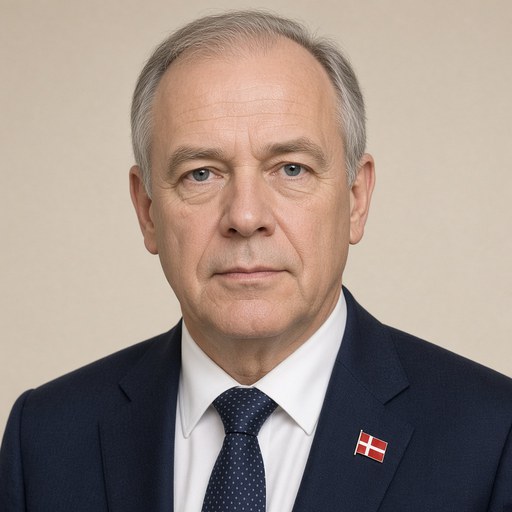
Prime Minister Poul Nyrup Rasmussen's speech at the conference marking the 100th anniversary of the September Agreement, September 1, 1999.
 Poul Nyrup Rasmussen · Prime Minister of Denmark
- Context
- Rasmussen addressed a conference at the Royal Library in Copenhagen on September 1, 1999, marking the 100th anniversary of the September Agreement.
- Main themes
- September Agreement centenary, Danish labor market model, history of Danish labor movement, collective bargaining, employer-union relations, Danish welfare society, social partnership, Danish exceptionalism in Europe, industrial society origins, class struggle and conflict resolution, corporatism vs. Danish model, mutual recognition and agreements
- Duration
- ~34 min
- Words
- 4,047
- Sentences
- 253
- Readability
- 54
- Grade
- 9.0
- Syntax
- 2.71
- Vocabulary
- 2.01
Translated from Danish
The broad sphere of national life a sentence belongs to. Every sentence has an Arena, so it is the denominator the other indices are read against.
Other253 sentences in 99 paragraphs
The Royal Library, 'The Black Diamond'.
The Danish model lives on.
I am pleased that we have become quite wealthy here in the country. Otherwise, we would not be able to sit here in such beautiful surroundings.
Our wealth has not come by chance. It has not come in quite the same way as in many other countries. Therefore, the wealth of our country also has a very special character.
The wealth has come because the start of the industrial society was based on the simple principle: 'An agreement is an agreement. If you recognize us, then we recognize you. If there is a disagreement about what we have agreed upon, then it must also be resolved.'
Trivialities? Perhaps okay today - but it was not so back then. Back in the early days of the labor movement, when the industrial society was being born, the class struggle was indeed in full swing. Here, as in all of Europe.
In the late 1800s, the struggles unfolded - some places more peacefully than others. Seen in the light of history, it happened peacefully here with us.
With the message 'Community makes strong', the workers joined together in groups and trade unions, and with targeted actions, called 'turning screws', the workers pressured the employers with varying success to give them better working conditions.
The conditions were harsh back then.
When we see 'Pelle the Conqueror', when we visit the Workers' Museum, when we walk in Copenhagen out in Nørrebro, it also gives us a sense of how it was back then. Copenhagen, the construction workers - yes, they won with varying success, but the working conditions were terrible. Horrific housing conditions, poverty, and toil.
This is how it looked in the beginning!
On their side, the employers banded together in what is now known as the Danish Employers' Association. This allowed the employers to centralize control and use lockouts to counter the workers' actions. The workers' countermeasure was to form LO, the Danish Confederation of Trade Unions.
The dynamics we see here are special in Europe - in the sense that the movement towards a unified employer side and a unified trade union side was unique. The opposition between the two sides and the actions taken at that time were not so special compared to the rest of Europe.
But one of the secrets of today's welfare society is how to resolve that conflict. Could it be resolved by bringing it into some frameworks that ensured we did not unnecessarily use resources that could have been used differently for the construction of society? - or was it the constant unregulated struggle that drew resources to itself and affected production?
We could have chosen a different direction than the one that drew resources to itself and affected production. We could have chosen a different direction than the one we chose. I do not believe that the Danish choice was random. It is worth remembering that we did not choose a French or Italian direction, where factories were occupied, - and where there was not even complete agreement on what kind of labor movement was occupying what. That has plagued them ever since, as you know.
When we compare the currents in Europe with what happened in Denmark, I think we can be proud. We chose a Danish direction. There were no role models from other countries; it was completely unique.
* * *
We entered the September Agreement, which became and remains the cornerstone of the agreement model that has now lasted for over 100 years.
The September Agreement of 1899 is fundamentally important for everything that followed. An agreement is an agreement. It still is. If there is doubt about how the agreement should be interpreted, we have someone to interpret it for us. It is still not known in many places in the rest of Europe.
If you recognize us, then we recognize you. This is also not taken for granted in the rest of Europe. There are still countries, such as Italy and France, where trade unions cannot agree on who should represent the collective agreement - even though the employers say they are willing to negotiate with whoever represents the company.
We used our efforts wisely to produce a foundation for a society to grow up and benefit the poor, benefit the workers, benefit the employers, benefit the industry, benefit our society.
This is not a corporatist society. A corporatist society - that was what we saw under dictatorial rule in Spain and Portugal: The Danish model is a completely different kind. It is Danish, and it is based on mutual respect, careful balance, and well-prepared techniques and approaches. And the state's respect for the parties, not the state's dictate of the parties, as we have seen in Portugal and Spain. And not a dictator like in Spain, who at that time 'bought' some of the Spanish workers - the rest were thrown in prison - by giving them job security in their working conditions.
The September Agreement was a natural consequence of the developments of the preceding years, which the parties themselves had led.
They found the solution themselves. Without state intervention. Or almost without state intervention. For there were in the state - then as now - wise people who said: We think it is wise that you now want to negotiate your way to agreement period by period. But you have a problem: Who will determine what is right and wrong if a dispute arises during the interpretation? Therefore, part of the agreement was the establishment of a permanent arbitration court to resolve disputes about the agreement. Only the state could provide that. We made a commitment and implemented it after the agreement in full accordance with the parties.
The state showed the parties its acceptance by transferring a public institution, which was not defined as 'public' at the time, to a private body, which was also not entirely defined as private.
The time immediately after the September Agreement showed that the state recognized the agreement as the cornerstone of the labor market and the development of the labor law system.
This delicate sense of the three parties' roles in relation to each other is again a very crucial cornerstone in understanding the secrets behind the Danish welfare society as we know it today.
One could say that the state acts as a midwife in solving the practical problems that arose in the wake of the September Agreement. In 1908, the famous 'August Committee' was established. It was a state committee, but it was characteristic that the members were representatives of the parties. The chairman was an independent jurist. Then came the laws on the Labor Court and the Conciliation Institution, which meant that the state followed the committee's recommendations.
* * *
The September Agreement and the follow-up on the work of the August Committee became the background for the labor law system that we know today. That it is the parties that are the driving force in the system is perhaps best seen in that something as important as the right to strike and lockout is not regulated by legislation.
It is not without reason that the September Agreement and the subsequent main agreement are called the Labor Market Constitution. So even back then, conflicts in the labor market were something the parties had to resolve themselves. Proximity and responsibility yield the best solutions.
In parallel with the development and organization of the labor market, we began the construction of the Danish welfare society. It was an unspoken mutual prerequisite and, in reality, also mutual dependence. Stability in the labor market and gradually advancing responsible improvements were the prerequisites for the construction of the welfare society.
But there was something else that also emerged. A mutual understanding that conflicts would inevitably arise along the way. There have been conflicts since the beginning. Nevertheless, today we can say that the Danish model in our society is not a contradiction to competitiveness and employment growth but a prerequisite for it.
* * *
This is, in fact, the lesson of history: The interplay between the modern welfare society, - which is based on the fact that we can all count on a fundamental security if things go wrong for us - and wise agreements – This interplay is the prerequisite for our country to have the greatest human and thus also labor market mobility.
One does not become less mobile due to security; one becomes more. One dares to take chances, pursue education, change jobs if one is sure that one is not lost, even if one has lost once or twice. Therefore, I have always believed that the description of the Danish model also includes that we have an unemployment benefit system that is fundamentally important for the collective agreement models to function as they do.
My message today is therefore also: We are not at sunset for the Danish model or the Danish welfare society at this turn of the century. We are at dawn!
It would be a fundamental mistake to believe that a deterioration or a fundamental replacement of the unemployment benefit system would lead us into a better world - that is what economists call 'incentive structure', I believe.
I would like to say that there is no good alternative to the unique combination of wise agreements and an unemployment benefit system that ensures that people do not face an economic downturn when they become unemployed, but that they can use the period of unemployment to qualify for new jobs.
We have seen other paths. Take Germany: Instead of an unemployment benefit system like the Danish, one gets such long notice periods that neither German workers, society, nor employers benefit from.
I believe that in the global next period for the Danish model, we are better equipped to handle the challenges of globalization than many others. We have seen that the unique combination of welfare, agreements, and the unemployment benefit system has led us to manage the tremendous changes the agreement model has undergone - from central to decentralized negotiations. We still have negotiations, still have agreements, still have orderly conditions, not unregulated, not jungle laws, - but still always the mutual respect, regardless of what level we are working at. And we have created the trust representative system, which in my opinion is completely unique and incredibly important to take good care of.
Modernize - yes, we must always do that, but we must take care of the foundation.
* * *
The National Labor Council is not found in many other places in the world either. Here, the labor market parties also take responsibility for how things are going centrally and regionally with the Danish labor market. Not just a market, but to a large extent an awareness on both sides that it is people, and educated people, who are Denmark's most important raw material.
And thus, the next big step we have slowly begun to take is the modernization of our adult and continuing education system. It is immensely important to organize it well and wisely. A long and careful process lies ahead of us, but both parties must again play a very important role - in collaboration with the government and the state.
It is the constructive interest opposition, where energy is channeled into forward-looking avenues. It is not the destructive jungle-like power.
* * *
The Swedish Nobel laureate in economics, Gunnar Myrdahl, once said: 'The only miracle I wish to talk about is the Danish one.' And Gunnar Myrdahl certainly notes how it can be that this country, Denmark, has become, yes, perhaps the world's richest society in the way we now like to measure it. The opportunities were fewer here than in so many other places. Nevertheless, the average economy per capita is greater than in most other places, and we also try to distribute welfare, regardless of who one is born to, better than in other places. And that is the model Myrdahl is concerned with.
The Danish model has shown that it is incredibly flexible. Just take a little trip back in history. We got through the great lockout in the 1920s. We got through stagnation in the 1930s with deep poverty. The war in the 1940s. The major conflict in the 1950s. Growth in the 1960s. Then came the war again, the great oil crisis in the 1970s, where we tried to act wisely, but where the rest of Europe could not really keep up. We analyzed a lot about it, can you remember, but we did not get through. Now I hope that in the new Europe we can learn - also from the mistakes of the 1970s.
* * *
The major structural changes in the 1990s and the lead-up to them in the 1980s are also an emphasis that we can have a basic model that can also renew itself. The Danish model has survived as strongly as ever, - or what?
In any case, we have gotten through major changes until now. But if the truth be told, it is also difficult here and there. It is difficult on the employers' side. Some of the large ones believe they should be bigger. And it is also difficult on LO's side. Some of the large ones believe they should be bigger. And when one becomes half-large in a family, one increasingly wants to decide for oneself. I can understand that, but my appeal today to those who want to become bigger and decide more for themselves would be: Think carefully!
Our historical experiences from a well-coordinated labor market, where the main organizations have a well-defined coordinating, unifying responsibility – our experiences that this is one of the foundations of the Danish model. Here, I am not only speaking on behalf of the government and Danish society. I am actually speaking on behalf of everyone. It is my deep conviction that we are best trained and best suited if we have well-defined role distributions. And the well-defined role distributions also include the Danish Employers' Association and LO - and the other main organizations, which do not overlap but complement each other.
I can assure you that when we meet trade unions and employer organizations out in Europe, I always note that there are a number of organizations from France or Italy. Each of them represents essentially the same sectors. It is impossible to figure out: Who is saying what and on whose behalf?
Here in the country, it is possible to find out! When the chairman of the Employers' Association says it is this way and that way, that voice stands clear. And we can agree or disagree, but the central point is that the voices are not to be misunderstood. The voices are representative. This naturally also applies to LO.
We must not come into conflict with the representativeness ourselves. If we do, we will start taking steps towards models that we fundamentally do not want.
My message today is: Take good care of the Danish model and be aware that it is possible to renew it, it is possible to introduce new areas of responsibility into it. It is possible to decentralize it. But the basic structure has proven to be akin to dawn and not akin to sunset.
* * *
What we are now facing - tripartite negotiations in a new guise - is not directly comparable to the tripartite negotiations we have had in the past. The tripartite negotiations today are based on the labor market we have today and on the roles of the two parties we have today.
The starting point is that much is more decentralized than it was before. The external conditions are very different from what they were before.
I am convinced that we can handle globalization, but I do not believe we will manage it automatically. I believe we have better conditions than many others.
It would be a great failure on our part if we do not together: the two parties, the government, society, and the Parliament, find the answers to the technological challenges - the renewal of our adult and continuing education. We must find answers at each workplace, find answers on how we adjust the way we enter into agreements - without failing the Danish model.
* * *
I would just like to offer a few simple pieces of advice.
I see the outlines of a new responsibility society emerging. Alongside the responsibilities of the main organizations, the trade unions, the federations, and the employers' organizations, we can see a responsibility at the individual workplace, a personal responsibility for our entirety.
For it does not help much if each of us only cares about our own little interest. We must constantly see our interest struggle in relation to the whole that must also hold together.
I do not, for example, believe that the solution is to throw ourselves into a large import of foreign labor because certain sectors feel that they are now lacking labor. I do not say this to provoke, or because I happen to have the background I have. I say it out of deep conviction that we must renew, we must further educate, we must continue to educate our own workforce, and there is still much to be done here. That is also what the adult and continuing education effort is about. I also say it for another reason: It should be possible in our country to employ many, many more of those people who have names other than Jensen, Sørensen, and Rasmussen. It should be possible. And if it is not possible in our country, then it is certainly not possible in other countries. And we cannot accept that.
Among the people who were born elsewhere but now have residence and work permits here, citizenship for some, we have unemployment that we cannot accept. I would therefore also today urge that the main responsible parties of the Danish model take on that task - on the terms of the Danish model.
It is possible if there is a will. Renewal, renewal, and renewal - without failing the values and the enormous strength that the Danish model is built on - that is the future.
* * *
Out in Europe, they have not followed that path. Out in Europe, something else has happened. They talk about European agreements. But remember: The kind of agreements they talk about, we would almost call 'mutual understandings' in Denmark.
I do not believe that we will see wage conditions agreed upon at the European level in the future of Europe. That would not be a good idea.
But I believe that in Europe's future within the economic and monetary cooperation, we will see the exchange of experiences in a more systematically organized way. That is a good idea. We have much to contribute. We have good inspirations for others. Therefore, I also hope that the labor movement sees that vision.
I remember many years ago in 1972, when we had the first referendum on Europe, that DA and LO published a little pamphlet that said 'We crack the nuts ourselves'. And that is also true. But I do not think there is anything wrong with us being inspired by each other. There is also nothing wrong with us in Europe agreeing on what it is that we should actually compete on.
I envision the day coming in Europe when we, for example, say: 'Now we should no longer compete on who has the lowest corporate tax or no corporate tax at all'. It is a common interest to create a somewhat uniform calculation basis.
Let us compete on what is our raw material - people and their education!
I therefore believe that Denmark should join the Euro area.
I am completely convinced that it is in Denmark's interest. I also look forward to working hard for it. We are already well underway.
This country is built on the principle that where decisions are made, we are also present.
Our country, Denmark, is built on the idea that presence and participation in negotiations is one of the secrets to the future of the welfare state. Therefore, Denmark must be where decisions are made about Denmark.
That is why we should join the Euro.
The other is our companies. I am quite sure that companies in these months are assessing how many currency hedges they need to take out to ensure that the contracts they have entered into will hold when the time for reckoning comes. It is not very good when all the others can avoid it.
Also for the sake of the companies' competitiveness, we must be where the others are, the 11 Euro countries. Also for the sake of employment.
If anyone has fought for employment policy to become an agenda in Europe, it is us. All the way back to the early 80s. We got it through in the Amsterdam Treaty: We have an agenda that is Danish. But then they agreed among the 11 others that they would discuss it themselves. We must be in the club where they talk about employment! That is done most concretely and bindingly in the Euro-11 area.
* * *
My third argument - there are many more - but let me mention the most important when all is said and done: The Euro is not just a currency that competes with the dollar and the Japanese yen. The Euro is a currency for a large market, where well over half of the total export goes to Denmark.
But that market is not just a random market, like in Asia or elsewhere. It is a regulated market where we have set labor, employer, and above all political conditions that we consider natural, but which are certainly not natural elsewhere in the world.
There are requirements for the environment. There are requirements for the recognition of fundamental rights, minorities, respect for human rights. There are also certain basic welfare principles internally. There are occupational health and safety regulations, etc.
A market with a human face, where we all compete on reasonably fair terms. That provides an enormous outlet externally. Also because our mutual dependence in the Euro area far exceeds 1/3 for all countries. In relation to the outside world, we are only dependent to the extent of 8-10%. We therefore have quite a bit of freedom to shape our own future in Europe. That presupposes that we decide to do so.
And if we do, then we have an enormous responsibility to leave our mark on the entire blue planet.
* * *
In the global world order, we will see Europe play an important role. If Europe decides to do so.
'Social leadership' or a humane, reasonable, respectful leadership in a world that has such difficulty figuring things out after the Cold War. That is also the responsibility we must help to lift!
In the upcoming WTO negotiations, it should be such that everything we consider reasonable in Denmark - that must also influence world trade. For the benefit of them, but certainly also for our benefit.
Recognition of fundamental rights, the right to organize, the right to negotiate with one's counterpart, prohibition of child labor, respect for the environment - all those things that we consider natural should slowly spread to other regions of the world - in our interest and in theirs.
There is much to be done. The Danish model is thriving and strong. It may creak along the way, but it certainly has before.
I look forward to being part of the continued lifting and welcome you to the new century. The mutual respect from my side towards you is unwavering. When we say something in the newspaper along the way - both the ministers of the government and I - it is not to irritate you. It is to offer a few good pieces of advice along the way. I have a sense that you do not hold back from giving us some good advice either.
Tit for tat, when friendship is to be maintained!
Congratulations on the Danish model. Good luck in the future.
The original Danish. The tags above are read on the English translation's sentences.
Det kgl. Bibliotek, 'Den sorte Diamant'.
Den danske model lever.
Jeg glæder mig over, at vi er blevet ret rige her i landet. Ellers havde vi jo ikke råd til at sidde her i så flotte omgivelser.
Vores rigdom er ikke kommet ved en tilfældighed. Den er ikke kommet helt på samme måde, som i mange andre lande. Derfor er vort lands rigdom også af en helt særlig karakter..
Rigdommen er kommet, fordi opstarten af industrisamfundet byggede på det enkle princip: 'En aftale er en aftale. Hvis I anerkender os, så anerkender vi jer. Opstår der uenighed om, hvad vi har aftalt, ja så skal det også klares.'
Banaliteter? Måske ok i dag - men det var det ikke dengang. Dengang i arbejdsbevægelsens barndom, dengang industrisamfundet var under fødsel, var klassekampen jo igang for fuld udblæsning. Her, som i hele Europa.
I slutningen af 1800-tallet udfoldede kampene sig - nogle steder fredeligere end andre steder. Set i historiens lys skete det på fredelig vis hos os.
Med budskabet 'Fællesskab gør stærk' sluttede arbejderne sig sammen i grupper og fagforeninger, og med punktvise aktioner, der blev kaldt 'omgangsskruer', pressede arbejderne med skiftende held arbejdsgiverne til at give dem bedre arbejdsvilkår.
Det var hårde vilkår dengang.
Når vi ser 'Pelle Erobreren', når vi kommer på Arbejdermuseet, når vi går i København ude på Nørrebro, giver det os også en fornemmelse af, hvordan det var dengang. København, bygningsarbejderne - jo, de vandt med skiftende held, men arbejdsforholdene var elendige. Forfærdelige boligforhold, fattigdom og slid.
Sådan så her ud i starten!
Arbejdsgiverne på deres side slog sig sammen i det, der nu kendes som Dansk Arbejdsgiverforening. Så kunne arbejdsgiverne med central styring og lockouter dæmme op for arbejdernes aktioner. Arbejdernes modtræk var, at danne LO, De Samvirkende Fagforbund.
De træk, vi her ser, er specielle i Europa - i den forstand, at bevægelsen mod en enheds - arbejdsgiverside og en enheds faglig side var specielle. Modsætningsforholdet mellem de to sider og de aktioner, der blev taget i brug, var på den tid ikke så specielle i forhold til resten af Europa.
Men én af hemmelighederne i dagens velfærdssamfund, er, hvordan man løser den konflikt. Kunne den løses ved at bringe den ind i nogle rammer, der gjorde, at vi ikke unødigt brugte ressourcer, som kunne være brugt anderledes til samfundets opbygning? - eller var det den konstante uregulerede kamp, som trak ressourcer til sig og gik ud over produktionen?
Vi kunne have valgt en anden retning end den, som trak ressourcer til sig og gik ud over produktionen. Vi kunne have valgt en anden retning, end den vi valgte. Jeg tror ikke, at det danske valg var tilfældigt. Det er værd at huske på, at vi ikke valgte en fransk eller italiensk retning, hvor man besatte fabrikkerne, - og hvor man ikke engang kunne blive helt enig om, hvad det egentlig var for en fagbevægelse, der besatte hvad. Det har jo plaget dem lige siden, som I ved.
Sammenligner vi strømningerne i Europa med, hvad der skete i Danmark, så synes jeg godt, vi kan være stolte. Vi valgte en dansk retning. Der var ikke nogen forbilleder fra andre lande, den var helt unik.
* * *
Vi indgik Septemberforliget, som blev og fortsat er grundstenen i den aftalemodel, der nu har holdt i over 100 år.
Septemberforliget fra 1899 er fuldstændig fundamentalt for alt, hvad der fulgte efter. En aftale er en aftale. Det er det stadigvæk. Er der tvivl om, hvordan aftalen skal fortolkes, så har vi nogen til at fortolke den for os. Det kendes stadigvæk ikke så mange steder i resten af Europa.
Hvis I anerkender os, så anerkender vi jer. Det kendes heller ikke som en selvfølge i resten af Europa. Der er fortsat lande, f.eks. Italien og Frankrig, hvor fagforeningerne ikke kan blive enige om, hvem det er, der skal tegne overenskomsten - selvom arbejdsgiverne siger, at de gerne vil forhandle med den, der nu tegner firmaet.
Vi brugte kræfterne rigtigt på at producere et grundlag for, at et samfund kunne vokse op og frem til gavn for de fattige, til gavn for arbejderne, til gavn for arbejdsgiverne, til gavn for industrien, til gavn for vores samfund.
Der er ikke tale om et korporativt samfund. Et korporativt samfund - det var jo dét vi så under diktatorisk overherredømme i Spanien og i Portugal: Den danske model er en helt anden slags. Den er dansk, og den bygger på gensidig respekt, omhyggelig balance og velforberedt teknik og fremgangsmåde. Og statens respekt for parterne, ikke statens diktat af parterne, som vi har set det i Portugal og Spanien. Og ikke en diktator som i Spanien, der i sin tid 'købte' nogle af de spanske arbejdere - resten blev jo smidt i fængsel - ved at give dem uopsigelighed i deres arbejdsforhold.
Septemberforliget var en naturlig følge af de foregående års udvikling, som parterne selv havde stået i spidsen for.
I fandt selv løsningen. Uden statslig indblanding. Eller stort set uden statslig indblanding. For der var i staten - dengang som i dag - kloge folk, som sagde: Vi synes, det er klogt, at I nu vil forhandle jer frem til enighed periode for periode. Men I har et problem: Hvem skal finde ud af, hvad der er rigtigt og forkert, hvis der opstår fortolkningstvist undervejs? Derfor blev en del af forliget nedsættelsen af den permanente voldgiftsret, der skulle løse uoverensstemmelser om forliget. Det kunne alene staten levere. Vi gav et tilsagn og gennemførte det efter forliget i fuld overensstemmelse med parterne.
Staten viste parterne sin accept, ved at overføre en offentlig instans, som ikke var defineret 'offentlig' på det tidspunkt til et privat organ, som heller ikke helt var defineret som et privat.
Tiden umiddelbart efter Septemberforliget viste, at staten anerkendte forliget som grundstenen for arbejdsmarkedet og udbygningen af det arbejdsretlige system.
Denne hård-fine fornemmelse af de tre parters roller i forhold til hinanden er igen en meget afgørende hjørnesten i forståelsen af hemmelighederne bag det danske velfærdssamfund, som vi kender det i dag.
Man kan sige, at staten agerer fødselshjælper ved løsningen af de praktiske problemer, der opstod i kølvandet på Septemberforliget. I 1908 blev det navnkundige 'August-udvalg' nedsat. Det var et statsligt udvalg, men det var karakteristisk, at medlemmerne var repræsentanter for parterne. Formanden var en uafhængig jurist. Så kom lovene om Arbejdsretten og Forligsinstitutionen, som betød, at staten fulgte udvalgets anbefalinger.
* * *
Septemberforliget og opfølgningen på August-udvalgets arbejde, blev baggrunden for det arbejdsretlige system, som vi kender i dag. At det er parterne, der er drivkraften i systemet, ses måske bedst ved, at noget så vigtigt som strejkeretten og lockout ikke er reguleret af lovgivningen.
Det er da heller ikke uden grund, at Septemberforliget og den efterfølgende hovedaftale kaldes Arbejdsmarkedsgrundloven. Så allerede dengang var konflikter på arbejdsmarkedet noget parterne skulle løse selv. Nærheden og ansvaret giver de bedste løsninger.
Parallelt med arbejdsmarkedets udvikling og organisering startede vi på opbygningen af det danske velfærdssamfund. Der var tale om en uudtalt gensidig forudsætning og i virkeligheden også gensidig afhængighed. Ro på arbejdsmarkedet og gradvist fremadskridende ansvarlige forbedringer var forudsætningen for velfærdssamfundets opbygning.
Men der var noget andet, som også voksede frem. En gensidig forståelse for, at der uundgåeligt kom konflikter undervejs. Det har der været siden starten. Alligevel kan vi i dag sige, at den danske model i vores samfund ikke er en modsætning til konkurrencekraft og beskæftigelsesfremgang men en forudsætning herfor.
* * *
Dette er i virkeligheden historiens lære: Samspillet mellem det moderne velfærdssamfund, - der bygger på, at vi allesammen kan regne med en grundlæggende tryghed, hvis det skulle gå galt for os - og kloge overenskomster – Dette samspil er forudsætningen for, at vort land har den største menneskelige og dermed også arbejdsmarkedsmæssige mobilitet.
Man bliver ikke mindre bevægelig af tryghed, man bliver mere. Man tør tage chancer, uddannelse, jobskifte, hvis man er sikker på, at man ikke er fortabt, selvom man har tabt en gang eller to gange. Derfor har jeg altid ment, at til beskrivelsen af den danske model hører også, at vi har et dagpengesystem, som er fuldstændig fundamentalt for, at overenskomstmodellerne kan fungere, som de kan.
Mit budskab er derfor også i dag: Vi står ikke ved solnedgangen for den danske model eller det danske velfærdssamfund ved dette århundredskifte. Vi står ved morgenrøden!
Det vil være en grundlæggende
fejltagelse
at tro, at en forringelse eller en fundamental udskiftning af dagpengesystemet vil bringe os over i en bedre verden - det er vist det økonomerne kalder 'incitamentstruktur', tror jeg.
Jeg vil gerne sige, at der ikke er noget godt alternativ til den unikke kombination mellem kloge overenskomster og et dagpengesystem der gør, at folk ikke får en økonomisk nedtur når de bliver arbejdsløse, men at de kan bruge ledighedsperioden til at kvalificere til nye job.
Vi har set andre veje. Tag Tyskland: I stedet for et dagpengesystem som det danske, får man så lange opsigelsesvarsler, som hverken tyske arbejdere, samfundet eller arbejdsgiverne er tjent med.
Jeg tror på, at vi i den globale næste periode for den danske model, er bedre udstyret til at klare globaliseringens udfordringer end så mange andre. Vi har set, at den unikke kombination af velfærd, aftaler og dagpengesystem har ført til, at vi har kunnet klare de voldsomme forandringer, aftalemodellen har undergået - fra central til decentrale forhandlinger. Vi har stadigvæk forhandlinger, stadigvæk aftaler, stadigvæk ordnede forhold, ikke uregulerede, ikke junglelove, - men stadigvæk hele tiden den gensidige respekt, uanset hvilket niveau det er vi arbejder på. Og vi har fået skabt tillidsmandssystemet, som efter min opfattelse er fuldstændig unikt og fantastisk vigtigt at passe godt på.
Modernisere - jo det skal vi altid, men vi skal passe på fundamentet.
* * *
Landsarbejdsrådet finder man jo heller ikke mange andre steder i verden. Også her påtager arbejdsmarkedets parter sig et ansvar for, hvordan det nu går centralt og regionalt med det danske arbejdsmarked. Ikke bare et marked, men i høj grad bevidsthed om, hos begge parter, at det er mennesker, og uddannede mennesker, der er Danmarks vigtigste råstof.
Og dermed bliver det næste store skridt, vi så småt har taget fat på moderniseringen af vores voksen- og efteruddannelsessystem. Det er kolossalt vigtigt at få tilrettelagt godt og klogt. En lang og omhyggelig proces er foran os, men begge parter må igen spille en meget vigtig rolle - i samspillet med regering og stat.
Det er den konstruktive interessemodsætning, hvor energien bliver ledt over i fremadrettede kanaler. Det er ikke den destruktive jungleagtige magt.
* * *
Den svenske nobelpristager i økonomi, Gunnar Myrdahl, har engang sagt: 'Det eneste mirakel jeg ønsker at tale om, er det danske'. Og Gunnar Myrdahl hæfter sig selvfølgelig ved, hvordan det kan gå til, at dette land, Danmark, er blevet, ja, måske verdens rigeste samfund på den måde, vi nu ynder at måle det på. Mulighederne var mindre her end så mange andre steder. Alligevel er gennemsnitsøkonomien pr. capita større end de fleste andre steder og velfærden prøver vi også at fordele, uafhængig af, hvem man er født af, bedre end andre steder. Og det er den model Myrdahl er optaget af.
Den danske model har jo vist, at den er utrolig fleksibel. Tag bare et lille smut tilbage i historien. Stor-lockout’en i 20’erne kom vi igennem. Stagnation i 30’erne med dyb fattigdom kom vi igennem. Krigen i 40’erne. Storkonflikten i 50’erne. Væksten i 60’erne. Så kom krigen igen, den store oliekrise i 70’erne, hvor vi prøvede at bære os klogt ad, men hvor resten af Europa ikke rigtigt kunne følge trop. Vi analyserede meget på det, kan I huske, men vi kom ikke igennem. Nu håber jeg, at vi i det nye Europa kan lære - også af 70’ernes fejltagelser.
* * *
De store strukturændringer i 90’erne og tilløb dertil i 80’erne er vel også en understregning af, at vi godt kan have en grundmodel, som samtidig kan forny sig. Den danske model har overlevet så stærkt som nogensinde, - eller hur?
I hvert fald er vi kommet igennem store forandringer indtil nu. Men hvis sandheden skal frem, kniber det jo også her og der. Det kniber på arbejdsgivers side. Nogle af de store mener, de skal være større. Og det kniber såmænd også på LO’s side. Nogle af de store mener de skal være større. Og når man bliver halvstor i en familie, så vil man gerne bestemme selv i stigende omfang. Det kan jeg sådan set godt forstå, men min opfordring i dag til dem, der gerne vil blive større og bestemme mere selv vil være: Tænk jer nu godt om!
Vores historiske erfaringer fra et velkoordineret arbejdsmarked, hvor hovedorganisationerne har et veldefineret koordinerende, samlende ansvar – vores erfaringer, at det erer et af fundamenterne i den danske model. Her taler jeg ikke alene på regeringens og det danske samfunds vegne. Jeg taler faktisk på alles vegne. Det er min dybe overbevisning, at vi er bedst trænede og bedste egnede, hvis vi har veldefinerede rollefordelinger. Og til de veldefinerede rollefordelinger hører også Dansk Arbejdsgiverforening og LO - og de andre hovedorganisationer, som jo ikke overlapper hinanden, men supplerer hinanden.
Jeg kan forsikre jer for, at når vi møder faglige organisationer og arbejdsgiverorganisationer ude i Europa, så hæfter jeg mig altid ved, at der sidder en række organisationer fra Frankrig eller Italien. Hver af dem repræsenterer i og for sig de samme sektorer. Det er ikke til at finde ud af: Hvem siger nu hvad og på hvis vegne?
Her i landet er det til at finde ud af! Når Arbejdsgiverforeningens formand siger, det er sådan og sådan, så står den stemme klart. Og der kan vi være uenig eller enig, men det centrale er, at stemmerne ikke er til at misforstå. Stemmerne er repræsentative. Det gælder naturligvis også LO.
Repræsentativiteten må vi ikke komme i konflikt med os selv om. Gør vi det, så begynder man jo at tage skridt ud til modeller, som vi dybest set ikke ønsker.
Mit budskab derfor i dag er: Pas nu godt på den danske model og vær opmærksom på, at man kan godt forny den, man kan godt komme nye ansvarsområder ind i den. Man kan godt decentralisere i den. Men grundstrukturen har vist sig at være lig med morgenrøde og ikke lig med solnedgang.
* * *
Det vi nu står foran - trepartsforhandlinger i en ny iklædning, - er ikke uden videre sammenlignelig med de trepartsforhandlinger vi har haft tidligere. Trepartsforhandlingerne i dag tager udgangspunkt i det arbejdsmarked, vi har i dag og i de to parters roller vi har i dag.
Udgangspunktet er, at meget er mere decentralt, end det var før. De ydre vilkår er meget anderledes, end de var før.
Jeg er overbevist om, at vi kan klare globaliseringen, men jeg tror ikke, vi klarer den automatisk. Jeg tror, vi har bedre forudsætninger end så mange andre.
Det vil være et stort svigt af os, hvis vi ikke i fællesskab: De to parter, regeringen, samfundet og Folketinget, finder svaret på de teknologiske udfordringer, - fornyelsen af vores voksen- og efteruddannelse. Vi må finde svar på den enkelte arbejdsplads, finde svar på, hvordan vi justerer måden at indgå overenskomster på, - uden at svigte den danske model.
* * *
Jeg vil bare give et par enkelte råd.
Jeg ser konturerne af et nyt ansvarssamfund vokse op. Ved siden af hovedorganisationernes, de faglige organisationers, forbundenes og arbejdsgiverorganisationernes ansvar, kan vi se et ansvar på den enkelte arbejdsplads, et personligt ansvar for vores helhed.
For det nytter jo ikke så meget, hvis vi hver især kun interesserer os for hver vores egen lille interesse. Vi er nødt til, hele tiden, at se vores interessekamp i forhold til den helhed, der også skal hænge sammen.
Jeg tror f.eks. ikke, det er løsningen at kaste os ud i en stor import af fremmed arbejdskraft, fordi enkelte brancher mener, at nu mangler de arbejdskraft. Jeg siger det ikke for at drille, eller fordi jeg nu engang har den baggrund jeg har. Jeg siger det af dyb overbevisning, at vi må forny, vi må videreuddanne, vi må efteruddanne vores egen arbejdskraft og der er stadig meget at gøre her. Det er også det voksen- og efteruddannelsesindsatsen handler om. Jeg siger det også af en anden grund: Det bør være muligt i vores land, at ansætte mange, mange flere af de mennesker der hedder noget andet end Jensen, Sørensen og Rasmussen. Det bør være muligt. Og hvis det ikke er muligt i vores land, så er det slet ikke muligt i de andre lande. Og vi kan ikke være det bekendt.
Blandt de mennesker, der er født et andet sted, men nu har fået opholds- og arbejdstilladelse her, statsborgerskab for en dels vedkommende, har vi en arbejdsløshed, som vi ikke kan være bekendt. Jeg vil derfor også i dag opfordre til, at den danske models hovedansvarlige løfter den opgave - på den danske models vilkår.
Det kan lade sig gøre, hvis man vil. Fornyelse, fornyelse og fornyelse - uden at svigte de værdier og den enorme kraft, som den danske model bygger på, - det er fremtiden.
* * *
Ude i Europa har de ikke fulgt den vej. Ude i Europa er der foregået noget andet. De taler om europæiske overenskomster. Men husk: Den slags overenskomster de taler om, vil vi nærmest kalde 'gensidige forståelser' i Danmark.
Jeg tror ikke på, at vi i fremtidens Europa vil se lønforhold aftalt på europæisk plan. Det vil ikke være en god idé.
Men jeg tror, at vi i Europas fremtid indenfor det økonomiske og monetære samarbejde vil se udveksling af erfaringer på en mere gennemsystematiseret måde. Det er en god idé. Vi har meget at komme med. Vi har gode inspirationer til de andre. Derfor håber jeg også, at fagbevægelsen ser den vision.
Jeg kan huske engang for mange år siden i 1972, da vi havde den første folkeafstemning om Europa, at DA og LO udgav en lille pjece, hvor der stod 'Nødderne knækker vi selv'. Og det er også rigtigt. Men, jeg synes ikke, der sker noget ved, at vi lader os inspirere af hinanden. Der sker heller ikke noget ved, at vi i Europa bliver enige om, hvad det egentligt er, vi skal konkurrere på.
Jeg ser for mig den dag komme i Europa, hvor vi f.eks. siger: 'Nu skal vi altså ikke længere konkurrere på, hvem der har den laveste selskabsskat eller slet ingen selskabsskat'. Det er en fælles interesse at få skabt et nogenlunde ensartet beregningsgrundlag.
Lad os konkurrere på det, der er vores råstof - mennesker og deres uddannelse!
Jeg tror derfor på, at Danmark skal tilslutte sig Euro-området.
Jeg er fuldstændig overbevist om, at det er i dansk interesse. Jeg glæder mig også til at arbejde hårdt for det. Vi er allerede i fuld gang.
Dette her land bygger på, at der hvor der besluttes noget, der er vi også.
Vores land, Danmark bygger på, at tilstedeværelse og deltagelse i forhandlinger er en anden af hemmelighederne i velfærdssamfundets fremtid. Derfor skal Danmark være der, hvor der besluttes noget om Danmark.
Det er derfor, vi skal melde os ind i EURO’en.
Det andet er vore virksomheder. Jeg er helt sikker på, at virksomhederne i disse måneder gør op, hvor mange valutaforsikringer de skal tegne for at være sikre på, at de kontrakter de har indgået også holder, når regnskabets time kommer. Det er ikke særlig godt, når alle de andre kan
undlade
det.
Også af hensyn til virksomhedernes konkurrenceevne skal vi være der, hvor de andre er, de 11 Eurolande. Også af hensyn til beskæftigelsen.
Er der nogen, der har kæmpet for, at beskæftigelsespolitikken skulle blive en dagsorden i Europa, så er det jo os. Helt tilbage fra starten af 80’erne. Det fik vi igennem i Amsterdam-traktaten: Vi har fået en dagsorden, som er dansk. Men så blev de enige om de, - 11 andre, - at det vil de selv drøfte. Vi skal være i den klub, hvor man snakker om beskæftigelsen! Det gør man mest konkret og forpligtende i EURO-11-området.
* * *
Mit tredje argument - der er mange flere - men lad mig nævne det væsentligste når alt kommer til alt: EURO’en er jo ikke bare en valuta, der konkurrerer med dollaren og med den japanske yen. EURO’en er en valuta for et stort marked, hvor vel langt mere end halvdelen af den samlede eksport går til Danmark.
Men det marked er jo ikke bare et tilfældigt marked, som i Asien eller andre steder. Det er et reguleret marked, hvor vi har sat faglige, arbejdsgivermæssige og frem for alt politiske betingelser på, som vi synes er naturlige, men som bestemt ikke er naturlige andre steder i verden.
Der er krav om miljø. Der er krav om anerkendelse af fundamentale rettigheder, minoriteter, respekt for menneskerettigheder. Der er også indadtil visse grundlæggende velfærdsprincipper. Der er arbejdsmiljøbestemmelser o.s.v.
Et marked med et menneskeligt ansigt, hvor vi allesammen konkurrerer på nogenlunde lige fornuftige vilkår. Det giver et enormt afsæt udadtil. Også fordi vores gensidige afhængighed i Euro-området langt overstiger 1/3 for alle landene. I forhold til omverdenen er vi jo kun afhængige med størrelsesordenen 8-10%. Vi har altså en ret stor handlefrihed til at forme vores egen fremtid i Europa. Det forudsætter, at vi beslutter os for det.
Og hvis vi gør det, så har vi et enormt stort ansvar for at sætte vores præg på hele den blå klode.
* * *
I den globale verdensorden vil vi se Europa komme til at spille en vigtig rolle. Hvis Europa selv beslutter sig for det.
'Social leadership' eller et menneskeligt, fornuftigt, respektfyldt lederskab i en verden, der har så svært ved at finde ud af det efter den kolde krig. Det er vel også det ansvar, vi må være med til at løfte!
Ved de kommende WTO-forhandlinger skal det være sådan: Alt det, vi synes er fornuftigt i Danmark, - dét må også smitte af på verdenshandelen. Til fordel for dem, men sandelig også til fordel for os.
Anerkendelse af grundlæggende rettigheder, retten til at organisere sig, retten til at forhandle med sin modpart, forbud mod børnearbejde, respekt for miljøet,- alle de ting, som vi betragter som naturlige, skal langsomt brede sig til de andre regioner af verden - i vores interesse og i deres.
Der er nok at tage fat på. Den danske model lever flot og stærkt. Det knaser undervejs, men det har det sandelig også gjort før.
Jeg glæder mig til at være med til at løfte videre og byder jer velkommen til det nye århundrede. Den gensidige respekt fra min side i forhold til jer fejler intet. Når vi siger noget i avisen undervejs - både regeringens ministre og jeg selv - så er det er ikke for at irritere jer. Det er for at give et par gode råd undervejs. Jeg har en fornemmelse af, at I heller ikke holder jer tilbage fra at give os nogle gode råd.
Lige for lige, når venskabet skal holdes!
Tillykke med den danske model. Held og lykke i fremtiden.