




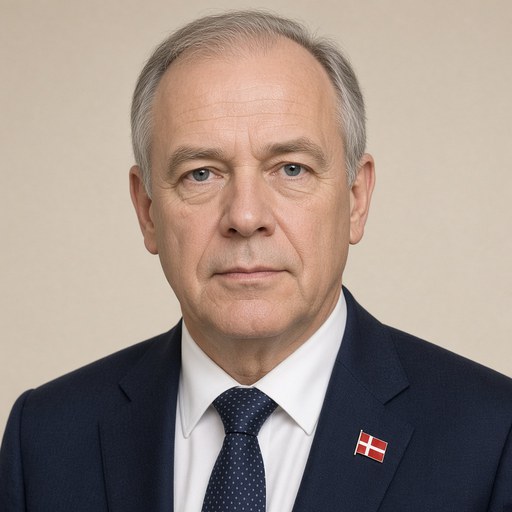
"Even if one is a small country, one can still think and act big." 75th anniversary of the construction of the tower at Ejer Bavnehøj
 Poul Nyrup Rasmussen · Prime Minister of Denmark
- Context
- Rasmussen spoke at the 75th anniversary celebration of the Ejer Bavnehøj tower in Jutland, Denmark, on 29 August 1999, reflecting on the 1920 reunification with North Schleswig.
- Main themes
- Danish reunification of 1920, national self-determination, minority rights, democracy and peaceful border resolution, Danish-German relations, Copenhagen/Bonn Declaration, national identity, Kosovo conflict, Ejer Bavnehøj tower anniversary, Danish history and heritage
- Duration
- ~16 min
- Words
- 1,870
- Sentences
- 122
- Readability
- 59
- Grade
- 8.1
- Syntax
- 2.63
- Vocabulary
- 2.03
Translated from Danish
The broad sphere of national life a sentence belongs to. Every sentence has an Arena, so it is the denominator the other indices are read against.
Other122 sentences in 41 paragraphs
Your Excellencies, Mayor, ladies and gentlemen,
Dear everyone,
It is not every day that I have the opportunity to use a podium that is so high up that one can look out over, if not all of Denmark, then a good part of it.
Today is a good day. One can grow larger in many ways. Denmark became a little larger yesterday. We welcomed a new addition to the family, Princess Alexandra and Prince Joachim became parents. Congratulations from the Danish government. Yes, I am sure from all of Denmark. Congratulations on the firstborn.
Today's 75th anniversary honoree, the Tower, stands proudly and majestically on its hilltop. What is it that makes us Danes so fond of building towers on hilltops? Himmelbjerget has its tower, Rytterknægten on Bornholm has its, and Ejer Bavnehøj naturally has its own tower.
I do not think it is because problems are piling up around us. No, the answer is something else. A people like ours needs to know where we come from. That is the prerequisite for knowing where we are going. We need and like open views. We like to have focal points. We like to have unity. We want something that can be seen. We want a striving for something that also signals to us that we can, of course, do better in our country and beyond our borders.
* * *
It was here in the midst of the Jutland nature, in the midst of this proof that 'Denmark is a lovely land, winding through hills and valleys,' that 75 years ago the tower was erected in memory of the reunification of North Schleswig with Denmark, inaugurated by the King. The tower is a beautiful expression of the joy and gratitude that all Danes felt at that time over the fact that the region returned to Denmark, that countrymen were once again united with countrymen.
Some may in these modern TV times, where everything must go so fast and we are all so busy, perhaps think, oh well, that was back then. It is history now. What does it have to do with me today? And to that, I must respond: It concerns you much more than you think.
With the reunification in 1920, so to speak, the Denmark was created that all the children learn about in school, the map we know so well. In 1920, we solved a burning national problem that had plagued us since 1864 and had burdened the relationship with our large neighbor to the south for decades. In 1920, the cornerstone was laid for a new beginning. A breakthrough for democracy at its finest.
It was not the size of the military power that determined, but it was the people who decided. We showed the whole world and above all ourselves and our neighbor to the south that it is possible. That the border between Denmark and Germany in 1920 was not drawn by military power, but was drawn democratically through two referendums.
It was the South Jutlanders themselves, with ballot in hand, who determined where that border should go. That was then a rarity. The most peaceful, democratic way to resolve border disputes is unfortunately still a rarity, still an exception.
Back then, we chose the right to national self-determination. Back then, we said goodbye to the historical rights and disputes, where both parties believe they are right by referring to history and the past and unyieldingly make claims that inevitably lead to bloody confrontations. We saw that clearly back then.
Since then, we have far too many times seen how badly it can go elsewhere. Most recently in Kosovo.
The resolution of our border issue in the democratic and dignified way we did was a prerequisite for us to also create a good relationship across the border between minority and majority in the years that followed. We cemented that in 1955 with the well-known Copenhagen/Bonn Declaration on the rights of minorities.
Here it was established - beautifully and clearly - that the confession to German and Danish nationality and culture is free, and that it must not be contested or verified by authorities. Or said in plain Danish: We treat our minorities as we ourselves wish to be treated.
It is a provision whose observance is unfortunately not a given everywhere in Europe and the world.
* * *
I believe it is truly remarkable what Denmark has achieved here. Two golden democratic and humanitarian cuts, a border drawn by the will of the people: Where do you want to belong? And how do minorities and majorities come together to learn to live in peace and harmony? We can be proud of that project. It commands respect. We can be proud that the minorities found their identity in respect of the majority. That history is good to learn about in our world.
An example to follow but not just an automatic export commodity. For we are not done with cooperation with our friends and neighbors. We also have much that we can develop. Other peoples seeking their future must tell themselves: If you really want it, you can do it, as we have done. But you must want it. Every country and every people, minority as well as majority, must find their own solutions and nurture them by showing mutual respect.
And we must all remember that our Danishness is not extreme nationalism but an awareness of where one belongs, where one comes from.
I was thinking about that when I saw the skilled young people from DGI a moment ago. Among the girls, there were also two, I saw, whose parents may not have been born and raised in Denmark, but they are all Danish on that gymnastics team. I can promise you that. And perhaps this is also a greeting here from Ejer Bavnehøj to Odense: Those people and those young boys who cannot figure out what is right and what is wrong need activity, need to participate in a gymnastics team, need to use their energy during the day so they can sleep at night instead of wandering the streets.
We must envision that the youth growing up now also carries a signal from Ejer Bavnehøj within them: We can, as a proud Danish people that knows what Danishness is, also embrace the task - to ensure that young second-generation immigrants growing up in Denmark become a completely natural part of Danish society... as long as we act wisely and correctly.
* * *
Many have opened their eyes to our path to peace. One foreign delegation after another has visited us. I have been told that a parliamentary delegation from Macedonia visited Denmark in the spring to absorb impressions from both sides of the Danish-German border. And this while the conflict in Kosovo was at its peak. What we can show in our part of the world is that our path is the most peaceful and that the path of democracy is the sustainable one.
We must also learn to take good care of it. Fortunately, the borderland has become a good and natural meeting place for Danish and German heads of state and politicians. Last year, Her Majesty the Queen met with the German Federal President and visited the Danish and German minorities. I had the opportunity at this year's Danish annual meetings in Flensburg to meet Heide Simonis, the Minister-President of Schleswig-Holstein. Our experience, our foundation, and the development we are building up is a good ballast for everything we do outside our borders.
I think most of you present here today know someone in your family or circle of friends who at some point has served outside the country's borders in a peacekeeping effort. They have been active practitioners of Danish foreign policy. We can be proud of them. They are doing well. People who have met them remember what Denmark is and what Denmark stands for.
Our own borderland, our way of doing things has gained new relevance.
* * *
In a world that has experienced so much, our way of managing community commands respect. As the mayor beautifully put it, the Ejer Bavnehøj tower is the beautiful symbol of unity and togetherness, of community. For there must be room for all of us in our country. We must all be able to be here together. I believe that the help we Danes gathered together when the Kosovo crisis was at its peak, and we saw images of a mother struggling with her last strength over the mountain ridge, was also a help to ourselves. Suddenly we discovered what it means to help someone. Suddenly we began to talk about something else with our neighbor and at the workplace. We felt again what a sense of community really is.
And here by the old European road, I would like to emphasize that without a community, without a sense of belonging, without the Danish solidarity we have, a welfare society cannot function. A welfare society cannot work if it is solely about grabbing as much as possible for oneself. A welfare society can only function if we stand together for it, are aware of it, choose to give and choose to take. Thinking of the weakest. Also those who came with a different past than ours.
* * *
Dear everyone, I would also like to say here today in Ejer Bavnehøj that we will soon have to make a big and new decision. A major choice we must make before long. I have said what I think about Denmark's relationship to the Euro. It is important that I also make some observations about the question today.
Throughout our history, Denmark has never benefited from being isolated, from being outside. Where decisions are made about something that matters to Denmark, we must also be there.
Therefore, what I recommend - when the time comes - is that we say yes to becoming a member of this cooperation, the Euro, the common currency. I know that there are many feelings involved, but I have no doubt about what is best for our country. It is about greater security in an international world where international money can, in seconds, put a country at odds. It is about employment, it is about taking on a shared responsibility for the world's development.
* * *
Here by the old European road, on perhaps the best-known of Denmark's many Bavnehøje, I would like to conclude by wishing the Border Association, DGI Horsens area, and Skanderborg Municipality heartfelt congratulations on the beautiful and fine arrangement. I think it is an important tradition to hold on to. I am happy and proud that you have invited me today. I think it is important to know one's roots, for that is the prerequisite for us to find our way and navigate in the future.
Now we can congratulate each other. We can congratulate ourselves that generations before us showed greatness and vision and skillfully laid the foundations for us to gather today to celebrate the 75th anniversary of the construction of the tower at Ejer Bavnehøj.
Heartfelt congratulations to everyone. Have a continued good day.
And remember what true Danishness is.
Thank you.
The original Danish. The tags above are read on the English translation's sentences.
Deres Excellencer, borgmester, mine Damer og Herrer,
Kære alle sammen,
Det er ikke hver dag, jeg har lejlighed til at bruge en talerstol, der er så højt beliggende, at man kan skue ud over om ikke hele Danmark så en god del deraf.
Det er en god dag i dag. Man kan blive større på mange måder. Danmark blev lidt større i går. Vi fik en familieforøgelse, Prinsesse Alexandra og Prins Joachim blev forældre. Der skal lyde et tillykke fra den danske regering. Ja, jeg er sikker på fra hele Danmark. Tillykke med den førstefødte.
Dagens 75-års jubilar, Tårnet, står stolt og knejser på sin bakketop. Hvad er det mon der gør, at vi danskere er så glade for at bygge tårne på bakketoppe? Himmelbjerget har sit tårn, Rytterknægten på Bornholm har sit og Ejer Bavnehøj har naturligvis sit eget tårn.
Jeg tror ikke, det er fordi problemer tårner sig op omkring os. Nej svaret er noget andet. Et folk som vort har brug for at vide, hvor vi kommer fra. Det er jo forudsætningen for at kunne vide, hvor vi skal hen. Vi har brug for og kan godt lide frit udsyn. Vi kan godt lide at have samlingspunkter.Vi kan godt lide at have sammenhold. Vi vil have noget, der kan ses. Vi vil have en stræben efter noget, der også signalerer til os, at vi naturligvis kan gøre det bedre i vores land og uden for vores lands grænser.
* * *
Det var jo her midt i den jyske natur, midt i dette bevis på, at 'Danmark er et yndigt land, som bugter sig i bakkedal', at man for 75 år siden rejste tårnet til minde om Nordslesvigsk genforening med Danmark, indviet af Kongen. Tårnet er et smukt udtryk for den glæde og taknemmelighed, som alle danske den gang følte over, at landsdelen kom tilbage til Danmark, at landsmænd igen blev forenet med landsmænd.
Nogen vil i disse moderne TV tider, hvor alting skal gå så stærkt og vi alle sammen har så travlt måske tænke, nå ja, det var jo dengang. Det er jo historie nu. Hvad vedrører det mig i dag? Og dertil må jeg svare: Det vedrører dig meget mere, end du tror.
Med genforeningen i 1920 blev så at sige det Danmark skabt, som alle børnene lærer om i skolen, det landkort vi kender så godt. I 1920 fik vi løst et brændende nationalt problem, som siden 1864 havde naget os og i årtier havde belastet forholdet til den store nabo i syd. I 1920 blev grundstenen lagt til en ny start. Et gennembrud for demokratiet, når det er smukkest.
Det var jo ikke størrelsen af den militære magt, der bestemte, men det var folket, der bestemte. Vi viste hele verden og vi viste frem for alt os selv og vor nabo mod syd, at det kan lade sig gøre. At grænsen mellem Danmark og Tyskland i 1920 ikke blev draget ved militær magt, men blev draget på demokratisk vis ved to folkeafstemninger.
Det var sønderjyderne selv, der med stemmesedlen i hånd fastlagde, hvor den grænse skulle gå. Det var dengang et særsyn. Den fredeligste, demokratiske måde at løse grænsestridigheder på er desværre fortsat et særsyn, fortsat en undtagelse.
Dengang valgte vi den nationale selvbestemmelsesret. Dengang sagde vi farvel til den historiske ret og strid, hvor begge parter mener de har ret under henvisning til historien og fortiden og uforsonligt gør krav gældende, som uvægerligt fører til blodige opgør. Det var rigtig set af os den gang.
Vi har siden alt for mange gange set, hvor galt det kan gå andre steder. Senest i Kosovo.
Løsningen af vores grænsespørgsmål på den demokratiske og værdige måde, vi gjorde det, var en forudsætning for, at vi i årene efter også fik skabt et godt forhold over grænsen mellem mindretal og flertal. Det fik vi cementeret i 1955 ved den velkendte Københavner/Bonn erklæring om mindretallenes rettigheder.
Her blev det slået fast - flot og klart, - at bekendelsen til tysk og dansk nationalitet og kultur er fri, og at den ikke må bestrides eller efterprøves af myndigheder. Eller sagt på godt dansk: Vi behandler vore mindretal, ligesom vi selv ønsker at blive behandlet.
Det er en bestemmelse, hvis efterlevelse desværre ikke er en selvfølge alle steder i Europa og verden.
* * *
Jeg mener, det er helt enestående, det Danmark har løftet her. To gyldne demokratiske og humanistiske snit, en grænsedragning ved hjælp af folkets ønske: Hvor vil du høre til? Og hvordan finder mindretal og flertal sammen om at lære at leve i fred og fordragelighed ? Vi kan være stolte over det projekt. Der står respekt om det. Vi kan være stolte over, at mindretallene fandt deres identitet i respekt af flertallet. Den historie er god at blive klog på i vores verden.
Et eksempel til efterfølgelse men ikke bare en automatisk eksportvare. For vi er ikke færdige med samarbejdet med vores venner og naboer.Vi har også meget, vi kan udvikle. Andre folk, der søger deres fremtid, må sige til sig selv: Hvis man virkelig vil det, så kan man godt bære sig ad, som vi har gjort. Men man skal ville det. Ethvert land og ethvert folk, mindretal som flertal må selv finde deres løsninger og give dem næring ved at udvise gensidig respekt.
Og så skal vi huske alle sammen, at vores danskhed ikke er ekstrem nationalisme men bevidsthed om, hvor man hører til, hvor man kommer fra.
Jeg sad og tænkte på det, da jeg så de dygtige unge mennesker fra DGI for et øjeblik siden. Blandt pigerne var også to, så jeg, hvis forældre måske ikke er født og opvokset i Danmark, men de er alle sammen danske på det gymnastik-hold. Det kan jeg godt love jer. Og måske er det også en hilsen her fra Ejer Bavnehøj til Odense: De mennesker og de unge knægte, som ikke kan finde ud af, hvad der er ret, og hvad der er vrang, skal have aktivitet, skal deltage på et gymnastikhold, skal bruge deres kræfter om dagen, så de kan sove om natten i stedet for at rende på gaderne.
Vi skal se for os, at den ungdom, der nu vokser op har også et signal fra Ejer Bavnehøj i sig: Vi kan godt som et flot dansk folk, der ved, hvad danskhed er, også favne
den
opgave - at sikre, at unge 2.- generations indvandrere, som vokser op i Danmark, bliver en helt naturlig del af det danske samfund.. Bare vi bærer os klogt og rigtigt ad.
* * *
Vores vej til fred er der mange, der har fået øjnene op for. Den ene udenlandske delegation efter den anden har besøgt os. Jeg har ladet mig fortælle, at en parlamentarisk delegation fra Makedonien besøgte Danmark i foråret for at suge indtryk til sig fra begge sider af den dansk-tyske grænse. Og det vel og mærke mens konflikten i Kosovo kørte i højeste gear. Det vi kan vise i vores del af verden, er at vores vej er den fredeligste og demokratiets vej er den holdbare.
Vi skal også lære at passe godt på det. Heldigvis er grænselandet blevet et godt og naturligt mødested for danske og tyske statsoverhoveder og politikere. Sidste år havde hendes majestæt Dronningen møde med den tyske forbundspræsident og besøgte det danske og det tyske mindretal. Jeg havde selv lejlighed til ved dette års danske årsmøder i Flensborg at træffe Heide Simonis, ministerpræsident i Slesvig-Holsten. Vores erfaring, vores fundament og den udvikling, vi bygger op, er en god ballast for alt det, vi gør uden for vores lands grænser.
Jeg tænker på vores kamp for menneskerettigheder, vores indsats i konfliktområder. Og jeg er så stolt over at fornemme, også da Kosovo-konflikten gik på sit højeste med alle de forfærdelige billeder, der blev vist, at danskerne holdt sammen om linien. Det var så flot. I holdt mere sammen, end de fleste andre gjorde.
I vidste, at vi ikke bare kunne vende ryggen til. Vi har jo aldrig vendt ryggen til i vores historie. Vi har ført en høj profil i de senere år på den internationale scene. Vi har set, at en aktiv indsats for menneskerettigheder nytter. Vi har også fået stor anerkendelse derfor og kvaliteten i de danske bidrag til konfliktløsninger står der respekt om.
Afslutningen af den kolde krig, Sovjetunionens kollaps, Tysklands genforening, nye staters opståen og Østeuropas omstilling til demokrati førte jo til en helt ny situation, også for Danmark. Den skabte håb for millioner af mennesker, Men samtidig så vi, at der op af de gamle huller pludselig kom gamle typer, som troede, at nu sad magten i spydstagen, nu var det dem, der havde ret, fordi de havde magt. Konflikter opstod. Det stiller nye krav til os alle sammen.
* * *
Forstå mig ret: At forebygge før en krise bliver til en krig, det er det sværeste. Men det er også det vigtigste. Forebyggelse af konflikter, tilstedeværelse af fredsbevarende styrker er forudsætning. Derfor skal vi ikke vende ryggen til. Forstår I, selvom man er et lille land, så kan man godt tænke og handle stort. Så kan man måske netop derfor gøre en forskel. Vi har sammen med andre allierede standset Milosovic’ folkeforbrydelser. Hans etniske udrensninger. Vi har sat alle kræfter ind for at gøre det. Nu skal vi sætte alle kræfter ind for at vinde freden med en ny indsats.
Vores indsats vil bestå af nødhjælp, af praktisk genopbygning, af støtte til at styrke demokratiet i hele regionen.
Jeg ved godt, at det kræver ressourcer, men jeg håber, at den danske befolkning vil støtte os fortsat. Det er mange kræfter, vi lægger i det arbejde både ude og hjemme. 1700 danske soldater, politibetjente, civileksperter, aktive fredsbevarende operationer har vi i sving rundt om i verden.
Jeg tror de fleste af jer, der er til stede her i dag kender en i familien eller i vennekredsen, der på et eller andet tidspunkt har gjort tjeneste uden for landets grænser i en fredsbevarende indsats. De har været aktive udøvere af dansk udenrigspolitik. Dem kan vi være stolte af. De gør det godt. Folk, der har mødt dem, husker, hvad Danmark er, og hvad Danmark står for.
Vores eget grænseland, vores måde at gøre det på har fået ny aktualitet.
* * *
I en verden, som har gennemlevet så meget, står der respekt om vores måde at klare fællesskab på. Som borgmesteren så smukt sagde det, er Ejer Bavnehøj-tårnet er det smukke symbol på sammenhold og samhørighed, for fællesskab. For der skal jo være plads til os alle i vores land. Vi skal kunne være her alle sammen. Jeg mener, at den hjælp, vi danske samlede sammen, da Kosovo-krisen var på sit højeste, og vi så billederne af lillemor slæbe sig med sine sidste kræfter over bjergkammen, også var en hjælp til os selv. Pludselig opdagede vi, hvad det vil sige at hjælpe nogen. Pludselig kom vi til at tale om noget andet med naboen og på arbejdspladsen. Vi mærkede igen, hvad fællesskabsfølelse egentlig er.
Og her ved den gamle Europavej vil jeg gerne understrege, at uden et fællesskab, uden en samhørighed, uden den danske samhørighed vi har, så går det ikke med et velfærdssamfund. Et velfærdssamfund kan ikke fungere, hvis det alene drejer sig om at rage mest muligt til sig hver for sig. Et velfærdssamfund kan kun fungere, hvis vi står sammen om det, er opmærksom på det, vælger fra og vælger til. Tænker på de svageste. Også dem, der kom med en anden fortid end os.
* * *
Kære alle sammen, jeg vil godt også i dag sige her i Ejer Bavnehøj, at nu skal vi snart igen træffe en stor og ny beslutning. Et stort valg skal vi foretage inden så længe. Jeg har sagt, hvad jeg mener om Danmarks forhold til EURO’en. Det er vigtigt, at jeg også i dag får gjort nogle betragtninger om spørgsmålet.
I hele vores historie har Danmark aldrig haft godt af at være isoleret, at stå uden for. Der, hvor der er nogen, der beslutter om noget, der har betydning for Danmark, der skal vi også være.
Derfor er det, jeg anbefaler, - når tid kommer, - at vi siger ja til at blive medlem af dette samarbejde, EURO’en, den fælles mønt. Jeg ved, at der er mange følelser med, men jeg er ikke i tvivl om, hvad der er bedst for vores land. Det drejer sig om større tryghed i en international verden, hvor internationale penge med sekunder, kan sætte et land på kant. Det drejer sig om beskæftigelse, det drejer sig om at påtage sig et medansvar for verdens udvikling.
* * *
Her ved den gamle Europavej, på den vel mest kendte af Danmarks mange bavnehøje, vil jeg gerne slutte med at ønske Grænseforeningen, DGI Horsens-egnen og Skanderborg Kommune hjertelig tillykke med det smukke og fine arrangement. Jeg synes, det er en vigtig tradition at holde fast. Jeg er glad og stolt over, man har inviteret mig i dag. Jeg synes, det er vigtigt at kende sine rødder, for det er jo forudsætningen for, at vi kan vinde vej og finde vej i fremtiden.
Nu kan vi lykønske hinanden alle sammen. Vi kan lykønske os med, at generationer før os viste storhed og udsyn og dygtigt lagde grundstenene til, at vi i dag kan samles om at fejre 75-året for opførelsen af tårnet på Ejer Bavnehøj.
Hjertelig tillykke alle sammen. Hav en fortsat god dag.
Og husk, hvad rigtig danskhed er.
Tak.