




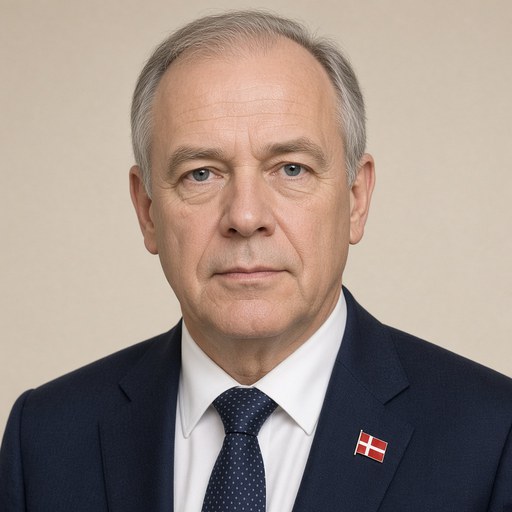
The Prime Minister's speech at the Folketing debate on June 16, 1999, regarding Denmark's participation in an international force in Kosovo.
 Poul Nyrup Rasmussen · Prime Minister of Denmark
- Context
- Rasmussen addressed the Danish Folketing on June 16, 1999, seeking approval for Denmark's participation in an international peacekeeping force in Kosovo following Milosevic's withdrawal.
- Main themes
- Danish participation in Kosovo peacekeeping force, NATO solidarity, humanitarian intervention, ethnic cleansing in Kosovo, Milosevic's defeat, post-conflict reconstruction, democratic values and humanism, displacement of Kosovo Albanians, Folketing consensus, Balkan stability, Cold War legacy, peace-building
- Duration
- ~10 min
- Words
- 1,181
- Sentences
- 97
- Readability
- 60
- Grade
- 7.0
- Syntax
- 2.42
- Vocabulary
- 2.17
Translated from Danish
The broad sphere of national life a sentence belongs to. Every sentence has an Arena, so it is the denominator the other indices are read against.
Other97 sentences in 40 paragraphs
Just think. It was only three weeks ago that we discussed the situation in Kosovo during the closing debate here in the Folketing. I said back then on May 27 that it was important for us to stand together, to hold firm, and to endure in NATO. We knew how much - fundamentally - was at stake.
* * *
And suddenly, things moved quickly. Milosevic yielded. And now on June 16, we find ourselves in a completely new situation that could become a turning point for the future of all of Europe.
For months, we have seen them. For months, we have heard about them. For months, we have empathized with them - but never felt quite as they do.
The displaced people in Kosovo have rightly had our attention over the past many months.
Starved, worn out, sometimes tortured from prison sentences, crying or simply staring blankly into the air in a mood of apathy. The citizens of Kosovo have dragged themselves across the border into Macedonia or Albania.
We have witnessed people fleeing from a regime's persecutions. A regime that has carried out an ethnic cleansing we have not seen the like of in Europe since World War II. The orders of the Serbian soldiers were chillingly clear: They had to leave their own country, not for what they had done, but for what they are - 'Kosovo Albanians.'
The suffering that the Serbian regime inflicted on the citizens of Kosovo could not be ignored by anyone. At least no one who wanted to continue living with their self-respect intact.
We would not!
In Denmark. In NATO! We endured, and we stood together. That has been absolutely crucial.
* * *
Not so long ago, the world was divided into two. The free world on one side. And then the world that lived behind a heavy, impenetrable iron curtain.
Today, we no longer divide the world in this way.
On the contrary, our humanitarian values have resonated in many of the countries that were once closed totalitarian regimes. Countries like Poland, the Czech Republic, Hungary, and not least the Baltic states are clear examples of countries that have embraced the fundamental universal values - with a focus on respect for the individual and their rights. They have begun a process where they are on their way into political, economic, and military cooperation in Europe.
But that form of society - democracy - and the values we stand for, both during the Cold War and today, will always be challenged. We must never forget that.
And when all other avenues have been tried, and there are no other paths ahead of us, we must be ready to fight for these values. Be ready to fight for humanism.
That is where the line will be drawn in the future. Between those who are ready to put action behind words and fight for people's right to live a life of dignity and good coexistence. And those who are not ready for this.
* * *
There will surely always be some who think - not now, not in that way, we must start all over again, we must continue to discuss the issue - while ethnic cleansing is taking place before our open eyes - that is just not us! It is not the Danish government. Not a clear majority here in the Folketing.
What we saw happen in Kosovo left us in no doubt. We tried persuasion with the help of diplomacy. OSCE missions. It did not work. Peace negotiations in Rambouillet. Mediator after mediator. That did not work either. Therefore, we had to play our last card. We had to take a hard stance to ensure humanism. History in this century has taught us that. And we have stopped acting against better judgment!
I am pleased with the broad and unwavering consensus not only here in the Folketing but, even more importantly, throughout the broad Danish population.
We have stood together in NATO to stop the oppression and cleansing of an entire people. Now we must stand together to create peace.
That is why we are gathered here in the Folketing today!
We have stopped the killings and the cleansing. Now we must win peace. It requires perseverance. It takes time. It will take years - many years. And we will hold on to the effort to win that peace - even when Kosovo and the Balkans are no longer on the front page of the newspaper or among the top stories in the TV news.
* * *
Now the massive work of rebuilding what Milosevic and the ultranationalists have destroyed begins.
The people of Kosovo will never recover from what has happened. The killings and massacres of the innocent have been too extensive. There will forever be a wound in their heart and soul. Perhaps we can help them alleviate this wound.
But we can especially contribute to ensuring that their lives can come together again. We can ensure that they win peace. With all that it entails of freedom and hope for the future. That is the task in all its simplicity. It is an ambitious and comprehensive task.
* * *
That is why we are here today.
Just as when we decided to contribute our efforts in the fight against Milosevic, we must now decide to contribute our efforts to ensure peace in this troubled part of the world. We must decide whether Denmark should participate in the international force that is currently moving in to secure peace in Kosovo.
For the government, this decision is clear and well-founded. We must contribute. Of course, we must do our part to ensure that UN Security Resolution 1244 - which forms the framework for peace in Kosovo - can be implemented.
We must never forget that while the past months have been a struggle for the rights of Kosovo Albanians to live in their own country, it has equally been a struggle for precisely those values that we hold most dear. The reckoning with Milosevic is not an attack on the Serbian people. Therefore, it is equally crucial that we ensure that the Serbian minority in Kosovo is also protected and has its rights secured.
* * *
Thus, the reckoning with Milosevic, his ultranationalists, and generals has also become a fight for our own self-respect, and we have retained our self-respect.
Today, we must decide to send 850 soldiers to Kosovo.
There is much work to be done in the Balkans in the coming many years. Not only in Kosovo but throughout the entire Balkans. We Danes will be involved. Now and in the future.
The responsibility for peace is also ours, and it comes at a cost.
I hope and believe that the Finance Committee will support the bill that the government has presented - as a follow-up to our humanitarian efforts.
Let us continue to uphold our share of the responsibility. Our shared responsibility for human rights, humanism, and democracy. It is and will remain the cornerstone of the Danish government's foreign policy.
The original Danish. The tags above are read on the English translation's sentences.
Tænk engang. Det er kun tre uger siden, at vi under afslutningsdebatten her i Folketinget drøftede situationen i Kosovo. Jeg sagde dengang den 27. maj, at det var vigtigt, at vi stod sammen, holdt fast og holdt ud i NATO. Vi vidste hvor meget - helt fundamentalt - der stod på spil.
* * *
Og pludselig gik det stærkt. Milosevic bøjede sig. Og nu den 16. juni står vi i en helt ny situation, der kan blive et vendepunkt for hele Europas fremtid.
Gennem måneder har vi set dem. Gennem måneder har vi hørt om dem. Gennem måneder har vi følt med dem - men aldrig følt helt
som
dem.
De fordrevne mennesker i Kosovo har med rette haft vores opmærksomhed gennem de seneste mange måneder.
Udsultede, udslidte, nogen gange torturerede fra fængselsstraffe, grædende eller blot stirrende lige ud i luften i en stemning af apati. Kosovos borgere har slæbt sig over grænsen til Makedonien eller Albanien.
Vi har været vidner til mennesker på flugt fra et regimes forfølgelser. Et regime, der har gennemført en etnisk udrensning, vi ikke har set magen til i Europa siden Anden Verdenskrig. De serbiske soldaters ordrer var uhyggelig klar: De skulle ud af deres eget land, ikke for det, de havde gjort, men for det de er - 'kosovo-albanere'.
De lidelser, som det serbiske styre påførte borgerne i Kosovo kunne ingen sidde overhørig. I hvert fald ingen som ville leve videre med sin selvrespekt i behold.
Det ville vi!
I Danmark. I NATO! Vi holdt ud, og vi holdt sammen. Det har været helt afgørende.
* * *
Engang for ikke så længe siden var verden delt op i to. Den frie verden på den ene side. Og så den verden, som levede bag et tungt, uigennemtrængeligt jerntæppe.
I dag deler vi ikke længere verden op på denne måde.
Tværtimod har vore humanistiske værdier vundet genklang i mange af de lande, som tidligere var lukkede totalitære regimer. Lande som Polen, Tjekkiet, Ungarn og ikke mindst de baltiske lande er klare eksempler på lande, der har taget de grundlæggende universelle værdier - med fokus på respekten for det enkelte menneske og dets rettigheder - til sig. De har påbegyndt en proces hvor de er på vej ind i det politiske, økonomiske og militære samarbejde i Europa.
Men den samfundsform - demokratiet - og de værdier vi står for, såvel under den kolde krig, som i dag, vil altid blive udfordret. Det må vi aldrig glemme.
Og når alle andre veje er prøvet, og der ikke er andre veje foran os, så må vi være parate til at kæmpe for disse værdier. Være parate til at kæmpe for humanismen.
Dér går skellet i fremtiden. Mellem dem som er parate til sætte handling bag ordene og kæmpe for menneskers ret til at leve et liv i værdighed og god sameksistens. Og dem som ikke er rede hertil.
* * *
Der vil sikkert altid være nogen, som mener - ikke nu, ikke på den måde, vi skal starte helt forfra, vi må tale videre om spørgsmålet - samtidig med, at etniske udrensninger finder sted for vore åbne øjne - det er bare ikke os! Det er ikke den danske regering. Ikke et klart flertal her i Folketinget.
Det vi så ske i Kosovo efterlod os ikke på nogen måde i tvivl. Vi forsøgte overtalelse med diplomatiets hjælp. OSCE-missioner. Det nyttede ikke. Fredsforhandlingerne i Rambouillet. Fredsmægler efter fredsmægler. Det nyttede heller ikke. Derfor måtte vi trække det sidste kort. Vi måtte sætte hårdt mod hårdt for at sikre humanismen. Det har historien i dette århundrede lært os. Og vi
er holdt
op med at handle
mod
bedre vidende!
Jeg glæder mig over den brede og aldrig svigtende enighed ikke alene her i Folketinget, men endnu vigtigere, i hele den brede danske befolkning.
Vi har stået sammen i NATO om at standse undertrykkelse og udrensning af et helt folk. Nu skal vi stå sammen om at skabe freden.
Det er derfor vi er samlet her i Folketinget i dag!
Vi har standset myrderierne og udrensningen. Nu skal vi vinde freden. Det kræver vedholdenhed. Det tager tid. Det vil tage år - mange år. Og vi vil holde fast i indsatsen for at vinde den fred - også når Kosovo og Balkan ikke længere er på forsiden af avisen eller blandt TV-nyhedernes tophistorier.
* * *
Nu starter det kæmpemæssige arbejde med at genopbygge, hvad Milosovic og ultranationalisterne har brudt ned.
Kosovos befolkning vil aldrig komme sig over det, som er sket. Dertil har myrderierne og massakrerne på uskyldige været for omfattende. Der vil for altid være et sår i deres hjerte og sjæl. Vi kan måske hjælpe dem med at lindre dette sår.
Men vi kan især gøre vores til at sikre, at deres liv kan hænge sammen igen. Vi kan sikre, at de vinder freden. Med alt hvad den indebærer af frihed og håb for fremtiden. Det er opgaven i alt sin enkelthed. Det er en ambitiøs og omfattende opgave.
* * *
Derfor er vi her i dag.
Som da vi besluttede at yde vores indsats i kampen mod Milosovic, skal vi nu beslutte at yde vores indsats til at sikre freden i dette plagede område af verden. Vi skal beslutte om Danmark skal deltage i den internationale styrke, som i denne tid rykker ind for at sikre freden i Kosovo.
For regeringen er denne beslutning klar og velbegrundet. Vi skal bidrage. Selvfølgelig skal vi gøre vores til, at FN’s sikkerhedsresolution 1244 - som danner rammerne for freden i Kosovo - kan føres ud i livet.
Vi må aldrig glemme, at nok var de seneste måneder en kamp for kosovo-albanernes ret til at bo i deres eget land, men det var i lige så høj grad en kamp for netop de værdier, som vi sætter højest. Opgøret med Milosevic er ikke et angreb på det serbiske folk. Derfor er det ligeså afgørende, at vi sikrer, at det serbiske mindretal i Kosovo også beskyttes og får sikret sine rettigheder.
* * *
Således blev opgøret med Milosovic, hans ultranationalister og generaler også en kamp for vores egen selvrespekt og vores selvrespekt har vi i behold.
I dag skal vi beslutte at sende 850 soldater til Kosovo.
Der er meget arbejde at gøre på Balkan i de næste mange år. Ikke alene i Kosovo, men på hele Balkan. Vi danskere vil være med. Nu og i fremtiden.
Ansvaret for freden er jo også vores, og det koster.
Jeg håber og tror, at Finansudvalget vil tilslutte sig det aktstykke, som regeringen har fremlagt - som opfølgning på vores humanitære indsats.
Lad os fortsætte med at løfte vores del af ansvaret. Vores fælles ansvar for menneskeret, humanisme og demokrati. Det er og bliver hjørnestenen i den danske regerings udenrigspolitik.
* * *