




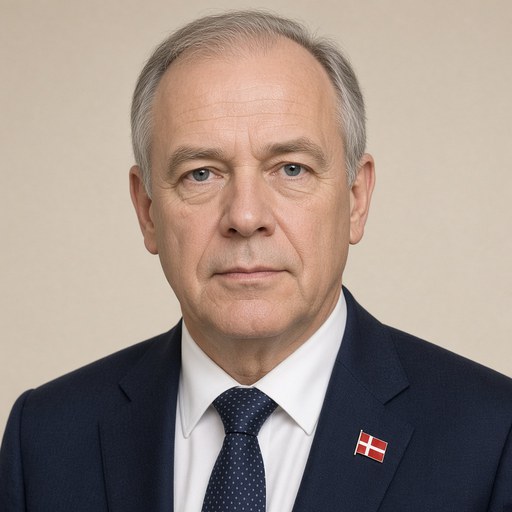
Speech at the Leaders' Main Organization's 100th Anniversary on Saturday, September 4, 1999, "People are the Most Important"
 Poul Nyrup Rasmussen · Prime Minister of Denmark
- Context
- Rasmussen addressed the Leaders' Main Organization's 100th anniversary celebration on September 4, 1999, reflecting on Danish labor history and evolving leadership.
- Main themes
- Danish welfare society, leadership evolution, labor-management cooperation, organizational history, workforce skills, technological change, workplace transformation, modern leadership roles, social dialogue, Danish economic success
- Duration
- ~21 min
- Words
- 2,513
- Sentences
- 193
- Readability
- 60
- Grade
- 7.8
- Syntax
- 2.58
- Vocabulary
- 1.91
Translated from Danish
The broad sphere of national life a sentence belongs to. Every sentence has an Arena, so it is the denominator the other indices are read against.
Other193 sentences in 52 paragraphs
Dear Chairman and Madam, ladies and gentlemen.
Congratulations on the 100 years.
Gunnar Myrdahl - a Swedish Nobel laureate in economics - once said: 'The only miracle I wish to talk about - to write about - is Denmark.' How did that actually happen? A country that over a number of hundred years lost more than 2/3 of its agricultural land, its production capacity – this country nevertheless became perhaps the best and richest welfare society in the world. He finds the explanation himself: Because we in Denmark build on people, skilled people - that is our raw material.
We did not find early coal, oil, or diamonds in our underground. We built on people. We sat down and talked about things when it was hardest in September 1899. In other countries, they occupied the factories. They talked about bloody revolutions and carried them out as well.
But we sat down and talked about things. We laid some lines a hundred years ago, which are part of the secret behind the welfare society we have today. The Denmark of organizations.
Moreover, with an A - A – A, which is a top grade for Denmark in 1999 from independent international experts. I hope the assembly understands my fondness for that letter.
It was tough in the beginning - a hundred years ago in August, September. Big lockouts, big struggles. Suddenly, the Association of Workshop Functionaries in the iron industry came into being on August 26, 1999. And many more followed. Workshop managers, foundry masters, brick masters, electrical plant managers, textile industry masters, etc.
The history of the leaders' organizations is a piece of Danish history that is worth learning from. Worth remembering. For where did the leaders actually come from? Yes, they came from workers who studied in the evenings and who had ambitions to move forward. Skilled people who did not have it easy in the beginning, but who nevertheless made an effort.
I believe that the author Aksel Breidal, who is quoted in your historical document here on the occasion of the anniversary, has a point when he writes the following in 1920: 'To be a work leader is not easy - least of all in our days. Here stands one who gets tired too easily, and here stands one who cries out for profit. And in between these two stands the one who never gets a moment's peace, the one who is below is regarded as arrogant and the one who is above is regarded as, well, a bit condescending.'
It is probably not entirely wrong that it was like that back then. Much has changed since then. Adaptation, adaptation, adaptation, transformation, change, change, change.
In the old days, there were trades that we all remember, but which have now disappeared. Also trades for the leaders. Picture carver, decorative sculptor, brush industry worker, gilder, coachmaker, coppersmith, plasterer, chewing tobacco worker - there were many.
And later, new technology made many leaders redundant: It was no longer where they needed to be. It was elsewhere.
Just think about what happened when the first forklift was introduced in Danish workplaces. Lots of dock workers who had toiled at the port for 10, 20, and 50 years, with work leaders who had to ensure that things worked together. They were no longer needed either. The work was loaded. The leaders found new tasks.
Or think about when containers first arrived. Here too, a long series of work functions suddenly became redundant. The leaders had to move over - and the workers with them.
Before, being a leader meant discipline, production, efficiency - on the assembly line! And it was: 'This is how you should do it.' But that has completely changed nowadays.
* * *
When I read the anniversary publication of the Leaders' Main Organization and look at the titles and positions for leaders in modern Denmark, we really see the change! Now it is the new positions and titles such as IT managers, quality managers, store managers, marketing managers, logistics managers, service managers, technical directors, education managers, finance managers, etc.
You have about 1,200-1,300 different leadership titles in your organization. It reflects the complexity of our modern society in a good way.
Now there is research into good leadership and courses, courses, and courses are held. Leaders must not only be able to handle numbers. That is not even the most important thing anymore. Something entirely different and more is required. You must inspire. You must innovate. We have long since left the time when one said from above: 'This is how it should be.' Now we are in the time when one must be able to respond respectfully when one's employees say: Why is that? And why now? And why in that way?
If one cannot explain, one cannot defend one's position. Mutual respect is part of the functions of being a good leader. From supervisor and professional advisor to inspirer of people.
* * *
I am pleased to see thoughts in your historical document about 'the developing work.' It is also quite natural that the Leaders' Main Organization is represented in tripartite negotiations and discussions about adult and further education. It is the key - as it always has been - to the innermost core of our welfare society.
To lead is a lifelong education and learning process that one never finishes. I see in your many course offerings to members that you also have something called 'communication.' That is also important nowadays. But be careful. There are many pitfalls.
Just take a story from my own childhood. There was a bicycle dealer in Esbjerg who thought he should stand out from the others. Business was a bit slow. So our friend, the bicycle dealer, put a sign in the front window that said: 'Don't go anywhere else and get cheated - come here first.' And that can lead one terribly astray. Or that shoemaker - it was many years later, perhaps in Vejle - who put a sign in his shop window that said: 'If you don't like our high-heeled shoes, you can have a pair of flats.' So be careful!
But I do believe that the Danes have enough sense of humor to manage that as well.
I saw that you in your anniversary publication have also been concerned about whether you are educating yourselves as much as the leaders in the public sector. Human development. The way to lead a group of employees. Percentage calculations leave the impression that it may be better in the public sector. It is not that simple.
A little story is told from one of our hospitals: One afternoon, the chief physician walks by while the nurses and nursing assistants are on a coffee break. The chief physician thinks he should deliver a quick remark, so he says: 'Well, you are probably sitting here drinking coffee'? Whereupon the whole team stopped working, for he should not come here with a premeditated remark.
Leading, communicating, and creating fellowship, solidarity, and mutual respect and team spirit - that is something one never finishes. It is something one must always work on, always further develop with oneself and one's employees. The modern leader must be able to formulate and implement a personnel policy that ensures that the company can retain the qualifications that have been developed and that must be further developed with the employees. This applies now, and it applies even more so in the internationalization and globalization that we are now fully entering.
It is more difficult than just giving orders. But it is infinitely more satisfying. And the results in the form of many skilled employees, who indicate to one that it works - that gives back many times the extra effort.
Leadership today is about people. It is worth holding on to. Leadership is personal strength - but it is also instinct, it is inspiration, and it is intuition. Therefore, I was so glad that the chairman said that there are many female leaders who are now emerging - also in your organization. There is certainly a need for that, I would like to say.
I have understood that there are now 13,000 female leaders in the organization. I hope the momentum will continue.
That is how it has become in our society. One cannot point to a single person and say: It was you who created the country we have now. But one can point to everyone and say: You have contributed to creating the society we have today. The society we have today was not what it was, and is - without the leaders also having done their part. I would like to acknowledge that this evening. I think it belongs to the right writing of history.
For the project called Denmark and the Danish welfare society, it is our common project.
Speaking of courses: Beware of abbreviations. One of the ministers told a story yesterday about an experience she had recently. It was a Sunday when someone suddenly rang the doorbell. She asked the person: And what should our conversation be about? And he said: Yes, I have heard so much about you, and I would like to ask if you could come and give a speech for LPD. The minister suddenly doubted about LPD. But she did not want to ask - so she asked a bit indirectly: Are there any associated organizations? Yes, yes, he says. There is HAF! OK, that is the Domestic Workers' Union, so it is probably completely wrong. So, before we know it, the man comes inside. The minister tries to figure out what LPD actually is. In the end, she feels she has to ask directly: You, tell me, LPD, what does it actually stand for? He then says, somewhat condescendingly: It is of course the National Association for Ornamental and Dwarf Chickens. But by that time, she had already agreed to come out and give a speech. So beware! Beware of abbreviations. She then asked: How many will come to that event? Well, there will probably be 700-800. Oh, okay. There were also 700-800, but they were ornamental and dwarf chickens!
* * *
In the government, we of course place an incredible amount of emphasis on ensuring that our society - even in the new era - hangs together well. That it is not just separate projects that we each rush ahead with, but that it also fits together properly. That what you do connects with what we do - and vice versa. Not just economically, but also environmentally. Above all, also internationally.
To this, we have now come and must get started on the next big, important move: Denmark's position in Europe. I would like to take the liberty this evening to appeal for us to help each other with that project. For me, saying yes to the euro means not only saying yes to introducing a currency that makes it easier for all of us to travel around Europe. For businesses as well as individuals. It also means something politically: That we are among those who are counted. I am sure that every single leader in this country understands what I am talking about. To be among those who are counted. If I were to give one recipe for a successful leader, it would be to give each individual employee the feeling: I count on you! You matter!
So it is also for a country and a people like ours. It is not just a question of currency. It is a question of being among those who are counted.
And we also insist - you know that well - on being there where decisions are made about our country. No more, no less. Now we have a legitimate opportunity to tell the great powers what we think. We can help determine.
For me, it is about ensuring stable conditions for our businesses, for our employment, for our own identity. To be part of determining where things happen.
But also more than that. I believe that the world can become better.
I believe that the part of the world called Europe is not just a currency zone or an internal market. It is more than that. It is a market where we - just as we have done in Denmark - are now on our way to setting some human, political frameworks that are reasonable. Minimum requirements for the environment, reasonable working environment requirements, demands that human rights and minorities must be respected, decency across the board. To ensure that certain fundamental welfare principles are upheld.
And think, with this we actually have the opportunity - not only internally for soon 400 million people - but also externally for the rest of the blue planet: To take on a kind of 'social leadership', a kind of human leadership, which I believe must be binding. For the upcoming negotiations in the World Trade Organization, WTO, and many other areas.
That is what it is about. To be able to use one's life. To be able to lead one's country to make a difference. For we also have something to offer. I am not saying that we are world champions across the board, but I am saying that we have something to offer. We should not just blend in with the wallpaper with the others, but we should be involved.
So my message to you this evening is: We have been together in bringing Denmark to where we are today. Now we must stand together to place our country safely and soundly in the new world. And we must, as the first step, start in Europe. I believe that the Danish population is with us when we vote on Denmark's connection to the European common currency. I believe we can lift it. I believe we lift it best if it happens in a mutual, respectful dialogue. Then we will also get there.
* * *
We are entering a period where people mean even more than before. It is fantastic. Human considerations must be taken. Not to become worse at producing and competing, but to become better. There is a social responsibility to lift, which you must be part of. We must function in a surrounding society with respect for the environment, the working environment, etc. It is real people we are after. It is real people who are our strongest competitive advantage.
Your chairman, Ole Skov's wise words are worth holding on to: 'This organization, the Leaders' Main Organization, must constantly change and renew itself because the challenges, the outside world changes and renews itself. And if we do not do that, then it is development that determines over us and not us who set our mark.'
To this, I would like to add: If it is indeed the case that people are our strongest asset in Denmark, then it is good to be a leader in Denmark - also in the next century.
I sincerely congratulate you on this.
Congratulations to everyone.
And safe travels ahead.
The original Danish. The tags above are read on the English translation's sentences.
Kære formand og frue, mine damer og herrer.
Tillykke med de 100 år.
Gunnar Myrdahl - en svensk nobelpristager i økonomi - har en gang sagt: 'Det eneste mirakel, jeg ønsker at tale om - skrive om - det er Danmark.' Hvordan gik det egentlig til? Et land, som gennem et antal hundrede år mistede over 2/3 af sin landbrugsjord, sin produktionskapacitet – dette land blev alligevel verdens måske bedste og rigeste velfærdssamfund'. Han finder selv forklaringen: Fordi vi i Danmark bygger på mennesker, dygtige mennesker - det er vores råstof.
Vi fandt jo ikke tidligt kul, olie eller diamanter i vores undergrund. Vi byggede på mennesker. Vi satte os ned og snakkede om tingene, da det gik hårdest til i september 1899. I de andre lande besatte man fabrikkerne. Man talte om blodige revolutioner og udførte dem også.
Men, vi satte os ned og snakkede om tingene. Vi lagde nogle linier for hundrede år siden, som hører med til hemmeligheden bag det velfærdssamfund, vi har i dag. Organisationernes Danmark.
Oven i købet med A - A – A, som er topkarakter til Danmark anno 1999 fra uafhængige internationale eksperter. Jeg håber, forsamlingen har forståelse for min forkærlighed for det bogstav.
Det var barskt i starten - for hundrede år siden i august, september. Store lock-out’er, store kampe. Pludselig kommer Foreningen af Værkstedsfunktionærer i jernindustrien til verden, den 26. august 1999. Og mange flere kom til. Værkførere, støbemestre, teglmestre, elværksbestyrere, tekstilindustriens mestre osv.
Ledernes organisations-historie er et stykke Danmarkshistorie, som nok er værd at blive klog af. Nok værd at huske på. For hvor kom lederne egentlig fra? Ja, de kom jo fra arbejdere, som læste om aftenen, og som havde ambitioner om at kunne nå videre. Dygtige folk, som ikke havde det så let i starten, men som alligevel gjorde en indsats.
Jeg tror, at forfatteren Aksel Breidal, som gengives i jeres historiske skrift her i anledning af jubilæet, har fat i noget, når han i 1920 skriver følgende: 'At være arbejdsleder, det er ikke let - i vore dage allermindst. Her står en, som alt for let bliver træt, og her står en, som råber på gevinst. Og midt mellem disse to står den, som ingen tid får ro, den som er under, betragter ham som hoven og den, som er over, betragter ham som, ja, sådan lidt fra oven.'
Det er nok ikke helt galt, at det var sådan dengang. Siden er meget forandret. Tilpasning, tilpasning, tilpasning, omstilling, forandring, forandring, forandring.
I gamle dage var der fag, som vi allesammen husker, men som nu er forsvundet. Også fag for lederne. Billedskærer, dekorationsbilledhugger, børsteindustriarbejder, forgylder, karetmager, kobbersmed, stukkatør, skråtobaksarbejder - der var mange.
Og senere kom den ny teknologi og gjorde mange ledere overflødige: Det var ikke længere dér, de skulle være. Det var andre steder.
Tænk bare på hvad der skete, da den første truck blev indført på danske arbejdspladser. Masser af havnearbejdere, som igennem 10, 20 og 50 år havde slidt ved havnen, med arbejdsledere, som skulle sørge for at tingene hang sammen. Dem var der heller ikke længere brug for. Arbejdet blev lastet. Lederne fandt nye opgaver.
Eller tænk, da containerne kom for første gang. Også her blev en lang række arbejdsfunktioner pludselig overflødige. Lederne måtte flytte over - og arbejderne med.
Før var det at være leder ensbetydende med disciplin, produktion, effektivitet - på målebånd! Og det var: 'Sådan skal du gøre'. Men også dèt er jo helt forandret nu om stunder.
* * *
Når jeg læser Ledernes Hovedorganisations jubilæumsskrift og ser på de betegnelser, man har for funktion og stilling som leder i det moderne Danmark, ser vi virkelig forandringen! Nu er det de nye stillinger og betegnelser som edb-chefer, kvalitetschefer, butikschefer, marketingschefer, logistikchefer, servicechefer, tekniske direktører, uddannelseschefer, økonomichefer osv.
I har vel 1.200-1.300 forskellige lederbetegnelser og -titler i jeres organisation. Det afspejler kompleksiteten i vores moderne samfund på en god måde.
Nu forskes der jo i god ledelse og der afholdes kurser, kurser og kurser. Lederne skal ikke alene kunne det med tallene. Det er ikke engang det vigtigste længere. Der skal noget helt andet og mere til. I skal inspirere. I skal forny. Vi har for længst forladt den tid, hvor man sagde oppefra: 'Sådan skal det være'. Nu er vi midt i den tid, hvor man skal kunne svare respektfyldt, når ens medarbejdere siger: Hvorfor egentlig det? Og hvorfor nu? Og hvorfor på den måde?
Hvis man ikke kan forklare, så kan man ikke forsvare sit standpunkt. Den gensidige respekt er en del af funktionerne for at være en god leder. Fra kontrollør og faglig vejleder til inspirator for mennesker.
* * *
Det glæder mig at se tanker i jeres historiske skrift om 'det udviklende arbejde'. Det er også helt naturligt, at Ledernes Hovedorganisation er repræsenteret ved trepartsforhandlinger og drøftelser om voksen- og efteruddannelsen. Det er nøglen - som det altid har været det - til vores velfærdssamfunds inderste kerne.
At lede er en livslang uddannelses- og læreproces, som man aldrig bliver færdig med. Jeg ser i jeres mange kursustilbud til medlemmerne, at I også har noget, der hedder 'kommunikation'. Det er også vigtigt nu om stunder. Men pas på. Der er masser af faldgruber.
Tag nu bare en historie fra min egen barndom. Det var en cykelhandler i Esbjerg, som syntes, at han skulle skille sig ud fra de andre. Det kneb lidt med omsætningen. Så vores ven, cykelhandleren satte et skilt ind i forruden, hvorpå der stod: 'Gå ikke andre steder hen og bliv snydt - kom først hér'. Og sådan kan man jo komme så forfærdeligt galt afsted. Eller ham skohandleren - det var mange år senere, måske i Vejle - som rykkede et skilt ind i sit butiksvindue, hvorpå der stod: 'Hvis de ikke kan lide vores højhælede sko, så kan de få et par flade'. Så pas på!
Men, jeg tror nu alligevel, at danskerne har tilstrækkelig humoristisk sans til at kunne administrere det også.
Jeg så, at I i jeres jubilæumsskrift også har været optaget af, om I nu uddanner jer lige så meget, som lederne i den offentlige sektor. Menneskelig udvikling. Måden at lede en gruppe medarbejdere på. Procentberegninger efterlader det indtryk, at det måske er bedre i den offentlige sektor. Så enkelt er det ikke.
En lille historie fortælles fra et af vore hospitaler: En eftermiddag kommer overlægen gående forbi, medens sygeplejerskerne og sygehjælperne har kaffepause. Overlægen synes, at han skal aflevere en kvik bemærkning, så han siger: 'Nå, I sidder nok her og drikker kaffe'? Hvorefter hele holdet nedlagde arbejdet, for han skulle ikke komme her med en overlagt bemærkning.
Dét at lede, at kommunikere og at skabe samvær, sammenhold og gensidig respekt og holdfølelse - dét er noget, man aldrig bliver færdig med. Det er noget, man altid skal arbejde med, altid skal videreudvikle med sig selv og sine medarbejdere. Den moderne leder skal kunne formulere og gennemføre en personalepolitik, der sikrer, at virksomheden kan holde på kvalifikationer, der er oparbejdet, og som skal videreudvikles med medarbejderne. Det gælder nu, og det gælder i endnu højere grad i den internationalisering og globalisering, som vi nu for fuld kraft er på vej ind i.
Det er vanskeligere end blot at give ordrer. Men, det er uendeligt meget mere tilfredsstillende. Og resultaterne i form af masser af dygtige medarbejdere, der jo tilkendegiver for én, at det fungerer - dét giver mangefold den ekstra indsats indsats tilbage.
Ledelse i dag handler om mennesker. Det er nok værd at holde fast i. Ledelse er personlig styrke - men det er også instinkt, det er inspiration og det er intuition. Derfor var jeg så glad for, at formanden sagde, at der er mange kvindelige ledere, som nu er på vej frem - også i jeres organisation. Det er der sandelig også brug for, vil jeg gerne sige.
Jeg har forstået, at der nu er 13.000 kvindelige ledere i organisationen. Jeg håber, fremdriften vil fortsætte.
Sådan er det da blevet i vort samfund. Man kan ikke udpege en enkelt og sige: Det var dig, der skabte det land, vi nu har. Men man kan udpege alle og sige: I har været med til at skabe det samfund, vi har i dag. Det samfund vi har i dag, var ikke det, det var, og er - uden at lederne også har taget deres tørn. Det vil jeg gerne kvittere for i aften. Det synes jeg hører med til den rigtige historieskrivning.
For det projekt, der hedder Danmark og det danske velfærdssamfund, det er vores fælles projekt.
Apropos kurser: Vogt jer for forkortelser. En af ministrene fortalte i går, om en oplevelse hun har haft fornylig. Det var en søndag, hvor der pludselig var blevet ringet på døren. Hun får spurgt den pågældende: Og hvad skal vores samtale så handle om? Og han siger: Ja, jeg har hørt så meget om dig, og jeg vil gerne spørge, om ikke du kunne komme og holde en tale for LPD. Ministeren var pludselig i tvivl om LPD. Men hun ville ikke spørge - så hun spørger lidt indirekte: Er der nogen associerede organisationer? Ja, ja, siger han. Der er HAF! OK, det er Husligt Arbejder Forbund, så er det nok helt galt. Så, inden vi får set os om, kommer manden indenfor. Ministeren prøver at krabbe sig ind på, hvad LPD nu egentlig er. Til sidst føler hun, at hun er nødt til at spørge direkte: Du, sig mig lige, LPD, hvad står det egentlig for? Han siger så, lettere overbærende: Det er naturligvis Landsforeningen for Pryd- og Dværghøns. Men på det tidspunkt havde hun allerede givet tilsagn om at komme ud og holde en tale. Så vogt jer! Vogt jer for forkortelser. Hun fik så spurgt: Hvor mange kommer så til det arrangement? Jo, der kom vel 700-800. Nå, okay. Der kom også 700-800, men det var altså pryd- og dværghøns!
* * *
I regeringen lægger vi selvfølgelig utrolig megen vægt på, at vores samfund - også i den ny tid - hænger godt sammen. At det ikke alene er separate projekter, vi hver suser derudad med, men at det også hænger ordentligt sammen. At det I gør hænger sammen med det vi gør - og omvendt. Ikke blot økonomisk, men også miljømæssigt. Frem for alt også internationalt.
Hertil er vi så kommet og skal i gang med det næste store, vigtige træk: Danmarks placering i Europa. Jeg vil godt i aften tillade mig at appellere til, at vi hjælper hinanden med det projekt. For mig betyder et ja til euroen ikke alene et ja til at indføre en valuta, som gør det lettere for os allesammen at rejse rundt i Europa. Virksomheder som privatpersoner. Det betyder også noget politisk: At vi er blandt dem, man regner med. Jeg er sikker på, at hver eneste leder i dette land forstår, hvad jeg taler om. At være blandt dem man regner med. Hvis jeg skulle give én opskrift på en succesfuld leder, så er det at give hver enkelt medarbejder den følelse: Jeg regner med dig! Du betyder noget!
Sådan er det også for et land og for et folk, som vores. Det er ikke alene et spørgsmål om valuta. Det er et spørgsmål om at være blandt dem, man regner med.
Og vi insisterer også selv på - det kender I jo også godt - at være dér, hvor der træffes beslutninger om vores land. Ikke mere ikke mindre. Nu har vi en legitim mulighed for at fortælle de store magter, hvad vi mener. Vi kan være med til at bestemme.
For mig handler det om, at vi sikrer stabile vilkår for vore virksomheder, for vores beskæftigelse, for vores egen identitet. At være med til at bestemme dér hvor tingene foregår.
Men også mere end det. Jeg tror på, at verden kan blive bedre.
Jeg tror på, at den del af verden, der hedder Europa, ikke bare er en valutazone eller et indre marked. Det er mere end det. Det er jo et marked, hvor vi - ligesom vi har gjort det i Danmark - nu er på vej til at sætte nogle menneskelige, politiske rammer som er fornuftige. Mindstekrav til miljøet, fornuftige arbejdsmiljøkrav, krav om at menneskerettigheder og minoriteter skal respekteres, ordentlighed over hele linien. Vedstå at visse grundlæggende velfærdsprincipper overholdes.
Og tænk, herved har vi faktisk muligheden for - ikke alene indadtil for snart 400 millioner mennesker - men også udadtil for resten af den blå klode: At påtage os en slags 'social leadership', en slags menneskeligt lederskab, som jeg nok synes må forpligte. Til de kommende forhandlinger i verdenshandelsorganisationen, WTO, til mange andre områder.
Det er dét, det handler om. At kunne bruge sit liv. At kunne føre sit land frem til at kunne gøre en forskel. For vi har jo også noget at byde på. Jeg siger ikke, at vi er verdensmestre over hele fronten, men jeg siger, at vi har noget at byde på. Vi skal ikke bare gå i ét med tapetet med de andre, men vi skal være med.
Så mit budskab i aften til jer er: Vi har været sammen om at bringe Danmark dertil, hvor vi er i dag. Nu må vi stå sammen om at placere vores land trygt og godt i den ny verden. Og vi må, som det første, starte i Europa. Jeg tror, at den danske befolkning er med os, når vi skal stemme om Danmarks tilknytning til den europæiske fælles mønt. Jeg tror, vi kan løfte det. Jeg tror, vi løfter det bedst, hvis det sker i en gensidig, respektfyldt dialog. Så skal vi også nok nå derhen.
* * *
Vi bevæger os ind i en periode, hvor mennesker betyder endnu mere end før. Det er jo fantastisk. Der skal tages menneskelige hensyn. Ikke for at blive ringere til at producere og konkurrere, men for at blive bedre. Der er et socialt ansvar at løfte, som I skal være med til. Vi skal fungere i et omkringliggende samfund med respekt for miljøet, arbejdsmiljøet osv. Det er ægte mennesker, vi går efter. Det er ægte mennesker, der er vores stærkeste konkurrencekraft.
Jeres formand, Ole Skovs, kloge ord er nok værd at fastholde: 'Denne organisation, Ledernes Hovedorganisation, må bestandigt forandre og forny sig, fordi udfordringerne, omverdenen forandrer og fornyr sig. Og gør vi det ikke, så er det jo udviklingen, der bestemmer over os og ikke os, der sætter vores præg.'
Hertil vil jeg gerne føje: Hvis det nu er sådan, at mennesker er vores stærkeste kraft i Danmark, så er det godt at være leder i Danmark - også i det næste århundrede.
Det ønsker jeg jer et rigtigt hjerteligt tillykke med.
Tillykke alle sammen.
Og god fart fremover.