




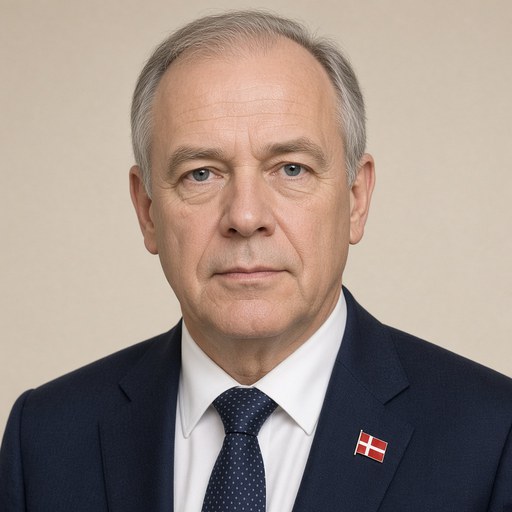
Speech at the Constitution Celebration in Viborg Cathedral on Friday, September 17, 1999
 Poul Nyrup Rasmussen · Prime Minister of Denmark
- Context
- Rasmussen addressed a Constitution celebration at Viborg Cathedral on September 17, 1999, marking the 150th anniversary of the Danish Constitution.
- Main themes
- 150th anniversary of the Danish Constitution, human dignity and equality, democratic participation, women's rights and self-determination, welfare state and social solidarity, religious freedom and tolerance, forced marriages and immigrant rights, community responsibility, constitutional monarchy, Danish national identity
- Duration
- ~23 min
- Words
- 2,717
- Sentences
- 199
- Readability
- 54
- Grade
- 8.6
- Syntax
- 2.61
- Vocabulary
- 1.92
Translated from Danish
The broad sphere of national life a sentence belongs to. Every sentence has an Arena, so it is the denominator the other indices are read against.
Other199 sentences in 65 paragraphs
The Responsibility for Each Other and the Community
I would like to thank the bishop and the county mayor for the invitation to speak here today in Viborg Cathedral. It is a great pleasure for me to come and speak in the Danish National Church - in the people's church.
This year marks the 150th anniversary of our Constitution. A Constitution that has given the Danes rights and opportunities that are still not available everywhere in the world. A Constitution that has protected us from abuses, which unfortunately are still a daily reality in certain other parts of the world.
I believe that the Danish Constitution has helped ensure that Denmark was not divided, not torn apart, as has unfortunately happened in many other places in Europe throughout history.
We
sat down and talked things through.
They
carried out bloody revolutions in many other places.
The Constitution is not just about institutions. The Constitution expresses a view of humanity. A view of humanity that is based on the belief that all people are born equal. That our value rests solely on the fact that we are human. On that - not on more and not on less. We all have our different roles to play in society. We all have our tasks to fulfill in our community. But as human beings, we are born equal.
Today - 150 years after the adoption of the Constitution - we Danes find it completely natural to have such a view of humanity. But it was only with the Constitution that this perspective gradually began to take hold in Danish social life. With the framework for our democratic life, for our political life, that was created with the Constitution, participation by all in our society gradually became a very decisive part of Danish democracy.
* * *
With the Constitution of 1849, the previous absolute monarchy was replaced by a constitutional monarchy. The king had to share his power with the people. A part of the people. With the Constitution of 1849, many gained the right to run for the National Assembly and to vote. But it was far from everyone who gained this right. Women, for example, did not gain this right, nor did the poor. Fortunately, that came later.
We must hold on to the concept of human dignity, the concept of equal opportunities. It is not just a formal right. It is above all a real right to participate in our democracy. And it is a right without exceptions.
I would like to emphasize here, almost 85 years after women gained the right to participate in public life on equal terms with men through the constitutional amendment in 1915: We cannot, and we will not, accept any interference in women's right to self-determination. This applies in all areas, and it applies without exception. Even if it might be justified by consideration for other cultures. Therefore, we must, for example, also say no to forced marriages, regardless of the cultural or religious background.
With the Constitution, we gained freedom of religion, and the development in Denmark since 1849 has moved towards greater tolerance towards other cultures. This is good, but misunderstood tolerance and political correctness must not lead to a denial of certain universal rights or human rights. Among these universal fundamental rights is also: The right to choose one's life partner, to determine for oneself who one wants to share life with. We take this for granted in our country, but we also know that it is not, for example, self-evident for all second-generation immigrant women whose parents do not share the same background as we do.
* * *
This is also connected to the care we find in the Constitution, which we adhere to here in the National Church, which is in fact also a fundamental value basis for the Danish welfare state.
The care for the weak in society was, after 1849, no longer solely a matter of the king's care for his subjects. Care is fundamental to our neighborly love, in the National Church, and a fundamental part of our Christianity. But care is also a matter of our care for each other - through the democratic political decision-making process. For me, it is a matter of solidarity, a matter of belonging, and a matter of community.
One of the fathers of the Constitution, D. G. Monrad, wrote at the adoption of the Constitution that 'the form is given, life must develop in the form gradually.' And life has developed in form, but the development has not come by itself. Only through participation, political participation, is life, political life, and change created.
The Danish welfare state did not come by itself. It came because we wanted it. It came through hard work, and it came through unity and community. In many other countries, welfare and security have not yet arrived. Security and care for each other are something very fundamental. It has largely succeeded in creating social security in our country. It is now a crucial core of our welfare state.
Because you have lost once, you are not lost. You are certainly not in the National Church, and you are not in the Danish welfare state either.
* * *
There are two fundamental considerations reflected in the Constitution. Two fundamental considerations. With the Constitution, the individual gained protection against abuses from the state. But at the same time, the state was obliged to protect the individual. This is something very central and characteristic of Danish society.
For me, security must also extend beyond ourselves - and towards each other. A sense of responsibility and a sense of community provide the cohesion that is absolutely crucial for the future of the welfare state of Denmark. It is also crucial for us to remain as a united people, strong and solidary, in the future.
And frankly: Even though we have received more money, it is not the case that the sense of responsibility and community has automatically followed. More money, yes, but less loneliness, we cannot really say yes to that.
The Constitution is not a guarantee against inequality, but the Constitution provides the opportunity to create equal opportunities in Denmark. The Constitution does not guarantee the inner living life of the Danish National Church, but it provides a framework for it. The Constitution is not a guarantee for a vibrant democracy, but it provides a framework for a democratic life that must unfold.
The Constitution does not take away our responsibility; it gives it to us. And it is the responsibility that we all have. Not just the state, not just others. It is also the employers. It is also the employees. It is also each workplace. It is also each family.
There is a small quote that I believe many can remember: 'Can we not do it a little better?'
Who are
we
actually? It is fundamental to remember that it is all of us. That is the core. The 'we' must be rediscovered: In workplaces, we must take responsibility for each other seriously. This applies if a colleague has alcohol problems or problems related to a divorce. It applies in the case of illness. There must be someone who calls and says: 'How are you? We need you.' In families, we must also take better care of each other. Human care and love cannot be replaced by public care, but are a foundation for public care.
Children - we must give ourselves time for the children. But then we must also choose between a new conservatory or more time for the children. The care for the marginalized and the poor, loneliness - we can all do better. If we, mind you - consistently - include ourselves when we talk about responsibility and not just others. If we ensure that responsibility is based on clear values, we ensure a cohesion in our society that also means that this country, Denmark, can have a good start in the next century.
In this way, we can also remind ourselves and each other that there is a connection between rights and duties, that it is not just duties and not just rights, but both. This is the value basis we are talking about that has existed for more than 100 years.
The welfare state must not develop into a society where one can automatically draw welfare or receive it in the mail. A prerequisite for maintaining social security is that the sense of responsibility and community is preserved. This can only be ensured if we decide to do so.
The Constitution provides the framework. Participation provides the responsibility and the sense of community.
* * *
I have talked a lot about responsibility and community here today. I am very aware of that. Last year, we had a conflict in the labor market - and suddenly there was a shortage of yeast. I was reminded of when the struggle for the welfare state began. Back then, the poorest were the majority. Back then, two-thirds of society was poor. Back then, solidarity and belonging were about taking from those 'above' oneself and giving to the poor.
Now - in our time - the situation is different! A year ago, there was a shortage of yeast. If we had acted more wisely, there would have been enough yeast for all of us. Since the struggle for the welfare state began, we have become children of our own success. Today, it is not the case that two-thirds are poor in our society. Today, it is such that most of us are doing reasonably well.
Now, solidarity is no longer about taking. Now it is primarily about giving - as it also is in the National Church!
Can the pants of solidarity hold in the modern society where Stauning's grandchildren have largely moved into single-family homes? My answer is: Yes!
It is not just a 'me-myself society' that we have now. We have just been able to ascertain that. Kosovo showed that we can rediscover community. When the Danes saw the old woman, with her last strength, dragging herself over the mountain ridge, or the little daughter who did not know if she would see her father again or her brother - we came together. We helped the people in the terrible situation in Kosovo. For we know well in Denmark what real need is and when and how help should be given.
And suddenly we rediscovered what it means to help someone! Suddenly we could feel again what a sense of community really is. The question is whether the help to Kosovo was in fact also a help to ourselves. A help for us in Denmark to rediscover that sense of community. Even in our own little butter hole, that sense of community is crucial for us to rediscover the real care for each other and thus the real fundamental values that are the foundation.
* * *
We can manage on our own in Denmark, but we should never be enough unto ourselves. The Constitution was created at a time when Europe played a very large role in Denmark's survival. It was a survival as a nation in a great power political game. The very concept of a nation was, by the way, of relatively recent character. Denmark became a nation with the Constitution. Denmark survived as a nation through the great power struggles that characterized Europe in the first 100 years of the Constitution. We should have learned from those years.
Europe's lesson from those years was that cooperation between nations was a necessity. That it was necessary to establish a community that extended beyond the country's borders.
My conclusion today is also that as we wave goodbye to this century, we will decide not to work against better knowledge, but for better knowledge - and based on better knowledge. The lesson from the bloody experiences of this century is that we must cooperate across borders.
I am very aware that in Viborg Cathedral and in the Danish National Church, it is difficult to talk about money. But if the project is to put people before money, then I feel that it is a different matter. For me, it is precisely about that, whether it is in Denmark or in Europe.
It is us humans who must define the framework for money and the market economy and not the other way around. That is the next big project that we must address before long. Much has happened since 1848. The message that King Louis Philippe had been overthrown in France on February 24, 1848, took a week to reach Denmark from Paris.
Today, the Hungarian-born currency speculator, George Soros, the man who broke the Bank of England, claims that he can make as much money available for himself and speculation in 6 hours as all the values we create in Denmark in a year.
Therefore, Denmark's participation in European cooperation is so crucial for our security. Soon we will have a referendum again. I would like to mention three reasons why it is best for Denmark to say yes to participating in the cooperation that sounds like money, the euro, but is not when it comes down to it.
The first reason is that it is about security. Security against economic abuses that can threaten our independence.
The second reason is that it is about employment and jobs and the future for all of us.
The third reason is that it is about shaping a cooperation that is based on the values we have fought so hard for over 100 years. It does not have to take 100 years in Europe. It is precisely about people before money and not after. And I think we owe it to ourselves to help shape it. Not to blend in with the wallpaper with the others. And not to rush forward and think we can do everything. But to make a difference, to use our lives, to use our people, to use our nation, to make an impact.
Now we need a proper conversation among the people. A proper democratic debate in Denmark about this issue.
Referendums are, for me, a fundamental part of Danish democracy. Some think that the topics are too complicated to vote on. I believe that referendums are here to stay and are a fundamental part of our value set.
And it is not that difficult: The crucial thing for me is that where fundamental questions are fought over, that affect our country and our people and the individual person - there we must also be. Also when it comes to Europe.
* * *
It is not an impossible task to make our values sustainable in the next century. But it is a task that is also connected to the larger community I have just mentioned. For this Danish people is not a tribe, with its inward-looking rituals, closedness, and distance from everything else.
Our Danish identity is also about tolerance. If we take the Copenhagen/Bonn Declaration between our great German neighbor and Denmark, it essentially states, when translated directly, that you should treat your own minorities as you would like to be treated yourself. I think that is a fantastically important message to hold on to today.
You should treat your minorities as you wish to be treated.
We are a skilled Danish people. We have come a long way. We participate in international cooperation. The Constitution is our foundation. It is 150 years old. But one can still be sure that it will remain a vital framework for Danish democracy.
* * *
Like all living things, our Constitution and our democracy must of course also be nurtured and cared for. My conclusion is therefore that cohesion, community, and responsibility for one another are the best means to nurture and care for our democracy. The very notion of my own worth, my own significance, and my own irreplaceability - that notion is fundamentally linked to the idea of others' worth, significance, and irreplaceability. That connection is closely tied to our foundation and to our future. We must cherish all that cannot be measured in money. Everything depends on that. Our Danish community.
Congratulations on the 150th anniversary of the Constitution.
Thank you.
The original Danish. The tags above are read on the English translation's sentences.
Ansvaret for hinanden og fællesskabet
Jeg vil gerne sige tak til biskoppen og til amtsborgmesteren for invitationen til at tale her i dag i Viborg Domkirke. Det er en stor glæde for mig at komme og tale i den danske folkekirke - i folkets kirke.
I år er det jo 150-året for vores Grundlov. En Grundlov, som har givet danskerne rettigheder og muligheder, man stadig ikke har alle steder i verden. En Grundlov, som har sikret os mod overgreb, som stadig desværre er dagligdag visse andre steder i verden.
Jeg tror, at den danske Grundlov har været med til at sikre, at Danmark ikke blev splittet, ikke blev revet fra hinanden, som det desværre er sket mange andre steder i Europa gennem historien.
Vi
satte os ned og talte tingene igennem.
De
gennemførte blodige revolutioner mange andre steder.
Grundloven handler ikke kun om institutioner. Grundloven er udtryk for et menneskesyn. Et menneskesyn, der tager udgangspunkt i, at alle mennesker er født lige. At vores værdi alene beror på, at vi er mennesker. Derpå - ikke på mere og ikke på mindre. Vi har alle vores forskellige roller at indtage i samfundet. Vi har alle vores opgaver, vi skal løfte i vores samfund. Men som mennesker er vi født lige.
I dag – 150 år efter vedtagelsen af Grundloven - finder vi danske det helt naturligt at have sådan et menneskesyn. Men det var jo først med Grundloven, at synspunktet gradvist fik lov at slå igennem i det danske samfundsliv. Med den ramme for vores demokratiske liv, for vore politiske liv, der blev skabt med Grundloven, blev deltagelse af alle i vores samfund efterhånden en meget afgørende del af det danske demokrati.
* * *
Med 1849-grundloven blev det tidligere enevælde afløst af et konstitutionelt monarki. Kongen måtte dele sin magt med folket. En del af folket. Med 1849-grundloven fik mange ret til at stille op til Rigsdagen og til at stemme. Men det var langt fra alle, der fik ret. Kvinder fik eksempelvis ikke denne ret, og de fattige fik den heller ikke. Det kom heldigvis senere.
Det må vi holde fast i, det med menneskeværdet, det med de lige muligheder. Det er ikke kun en formel ret. Det er fremfor alt en reel ret til at deltage i vores demokrati. Og det er en ret uden undtagelser.
Jeg vil gerne understrege her, næsten 85 år efter at kvinderne ved grundlovsændringen i 1915 fik ret til at deltage i samfundslivet på lige fod med mændene: Vi kan ikke, og vi vil ikke acceptere indgreb i kvindernes ret til selvbestemmelse. Det gælder på alle områder, og det gælder uden undtagelse. Også selv om det måtte blive begrundet i hensynet til andre kulturer. Derfor må vi f.eks. også sige nej til tvangsægteskaber, uanset den kulturelle eller religiøse baggrund.
Med Grundloven fik vi religionsfrihed og udviklingen i Danmark siden 1849 er gået i retning af større tolerance over for andre kulturer. Det er godt, men misforstået tolerance og politisk korrekthed må ikke føre til en knægtelse af visse universelle frihedsrettigheder eller menneskerettigheder. Til disse universelle grundlæggende rettigheder hører også: Retten til selv at vælge sin livsledsager, selv at bestemme, hvem man vil dele livet med. Det tager vi som noget selvindlysende i vores land, men vi ved jo også godt, at det fx ikke er indlysende for alle 2. generations indvandrerkvinder, hvis forældre ikke har samme baggrund som vi.
* * *
Det hænger for mig også sammen med den omsorg, vi genfinder i Grundloven, som vi holder os til her i folkekirken, som i virkeligheden også er et fundamentalt værdigrundlag for det danske velfærdssamfund.
Omsorgen for de svage i samfundet var efter 1849 ikke længere alene et spørgsmål om kongens omsorg for sine undersåtter. Omsorg er fundamentalt i vores næstekærlighed, i folkekirken og en fundamental del af vores kristendom. Men omsorg er også et spørgsmål om vores omsorg for hinanden - gennem den demokratiske politiske beslutningsproces. For mig er det et spørgsmål om solidaritet, et spørgsmål om samhørighed og et spørgsmål om fællesskab.
En af Grundlovens fædre, D. G. Monrad, skrev ved Grundlovens vedtagelse, at 'formen er givet, livet må udvikle sig i formen efterhånden.' Og livet har udviklet sig i formen, men udviklingen er ikke kommet af sig selv. Kun via deltagelse, den politiske deltagelse, skabes der liv, politisk liv og forandring.
Det danske velfærdssamfund kom ikke af sig selv. Det kom fordi vi ville det. Det kom gennem hårdt arbejde, og det kom gennem sammenhold og fællesskab. I mange andre lande er velfærd og tryghed slet ikke kommet endnu. Tryghed og omsorg for hinanden er noget meget grundlæggende. Det er i vidt omfang lykkedes at skabe social tryghed i vores land. Det er nu en afgørende kerne i vores velfærdssamfund.
Fordi du har tabt en gang, er du ikke fortabt. Det er du slet ikke i folkekirken, og det er du heller ikke i det danske velfærdssamfund.
* * *
Der er to grundlæggende hensyn, som afspejles i Grundloven. To grundlæggende hensyn. Med Grundloven fik individet en beskyttelse mod overgreb fra staten. Men samtidig blev staten pålagt at beskytte individet. Det er noget meget centralt og karakteristisk for det danske samfund.
For mig må trygheden også række ud over os selv - og hen til hinanden. Ansvarsfølelse og fællesskabsfølelse giver den samhørighed, der er fuldstændig afgørende for velfærdssamfundet Danmarks fremtid. Det er også afgørende for, at vi i fremtiden kan forblive som et samlet folk, stærke og solidariske.
Og oprigtigt talt: Selv om vi har fået flere penge, så er det jo ikke sådan, at ansvaret og fællesskabsfølelsen automatisk er fulgt med. Flere penge, ja, men mindre ensomhed, det kan vi vist ikke svare ja til.
Grundloven er ikke en garanti mod ulighed, men Grundloven giver mulighed for at skabe lige muligheder i Danmark. Grundloven sikrer ikke den danske folkekirkes indre levende liv, men den giver en ramme herfor. Grundloven er ikke en garanti for et levende demokrati, men den giver en ramme for et demokratisk liv, som må udfolde sig.
Grundloven fratager os ikke ansvaret, den giver os det. Og det er det ansvar, vi alle sammen har. Ikke kun staten, ikke kun de andre. Det er også arbejdsgiverne. Det er også lønmodtagerne. Det er også den enkelte arbejdsplads. Det er også den enkelte familie.
Der er et lille citat, som jeg tror, mange kan erindre: 'Kan vi ikke gøre det lidt bedre ?'
Hvem er
vi
egentlig? Det er fundamentalt at huske, at det er os alle sammen. Det er kernen. Vi’et skal genfindes: På arbejdspladserne må vi tage ansvaret for hinanden alvorligt. Det gælder, hvis en kollega får alkoholproblemer eller problemer i forbindelse med en skilsmisse. Det gælder ved sygdom. Der må være nogen, der ringer og siger: 'Hvordan har du det? Vi har brug for dig.' I familierne må man også tage mere vare på hinanden. Medmenneskelig omsorg og kærlighed kan ikke erstattes af offentlig omsorg, men er et fundament for offentlig omsorg.
Børnene - vi skal give os tid til børnene. Men så må vi også vælge mellem en ny udestue eller mere tid til børnene. Omsorgen for de udstødte og de fattige, ensomheden - vi kan alle sammen gøre det bedre. Hvis vi vel og mærke - helt konsekvent - omfatter os alle, når vi taler ansvar og ikke bare de andre. Hvis vi sikrer, at ansvaret bygger på klare værdier, så sikrer vi en sammenhængskraft i vores samfund, som også betyder, at dette land, Danmark, kan få en god start i det næste århundrede.
På den måde kan vi også fastholde os selv og hinanden på, at der er sammenhæng mellem rettigheder og pligter, at det er ikke kun pligter og ikke kun rettigheder, men det er begge dele. Det er jo værdigrundlaget gennem mere end 100 år, vi her taler om.
Velfærdssamfundet må ikke udvikle sig til et samfund, hvor man automatisk kan trække velfærden, eller får den tilsendt via posten. En forudsætning for at bevare den sociale tryghed er, at ansvarsfølelsen og fællesskabsfølelsen bevares. Det kan kun sikres ved, at vi beslutter os derfor.
Grundloven giver rammen. Deltagelsen giver ansvaret og følelsen af fællesskab.
* * *
Jeg har talt meget om ansvar og fællesskab her i dag. Det er jeg meget bevidst om. Sidste år havde vi en konflikt på arbejdsmarkedet - og pludselig manglede der gær. Jeg kom til at tænke på dengang kampen om velfærdssamfundet startede. Dengang var de fattigste jo de fleste. Dengang var to tredjedele af samfundet fattige. Dengang handlede samhørighed og solidaritet om at tage fra dem 'oven over' en selv og give til de fattige.
Nu - i vores tid - er situationen en anden! For et år siden manglede der gær. Havde vi båret os klogere ad, havde der såmænd nok været gær til os alle sammen. Siden dengang arbejdet for velfærdssamfundet startede, er vi blevet børn af vores egen succes. I dag er det jo ikke sådan, at to tredjedele er fattige i vores samfund. I dag er det sådan, at de fleste af os har det rimeligt fornuftigt og godt.
Nu handler solidaritet ikke længere om at tage. Nu handler det først og fremmest om at give - som det også gør i folkekirken!
Kan solidaritetens bukser holde i det moderne samfund, hvor Staunings børnebørn for en stor del er flyttet i parcelhus? Mit svar er: Ja!
Det er ikke bare et 'mig-selv-samfund,' vi har nu. Det har vi lige kunnet konstatere. Kosovo viste, at vi kan genfinde fællesskabet. Da danskerne så den gamle kone, med sine sidste kræfter, slæbe sig over bjergryggen, eller den lille datter, som ikke vidste, om hun ville se sin far igen eller sin bror - så fandt vi sammen. Så hjalp vi folkene i den forfærdelig situation i Kosovo. For vi véd jo godt i Danmark, hvad reel nød er og hvornår og hvordan, der skal hjælpes.
Og pludselig opdagede vi igen, hvad det vil sige at hjælpe nogen! Pludselig kunne vi mærke igen, hvad fællesskabsfølelse egentlig er. Spørgsmålet er, om hjælpen til Kosovo i virkeligheden ikke også var en hjælp til os selv. En hjælp til at vi i Danmark kunne genfinde den fællesskabsfølelse. Selv i vores eget lille smørhul er den - fællesskabsfølelsen -afgørende for, at vi kan genfinde den reelle omsorg for hinanden og dermed de reelle grundlæggende værdier, som er fundamentet.
* * *
Vi kan godt klare os selv i Danmark, men vi bør aldrig være os selv nok. Grundloven blev skabt i en tid, hvor Europa spillede en meget stor rolle for Danmarks overlevelse. Det var en overlevelse som nation i et storpolitisk magtspil. Selve begrebet nation var i øvrigt af forholdsvis ny karakter. Danmark blev nationen med Grundloven. Danmark overlevede som nation gennem de stormagtsopgør, der prægede Europa i Grundlovens første 100 år. Vi bør have lært af de år.
Europas lære af de år var, at samarbejde mellem nationerne var en nødvendighed. At det var nødvendigt at etablere et fællesskab, der rakte ud over landets grænser.
Min konklusion i dag er også, at når vi vinker farvel til dette århundrede, vil vi beslutte os for ikke at arbejde mod bedre vidende, men for bedre vidende - og på grundlag af bedre vidende. Læren af de blodige erfaringer fra dette århundrede er, at vi må samarbejde over grænser.
Jeg er meget opmærksom på, at i Viborg Domkirke og i den danske folkekirke, er det svært at tale om penge. Men hvis nu projektet er at sætte mennesker foran pengene, så føler jeg, at det er en anden sag. For mig handler det lige netop om det, uanset det er i Danmark, eller det er i Europa.
Det er os mennesker, der må definere rammerne for pengene og markedsøkonomien og ikke omvendt. Det er det næste store projekt, som vi skal tage stilling til inden så længe. Meget er sket siden 1848. Budskabet om, at kongen, Louis Philippe, var styrtet i Frankrig den 24. februar 1848, var en uge om at nå frem til Danmark fra Paris.
I dag påstår den ungarsk fødte valutaspekulant, George Soros, manden der knækkede Bank of England, at han på 6 timer kan skaffe lige så mange penge til rådighed for sig selv og spekulation, som alle de værdier vi på et år skaber i Danmark.
Derfor er Danmarks deltagelse i det europæiske samarbejde så afgørende for vores tryghed. Inden længe skal vi til folkeafstemning igen. Jeg vil tillade mig i dag at nævne tre grunde til, at det er bedst for Danmark at sige ja til at deltage i det samarbejde, der lyder som penge, euroen, men ikke er det, når det kommer til stykket.
Den første grund er, at det handler om tryghed. En tryghed mod økonomiske overgreb, der kan true vores selvstændighed.
Den anden grund er, at det handler om beskæftigelse og job og fremtid for os alle sammen.
Den tredje grund er, at det handler om at udforme et samarbejde, der bygger på de værdier, vi har kæmpet så hårdt for i 100 år. Det behøver ikke at tage 100 år i Europa. Det handler netop om mennesker foran penge og ikke efter. Og jeg synes, vi skylder os selv at være med til at sætte vores præg. Ikke gå i ét med tapetet med de andre. Og heller ikke fare frem og tro vi kan alting. Men gøre en forskel, bruge vores liv, bruge vores folk, bruge vores nation, sætte præg.
Nu skal vi have en ordentlig samtale mellem folk. En ordentlig demokratisk debat i Danmark om den sag.
Folkeafstemninger er for mig en fundamental del af det danske demokrati. Nogen synes, at det er for komplicerede emner til at stemme om. Jeg mener, at folkeafstemninger er kommet for at blive og en hel fundamental del af vores værdisæt.
Og det er såmænd ikke så svært: Det afgørende er for mig, at dér hvor der kæmpes om fundamentale spørgsmål, der berører vores land og vores folk og det enkelte menneske - dér skal vi også være. Også når det gælder Europa.
* * *
Det er ikke en umulig opgave at gøre vore værdier langtidsholdbare i det næste århundrede. Men det er en opgave, der også hænger sammen med det større fællesskab, jeg netop har omtalt. For dette danske folk er jo ikke en stamme, med sine indadvendte ritualer, lukkethed og afstand fra alt andet.
Vores danskhed handler jo også om tolerance. Hvis vi tager København/Bonn-erklæringen mellem den store tyske nabo og Danmark, står der jo egentlig direkte oversat, at du skal behandle dine egne mindretal, som du egentlig selv foretrækker at blive behandlet. Det synes jeg er et fantastisk vigtigt budskab også at holde fast i i dag.
Du skal behandle dine mindretal, som du selv ønsker at blive behandlet.
Vi er et dygtigt dansk folk. Vi er nået langt. Vi deltager i et mellemfolkeligt samarbejde. Grundloven er vores basis. Den er 150 år. Men man kan fortsat være sikker på, at den vil være en livskraftig ramme om det danske demokrati.
* * *
Som alt levende skal vores Grundlov og vores demokrati naturligvis også plejes og passes. Min konklusion er derfor, at samhørighed, fællesskab og ansvar for hinanden er de bedste midler til at pleje og passe vort demokrati. Selve forestillingen om mit eget værd, min egen betydning og min egen umistelighed - den forestilling er fundamentalt knyttet til forestillingen om andres værd, betydning og umistelighed. Den sammenhæng er nøje knyttet til vores fundament og til vores fremtid. Vi skal værne om alt det, der ikke kan måles i penge. Derpå beror det alt sammen. Vores danske fællesskab.
Tillykke med 150-året for Grundloven.
Tak.