




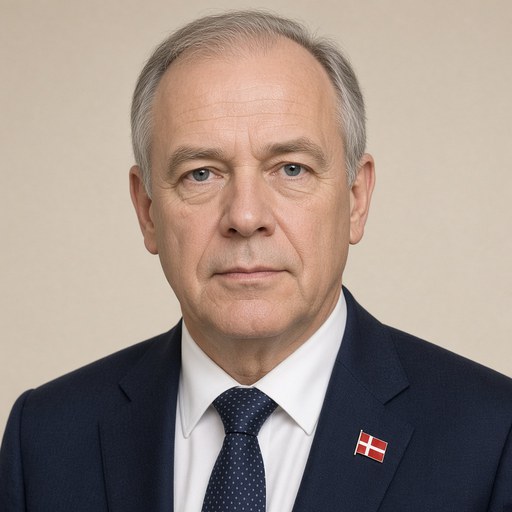
Prime Minister Poul Nyrup Rasmussen New Year's Speech 2001
 Poul Nyrup Rasmussen · Prime Minister of Denmark
- Context
- Rasmussen delivered his annual New Year's address to the Danish nation on January 1, 2001, outlining economic achievements and priorities for the coming years.
- Main themes
- Danish economic success, welfare state sustainability, fiscal responsibility, IT and digital society, public health and quality of life, tax policy, education and innovation, economic reforms of the 1990s, future investment plans, social equity
- Duration
- ~17 min
- Words
- 2,091
- Sentences
- 159
- Readability
- 62
- Grade
- 7.1
- Syntax
- 2.57
- Vocabulary
- 1.94
Translated from Danish
The broad sphere of national life a sentence belongs to. Every sentence has an Arena, so it is the denominator the other indices are read against.
Other159 sentences in 74 paragraphs
Good evening – and Happy New Year.
In October, I visited South Korea and had the opportunity to meet President Kim Dae-Jung, who suddenly asked me during our conversation:
What is it really like to be Prime Minister in paradise on earth?
That question took me by surprise. It is not exactly the word we hear every day in Denmark, and certainly not in the political debate.
But it is not the first time I have heard people abroad say something nice about Denmark. And it is true that, compared to almost all other nations, we are a peaceful and harmonious society that, moreover, has created one of the world's strongest economies and the lowest unemployment in 25 years over the past eight years.
This has not happened by itself. Most of it has come through hard work in all parts of Danish society over the past eight years.
Just think for a moment about how Denmark looked in the early 1990s:
A country in stagnation, despondency, and crisis mood. Colossal unemployment and a weakened economy.
We knew what we wanted. We needed to get the economy going. We needed to get people into work. We needed money for welfare.
Since 1993, we have implemented reforms in almost all areas. I knew that it would not all be equally popular. But I have always tried to think about what serves Denmark best in the long run. After all, it is the results that ultimately count.
* * *
The 1990s became a good chapter for the country. Denmark became economically sustainable.
This evening, I would like to hint at some of the tasks we need to tackle in the coming years. Our agenda is: 'People before money'. A sustainable Denmark.
Today, we are a richer society than we were 10 years ago. Most people have more money in their hands. For some, it might be tempting to say: Fine, the goal has been reached. The economy is in order. Now we can relax.
On the contrary. It is precisely now that it is important that we stay the course.
I have seen so much unemployment in my time and so much injustice and social decline in its wake that one thing is completely clear: We do not want to repeat the mistakes, yes we do not even want to risk them – that led to economic setbacks, as we saw in 1982 and 1986.
Therefore, we must keep order in the economy. And we must use the money wisely. It is so easy to throw it all away again.
Therefore, we must also figure out what we choose in the debate about taxes and welfare.
In these years, the state tax is being lowered for the lowest incomes. Nevertheless, I understand well that some families in certain municipalities may feel squeezed by high oil prices and rising municipal taxes.
For all of us, it is a razor-sharp balance when we must at the same time ensure money for welfare, pay down debt – and meet the needs of individual families.
It is important that we secure welfare. That we continue to reduce debt so that we are prepared for hard times, and so that there will also be money in the future to ensure welfare for our elderly.
But let us also be open and see if we can arrange our taxes better – without undermining the principle that those with the broadest shoulders bear the heaviest burdens.
* * *
We are in the midst of a change that is as extensive as when Denmark transitioned from an agricultural to an industrial society. Now the changes are just happening much faster.
Denmark has great opportunities to do well if we invest wisely. Because it is people that matter. People's imagination, creativity, and knowledge – skill, in short.
I want a Denmark that is simply the world's best IT nation. It is not an impossible dream. This means that all Danes should have access to the Internet and the opportunity for an email address.
The public sector must be at the forefront in the use of computers and information technology. There is much to be done. It is about education for all, and it must start in the Folkeskole.
I urge that the public sector and Danish businesses together – in a new partnership – help lift Denmark into the future. I know that the will is there. Now it is about action, and we must together find a plan for financing things.
This will be one of the focal points in the major investment plan that will come this year – 'Investments in Denmark's Future'.
* * *
But our ambitions go further. Our investments must go to a Denmark where health, environment, and a good working life are better connected.
Denmark has a dismal record in Europe. Far too many of us become ill from the lives we lead! If we want to live longer and have a better quality of life, we must take action in all areas: This applies to our children, youth, adults, and elderly – in canteens, schools, nursing homes, and hospitals.
Let us start with the children. Let us work to provide our children with a healthy and affordable meal. We can start with selected schools.
We should also be able to offer a good meal to our elderly. Good food that smells and tastes of something. As a butcher said to me the other day with a twinkle in his eye: 'The taste must return to the food'. And that is true. We will work hard to ensure healthy and clean food.
* * *
Our healthcare system is a cornerstone of the welfare state. We have invested a lot. Now the results are beginning to show. We continue to improve. We must never compromise on quality.
There must be room and space for equal conversation, the warm supportive hand, and care.
And if we cannot manage things on time here in the country for a period, then the patient must have the right to documented treatment – even if it can only take place abroad. It is the patient who comes first.
And I cannot help but say: There are several hundred thousand employees in our hospitals, nursing homes, and elderly centers. Despite many critical voices, you tirelessly do a solid job for a good cause – to help the sick and the elderly. To all of you: You deserve great thanks for that.
* * *
Many are probably familiar with the verse:
'The heath, yes, one can hardly believe it, but come yourself, see it a bit: the heather is a magnificent carpet, flowers swarm mile-wide ...' . It is H.C. Andersen in 'Jutland between two seas'.
Back then, H.C. Andersen foresaw that the heath would be cultivated and the heather would disappear. And he continues: 'Hurry, come! In a few years, the heath will stand like a cornfield'.
Today, we wish to preserve the heath with its distinctive beautiful nature, but now we see that the heath is deteriorating due to ammonia pollution from agriculture.
It is good for Denmark that we have a competitive, modern agriculture. But it must not be at the expense of people, the environment, and nature.
Large parts of agriculture have in recent years developed something that resembles factories more than farms. They are not pleasant to be neighbors to. Our water environment is still threatened by agricultural production, even though progress has been made.
All these problems must be solved. The industry must find a way to produce that takes into account people in small communities, preserves the heath, and keeps our groundwater clean. Otherwise, we cannot talk about sustainability.
* * *
We need a Denmark where our working life becomes better for all of us. Not divided between those who have exciting jobs and those who have stressful jobs. And we must create space and opportunities for those who are not one hundred percent efficient.
We have outsourced a lot in recent years. Many former public enterprises are now in full private competition. In some places, the work is organized sensibly, but it is my clear impression that the pace in many places has been set unreasonably high.
How is a cleaning assistant, who, according to the Working Environment Institute, must clean an area equivalent to 28 Danish single-family homes daily, supposed to maintain her job satisfaction and her energy for the kids at home?
Or what about the bus driver, who can hardly manage to take a break due to a tight schedule?
The question is whether the time has come for us to take a close look at the working conditions for people in all these jobs, and thereby perhaps contribute to a little more job satisfaction.
* * *
I want a Denmark where we become much better at ensuring that new refugees and immigrants are included in Danish society. Our integration law is good. Let us now make it work across the country. The new Danes can contribute positively if we create opportunities and dare to set demands.
Here, as everywhere else, it applies that the few should not ruin it for the many. We are constantly working to intervene as early as possible and set clear boundaries between right and wrong. To be consistent both in relation to violence and in relation to its causes. But we will only stop the senseless violence when each individual parent looks their children in the eye, raises them, and sets boundaries.
It starts with school age, and here we must note that there are still far too many who get too little out of their schooling. It is often children from families with significant social problems. Thus begins the vicious spiral for young people who do not get a chance.
I remember from my own upbringing how quickly one could come into conflict with society if no one took care of you. The Folkeskole is and will remain a very important foundation.
But schooling must be followed up with getting a job or starting an education – this applies to ethnic minorities as well as to everyone else.
Fortunately, there are many good examples – from the newly graduated police officer to the smiling cashier and the engineer.
* * *
This evening, I have touched on some important examples of how we can achieve more quality in our daily lives in Denmark.
The common thread is that problems can only be solved together. That we must help each other.
It is exactly the same in international cooperation. We do best in collaboration with other countries. This is especially true in Europe.
I fully and completely respect the decision made in the referendum on September 28. We have talked about that. And now we must move on.
I believe we can come together on especially two things:
Denmark must be actively involved when it comes to the EU's expansion. It is by far the largest and most important project to ensure a peaceful and whole Europe.
- Denmark must help create greater clarity about what the EU should take care of and what we should decide for ourselves in our own countries. That is also what we decided in the negotiations in Nice a few weeks ago.
Let us discuss these questions with each other – freely and openly. For one thing is certain: The debate about Europe has for far too long resembled a horse trade at Hjallerup market. The European cooperation deserves better.
* * *
We have put on our future glasses this evening. We face incredibly exciting tasks in the new year. We will not achieve everything in one year – but we will achieve it. Just as we have achieved everything we set out to do in the first eight years.
I owe it to tell you what I said to the President of South Korea when he asked about the Danish paradise: Paradise, that may be saying too much, but we have a good society in Denmark. It has not come by itself; there is a long and often narrow history behind it. It came because we wanted it. Because we held on. And because we built on the abilities and opportunities of all people in a safe community.
And it was quite nice to be able to say that. Because that is what it is all about: A humane, decent, skilled, and sustainable Denmark.
I wish everyone a truly Happy New Year.
The original Danish. The tags above are read on the English translation's sentences.
Godaften – og godt nytår.
I oktober besøgte jeg Sydkorea, og mødte ved den lejlighed præsident Kim Dae-Jung, som midt under vores samtale pludselig spurgte:
Hvordan er det egentlig at være statsminister i paradis på jorden?
Det spørgsmål kom bag på mig. Det er ikke lige det ord, vi hører hver dag i Danmark, og slet ikke i den politiske debat.
Men det er ikke første gang, jeg hører folk i udlandet sige noget pænt om Danmark. Og sandt er det jo, at vi i forhold til næsten alle andre nationer er et fredeligt og harmonisk samfund, som oven i købet inden for de seneste otte år har skabt en af verdens stærkeste økonomier og den laveste arbejdsløshed i 25 år.
Det er ikke sket af sig selv. Det meste er kommet gennem hårdt arbejde i alle dele af det danske samfund gennem de otte år.
Tænk et øjeblik på, hvordan Danmark så ud i begyndelsen af 1990’erne:
Et land i stagnation, mismod og krisestemning. En kolossal arbejdsløshed og en svækket økonomi.
Vi vidste, hvad vi ville. Vi skulle have gang i økonomien. Vi skulle have mennesker i arbejde. Vi skulle have penge til velfærden.
Siden 1993 har vi gennemført reformer på snart sagt alle områder. Jeg vidste godt, at det ikke ville være lige populært alt sammen. Men jeg har hele tiden prøvet at tænke på, hvad der tjener Danmark bedst i det lange løb. Det er jo i sidste ende resultaterne, der tæller.
* * *
1990’erne blev et godt kapitel for landet. Danmark blev økonomisk holdbart.
Jeg vil her i aften antyde nogle af de opgaver, vi skal tage fat på i de kommende år. Vores dagsorden hedder: 'Mennesker før penge'. Et holdbart Danmark.
Vi er i dag et rigere samfund end for 10 år siden. De fleste mennesker har fået flere penge mellem hænderne. For nogle kunne det sikkert være fristende at sige: Fint, målet er nået. Økonomien er bragt i orden. Nu kan vi slappe af.
Tværtimod. Det er jo netop nu, det er vigtigt, at vi holder kursen.
Jeg har set så megen arbejdsløshed i min tid og så megen uretfærdighed og social nedtur i kølvandet, at ét står fuldstændigt klart: Vi vil ikke gentage de fejl, ja vi vil ikke engang risikere det – der førte til økonomiske tilbageslag, som vi så i 1982 og i 1986.
Derfor skal vi holde orden i økonomien. Og pengene skal vi bruge klogt. Vi kan så let sætte det hele over styr igen.
Derfor skal vi også finde ud af, hvad vi vælger i debatten om skat og velfærd.
I disse år sænkes statsskatten for de laveste indkomster. Alligevel forstår jeg godt, at nogle familier i visse kommuner kan føle sig klemt af høje oliepriser og stigende kommuneskatter.
For os alle er det en knivskarp balance, når vi på én gang skal sikre penge til velfærd, afdrag på gælden – og den enkelte families behov.
Det er vigtigt, at vi sikrer velfærden. At vi fortsætter med at nedbringe gælden, så vi er rustet til dårlige tider, og så der også i fremtiden er penge til at sikre velfærden for vore ældre.
Men lad os samtidig være åbne og se på, om vi kan indrette vores skatter bedre – uden at pille ved princippet om, at de bredeste skuldre bærer de tungeste byrder.
* * *
Vi står midt i en forandring, der er lige så omfattende, som da Danmark gik fra landbrugs- til industrisamfundet. Nu sker ændringerne bare meget hurtigere.
Danmark har store chancer for at klare sig godt, hvis vi satser rigtigt. For det er mennesker, der tæller. Menneskers fantasi, kreativitet og viden – dygtighed kort sagt.
Jeg vil gerne have et Danmark, der ganske enkelt er verdens bedste IT-nation. Det er ikke en umulig drøm. Det betyder, at alle danskere skal have adgang til Internet og mulighed for en e-mailadresse.
Den offentlige sektor skal være med helt fremme med anvendelsen af computere og informationsteknik. Der er meget at tage fat på. Det handler om uddannelse for alle, og det skal starte i Folkeskolen.
Jeg opfordrer til, at det offentlige og danske erhvervsliv i fællesskab - i et nyt partnerskab - er med til at løfte Danmark ind i fremtiden. Jeg ved, at viljen er der. Nu gælder det handling, og vi skal i fællesskab finde en plan for finansieringen af tingene.
Det bliver et af omdrejningspunkterne i den store investeringsplan, som kommer i år – 'Investeringer i Danmarks fremtid'.
* * *
Men vores ambitioner rækker videre. Vores investeringer skal gå til et Danmark, hvor sundhed, miljø og et godt arbejdsliv hænger bedre sammen.
Danmark har en kedelig rekord i Europa. Alt for mange af os bliver syge af det liv, vi lever! Hvis vi vil leve længere og have en bedre livskvalitet, er vi nødt til at sætte ind på alle områder: Det gælder vores børn, unge, voksne og ældre – i kantiner, skoler, plejehjem og sygehuse.
Lad os starte med børnene. Lad os arbejde for at give vore børn et sundt og billigt måltid mad. Vi kan jo starte med udvalgte skoler.
Vi bør også kunne tilbyde et godt måltid mad til vore ældre. God mad, som dufter og smager af noget. Som en slagteriarbejder sagde det til mig forleden med et glimt i øjet: 'Smagen skal tilbage til maden'. Og det er jo rigtigt. Vi vil arbejde hårdt for at sikre sunde og rene fødevarer.
* * *
Vores sundhedsvæsen er en hjørnesten i velfærdssamfundet. Vi har investeret meget. Nu begynder resultaterne at vise sig. Vi fortsætter med at forbedre. Vi må aldrig gå på kompromis med kvaliteten.
Der skal skabes rum og plads til den ligeværdige samtale, den varme støttende hånd og omsorgen.
Og kan vi ikke i en periode klare tingene til tiden her i landet, så skal patienten have ret til dokumenteret behandling – også hvis den kun kan foregå i udlandet. Det er patienten, der kommer først.
Og så kan jeg ikke lade være med at sige: Der er flere hundredtusinde medarbejdere på vores sygehuse, vore plejehjem og ældrecentre. Trods mange kritiske røster, gør I ufortrødent et godt solidt arbejde for en god sag – at hjælpe de syge og de ældre. Til alle jer: Det skal I have stor tak for.
* * *
Mange kender sikkert verset:
'Heden, ja man tror det næppe, men kom selv, bese den lidt: lyngen er et pragtfuldt tæppe, blomster myldrer milevidt ...' . Det er H.C. Andersen i 'Jylland mellem tvende have'.
Dengang forudså H.C. Andersen, at heden ville blive opdyrket og lyngen forsvinde. Og han fortsætter derfor: 'Skynd dig, kom! om føje år heden som en kornmark står'.
I dag ønsker vi at bevare heden med dens særprægede smukke natur, men nu ser vi, at heden er ved at gå til af ammoniakforurening fra landbruget.
Det er godt for Danmark, at vi har et konkurrencedygtigt, moderne landbrug. Men det skal ikke ske på bekostning af mennesker, miljø og natur.
Store dele af landbruget har i de senere år udviklet noget, der mere ligner fabrikker end landbrug. De er ikke rare at være naboer til. Vores vandmiljø er stadig truet af landbrugsproduktionen, selv om der er sket fremskridt.
Alle disse problemer skal løses. Erhvervet må finde en måde at producere på, så der tages hensyn til mennesker i de små samfund, så heden bevares, og vores grundvand er rent. Ellers kan vi ikke tale om bæredygtighed.
* * *
Vi skal have et Danmark, hvor vores arbejdsliv bliver bedre for os alle. Ikke delt mellem dem, der har det spændende job og dem, der har det stressede job. Og vi skal skabe plads og muligheder for dem, der ikke er hundred procent effektive.
Vi har udliciteret meget i de senere år. Mange tidligere offentlige virksomheder er nu i fuld privat konkurrence. Nogle steder er arbejdet tilrettelagt fornuftigt, men det er mit klare indtryk, at tempoet mange steder er sat urimeligt højt i vejret.
Hvordan skal en rengøringsassistent, som, ifølge Arbejdsmiljøinstituttet, dagligt skal rengøre et areal, der svarer til 28 danske parcelhuse, kunne bevare sin arbejdsglæde og sit overskud til ungerne derhjemme?
Eller hvad med buschaufføren, som knapt nok kan nå at holde pause på grund at en stram køreplan?
Spørgsmålet er, om tiden ikke er inde til, at vi skal se grundigt på arbejdsforholdene for mennesker i alle disse job, og dermed måske bidrage til lidt mere arbejdsglæde.
* * *
Jeg vil gerne have et Danmark, hvor vi bliver langt bedre til at sikre, at nye flygtninge og indvandrere kommer med i det danske samfund. Vores integrationslov er god. Lad os nu få det til at virke rundt om i landet. De nye danskere kan bidrage positivt, hvis vi skaber muligheder og tør stille krav.
Her, som alle andre steder, gælder det, at de få ikke skal ødelægge det for de mange. Vi arbejder hele tiden på at sætte ind tidligst muligt og sætte klare grænser mellem rigtigt og forkert. At være konsekvente både i forhold til volden og i forhold til dens årsager. Men vi får først standset den meningsløse vold, når hver enkelt forældre ser deres børn i øjnene, opdrager og sætter grænser.
Det starter med skolealderen, og her må vi konstatere, at der stadig er alt for mange, der får for lidt ud af skolegangen. Det er oftest børn fra familier med store sociale problemer. Så starter den onde spiral for unge, der ikke får en chance.
Jeg husker det jo fra min egen opvækst, hvor hurtigt man kom på kant med samfundet, hvis der ikke blev taget hånd om en. Folkeskolen er og bliver et meget vigtigt grundlag.
Men skolegangen skal følges op med, at man får arbejde eller kommer i gang med en uddannelse – det gælder for etniske minoriteter, som for alle andre.
Der er heldigvis mange gode eksempler – fra den nyuddannede politibetjent til den smilende kassedame og ingeniøren.
* * *
Her i aften har jeg berørt nogle vigtige eksempler på, hvordan vi får mere kvalitet i vores daglige liv i Danmark.
Den røde tråd er, at problemerne kun kan løses i fællesskab. At vi skal hjælpes ad.
Det er præcis det samme i det internationale samarbejde. Vi klarer os bedst i samarbejde med andre lande. Det gælder ikke mindst i Europa.
Jeg respekterer fuldt og helt afgørelsen ved folkeafstemningen den 28. september. Dét har vi talt om. Og nu skal vi videre.
Jeg tror, vi kan finde sammen om især to ting:
Danmark skal være aktivt med, når det gælder EU’s udvidelse. Det er uden sammenligning det største og vigtigste projekt for at sikre et fredeligt og helt Europa.
- Danmark skal være med til at skabe større klarhed over, hvad EU skal tage sig af, og hvad vi selv skal bestemme i vore egne lande. Det er også det, vi har besluttet i forhandlingerne i Nice for få uger siden.
Lad os drøfte de her spørgsmål med hinanden – frit og åbenhjertigt. For ét er sikkert: Debatten om Europa har alt for længe lignet en hestehandel på Hjallerup marked. Det europæiske samarbejde fortjener bedre.
* * *
Vi har taget fremtidsbrillerne på i aften. Vi står foran utroligt spændende opgaver i det nye år. Vi når ikke det hele på ét år – men vi når det. Som vi har nået alt det, vi satte os for de første otte år.
Jeg skylder at fortælle, hvad jeg sagde til Sydkoreas præsident, da han spurgte til det danske paradis: Paradis, det er måske så meget sagt, men vi har et godt samfund i Danmark. Det er ikke kommet af sig selv, der går en lang og ofte trang historie forud. Det kom, fordi vi ville. Fordi vi holdt fast. Og fordi vi byggede på alle menneskers evner og muligheder i et trygt fællesskab.
Og det var helt rart at kunne sige det. For det er jo dét, det handler om: Et menneskeligt, ordentligt, dygtigt og holdbart Danmark.
Jeg ønsker alle et rigtigt glædeligt nytår.
***
Se nytårstalen
hér