




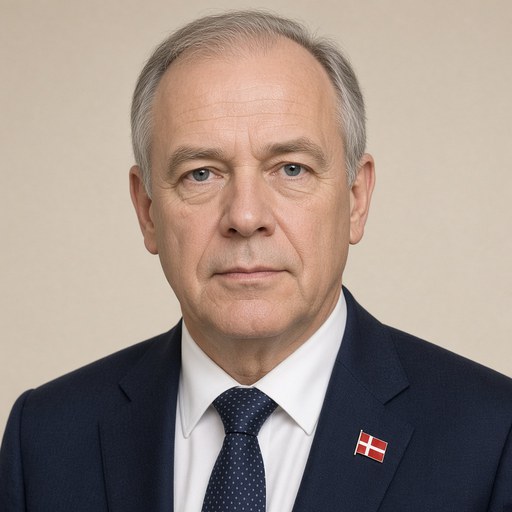
Statement by the Prime Minister of the Kingdom of Denmark, Poul Nyrup Rasmussen, at the Zagreb Summit on November 24, 2000.
 Poul Nyrup Rasmussen · Prime Minister of Denmark
- Context
- Rasmussen addressed the Zagreb Summit on November 24, 2000, expressing EU and Danish support for Western Balkans stability, reform, and European integration.
- Main themes
- Western Balkans stability and integration, EU Stabilization and Association Process, democratization and political reform, regional cooperation and good neighborliness, Yugoslavia's return to European family, reconciliation and post-conflict reconstruction, Danish financial aid and support, civil society development, free and independent media, refugee assistance, economic reform challenges
- Duration
- ~5 min
- Words
- 591
- Sentences
- 44
- Readability
- 45
- Grade
- 10.3
- Syntax
- 2.50
- Vocabulary
- 2.14
Translated from Danish
The broad sphere of national life a sentence belongs to. Every sentence has an Arena, so it is the denominator the other indices are read against.
Other44 sentences in 11 paragraphs
Your Excellencies, ladies and gentlemen,
New winds are blowing over the Western Balkans. Strong voices have spoken in favor of democracy and reforms. The region has gained a new perspective and Europe a new hope. We are gathered here today to give substance to that perspective and to reaffirm that hope.
We welcome the Federal Republic of Yugoslavia into the European family. We have full confidence that the new political forces in Belgrade will do their utmost to fulfill the obligations that come with international integration. We know it is difficult. In return, we are ready to provide the same support and commitment as in the other countries of the Western Balkans.
We all know that change does not happen overnight. The last ten years leave no room for illusions. Societies have been torn apart. Neighbors have killed neighbors. Old friends have become enemies. The many conflicts have taken a heavy toll on the people and economies of the region. Reconstruction takes time. Reconciliation takes even longer.
The primary responsibility for the difficult path towards stability and prosperity lies with the people and nations of the Western Balkans. It is hard work to create democratic societies that have room for everyone, regardless of faith or ethnic origin. The consequences of economic reform can often be a heavy burden to bear. But there are no easy shortcuts.
Once the choice is made and concrete steps are taken to turn visions into reality, the doors to international cooperation and integration will open. Each country in the region chooses its own path. But the starting point should be the same: good neighborliness and a sincere willingness to develop regional cooperation.
The Stabilization and Association Process is based on precisely such principles. It offers EU membership in accordance with the Copenhagen criteria and the progress made in the implementation of the Stabilization and Association Agreements. In return, the European Union demands the development of sustainable democratic societies and good neighborly relations in the region. The requirements are the same for all. But the Union also offers extensive and lasting support to achieve these goals.
Denmark bears its share of EU support. But we also offer national Danish support for reconstruction and democratization in the Western Balkans.
We have allocated a framework for the region of around 60 million USD this year and more than 37 million USD for next year. Humanitarian support, mainly for refugees and internally displaced persons, continues. So do efforts aimed at rebuilding physical, social, and political infrastructure. Through the Framework for Peace and Stability in Southeast Europe, we will continue our efforts for democratic development by supporting initiatives to strengthen civil society.
As an immediate response to the changes in Serbia, Denmark has allocated around 7 million USD, which is expected to be disbursed as early as December this year. The areas of focus will be energy, social institutions, and refugees. At the same time, we will continue our support for the promotion of free and independent media. Let me add that we in the Western Balkans should never focus on a single effort at the expense of the whole. We do not intend to do so.
We are gathered here today, in this historic city of Zagreb, with the certainty that security and stability in Europe cannot be separated. No one can secure the future for themselves, any country, or any region at the expense of others. Together, we must leave nationalism, enmity, and totalitarianism behind. Together, we can build societies in the Western Balkans based on prosperity and stability.
The original Danish. The tags above are read on the English translation's sentences.
Deres excellencer, mine damer og herrer
Nye vinde blæser over det Vestlige Balkan. Stærke stemmer har talt til fordel for demokrati og reformer. Regionen har fået et nyt perspektiv og Europa nyt håb. Vi er samlet her i dag for at give perspektivet indhold og at bekræfte håbet.
Vi hilser Forbundsrepublikken Jugoslavien velkommen i den europæiske familie. Vi har fuld tillid til, at de nye politiske kræfter i Beograd vil gøre deres yderste for at efterleve de forpligtelser, der følger med international integration. Vi ved, det er svært. Vi er til gengæld rede til at yde samme støtte og engagement som i de øvrige lande i det Vestlige Balkan.
Vi ved også alle sammen, at forandringer ikke sker på en nat. De seneste ti år levner ikke plads for illusioner. Samfund er blevet revet fra hinanden. Naboer har dræbt naboer. Gamle venner er blevet fjender. De mange konflikter har taget hårdt på folk og økonomier i regionen. Genopbygning tager tid. Forsoning endnu længere.
Hovedansvaret for den vanskelige vej mod stabilitet og velfærd ligger hos befolkningen og nationerne på det Vestlige Balkan. Det er hårdt arbejde at skabe demokratiske samfund med plads til alle, uanset tro eller etnisk oprindelse. Konsekvenserne af økonomisk reform kan ofte være en tung byrde at bære. Men der er ingen nemme genveje.
Når først valget er truffet og konkrete skridt taget for at gøre visionerne til virkelighed, åbnes dørene for internationalt samarbejde og integration. Hvert land i regionen vælger sin egen vej. Men udgangspunktet bør være det samme: godt naboskab og en ærlig vilje til at udvikle det regionale samarbejde.
Stabiliserings- og associeringsprocessen bygger på netop sådanne principper. Den stiller EU-tiltrædelse i udsigt på grundlag af Københavnskriterierne og de fremskridt, der opnås i gennemførelsen af stabiliserings- og associeringsaftalerne. Til gengæld stiller den Europæiske Union krav om udvikling af bæredygtige demokratiske samfund og gode naboforbindelser i regionen. Kravene er de samme for alle. Men Unionen tilbyder samtidig omfattende og varig støtte for at nå disse mål.
Danmark bærer sin del af EU-støtten. Men vi tilbyder også national dansk støtte til genopbygning og demokratisering i det Vestlige Balkan.
Vi har afsat en ramme til regionen på omkring 60 millioner USD i år og mere end 37 millioner USD til næste år til regionen. Den humanitære støtte, hovedsageligt til flygtninge og internt fordrevne, fortsætter. Det samme gør indsatser rettet mod genopbygning af fysisk, social og politisk infrastruktur. Gennem Rammen for Fred og Stabilitet i det Sydøstlige Europa vil vi fortsætte indsatsen for demokratisk udvikling ved at støtte initiativer til styrkelse af civilsamfundet.
Som øjeblikkeligt svar på forandringerne i Serbien har Danmark afsat omkring 7 millioner USD, som forventes udbetalt allerede fra december i år. Indsatsområderne vil være energi, sociale institutioner og flygtninge. Vi vil samtidigt fortsætte støtten til fremme af frie og uafhængige medier. Lad mig tilføje, vi på det Vestlige Balkan aldrig bør koncentrere os om en enkelt indsats på bekostning af helheden. Det agter vi heller ikke at gøre.
Vi er samlet her i dag, i denne historiske by Zagreb, med vished om, at sikkerhed og stabilitet i Europa ikke kan adskilles. Ingen kan sikre fremtiden for sig selv, noget land eller nogen region, på bekostning af andre. Sammen må vi lægge nationalisme, fjendskab og totalitarisme bag os. Sammen kan vi bygge samfund på det Vestlige Balkan i velfærd og stabilitet.