




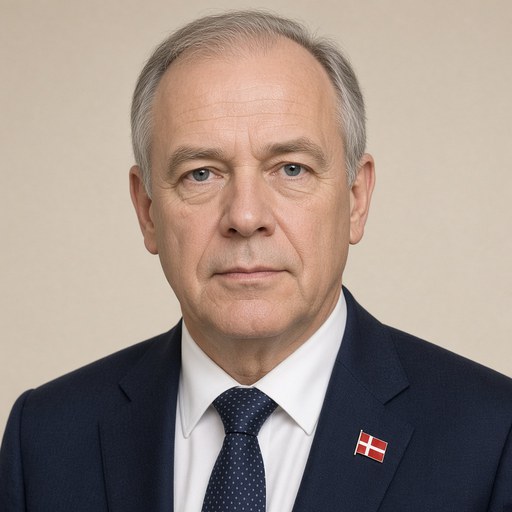
Prime Minister Poul Nyrup Rasmussen's speech at Tom's Fabrikker, Wednesday, August 30, 2000
 Poul Nyrup Rasmussen · Prime Minister of Denmark
- Context
- Rasmussen addressed workers at Tom's Fabrikker factory on August 30, 2000, campaigning for a 'Yes' vote in Denmark's September 28 euro referendum.
- Main themes
- Euro adoption referendum, Danish crown currency vulnerability, financial speculation, employment and economic security, currency union benefits, working class interests, business competitiveness, exchange rate costs
- Duration
- ~20 min
- Words
- 2,374
- Sentences
- 115
- Readability
- 66
- Grade
- 9.1
- Syntax
- 3.02
- Vocabulary
- 1.90
Translated from Danish
The broad sphere of national life a sentence belongs to. Every sentence has an Arena, so it is the denominator the other indices are read against.
Other115 sentences in 21 paragraphs
I would like to start by talking about this 20-kroner coin with the queen on the front, which has served us well over many years as the Danish currency. It has also sometimes been in quite serious difficulties. Did you know that just 2 years ago, this Danish crown was in trouble? There were international financiers who thought they could make money by speculating that this crown would lose value. Just 2 years ago, Denmark's National Bank had to use – hold on to your hats – 40 billion kroner to protect and safeguard the Danish crown; otherwise, it would have collapsed.
You must remember one thing – pressure on the Danish crown is pressure on Danish society. 40 billion kroner, what is that? Yes, it is roughly equivalent to our total annual expenses for our hospitals in Denmark. Now, most of the money came back to us this time, but it has not always returned to us. When the crown came under pressure in 1993, we had to raise interest rates significantly, and again in 1986, when the 'potato cure' hit us in Denmark. One thing is the content, which we disagreed with regarding the then government, but one thing I will say to you: Every time there has been a major economic crisis intervention in Denmark, a large part of the reason is that we must protect our currency, the crown, because we know that protecting it also protects society.
Dear everyone – in 1998, in 1993, in 1986, in 1982, and in the 70s, we have seen that pressure on the crown ultimately leads to unemployment and crisis. I start by saying this because it is what, for me, is central – also regarding the referendum we will have on September 28. It gives us a unique opportunity to switch to the Danish euro, which also has the queen's portrait on the Danish coins. If we do this, we no longer need to look over our shoulders to see if there are international financiers who want to make money off the Danish crown. By joining with the others, we can once and for all draw an insurance together with the others that means that the currency, the Danish euro, we choose, can no longer be toppled. And when that can no longer happen, we also no longer need to fear financial crises and interventions.
I have seen my father and my mother become unemployed, and all my classmates' parents were also affected by unemployment in the 50s. Since I was a kid, I have told myself that if there is something you can do in your society, Denmark, to ensure that as many people as possible get jobs and that as few crises as possible hit us, then that is what you should do. Because I know – just as you do – who has to bear the burden when there are crises in our country. It is not people in business class, it is not people who can speak all the fine languages, it is not people who travel abroad, and what do I know.... It is you! It is ordinary workers and employees in Denmark who first and foremost feel the impact when there is a crisis in Denmark.
That is why I say that a fantastic opportunity is emerging for Denmark. By saying Yes, we have the opportunity to protect ourselves from being run over by financial speculators. That is my first reason for recommending a Yes on September 28. And I am not talking about small change, I am not talking about 1 – 2 jobs, I am talking about many jobs. When we had the oil crisis years in the 70s, I saw hundreds of thousands of Danish workers lose their jobs. Now we have an opportunity to secure a safe future together with the others, a future we have not had before. Denmark is too small for us to allow ourselves to isolate ourselves. We are too small in an international world to withstand the brutal market economy if it descends upon us and thinks it can make money off us. Some have said to me: 'But, Poul Nyrup, this is just the elite's project on September 28.' And I say: It is not the elite's project – it is the people's project!
Some say to me: 'But it is more popular to say No,' but I say that there is not much popular support in saying No, because it means that the Danish crowns will continue to be vulnerable to a few making money by speculating against the crown to the detriment of the many. That is not popular at all.
I have one more reason that I would like to mention to you. This good workplace is deeply dependent on its surroundings. This workplace – and far, far most Danish workplaces – will have a significant advantage from having a currency union, where you can save on exchange costs as a business, and you are guaranteed full and equal access to your market. Where you do not have to be held back compared to others because you have to go through exchange mechanisms. Where you can compete on completely equal terms, and where you compete with the skilled workforce you have. Therefore, it is no coincidence that over 80% of all trade and service business leaders, many, many business leaders – yes, the vast majority of business leaders – recommend a Yes! I believe it is a given that a Yes will be best for Danish jobs and best for Danish companies. And if it is best for Danish companies and best for Danish jobs, then it is also best for Denmark's welfare society, because we must get the money from our companies through taxation to afford our welfare.
My third argument is that we have had good progress in Denmark for 7 years – since 1993. Before we got started in Denmark again in 1993, there was uncertainty. There were 360,000 unemployed in Denmark in 1993. Now there are 150,000 unemployed. We have more than halved unemployment in Denmark – far more. We do not need new uncertainty; we need a Yes that can ensure us the calm and stability necessary for us to continue the development line that we so desperately need.
Then there is something else that you should also be aware of. I know that many of you are thinking about whether a small country like Denmark can manage in relation to the large countries. Are we not going to drown – are we not going to be swallowed up as a small country? What about our welfare? And here I must say to you: Think about how it has gone in the 28 years we have been members. It has gone well. We have not been swallowed up. We have further developed our welfare. We have not been held down. If we did not have a cooperation where there were some rules that both large and small countries had to follow, it would be solely the large ones that decided. I can promise you that. It actually means that Germany, which otherwise completely determined interest rates in Europe and in Denmark, now has to accept that we all decide together – if we want to. Denmark has always benefited from being in good trade and good cooperation with others to protect our welfare and to create the stability and security that is necessary.
How will this work in practice? Yes, we have made a little brochure together with Lise Nørgaard, which I think explains quite well how this will work in practice. Let me try to briefly explain what happens.
If we vote Yes on September 28, what will happen is that Denmark's National Bank will start producing the Danish euro. If we vote Yes, it will also in the future be Denmark's National Bank that produces our money – and that also applies to the banknotes. The difference will just be that the new Danish euro has the same value throughout Europe. This means that when we travel abroad, you just take the Danish euro with you. It has exactly the same value everywhere. This Danish euro will be introduced on January 1, 2004 – so there will be almost 4 years to adapt, where we will have plenty of time to make everything work. What about my salary, my plastic cards, my pension, etc.? What happens here? Yes, what happens is that your salary in kroner will be converted to Danish euros. It will be a smaller number that will appear on the line, but the purchasing power – what I can buy for my salary – will be exactly the same because prices will also be converted by legislation and in agreements. There will, just as you see it in Finland, be a period where there is double price labeling.
The state pension. I have seen that some claim that if we say Yes, it will affect the state pension in Denmark. I must say to you: That is pure scare campaign! The Danish state pension is one that we alone decide in Denmark and no one else. What we voted on in 1993 is an agreement that we all signed, which states:
Each individual country in this cooperation determines its own social policy and its own pension policy.
Therefore, it will not be negative for our pension – it will be an absolute advantage for our pension to vote Yes on September 28, because it gives businesses the basis for us to make money, for us to have our jobs, our salaries, pay our taxes, and thus take care of our elderly and pay them a decent pension.
What about my bank loans and my savings and my mortgage? Yes, if a family has a mortgage, for example, a 30-year loan with the mortgage credit, there will be no extra costs. It is not the case that you will have to pay stamp duty again or exchange fees; you will not incur any extra costs during the transition – society will take care of that – businesses will take care of that.
Salaries, pensions, your plastic cards, your savings, your bank loans – all of this will, in other words, automatically transition to the new currency, so that as of January 1, 2004, we can go to the grocery store, pay with the Danish euro, buy goods at Danish euro prices with the same purchasing power that we know today.
Sometimes, when I visit factories around Denmark, someone asks: 'It’s not me, it’s my neighbor, but if my neighbor doesn’t manage to exchange all the money and finds some under the mattress 6-8 years later or under the pillow, what then?'. And my answer is: You can exchange all the money you have lying around for the next 30 years. So if you do not manage it before 2004, you go to your bank, and the bank will exchange it through the National Bank for Danish euros. You could sometimes see that someone wiped the sweat from their brow and said OK! This is not a currency exchange; it is actually a transition to a common currency that we need to ensure our welfare is stronger in the future than before.
In conclusion, I want to say to you: I have experienced so many currency crises and pressure situations in Denmark, and I have, since I was a kid from Esbjerg, seen who is affected in crises in our country or stagnation. Therefore, when we now have the chance in a period where things are going well for us, to secure Denmark's continued progress even better, and when I know how important it is for people here in the country to get jobs, I recommend a YES based on everything I stand for. I hope you all will reflect deeply on this – for our jobs, for our economy, and for our security and our influence.
I almost said, if the management here at the factory makes decisions about all matters concerning the employees, I have a feeling that Søren would go up and say, 'Tell me, don’t you think you should discuss things with me as well?'. And in the same way, it is also with European cooperation. I do not like being outside. I do not think it is a good idea for others to make decisions about monetary policy that we then just have to passively adapt to. It happens today that every time they decide to raise interest rates, it takes about 35 minutes before the Danish National Bank raises interest rates. And I am not very keen on that continuing. I think that since it is like this, we should be involved in making decisions where the decisions are made. That is how I feel – and that is how I think we all feel. And remember that 50 years ago, we decided everything ourselves, and we are best off with that – it is also a shame that we do not decide everything ourselves, but we do not anymore!
I truly feel that the Danish People's Party, the Socialist People's Party, the Red-Green Alliance, and the June Movement are doing the Danish people a disservice if they try to give the impression to the Danes that little Denmark is best off by being outside, isolated, and that we can decide everything ourselves. Little Denmark can no longer do that. We could do that 50 years ago, but capital has become internationalized and can, in a short time, affect us very, very strongly. Therefore, we need unity; therefore, we need cooperation. It is just like with yellow trade unions. I know them well. They are the ones who think they do not need to sign a collective agreement – they can just get the same rights as everyone else. That is how it is to stand outside an association and think you can get all the benefits without also providing some cooperation. It is about community. It is about giving us all the best chances. Therefore, I will recommend a Yes on September 28.
Thank you all very much!
The original Danish. The tags above are read on the English translation's sentences.
Jeg vil gerne starte med at tale om denne 20-krone med dronningen på forsiden, der har tjent os godt igennem mange år som den danske mønt. Den har også nogle gange været i temmelig store vanskeligheder. Vidste I, at for bare 2 år siden var denne danske krone i vanskeligheder? Der var internationale finansmænd, som troede, at de kunne tjene penge på at spekulere i, at denne krone ville tabe i værdi. For blot 2 år siden måtte Danmarks Nationalbank bruge – hold jer nu fast - 40 mia. kroner for at passe på og værne om den danske krone, ellers var den væltet.
I skal huske én ting – et pres på den danske krone, det er et pres på det danske samfund. 40 mia. kroner hvad er det? Ja, det svarer nogenlunde til vores samlede udgifter til vores hospitaler om året i Danmark. Nu kom hovedparten af pengene tilbage til os denne gang, men de er altså ikke altid kommet tilbage til os. Da kronen kom under pres i 1993, måtte vi hæve renten meget, og igen i 1986, da 'kartoffelkuren' ramte os i Danmark. Én ting er indholdet, som vi var uenige i i forhold til den daværende regering, men én ting vil jeg sige til jer: Hver gang der har været et omfattende økonomisk kriseindgreb i Danmark, så er en stor del af årsagen, at vi skal værne om vores valuta, om kronen, fordi vi ved at værne om den også værner om samfundet.
Kære alle sammen – i 1998, i 1993 i 1986, i 1982 og i 70’erne har vi set, at et pres på kronen i sidste ende indebærer arbejdsløshed og krise. Jeg starter med at sige det, fordi det er dét, der for mig er det centrale – også ved den folkeafstemning vi skal have den 28. september. Den giver os en enestående mulighed for at gå over til den danske euro, som også har dronningens portræt på de danske mønter. Hvis vi gør det, behøver vi ikke længere at se os tilbage over skulderen, om der er internationale finansfolk, der vil tjene penge på den danske krone. Ved at gå sammen med de andre, kan vi én gang for alle tegne en forsikring sammen med de andre, der betyder, at den mønt, den danske euro, vi vælger, ikke længere kan væltes. Og når det ikke længere kan ske, behøver vi heller ikke længere at frygte finanskriser og indgreb.
Jeg har set min far og min mor blive arbejdsløse, og alle mine klassekammeraters forældre blev også ramt af arbejdsløshed i 50’erne. Siden jeg var knægt, har jeg sagt til mig selv, at hvis der er noget, du kan gøre i dit samfund, Danmark, for at sikre, at flest mulige mennesker kommer i arbejde og at færrest mulige kriser rammer os, så er det dét, du skal gøre. For jeg ved – ligesom I gør - hvem der skal bære tingene, når der er kriser i vores land. Det er jo ikke folk på business class, det er jo ikke folk, der kan alle de fine sprog, det er jo ikke folk, der rejser til udlandet, og hvad ved jeg.... Det er jer! Det er ganske almindelige arbejdere og funktionærer i Danmark, der først og fremmest får det at mærke, når der er krise i Danmark.
Derfor er det, at jeg siger, at der tegner sig en fantastisk chance for Danmark. Ved at sige Ja har vi mulighed for at sikre os mod at blive rendt over ende af finansspekulanter. Det er min første begrundelse for at anbefale et Ja den 28. september. Og jeg taler ikke om småpenge, jeg taler ikke om 1 – 2 arbejdspladser, jeg taler om mange arbejdspladser. Da vi havde oliekriseårene i 70’erne, så jeg jo hundrede-tusindvis af danske arbejdere miste deres job. Nu har vi en mulighed for sammen med de andre at sikre os en tryg fremtid, som vi ikke har haft før. Danmark er for lille til, at vi kan tillade os at isolere os. Vi er for små i en international verden til at modstå den brutale markedsøkonomi, hvis den kaster sig over os og tror, den kan tjene penge på os. Nogle har sagt til mig: 'Jamen, Poul Nyrup, det er jo bare elitens projekt, det her den 28. september'. Og jeg siger: Det er ikke elitens projekt – det er folkets projekt!
Nogle siger til mig: 'Jamen, det er mest folkeligt at sige Nej', men jeg siger, at der ikke er meget folkelighed i at sige Nej, for det betyder, at de danske kroner fortsat vil være sårbare for, at nogle få kan tjene penge på at spekulere mod kronen til skade for de mange. Det er ikke spor folkeligt.
Jeg har én grund til, som jeg gerne vil nævne for jer. Denne gode arbejdsplads er dybt afhængig af sin omverden. Denne arbejdsplads - og langt, langt de fleste danske arbejdspladser - vil have en betydelig fordel af at få et valutafællesskab, hvor man kan spare vekselomkostninger som virksomhed, og man er sikret fuld og lige adgang til sit marked. Hvor man ikke behøver at blive holdt tilbage i forhold til de andre, fordi man skal igennem vekselmekanismerne. Hvor man kan konkurrere på fuldstændig lige fod, og hvor man konkurrerer med den dygtige arbejdskraft, man har. Derfor er det jo ikke nogen tilfældighed, at over 80% af alt, hvad der hedder handel- og servicevirksomhedsledere, mange, mange erhvervsledere – ja, langt de fleste erhvervsledere - anbefaler et Ja! Jeg tror, det er en given ting, at et Ja vil være bedst for danske arbejdspladser og bedst for danske virksomheder. Og hvis det er bedst for danske virksomheder og bedst for danske arbejdspladser, så er det også bedst for Danmarks velfærdssamfund, for vi skal nu engang have pengene fra vores virksomheder gennem beskatning, for at have råd til vores velfærd.
Mit 3. argument er, at vi igennem 7 år – siden 1993 – har haft en god fremgang i Danmark. Før vi kom i gang i Danmark igen i 1993, var der usikkerhed. Der var 360.000 arbejdsløse i Danmark i 1993. Nu er der 150.000 arbejdsløse. Vi har mere end fået halveret arbejdsløsheden i Danmark – langt mere. Vi har ikke brug for ny usikkerhed, vi har brug for at få et Ja, som kan sikre os den ro og stabilitet, der skal til, for at vi kan fortsætte den udviklingslinie, vi har så hårdt brug for.
Så er der noget andet, som I også skal være klar over. Jeg ved, at mange af jer tænker på, om et lille land som Danmark nu kan klare sig i forhold til de store lande. Drukner vi ikke – bliver vi ikke opslugt som lille land? Hvad med vores velfærd? Og her må jeg sige til jer: Tænk på, hvordan det er gået de 28 år, vi har været medlem. Det er gået godt. Vi er ikke blevet opslugt. Vi har videreudviklet vores velfærd. Vi er ikke blevet holdt nede. Hvis vi ikke havde et samarbejde, hvor der var nogle regler, som både de store og små lande skulle følge, var det alene de store der bestemte. Det kan jeg godt love jer. Det betyder i virkeligheden, at Tyskland, som ellers helt bestemte renten i Europa og i Danmark, nu må indstille sig på, at det bestemmer vi alle sammen i fællesskab - hvis vi vil det. Danmark har altid tjent på at befinde sig i en god samhandel og et godt samarbejde med de andre for at beskytte vores velfærd, og for at skabe den stabilitet og den tryghed, der skal til.
Hvordan kommer det så til at fungere i praksis? Ja, vi har lavet sådan en lille pjece sammen med Lise Nørgaard, som jeg synes ganske godt forklarer, hvordan dette kommer til at fungere i praksis. Lad mig prøve at fortælle ganske kort, hvad der sker.
Hvis vi stemmer Ja den 28. september, sker der det, at Danmarks Nationalbank går i gang med at producere den danske euro. Hvis vi stemmer Ja, vil det også i fremtiden være Danmarks Nationalbank, der producerer vores penge – og det gælder også sedlerne. Forskellen vil bare være, at den nye danske euro har samme værdi i hele Europa. Det betyder, at når vi rejser til udlandet, så tager I bare den danske euro med. Den har præcis samme værdi over det hele. Denne danske euro vil blive indført den 1. januar 2004 – der bliver altså små 4 år at tilpasse os i, hvor vi får god tid til at få alt sammen til at fungere. Hvad så med min løn, mine plastikkort, min pension, osv.? Hvad sker der her? Ja, det, der sker, er, at ens løn fra kroner bliver omregnet til danske euro. Det bliver et mindre tal, der kommer til at stå på linien, men købekraften – det, jeg kan købe for min løn - bliver nøjagtig den samme, fordi priserne også bliver omregnet ved lovgivning og i aftaler. Der vil, ligesom I ser det i Finland f.eks., blive en periode, hvor der er dobbelt prismærkning.
Folkepensionen. Jeg har set, at nogle påstår, at hvis vi siger Ja, vil det gå ud over folkepensionen i Danmark. Jeg må sige til jer: Det er ren skræmmekampagne! Den danske folkepension er en, kun vi bestemmer i Danmark og ingen andre. Det, vi stemte om 1993, er en aftale, vi alle har skrevet under på, og hvori der står:
Hvert enkelt land i dette samarbejde bestemmer selv sin socialpolitik og sin pensionspolitik.
Derfor vil det ikke være negativt for vores pension – det vil være en absolut fordel for vores pension at stemme Ja den 28. september, for det giver virksomhederne grundlag for, at vi kan tjene penge, at vi kan have vores arbejde, vores løn, betale vores skat og dermed tage os af vores ældre mennesker og udbetale dem en ordentlig pension.
Hvad så med mine banklån og min opsparing og mit huslån? Ja, hvis en familie har et huslån på f.eks. et 30-årigt lån ved realkreditten, sker der ingen ekstra omkostninger. Det er ikke sådan, at man skal til at betale stempelafgift igen eller vekselgebyrer, man vil ikke komme til at få én ekstra krones udgift ved overgangen - det tager samfundet sig af – det tager virksomhederne sig af.
Løn, pension, ens plastikkort, ens opsparing, ens banklån – alt det vil, med andre ord, automatisk gå over til den nye mønt, således at vi pr. 1. januar 2004 kan gå i Brugsen, betale med den danske euro, købe varerne i danske europriser med samme købekraft, som vi kender i dag.
Sommetider, når jeg er på besøg rundt om på Danmarks fabrikker, er der én, der spørger: 'Det er ikke mig, det er min nabo, men hvis nu min nabo ikke når at få vekslet alle pengene og finder nogle i madrassen 6-8 år senere eller under hovedpuden, hvad så?'. Og der er mit svar: Man kan få vekslet alle de penge, man har liggende, de næste 30 år frem i tiden. Så hvis man ikke når det inden 2004, går man til sin bank og banken veksler så via Nationalbanken til danske euro. Man mærkede sommetider, at der var én, der tørrede sveden af panden og sagde OK! Det er altså ikke en pengeombytning, det er i virkeligheden en overgang til en fælles valuta, vi har brug for, for at sikre vores velfærd stærkere i fremtiden end før.
Til slut vil jeg sige til jer: Jeg har oplevet så mange valutakriser og pressituationer i Danmark, og jeg har, siden jeg var knægt fra Esbjerg, set, hvem det går ud over i kriser i vores land eller stagnation. Derfor, når vi nu har chancen i en periode, hvor det går os godt, for at sikre Danmarks fortsatte fremgang endnu bedre, og når jeg ved, hvor vigtigt, det er for mennesker her i landet at få arbejde, så anbefaler jeg et JA ud fra alt det, jeg står for. Jeg håber, I alle sammen vil fundere meget over det - for vores arbejdspladser, for vores økonomi og for vores tryghed og for vores indflydelse.
Jeg havde nær sagt, hvis direktionen her på fabrikken træffer beslutning om alle forhold vedrørende medarbejderne, så har jeg en fornemmelse af, at Søren vil gå op og sige, 'Sig mig engang, synes I ikke, I skulle tage at drøfte tingene også med mig'. Og på samme måde er det også med det europæiske samarbejde. Jeg bryder mig ikke om at være udenfor. Jeg synes ikke, det er en god idé, at de andre sidder og træffer beslutninger om pengepolitik, som vi så bare passivt skal indrette os efter. Det sker jo i dag, at hver gang de har besluttet at sætte renten op, så går der ca. 35 minutter, før den danske Nationalbank sætter renten op. Og jeg er altså ikke meget for, at det bliver ved. Jeg synes, at når det nu er sådan, så skal vi da være med til at beslutte dér, hvor beslutningerne bliver truffet. Sådan har jeg det - og sådan tror jeg, vi har det alle sammen. Og husk, at for 50 år siden, da bestemte vi alting selv og det har vi det jo bedst med - det er også pokkers, at vi ikke bestemmer alting selv, men det gør vi altså ikke mere!
Jeg føler virkelig, at Dansk Folkeparti, SF, Enhedslisten og Junibevægelsen gør den danske befolkning en dårlig tjeneste, hvis de prøver at give det indtryk til danskerne, at lille Danmark klarer sig bedst ved at være udenfor, isoleret, og at vi kan bestemme det hele selv. Det kan lille Danmark ikke længere. Det kunne vi for 50 år siden, men kapitalen er blevet internationaliseret og kan på kort tid sådan påvirke os meget, meget stærkt. Derfor har vi brug for sammenhold, derfor har vi brug for samarbejde. Det er lige som med gule fagforeninger. Jeg kender dem jo godt. Det er dem, der tror, at de behøver ikke at tegne en overenskomst - de kan bare få de samme rettigheder som alle andre. Sådan er det at stå uden for en forening og tro, man kan få alle fordelene uden samtidig at levere noget samarbejde. Det handler om fællesskab. Det handler om at give os alle sammen de bedste chancer. Derfor vil jeg anbefale et Ja den 28. september.
Tak skal I have alle sammen!