




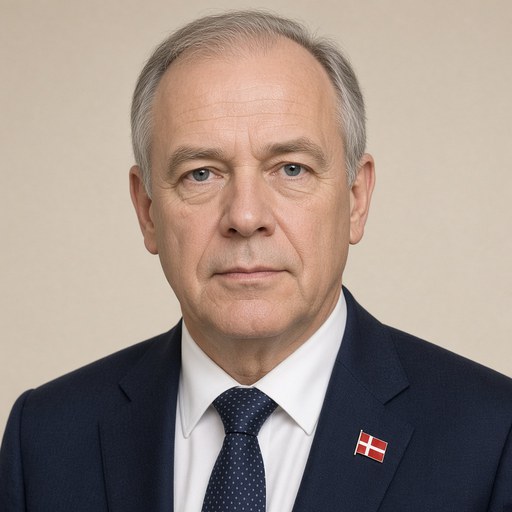
Prime Minister Poul Nyrup Rasmussen's response in the Folketing to inquiry F34 regarding the Faroe Islands banking case.
 Poul Nyrup Rasmussen · Prime Minister of Denmark
- Context
- Rasmussen addressed the Folketing on January 27, 1998, responding to an inquiry about the investigation commission's findings on Denmark's intervention in the 1990s Faroese banking crisis.
- Main themes
- Faroese banking crisis investigation, investigation commission findings, political accountability, Denmark-Faroe Islands relations, accusations and political discourse, government response to economic crisis, Faroese economic mismanagement, Danish financial intervention, political irrationality, parliamentary inquiry
- Duration
- ~29 min
- Words
- 3,520
- Sentences
- 204
- Readability
- 39
- Grade
- 10.9
- Syntax
- 2.72
- Vocabulary
- 2.20
Translated from Danish
The broad sphere of national life a sentence belongs to. Every sentence has an Arena, so it is the denominator the other indices are read against.
Other204 sentences in 117 paragraphs
After nearly three years of work, the investigation commission on the Faroese banking case has now presented its findings. A comprehensive report in five volumes and over 2,260 pages.
The entire purpose of initiating the investigation was to obtain an objective description of the overall sequence of events during those years - from 1992 onwards - when Denmark helped the Faroe Islands out of the economic crisis and saved the two banks from financial collapse.
We have now received such an objective description. The investigation commission has done its work thoroughly. 'Every stone has been turned.' Just as we all wished. The commission has fulfilled its task.
* * *
Now we must take a political stand. Therefore, we must, from a political standpoint, of course, base our position on this objective description and respond politically to it.
I will do that. The government and the governing parties will do that. And I will also simultaneously urge all other parties to do the same!
The political situation
When such a call is made, it is connected to my experience in recent weeks of how the political reasonableness and sensible political dialogue that normally characterize political work have been pushed aside. Replaced by political irrationality and unreasonable political dialogue.
It is sad - it is doubly sad.
When we look at the objective content of the extensive commission work and the conclusions of the investigation commission, the political conclusions are just as clear. I must first and foremost state that the many accusations directed at the government while the commission was working - accusations of conspiracies and secret alliances - did not have any basis in reality!
Nevertheless, we have experienced in recent weeks - also in the days following the publication of the investigation commission's report - that certain political parties - especially one particular party - have attempted to engage in suspicion and personal persecution against the government and some of its members.
We have seen claims of conspiracies, secret alliances, and malicious intent, and diabolical ministers who only wished harm for the Faroese people.
Unfortunately, certain parties - or rather one specific party - have, as I have experienced it, consciously chosen to ignore the objective reality as it is illuminated in the Faroebank report. Instead, they have attempted to interpret the text entirely differently to fit another kind of reality - because the commission's work evidently does not fit into that party's tactics.
If we are to address the Faroebank case realistically and seriously today, it must not be done on such a distorted basis, but precisely on the objective basis that is available today in the form of the thorough commission investigation.
* * *
When this government took over in 1993, it did not only take over the leadership of a Denmark with significant economic problems and high unemployment - the government also took on a task in relation to the Faroese society, which was in a deep crisis.
In Denmark, we had to start correcting things to establish a foundation for the progress that today characterizes Danish society.
* * *
In relation to the Faroese crisis, there must be no doubt in Denmark or the Faroe Islands about who bore the main responsibility for the economic development in the Faroe Islands.
The economic crisis in the Faroe Islands was not imposed on the Faroese from the outside. A large number of reports from expert committees already pointed out in the 1980s a series of mistakes, massive overconsumption through the economic policy in the Faroe Islands, and an excessively high level of debt. Year after year, the warnings became increasingly stronger - in the reports. But unfortunately only there. I can today regret that there was not already then a greater emphasis from the official Danish side - and also much earlier in the 80s from the Danish government - on the deeply serious development in the Faroe Islands.
Had that happened, much would likely have been easier to handle later.
Only when the economic crisis hit the banking sector - only when the first bank, according to the Financial Supervisory Authority, faced bankruptcy in October 1992, did the then Danish government react - after a request from the Faroese government.
A government that in October 1992 had only limited opportunities to prepare for negotiations with the government regarding the acute crisis. Because the then government only informed the Faroese government at a late stage. This is evident from the conclusions of the investigation commission.
[Page 458]
The crisis was at that time under strong development. Production in the Faroe Islands had already fallen drastically - without any initiatives being taken from the Danish side to help the Faroese out of their problems.
* * *
When the current government leadership took over the problems at the end of January 1993, the economic development in the Faroe Islands was on the verge of total collapse. In reality, it was the most extensive economic crisis any Western society has experienced in recent times. The situation in the Faroe Islands was alarming:
direct decline in production and income,
constantly rising unemployment to catastrophic levels,
the foreign debt had increased throughout the 1980s and now reached 8 billion DKK.
At the same time, we began to collaborate with a government that was poorly prepared to handle such a crisis, and which until the turn of 1992-93 would not acknowledge that there could be significant losses in the banks.
The then government in October 1992, in collaboration with the Faroese government, established the Financing Fund of 1992. This initiative was supported by a broad majority in the Folketing and laid the groundwork for later solutions. With the agreement of October 6, 1992, on the first bank reconstruction, the solution model was practically also established for the subsequent bank rescues of Sjóvinnubankin and - in October 1993 - of Føroya Banki.
* * *
This did not prevent the next banking crisis from breaking out almost simultaneously with the change of government on January 25, 1993.
Despite the time pressure that the newly appointed government was under, the agreement of February 1, 1993, between the government and the Faroese government became a turning point in the effort to halt the crisis and reverse the development.
From the outset in the new government, we realized that a wide range of business policy initiatives, new caution in fishing, and savings in economic policy were necessary. To prevent new crises in the banking sector, a long-term effort was required. - For the crisis did not arise as a result of the banking case. The opposite was true!
Our agreement of February 11, 1993, was forward-looking. It was interventions that the newly appointed Prime Minister supported. It was interventions that worked.
I am today in no doubt that the agreement of February 1 was crucial for the Faroe Islands to get back on the right track. Politically, the newly appointed Prime Minister later paid a high price for his courageous and forward-looking decision to participate in the new agreement. Historically, we must acknowledge that the interventions and the tough conditions in economic policy worked. I am in no doubt that this is a key reason why the Faroe Islands today - after just a few years - are on their way out of the economic crisis, provided the course is maintained.
The agreement of February 1, 1993, had indeed broader perspectives. The agreement included, among other things, quite strong demands for savings in the national budget in accordance with the IMF's guidelines, a halt to capital investments, and new strict initiatives to ensure a future sustainable fishery - after the massive overfishing in the 80s, which was an independent contributing cause of the crisis.
* * *
The economic lending that the Danish state provided to the Faroe Islands in 1993 solved the very serious, acute problems in the Faroese economy. The medicine worked. And the demands we made created a better foundation for the development of the Faroese economy in the long term.
Firstly,
our efforts contributed to maintaining the Faroese banking system. The alternative would have created unmanageable consequences for the Faroese population. We avoided a collapse of the economy. We all agreed that that was the outlook if just one of the banks went down. All responsible parties also agreed on this in the Folketing!
Secondly,
the support enabled the Faroese government to repay its loans to foreign creditors in a planned manner.
Without a solution to these two problems, the consequences of the economic crisis would have been even more severe - also for the individual Faroese.
* * *
The overall picture is that the interventions worked. It was right that we from the Danish side placed decisive emphasis on ensuring that our efforts were based on help-to-self-help for the Faroe Islands. The main effort, which was based on a new, arduous effort from the Faroese people - and extensive economic lending from Denmark - combined with a number of conditions - worked. It still does - if the course in the Faroe Islands is indeed maintained.
* * *
It surprises me that this effort from the Danish state, and this economic injection from the Danish population - which itself was in a difficult situation - has seemingly been forgotten in this entire process. Have the Faroese and certain Danish opposition politicians really forgotten it??
We have not forgotten it. That this effort may have been forgotten is connected to another of the investigation commission's conclusions, namely the one stating that something went wrong in connection with the so-called share swap.
On March 10, 1993, a proposal for a share swap between the Financing Fund and Den Danske Bank was placed on the government's table - incidentally just after the Faroese government had been presented with the proposal. But before this proposal was presented, the very terms of the transaction had already been established between the two parties, the Financing Fund of 1992 and Den Danske Bank - with assistance from the Financial Supervisory Authority.
In this context, it is important to distinguish between technique and politics.
Technically,
both the government and the Faroese government had to assume that Den Danske Bank, the Financing Fund, and the Financial Supervisory Authority had reached a reasonable and fair exchange ratio between the shares. And when, moreover, the parties involved gave the impression that it was commercially acceptable, what basis did the government have to doubt this?
What the government had to consider was whether it was politically a good idea. - We in the government agreed on a yes! It was because the share swap was part of the effort to get the Faroese business community back on its feet. Through the coordination of the two banks' business practices, conditions were created for a coordinated banking effort that could contribute to the much-needed structural adjustment of the Faroese business community, especially in the fishing industry.
I would like to say in connection with the work of the Financing Fund in general that I do not find that the criticism raised by the investigation commission against the then chairman touches upon the Financing Fund itself as a construction.
* * *
It is evident, when looking back, that the communication between the government and the Faroese government has not been satisfactory. We have become a bit wiser when we look back at the process. The consequence of this has been that the Faroese government has had limited time to consider the various proposals, ask questions, and assess the answers. However, the process must also be evaluated in light of the difficulties associated with discussing a bank's problems with liquidity, solidity, and ownership outside of a very narrow circle, as is also mentioned in the report.
That said, the government is ready to acknowledge and take responsibility for the fact that the communication was not good enough - that can rightly be criticized now.
* * *
The government acknowledges its responsibility
It is a united government that acknowledges its overall political responsibility for the handling of the Faroese crisis in 1993.
It is important to emphasize that the decision-making basis was the same for the Danish government and the Faroese government.
In a situation of extremely high unemployment and budget deficits in Denmark, we wanted just as little as our predecessors in government to place burdens from the Faroese crisis on Danish taxpayers. That is still the Danish government's position.
Therefore, our assistance to the Faroe Islands had to be based on help-to-self-help.
Therefore, in the spring of 1993, there was massive support here in Christiansborg for a solution where Denmark's role was to provide loans that would enable the Faroe Islands to solve the crisis themselves.
It was not the Danish population that had spent the money. Our viewpoint was and is the simple one that it was money that had been spent and lost in the Faroe Islands!
* * *
But increasingly grim reports kept coming in.
We had - we thought - reason to fear that the crisis awareness had not developed enough in the Faroe Islands.
But it must also be strongly emphasized that no one could naturally know how deep the crisis would become. No one knew where it would end. No one promised anyone a specific limit to the size of the disaster.
Everything we did in the government, even after the share swap was agreed upon, had one single purpose: To keep the Faroese banking system alive, not to contribute to unrest and further, self-reinforcing crisis sentiment.
In some places, it has been portrayed as if the government had better knowledge than the Faroese government about how deep the crisis would become.
The facts are that the entire process leading up to the autumn of 1993 is the story of one long crisis worsening:
More unemployed, more business closures, capital flight from the banks, emigration, total stagnation in the real estate market.
As anyone can hear and, not least, resolve in the report, there has been absolutely no basis for the accusations we have heard from certain politicians here in the parliament and in the Faroe Islands. Accusations of conspiracies, secret alliances, ill will, and diabolical ministers. The report thoroughly punctures these myths. It is also the goodwill that has characterized the Danish state and government's efforts in this matter, just as it is the goodwill that has characterized the actions of my ministers.
That said, it must also be stated that we must learn from the experiences we have had in this case. There are things that can be criticized in hindsight, certainly - and things that can be done better.
Compensation - legal responsibility
First point.
The government will take the initiative to start discussions with the government of the Faroe Islands as soon as possible after today's debate. Now we need to conclude this matter in a dignified manner and move forward in the development of the relationship between Denmark and the Faroe Islands.
It is evident from the report that neither the government of the Faroe Islands nor the Danish government was aware that the information underlying the share swap was not based on thorough investigations. The commission assumes that the Danish Bank's response was not representative of the actual situation that Føroya Banki found itself in.
According to the report, the chairman of the Financing Fund and the Financial Supervisory Authority share responsibility for not providing a comprehensive picture of Føroya Banki's situation.
* * *
In this context, the government will soon contact the government of the Faroe Islands to discuss the procedure for establishing appropriate compensation to the government, including the steps that should be taken regarding the Danish Bank.
* * *
The government has not yet concluded its considerations regarding the legal questions that the case raises.
I can inform you that the government has requested the Attorney General to assess the case for these considerations.
* * *
Now the Danish Bank has opened up for a discussion on the issue of compensation. That is, in itself, quite interesting.
* * *
The government acknowledges its responsibility. Therefore, we must now initiate negotiations with the government of the Faroe Islands regarding the repayment of the debt, which has already been anticipated.
As a result of the crisis in 1992-93 and as a remedy for its consequences, the government has provided state loans to the government of the Faroe Islands amounting to approximately 5.6 billion DKK. The loans have been granted according to agreements between the government and the government of the Faroe Islands, and the agreements have been approved by the Folketing and the Lagting. The most recent agreement was made on November 3, 1995.
This agreement includes, among other things, that the government and the government of the Faroe Islands will discuss the repayment of state loans during 1997.
These negotiations have not yet commenced, partly because we have been awaiting the report from the Investigation Commission. Now we have it, and now the negotiations must begin.
The Danish government is prepared to negotiate the overall debt settlement so that it occurs in a reasonable relation to the economic sustainability of the Faroe Islands.
Improvement of cooperation relations with the Faroe Islands
The second point is a strengthening of cooperation with the Faroese government and Lagting. The process was initiated during my recent visit to the Faroe Islands, where I agreed with the Løgmaður that we will improve contacts both politically and at the civil servant level. In this connection, the government will establish a working group chaired by the Permanent Secretary of the Prime Minister's Office, which will propose how the contact between us and the home rule governments can be improved.
In this context, I would like to point out that there is also a task for the Folketing. After my visit to the Faroe Islands, I have reached out to the Speaker of the Folketing, in which I encourage strengthening the contact between the parliaments as well.
Improvement of rules and administrative procedures
The third point I want to mention is the issue of improving procedures and rules.
It is absolutely crucial that the work being done at the civil servant level is precisely anchored at the political level. In this case, we must now acknowledge that the ordinary information and communication procedures that a newly appointed government might assume were in place subsequently turned out not to be in order. There has been insufficient information along the way. Such things must not happen. It is an experience that the government will take to heart. It will be corrected.
The government will also assess whether there is a basis for criticism of the civil servants' execution of their duties. Steps have been taken in this regard.
Regarding the Financing Fund of 1992, it was established by agreement between the government and the Faroese government. In the discussions that are now to take place, we will discuss with the Faroe Islands whether there is a need for clarification of the statutes of the Financing Fund and a clarification of the competencies and tasks for the fund.
The Minister of Finance will elaborate on the issue of measures concerning the Financial Supervisory Authority in his statement.
* * *
Conclusion
Let me conclude - as I started - with a few comments of a more general nature.
The report of the Investigation Commission is now on the table. The Investigation Commission has delivered a particularly solid piece of work. The task assigned to the commission has been accomplished. Last Wednesday, we had a very long and detailed meeting in the Folketing's Political-Economic Committee. And since then, 38 questions have been raised. The case must therefore be said to be well illuminated.
The government acknowledges its political responsibility - all the way through. I would like to emphasize this - along the way, I have asked the Minister of Finance to take on important negotiation tasks. He has done so - on behalf of the entire government!
Therefore, I must today distance myself from the suspicion and personal attacks on individuals in the government. It is completely unreasonable.
We collectively acknowledge the political responsibility. But we also maintain that the main purpose of our efforts - to bring the Faroe Islands out of the crisis - has been successful!
Therefore, it seems, to say the least, rather hectic when one of the parties in the Folketing now begins to talk about impeachment trials, independent legal investigations, and what have you.
I see the strategy well. The government is to be discredited and given as many scratches and dents as possible.
I think it is unwise. First and foremost for the sake of the realm community. It is fine to conduct active domestic politics. But it is not acceptable to involve anything in the domestic political game. And certainly not the realm community.
Now we must get started with the negotiations with the government of the Faroe Islands and, in this context, clarify the legal questions.
And then we must look ahead.
The original Danish. The tags above are read on the English translation's sentences.
Efter næsten 3 års arbejde har undersøgelseskommissionen om den færøske banksag nu fremlagt deres arbejde. En omfattende rapport på 5 bind og på mere end 2.260 sider.
Hele formålet med at sætte undersøgelsen i gang var, at få en
objektiv
beskrivelse af det samlede begivenhedsforløb i de år - fra 1992 og frem - hvor Danmark hjalp Færøerne ud af den økonomiske krise og reddede de to banker fra økonomisk sammenbrud.
Vi har nu fået en sådan objektiv beskrivelse. Undersøgelseskommissionen har gjort sit arbejde grundigt. 'Hver en sten er vendt'. Sådan som vi alle har ønsket det. Kommissionen har løst sin opgave.
* * *
Nu skal vi
politisk
tage stilling. Derfor skal vi fra politisk side selvfølgelig tage vort udgangspunkt i denne
objektive
beskrivelse og forholde os politisk dertil.
Det vil jeg gøre. Det vil regeringen og regeringspartierne gøre. Og jeg vil også samtidig opfordre alle andre partier til at gøre det samme!
Den politiske situation
Når der skal lyde sådan en opfordring hænger det jo sammen med, at jeg i de forgangne uger har oplevet, hvordan den politiske fornuft og fornuftige politiske dialog, der normalt kendetegner det politiske arbejde, er blevet skubbet til side. Erstattet af en politisk ufornuft og ufornuftig politisk dialog.
Det er trist - det er dobbelt trist.
Når vi ser på det objektive indhold af det omfattende kommissionsarbejde og undersøgelseskommissionens konklusioner, så er de politiske konklusioner ligeså klare. Så må jeg først og fremmest konstatere, at de mange beskyldninger, der blev rettet mod regeringen, mens kommissionen arbejdede - beskyldninger om komplotter og hemmelige alliancer -
ikke
havde nogen som helst bund i virkeligheden!
Alligevel har vi oplevet igennem de seneste uger - også i dagene efter undersøgelseskommissionens offentliggørelse - at ganske bestemte politiske partier - især et enkelt parti - har forsøgt sig med mistænkeliggørelse og personforfølgelse overfor regeringen og enkelte af dens medlemmer.
Vi har set påstande om komplotter, hemmelige alliancer og ond vilje og diabolske ministre, der kun har villet det onde for færingerne.
Desværre har bestemte partier - eller snarere et bestemt parti - helt bevidst, som jeg har oplevet det, valgt at se bort fra den objektive virkelighed, sådan som den foreligger belyst i Færøbank-rapporten. I stedet har man forsøgt at udlægge teksten helt anderledes til en anden slags virkelighed - fordi kommissionens arbejde åbenbart ikke passer ind i det pågældende partis taktik.
Skal vi i dag forholde os realistisk og seriøst til Færøbank-sagen, konsekvenserne heraf, må det ikke ske på et sådant forskruet grundlag, men netop på det objektive grundlag, som er tilgængeligt i dag i form af den grundige kommissionsundersøgelse.
* * *
Da denne regering tog over i 1993, overtog den ikke alene ledelsen af et Danmark med store økonomiske problemer og høj arbejdsløshed - regeringen overtog også en opgave i forhold til det færøske samfund, som var i en afgrundsdyb krise.
I Danmark måtte vi i gang med at rette op for få skaffet grundlag for den fremgang, der i dag kendetegner det danske samfund.
* * *
I forhold til den færøske krise, må der hverken i Danmark eller på Færøerne være tvivl om, hvem der havde hovedansvaret for den økonomiske udvikling på Færøerne.
Den økonomiske krise på Færøerne blev ikke påført færingerne udefra. Et stort antal rapporter fra sagkyndige udvalg pegede allerede i 1980’erne på en række fejl, massivt overforbrug gennem den økonomiske politik på Færøerne og en alt for stor gældsætning. År for år blev advarslerne stadigt stærkere - i rapporterne. Men desværre kun dér. Jeg kan i dag godt ærgre mig over, at der fra officiel dansk side ikke allerede dengang blev talt med større bogstaver - og heller ikke langt tidligere i 80’erne fra den danske regering blev gjort opmærksom på den dybt alvorlige udvikling på Færøerne.
Var det sket, havde meget formentlig været lettere at klare senere.
Først da den økonomiske krise ramte banksektoren, - først da den første bank ifølge Finanstilsynet stod over for en konkurs i oktober 1992, reagerede den daværende danske regering - efter henvendelse fra Færøernes landsstyre.
Et landsstyre, som i oktober 1992 kun havde haft ringe muligheder for at forberede sig på forhandlingerne med regeringen om den akutte krise. Fordi den daværende regering først orienterede landsstyret på et sent tidspunkt. Dette fremgår af Undersøgelseskommissionens konklusioner.
[Side 458]
Krisen var på det tidspunkt under kraftig udvikling. Produktionen på Færøerne var allerede faldet drastisk - uden at der var taget initiativer fra dansk side til at hjælpe færingerne ud af problemerne.
* * *
Da den nuværende regeringsledelse overtog problemerne i slutningen af januar 1993, var den økonomiske udvikling på Færøerne på vej ind i totalt kollaps. I virkeligheden den mest omfattende økonomiske krise, noget vestligt samfund har oplevet i nyere tid. Situationen på Færøerne var alarmerende:
direkte fald i produktion og indkomst,
konstant stigende arbejdsløshed til katastrofalt omfang
udlandsgælden var steget gennem 1980’erne og nåede nu 8 mia. kr.
Samtidig tog vi fat på at samarbejde med et landsstyre, som var dårligt forberedt på håndteringen af en sådan krise, og som helt frem til årsskiftet 1992-93 ikke ville erkende, at der kunne blive tale om betydelige tab i bankerne.
Den daværende regering i oktober 1992 gennemførte i samarbejde med landsstyret etableringen af Finansieringsfonden af 1992. Dette initiativ blev støttet af et bredt flertal i Folketinget og dannede spor for senere løsninger. Med aftalen af 6. oktober 1992 om den første bank-rekonstruktion blev løsningsmodellen i praksis også fastlagt for de efterfølgende bankredninger af Sjóvinnubankin og - i oktober 1993 - af Føroya Banki.
* * *
Det forhindrede ikke, at den næste bankkrise brød ud stort set samtidig med regeringsskiftet den 25. januar 1993.
Trods det tidspres, den netop tiltrådte regering blev sat under, blev aftalen af 1. februar 1993 mellem regeringen og landsstyret et vendepunkt i indsatsen for at bremse krisen og vende udviklingen.
Vi indså fra starten i den nye regering, at en bred vifte af bl.a. erhvervspolitiske initiativer, ny påpasselighed i fiskeriet og besparelser i den økonomiske politik var nødvendig. Skulle man forebygge nye kriser i banksektoren, krævede det en langsigtet indsats. - For krisen opstod jo netop ikke som følge af banksagen. Det forholdt sig omvendt!
Vor aftale af 11.februar 1993 var fremsynet. Det var indgreb, som den nytiltrådte lagmand lagde ryg til. Det var indgreb, som virkede.
Jeg er idag ikke i tvivl om, at netop aftalen fra 1. februar var afgørende for, at Færøerne igen kom ind på det rigtige spor. Politisk betalte den nytiltrådte lagmand senere en høj pris for sit modige og fremsynede beslutning om at deltage i den ny aftale. Historisk må vi konstatere, at indgrebene og de hårde betingelser i den økonomiske politik virkede. Jeg er ikke i tvivl om, at det er en afgørende hovedårsag til, at Færøerne i dag - efter ganske få år - er på vej ud af den økonomiske krise, hvis man fastholder kursen.
Aftalen af 1. februar 1993 havde nemlig bredere perspektiv. I aftalen indgik bl.a. ganske stærke krav om besparelser på landskassens budget i overensstemmelse med IMF’s anvisninger, stop for anlægsinvesteringer og nye skrappe initiativer for at sikre et fremtidigt bæredygtigt fiskeri - efter den massive overfiskning i 80’erne, der var en selvstændig, medvirkende årsag til krisen.
* * *
Den økonomiske långivning, som den danske stat ydede Færøerne i 1993, løste de meget alvorlige, akutte problemer i færøsk økonomi. Medicinen virkede. Og de krav, vi stillede, skabte et bedre grundlag for udviklingen af den færøske økonomi på længere sigt.
For det første
bidrog vor indsats til at opretholde det færøske banksystem. Alternativet ville have skabt uoverskuelige konsekvenser for den færøske befolkning. Vi undgik et sammenbrud i økonomien. Vi var alle enige om, at dét var udsigten, hvis blot én af bankerne gik ned. Det var alle ansvarlige partier også enige om her i Folketinget!
For det andet
muliggjorde støtten, at landsstyret kunne afdrage planmæssigt på sine lån hos de udenlandske kreditorer.
Uden en løsning på disse to problemer ville følgerne af den økonomiske krise have været endnu alvorligere - også for den enkelte færing.
* * *
Det samlede billede er, at indgrebene virkede. Det var rigtigt, at vi fra dansk side lagde afgørende vægt på, at vor indsats måtte bygge på hjælp-til-selvhjælp for Færøerne. Hovedindsatsen, der byggede på en ny, slidsom indsats fra den færøske befolkning - og dansk omfattende økonomisk långivning - kombineret med en række betingelser - virkede. Det gør det stadig - hvis kursen på Færøerne vel at mærke holdes.
* * *
Det kan undre mig, at denne indsats fra den danske stats side, og denne økonomiske indsprøjtning fra den danske befolknings side - der vel at mærke
selv
befandt sig i en svær situation - ligesom er blevet glemt i hele dette forløb. Har færingerne og visse danske oppositionspolitikere virkelig glemt det??
Vi har ikke glemt det. At denne indsats kan være blevet glemt hænger sammen med en anden af Undersøgelseskommissionens konklusioner, nemlig den der lyder, at noget gik galt i forbindelse med det såkaldte
aktiebytte.
Den 10. marts 1993 blev der lagt et forslag om aktiebytte mellem Finansieringsfonden og Den danske Bank på regeringens bord - iøvrigt lige efter, at landsstyret var blevet præsenteret for forslaget. Men inden dette forslag blev præsenteret var selve vilkårene for handlen allerede fastlagt mellem de to parter, Finansieringsfonden af 1992 og Den Danske Bank - under bistand fra Finanstilsynet.
I denne sammenhæng er det vigtigt at kunne skelne mellem teknik og politik.
Teknisk set
måtte både regeringen og landsstyret gå ud fra, at Den Danske Bank, Finanseringsfonden og Finanstilsynet var nået frem til et rimeligt og retfærdigt bytteforhold mellem aktierne. Og når så oven i købet de involverede gav indtryk af, at det forretningsmæssigt var i orden, hvilket grundlag havde regeringen så for at betvivle dette?
Det, som regeringen skulle tage stilling til, var, om det
politisk set
var en god idé. - Vi var i regeringen enige om et ja! Det var det, fordi aktiebyttet var et led i indsatsen for at bringe det færøske erhvervsliv på fode. Gennem den samordning af de to bankers forretningspraksis, blev der skabt forudsætninger for en koordineret, bankmæsig indsats, der kunne medvirke til den helt nødvendige strukturtilpasning af færøsk erhvervsliv, specielt i fiskeriindustrien.
Jeg vil gerne i forbindelse med Finansieringsfondens arbejde generelt sige, at jeg ikke finder, at den kritik, som af Undersøgelseskommissionen er blevet rejst af den daværende formand, berører selve Finansierings-fonden, som konstruktion.
* * *
Det er åbenbart, når man ser i bakspejlet, at kommunikationen mellem regeringen og det færøske landsstyre ikke har været tilfredsstillende. Vi er blevet lidt klogere, når vi bagefter ser på forløbet. Konsekvensen heraf har været, at landsstyret har haft begrænset tid til at tage stilling til de forskellige forslag, stille spørgsmål og vurdere svarene. Forløbet må imidlertid også vurderes i lyset af de vanskeligheder, der var forbundet med at drøfte en banks problemer med likviditet, soliditet og ejerskab uden for en meget snæver kreds, således som man også er inde på i beretningen.
Når dette er sagt, er regeringen parat til at vedstå og tage ansvaret for, at kommunikationen ikke var god nok - det kan man godt med rette nu kritisere.
* * *
Regeringen vedstår sit ansvar
Det er en samlet regering, der vedkender sig sit overordnede politiske ansvar for håndteringen af Færø-krisen i 1993.
Det er vigtigt at understrege, at beslutningsgrundlaget var det samme for den danske regering og det færøske landsstyre.
I en situation med ekstrem høj arbejdsløshed og budgetunderskud i Danmark ønskede vi lige så lidt som vore forgængere på regeringsbænken at lægge byrder fra den færøske krise på danske skatteydere. Det er stadig den danske regerings holdning.
Derfor måtte vor bistand til Færøerne bygge på hjælp-til-selvhjælp.
Derfor var der i foråret 1993 massiv opbakning her på Christiansborg til en løsning, hvor Danmarks rolle var at yde lån, som kunne gøre det muligt for Færøerne
selv
at løse krisen.
Det var ikke den danske befolkning, der havde brugt pengene. Vort synspunkt var
og er
det enkle, at det var penge, der var brugt og tabt på Færøerne!
* * *
Men der kom hele tiden endnu mere dystre meldinger.
Vi havde - syntes vi - grund til at frygte, at krisebevidstheden slet ikke var udviklet nok på Færøerne.
Men det skal samtidig meget kraftigt understreges, at ingen i sagens natur kunne vide, hvor dyb krisen ville blive. Ingen vidste, hvor det endte. Ingen lovede nogen en bestemt overgrænse for katastrofens størrelse.
Alt hvad vi foretog os i regeringen, også efter at aktiebyttet var aftalt, havde ét eneste formål: Hele tiden at holde det færøske banksystem i live, ikke bidrage til uro og yderligere, selvforstærkende krisestemning.
Det er nogle steder blevet fremstillet, som om regeringen havde en bedre viden end landsstyret om, hvor dyb krisen ville blive.
Kendsgerningerne er, at hele forløbet frem til efteråret 1993 er historien om én lang kriseforværring:
Flere arbejdsløse, flere virksomhedslukninger, kapitalflugt fra bankerne, afvandring, total stagnation i ejendomsmarkedet.
Som enhver kan høre og ikke mindst løse i beretningen, har der overhovedet ikke været belæg for at fremsætte de anklager, som vi har hørt fra visse politikere her i tinget og på Færøerne. Anklager om komplotter, hemmelige alliancer, ond vilje og diabolske ministre. Beretningen punkterer godt og grundigt disse myter. Det er også den gode vilje, der har kendetegnet den danske stat og regerings indsats i denne sag, ligesom det også er den gode vilje, der har kendetegnet mine ministres handlinger.
Når det er sagt, skal det også siges, at vi må lære af de erfaringer, vi har gjort os i denne sag. Der er ting, der i bakspejlet kan kritiseres, javist - og ting, der kan gøres bedre.
Kompensation - retligt ansvar
Første punkt.
Regeringen vil tage initiativ til, at vi så hurtigt som muligt efter debatten i dag får indledt drøftelser med landsstyret. Nu skal vi have afsluttet denne sag på en værdig måde og komme videre i udviklingen af forholdet mellem Danmark og Færøerne.
Det fremgår af beretningen, at hverken landsstyret eller den danske regering var bekendt med, at de oplysninger, der lå til grund for aktiebyttet, ikke byggede på fyldestgørende undersøgelser. Kommissionen lægger til grund, at Den Danske Bank’s svar
ikke
var dækkende for den faktiske situation, som Føroya Banki befandt sig i.
Ifølge beretningen har Finansieringsfondens formand og Finanstilsynet et medansvar for, at der ikke blev givet et dækkende billede af Føroya Banki’s situation.
* * *
På den baggrund vil regeringen snarest tage kontakt til landsstyret for at drøfte proceduren for, at fastlægge en passende kompensation til landsstyret, herunder de skridt der bør tages overfor Den Danske Bank.
* * *
Regeringen har endnu ikke afsluttet sine overvejelser om de retlige spørgsmål, som sagen giver anledning til.
Jeg kan oplyse, at regeringen til brug for disse overvejelser har anmodet Kammeradvokaten om en vurdering af sagen.
* * *
Nu har Den Danske Bank åbnet op for en drøftelse af spørgsmålet om kompensation. Det er i sig selv ganske interessant.
* * *
Regeringen vedkender sig
sit
ansvar. Derfor må vi nu få sat gang i de forhandlinger med landsstyret om tilbagebetaling af gælden, som allerede er forudset.
Som følge af krisen i 1992-93 og som afhjælpning på konsekvenserne heraf har regeringen ydet statslån til landsstyret på ca. 5,6 mia. kr. Lånene er ydet ifølge aftaler mellem regering og landsstyre, og aftalerne er godkendt af Folketing og Lagting. Den seneste aftale er indgået den 3. november 1995.
Det indgår bl.a. i denne aftale, at regering og landsstyre skal drøfte tilbagebetaling af statslån i løbet af 1997.
Disse forhandlingerne er ikke kommet i gang, bl.a. fordi vi har afventet rapporten fra Undersøgelseskommissionen. Nu har vi den, og nu skal forhandlingerne i gang.
Den danske regering er indstillet på at forhandle den samlede gældsafvikling, så den sker i et rimeligt forhold til Færøernes økonomiske bærekraft.
Forbedring af samarbejdsrelationerne med Færøerne
Det andet punkt er en styrkelse af samarbejdet med det færøske landsstyre og Lagting. Processen blev startet under mit nylige besøg på Færøerne, hvor jeg aftalte med lagmanden, at vi vil forbedre kontakterne såvel politisk som på embedsmandsplan. I den forbindelse vil regeringen nedsætte en arbejdsgruppe med Statsministeriets departementschef som formand, der skal komme med forslag til, hvorledes kontakten mellem os og hjemmestyrerne kan forbedres.
I den forbindelse vil jeg gerne pege på, at der her også ligger en opgave for Folketinget. Jeg har efter besøget på Færøerne rettet henvendelse til Folketingets formand, hvori jeg opfordrer til, at man også mellem tingene styrker kontakten.
Forbedring af regler og administrative procedurer
Det tredje punkt, jeg vil nævne, er spørgsmålet om forbedring af procedurer og regler.
Det er helt afgørende, at det arbejde, der sker på embedsmandsniveau, er præcist forankret i det politiske niveau. I denne sag må vi nu erkende, at de almindelige informations- og kommunikationsprocedurer, som en nytiltrådt regering måtte forudsætte var på plads, efterfølgende ikke viste sig at være i orden. Der har været mangelfuld orientering undervejs. Den slags må ikke ske. Det er en erfaring, som regeringen vil tage til sig. Det vil blive rettet.
Regeringen vil også vurdere, om der er grundlag for kritik af embedsmændenes udførelse af deres hverv. Der er taget skridt hertil.
Med hensyn til Finansieringsfonden af 1992, så blev den etableret efter aftale mellem regeringen og det færøske landsstyre. Vi vil i de drøftelser, der nu skal i gang, drøfte med Færøerne, om der er behov for en præcisering af vedtægterne i Finansieringsfonden og en klargøring af kompetencer og opgaver for fonden.
Økonomiministeren vil i sin redegørelse nærmere komme ind på spørgsmålet om tiltag i forhold til Finanstilsynet.
* * *
Afslutning
Lad mig slutte - som jeg startede - med et par kommentarer af mere overordnet karakter.
Undersøgelseskommissionens rapport ligger nu på bordet. Undersøgelseskommissionen har leveret et særdeles gedigent stykke arbejde. Den opgave, kommissionen fik, er løst. Vi havde i onsdags et meget langt og detaljeret møde i Folketingets Politisk-Økonomiske Udvalg. Og der er siden stillet 38 spørgsmål. Sagen må derfor siges at være godt belyst.
Regeringen vedstår sig sit politiske ansvar - hele vejen igennem. Jeg vil gerne understrede dette - undervejs har jeg bedt finansministeren påtage sig at løse vigtige forhandlingsopgaver. Det har han gjort - på hele regeringens vegne!
Derfor må jeg i dag tage afstand fra mistænkeliggørelsen og personangreb på enkeltpersoner i regeringen. Det er helt urimeligt.
Vi vedstår os samlet det politiske ansvar. Men vi fastholder også, at hovedformålet med vor indsats - at bringe Færøerne ud af krisen - det er lykkedes!
Derfor forekommer det mildest talt temmeligt hektisk, når ét af Folketingets partier nu begynder at tale om rigsretssager, uvildige advokatundersøgelser, og hvad ved jeg.
Jeg ser godt strategien. Regeringen skal mistænkeliggøres og tilføjes så mange skrammer og ridser som muligt.
Jeg synes, det er uklogt. Først og fremmest for rigsfællesskabets skyld. Det er i orden at føre aktiv indenrigspolitik. Men det er ikke i orden at inddrage hvad som helst i det indenrigspolitiske spil. Og slet ikke rigsfællesskabet.
Nu må vi i gang med forhandlingerne med landsstyret og i den forbindelse få afklaret de retlige spørgsmål.
Og dernæst skal vi til at se fremad.