




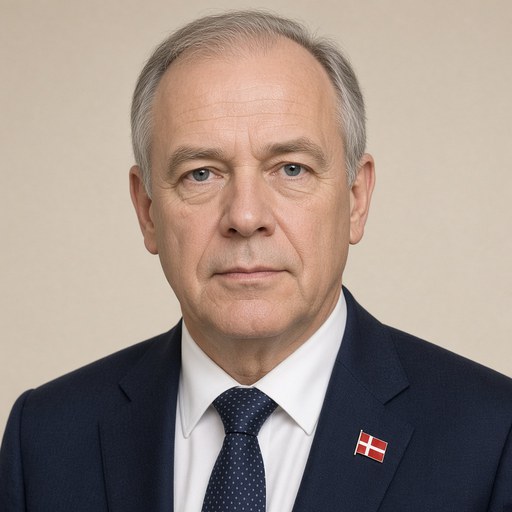
Prime Minister Poul Nyrup Rasmussen's speech at the Industry's Annual Day in Bella Center, Tuesday, September 21, 1999.
 Poul Nyrup Rasmussen · Prime Minister of Denmark
- Context
- Rasmussen addressed Danish industry leaders at the Industry's Annual Day in Bella Center, Copenhagen, on September 21, 1999, outlining Denmark's global and European policy priorities.
- Main themes
- Globalization and inequality, development aid and debt relief, WTO negotiations, European integration and global leadership, environmental policy and CO2 emissions, Danish foreign policy activism, multilevel democracy, NATO and UN engagement, international crime and mafia, Africa and developing countries, Øresund and Baltic cooperation, EU membership
- Duration
- ~28 min
- Words
- 3,393
- Sentences
- 229
- Readability
- 53
- Grade
- 8.6
- Syntax
- 2.66
- Vocabulary
- 2.11
Translated from Danish
The broad sphere of national life a sentence belongs to. Every sentence has an Arena, so it is the denominator the other indices are read against.
Other229 sentences in 87 paragraphs
Fire is not – with very few exceptions – in favor of Africa, but rather in favor of the rich world. The triad I just mentioned.
We must not underestimate crime. The international, professional mafia, which has come closer to us in the wake of globalization – and has become more visible to us.
Globalization and information technology also deepen the divide between urban and rural areas in poor countries. There is a greater community among young people from Nairobi, Ho Chi Minh City, and Copenhagen than there is between the capital and the provinces in Kenya and Vietnam.
* * *
Denmark's global activist profile must be maintained. The world's poor countries still talk about the Social Summit in 1995, which was held here at the Bella Center.
Debt relief for developing countries is a temporary measure if it is not also followed up by production and new progress. Therefore, we will maintain our development aid. I strongly appeal to Danish Industry and to all opinion makers to help us maintain public understanding of this. I know that we need to renew ourselves here – and we will, of course. But renewal is not to abandon the solidarity on which Danish society is built.
The upcoming WTO negotiations will be absolutely crucial – also for developing countries and the perspective I have outlined. Not least, Europe's engagement with developing countries will be decisive. Europe is indeed the region that most clearly has Africa on its internal bulletin board. There will be work for Poul Nielson, and I am proud and pleased that a Danish commissioner has taken on this responsibility. I know it is very challenging, but it is also very important.
Furthermore, I see Europe in a global perspective, as the region that must take on its global 'social leadership' – because there is no one else doing it, even though the need is great – and because we are best at it.
* * *
There is still much to be done for the environment. In environmental matters, one could say that we have not yet fully grasped the consequences of the knowledge we have. Here too, I must say: We are still working against better knowledge and not with better knowledge. We have set ourselves some goals at the Rio Summit and in Kyoto.
The Danish strategy is clear: In 1990, we adopted a national target of 20% for CO2 emissions. We have integrated our strategy into European cooperation. It is our belief that this is where the decisive influence lies. And it is also in the European region that the leading edge, which many Danish industrial companies skillfully manage, can become an important competitive force in the coming years.
* * *
We know deep down that politics is about being where decisions are made. I firmly believe that we strike a chord with the Danish national spirit when it comes down to it. A union representative in a company will want to be exempted if others are making decisions on issues he or she usually participates in.
* * *
When we try to open people's eyes to the world, it is about trying to place our various democratic levels in relation to each other. And the levels we have in the globalized world fit well with a Danish understanding of what democracy is.
It starts at the local level between municipalities and counties. We move from the local level, where a specific type of tasks is solved, to the national level, with government and parliament, where another type of tasks is solved that cannot be addressed at the local or regional level.
We continue to the regional level. Here too, we are facing a tremendously exciting development called Øresund and the Baltic Sea. At the Danish-German border, we have shown how to treat minorities, how to cooperate between small and large neighbors.
Moving to the global level, we have the UN and the WTO.
And I add: If we did not have the EU, we would have to invent a regional, institutional cooperation. One must understand that in the globalized world, political presence is essential.
For me, Denmark must be present everywhere. From the most immediate local level to the most distant global level. Where decisions are made, Denmark must be.
We must be present in NATO and in the UN, and we have certainly influenced NATO. It was fantastic to see at the recent summit in Washington how many national prime ministers suddenly found themselves in the same room. When the former Soviet Union fell, it was remarkable to hear a voice from one of the former Soviet republics say in Washington: 'Yes, I can see at least five former members of the Soviet-Russian Central Committee present here today.' A completely new era that one may not always realize, but which is worth remembering.
The Baltic cooperation holds entirely new opportunities for us in our unique location. The EU is and will remain the dominant form of cooperation – also the most binding and thus the most promising in relation to the challenges.
* * *
But let us not be mistaken. The UN is not part of the problem; the UN is part of the solution. Regardless of the many difficulties facing the UN, which has been the foundation for value assessment and global strategies – it is still the case that one cannot bypass the UN. Therefore, Denmark will continue to be very strongly engaged in the UN. It will continue to be the case that the UN is our legitimacy when it comes to our efforts for peacekeeping, human rights, and development policy.
A crucial prerequisite for the UN to play a role is the legitimacy and authority of the Security Council. To ensure this in the future, it also requires that large regions and societies that have a decisive influence on the world are present. This raises demands for the representation of countries like India, Japan, and others. It raises demands for stable finances and places new demands on the USA to meet their debt obligations to the UN. It is about being able to be true to oneself.
For Denmark, this is, as is well known, not a problem. May I just remind you that in UNDP, the UN's development organization, Denmark is the third or fourth largest contributor – not only measured in relation to population but measured in absolute kroner and dollars. I believe we should maintain that position. Even if we maintain it, I would like to see us in a bit tougher competition with other European countries!
* * *
Kosovo meant that we embarked on a new chapter in our international law. Kosovo made it clear to us that the classical international law's demands for state sovereignty and the prohibition against interference by others could no longer hold, not if we were to rely solely on a UN Security Council resolution that was completely crystal clear in all details.
Kosovo made it clear, as Kofi Annan also said in a speech he gave on April 7 this year to the UN Human Rights Commission, that 'the UN Charter must never be a cloak for dictators' oppression of their own people or internal ethnic cleansing.'
It is a very complicated discussion. I do not have the key, the recipe, or the finished conclusion. But I have a clear sense that Kosovo has shown that we cannot settle for classical international law. That NATO must take on tasks that NATO perhaps did not have before, but which are natural now – after the Cold War and Kosovo. There is, of course, a limit to how much we can engage in the NATO circle.
But there should be no doubt that we must be better at intervening in conflicts. We must be better at conflict prevention. We must also take into account in European cooperation that our preparedness to resolve conflicts and manage crises is still not good enough. Europe is still not good enough at solving problems in its own backyard.
And it is, of course, in this light that we must also view the discussion about European defense cooperation and the discussion about the Danish attitudes towards it.
* * *
Denmark today has a very strong international engagement. We are present with peacekeeping forces in most places.
There is one thing I am incredibly pleased about when I look back at the difficult Kosovo period. Throughout Kosovo – despite many doubts along the way – there was broad support in the Danish population. 75% of the population supported the Danish line. 75%! And our fundraising for aid to Kosovo's refugees showed that this country does not have selfishness at its core. I do not believe that the Danes came together solely to help Kosovo. I believe that the Danes simultaneously discovered something within themselves that they may have forgotten. A community and something to stand together for and a sense of belonging that they may not have been aware of.
It is immensely important that the outward-looking, active line we maintain in the government continues to be well anchored in the population. I believe we can ensure this if we constantly make sure not to give the impression that the Kosovo problems are now solved. They are far from it. But we must explain that they will not be solved if we are not also involved, inspire, intervene, and participate.
* * *
We must also be active in the WTO negotiations. This is not just a new traditional negotiation round, which is based on the WTO ministerial meeting on November 30 this year. It is much more than that. It is a negotiation round that introduces a new dimension to the WTO's agenda. It was Denmark, and in all modesty the Danish government, that succeeded at the summit in Cologne in getting it included in the conclusion that the European Union must now work to ensure that the WTO conditions for further liberalization of free trade and world trade also include requirements for respect for fundamental labor rights, respect for environmental rights, and respect for how we treat each other.
The biggest reluctant party in relation to the goals set here is not necessarily the other countries in the rich part of the world, but rather the developing countries. They fear that it could become an obstacle to their trade. Therefore, there is, of course, a close connection between humanizing the market economy and our development aid. It is precisely development aid that should enable developing countries to meet the new demands.
* * *
They are so busy down there in Europe talking about 'The Blue Banana': the growth area that stretches from northeastern Spain over France, northern Italy, through Germany, and up to England. Completely bypassing Denmark and the Nordics. Instead, we have 'The Baltic Strawberry.' The whole area around the Baltic Sea. Now the old Soviet-Russian rhetoric about a 'Sea of Peace' can become a reality. If we ensure that the EU does not just look south but also north – and makes clear what a fantastic perspective is emerging.
I was in Poland for the first time a couple of years ago, and I intend to continue to prioritize our cooperation with Poland and the Baltic countries very highly. Poland is the largest growth potential in our industrial neighborhood. And we have colossal goodwill in the area.
I say this also to point out that this is not just words. It is actually concrete kroner and dollars. We live up to our aid. We cannot have, on one side of the Baltic Sea, rich welfare societies and on the other side street children in Riga, poor pensioners in Estonia, and even poorer people in Lithuania. We must help translate our efforts into practical support.
* * *
Then there is Europe. After the Cold War, the big questions have returned. It is about a choice between two paths: Either continued integration in Europe, which can keep the big powers in check and together. Or a regression to the old power balances.
Am I exaggerating? No!
The danger in the Balkans – our nightmare scenario – was a situation where it was not just Croats against Serbs, but Germans helping Croats and French helping Serbs. If that had happened, if it had been allowed to develop, we would have experienced a colossal setback in European cooperation.
Therefore, it is worth understanding that the healing of Europe's sick man is not just a matter of helping out of a charitable act, but a foundation for European existence in the 21st century! The best means to solve security problems is the European strategy, which aims to resolve the conflict before it breaks out, and thus becomes a matter for NATO.
I can assure you that Hungary and Romania would not have entered into an agreement to treat their minorities better than they have done in this century if it were not for the EU. Czechoslovakia would not have undergone a peaceful divorce if it were not for the EU.
What holds it together is the core of European cooperation. What creates the core around the Eurozone countries is actually the prerequisite for the EU's expansion.
* * *
Therefore, the fundamental question is whether Denmark should be part of the core or whether we should be on the periphery.
Thus, the European agenda is not just a theoretical agenda, but a tremendously crucial practical agenda for Denmark's future.
A close agenda, yes – the Finnish presidency must go through two major exercises. In Tampere, we must address legal and internal cooperation. And in December, we must in Helsinki address the EU's continued expansion and begin the discussion on the EU's security dimension. We must ensure peace and quiet in our own backyard.
The Finnish presidency will be succeeded by Portugal, which will initiate the government conference and the employment summit. Portugal will be succeeded by France, which in the second half of 2000 will conclude the government conference and finalize the work on security and defense.
* * *
There is something we need to clarify among ourselves. It is the myths.
The political union. What is that? May I just remind you that it has been the big beast in the revelation in a multitude of myths and rhetorical formations, especially on the side that thinks that Europe is a bad idea. Now we must start talking about what the political union is really about.
The political union is a very sympathetic entity. Firstly, it is a gathering around a number of common values: human rights, proper treatment of minorities, democracy, and the rule of law.
Secondly, it is a political union that seems to find it important to have a common foreign policy, as seen in the Balkans. It is important that we become better at managing our own backyard. It is important that we support the Third World.
All of this, to me, is part of a political union. I believe that in practice, it will be something that we can benefit from.
It is also about democratic legitimacy regarding the principle of proximity, transparency, and a sensible distribution of roles among the institutions.
All of this constitutes a political union, which I believe forms the basis for the greatest task: the EU's enlargement. Our ambition here is to include the three Baltic countries and the other applicant countries.
* * *
I believe that it is possible to gain broad public support for Denmark's accession to the euro. If we explain it properly. If we do not drown the population in technicalities. If we do not come crashing down on the population, but talk with the population - properly about the matter.
For me, there are three things that are crucial for the euro and Denmark's accession to the euro:
The first is Denmark's security and safety. When I see what a speculator like Soros can bring, it is for me a definitive answer that Denmark, for security and safety reasons, should enter the euro area. Sweden tried to protect its currency. They had to raise interest rates to 500%. It did not help. Soros was also the man who broke the Bank of England.
My second reason for saying yes to the euro is employment, the competitiveness of businesses, and Denmark as an attractive investment country.
My third reason is about what it is that we actually want as a nation. In our part of the world. In our Europe. Where should Europe and Denmark be heading? We will have the most control over that if we are involved in making the decisions.
* * *
There are a couple of things we need to remember. During the oil crises in 1974 and '79, unemployment rose. Each time, we made the same mistakes in the European governments: We competed through devaluations and cuts. The losers were unequivocally the people of the European nations.
That must end now. We must learn from our experiences, and we must be able to utilize the knowledge we have about economic strategies.
Just look at Denmark. We have the highest business and employment rate in Europe. If the others reached our level, 30 million more jobs would be created in Europe!
* * *
But my central point about learning from the sins of the past is different. It focuses on the economic unity that Europe actually is. There is a report, quite coincidentally called the 'Rasmussen Report'. Read it – it is interesting reading. It contains much wisdom that we have not yet fully implemented in practice. The lesson from the oil crisis years of the '70s is that it pays to cooperate. The export share of individual EU countries fluctuates around 1/3. Some even more. The majority of trade takes place internally within the EU. Our dependence on the outside world is significantly less than our mutual dependence on each other.
Thus, we have a much greater degree of freedom to shape our own path in the EU than we actually realize. That is what we should use in a wise employment strategy. That is why we should be involved in making decisions where things are happening. In the area where there is a fixed exchange rate.
For me, the euro is not about technicalities, but about a wise basis for shaping a smart strategy and policy for employment, for competitiveness, and for economic stability.
Fixed exchange rate – yes. But we have also had that in Denmark for 17 years. I think it is time that we also say yes to entering that area and tell the other 11 how to combine a fixed exchange rate and economic self-discipline with a welfare society that is sympathetic and provides opportunities for most – preferably for all.
Previously, Denmark's currency and interest rate policy was heavily dependent on one of the three dominant currencies in the world. Not so much the American dollar directly, nor the Japanese yen, but the German D-mark. We had an independence of about 18 seconds to adjust to the Deutsche Bundesbank's interest rate level.
Nowadays, one could say, we are in a slightly different situation. Now we have about 16 seconds to adjust to the interest rate within the euro. The other difference is that we can actually have a say if we decide to. We can be represented on the board of the European Central Bank.
For good reasons, we could not get a seat on the German Bundesbank.
But within the euro area, we can help inspire the other countries. We can help shape an advanced economic strategy. A strategy that I have longed for all the years since the oil crises of the '70s.
* * *
It is a matter of political decisions.
We only have our own chains to throw off.
We can make a difference. I feel that we have special conditions to make a difference because we are a harmonious society. Because we may, by entering the euro, gain a contribution to discovering something more within ourselves. Because for me, it is about the harmony in this country and the cohesion in this country also being connected to fighting for one's cause – internationally as well as nationally.
Thank you.
The original Danish. The tags above are read on the English translation's sentences.
ogien er ikke - med ganske få undtagelser - til fordel for Afrika, men derimod til fordel for den rige verden. Den triade jeg just har nævnt.
Vi må heller ikke undervurdere kriminaliteten. Den internationale, professionelle mafia, der i kølvandet af globaliseringen er kommet tættere på os – og blevet tydeligere for os.
Globaliseringen og informationsteknologien uddyber også forskellen mellem land og by i de fattige lande. Der er et større fællesskab mellem unge fra Nairobi, Hô Chi Minh City og København, end der er mellem hovedstad og provins i Kenya og Vietnam.
* * *
Danmarks globale aktivistiske profil skal fastholdes. Verdens fattige lande taler stadig om Det Sociale Topmøde i 1995, der blev afholdt her i Bella Centeret.
Gældseftergivelse til ulandene er en stakket frist, hvis det ikke også følges op af produktion og ny fremgang. Derfor vil vi fastholde vores ulandsbistand. Jeg appellerer meget til Dansk Industri og til alle meningsdannerne om at hjælpe os med at fastholde den folkelige forståelse herfor. Jeg ved godt, at vi skal forny os her – og det vil vi selvfølgelig også. Men fornyelse er ikke at svigte den solidaritet, som det danske samfund bygger på.
De kommende WTO-forhandlinger bliver fuldstændig afgørende - også for udviklingslandene og det perspektiv jeg har ridset op. Ikke mindst Europas ulandsengagement bliver afgørende. Europa er jo den region, der mest tydeligt har Afrika på sin indre opslagstavle. Der bliver noget at lave for Poul Nielson, og jeg er stolt og glad over, at en dansk kommissær har fået det ansvarsområde. Jeg ved, at det er meget besværligt, men det er også meget vigtigt.
Jeg ser i øvrigt Europa i et globalt perspektiv, som den region der må påtage sig sit globale 'social leadership' - fordi der ikke er nogle andre, der gør det, selvom behovet er stort – og fordi vi er bedst til det
* * *
Også miljøet er der stadig meget at gøre for. På miljøområdet kan man sige, at vi endnu ikke har taget de fulde konsekvenser af den viden, vi har. Også her er jeg nødt til at sige: Vi arbejder stadig mod bedrevidende og ikke med bedrevidende. Vi har sat os nogle mål på Rio-topmødet og i Kyoto.
Den danske strategi er klar: Vi har i 1990 vedtaget en national 20 % målsætning for CO2-udledning. Vi har lagt vores strategi ind i det europæiske samarbejde. Det er vores opfattelse, at det er her, den afgørende påvirkningskraft ligger. Og det er vel også i den europæiske region, at den foregangslinie, som mange danske industrivirksomheder dygtigt administrerer, kan gå hen og blive en vigtig konkurrencekraft i de kommende år.
* * *
Vi ved inderst inde godt, at politik er at være med der, hvor der træffes beslutninger. Jeg tror fuldt og fast på, at vi rammer ned i den danske folkesjæl, når det kommer til stykket. En tillidsmand på en virksomhed vil have sig fritaget, hvis andre sidder og træffer beslutninger om emner, han eller hun plejer at deltage i.
* * *
Når vi skal prøve at åbne folks øjne for verden, handler det om, at vi skal prøve at placere vore forskellige demokratiske niveauer i forhold til hinanden. Og de niveauer vi har i den globaliserede verden passer fint i forhold til en dansk opfattelse af, hvad demokrati er.
Det starter på det lokale plan mellem kommuner og amter. Vi bevæger os fra det lokale plan, hvor man løser en bestemt type opgaver til det nationale plan, med regering og parlament, hvor man løser en anden type opgaver, der ikke kan løses på lokalt, regionalt plan.
Vi fortsætter til det regionale niveau. Også her står vi over for en fantastisk spændende udvikling, som hedder Øresund og Østersøen. Ved den dansk-tyske grænse har vi vist, hvordan man behandler mindretal, hvordan man indgår samarbejde mellem små og store naboer.
Bevæger vi os til det globale plan har vi FN og WTO.
Og jeg tilføjer: Hvis vi ikke havde EU, måtte vi opfinde et regionalt, institutionelt samarbejde. Man skal forstå, at i den globaliserede verden er politik tilstedeværelse.
For mig skal Danmark være til stede alle steder. Fra det mest nære lokale niveau til det mest fjerne, globale niveau. Der, hvor der træffes beslutninger, skal Danmark være.
Vi skal være til stede i NATO og i FN, og vi har sandelig præget NATO. Det var fantastisk at se på det seneste topmøde i Washington, hvor mange nationers statsministre, som pludselig befandt sig i samme rum. Da det tidligere Sovjetunionen faldt, var det bemærkelsesværdigt at høre en stemme fra én de tidligere sovjetrepublikker sige i Washington: 'Ja, jeg kan jo se i hvert fald fem tidligere medlemmer af den sovjet-russiske centralkomité til stede her i dag'. En helt ny tid som man måske ikke altid gør sig klart, men som nok er værd at huske på.
Østersø-samarbejdet rummer helt nye muligheder for os i vores unikke placering. EU er og bliver den dominerende samarbejdsform – også den mest forpligtende og dermed også den mest lovende i forhold til udfordringerne.
* * *
Men, lad os nu alligevel ikke tage fejl. FN er ikke en del af problemet, FN er en del af løsningen. Uanset de mange vanskeligheder, der er for det FN, som har været fundamentet for værdiudmåling og globale strategier – er det stadig sådan, at man ikke kommer udenom FN. Derfor vil Danmark fortsat være meget stærkt engageret i FN. Det vil fortsat være sådan, at FN er vores legitimitet, når det gælder vores indsats for fredsbevarende arbejde, menneskerettigheder og ulandspolitik.
En afgørende forudsætning for, at FN kan spille en rolle, er Sikkerhedsrådets legitimitet og autoritet. Skal det sikres i fremtiden, forudsætter det også, at store regioner og samfund, som har en afgørende indflydelse på verden, er til stede. Det rejser krav om repræsentation af lande som Indien, Japan og andre. Det rejser krav om stabile finanser og stiller nye krav til USA om at klare deres gældsforpligtelser i forhold til FN. Det handler om at kunne være sig selv bekendt.
For Danmark er det som bekendt ikke noget problem. Må jeg bare minde om, at i UNDP, FN’s udviklingsorganisation, er Danmark den tredje-fjerde største bidragyder – ikke alene målt i forhold til indbyggertallet, men målt i absolutte kroner og dollars. Den position synes jeg, vi skal fastholde. Selvom vi fastholder den, ser jeg gerne, at vi er i lidt hårdere konkurrence med andre europæiske lande!
* * *
Kosovo betød, at vi tog fat på et nyt kapitel i vores internationale folkeret. Kosovo gjorde det klart for os, at den klassiske folkerets krav om staternes suverænitet og forbud mod andre i at blande sig, ikke længere kunne holde, ikke hvis vi alene skulle bero på en FN-sikkerhedsråds resolution, der var fuldstændig krystalklar i alle detaljer.
Kosovo gjorde det klart, som også Kofi Annan sagde i en tale, han holdt den 7. april i år for FN’s menneskerettighedskommission, at 'FN-pagten aldrig må blive et skalkeskjul for diktatorers undertrykkelse af et eget folk eller interne etniske udrensninger'.
Det er en meget kompliceret diskussion. Jeg har ikke nøglen, opskriften eller den færdige konklusion. Men jeg har en klar fornemmelse af, at Kosovo har vist, at vi ikke kan nøjes med den klassiske folkeret. At NATO må påtage sig opgaver, som NATO måske ikke havde før, men som er naturlige nu - efter den kolde krig og Kosovo. Der er selvfølgelig en grænse for, hvor vi kan engagere os i NATO-kredsen.
Men der er ikke og bør ikke være tvivl om, at vi skal være bedre til at gå ind i konflikter. Vi skal være bedre til konfliktforebyggelse. Vi skal også tage konsekvensen i det europæiske samarbejde af, at vores beredskab til at løse konflikter og styre kriser stadig ikke er godt nok. Europa er stadig ikke god nok til at løse problemer i egen baghave.
Og det er selvfølgelig også i det lys, at vi også skal se diskussionen om det europæiske forsvarssamarbejde og diskussionen om de danske holdninger dertil.
* * *
Danmark har i dag et meget stærkt internationalt engagement. Vi er tilstede med fredsbevarende styrker de fleste steder.
Der er en ting, jeg er utroligt glad for, når jeg ser tilbage på den vanskelige Kosovo-tid. Hele vejen igennem under Kosovo - på trods af, at mange kom i tvivl undervejs - hele vejen var der en bred opbakning i den danske befolkning. 75% af befolkningen bakkede den danske linie op. 75%! Og vores nødhjælpsindsamling til hjælp for Kosovos flygtninge viste jo, at dette land ikke har egoismen i centrum. Jeg tror ikke, at danskerne alene fandt sammen for at hjælpe Kosovo. Jeg tror, at danskerne samtidig opdagede noget i sig selv, som de måske havde glemt. Et fællesskab og noget at stå sammen om og en samhørighed, man måske ikke havde været sig bevidst.
Det er umådeligt vigtigt, at den udadvendte, aktive linie vi fastholder i regeringen, fortsat er godt forankret i befolkningen. Det tror jeg godt, vi kan sikre, hvis vi hele tiden sørger for ikke at give det indtryk, at Kosovo-problemerne nu er løst. Det er de langt fra. Men vi skal forklare, at de ikke bliver løst, hvis vi ikke også er med, inspirerer, blander os og deltager.
* * *
Vi skal også være aktive ved WTO-forhandlingerne. Det er ikke alene en ny traditionel forhandlingsrunde, som tager sit afsæt i WTO-ministermødet den 30. november i år. Det er langt mere end det. Det er en forhandlingsrunde, der indfører en ny dimension på WTO’s dagsorden. Det lykkedes Danmark, og i al ubeskedenhed den danske regering, på topmødet i Köln, at få indført i konklusionen, at den Europæiske Union nu skal arbejde for, at der i WTO-betingelserne for en yderligere liberalisering af frihandelen og verdenshandelen også indføjes krav om respekt af faglige grundrettigheder, respekt for miljørettigheder, og respekt for hvordan vi behandler hinanden.
Den største modstræbende part i forhold til de mål, der her er sat, er ikke nødvendigvis de andre lande i den rige del af verden, men derimod ulandene. De frygter, at det kan blive en hindring for deres handel. Derfor er der selvfølgelig en tæt sammenhæng mellem, at menneskeliggøre markedsøkonomiens og vores ulandsbistand. Netop ulandsbistanden skal gøre det muligt for ulandene at leve op til de nye krav.
* * *
De har så travlt dernede i Europa med at tale om 'Den blå Banan': Vækst-området der går fra det nord-østlige Spanien over Frankrig, over det nordlige Italien, gennem Tyskland og op til England. Helt uden om Danmark og Norden. Vi har i stedet 'Det baltiske Jordbær'. Hele området omkring Østersøen. Nu kan den gamle sovjet-russiske retorik om et 'Fredens Hav' blive en realitet. Hvis vi sørger for, at EU ikke bare kigger sydpå men nordpå - og gør klart, hvilket fantastisk perspektiv, der tegner sig.
Jeg var for første gang i Polen for et par år siden, og jeg agter fortsat at prioritere vores samarbejde med Polen og de baltiske lande meget højt. Polen er det største vækstpotentiale i vores industrielle nærområde. Og vi har en kolossal høj goodwill i området.
Jeg siger det også for at gøre opmærksom på, at det ikke kun er ord dette her. Det er faktisk konkrete kroner og ører. Vi lever op til vores bistand. Vi kan selvfølgelig ikke have, at der på den ene side af Østersøen er rige velfærdssamfund og på den anden er gadebørn i Riga, fattige pensionister i Estland og endnu fattigere folk i Litauen. Vi må være med til at omsætte vores indsats i praktisk støtte.
* * *
Så er der Europa. Efter den kolde krig er de store spørgsmål kommet igen. Det drejer sig om et valg mellem to veje: Enten en fortsat integration i Europa, der kan holde de store på plads og sammen. Eller et tilbageskridt til de gamle magtbalancer.
Overdriver jeg? Nej!
Det farlige ved Balkan - vores mareridtsscenarie - var en situation, hvor det ikke kun var kroatere mod serberne, men tyskere der hjalp kroaterne og franskmænd der hjalp serberne. Var det sket, havde det fået lov at udvikle sig, havde vi oplevet et kolossalt tilbageslag i det europæiske samarbejde.
Derfor er det værd at forstå, at helbredelsen af Europas syge mand ikke alene er et spørgsmål om at hjælpe ud fra en barmhjertighedsgerning, men et fundament for den europæiske eksistens i det 21. århundrede! Det bedste middel til at løse sikkerhedsproblemerne er den europæiske strategi, hvor det gælder om at løse konflikten før den bryder ud, og dermed bliver en sag for NATO.
Jeg kan godt love jer, at Ungarn og Rumænien havde ikke indgået en aftale om at behandle deres mindretal bedre, end de har gjort det i dette århundrede, hvis det ikke var for EU. Tjekkoslovakiet havde ikke gennemgået en fredelig skilsmisse, hvis det ikke lige var for EU.
Det, der holder det sammen, er kernen i det europæiske samarbejde. Det der skaber kernen omkring Eurolandene er i virkeligheden forudsætningen for EU’s udvidelse.
* * *
Derfor er det fundamentale spørgsmål, om Danmark skal være med i den kerne, eller om vi skal være i periferien.
Derfor er den europæiske dagsorden ikke alene en teoretisk dagsorden, men en fantastisk afgørende praktisk dagsorden for Danmarks fremtid.
En tæt dagsorden, ja - det finske formandskab skal igennem to store øvelser. I Tammerfors skal vi tage stilling til det retlige og indre samarbejde. Og i december skal vi i Helsingfors tage stilling til EU’s fortsatte udvidelse og begynde diskussionen om EU’s sikkerhedsdimension. Vi skal sikre fred og ro i vores egen baghave.
Det finske formandskab afløses af Portugal, som skal sætte regeringskonferencen og beskæftigelsestopmødet i gang. Portugal afløses af Frankrig, som i 2. halvår af 2000 skal sætte punktum for regeringskonferencen og konkludere på sikkerheds- og forsvarsarbejdet.
* * *
Der er noget, vi er nødt til at gøre op med hinanden. Det er myterne.
Den politiske union. Hvad er det for en størrelse? Må jeg bare minde om, at den har jo været det store dyr i åbenbaringen i en mangfoldighed af myter og retorikdannelser især på den side, der synes, at Europa er en dårlig idé. Nu må vi altså til at tale om, hvad den politiske union egentlig drejer sig om.
Den politiske union er en meget sympatisk størrelse. Det er for det første samling om en række fælles værdier: Menneskerettigheder, ordentlig behandling af minoriteter, demokrati og retssamfund.
Det er for det andet en politisk union, der synes, det er vigtigt at have fælles udenrigspolitik, jf. Balkan. Det er vigtigt, at vi bliver bedre til at styre vores egen baghave. Det er vigtigt, at vi støtter den 3. Verden.
Alt dette hører for mig med til en politisk union. Jeg mener, at det i praksis bliver noget, vi kan være tjent med.
Det er også en demokratisk legitimitet om nærhedsprincip, om gennemsigtighed og om fornuftig rollefordeling mellem institutionerne.
Alt det er politisk union, som jeg synes danner basis for den opgave, der er den største: EU’s udvidelse. Vores ambition er her, at få de tre baltiske lande og de øvrige ansøgerlande med.
* * *
Jeg tror på, at det kan lade sig gøre at få en bred folkelig opbakning bag ved Danmarks tilslutning til euroen. Hvis vi forklarer det ordentligt. Hvis vi ikke drukner befolkningen i teknik. Hvis vi ikke kommer tromlende henover befolkningen, men taler sammen med befolkningen - ordentligt om sagen.
For mig er der tre ting, der er afgørende for euroen og Danmarks tilslutning til euroen:
Den første er Danmarks sikkerhed og tryghed. Når jeg ser, hvad en spekulant som Soros kan bringe, er det for mig et endegyldigt svar på, at Danmark af sikkerhedsmæssige og tryghedsmæssige grunde bør gå ind i euro-området. Sverige prøvede at værne om sin valuta. De måtte sætte renten op til 500 %. Det nyttede ikke noget. Soros var også manden, der knækkede Bank of England.
Min anden grund til at sige ja til euroen er beskæftigelsen, virksomhedernes konkurrencekraft og Danmark som attraktivt investeringsland.
Min tredje grund handler om, hvad det egentlig er, vi vil som nation. I vores del af verden. I vores Europa. Hvor skal Europa og Danmark bevæge sig hen? Det får vi nu engang mest styr på, hvis vi selv er med til at bestemme.
* * *
Der er et par ting, vi lige skal huske. Ved oliekriserne i 1974 og ' 79 steg arbejdsløsheden. Hver gang begik vi de samme fejl i de europæiske regeringer: Vi konkurrerede på devalueringer og nedskæringer. Taberne blev entydigt de europæiske nationers folk.
Det må være slut nu. Vi må lære af vores erfaringer, og vi må være i stand til at udnytte den viden, vi har om de økonomiske strategier.
Se bare på Danmark. Vi har Europas højeste erhvervs- og beskæftigelsesfrekvens. Hvis de andre nåede op på vores niveau, ville der blive skabt 30 millioner flere arbejdspladser i Europa!
* * *
Men min centrale pointe om læren af fortidens synder er en anden. Den fokuserer på den økonomiske enhed, som Europa i virkeligheden er. Der findes en rapport, der helt tilfældigt kaldes 'Rasmussen-rapporten'. Læs den – det er interessant læsning. I den står der megen lærdom, som vi ikke helt har omsat i praksis endnu. Lærdommen fra oliekriseårene i ’70’erne er, at det betaler sig at samarbejde. De enkelte EU-landes eksportandel svinger omkring 1/3. Nogen endda endnu mere. Hovedparten af vareudvekslingen finder sted internt i EU. Vores afhængighed af omverdenen er væsentlig mindre, end vores gensidige afhængighed af hinanden.
Vi har altså en langt større frihedsgrad til at forme vores egen vej i EU, end vi egentlig gør os klart. Det er det, vi skal bruge i en klog beskæftigelsesstrategi. Det er derfor, vi skal være med til at bestemme der, hvor tingene foregår. I det område, hvor man har den faste valutakurs.
For mig drejer euroen sig ikke om teknik, men om en klog basis for at forme en klog strategi og politik for beskæftigelse, for konkurrenceevne og for økonomisk stabilitet.
Fast valutakurs – ja. Men det har vi jo også haft i Danmark i 17 år. Jeg synes det er på tide, at vi også siger ja til at gå ind i det område og fortælle de andre 11, hvordan man forener en fast valutakurs og en økonomisk selvdisciplin med et velfærdssamfund, der er sympatisk og som giver muligheder for de fleste – ja helst for alle.
Før var Danmarks krone- og rentepolitik stærkt afhængig af én af de tre dominerende valutaer i verden. Ikke så meget den amerikanske dollar direkte, heller ikke så meget den japanske yen, men den tyske D-mark. Vi havde en selvstændighed på ca. 18 sekunder til at indrette os efter Deutsche Bundesbanks renteniveau.
Nu om stunder kan man sige, er vi er i en lidt anden situation. Nu har vi ca. 16. sekunder til at rette os efter renten indenfor euroen. Den anden forskel er, at vi faktisk godt kan være med til at bestemme, hvis vi beslutter os for det. Vi kan blive repræsenteret i bestyrelsen for Den europæiske Centralbank.
Vi kunne af gode grunde ikke få sæde i den tyske forbundsbank.
Men inden for euro-området kan vi være med til at inspirere de andre lande. Vi kan være med til at forme en avanceret økonomisk strategi. En strategi som jeg har længtes efter i alle årene siden 70’ernes oliekriser.
* * *
Det er et spørgsmål om politiske beslutninger.
Vi har kun vores egne lænker at kaste.
Vi kan gøre en forskel. Jeg føler, at vi har særlige forudsætninger for at gøre en forskel, fordi vi er et harmonisk samfund. Fordi vi måske ved at gå ind i Euroen får et bidrag til at opdage noget mere i os selv. Fordi det for mig handler om, at harmonien i dette land og sammenhængskraften i dette land også er forbundet med at kæmpe for sin sag – internationalt såvel som nationalt.
Tak.