




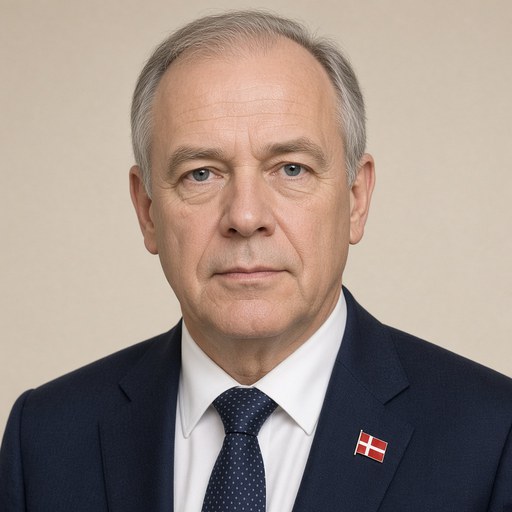
"We must break the pattern." Prime Minister Poul Nyrup Rasmussen's speech on World Health Day, April 7, 2001.
 Poul Nyrup Rasmussen · Prime Minister of Denmark
- Context
- Rasmussen addressed a World Health Day event in Denmark on April 7, 2001, speaking on mental health awareness and psychiatric care reform.
- Main themes
- Mental health awareness, breaking stigma around mental illness, psychiatric care reform, social inclusion of mentally ill, welfare society obligations, open dialogue, research conditions, district psychiatry development, WHO global health agenda
- Duration
- ~33 min
- Words
- 3,914
- Sentences
- 245
- Readability
- 63
- Grade
- 8.4
- Syntax
- 2.79
- Vocabulary
- 1.88
Translated from Danish
The broad sphere of national life a sentence belongs to. Every sentence has an Arena, so it is the denominator the other indices are read against.
Other245 sentences in 40 paragraphs
I can be a bit envious that so many very exciting discussion rounds have been taking place this week. Every now and then, even a prime minister can ask himself if he is using his time correctly. I mean for the most important things? But I will probably find out the essence of your discussions.
I would like to start by thanking all of you who have spent some of your lives and your time contributing to greater knowledge and greater openness about the very topic we have on the agenda here this morning.
I also think it is fantastic that Gro Harlem Brundtland and WHO have put this topic on the agenda worldwide. Because perhaps we can also develop even greater openness and even greater knowledge about our mental illnesses internationally.
We often say "get well soon" when we meet someone who has the flu, breaks a leg, or otherwise has pain somewhere that can be seen and felt. It needs to be repaired, and fixed, and then we should see to move on? But what do we actually say to the many who suffer from what I would call "the silent illness"? All those who have pain in their soul. What do we say to them when we meet? It can be difficult to figure out what to say when another person suffers from a mental illness. In the past week, the Psychiatric Foundation has spotlighted the issue, culminating in today's event, where many good forces from WHO, from Sind, and from the Danish Psychiatric Society to the Psychology Association are contributing in a distinguished manner.
I think it is right of WHO to choose precisely mental health, or as we say here in Denmark: mental health.
Some may think that talking does not change anything. I must say that in this case, they are wrong. Mental disorders are best served by not talking about them. By remaining silent. Therefore, we must talk about mental disorders openly and directly. Knowing is a prerequisite for being able to act and do the right thing. We must always remember that the people affected by mental disorders cannot speak for themselves.
In modern society, there are so many who can speak for themselves. But precisely the group of people we are talking about here lacks a representative. I am so glad to see that there are more and more representatives for those who cannot speak for themselves. Yes, often the people we think of here cannot figure out how to receive help at all, and when one cannot manage to receive or give help, one is almost in the most difficult situation possible for a person.
When we encounter what cannot be felt and cannot be seen or understood at first glance, we are actually on the edge of what modern humans can comprehend. Therefore, I truly believe that only those who have had the illness close to their lives can communicate it, understand it, and perhaps participate in discussions about the future. The silence, the one-syllable answers, the inwardness, and again the resounding silence. The inner struggle, which so significantly drains one's strength, is so striking and can often leave a feeling of helplessness in others.
Having pain in the mind is still one of the topics we talk too little about in Danish society. There is still much to be done to remove the myths, and above all, there is still much to be done to talk about it. The more we talk about it, the more we break down the fear of addressing the topic, and the better we become at taking on the task.
I also believe that researchers will have better working conditions when we can all talk openly about it. Because for research in the field, it is also the dialogue with people, with relatives - with people affected by the illness.
I have never hidden the fact that I attach the utmost importance to our society's efforts and everyone's efforts in this field.
It is simple for me. We cannot talk about a society and a welfare society without creating decent and safe conditions and circumstances for our mentally ill people in Denmark.
The goal is simple, but quite ambitious. We must be able to offer proper quality and proper care for each individual in this country with respect and insight into each person's dignity and everyday life. We will not give up a single person. We will not leave anyone on the sidelines, and we will not leave anyone outside. We will not achieve this tomorrow, but we will achieve it because we have set ourselves the goal. The hardest part, I will share with you. Yes, the hardest part in both life and politics is that it takes time. Things take time.
Psychiatry was an area that was not well supported about a dozen years ago or more. Psychiatry has been on the agenda since the early 90s. We have now moved away from the large psychiatric hospitals. They have long been replaced by a new district psychiatry. Many more people have gained greater dignity and respect for themselves and their illness. But we may have been too quick to close the beds and too slow to develop district psychiatry. There is still much to be done. We are far from finished.
But that said, openness is the key to breaking down the many taboos, and it is openness that is the framework for a continued strengthened effort. Openness is so important because in the efforts to do the right thing, one can easily end up doing the wrong thing.
Today, the Association of County Councils estimates that we have about 50,000 people in this country suffering from severe mental disorders, the majority being schizophrenia or similar disorders according to our diagnoses. Many, many more are of course also struggling along the way, just in a different way. I should mention depression, which also partially overlaps with the group of patients I am talking about today. Anxiety disorders, eating disorders, and substance abuse problems. Thus, we are talking about a much, much larger number.
But I don't think we should dwell too much on the numbers today. What matters to me is whether we see a shared responsibility behind the numbers that is greater today than it was before. The numbers and the increased number of single rooms do not fundamentally tell us whether we feel a greater responsibility today than before. They do not show whether we have understood how important it is to be able to prevent. Our way of thinking, the way we organize ourselves, the way we live. We can see that the number of young people with mental illnesses is growing. The pressure, the role models, young people who cannot create an identity by looking at themselves in the mirror or cannot find it by being with others.
If a young person's self-esteem is affected and replaced by bullying and loneliness, then we have the first sign. Is there anyone who hears it? Is there anyone who picks it up? Is there anyone who intervenes sufficiently early?
I would like to start where all the things we legislate about, our circulars, our announcements, our paragraphs must wait a moment.
I want to start where all parties fall short. Where we really only have the bonds between us humans, the human relationships that can make a decisive moment decisive. Where it is about care, about security, about the little glance, the little contact that is needed about presence and respect, simply being there for each other. We are too busy for that sometimes, but there is a strong need for it.
It really shouldn't be that difficult, but there is still a big difference between breaking a leg and becoming mentally ill. As I said, we ask how things are going and wish for a speedy recovery if we meet someone who has broken a leg. But we immediately become more touchy when it comes to mental disorders. Here, words often fail. I believe there are several explanations: First, it can generally be difficult to understand what a person with a mental illness is and how the illness arises. Second, it can be difficult to understand that a close family member or a good friend, whom you may not have seen for a long time, has suddenly changed. Perhaps is no longer the person you thought you knew so well. Without knowing why, what is happening inside. In those situations, I believe many easily become afraid. Afraid of embarrassing the person. Afraid of expressing themselves a bit clumsily. So, out of misguided consideration, we risk doing the exact opposite of what we actually wanted. We withdraw, avoid, and close our eyes. This can be the start of a vicious circle. In the worst case, a wall is formed that isolates the sick person. Where prejudices about the mentally ill and mental illnesses continue to live. Openness withers. There is no help.
As I said, we are dealing with something that cannot be solved with political decisions and legal paragraphs alone. As politicians in counties, municipalities, in the state, and around, we can help provide resources for single rooms, ensure staff, and create more and better frameworks. There is much to be done. But we also need to fundamentally address precisely the other place I am talking about here.
We must start with ourselves. We must break the patterns. We must break the vicious circles. We have a shared responsibility to reduce ignorance and prejudice, and this event can be a very important piece. Education and information. I believe it is crucial that people, both known and unknown, step forward and say that we have a task here. This is how it is connected. This is our experience. This is what we know. An illness that strikes indiscriminately, where no one can feel safe or be free. Being able to put a face to it and hear a voice engages us. It is absolutely necessary if we are to realize the common goal that people with mental illnesses should have the opportunity to live a life of their own choosing.
When I instead clean up our attitudes and meet the mentally ill with greater openness as well, when today is over.
Let me clarify a couple of things. When it comes to the question of bringing new professional knowledge into use for the benefit of patients, there is a heavy responsibility on all of us, but perhaps also on the systems. It is important that we become better at spreading the new research results. Of course, when they have been tested and documented both in the medical field and in other treatment areas. I still think we have a situation today where there is too much variation in the practical application of the latest knowledge in our small country. Here, there is also a responsibility for us to lift. It is fundamentally about always being at the forefront of knowledge, research, and results and ensuring that each individual also benefits from it.
There is something else that is just as important. It is the network. It is all the people that the mentally ill person meets when they are not directly in contact with the professional staff. It is absolutely crucial to prioritize our entire view of the relatives and the surroundings. The powerlessness, the self-blame is often the repeated state that many feel. What do you do? How do you do it? That feeling is the same whether you are a parent of a child affected by the illness or an adult child whose father or mother is affected by the illness. The fact that a person you care about is in a dark place where you cannot really penetrate. Where the only thing you can do is to be there, and where you cannot really feel that it makes a difference. It is a very big challenge. In that situation, it is incredibly important that we reach out to the relatives and to the network, which is so fundamental. Because we all know that the mentally ill person has loneliness as their worst ally. In reality, it is also very simple. If you ask what you can do if you are not a staff member, or a researcher, or a doctor in the field, what you can do is to be there.
I think the Psychiatric Foundation is making a huge effort in this entire field, and I am immensely glad that the relatives' associations for the mentally ill, the visiting friends, the neighbors, Sind, and many, many others see their crucial importance. I do not believe that the modern welfare society can function solely on the goodwill or resources of the systems, no matter how skilled we are at providing resources in the coming years. I say this because we are dealing with something very, very fundamental. Who will take care of Brian when he leaves the open ward? Is there anyone at all when the social army has gone home at 4 PM in Nørrebro, or wherever it is? If there is no one, then it will go wrong. We must understand that the life of our mentally ill must be surrounded by an effort that is coherent. It is quite obvious. For a person who has such great difficulties in making their own life work, the efforts of the surroundings must of course be coherent.
We have a task here that is large and ongoing. We have barriers that need to be broken down. We have systems that need to establish contact across, and we have coherence that needs to be established. It is the coherence in treatment and support offers that is absolutely crucial. One must understand that if there are lasting interruptions, relapses, then we have part of the explanation here. We cannot have patients ending up in long-term stays in psychiatric hospitals or as revolving door patients with far too frequent readmissions because there is no coherence in the offers. Because there is no one who takes over when others let go. I know it is difficult, but I feel that this point is one of the most crucial.
At the government's public hearings for the mentally ill last year, part of the criticism was gathered here. That there was a lack of coherence between the healthcare system's treatment offers and the social sector's support offers. The county does what it can. The departments of the hospitals and the psychiatric departments do what they can. The district psychiatric centers, the acute centers, the contact persons. But it does not all come together as it should. It is all that we need to gather.
In these times, there is so much talk about value-based leadership. Why not use values to connect the threads between the many, many people who fundamentally want the same thing? And forget all about rigid rules and bent paragraphs. It is about people, and it is about getting all those people who want to make a difference to talk to each other.
My point is that there should not be a single situation in the entire country going forward where one is not aware of what happens when the patient, after being discharged from a psychiatric ward, says goodbye and walks out the door. There must be complete clarity about who is on the other side of the door. What will happen in the week after? In the month after? Some places in the country are close, but others are very far away. And I must say that where we are farthest away is here in the Capital Region. That is where we are farthest from this overarching goal. I do not say this to criticize anyone. I say it because I feel, on behalf of the government, that it is a great duty to say it. It is the prerequisite for being able to move forward. There are still people at the Central Station late at night who have no one to talk to but the friendly police officer who comes by. I say this because it is the prerequisite for us not to continue to accept it.
It is also important that we, in the name of openness and information, support our staff. I am a great admirer of our staff in our psychiatric wards and all the many people who work with mentally ill individuals. They make a huge effort; it is alpha and omega. I actually believe that the most precious job one can have is precisely the job that involves working with people. But I also know that there is a need for more staff in the field. This is especially true in child and adolescent psychiatry. We must prioritize that effort very highly in the coming years. There are departments that are understaffed. There are departments that lack conversation and contact opportunities. There are departments where the answer to restraint is not there. One must remember that many young people who have mental illnesses and other mentally ill individuals suffer from restraint. And when the restraint feels as overwhelming as it sometimes does, that is when we have restlessness. Ambivalence, to mention a couple of typical examples. It is precisely in that situation that there is a need for particularly calm care, contact, presence, and activity.
I am again pleased with the results that have been achieved. I can see that we are approaching a situation where two-thirds of the people who are hospitalized or are in psychiatric wards now seem to be able to have their own single room. But again, I must say, when we talk about the skewed Denmark, that here it is the opposite. Again, I must say that in the Capital Region, and especially in Copenhagen, it is not good enough. There is a need for a stronger effort in our departments and in our immediate surroundings here in the Capital.
While we are on the subject of capacity and effort, we have not yet found the answers to what we should say to those people who suddenly need help after 4:00 PM on Friday afternoon. I know that the counties are working hard on this, and I hope we can help each other to implement it in practice. The relatives are in doubt; what should one do? The individual feels the fear. Where should I turn? There is a need for us to strengthen the effort to have emergency preparedness in a greater capacity than we know it today during the weekend and after 4:00 PM on Friday.
Well, we have good psychiatric agreements between the government, counties, and municipalities. We have a basis to move forward, and I have mentioned some of the important things that need to happen. Psychiatry is our heart's project, and it is important to maintain it as the highest priority. If we can, on a day like today, contribute to even more people feeling like representatives for the group that cannot choose anyone, then we have taken a new step in the right direction. This takes time, and it is important that we maintain our education and further education of our staff.
I would also like to emphasize that quality is not just what can be measured and weighed. Quality is about developing a view of humanity that we can be proud of. You must remember that mentally ill individuals are just as different as all of us are. In reality, we all have it within us. Therefore, it is also about understanding that there do not necessarily need to be uniform solutions across the country or uniform solutions for the individual patient. And it is therefore also about saying to each other: Beware of standard solutions. Beware of uniformity in medication and understand how important it is that there is always the necessary openness and nuance in relation to our patients, both analytically and diagnostically. I am also glad that there is now a growing recognition that we have a special need in relation to our ethnic minorities, our refugees, our substance abusers. I believe we also need to discuss those examples.
Treatment should, to the greatest extent possible, be based on trust relationships between all of us, but perhaps especially the trust relationship between the staff and the patient. In that process, the relatives and the personal network can play a very decisive role. I therefore think it is positive to see that we are developing a relative policy in many places around the country that can be built on these elements. First, that the mentally ill person receives support in maintaining relatives and the network. Second, that the relatives receive greater information, greater knowledge, and support. Third, that we can improve the overall treatment and support effort by precisely involving the relatives' experiences, knowledge, and resources. I am sure that by showing the respect that is necessary and by understanding the relatives' key role in relation to the mentally ill, newer and better results can be achieved. When it comes to social and treatment psychiatry, there is a need for closer collaboration. It is about the two worlds needing to use each other in interdisciplinary cooperation for the benefit of the patient. We are working on this in the Ministry of Social Affairs and Health. In reality, what should drive what we are talking about here is the same thing that should drive our society: That ultimately, it is only us humans and the human relationships that are the prerequisite for everything else. Without exception, it is true that existence is not a long string of happy moments or an eternal life of the same kind for anyone. There are downs and ups for all of us, and therefore we should understand that this discussion is for all of us.
We need each other. We need a strong community.
Just under two weeks ago, I presented a new 10-point plan in connection with the Association of County Councils' 25th anniversary for district psychiatry. I will not bore you with that today. I have touched on some of the points that I believe should have the highest priority: First, there must be coherence for people who cannot find coherence in their lives. Coherence in care, effort, advice, and treatment. Second, it is important that we respect and support our staff and invest in the provision of resources in the coming years. We must strengthen advice to the relatives. Third: Help must be there, and it must be accessible when needed - also after 4:00 PM. Fourth, we must be able to test and explore new paths; we must move forward. We must prioritize research, and we must also translate that into documented new results across the country. It is incredibly important to get new medication with fewer side effects and to understand the importance of spreading it out.
We have set ourselves some ambitious goals. Some people occasionally say to me, "You should be careful about setting overly ambitious goals." I say that if you do not set such goals, you change nothing. Sometimes it takes longer, but it is important to set proper, humane goals. You contribute significantly with your presence and your engagement. I thank you for that, and I wish you a continued good and fruitful day - World Mental Health Day. And remember - we need each other!
The original Danish. The tags above are read on the English translation's sentences.
Jeg kan godt være lidt misundelig over, at så mange, meget spændende diskussionsrunder har været i gang i ugens løb. Engang imellem kan selv en statsminister spørge sig selv om han nu bruger sin tid rigtigt. Jeg mener til det vigtigste? Men jeg finder jo nok ud af essensen i jeres drøftelser.
Jeg vil godt starte med at sige tak til alle jer, der har brugt noget af jeres liv og jeres tid på at bidrage til større viden og større åbenhed om netop det emne, vi har på dagsorden her på denne formiddag.
Jet synes også det er fantastisk fint, at Gro Harlem Brundtland og WHO har sat det emne på dagsordenen i hele verden. Fordi vi måske også internationalt kan udvikle endnu større åbenhed og endnu større viden omkring vores psykiske sygdomme.
God bedring siger vi ofte, når vi møder en, der har influenza, brækker benet, eller på anden måde har ondt et sted, hvor det kan ses og mærkes. Det skal repareres, og ordnes og skal vi så se at komme videre? Men hvad siger vi egentlig til de mange, der lider af det jeg vil kalde ”den tavse sygdom”. Alle dem, der har ondt i sjælen. Hvad siger vi til dem, når vi mødes? Det kan være svært at finde ud af, hvad man skal sige, når et andet menneske lider at en psykisk sygdom. I den forløbne uge har Psykiatrifonden sat spot på sagen, som kulminerer med markeringen i dag, hvor masser af gode kræfter fra WHO, fra Sind og fra Dansk Psykiatriskselskab til Psykologiforeningen på fornem vis bidrager.
Jeg synes det er rigtigt af WHO at vælge netop den mentale sundhed eller som vi vist siger her i Danmark: Den psykiske sundhed.
Nogle mener måske at snak ikke flytter noget. Jeg må sige, at netop i dette tilfælde har de uret. Psykiske lidelser gør man den værste tjeneste ved ikke at tale om dem. Ved at tie. Derfor skal der tales om psykiske lidelser åbent og direkte. At vide er forudsætning for at kunne handle og gøre det rigtige. Vi skal jo hele tiden huske, at de mennesker som er ramt af psykiske lidelser netop ikke kan tale deres egen sag.
I det moderne samfund, er der så mange der kan tale deres egen sag. Men netop den gruppe af mennesker vi her taler om, mangler en tillidsrepræsentant. Jeg er så glad for at se, at der bliver flere og flere tillidsrepræsentanter for dem, der ikke kan tale deres egen sag. Ja oftest kan de mennesker vi tænker på her ikke finde ud af, hvordan man overhovedet modtager hjælp, og når man hverken kan klare at modtage eller at give, så er man næsten i den sværeste situation overhovedet for et menneske.
Når vi møder det, der ikke kan mærkes og heller ikke i første blik kan ses eller forstås, så er vi i virkeligheden på kanten af det, som det moderne menneske overhovedet kan indse. Derfor tror jeg i virkeligheden, at kun dem, som har haft sygdommen tæt inde på livet, kan kommunikere det, forstå det og måske deltage i drøftelserne om fremtiden. Tavsheden en-stavelsessvarene, indadvendtheden og igen den rungende tavshed. Den indre kamp, som i den grad tapper på kræfterne er så iøjefaldende og kan ofte efterlade en følelse af magtesløshed hos andre.
At have ondt i sindet er stadigvæk et af de emner, vi taler for lidt om i det danske samfund. Der er stadig meget at gøre, for at fjerne myterne, og der er frem for alt stadig meget at gøre for at tale om det. Jo mere vi taler om det, jo mere nedbryder vi angsten for at komme ind på emnet og jo bedre bliver vi i stand til at løfte opgaven.
Jeg tror i virkeligheden også at forskerne får bedre arbejdsvilkår, når vi alle sammen kan tale åbent om det. Fordi for forskningen på området er det jo også dialogen med mennesker, med pårørende - med mennesker, der er ramt af sygdommen.
Jeg har aldrig lagt skjul på, at jeg tillægger vores samfunds indsats og alles indsats på feltet her den allerstørste betydning.
Det er enkelt for mig. Vi kan ikke tale om et samfund og et velfærdssamfund, uden at vi skaber ordentlige og trygge vilkår og forhold for vores psykisk syge mennesker i Danmark.
Målet er enkelt, men temmelig ambitiøst. Vi skal kunne tilbyde en ordentlig kvalitet og en ordentlig omsorg for hvert enkelt menneske i det her land med respekt og med indsigt i hvert menneskes værdighed og hverdag. Vi vil ikke opgive et eneste menneske. Vi vil ikke efterlade nogle på sidesporet, og vi vil ikke lade nogen udenfor. Det når vi ikke i morgen, men vi når det, fordi vi har sat os målet. Det sværeste, vil jeg dele med jer. Ja, det sværeste i både liv og i politik, er at det tager tid. Ting tager tid.
Psykiatrien var jo et område, der ikke var tilgodeset så meget for vel en halv snes år siden eller mere. Psykiatrien blev lige fra begyndelsen af 90’erne sat på dagsordenen. Vi er kommet væk nu fra de store psykiatriske hospitaler. De er for længst aflyst af en ny distriktspsykiatri. Mange flere mennesker har fået større værdighed og respekt omkring sig selv og deres sygdom. Men vi har måske været for hurtige til at nedlægge sengene og for langsomme til at udvikle distriktspsykiatrien. Der er stadig meget at gøre. Vi er langt fra færdige.
Men når det så er sagt, så er det åbenheden, som er nøglen til at gøre op med de mange tabuer, og det er åbenhed, der er rammen for en fortsat forstærket indsats. Det er så vigtigt det med åbenheden, fordi man i bestræbelserne på at gøre det rigtige, nemt kan komme til at gøre det forkerte.
I dag anslår Amtsrådsforeningen, at vi her i landet har ca. 50.000 mennesker, som lider af svære sindslidelser, hovedparten skizofreni eller dertil sidestillede lidelser i forhold til vores diagnoser. Mange, mange flere har det selvfølgelig også svært undervejs bare på en anden måde. Jeg skal nævne depressionerne, som også delvist overlapper den gruppe af patienter, jeg taler om i dag. Angsttilstandene, spiseforstyrrelserne og misbrugsproblemerne. Dermed er vi oppe i et langt, langt større tal.
Men jeg synes egentlig ikke vi skal opholde os så meget ved tallene i dag. Det afgørende for mig er, om vi bag ved tallene ser et fælles ansvar, der er højere i dag end det var før. Tallene og heller ikke de flere enestuer fortæller os jo dybest set, om vi mærker et større ansvar i dag end før. De viser heller ikke om vi har forstået, hvor vigtigt det er at kunne forebygge. Vores måde at tænke på, måden at indrette os på, måden at leve på. Vi kan se, at antallet af mennesker blandt unge psykisk syge vokser. Presset, forbillederne, rollemodellerne, unge som ikke kan skabe identitet ved at se sig selv i spejlet eller ikke kan finde det ved at være sammen med andre.
Hvis selvværdet rammes hos et ungt menneske og afløses af mobning og ensomhed, så har vi det første tegn. Er der nogen, der hører det? Er der nogen, der samler op? Er der nogen, der griber tilstrækkelig tidligt ind?
Jeg vil gerne starte der, hvor alt det, vi lovgiver om, vores cirkulærer, vores bekendtgørelser, vores paragraffer lige må vente et øjeblik.
Jeg vil starte der, hvor alle parter kommer til kort. Der, hvor vi i virkeligheden kun har båndene mellem os mennesker, de menneskelige relationer, der kan gøre et afgørende øjeblik til det afgørende. Der, hvor det handler om omsorg, om tryghed, om det lille blik, den lille kontakt, der skal til om nærvær og respekt ganske enkelt at være noget for hinanden. Vi har for travlt til det indimellem, men der er stærkt behov for det.
Egentlig burde det ikke være så svært, men der er fortsat stor forskel på at brække benet og at blive psykisk syg. Som sagt spørger vi til, hvordan det går og ønsker god bedring, hvis vi møder en, som har brækket benet. Men vi bliver straks mere berøringsangste når det drejer sig om sindslidelser. Her kniber det ofte med ordene. Jeg tror, at der er flere forklaringer: For det første kan det generelt være svært at forstå, hvad en sindslidende er og hvordan sygdommen opstår. For det andet kan det være svært at forstå, at et nært familiemedlem eller en god ven, man måske ikke har set længe, pludselig har forandret sig. Måske ikke længere er den man synes, man kendte så godt. Uden at man ved hvorfor, hvad der sker indeni. I de situationer tror jeg mange let bliver bange. Bange for at bringe vedkommende i forlegenhed. Bange for selv at udtrykke sig lidt klodset. Så af misforstået hensynsfuldhed risikerer vi at gøre det stik modsatte af, hvad det egentlig var vi gerne ville. Trækker os tilbage, undviger og lukker øjnene. Det kan være starten på en ond cirkel. I værste fald dannes der en mur, som isolerer den syge. Hvor fordomme om sindslidende og psykiske sygdomme lever videre. Åbenheden visner. Der er ingen hjælp.
Som jeg sagde det, har vi her at gøre med noget, som ikke kan løses med politiske beslutninger og lovparagraffer alene. Som politikere i amt, kommuner, i staten og rundt om, kan vi være med til at skaffe ressourcer til enestuer, sørge for personalet og flere og bedre rammer. Der er meget at gøre. Men vi bliver også nødt til helt, helt grundlæggende at tage fat netop det andet sted, jeg her taler om.
Vi må starte med os selv. Vi må bryde mønstrene. Vi må bryde de onde cirkler. Vi har et fælles ansvar for at mindske uvidenheden og fordommene, og her kan dette arrangement være en meget vigtig brik. Oplysning og information. Jeg tror det helt afgørende er, at mennesker af kød og blod, kendte som ukendte, står frem og fortæller, at her har vi en opgave. Det er sådan det hænger sammen. Det er det, der er vores erfaring Det er det, vi ved. En sygdom som rammer i flæng, hvor ingen kan vide sig sikker eller gå fri. Det, at kunne sætte ansigt på og høre en stemme, engagerer os. Det er helt nødvendigt, hvis vi skal realisere den fælles målsætning om, at sindslidende skal have mulighed for at leve et liv efter eget valg.
Når jeg i stedet for rydde op i vores holdninger og møde de sindslidende med større åbenhed også, når dagen i dag er slut.
Lad mig slå et par ting fast. Når det gælder spørgsmålet, om at bringe ny faglig viden i anvendelse til gavn for patienterne, hviler der et tungt ansvar på os alle sammen, men måske også på systemerne. Det er vigtigt, at vi bliver bedre til at sprede de nye forskningsresultater. Naturligvis når de er afprøvet og dokumenteret både på det medicinske område, men også på andre behandlingsområder. Jeg synes stadig, vi har en situation i dag, hvor der er for stor spredning i den nyeste videns praktiske anvendelse i vores lille land. Her er der også et ansvar for os at løfte. Det handler grundlæggende om hele tiden at være længst fremme i viden, i forskning og i resultater og drage omsorg for, at hvert enkelt menneske også nyder godt deraf.
Der er noget andet, som er lige så vigtigt. Det er netværket. Det er alle de mennesker, som den sindslidende møder, når man ikke direkte er i kontakt med det professionelle personale. Det er fuldstændig afgørende at få opprioriteret hele vores billede af de pårørende mennesker og omgivelserne. Afmagten, selvbebrejdelserne er ofte den gentagne tilstand, som mange føler. Hvad gør man? Hvordan gør man det? Den følelse er den samme, hvad enten man er forældre til et barn, der rammes af sygdommen, eller man er et voksent barn, hvis far eller mor rammes af sygdommen. Det, at et menneske man holder af befinder sig i mørkeland, hvor man ikke rigtig kan trænge ind. Hvor det ene man kan gøre er at være der, og hvor man ikke rigtigt kan mærke, at det nytter. Det er en meget stor udfordring. I den situation er det fantastisk vigtigt, at vi rækker hånden frem til de pårørende og til det netværk, som er så fundamentalt. For vi ved jo godt alle sammen, at den psykisk syge har ensomheden som sin værste allierede. I virkeligheden er det også her meget enkelt. Hvis man spørger, hvad man kan gøre, hvis man ikke er personale, eller man forsker eller læge på feltet, så er det man kan gøre, det er at være der.
Jeg synes Psykiatrifonden gør en kæmpe indsats i hele det felt, og jeg er umådelig glad for, at pårørende foreningerne til sindslidende, besøgsvennerne, naboerne, Sind og mange, mange andre ser deres afgørende betydning. Jeg tror ikke på, at det moderne velfærdsamfund kan fungere alene på systemernes velvilje eller ressourcer, uanset næsten hvor dygtige vi er til at tilføre ressourcer i de kommende år. Jeg siger det, fordi vi er ved noget meget, meget fundamentalt. Hvem skal tage sig af Brian, når han forlader den åbne afdeling? Er der overhovedet nogen, når den sociale armé er taget hjem kl. 16.00 på Nørrebro, eller hvor det nu er? Hvis der ikke er nogen, så går det galt. Vi skal forstå, at livet for vores sindslidende skal omgives af en indsats, der hænger sammen. Det er ganske indlysende. For et menneske, der har så store vanskeligheder ved at få sit eget liv til at hænge sammen, skal omgivelsernes indsats for vedkommende selvfølgelig hænge sammen.
Vi har en opgave her, der er stor og vedvarende. Vi har båse, der skal brydes ned. Vi har systemer, der skal etableres kontakt på tværs, og vi har sammenhæng, der skal etableres. Det er sammenhængen i behandlingen og støttetilbudene, der er fuldstændig afgørende. Man skal forstå, at hvis der sker varige afbræk, tilbagefald, så har vi en del af forklaringen her. Vi kan ikke have, at patienter havner i langvarige ophold på psykiatriske sygehuse eller som svingdørspatienter med alt for hyppige genindlæggelser, fordi der ikke er sammenhæng i tilbudene. Fordi der ikke er nogen, der tager fra, når andre slipper. Jeg ved godt, det er svært, men jeg føler, at dette punkt er et af de mest afgørende.
På regeringens folkehøringer for sindslidende sidste år var en del af kritikken samlet herom. At der manglede sammenhæng mellem sundhedsvæsenets behandlingstilbud og den sociale sektors støttetilbud. Amtet gør, hvad det kan. Sygehusenes afdelinger og de psykiatriske afdelinger gør, hvad de kan. De distriktspsykiatriske centre Vest, akutcentrene, kontaktpersonerne. Men det hænger ikke alle steder sammen, som det skal. Det er alt det, vi skal samle.
I de her tider taler man så meget om værdibaseret ledelse. Hvorfor ikke benytte værdierne til at knytte trådene sammen mellem de mange, mange mennesker, der i grunden vil det samme? Og glem så alt om stive regler og bøjede paragraffer. Det handler om mennesker, og det handler om at få alle de mennesker, der gerne vil gøre en forskel til at tale sammen.
Min pointe er, at der ikke i hele landet fremover bør være en eneste situation, hvor man ikke er klar over, hvad der sker, når patienten, efter endt indlæggelse på en psykiatrisk afdeling, siger farvel og går ud af døren. Der skal være fuldstændig klarhed over, hvem der står på den anden side af døren. Hvad skal der ske i ugen efter? I måneden efter? Man er tæt på i nogle steder af landet, men man er meget langt fra andre steder. Og jeg er nødt til at sige, at der hvor man er længst fra er her i Hovedstadsområdet. Det er der, vi er længst fra denne overordnede målsætning. Jeg siger det ikke for at kritisere nogen. Jeg siger det, fordi jeg på regeringens vegne føler, at det er en stor pligt at få det sagt. Det er forudsætningen for at kunne komme videre. Der er stadigvæk mennesker på Hovedbanegården en sen aftentime, der ikke har andre at snakke med end den venlige politibetjent, der kommer forbi. Jeg siger det, fordi det er forudsætningen for, at vi ikke fortsætter med at acceptere det.
Det er også vigtigt at vi, i åbenheden og informationens navn, bakker vores personale op. Jeg er en stor beundrer af vores personale på vores psykiatriske afdelinger og alle de mange mennesker, der har med psykisk syge mennesker at gøre. De gør en kæmpe indsats, det er alfa og omega. Jeg mener i virkeligheden, at det mest dyrebare job, man kan have, det er netop job, der har med mennesker at gøre. Men jeg ved også, at der er behov for yderligere personale på feltet. Det gælder især indenfor børne- og ungdomspsykiatrien. Den indsats skal vi prioritere meget højt i de kommende år. Der er afdelinger, som er undernormeret. Der er afdelinger, der mangler samtale- og kontaktforhold. Der er afdelinger, hvor svaret på fastlåshed ikke er der. Man skal huske, at mange unge, som har psykiske sygdomme og andre psykisk syge mennesker lider af fastlåshed. Og når fastlåsheden er så overvældende, som den sommetider føles, så er det vi har rastløsheden. Ambivalensen for at nævne et par typiske eksempler. Netop i den situation er der brug for særlig rolig omsorg, kontakt, nærvær og aktivitet.
Jeg er igen glad for de resultater, der er blevet skaffet. Jeg kan se, at vi nærmer os en situation, hvor 2/3 af de mennesker, som er indlagt eller er på psykiatriske afdelinger, nu ser ud til at kunne få deres egen enestue. Men igen må jeg sige, når vi taler om det skæve Danmark. At her er det omvendt. Igen er jeg nødt til at sige, at i Hovedstadsområdet og især i København, er det ikke godt nok. Der er brug for en stærkere indsats på vores afdelinger og i vores nærmeste omgivelser her i Hovedstaden.
Mens vi er ved det her med kapaciteten og indsatsen, har vi heller ikke endnu fundet svarene på, hvad vi skal sige til det mennesker, som pludselig har brug for hjælp efter kl. 16.00 fredag eftermiddag. Jeg ved, at amterne er i gang med at tage hårdere fat om det, og jeg håber, vi kan hjælpe hinanden med at få det omsat i praksis. De pårørende kommer i tvivl, hvad gør man? Den enkelte mærker angsten. Hvor skal jeg henvende mig? Der er brug for, at vi i weekenden og efter kl. 16.00 fredag forstærker indsatsen for at have akutberedskabet i en større kapacitet, end vi kender det i dag.
Nuvel, vi har gode psykiatriaftaler mellem regeringen, amter og kommuner. Vi har en basis for at komme videre, og jeg har nævnt nogle af de vigtige ting, der skal ske. Psykiatrien er vores hjertebarn, og det er vigtigt at fastholde det som den højeste prioritet. Kan vi med en dag som i dag bidrage til, at der er endnu flere, der føler sig som tillidsrepræsentanter for den gruppe, der ikke kan vælge nogen, så har vi nået et nyt skridt i den rigtige retning. Det tager tid dette her, og det er vigtigt, at vi fastholder vores uddannelse og efteruddannelse af vores personale.
Jeg vil også gerne understrege, at kvalitet ikke bare er det, der kan måles og vejes. Kvalitet handler om at udvikle et menneskesyn, vi kan være bekendt. I skal huske, at psykisk syge mennesker, sindslidende er lige så forskellige, som alle vi andre er. I virkeligheden har vi det jo alle sammen i os. Derfor gælder det også om at forstå, at der ikke nødvendigvis skal findes ens løsninger over hele landet eller ens løsninger for den enkelte patient. Og det gælder derfor også om at sige til hinanden: Pas på standardløsningerne. Pas på medicineringsensartetheden og forstå, hvor vigtigt det er, at der analytisk og diagnosemæssigt hele tiden vises den fornødne åbenhed og den fornødne nuancerethed i forhold til vores patienter. Jeg er også glad for, at der nu breder sig en erkendelse af, at vi har et særligt behov i forhold til vores etniske minoriteter, vores flygtninge, vores misbrugere. Jeg tror vi også er nødt til at tale de eksempler igennem.
Behandlingen skal jo i videst muligt omfang bygge på tillidsforhold mellem os alle sammen, men måske i særlig grad tillidsforholdet mellem personalet og patienten. I den proces kan den pårørende og det personlige netværk spille en meget afgørende rolle. Jeg synes derfor, det er positivt at se, at vi mange steder rundt om i landet er ved at udvikle en pårørende politik, der overordnet kan bygges op på disse elementer. For det første, at den sindslidende får støtte i fastholdelse af pårørende, netværket. For det andet, at de pårørende får større information, større viden og støtte. For det tredje, at vi kan forbedre den samlede behandling og støtte indsatsen ved netop at inddrage de pårørendes erfaringer, viden og ressourcer. Jeg er sikker på, at man ved at vise den respekt, der skal til, og ved at forstå de pårørendes nøglerolle i forhold til den sindslidende kan nyere og bedre resultater nås. Når det gælder social- og behandlingspsykiatrien er der brug for et tættere samarbejde. Det handler om, at de to verdener skal bruge hinanden i et tværfagligt samarbejde til gavn for patienten. Vi arbejder med det i Social- og Sundhedsministeriet. I virkeligheden er det, der skal drive det, vi her taler om, Det er det samme, som skal drive vores samfund: At til syvende og sidst er det kun os mennesker og de medmenneskelige relationer, der er forudsætningen for alt det andet. Uden undtagelse gælder det jo, at tilværelse ikke for nogen er en lang perlekæde af lykkelige stunder eller et evigt liv af samme slags. Der er nedture og opture for os alle sammen, og derfor bør vi forstå, at den diskussion er for os alle sammen.
Vi har brug for hinanden. Vi har brug for et stærkt fællesskab.
For knap 14 dage siden fremlagde jeg en ny 10-punkts plan i forbindelse med amtsrådsforeningens 25 års jubilæum for distriktspsykiatrien. Den skal jeg ikke trætte jer med i dag. Jeg har strejfet nogle af punkterne, som jeg tror skal have højeste prioritet: For det første skal der være sammenhæng for mennesker, der ikke kan få sammenhæng i deres liv. Sammenhæng i omsorgen, indsatsen, rådgivningen og behandlingen. For det andet, er det vigtigt, at vi respekterer og hjælper vores personale og satser på tilførelse af ressourcer i de kommende år. Vi skal styrke rådgivning til de pårørende. For det tredje: Hjælpen skal være der, og den skal være til at få fat på, når man har brug for den - også efter kl. 16.00. For det fjerde skal vi kunne afprøve og gå nye veje, vi skal videre. Vi skal opprioritere forskningen, og vi skal endvidere få omsat den dokumenteret i nye resultater over hele landet. Det er utrolig vigtigt at få ny medicin med færre bivirkninger og at forstå betydningen af at få den spredt ud.
Vi har sat os nogle ambitiøse mål. Nogen siger engang imellem til mig ”du skal passe på med at sætte dig for ambitiøse mål”. Jeg siger, at hvis man ikke sætter sig sådan nogle, så forandrer man intet. Sommetider tager det længere tid, men det er vigtigt at sætte sig nogle ordentlige, menneskelige mål. I bidrager i høj grad ved jeres tilstedeværelse og jeres engagement. Det takker jeg for, og jeg ønsker jer fortsat en god og udbytterig dag – verdens mentale sundhedsdag. Og husk - vi har brug for hinanden!