




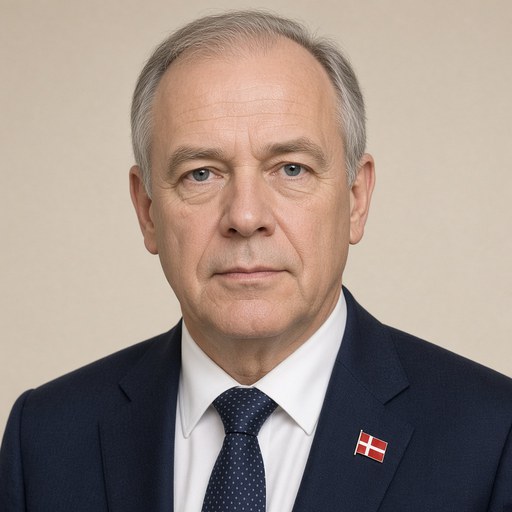
Speech at the Danish Refugee Council's Information and Fundraising Campaign April 19, 2001 "What do we give to those who had everything"
 Poul Nyrup Rasmussen · Prime Minister of Denmark
- Context
- Rasmussen addressed the Danish Refugee Council's 2001 national information and fundraising campaign launch on April 19, 2001, appealing for solidarity with global refugees.
- Main themes
- Refugee assistance and solidarity, humanitarian responsibility, causes of displacement, Danish Refugee Council fundraising campaign, Primo Levi and Holocaust memory, global refugee crisis, ethnic conflict and persecution, compassion and empathy, internal displacement, natural resources and war, media attention and compassion fatigue, Danish solidarity tradition
- Duration
- ~20 min
- Words
- 2,358
- Sentences
- 156
- Readability
- 63
- Grade
- 8.3
- Syntax
- 2.74
- Vocabulary
- 1.92
Translated from Danish
The broad sphere of national life a sentence belongs to. Every sentence has an Arena, so it is the denominator the other indices are read against.
Other156 sentences in 25 paragraphs
What do you give to the woman who has everything? Is it not precisely those who have almost everything who should especially think of those who have something fundamental – a place to live, a place to be, a place to exist? Is it not us who should come together, so that there are only us, those who had everything and those who have almost everything? I am therefore glad that you have chosen this theme. I think it hits the mark. And I think the way you have formulated it also has the resonance it should have in Denmark. Not a raised moralizing finger, but an appeal straight to the heart.
I have brought a few words from an author named Primo Levi, who has said something precise about what it is all about. Indeed, in a different context, but still. About why we should care for others besides ourselves. Primo Levi says, and his words go back to the Holocaust period in relation to World War II, but the words still resonate so strongly and emphasize how fundamental it is to care for others besides oneself.
Primo Levi says: "You who live in safety in your warm houses. You who find, when you come home in the evening, warm food and friendly faces. Think about whether this is a human being, who works in mud, who knows no peace, who fights for a piece of bread, who dies because of a yes or a no. Think about that this has happened. I overemphasize these words to you. Let them carve themselves into your hearts at home as well as outside, when you go to bed. When you get up. Repeat them to your children or may your houses collapse. Diseases strike you and the children turn away from you."
I feel that these words are no less relevant, unfortunately. The Danish Refugee Council's national collection in 2001 goes to the work for refugees in the many poor countries of the world – the Third World. And unfortunately, there is even more need for that effort. The number of refugees is enormous. Yes, almost incomprehensible. Around 15 million, to which comes an even larger number of internally displaced persons, 25-35 million people. So many people who have left their houses and their homes.
The Danish Refugee Council is connected with the national collection for a very fundamental information campaign, with the approach I have mentioned and which is about ensuring that understanding continues to exist among the Danish population. Both the understanding of why conflicts arise and the understanding of why we must help. The necessity of our help is that we have almost everything. And the necessity of our help is that we give ourselves time. Time to help those who had almost everything.
It is like our own history, fundamentally. We do not have to go far back. In the 1920s, when there was indeed a majority that had not, and a minority that had. Back then, solidarity was about taking. The 2/3 who were the majority had to take as an expression of true solidarity, the fewest had to give to the most. Now it has at least in our society been reversed. Now solidarity is about giving both inwardly in our country to the small minorities. But in reality, to an even greater extent outwardly.
We know well that many conflicts have arisen because oppressed minorities have increasingly demanded greater self-governance or the right to use their own language. The response has often been violent abuses and political oppression. We also know from Africa and other places that the struggle for natural resources, access to the earth's resources has created wars, has created flight. We know that nationalist forces have often fanned the flames by playing on historical contradictions due to differences in religion, ethnic origin, nationality, race, and language. We know that economic interests and greed are so often a significant reason for conflicts to continue. There is the same old terrible story of dictators, of poverty, of oppression, and of refugees. And time and again we have witnessed ethnic cleansing. Women systematically raped, children taken away, men who were the subject of mass murder or were forced into military service. Recruitment of child soldiers has been widespread and continues to be so. Violence has been perpetrated solely for the purpose of systematically terrorizing entire populations.
Images have burned themselves into our retinas, the crying children and women. The burning houses. People who in mute despair stare at a destruction they cannot comprehend of all that they owned and all that they held dear.
We must not forget in our country, which has everything, those who had everything. We must not extinguish their hope. They have a right to our help and our solidarity.
The Danish Refugee Council and the Danish Refugee Council's collection is an expression of that solidarity.
It takes more and more to capture our attention and hold it in the media's fickle time. It is so easy to be horrified for a moment only to then fall back into the thought that it is too big. It won't help anyway. We turn off the TV or switch to something more entertaining. That is how the world is – let it remain as it is. I say, is that right? Is that decent? And who are we really? Are we not precisely those who, by virtue of not just letting things be, want to make a difference? Yes, others say, we know that is how it is. The world is not evenly distributed when it comes to goods. But we cannot save the whole world. I say: It does not help to close our eyes. We can make a difference and furthermore, if we are to endure and look at ourselves in the mirror, we must be part of those who make a difference.
I also believe we can document it. The civil war in the small West African country, Sierra Leone, is a good example. Thousands of people were driven into flight when the rebels launched a regular terror campaign against the civilian population a few years ago. The horrific images of small children, mutilated, went around the world and were for a few days top stories in the media's life. But the media's interest does not last long. Not even when it comes to children and refugees: For the media, the children have gradually been forgotten, but they are not forgotten by us. Here we can make a significant difference with Danish humanitarian aid, and we actually do. We have not forgotten the children in Sierra Leone or the people who are suffering elsewhere in the world outside the media's spotlight. Danish aid is given where the need is greatest. Denmark's efforts to help people in need are multifaceted, and the Danish Refugee Council is crucial for our own sense of identity.
The truth is also that it is not only civil wars that drive people into flight. It is also everything that happens before conflicts turn into war. Social distress, economic exploitation, need, hunger, poverty breed dictators, and that is also what we must push back. First and foremost, we do this through long-term development aid, doing great work to prevent conflicts from turning into wars and violence. But we should also extend our ambitions. In these years, based on the fantastic work the Danish Refugee Council does, we should also raise a new debate about whether the world's global face is as it should be.
We should raise a debate about whether the market forces, which at one and the same time provide contributions to our welfare, also need to have a stronger human face. Just because we become richer does not mean that others must remain in poverty elsewhere in the world. We do not want to eat Denmark away in relation to the population with isolation and xenophobia. We do not want to impose on the population that there is a world out there and then there is us, and now we set up the two signs. We want to be together with others. We insist on solidarity.
The welfare of our women in Denmark is not independent of the welfare of other women in the Third World. There will surely be some who will claim that it would be an advantage for Denmark to cut 1/4 of Denmark's development aid so that we can get tax cuts here in the country. I think one should be aware of a fundamental thing in that debate. The development aid that in that case will be cut by 1/4 will not be the long-term bilateral aid that we give through the state. It will be the aid we give to the UN. That is precisely what we are talking about today. It is the aid that concerns all the children in the poor societies we are concerned about giving a better future. It is precisely all those children who risk becoming sick and dying. It is precisely all the oppressed women whom we help through the UN – and through the Danish Refugee Council. It is precisely they who will be exposed and feel the consequences. I say this because true solidarity also involves saying things as they are. And because the red thread of our history in Denmark is precisely to share with others.
I say this also because globalization must not hang on to the fact that there are no political answers, popular answers, to ensure the true benefits of globalization. We must pursue international agreements that mean that market forces do not dominate over people but become servants of people.
We must set ourselves the goal that it must be the end of the exploitation of child labor or female and male labor. We want to confront the greed that has too much characterized international development.
We will confront the despicable human trafficking and the exploitation of women and children. We will create the basis for a new era characterized by social and economic humanity in our dealings between our continents. We want more politics. More engaged popular work. We want a strong Danish Refugee Council, which is also a mirror of ourselves.
When the damage has occurred, it is important that the Danish Refugee Council is here. Important as we saw during the Kosovo crisis when over 1 million people, Kosovo Albanians, crossed the border into Albania and Macedonia in just a few months. In both places, the international community was ready with food and shelter. And I remember it so clearly. I remember clearly how active the Danish Refugee Council was. How much they helped. They remember it, I can assure you – both in Albania and in Kosovo. But not all can return as the Kosovo Albanians could and can. Not all refugees are so lucky. Many spend years, perhaps a whole life in refugee camps.
Life in the Third World refugee camps is so hard, yes, almost incomprehensible. It is not just poor; it is also dangerous. Security in the camps is rarely as good as it should be. Crime and violence are a typical part of everyday life. That is why it is so important that we also know that the Danish Refugee Council's efforts are part of the effort to be able to return home in safety and dignity. For that to happen, we need the Danish Refugee Council.
I look forward every year to the effort that is now being initiated. And I am pleased to see that the Danish population deep down knows what is needed when we ask. Money is not always enough. It is important to have people to manage the efforts where refugees are. In refugee disasters, it is absolutely crucial to have experienced people to create at least a little order in the chaos. That experience and that expertise you have in the Danish Refugee Council. It is incredible, invaluable, and worthy of us.
I will therefore conclude by saying that it is both a reflection for us, for myself, whether we can really say in the world now: Now we begin this century by addressing a greater humanity in our global relations? I hope so. I cannot know when we will reach that. But one thing I can know. When we set ourselves some goals, we can also make a difference.
I believe that practical action, no matter how small it may be, in the face of such great problems we face, makes a difference. I believe that human and political efforts can make a difference. I believe that one should use one's life actively, and I believe that every single person who participates in the Danish Refugee Council's collection this year is using their life actively. It makes sense. It also brings a little joy in a daily life that can often seem a bit hopeless, and it provides a small contribution to an overwhelming situation that one can only grasp by making a difference oneself. That is why the Danish Refugee Council is so deeply rooted in Danish society, the popular participation so fundamental that no state can replace it. I hope that this effort can emphasize what it is all about: Humanitarian work internationally and proper integration nationally. It is in that tension between outward and global on one side – inward and local on the other side, that the bridges must be built in our Danish population. And it is in that tension that your work for the Danish Refugee Council is fantastically crucial and simply indispensable for our shared dignity in Denmark, for our community in Denmark.
I hope that the great effort from the volunteer collectors will be followed up by a great fundraising result. You deserve it. The Danish Refugee Council deserves it, and above all, the people in the poor world deserve it. And remember, as long as our dreams and our will to act for the future weigh heavier than our memories. Yes, then the Danish Refugee Council's efforts will be eternally young and strong.
Good luck with the collection.
The original Danish. The tags above are read on the English translation's sentences.
Hvad giver man kvinden som havde alt? Er der ikke netop dem, som har alt, næsten, der især skal tænke på dem, som havde noget fundamentalt – et sted at bo, et sted at være, et sted at leve? Er det ikke netop os, der skal mødes, så der kun er os, dem der havde alt og dem der har næsten alt. Jeg er derfor glad for, at I har valgt det her tema. Jeg synes det rammer rigtigt. Og jeg synes den måde, I har formuleret det på også har den klang, det skal have i Danmark. Ikke en løftet moralsk bedrevidende pegefinger, men en appel lige indtil hjertet.
Jeg har taget et par ord med fra en forfatter, der hedder Primo Lewi, som har sagt noget præcist om, hvad det hele drejer sig om. Ganske vist i en anden sammenhæng men alligevel. Om hvorfor vi skal interessere os for andre end os selv. Primo Lewi siger, og hans ord går jo tilbage til Holocaust-perioden i relation til 2. Verdenskrig, men ordene lever alligevel så stærkt, og understreger hvor fundamentalt det er, det at interessere sig for andre end sig selv.
Primo Lewi siger: ”At I som lever i sikkerhed i jeres varme huse. I der finder, når I kommer hjem om aftenen varm mad og venlige ansigter. Tænk over om dette er et menneske, som arbejder i mudder, som ikke kender til fred, som slås om en bid brød, som dør pga. et ja eller et nej. Tænk over at dette er sket. Jeg overanvorter jer disse ord. Lad dem mejsle sig ind i jeres hjerter hjemme såvel som ude, når I går i seng. Når I står op. Gentag dem for jeres børn eller måtte jere huse falde sammen. Sygdomme ramme jer og børnene vende sig fra jer.”
Jeg føler, at de ord ikke er mindre aktuelle, desværre. Dansk Flygtningehjælps landsindsamling 2001 går til arbejdet for flygtninge i de mange fattige lande i verden – den 3. verden. Og desværre er der endnu mere brug for den indsats. Antallet af flygtninge er enormt. Ja, næsten ufatteligt. Omkring 15 millioner, hvortil kommer et endnu større antal interne fordrevne 25-35 millioner mennesker. Så mange mennesker, der har forladt deres huse og deres hjem.
Dansk Flygtningehjælp står i forbindelse med landsindsamlingen for et meget grundlæggende oplysningsarbejde, med den tilgang, jeg har nævnt og som gælder om at sikre, at forståelsen fortsat er der hos den danske befolkning. Både forståelsen af hvorfor konflikter opstår og forståelsen af, hvorfor vi skal hjælpe. Nødvendigheden af at vi skal hjælpe er, at vi har næsten alt. Og nødvendigheden af, at vi skal hjælpe er, at vi giver os tid. Tid til at hjælpe dem, der havde næsten alt.
Det er som vores egen historie i grunden. Vi skal såmænd ikke så langt tilbage. I 1920’erne, hvor der jo var et flertal, der ikke havde, og et mindretal, der havde. Dengang handlede solidaritet om at tage. De 2/3 der var de fleste, skulle tage som udtryk for den ægte solidaritet, de færreste måtte give til de fleste. Nu er det i hvert fald i vores samfund blevet omvendt. Nu handler solidaritet om at give både indadtil i vores land til de små mindretal. Men i virkeligheden i endnu højere grad udadtil.
Vi ved godt, at mange konflikter er opstået fordi undertrykte mindretal i stigende grad har krævet større selvstyre eller ret til at anvende deres eget sprog. Svaret har ofte været voldelige overgreb og politisk undertrykkelse. Vi ved også godt fra Afrika og andre steder, at kampen om naturrigdomme, adgang til jordens ressourcer har skabt krige, har skabt flugt. Vi ved, at nationalistiske kræfter mange gange har pustet til ilden ved at spille på historiske modsætninger pga. forskelle i religion, i etnisk oprindelse, i nationalitet, i race og i sprog. Vi ved, at økonomiske interesser og grådighed, så ofte er en væsentlig grund til konflikter fortsætter. Der er den samme gamle frygtelige historie om diktatorer, om fattigdom, om undertrykkelse og om flygtninge. Og gang på gang har vi været vidner til etniske udrensninger. Kvinder der systematisk voldtages, børn der fjernes, mænd som var genstand for massemord eller er blevet tvunget til militærtjeneste. Rekruttering af børnesoldater har været udbredt og er det fortsat. Vold er blevet udøvet alene med det formål systematisk at terrorisere hele befolkninger.
Billeder har brændt sig fast på vores nethinder, de grædende børn og kvinder. De brændende huse. Mennesker som i stum afmagt stirrer på en ødelæggelse, de ikke kan fatte af, alt hvad de ejede og alt hvad de havde kært.
Vi må, ikke glemme i vores land, der har alt, dem der havde alt. Vi må ikke slukke deres håb. De har krav på vores hjælp og vores solidaritet.
Dansk Flygtningehjælp og Dansk Flygtningehjælps indsamling er udtryk for den solidaritet.
Der skal jo efterhånden mere og mere til for at fange vores opmærksomhed og fastholde den i mediernes omskiftelige tid. Det er så let at forfærdes et øjeblik for så næste øjeblik at forfalde til tanken om, at det er for stort. Det kan alligevel ikke nytte noget. Vi slukker for TV-apparatet eller skifter over til noget mere underholdning. Sådan er verden nu en gang - lad den forblive, som den er. Jeg siger, er det nu rigtigt? Er det nu ordentligt? Og hvem er vi egentlig? Er vi ikke netop dem vi er i kraft af, at vi ikke bare vil lade stå til? At vi vil gøre en forskel? Jo, siger andre, vi ved jo godt, at det er sådan. Verden er nu engang ikke ligelig fordelt, hvad goder angår. Men vi kan nu engang ikke redde hele verden. Jeg siger: Det kan ikke nytte noget at lukke øjnene. Vi kan gøre en forskel og iøvrigt, hvis vi skal kunne holde ud og se os selv i spejlet, så skal vi være en del af dem, der gør en forskel.
Jeg mener også vi kan dokumentere det. Borgerkrigen i det lille Vestafrikanske land, Sierra Leone, er et godt eksempel. Tusinder af mennesker blev drevet på flugt, da oprørerne for et par år siden indledte en regulær terrorkampagne hos civilbefolkningen. De forfærdelige billeder af små børn, lemlæstet gik verden rundt og var vel i et par få dage tophistorier i mediernes liv. Men mediernes interesse holder ikke længe. Heller ikke, når det gælder børn og flygtninge: For medierne er børnene efterhånden glemt, men det er de ikke for os. Her kan vi med dansk nødhjælp gøre en stor forskel, og det gør vi faktisk. Vi har ikke glemt børnene i Sierra Leone eller de mennesker, der er uden for mediernes søgelys lider nød andre steder i verden. Dansk bistand bliver givet der, hvor nøden er størst. Danmarks indsats for at hjælpe mennesker i nød, er mangesidet og Dansk Flygtningehjælp er helt afgørende for vores egen identitetsfølelse.
Sandheden er jo også, at det ikke alene er borgerkrigene, der driver folk på flugt. Det er også alt det, der sker, før konflikter bliver til krig. Den sociale nød, den økonomiske udbytning, nød, hunger, fattigdom avler diktatorere og det er også det vi skal trænge tilbage. Først og fremmest gør vi det igennem den langsigtede udviklingsbistand et stort arbejde for at forhindre, at konflikter bliver til krige og vold. Men vi bør også udstrække vores ambitioner. Vi bør i de her år, med udgangspunkt i det fantastiske arbejde dansk flygtningehjælp gør, også rejse en ny debat, om verdens globale ansigt nu er, som det bør være.
Vi bør rejse en debat om, hvorvidt de markedskræfter, som på en og sammen tid leverer bidrag til vores velfærd, nu ikke også trænger til at få et stærkere menneskeligt ansigt. Fordi vi selv bliver rigere, behøver man jo ikke forblive i fattigdom andre steder i verden. Vi vil ikke spise Danmark af i forhold til befolkningen med indelukkethed og fremmedfjendskhed. Vi vil ikke pådutte befolkningen, at der er en verden derude og så er der os, og nu sætter vi de to tegn op. Vi vil være sammen med de andre. Vi insisterer på solidariteten.
Vores kvinders velfærd i Danmark er ikke uafhængig af andre kvinders velfærd i den 3. verden. Der vil sikkert være nogle, der vil påstå, at det vil være en fordel for Danmark at skære 1/4 af Danmarks ulandsbistand væk, således at vi kan få skattelettelser her i landet. Jeg synes man i den debat skal være klar over en fundamental ting. Den ulandsbistand, der i givet fald skal beskæres med 1/4. Det bliver jo ikke den langsigtede bilaterale bistand, som vi giver via staten. Det bliver den, vi giver til FN. Det er lige præcis den, vi taler om i dag. Det er den, der handler om alle de børn i de fattige samfund, vi er optaget af at give en bedre fremtid. Det er lige præcis alle de børn, der risikerer at blive syge og dø. Det er lige præcis alle de underkuede kvinder, som vi hjælper igennem FN - og igennem Dansk Flygtningehjælp. Det er lige præcis dem, der vil blive udsat og få konsekvensen at mærke. Jeg siger det, fordi ægte solidaritet også handler om at sige tingene, som de er. Og fordi vores histories røde tråd i Danmark netop er at dele med andre.
Jeg siger det også, fordi globaliseringen ikke må have hængende på sig, at der ikke er politiske svar, folkelige svar, på at sikre det ægte udbytte af globaliseringen. Vi skal gå efter internationale aftaler, som betyder, at markedskræfterne ikke bliver dominerende i forhold til mennesker, men bliver menneskers tjenere.
Vi skal sætte os det mål, at det skal være slut med udnyttelse af børnearbejdskraft eller kvindelig og mandlig arbejdskraft. Vi vil have et opgør med den grådighed som i for stor udstrækning har præget den internationale udvikling.
Vi vil tage et opgør med den afskyelig menneskehandel og med udnyttelse af kvinder og med børn. Vi vil skabe grundlag for en ny tid præget af social og økonomisk menneskelig, i vore ærinder mellem vore kontinenter. Vi vil mere politik. Mere engageret folkeligt arbejde. Vi vil et stærke Dansk Flygtningehjælp, som er vores spejl også af os selv.
Når skaden så alligevel er sket, så er det vigtigt, at Dansk Flygtningehjælp er her. Vigtigt som vi så det under Kosovo-krisen hvor over 1 million mennesker, Kosovo-albanere, på få måneder krydsede grænsen til Albanien og Makedonien. Begge steder stod det internationale samfund parat med mad og husly. Og jeg huske det så tydeligt. Jeg husker tydeligt, hvor aktive også Dansk Flygtningehjælp var. Hvor meget de hjalp til. De husker det, kan jeg forsikre for – både i Albanien og i Kosovo. Men ikke alle kan jo vende tilbage som Kosovo-albanerne kunne og kan. Ikke alle flygtninge er så heldige. Mange tilbringer årevis, ja måske et helt liv i flygtningelejr.
Livet i den 3. verdens flygtningelejre er så hårdt, ja, næsten ufatteligt. Det er ikke bare fattigt, det er også farligt. Sikkerheden i lejrene er sjældent så god, som den burde være. Kriminalitet og vold er en typisk del af hverdagen. Derfor er det så vigtigt, at vi også ved, at Dansk Flygtningehjælps indsats er en del af indsatsen for at kunne vende hjem i sikkerhed og i værdighed. For at det skal ske har vi brug for Dansk Flygtningehjælp.
Jeg glæder mig hvert år over den indsats, der nu sættes i gang. Og jeg glæder mig over at se, at den danske befolkning inderst inde godt ved, hvad der skal til, når vi spørger. Penge er ikke altid nok. Det er vigtigt at have mennesker til at styre indsatsen, der hvor flygtninge er. Ved flygtningekatastrofer er det fuldstændig afgørende at have erfarne folk til at skabe bare lidt orden i kaos. Den erfaring og den ekspertise har I i Dansk Flygtningehjælp. Det er utroligt, uvurderligt og værdigt for os.
Jeg vil derfor for min part slutte med at sige, at det er både en eftertænksomhed for os, for mig selv, om vi virkelig i verden nu kan sige: Nu begynder vi det her århundrede med at tage fat på en større menneskelighed i vores globale relationer? Jeg håber det. Jeg kan ikke vide, hvornår vi når det. Men en ting kan jeg vide. Når vi sætter os nogle mål, så kan vi også gøre en forskel.
Jeg tror på, at den praktiske handling, så lille den end kan være, overfor så store problemer, vi står for, gør en forskel. Jeg tror på, at menneskelig og politik og indsats kan gøre en forskel. Jeg tror på, at man skal bruge sit liv aktivt, og jeg mener at hvert eneste menneske, som deltager i Dansk Flygtningehjælps indsamling i år bruger sit liv aktivt. Det giver mening. Det giver også lidt glæde i en hverdag, som ofte kan være lidt udsigtsløs, og det giver et lille bidrag til en uoverskuelighed, som man først får hold på ved selv at gøre en forskel. Derfor er Dansk Flygtningehjælp så dybt forankret i det danske samfund, den folkelige deltagelse så fundamental, som ingen stat kan erstatte. Jeg håber, at den indsats her kan understrege, hvad det hele handler om: Humanitært arbejde internationalt og ordentlig integration nationalt. Det er det spændingsfelt udadtil og globalt på den ene side - indadtil og lokalt på den anden side, at broerne skal bygges i vores danske befolkning. Og det er i det spændingsfelt at jeres arbejde for Dansk Flygtningehjælp er fantastisk afgørende og simpelthen uundværligt for vores fælles værdighed i Danmark, for vores fællesskab i Danmark.
Jeg håber, at den store indsats fra de frivillige indsamlere må blive fulgt op af et flot indsamlingsresultat. Det har I fortjent. Det har Dansk Flygtningehjælp fortjent, og det har frem for alt menneskene i den fattige verden fortjent. Og husk så, så længe vores drømme og handlekraft om fremtiden vejer tungere end vores erindringer. Ja så vil Dansk Flygtningehjælps indsats være evig ung og stærk.
Held og lykke med indsamlingen.