




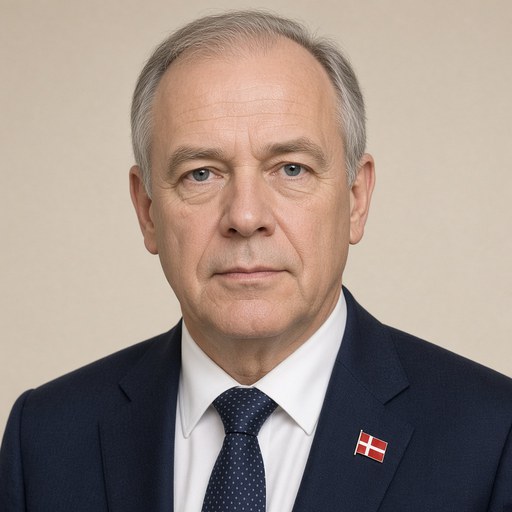
Prime Minister Poul Nyrup Rasmussen's statement at the concluding debate of the Folketing on Thursday, May 25, 2000.
 Poul Nyrup Rasmussen · Prime Minister of Denmark
- Context
- Rasmussen addressed the Danish Folketing's concluding debate on May 25, 2000, arguing for deeper European integration to safeguard Denmark's economic prosperity.
- Main themes
- Danish economic prosperity, European cooperation, international economic interdependence, lessons from 1970s crises, Denmark's role in the EU, globalization, solidarity and collective action, unemployment, Danish foreign policy, sustainable growth
- Duration
- ~44 min
- Words
- 5,328
- Sentences
- 339
- Readability
- 50
- Grade
- 9.7
- Syntax
- 2.65
- Vocabulary
- 2.00
Translated from Danish
The broad sphere of national life a sentence belongs to. Every sentence has an Arena, so it is the denominator the other indices are read against.
Other339 sentences in 170 paragraphs
There are good times in Denmark.
They are good times – so good that many rightly draw comparisons with the good times of the mid-1960s.
Back then, we talked about making the good times better – and we do that today as well. They are good, and they can get better.
Back then, there was also an American singer, his name was Bob Dylan, who became world-famous with his song 'The Times They Are A-Changin'. He sang it for the first time in the mid-1960s, when the economic boom was roaring in the Western world. Back then, no one believed that growth would ever come to an end. Back then, when the good times almost by natural law had to continue.
Here, 35 years later, we must say that Dylan was right. He was right when he said that the times are changing. They have indeed been changing ever since.
But what was it that actually stopped the good times back in the 1960s? What happened? What was it that made everything not just continue automatically in high gear forward?
It was the international crises – and it was our lack of ability to cooperate between countries to withstand them. Back then, we also saw who it affected – it was the unemployed, it was the low-income earners and the middle-income earners. It was the weakest in society who bore the brunt.
We have gone through downturns with oil crises and lots of unemployment. Times when the countries in the Western world could not agree on a common effort – and certainly not in Europe. Times when each tried their own national interventions, which in hindsight only made things worse. Times when precisely the lack of cooperation and – especially small countries' – like Denmark's isolated, futile attempts to cope – set us back.
That is the lesson from back then – and it is actually even more relevant today. We have not become less dependent on each other; we have become more dependent on each other in the new international world, where there is always a stock exchange open somewhere on the globe, where the Internet and computers ensure that buying and selling can take place – where countries have never before been as dependent on each other's economies as they are right now.
We overcame the damages from back then – but it took us more than 20 years to overcome the damages that the international economy inflicted on us.
* * *
These are good times – and they must get better. But if they are to improve in a sustainable way, we must learn from history.
Now is the time to prove that we have learned from history. Now is the time to understand that a prerequisite for the good times to get better is that we make the right choices in the coming years of European and international cooperation. That we understand that Denmark is not and has never been served by being outside, by being on the sidelines. By being isolated.
We must, together with countries that understand and respect us, form a bulwark against the next crisis, so that it never reaches the same magnitude as back in the 1970s, when unemployment rose month by month, year by year. When hundreds of thousands of Danish workers and employees lost their jobs. And where we, in fact, have only just now – after 7 years of very strong efforts and a fixed exchange rate – returned to an unemployment rate that is the lowest in 25 years.
That is what is truly the crucial pivot for the transformation process of Danish society in these years. To ensure the best possible foundation for continued stable progress in Denmark – that is closely linked to equipping ourselves for the changes that come to us internationally, and also preparing ourselves against new international setbacks. For one thing we can say with certainty: Not a single person can guarantee that there will never again be economic, international setbacks or crises.
* * *
The Danish economy is not so bad – to put it in Jutlandic terms. So why all the talk about international crises and speculation?
The explanation is simple: It is in times of prosperity that we must create the binding cooperation. If a recession and setbacks occur, we risk that some countries break the solidarity and try to salvage their own situation, resulting in everyone being worse off.
Denmark has much to offer internationally. We need not worry about whether we can assert ourselves. We can.
We participate not only to defend ourselves against external threats. We participate even more because we have something to offer.
That is why it is important that we do not forget the major international issues, even though we are doing well in Denmark. Denmark can and must continue to be an active player on the international stage. It is here that a very important part of the conditions for our future is shaped. This applies in the EU, it applies in the UN, it applies in relation to developing countries and our neighboring countries. It applies everywhere we meet the outside world. Everywhere policies are shaped. Everywhere that influences our conditions in the short and long term.
Internally and externally, we know it well: Politics and influence are too important to leave to others. Real democracy consists of us being present everywhere decisions are made that affect our everyday lives, our living conditions, our way of organizing ourselves.
* * *
In our close cooperation with our European partners, we have shown that Denmark can indeed make its mark. Denmark has been among those who have set the European agenda when it comes to the environment, employment, democracy, and human rights.
As all members of the Folketing know, influence does not come by itself. It requires hard work. And above all, it requires being present. Being involved. Then we can win.
Just like in the Eurovision Song Contest and at the Cannes Film Festival. When Denmark wins on the international stage, it is of course due to the fantastic and impressive efforts of those involved. We achieve victory because the other countries understand and appreciate our contributions. That is worth remembering.
The world is there – for better or worse. We must relate to it, and we do. But if we do not constantly seek influence actively, Denmark will end up as a passive player – one that must adapt to others. One that must accept the results of what others have decided. I do not think Denmark deserves that.
Denmark deserves better. And fundamentally, the progress and good times we have in Denmark after seven years of effort are also a progress that is deeply dependent on cooperation with others in Europe. We would not have been able to achieve that progress if it had not also been based on good and sensible cooperation with others.
Never before have we had such good opportunities to ensure stable development – and such good opportunities to participate in decision-making, to assert our influence as right now.
Thus, our own self-determination, our sovereignty has actually been expanded and not narrowed: The self-determination and sovereignty that I value the most is the real, the genuine – and the real, genuine self-determination consists primarily of being there where decisions are made.
Self-determination also consists of recognizing our economic dependence on others. Otherwise, we go astray. The monetary and economic dependence that has long been a reality for us – we should follow up with a new influence on the decisions we must adapt to in any case.
On many fronts of cooperation, Denmark is at the forefront. We know that, and so do others. That is why they also listen to us. Perhaps even more than our size justifies. Should we then doubt ourselves as Danes? When we know that the people of all the other countries have tried the alternatives. When we can see that our values are slowly but surely becoming an attraction for many other countries in Europe – they have tried all alternatives. The vertical, extreme market liberalism – and the top-down, equally extreme Soviet communism.
Should we then doubt? It is precisely now that there is a tailwind for our values and everything we believe in. It is precisely now that the opportunities are greatest to promote development in our part of the world on the premises and conditions we have good experiences with. It is precisely now that the right decisions must be made.
* * *
A good start
We have entered the new millennium well. We are well equipped to take new steps in the development of the Danish welfare state. We are ready to meet the new challenges.
The progress that the government, the Folketing, the business community, municipalities, and counties have achieved in collaboration with all Danes since 1993 can continue if we want it to.
The foundation and prerequisite for our work is a sound economy. And the Danish economy is doing particularly well. Employment and investments are on the rise. The surplus with foreign countries is at its peak.
More than 200,000 have found work since unemployment peaked in 1994. We have brought unemployment down to the lowest level in 25 years.
These are good times. It is time to also set new ambitions in our domestic policy work.
* * *
The sustainable society – time for new steps in four core areas
Four core areas where quality must be strengthened through dialogue and participation: Elderly care, health, family/school, and the inclusive labor market.
With 'The Sustainable Society', we have created a dialogue with the entire community. The dialogue will help show the way in the necessary choices and practical solutions in the coming years.
An open and binding dialogue across all groups in society must ensure the solidarity and shared responsibility that make our choices sustainable and robust. Also for future generations.
Elderly care
It must be safe for everyone to be old in Denmark. Fortunately, many elderly people manage on their own. Those who require necessary care and support must, of course, receive it.
We hear criticism that we have prioritized bricks and the arrangement of modern elderly housing higher than personal care.
The government will, in upcoming negotiations with the municipalities and in the autumn, follow up with initiatives that will strengthen personal care and support.
Health and Hospitals
The government has agreed with the counties on a three-year development plan for the hospital sector for the period 2000-2002, which provides the best conditions for achieving the goals for quality in healthcare services and short waiting times for treatment. This includes, for example, the treatment guarantee for people with life-threatening illnesses.
The service that the healthcare system provides to citizens must be characterized by safety and security and be based on the individual’s situation and needs.
That message was clearly conveyed at the hearing on health and hospitals, and 'the patient at the center' will be an overarching goal that we will organize our health policy around in the coming years.
The government’s cross-sector public health program sets clear goals for the efforts in the next 10 years. For the government, it is crucial to address the socially conditioned disparities in quality of life and health.
Family, children, and school
Children, young people, and families continue to be a high priority for the government, and this year we have also improved welfare offerings for families.
The number of public childcare offerings continues to rise. New freedoms for families with children with more flexible frameworks for parental leave and maternity leave.
All children have the right to a good start characterized by calm and security. The government has proposed legislation for a strengthened effort towards disadvantaged children and young people.
Even in the 21st century, the public school will be the school for the whole people.
The inclusive labor market – room for everyone – need for everyone
Unemployment is historically low. More than 200,000 have found work since 1994. And the number of long-term unemployed has fallen from 160,000 to only 40,000 people in five years.
The same has been true for the young. When the government came to power in 1993, there were over 60,000 young unemployed. Now there are only 14,000. But we want to make good times even better.
Now is the time to seize the opportunity to bring the last groups into the labor market – into the community. This especially applies to the group of social assistance recipients who have problems beyond unemployment. Here, extra efforts must be made.
We can take initiatives and create legislation here in the Folketing. But the project can only succeed if there is an active and targeted effort out in businesses, in municipalities, in educational institutions, and in local communities.
That is why the government has emphasized a broad and binding dialogue with the population, businesses, and local actors – most recently yesterday's hearing in Aalborg on 'The Inclusive Labor Market'.
* * *
Proactive responses to internationalization
In the past parliamentary year, the government has presented visions and concrete proposals in a number of areas where we are affected by increasing internationalization.
Forward-looking responses that ensure Denmark as a whole society.
The business strategy
We are entering a global knowledge economy, which presents us with many new opportunities and challenges. For businesses and for society as a whole.
A well-functioning welfare society and a strong business community are prerequisites for each other. That is the starting point of the government’s business strategy.
It is a strategy for the entire business community. Everyone is included. From the large and well-established to the small and newly started and the businesses that are hardly even born yet.
Visions and benchmarks are set that we will steer towards in the coming years, and there are already a number of initiatives underway.
Reform of adult and continuing education
Space in the labor market requires maintenance and development of individual qualifications and competencies.
In this parliamentary year, we succeeded in implementing a reform of the entire adult and continuing education effort that takes into account the situation in the labor market and provides all adults with the opportunity for a skills upgrade.
The public effort is targeted at those with the greatest need, the short-educated.
At the same time, educational pathways and compensation schemes are simplified, and the labor market parties gain greater influence and responsibility.
The network society
The network society is a reality.
We have in Denmark the potential to become a leading IT nation and share in the growth potential of the digital economy.
For the benefit of all and without compromising the values of the welfare state.
We will prioritize accessibility and security for everyone. No one should be left behind. Everyone should have a ticket to the network society.
Culture and values
As international trends increasingly blend into our everyday lives, it is natural to discuss our values - our cultural heritage and the common value foundation that is a necessary basis for the welfare state.
It has therefore been important for the government to secure a good media agreement for the coming years. A media agreement that places greater focus on public service and strengthens the production of Danish programs.
The media agreement will help strengthen and develop our common values, so we can engage constructively and boldly in international interactions with other countries and cultures.
Integration of new Danes
The debate on the integration of new Danes has been significant and has occupied many in recent years. For better or worse. The government wants a society with equal opportunities for all. We do not want a divided Denmark.
The government has therefore presented two action plans in the area of integration with a number of concrete initiatives: an action plan for marginalized youth and an action plan for integration into Danish society.
Three fundamental demands that we must make in Denmark – to the newcomers and to ourselves:
Everyone must learn the Danish language,
Everyone must have the opportunity to get a job and an education,
Everyone must accept the values on which Danish society is built.
The demands must ensure that refugees and immigrants have the opportunity to participate on equal terms with other citizens in society – in the labor market, in the education system, in cultural activities, and in political life.
* * *
A year rich in results
It has been an incredibly industrious parliamentary year. Many results have been achieved for the benefit of Danish society.
Not by a single entity – not even by a single party or two. But first and foremost through broad cooperation across the Danish Parliament.
I would like to express my gratitude for this on behalf of the entire Danish government.
What a parliamentary year it has been, characterized by stability and good legislative results. I believe that is what the Danish people expect from us.
All – almost all parties have been involved in one agreement or another – that is the hallmark of the Parliament – that is Danish political democracy at its best.
Let me just mention some of the most significant tasks we have tackled and legislated on in this parliamentary year:
The adult education reform
The new legislation on better integration of immigrants and refugees into Danish society.
A long series of proposals for better functioning of the financial sector
A major new gas reform that ensures stability in energy supply and reasonable competition
A completely new competition law
A modernization of our entire gender equality work through the new gender equality law
Enhanced support for children and youth
The Justice Minister's many important proposals
Reform of intermediate and higher education
I could mention many more. But central to it all is that we have a democracy in Denmark that delivers – that delivers results in abundance.
It is not just the government - it is of course the government that presents the proposals and the foundation – but it happens decisively in cooperation with the Danish Parliament.
We have again in this parliamentary year confirmed that the cooperative democracy is alive and well. That stability internally and externally is primarily connected to this.
* * *
The Realm
The government has, as you know, begun negotiations with the Faroese government regarding the government's wishes for the establishment of a sovereign Faroese state.
The Parliament had the opportunity to debate the issue during the inquiry debate on April 6, where a 21-member committee regarding the Faroe Islands was also established, with which the government has a good ongoing dialogue.
And there emerged - in my assessment - a very uniform picture in the perceptions among almost all parties. Fundamental perceptions that can simultaneously be described as broad support for the government's overall and principled position.
The government and a broad majority in the Parliament prefer that the Faroe Islands remain in the realm, but that is a decision that must be made in the Faroe Islands.
I would like to pause here for a moment. Amid the legal, economic, and practical considerations in the negotiations we have with the Faroese government, we must not forget what it is we are really dealing with. What our realm is fundamentally about.
It is the shared long history, it is the sense of belonging, our linguistic and cultural common roots. It is the many family ties and the countless points of contact between our two societies – in educational institutions, in workplaces, in business. It is the mutual respect and the right to self-determination. That is the core of our centuries-old community.
I believe there is good reason to cherish these values in a continued realm between Denmark, the Faroe Islands, and Greenland. But preferably under new forms.
* * *
Common to the Faroe Islands and Greenland is that the economy is doing well. For several years, both places have experienced high economic growth, increasing employment, and surpluses in the treasury. This positive development has especially been evident in the Faroe Islands, but it has also progressed in Greenland.
* * *
In Greenland, a self-government commission has been established to assess what further opportunities for self-government can be accommodated within the framework of the realm. I have not hidden my pleasure that the self-government commission, in its work, is based on the realm.
The government and the local government agree that it is in Greenland that the desires for expanded self-government should be shaped. The government will therefore await a proposal from the home rule government based on the completion of the commission's work.
Greenland is in the midst of crucial fishing negotiations with the EU, and the government is providing its usual support for this. I will accompany the chairman of the local government, commission chairman Romano Prodi, on a trip to Greenland in July, so that the commission chairman can see for himself the special Arctic conditions and Greenland's dependence on fishing.
In our ongoing cooperation with Greenland, we have, as before, maintained a good dialogue. In the past year, there has been further transfer of competence within the home rule arrangement. I am thinking here of the legislation that the Parliament has just adopted regarding the transfer of competence in the area of media responsibility and the amendment of the aviation law.
* * *
Denmark and the common currency
Let me conclude as I began – together with domestic policy, we best secure Denmark when we are also active in the foreign policy arena in the world around us.
This is especially true in the part of the world where we find ourselves, here in the middle of Europe.
Leading up to the EU summit in Luxembourg in December 1997, we were largely alone in advocating for a broad enlargement. Nevertheless, we established that the accession process should include all the Central and Eastern European countries. And they should participate on the same terms.
And now – with the decisions from Helsinki in December 1999 – negotiations have been opened with all ten Central and Eastern European countries as well as Cyprus and Malta. Now, for example, all three Baltic countries are negotiating to join the EU. Now everyone can see the results of the line we have always fought for, right from the summit in Copenhagen in 1993, where the criteria were established.
In the area of employment, it was us who – despite significant opposition – put employment on the agenda for the last government conference. It was us who presented concrete proposals that largely corresponded to what became the final result. And now – just three years later – work on employment has become a central and completely natural element at almost every EU summit.
Most recently, we decided at the summit in Lisbon that we will hold a summit on employment and other economic and social issues every spring from now on. Not to move towards harmonization in these areas. Not at all. But to take advantage of the new 'open method of coordination' in the EU. That is, a method where we set common goals and exchange experiences about our results, but where the means are up to the individual countries. This is very positive. It shows that there is respect for the competencies of member states in the EU. It shows that the EU must continue to be an association of sovereign states that have chosen to come together to solve certain tasks in common.
We are also working on a charter for fundamental rights in the EU. This is a very important task that focuses on placing citizens' rights in relation to the EU at the center. The goal is to make visible the rights that citizens have in relation to the EU's institutions. This is very positive. It demonstrates that the EU is also about more than money. Here too, Denmark must contribute actively and constructively.
The government conference in Nice in December is developing as we have emphasized. All member states recognize that the purpose is to complete the EU's preparations for enlargement. Everyone agrees that we must be finished on time – that is, by December this year. Everyone agrees that the EU – for its part – must be ready for enlargement by the end of 2002.
Of course, anyone can make proposals – the treaty says so – and several are doing so. But there is agreement not to lose sight of the overall aim. There is agreement that this government conference should have a completely different and more limited character than the two previous ones. We can only be satisfied with that.
* * *
Thus, I have reached the question of Denmark's participation in the common currency. The referendum will undoubtedly shape the political work leading up to the voting day on September 28.
For the government, it is clear that we should also ensure a solution here that gives the country the best conditions for continued stable development.
In relation to the EMU cooperation, we have today all the obligations – now we must also have the rights.
Denmark must be involved where decisions are made. It is untenable that we do not have influence over the decisions that ultimately affect our everyday lives.
The time has passed when we could say, 'we know what we have' and then let the world go its own way. We need the community as a safeguard against hard times. As in any other community, it only works if everyone commits.
It has been said that the common currency will mean more union and less independence.
There are members in this chamber who can tell what the price of national egoism and so-called independence was in the 1980s, when interest rates were around 20% and unemployment hit hard.
As for the loss of Danish identity – I believe the best way to preserve Danishness is to ensure continued progress and stability.
There are also voices suggesting that there are not great gains to be had from participating in the common currency.
That is like canceling your car insurance when you have become an elite driver – you have nothing to use it for.
I am convinced that it will enhance foreign interest in investing in Danish jobs and further increase trade among the participating countries. And I am sure that the day the international economy takes a dive, we will be quite pleased with the insurance we have taken out.
I have also seen that there have been voices suggesting that it does not matter much economically.
I would like to say, for me, the economic aspect matters quite a lot. For me, it matters a great deal that Danish wage earners, in the event of a no vote, will face an interest rate increase that significantly affects the monthly rent if one is a homeowner. It may not matter much in the writings of wise men that one risks an increase of 200-400 kroner a month.
There is another very important question: The worst service one can do for one's country right now is to create uncertainty about the fixed exchange rate – about the fixed krone rate. I have been very pleased that the National Bank has left no doubt about where it stands: Firm, on the basis of the fixed exchange rate – that is where the government stands as well. And I would like to do what I can today to ensure that there is no longer any uncertainty about what is in Denmark's best interest.
Therefore, it is not in Denmark's interest to start a new debate about floating exchange rates. This would at worst only send a signal to the outside world that we are thinking about such things. I can say that we are not thinking about that in the government offices. I also do not have the impression that there is any doubt about this in the Parliament.
Therefore, I must also say: The real comparison between a yes and a no to the common currency. It is either a Denmark outside, isolated on the sidelines, which must maintain a fixed exchange rate, as we have done for 17 years, and in addition a tighter fiscal policy. Or a Denmark that is inside and thus protected against future financial crises, which must maintain a fixed exchange rate – that is inherent in being a part of it. A Denmark that simultaneously gains all the rights and does not have the same pressure to convince the outside world that there is control over economic policy.
Let others call it small economic gains that there is an interest rate difference of ½ - ¾ percent. I maintain that it is of colossal importance for the individual person in Denmark, for family Denmark, for Danish wage earners in their monthly and daily economy. Let others think that it is of lesser significance that an interest rate difference of that magnitude also has negative implications for employment. I maintain that even a loss of 6000 jobs is 6000 jobs too many.
I believe it must be said loud and clear what is required to achieve the same employment trajectory outside as inside: It is evident from the calculations that it involves a real wage decline or a tightening of taxes, which have the same result.
We must discuss freely and openly. We must illuminate all sides, economically and politically. And I say this because I am completely convinced that one goes terribly wrong in reality if one tries to separate the economic and political aspects of membership in the common currency. They are inextricably linked.
You cannot separate the two things, because the economy is not a free bird in the air, floating, laboratory-sized. The economy is a tremendously crucial tool that is connected to the political line one chooses. I do not wish to see Denmark reduced to an economic, theoretical entity where it does not matter how we arrange ourselves.
I can see that this is not something that is taken into account in the theoretical assessment. But for me and for the government, it is absolutely crucial to remember that when there have been setbacks in our society – internationally and nationally – we know well who it affects. It has always affected the weakest in our society. That is why it is in Denmark's interest to participate in the cooperation on the common currency to shape it with our values and our viewpoints.
* * *
May I conclude by saying that I have been pleased – this is addressed to the Socialist People's Party – to sense that there is agreement on these fundamental premises. There is agreement, I understand, that the fixed exchange rate must be maintained both inside and outside. It is also acknowledged that if one stands outside in the event of a no, it entails a tighter budget. I mention this now, for it is worth remembering when we eventually begin the budget negotiations for the year 2001. I have noted the wish list from the Socialist People's Party and from others. If we now put the two things together, I look forward to an interesting debate also about what serves Denmark's interests best.
Politics is about being present where it happens. Therefore, the government recommends a yes on September 28.
Let me conclude by saying: We will have a debate today that will deal with big things and small things – that is how it should be. We will also have a debate that will undoubtedly deal with issues and individuals – and that is also perfectly fine.
I have just one wish, and that is that we also today have time to cover – the most important foreign policy question the Danish nation will have to address for many years, namely the question of the common currency.
The original Danish. The tags above are read on the English translation's sentences.
Det er gode tider i Danmark.
Det er gode tider – så gode, at mange med rette drager sammenligninger med de gode tider i midten af 60’erne.
Dengang talte vi om at gøre de gode tider bedre – det gør vi også i dag. De er gode og de kan blive bedre.
Dengang var der også en amerikansk sanger, Bob Dylan hed han, som blev verdensberømt med sin sang 'Tiderne skifter'. Den sang han første gang i midten af 60’erne, da højkonjunkturen drønede derudaf i den vestlige verden. Dengang ingen troede, at væksten ville få nogen ende. Dengang hvor de gode tider næsten pr. naturlov måtte fortsætte.
Her 35 år efter må vi sige, at Dylan havde ret. Han havde ret når han sagde, at tiderne skifter. Det har de faktisk gjort lige siden.
Men, hvad var det egentlig der stoppede de gode tider dengang i 1960’erne? Hvad var det der skete? Hvad var det der gjorde, at det hele ikke bare fortsatte automatisk i højeste gear fremad?
Det var de internationale kriser – og det var vores mangel på evne til at samarbejde mellem landene for at modstå dem. Dengang så vi også hvem det gik ud over – det blev de arbejdsløse, det blev lavindkomsterne og mellemindkomsterne. Det blev de svageste i samfundet, der kom til at bære hårdest.
Vi har været igennem nedgangstider med oliekriser og masser af arbejdsløshed. Tider, hvor landene i den vestlige verden ikke kunne enes om en fælles indsats – og slet ikke i Europa. Tider, hvor hver især forsøgte sig med egne, nationale indgreb, der set i bakspejlet kun gjorde tingene værre. Tider hvor netop manglen på samarbejde og – især små landes – som Danmarks - isolerede, forgæves forsøg på at klare sig – satte os tilbage.
Det er læren fra dengang – og det gælder i virkeligheden i endnu højere grad i dag. Vi er ikke blevet mindre afhængige af hinanden, vi er blevet mere afhængige af hinanden i den ny, internationale verden, hvor der altid er en finansbørs der har åbent et eller andet sted på kloden, hvor Internettet og computerne sikrer, at der kan købes og sælges – hvor landene aldrig før har været så afhængige af hinandens økonomi som netop nu.
Vi overvandt skaderne fra dengang – men det tog os mere end 20 år at overvinde de skader, som den internationale økonomi påførte os.
* * *
Det er gode tider – og det skal blive bedre. Men, hvis det skal blive det på en holdbar måde, så skal vi lære af historien.
Det er nu er tid til at bevise, at vi har lært af historien. Nu er det tid at forstå, at en forudsætning for, at de gode tider kan blive bedre er, at vi vælger rigtigt i de kommende års europæiske og internationale samarbejde. At vi forstår, at Danmark ikke er og aldrig har været tjent med at befinde sig udenfor, at befinde sig på sidelinien. At være isoleret.
Vi skal sammen med lande, der forstår og respekterer os, danne et værn mod den næste krise, så den aldrig når samme omfang som dengang i 1970’erne, hvor arbejdsløsheden steg måned for måned, år for år. Hvor hundrede tusindvis af danske arbejdere og funktionærer mistede deres job. Og hvor vi i virkeligheden først nu – efter 7 års meget kraftig indsats og fast valutakurs – er kommet tilbage til en arbejdsløshed, der er den laveste i 25 år.
Det er det, der i virkeligheden er det afgørende omdrejningspunkt for det danske samfunds forandringsproces i disse år. At sikre det bedst mulige grundlag for en fortsat stabil fremgang i Danmark – det hænger meget nøje sammen med at ruste os til forandringerne der kommer til os internationalt, og ruste os også mod nye internationale tilbageslag. For en ting kan vi sige med sikkerhed: Ikke én eneste kan garantere, at der aldrig nogensinde mere kommer økonomiske, internationale tilbageslag eller kriser igen.
* * *
Dansk økonomi er ikke så ringe – for nu at sige det på jysk. Så hvorfor egentlig al den snak om internationale kriser og spekulation?
Forklaringen er enkel: Det er i opgangstider, at vi skal skabe det forpligtende samarbejde. Hvis der kommer lavkonjunktur og tilbageslag risikerer vi, at nogle lande bryder sammenholdet og forsøger at bjærge sit med det resultat, at alle får det dårligere.
Danmark har meget at byde på internationalt. Vi behøver slet ikke at være bekymrede for om vi kan gøre os gældende. Det kan vi.
Vi deltager ikke kun for at forsvare os mod udefra kommende trusler. Vi deltager i endnu højere grad fordi vi har noget at byde på.
Det er derfor vigtigt at vi ikke glemmer de store internationale spørgsmål, selv om vi har det godt i Danmark. Danmark kan og skal fortsat være en aktiv medspiller på den internationale scene. Det er jo her en meget vigtig del af vilkårene for vores fremtid formes. Det gælder i EU, det gælder i FN, det gælder i forhold til u-landene og vore nabolande. Det gælder alle de steder, hvor vi mødes med omverdenen. Alle de steder, hvor der formes politik. Alle de steder, der har indflydelse på vores vilkår på kortere og længere sigt.
Indadtil og udadtil ved vi det jo godt: Politik og indflydelse er for vigtig til at overlade til andre. Det reelle demokrati består i, at vi er med alle de steder, hvor der træffes beslutninger, som berører vores hverdag, vores livsvilkår, vores måde at indrette os på.
* * *
I vores nære samarbejde med vore europæiske partnere har vi vist, at Danmark godt kan sætte sit præg. Danmark har været blandt dem, der har sat den europæiske dagsorden når det gælder miljø, beskæftigelse, demokrati og menneskerettigheder.
Som alle Folketingets medlemmer ved, kommer indflydelse ikke af sig selv. Der skal arbejdes hårdt. Og frem for alt kræver det, at man er til stede. At man er med. Så kan vi vinde.
Ligesom i Melodi Grandprix’et og ved filmfestivalen i Cannes. Når Danmark vinder på den internationale scene er det naturligvis på grund af de medvirkendes fantastiske og flotte indsats. Sejren får vi jo fordi de andre lande forstår og værdsætter vores bidrag. Det er værd at huske på.
Verden er der – på godt og ondt. Det må vi forholde os til og det gør vi. Men hvis vi ikke hele tiden aktivt søger indflydelse ender Danmark som en passiv medspiller – den der må tilpasse sig de andre. Den, der må indkassere resultaterne af det, de andre har besluttet. Det synes jeg ikke, Danmark fortjener.
Danmark fortjener bedre. Og dybest set er den fremgang og de gode tider, vi har i Danmark efter syv års indsats, jo også en fremgang der er dybt afhængig af samarbejdet med de andre i Europa. Vi ville ikke have kunnet nå den fremgang, hvis det ikke også var sket på grundlag af et godt og fornuftigt samarbejde med de andre.
Aldrig før har vi haft så gode muligheder for at sikre en stabil udvikling – og så gode muligheder for at være med til at træffe beslutninger, at gøre vores indflydelse gældende som netop nu.
Dermed er vores egen selvbestemmelse, vores suverænitet i virkeligheden også blevet udbygget og ikke indsnævret: Den selvbestemmelse og suverænitet, jeg lægger allermest vægt på er den reelle, den virkelige – og den virkelige, reelle selvbestemmelse den består først og fremmest i at være med dér, hvor beslutningerne træffes.
Selvbestemmelse består også i at erkende vores økonomiske afhængighed af de andre. Ellers går vi galt i byen. Den pengepolitiske og økonomiske afhængighed der for længst er en realitet for os – den bør vi følge op med en ny medindflydelse på de beslutninger, vi under alle omstændigheder skal indrette os efter.
På mange samarbejdsfronter er Danmark forrest. Det ved vi, og det ved de andre. Derfor lytter de også til os. Måske også mere end vores størrelse berettiger os til. Skulle vi så komme i tvivl os danskere? Når vi nu ved, at alle de andre landes folk har prøvet alternativerne. Når vi kan se at vore værdier langsomt men sikkert er ved at blive trækplaster for mange andre lande i Europa – de har jo prøvet alle alternativer. Den lodrette, ekstreme markedsliberalisme – og den topstyrede, lige så ekstreme sovjetkommunisme.
Skulle vi så komme i tvivl? Det er jo netop nu, der er medvind for vore værdier og alt det, vi tror på. Det er netop nu mulighederne er størst for at fremme udviklingen i vores del af verden på de præmisser og betingelser vi har gode erfaringer med. Det er netop nu, der skal træffes rigtige beslutninger.
* * *
En god start
Vi er kommet godt ind i det nye årtusinde. Vi står godt rustet til at tage nye skridt i udviklingen af det danske velfærdssamfund. Vi er klar til at møde de nye udfordringer.
Den fremgang regering, folketing, erhvervsliv, kommuner og amter i samarbejde med alle danskere har præsteret uafbrudt siden 1993 kan fortsætte, hvis vi selv vil det.
Grundlaget og forudsætningen for vores arbejde er den sunde økonomi. Og dansk økonomi har det særdeles godt. Der er gang i beskæftigelsen og investeringer. Overskuddet overfor udlandet er i top.
Mere end 200.000 er kommet i arbejde siden ledigheden toppede i 1994. Vi har fået arbejdsløsheden ned på det laveste niveau i 25 år.
Det er gode tider. Det er tid til også at sætte nye ambitioner i vores indenrigspolitiske arbejde.
* * *
Det holdbare samfund – tid til nye skridt på fire kerneområder
Fire kerneområder, hvor kvaliteten skal styrkes gennem dialog og deltagelse: Ældreomsorg, sundhed, familie/skole og det rummelige arbejdsmarked.
Vi har med 'Det holdbare samfund' skabt en dialog med hele samfundet. Dialogen skal være med til vise vej i de kommende års nødvendige valg og praktiske løsninger.
En åben og forpligtende dialog på tværs af alle grupper i samfundet skal sikre dét sammenhold og det fælles ansvar, der gør, at vore valg bliver holdbare og robuste. Også for kommende generationer.
Ældreomsorg
Det skal være trygt for alle at være gammel i Danmark. Heldigvis er der mange ældre, der klarer sig selv. Dem, der har krav på nødvendig pleje og omsorg, skal selvfølgelig have den.
Vi hører kritik af, at vi har prioriteret mursten og indretning af moderne ældreboliger højere end den personlige pleje.
Regeringen vil under kommende forhandlinger med kommunerne og til efteråret følge op med initiativer, som skal styrke den personlige pleje og omsorgen.
Sundhed og Sygehuse
Regeringen har med amterne aftalt en treårig udviklingsplan for sygehusvæsenet i perioden 2000-2002, der giver de bedste forudsætninger for, at målene for kvaliteten i sundhedsvæsenets ydelser og korte ventetider til behandling nås. Det gælder f.eks. behandlingsgarantien for mennesker med livstruende sygdomme.
Den service sundhedsvæsenet yder borgerne skal være kendetegnet ved tryghed og sikkerhed og tage udgangspunkt i den enkeltes situation og behov.
Det budskab blev klart fremført på høringen om sundhed og sygehuse, og 'patienten i centrum' vil være et gennemgående mål, vi vil tilrettelægge vores sundhedspolitik efter de kommende år.
Regeringen tværgående folkesundhedsprogram sætter klare mål for indsatsen i de næste 10 år. For regeringen er det helt afgørende at komme den socialt betingede skævhed i livskvalitet og sundhed til livs.
Familie, børn og skole
Børn, unge og familie har fortsat høj prioritet for regeringen, og også i år har vi forbedret velfærdstilbuddene til familien.
Antallet af offentlige pasningstilbud stiger fortsat. Nye frihedsgrader for børnefamilien med mere fleksible rammer for børnepasningsorlov og barselsorlov
Alle børn har krav på en god start præget af ro og tryghed. Regeringen har fremsat lovforslag om en styrket indsats over for de vanskeligt stillede børn og unge.
Også i det 21. århundrede vil folkeskolen være hele folkets skole.
Det rummelige arbejdsmarked – plads til alle – brug for alle
Ledigheden er historisk lav. Mere end 200.000 er kommet i arbejde siden 1994. Og antallet af langtidsledige er på fem år faldet fra 160.000 til kun 40.000 mennesker.
Lige så godt er det gået for de unge. Da regeringen kom til i 1993 var der over 60.000 unge ledige. Nu er der kun 14.000. Men vi vil gerne gøre gode tider endnu bedre.
Det er nu vi skal gribe muligheden for få de sidste grupper ind på arbejdsmarkedet – med i fællesskabet. Det gælder ikke mindst den gruppe af kontanthjælpsmodtagere, som har problemer udover ledigheden. Her skal der gøres en ekstra indsats.
Vi kan tage initiativer og lave lovgivning her i Folketinget. Men projektet kan kun lykkes, hvis der gøres en aktiv og målrettet indsats ude i virksomhederne, i kommunerne, på uddannelsesstederne, i lokalsamfundene.
Derfor har regeringen lagt vægt på en bred og forpligtende dialog med befolkning, virksomheder og lokale aktører- senest gårsdagens høring i Ålborg om 'Det rummelige arbejdsmarked'.
* * *
Offensive svar på internationaliseringen
I det folketingsår, der er gået, har regeringen fremlagt visioner og konkrete forslag på en række områder, hvor vi berøres af den stigende internationalisering
Fremadrettede svar, som sikrer Danmark som et helt samfund.
Erhvervsstrategien
Vi er på vej ind i en global videnøkonomi, som stiller os overfor mange nye muligheder og udfordringer. For erhvervslivet og for samfundet som helhed.
Et velfungerende velfærdssamfund og et stærk erhvervsliv er hinandens forudsætninger. Det er udgangspunktet i regeringens erhvervsstrategi.
Det er en strategi for hele erhvervslivet. Alle er tænkt med. Fra de store og veletablerede til de små og nystartede og de virksomheder, der er knapt er født endnu.
Der opstilles visioner og pejlemærker, vi vil styre efter i de kommende år. og der er allerede en række initiativer undervejs.
Reform af voksen- og efteruddannelserne
Plads på arbejdsmarkedet forudsætter vedligeholdelse og udvikling af den enkeltes kvalifikationer og kompetencer.
I dette Folketingsår lykkedes det os, at få gennemført en reform af hele voksen- og efteruddannelsesindsatsen, der tager højde for situationen på arbejdsmarkedet, og som giver alle voksne mulighed for et kompetenceløft.
Den offentlige indsats målrettes mod dem med størst behov, de kort-uddannede.
Samtidig forenkles uddannelsesveje og godtgørelsesordninger og arbejdsmarkedets parter får større indflydelse og ansvar.
Netværkssamfundet
Netværkssamfundet er en realitet.
Vi har i Danmark potentialet til at blive en førende IT-nation og få del i den digitale økonomis vækstpotentiale.
Til gavn for alle og uden at sætte velfærdssamfundets værdier over styr.
Vi vil vægte tilgængelighed og tryghed for alle. Ingen skal tabes bag af vognen. Alle skal have adgangsbillet til netværkssamfundet.
Kultur og værdier
I takt med, at internationale strømninger blander sig mere og mere i vores hverdag, er det naturligt at drøfte vore værdier - vor kulturarv og det fælles værdigrundlag, som er et nødvendigt fundament for velfærdssamfundet.
Det har derfor været vigtigt for regeringen at få en god medieaftale for de kommende år. En medieaftale, der sætter større fokus på public service og styrker produktionen af danske programmer.
Medieaftalen vil være med til at styrke og udvikle vores fælles værdier, så vi kan gå konstruktivt og modigt ind i det internationale samspil med andre lande og kulturer.
Integration af de nye danskere
Debatten om integration af de nye danskere har fyldt meget og optaget mange i de seneste år. På godt og ondt. Regeringen vil et helt samfund med lige muligheder for alle. Vi vil ikke et delt Danmark.
Regeringen har derfor fremlagt 2 handlingsplaner på integrationsområdet med en række konkrete initiativer: handlingsplan om utilpassede unge og handlingsplan for integration i det danske samfund.
Tre grundlæggende krav som vi må stille i Danmark – til de nye og til os selv:
Alle skal lære det danske sprog,
Alle skal have mulighed for at få et arbejde og en uddannelse,
Alle skal acceptere de værdier, det danske samfund bygger på.
Kravene skal sikre flygtninge og indvandrere mulighed for at deltage på lige fod med andre borgere i samfundet – på arbejdsmarkedet, i uddannelsessystemet, i de kulturelle aktiviteter og i det politiske liv
* * *
Et år rigt på resultater
Det har været et utroligt arbejdsomt folketingsår. Masser af resultater er skabt til gavn for det danske samfund.
Ikke af en enkelt – ja end ikke af et enkelt parti eller to. Men først og fremmest gennem et bredt samarbejde på kryds og tværs i det danske Folketing.
Det vil jeg gerne sige tak for på vegne af hele den danske regering.
Hvor har det dog været et folketingsår præget af stabilitet og af gode lovgivningsresultater. Jeg tror, det er det, den danske befolkning forventer af os.
Alle – næste alle partier har været med i det ene eller det andet forlig – det er Folketingets kendemærke – det er dansk politisk demokrati, når det er bedst.
Lad mig blot nævne nogle af de væsentligste opgaver, vi har fået taget godt fat på og lovgivet om i dette folketingsår:
Voksenuddannelsesreformen
Den nye lovgivning om bedre integration af indvandrere og flygtninge i det danske samfund.
En lang række forslag om bedre funktion af den finansielle sektor
En stor ny gasreform der sikrer stabilitet i energiforsyningen og fornuftig konkurrence
En helt ny konkurrencelov
En modernisering af hele vores ligestillingsarbejde gennem den nye ligestillingslov
En forstærket støtte til børn og unge
Justitsministerens mange vigtige forslag
Reform af de mellemlange og videregående uddannelser
Jeg kunne nævne mange flere. Men centralt i det hele står, at vi har et folkestyre i Danmark som leverer – som leverer resultater i stribevis.
Det er ikke regeringen alene - det er naturligvis regeringen, der leverer udspillet og grundlaget – men det sker afgørende i samarbejde med det danske Folketing.
Vi har igen i dette folketingsår fået bekræftet, at det samarbejdende folkestyre lever og har det godt. At stabilitet indadtil og udadtil først og fremmest hænger sammen hermed.
* * *
Rigsfællesskabet
Regeringen har som bekendt påbegyndt forhandlingerne med det færøske landsstyre om landsstyrets ønsker om oprettelse af en suveræn færøsk stat.
Folketinget havde anledning til at debattere spørgsmålet under forespørgselsdebatten den 6. april, hvor der også blev nedsat et 21-mands udvalg vedrørende Færøerne, som regeringen har en god løbende dialog med.
Og der tegnede sig - efter min vurdering - et meget ensartet billede i opfattelserne blandt næsten alle partier. Grundlæggende opfattelser, der samtidig må betegnes som bred opbakning til regeringens overordnede og principielle holdning.
Regeringen og et bredt flertal i Folketinget så helst, at Færøerne bliver i rigsfællesskabet, men det er en afgørelse, der må træffes på Færøerne.
Jeg vil gerne lige gøre et lille ophold her. Midt de juridiske, de økonomiske, de praktiske overvejelser i de forhandlinger, vi har med det færøske landsstyre, må vi ikke glemme, hvad det egentlig er, vi har med at gøre. Hvad vores rigsfællesskab dybest set handler om.
Det er den fælles lange historie, det er samhørigheden, vores sproglige og kulturelle fælles rødder. Det er de mange familiemæssige bånd og de utallige kontaktflader mellem vore to samfund – i uddannelsesinstitutionerne, på arbejdspladserne, i erhvervslivet. Det er den gensidige respekt og retten til selvbestemmelse. Det er det, der er kernen i vores mangehundredeårige fællesskab.
Jeg synes, at der er god grund til at værne om disse værdier i et fortsat rigsfællesskab mellem Danmark, Færøerne og Grønland. Men gerne under nye former.
* * *
Fælles for Færøerne og Grønland kan siges, at det går godt med økonomien. Gennem flere år har man begge steder oplevet høj økonomisk vækst, stigende beskæftigelse og overskud i landskassen. Denne positive udvikling har især gjort sig gældende på Færøerne, men det er også gået fremad i Grønland.
* * *
I Grønland har man nedsat en selvstyrekommission, som skal vurdere, hvilke yderligere muligheder for selvstyre, der kan rummes indenfor rigsfællesskabets rammer. Jeg har ikke lagt skjul på, at det har glædet mig, at selvstyrekommissionen i sit arbejde tager udgangspunkt i rigsfællesskabet.
Regeringen og landsstyret er enige om, at det er i Grønland, at ønskerne til et udvidet selvstyre skal formes. Regeringen vil derfor afvente et udspil fra hjemmestyret på grundlag af et afsluttet kommissionsarbejde.
Grønland er midt i afgørende fiskeriforhandlinger med EU og regeringen yder som vanligt sin støtte hertil. Jeg ledsager sammen med landsstyreformanden kommissionsformand Romano Prodi på en rejse til Grønland i juli måned, således at kommissionsformanden ved selvsyn får indtryk af de særlige arktiske vilkår og Grønlands afhængighed af fiskeriet.
I vort løbende samarbejde med Grønland arbejder har vi som hidtil i en god dialog. I det forløbne år er der indenfor hjemmestyreordningen sket yderligere overdragelse af kompetence. Jeg tænker her på den lovgivning, Folketinget netop har vedtaget, om overdragelse af kompetencen på medieansvarsområdet og på ændringen af luftfartsloven.
* * *
Danmark og den fælles valuta
Lad mig slutte, som jeg begyndte – sammen med det indenrigspolitiske sikrer vi bedst Danmark, når vi også er aktive i det udenrigspolitiske i verden omkring os.
Det gælder især i den del af verden, hvor vi befinder os, her midt i Europa.
Op til EU-topmødet i Luxembourg i december 1997 var vi stort set alene om at arbejde for en bred udvidelse. Ikke desto mindre fik vi slået fast, at tiltrædelsesprocessen skulle omfatte alle de central- og østeuropæiske lande. Og de skulle deltage på samme vilkår.
Og nu – med beslutningerne fra Helsingfors i december 1999 – er der åbnet forhandlinger med alle de 10 central- og østeuropæiske lande samt Cypern og Malta. Nu forhandler fx
alle
de tre baltiske lande om at komme med i EU. Nu kan alle se resultaterne af den linje, som vi hele tiden har kæmpet for, lige fra topmødet i København i 1993, hvor kriterierne blev fastlagt.
På
beskæftigelsesområdet
var det os, der - trods betydelig modstand – fik sat beskæftigelse på dagsordenen for sidste regeringskonference. Det var os, der fremlagde konkrete forslag, som i store træk svarede til det, der blev det endelige resultat. Og nu – blot tre år senere – er arbejdet med beskæftigelsen blevet et centralt og helt selvfølgeligt element på næsten ethvert topmøde i EU.
Senest besluttede vi på topmødet i Lissabon, at vi fremover – hvert forår – vil holde et topmøde om beskæftigelse og andre økonomiske og sociale emner. Ikke for at bevæge os i retning af harmonisering på disse områder. Slet ikke. Men for at drage fordel af den nye 'åbne metode til koordination' i EU. Dvs. en metode, hvor vi opstiller fælles mål og udveksler erfaringer om vore resultater, men hvor midlerne er op til de enkelte lande. Det er meget positivt. Det viser, at der i EU er respekt for medlemslandenes kompetencer. Det viser, at EU også fremover skal være en sammenslutning af suveræne stater, der har valgt at gå sammen om at løse visse opgaver i fællesskab.
Vi er også i gang med arbejdet med et
charter for grundlæggende rettigheder
i EU. Det er et meget vigtigt arbejde, der handler om at sætte borgernes rettigheder i forhold til EU i centrum. Målet er at synliggøre de rettigheder, som borgerne har i forhold til EU’s institutioner. Det er meget positivt. Det vidner om, at EU også handler om andet end penge. Også her skal Danmark bidrage aktivt og konstruktivt.
Regeringskonferencen
i Nice til december udvikler sig, som vi har lagt vægt på. Alle medlemslande anerkender, at formålet er at blive færdig med EU’s forberedelser til udvidelsen. Alle accepterer, at vi skal være færdige til tiden – dvs. til december i år. Alle er enige om, at EU – for sit vedkommende – skal være klar til udvidelsen med udgangen af 2002.
Alle kan selvfølgelig komme med forslag – det siger traktaten – og flere gør det også. Men der er enighed om ikke at tabe det overordnede sigte af syne. Der er enighed om, at denne regeringskonference skal have en helt anden og mere begrænset karakter end de to foregående. Det kan vi kun være tilfredse med.
* * *
Dermed er jeg nået til spørgsmålet om dansk deltagelse i den fælles valuta. Folkeafstemningen vil unægtelig komme til at præge det politiske arbejde frem til afstemningsdagen d. 28. september.
For regeringen er det helt klart, at vi også her bør sikre en løsning, der givet landet de bedste betingelser for en fortsat stabil udvikling.
I forhold til ØMU-samarbejdet har vi i dag alle pligterne – nu skal vi også have rettighederne.
Danmark skal være med, der hvor beslutningerne træffes. Det er uholdbart, at vi ikke har indflydelse på de beslutninger, der i sidste ende påvirker vores hverdag.
Den tid er forbi, hvor vi kunne sige, 'vi ved, hvad vi har' og så lade verden gå sin egen gang. Vi har brug for fællesskabet som et værn mod dårlige tider. Som i et hvert andet fællesskab fungerer det kun, hvis alle forpligter sig.
Det har været sagt at den fælles mønt vil betyde mere union og mindre selvstændighed.
Der sidder medlemmer i denne sal, der kan fortælle om, hvad prisen for nationalegoisme og såkaldt selvstændighed var i 80’erne, da renten var oppe omkring de 20% og arbejdsløsheden ramte i flæng.
Hvad angår tabet af dansk identitet – så tror jeg den bedste måde, hvorpå vi bevarer danskheden er ved at sørge for fortsat fremgang og stabilitet.
Der er også røster fremme, der siger, at der ikke er store gevinster at hente ved at deltage i den fælles mønt.
Det svarer til at sige sin bilforsikring op, når man er blevet elitebilist – man har jo ikke noget at bruge den til.
Jeg er overbevist om, at det vil fremme udlandets lyst til at investere i danske arbejdspladser og øge samhandlen yderligere blandt de deltagende lande. Og jeg er sikker på, at den dag den internationale økonomi tager et dyk, så vil vi være temmelig begejstrede for den forsikring, vi har tegnet.
Jeg har også set, at der har været røster fremme om at det heller ikke betyder ret meget med det økonomiske.
Jeg vil gerne sige, for mig betyder det ret meget det med det økonomiske. For mig betyder det ret meget, at danske lønmodtagere i givet fald ved et nej kommer ud for en renteforhøjelse, der betyder ret meget på den månedlige husleje hvis man er boligejer. Det er muligt, det ikke betyder ret meget i vise mænds skriverier, at risikerer at stige 200-400 kroner om måneden.
Der er et andet meget vigtigt spørgsmål: Den værst tænkelige tjeneste, man kan give sit land lige nu, er at skabe usikkerhed om den faste valutakurs – om den faste kronekurs. Jeg har været meget glad for, at Nationalbanken ikke har efterladt tvivl om, hvor Nationalbanken står: Fast, på den faste valutakurs’ grund – dér står regeringen også. Og jeg vil gerne i dag gøre hvad jeg kan for, at der ikke herefter er usikkerhed om, hvad Danmark er bedst tjent med.
Derfor er det ikke i Danmarks interesse at starte på en ny debat om flydende valutakurser. Dette giver i værste fald kun et signal til omverdenen og det er, at vi går og tænker på sådan noget. Jeg kan sige, at det tænker vi ikke på i regeringskontorerne. Jeg har heller ikke indtrykket af, at der er tvivl herom i Folketinget.
Derfor må jeg også sige: Den reelle sammenligning mellem et ja og et nej til den fælles valuta. Det er enten et Danmark udenfor, der er isoleret på sidelinien, som skal føre en fast valutakurs, som vi har gjort gennem 17 år og dertil en strammere finanspolitik. Eller et Danmark, der er inden for og dermed værnet mod fremtidige finansielle kriser, som skal føre en fast valutakurs – det ligger i at være med. Et Danmark som samtidig får alle rettighederne og som ikke har det samme pres med sig for at overbevise omverdenen om, at der er styr på den økonomiske politik.
Lad andre kalde det små, økonomiske gevinster at der er en renteforskel på 1⁄2 - 3⁄4 procent. Jeg fastholder, at det er for det enkelte menneske i Danmark, for familien Danmark, for danske lønmodtagere er kolossalt afgørende i deres månedlige og daglige økonomi. Lad andre mene, at det er af mindre betydning, at en renteforskel af den størrelsesorden også har negativ betydning for beskæftigelsen. Jeg fastholder, at selv et tab på 6000 arbejdspladser er 6000 arbejdspladser for meget.
Jeg synes, at det skal siges højt og tydeligt, hvad der skal til for at man opnår det samme beskæftigelsesforløb udenfor som indenfor: Det fremgår jo af regnestykkerne – at det indebærer en reallønstilbagegang eller en stramning af skatterne, som jo har det samme resultat.
Vi skal diskutere frit og åbent. Vi skal belyse alle sider, økonomisk og politisk. Og jeg siger det fordi jeg er fuldstændig overbevist om, at man går frygteligt galt i byen i virkeligheden, hvis man prøver at adskille det økonomiske og det politiske aspekt af medlemskab af den fælles valuta. De hører ubrydeligt sammen.
Man kan ikke skille de to ting ad, fordi økonomi er ikke en fri fugl i luften, svævende, laboratoriestørrelse. Økonomi er et fantastisk afgørende værktøj, der hænger sammen med den politiske linie man vælger. Jeg ønsker ikke at se Danmark reduceret til en økonomisk, teoretisk størrelse, hvor det er ligegyldigt hvordan vi indretter os.
Jeg kan da godt se, at det ikke er noget der tages højde for i den teoretiske vurdering. Men for mig og for regeringen er det fuldstændig afgørende at huske, at når der har været tilbageslag i vort samfund – internationalt og nationalt – så ved vi godt, hvem det går ud over. Så er det altid gået ud over de svageste i vort samfund. Det er derfor i Danmarks interesse at gå med i samarbejdet om den fælles valuta for at præge det med vores værdier og vores synspunkter.
* * *
Må jeg slutte med at sige at jeg har været glad for – det er henvendt til SF – at mærke at der jo er enighed om disse grundlæggende præmisser. Der er enighed om, forstår jeg, at den faste valutakurs skal fastholdes både indenfor og udenfor. Det er også erkendt, at hvis man står udenfor i tilfælde af et nej, så indebærer det en strammere finanslov. Jeg siger det nu, for det er nok værd at huske, når vi til sin tid skal i gang med finanslovsforhandlingerne for år 2001. Jeg har noteret ønskelisten fra SF og fra andre. Hvis vi nu satte de to ting sammen, så vil jeg se frem til en interessant debat også om, hvad der tjener Danmarks interesser bedst.
Politik handler om at være tilstede, der hvor det sker. Derfor anbefaler regeringen et ja den 28. september.
Lad mig slutte med at sige: Vi får en debat i dag, som vil handle om store ting og små ting – sådan skal det være. Vi får også en debat, der vil handle om – utvivlsomt – sager og personer – og det er sådan set også i orden.
Jeg har bare ét ønske og det er, at vi også i dag får tid til at komme rundt om – det vigtigste udenrigspolitiske spørgsmål, den danske nation skal tage stilling til i mange år, nemlig spørgsmålet om den fælles valuta.