




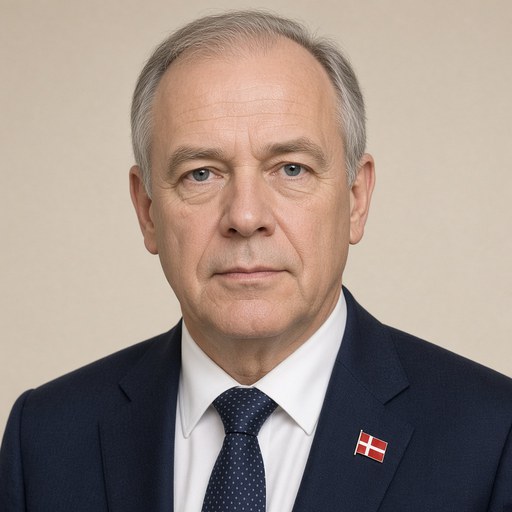
Prime Minister Poul Nyrup Rasmussen's speech at Haderslev Teacher Training College on August 16, 2000.
 Poul Nyrup Rasmussen · Prime Minister of Denmark
- Context
- Rasmussen addressed students at Haderslev Teacher Training College on August 16, 2000, ahead of the September 28 Danish euro referendum.
- Main themes
- Danish welfare state, euro referendum, Danish identity and values, education and teacher training, currency debate, Grundtvig and cooperative movement, economic sovereignty, social equality, historical development of Denmark, market forces vs. welfare model
- Duration
- ~36 min
- Words
- 4,308
- Sentences
- 190
- Readability
- 59
- Grade
- 10.6
- Syntax
- 3.08
- Vocabulary
- 2.02
Translated from Danish
The broad sphere of national life a sentence belongs to. Every sentence has an Arena, so it is the denominator the other indices are read against.
Other190 sentences in 47 paragraphs
Thank you for the welcome and for the song. One becomes a little better by singing, and in a way, one also becomes a little better by trying to think about what really matters. I mean, there is so much to accomplish in everyday life, and therefore it is nice to use song to get a grip on what it is all really about. I cannot help but, here in front of the students at Haderslev State Seminar, draw a couple of historical lines.
At the beginning of the last century, Denmark faced a very decisive choice of fate. Should we choose to build the welfare state as a protection of the individual against market forces, without, mind you, eradicating the market forces, or should we choose a more liberal path, where the welfare state as an idea did not take root and grow? We chose the former, and we built our entire value foundation on a very special Danish combination of Grundtvig, the labor movement, and the cooperative movement. We said to each other that every single person in this society has value as a human being, everyone can do something, and therefore it should not be decisive for whether one can unfold one's talent, whether one is born with a silver spoon in one's mouth or, for that matter, a drag over one's neck. The crucial thing was that we had the same fundamental value simply by virtue of being human in Denmark.
Therefore, we invested heavily in education, skill development, and social basic security.
Of course, it did not come by itself, and far from it as an expression of a carefully thought-out plan that was supposed to last for a hundred years. The Danish welfare society came because we wanted it and because we fought for it. The welfare society of Denmark came because most said that it should not be the few who decide alone, and that it must not be money that determines everything. It had to be a society where we all could participate in decision-making. And that is fundamentally what it is all about, even on September 28, 2000, if we cut right to the bone: Who should really decide over me, you, us, Denmark, our part of the world, the whole world? For it would be a great mistake to believe that it is us who decide alone. It would be just as great a mistake to believe that it is us who decide over Denmark's development completely sovereignly and alone.
The driving force in the construction of the Danish welfare society, and what has ensured continuity, has always been that we have had a set of common values with a connection to the reality we found ourselves in. We have always managed to incorporate new tools into our work, which have ensured that we could maintain our values and achieve new progress on our path.
In other words, we did not turn our backs on reality - not even when it changed.
The teacher seminaries spring from the fundamental values that we all have a responsibility for each other and a special responsibility for the weakest in our country, and that we must take good care of the values that cannot be measured in money. We would not have had the teacher seminaries we have if we did not have the society we have, and vice versa. Therefore, the education you are receiving is crucial for there to be a Danish welfare society, a Danish idea, a Danish identity. It is not so crucial whether we have a 20-kroner bill that looks a certain way.
Danishness, for me, is precisely the values that the Danish society is built upon. Danishness, for me, is not that we necessarily have to use a very specific type of currency in our Danish society.
Here is the Danish coin. On the front of the Danish coin, we see a portrait of Her Majesty the Queen. This little Danish coin will play a very decisive role in the referendum debate leading up to September 28, 2000.
There are those who claim that the entire identity, survival, and future of Danish society depend on whether we keep exactly this one. And then there are those who - like me - say that it is something much more fundamental that determines whether we do well, so that we have the energy and independence to shape our own welfare society. This little Danish coin is the symbol of a Danish economy that is currently strong and competitive. This little coin has weathered storms, where it has sometimes gone wrong - sometimes it has managed to hold its own. But every time this coin has been under pressure, we have had to take measures that we fundamentally do not like in Danish society.
This coin has been under pressure in 1974, 1979, 1982, 1986, 1993, and 1998. Two years ago, in 1998, the National Bank had to use 40 billion kroner of our foreign exchange reserves to defend the Danish krone. 40 billion is roughly equivalent to our total expenses for our hospitals in Denmark.
In 1993, the European monetary cooperation collapsed, and we had to raise interest rates quite a bit because there was pressure on the krone. In 1986, Danish society came to a standstill due to the potato crisis, which some of you may remember. Denmark faced pressure: there was a deficit in the balance of payments and speculative pressure on the krone, and the then-liberal government had to take quite drastic measures. One can always discuss the methods, but Danish society came to a standstill from 1986 until 1992.
Further back, in 1974 and 1979, the two global oil crises pulled the rug out from under employment in Europe. And I will tell you: That is the worst.
I remember when I was a young student at the state gymnasium in Esbjerg. 1st year started well with good grades and a teacher who thought you were nice - until he got to know you better, right? And then it went downhill in 2nd year. I earned a little money on the side of my student grant as a milk boy, where I rode around on a Long John on Sundays - you can probably see, it is a deeply sentimental story. I delivered milk to a bakery, where the old experienced baker served a cup of coffee and a piece of pastry and asked, 'So, how is it going at the fine gymnasium?' And I replied, 'Well, in 1st year it went well, but in 2nd year, it is not going so well - but I hope it goes.' Then he said the wise words: 'You know what, my boy. If it should happen that you go on to graduate, it need not be an obstacle for you to become a baker.' I thought it was wonderfully said. It was a bit of a comfort at the time, but I have often thought back on it, as it confirms the values: that we are all something by virtue of using our talent.
I would so much like for people not to be prevented from using their talent because they become unemployed. The worst thing that can happen is to become unemployed or not be able to get a job. That is just how it is.
I have seen hundreds of thousands of Danish workers lose their jobs in the 1970s because we could not figure out how to cooperate in Europe, and many again in 1982, when Knud Heinesen spoke of Denmark approaching the abyss, and again in 1986. I consider it my most important job to ensure that there are jobs and education for everyone in our country. And now that we in Denmark can no longer do this completely independently of other countries, we must relate to the new reality we are in and take the new tools into use.
No one would insist that the teacher education in the Danish state seminaries and other seminaries should be exactly the same as it was 25 years ago. Our pedagogical knowledge has grown much larger, society has changed, many more are being educated today, authorities are falling, and we do not use the same pedagogical methods as we did 25 years ago. But our values, goals, and ambitions are the same. And in the same way with society. When reality has changed, we risk by holding on to the old tools to achieve the opposite of what we want.
To say no based on a misunderstood insistence on Danishness risks leading us to the opposite of what is actually your motive. When Pia Kjærsgaard's press secretary compares an EU institution, which is supposed to safeguard our values in Europe and ensure that racism and xenophobia do not take root again, with a center for Stasi methods, then I think we have something to think about.
Also when Drude Dahlerup says that the EU will destroy welfare, and when Holger K. says - though not quite with that rhetoric - speaks of a Europe in several rooms, we have something to think about. When I hear those analyses, I think they are fundamentally mistaken.
Let me illuminate why one is mistaken. You see, immediately after World War II, the world divided between the two power centers: The communist power center and the free or democratic power center, whatever one prefers to call things.
We have spent many resources on being armed to threaten each other not to attack each other. But we have also seen that old people have fought in Europe in such a bloody way that we said to each other that it must never happen again. That is why the European community was created.
The Berlin Wall is now gone; we recognize that the global financial forces have enormous centrifugal effects; and we have some EU institutions that we can use. All of this means that we, like never before, can have a solidarity approach to our actions. I consider that a great privilege.
I would like to take a couple of steps closer.
In 1982, we decided in Denmark to liberalize capital movements roughly at the same time as other countries. From that point on, we began to lose some of our independence when it comes to our interest rates, money, and ability to decide our economy ourselves. Since then, the international financial economy has been able to move without any obstacles and go to the countries where it was most profitable to go. Have you thought about the fact that there is not a single hour of the 24 hours in a day when there is not a stock exchange somewhere in the world that is open! There will surely be a 37-year-old kid on the New York Stock Exchange, sitting on the 24th floor trading money, securities, and surely also some of the Danish jobs. They could change owners before we have even had time to blink, and before the shop steward has taken the first steps up to the management floor to discuss what is actually going on.
We are in a globalized world for better or for worse, and we must make it clear that we are doing Denmark a disservice by leaving Denmark isolated on the sidelines outside the community that is painstakingly being built up in these years.
It is about who will decide over Denmark and our people's future. The real independence we lost along the way when it comes to money, we cannot regain alone, but we can regain it together with others. The European union stands by our side in taking from the negative effects of globalization on our common future. If we choose the right path, do it right, and know what we want.
One could say that September 28, 2000, is about whether Denmark should be on the A-team or the B-team. It is meant in such a way that no one likes to be isolated or alone or outside - not one. Denmark does not feel good about being outside, especially if others make decisions that have a direct decisive impact on our future - and they do.
Every time others decide to change interest rates, it has a direct impact on us. Every time others decide to strengthen their economic cooperation, it has a direct influence on us - whether we are there or not. And yet: If we were there, we could sit at the table, let our voice be heard, and influence things. We could show ourselves by our example and by our vision and by our concrete arguments. And it works! Denmark has influence; it is not just a small country that has merged with the wallpaper with the others. We can make a big difference. That is my assertion, and I can prove it: We would not have gotten the employment chapter in the Amsterdam Treaty if we had not been there.
I have been working on this since 1974, when I experienced the first oil crisis and said to myself: It must not happen again. I found out that when external crises hit our part of the world, we begin to work against each other. Either we devalue to steal some jobs from the neighbor, or we cut public budgets to limit our deficit in the balance of payments. We dig ourselves deeper and deeper into a bigger and bigger hole, and that is the explanation for why the EU today has 14-15 million unemployed. Also in the rest of Europe, there was full employment in the 1960s, and when the major international crises came, unemployment rose. In other words, 15 million unemployed in the European countries is not due to the EU, but because the EU lacked the ability to formulate an intelligent and visionary cooperation that, in a collaboration between public and private investments, could ensure a society that could keep going, instead of competing itself down into a hole. That is what we must and can avoid in the future.
Does this - the common currency and the Danish euro - not lead to the united states of Europe? No, it does not, because we have invented this particularly unique construction. Instead of a state structure or the United States of America, we are formulating a set of rules that we have negotiated together. One could say that this set of rules within the area of the common currency replaces the argument for having a superstate structure. And I can assure you that the French are just as French as they have always been - perhaps even more so, just ask them themselves. The Danes are at least just as Danish as they have always been after 25 years of EU membership - just ask them themselves.
Neither France nor Germany could naturally dream of abolishing themselves or the state or identity or the people and its symbols. It is about something else: about being exposed as a solitary country to greater risk and losing the advantage of cooperating with others. A no will isolate us, and I will do my utmost to avoid that.
A yes will ensure us greater security and room to maneuver in our society than a no will. If we say yes, this Danish coin will be replaced by a Danish euro. On the front of the Danish euro, the Queen's portrait will adorn the coin just as it does today. There will be 8 Danish euro coins, 5 of the Danish euro coins will feature the Queen's portrait and 3 of them, the very small coins, will have the royal crown. The banknotes will remain the same.
The production of the Danish euro coins and banknotes will take place at Danmarks Nationalbank, as stated in the Constitution: The King mints the coin. Each year, the European Central Bank, where all the national bank directors of the member countries will be, decides how much money, coins, and banknotes are needed in each individual country. In reality, it is just like what we know today in the National Bank in Denmark, and then they go home and produce that number of Danish, German, French, etc. euros.
The Germans will no longer come to the West Coast with D-marks, but with German euros, and the French with French euros, and they can spend them right away - and similarly with the Danish euro. In other words, you should envision that there will always be Danish euros in Denmark, and instead of D-marks, there will be German euros, and French francs will be replaced by French euros - but there will always be Danish euros in Denmark, as they are the central means of payment.
Each individual Dane's salary will be converted to Danish euros, but the purchasing power will be exactly the same. Prices will be converted to Danish euro prices through laws, regulations, and agreements with retail, etc. Pensions will be converted but will have the same purchasing power, and plastic cards will have the same purchasing power; everything will have the same purchasing power. A pensioner said to me: 'Well, I have heard that the euro has fallen 30% in value compared to the dollar. Has my pension also fallen if we switch to the euro?'. No, the purchasing power of the state pension is exactly the same as before. The Danish krone has in any case been tied to and will continue to be tied to the euro because we pursue a fixed exchange rate policy.
Then there is the famous question that I often encounter: 'You know, it’s not so much me, it’s the neighbor who has some Danish money under the mattress. What if they don’t manage to exchange it before two years have passed, can they still exchange it?'. And I answer: 'This is not a currency exchange like the one right after the war' - then I can feel the first part of the sweat being wiped from my forehead. It is such that if you find something under your pillow or in a small cupboard - that’s fair enough, there are pensioners who want to save a little for their children and grandchildren - for the next 30 years, you can go to your bank, which will exchange the money without restrictions. Then the relief really comes forth!
So we are talking about 12 euros, all of which have the same value. The amazing thing is that instead of the krone, which can be toppled, it is 12 euros with the same value that hold together and cannot be toppled by international pressure and speculation.
Instead of a superstate, we have some common rules that we adhere to: We must not have too large a deficit in our public finances - it is not wise to have under any circumstances. We need to have a reasonably low inflation - yes, we would like that, because with high inflation it was the opposite of Robin Hood. High inflation has always benefited wealthy people. And finally, we must ensure that we have a reasonable grip on our debt - yes, that is clear, for who wants to hand over a society to the next generation with a lot of debt attached to it, which will limit the next generation's options? These common rules are created to ensure that currency cooperation exists without a governmental superstructure. And what are their national symbols helps to document that it is not a European superstate. That is very important for me to say because others want to give the opposite impression.
I actually believe that Denmark has something to offer: our fundamental view and our values. And that leans in our direction. You must remember that the European people have experienced top-down communism, Leninism, Stalinism, and they have suffered from it. Southern Europe, Spain, Portugal, and Greece have also experienced fascism, and many others have experienced Margaret Thatcher's total liberalism and the total centrifugal force of market forces. Now the peoples are slowly but surely moving in the direction that is about the values on which we have built our society.
We saw it in Lisbon during the European summit between the prime ministers, where we agreed that the active welfare state is our national goal, but also our common European value. In Danish, we call it the humane Europe or the active welfare state. It is not to harmonize us. It is to signal to the USA and Japan that these are our values, and we do not believe that total liberalism is a necessity to cope in the brutal competition of the global economy. We believe that our values are an advantage. Denmark is one of the star examples that social security and high competitiveness are not opposites, but prerequisites for each other. When you are secure, you dare to move, to jump into another education, because you are not afraid of losing.
In Denmark, it is such that the one who has lost once is not lost. You can try again, and therefore you dare. We have the most mobile workforce, not because there is a whip over your head, but because there is security - it can be improved, of course - but that is the idea. The differences between European countries are increasingly approaching our value set. Frankly, should we then doubt, close off, return to a village idyll that fundamentally was not so idyllic, and believe that this country can just decide everything for itself when it cannot anyway? Should we completely forget that we are best when we cooperate with others? That is the fundamental choice we also have to face.
My vision for Europe is clear and unequivocal. As a young student at the labor movement's business council, a man from SID's international trade union organization came and told about the operations of multinational companies around the globe, IBM, Coca Cola, and whatever they were all called. About how unfair it was that workers in Asia or Africa were not allowed to organize themselves in a trade union, and that child labor was part of a culture that one could fundamentally perhaps see the economic necessity of, but had to distance oneself from and find an alternative to. It meant that I said to myself, we must change that, and it should not take 100 years. It took 100 years to build the Danish welfare state; it should not take 100 years to build a European region with a human face on market forces, or 100 years to build a global market economy with a human face.
I had almost forgotten all of this until a few years ago when I suddenly saw that if we choose to build a European region with a common currency, there is a basis for enormous positive energy. In relation to the new Eastern European countries, we can now bring in and provide them with welfare and prosperity without it being at our expense. In relation to the developing countries, we have enough energy and economy to open our markets to them. And in relation to the financial powerhouses of the world, we can begin to stem the tide. I see a Europe that can become the next voice in G8 summits by saying: Now we want transparency in the financial markets, proper conduct rules for the many hedge funds, clear rules for when one can establish banks in the world - securities so that ordinary people do not fall through the cracks because of speculation or mutual lending.
And I can see a global environmental cooperation with the European region as a frontrunner, following up on Kyoto, and some fundamental labor rights in the WTO negotiations. All of this I can see as a vision for Europe. I am not saying that it will be like that, and certainly not tomorrow, but it can be like that if one insists, is present, and can argue and show that it can make a difference.
We have something to offer, and I am sure that we do it best by showing, trying, and comparing ourselves. We are not the world champions in everything. Child benefits are higher in France than in Denmark, pensions in the Netherlands and other places are not so bad to compare with in Denmark. Our welfare state is not the best in the world in every respect - it is good, but we can also learn something from others, and we can teach them something.
Let me conclude as I started. Just think, if we can, not exactly take each other by the hand all together, but in a way think about taking each other by the hand. 'International bridges from coast to coast', and what has brought us forward in Denmark has been a recognition that we are best when we cooperate with others - that we achieve the greatest benefits for them and for us when we are together with others.
When I stood down at the Esbjerg quay and saw the tough strong dockworkers by the British or Danish ships, and dreamed a little about Denmark and the future, it was precisely by seeing the diversity. When Osvald Helmuth recited the tension between one's national affiliations and the larger world, 'I take a trip along the harbor... it is not that - ship by ship, it is almost everything out here', one is confirmed that it is right there in that tension field that one finds the true values. The values that drive oneself and the community forward, and that mean that one can also give a little contribution to others than oneself. That is surely where our significance as human beings lies. That was basically all I wanted to say. Thank you.
The original Danish. The tags above are read on the English translation's sentences.
Tak for velkomsten og for sangen. Man bliver lidt bedre af at synge, og man bliver på sin vis også lidt bedre af at prøve at tænke på dét, der virkelig betyder noget. Jeg mener, der er så meget, man skal nå i hverdagen, og derfor er det rart at bruge sangen til at få lidt hold på, hvad det hele nu egentlig drejer sig om. Jeg kan ikke lade være med, her foran de studerende på Haderslev Statsseminarium, at trække et par historiske linier op.
I starten af det forrige århundrede stod Danmark i et meget afgørende skæbnevalg. Skulle vi vælge at opbygge velfærdsstaten som beskyttelse af individet overfor markedskræfterne, uden vel at mærke at udrydde markedskræfterne, eller skulle vi vælge en mere liberalistisk vej, hvor velfærdsstaten som idé ikke fik rødder og grokraft? Vi valgte det første, og vi byggede hele vores værdigrundlag på en meget speciel dansk kombination af Grundtvig, fagbevægelsen og andelsbevægelsen. Vi sagde til hinanden, at hver eneste i dette samfund har værdi som menneske, hver eneste kan noget, og derfor skal det ikke være udslagsgivende for, om man kan udfolde sit talent, om man er født med en sølvske i munden eller for den sags skyld et drag over nakken. Det afgørende var, at vi havde samme grundlæggende værdi alene i kraft af, at vi var mennesker i Danmark.
Derfor investerede vi meget i uddannelse, dygtiggørelse og social grundlæggende tryghed.
Det kom selvfølgelig ikke af sig selv, og langt fra heller som udtryk for en nøje gennemtænkt plan, der skulle holde i gennem hundrede år. Det danske velfærdssamfund kom, fordi vi ville det og fordi vi kæmpede for det. Velfærdssamfundet Danmark kom, fordi de fleste sagde, at det ikke skulle være de færreste, der skal beslutte alene, og at det ikke måtte være pengene, der bestemte alting. Det måtte være et samfund, hvor vi alle sammen kunne være med til at bestemme. Og det er i grunden dét, det hele handler om også den 28. september 2000, hvis vi skærer helt ind til benet: Hvem skal egentlig bestemme over mig, dig, os, Danmark, vores del af verden, hele verden? For det ville være en stor fejltagelse at tro, at det er os, der bestemmer alene. Det ville være ligeså stor en fejltagelse at tro, at det er os, der bestemmer over Danmarks udvikling fuldstændig suverænt og alene.
Drivkraften i det danske velfærdssamfunds opbygning, og det, der har sikret kontinuiteten, har altid været, at vi har haft et sæt fælles værdier med et remtræk over til den virkelighed, vi befandt os i. Vi har altid formået at tage de nye værktøjer ind i vores arbejde, som har sikret, at vi kunne fastholde vores værdier og nå nye fremskridt på vores vej.
Vi vendte med andre ord ikke ryggen til virkeligheden - heller ikke når den forandrede sig.
Lærerseminarierne udspringer jo af de grundlæggende værdier, at vi alle sammen har et ansvar for hinanden og et særligt ansvar for de svageste i vores land, og at vi skal passe godt på de værdier, der ikke kan måles i penge. Vi havde ikke haft de lærerseminarier, vi har, hvis vi ikke havde det samfund, vi har og omvendt. Derfor er den uddannelse, I tager, afgørende for, at der er et dansk velfærdssamfund, en dansk idé, en dansk identitet. Det er ikke så afgørende, om vi har en 20-krone, der ser ud på en bestemt måde.
Danskhed er for mig netop de værdier, det danske samfund bygger på. Danskhed er for mig ikke, at vi nødvendigvis skal bruge en ganske bestemt type betalingsmiddel i vores danske samfund.
Her er den danske mønt. På den danske mønts forside ser vi et portræt af Hendes Majestæt Dronningen. Denne lille danske mønt kommer til at spille en ganske afgørende rolle i folkeafstemningsdebatten frem til den 28. september 2000.
Der er dem, der påstår, at hele det danske samfunds identitet, overlevelse og fremtid afhænger af, om vi beholder lige præcis denne her. Og så er der dem, der – som jeg - siger, at det er noget meget mere grundlæggende, der er bestemmende for, om vi klarer os godt, så vi har energi og selvstændighed til at forme vores eget velfærdssamfund. Denne lille danske mønt er symbolet for en dansk økonomi, der lige i øjeblikket er stærk og konkurrencedygtig. Denne lille mønt har været gennem stormvejr, hvor det sommetider er gået galt - sommetider har man kunnet klare sig. Men hver gang denne mønt har været under pres, har vi været nødt til at foretage os indgreb, som vi i grunden ikke kan lide, i det danske samfund.
Denne mønt har været under pres i 1974, 1979, 1982, 1986, 1993 og 1998. For 2 år siden, i 1998, måtte National Banken bruge 40 milliarder kroner af vores valutabeholdning for at forsvare den danske krone. 40 milliarder svarer nogenlunde til vores samlede udgifter til vores hospitaler i Danmark.
I 1993 brød det europæiske valutasamarbejde sammen, og vi måtte hæve renten ganske meget, fordi der kom pres på kronen. I 1986 gik det danske samfund i stå pga. kartoffelkuren, som nogle af jer husker. Danmark kom ud for pres: der var underskud på betalingsbalancen og spekulationspres på kronen, og den daværende borgerlige regering måtte gå ganske kraftigt til værks. Man kan altid diskutere metoderne, men det danske samfund gik i stå fra 1986 og frem til 1992.
Længere tilbage, i 1974 og i 1979, trak de to verdensomspændende oliekriser tæppet væk under beskæftigelsen i Europa. Og det vil jeg sige jer: Dét er det værste.
Jeg husker, da jeg var ung studerende på statsgymnasiet i Esbjerg. 1.G startede godt med gode karakter og læreren, der syntes, man var flink - indtil han lærte én nærmere at kende, ikke sandt? Og så gik det ned ad bakke i 2. G. Jeg tjente lidt penge ved siden af SU ́en som mælkedreng, hvor jeg kørte rundt på Long John om søndagen - I kan nok se, det er en drivende sentimental historie. Jeg afleverer så mælk på et bageri, hvor den gamle erfarne bager serverer en kop kaffe og et stykke wienerbrød og spørger: 'Nå, hvordan går det så, ude på det fine gymnasium?.' Og jeg svarer, 'Jo, i 1.G gik det godt, men i 2. G, der går det altså ikke så godt - men jeg håber, det går.' Så sagde han de vise ord: 'Ved du hvad, min dreng. Hvis der skulle ske det, at du går hen og bliver student, så behøver det ikke at være nogen hindring for, at du kan blive bager.' Jeg syntes, det var fantastisk flot sagt. Det var lidt af en trøst på det tidspunkt, men jeg har også tit tænkt tilbage på det, da det bekræfter det med værdierne: at vi alle sammen er noget i kraft af, at vi bruger vores talent.
Jeg ville så gerne have, at mennesker ikke blev forhindret i at bruge deres talent, fordi de bliver arbejdsløse. Det værste, der kan ske, er at blive arbejdsløs eller ikke kunne få et arbejde. Sådan er det nu engang.
Jeg har set hundrede tusindvis af danske arbejdere, der mistede deres job i 1970’-erne, fordi vi ikke kunne finde ud af at samarbejde i Europa, og mange igen i 1982, da Knud Heinesen talte om, at Danmark nærmede sig afgrunden, og igen i 1986. Jeg betragter det som mit vigtigste job at sikre, at der er job og uddannelse for alle i vores land. Og nu hvor vi i Danmark ikke længere kan gøre det fuldstændigt uafhængigt af de andre lande, må vi forholde os til den nye virkelighed, vi er i, og tage de nye værktøjer i brug.
Ingen ville jo insistere på, at læreruddannelsen i de danske statsseminarier og andre seminarier skal være fuldstændig den samme som for 25 år siden. Vores pædagogiske viden er blevet langt større, samfundet har ændret sig, mange flere bliver uddannet i dag, autoriteterne står for fald, og vi bruger ikke de samme pædagogiske metoder som for 25 år siden. Men vores værdier, mål og ambitioner er de samme. Og på samme måde med samfundet. Når virkeligheden har ændret sig, risikerer vi ved at holde fast i de gamle værktøjer at nå det modsatte af det, vi gerne vil.
At sige nej udfra en misforstået insisteren på danskhed risikerer at føre os over i det modsatte, end det er i virkeligheden er ens motiv. Når Pia Kjærsgaards pressechef sammenligner en EU institution, som skal sikre vores værdier i Europa og sikre, at racisme og fremmedfjendskhed ikke får grobund igen, med et center for stasimetoder, så synes jeg, vi får noget at tænke over.
Også når Drude Dahlerup siger, at EU vil smadre velfærden, og når Holger K. siger – dog ikke helt med den retorik - taler om et Europa i flere rum, får vi noget at tænke over. Når jeg hører de analyser, tænker jeg, at de tager grundlæggende fejl.
Lad mig belyse, hvorfor man tager fejl. Se, umiddelbart efter 2. verdenskrig delte verden sig imellem de to magtcentre: Det kommunistiske magtcenter og det frie eller det demokratiske magtcenter, hvad man nu foretrækker at give tingene af betegnelse.
Vi har brugt mange ressourcer på at være rustet op til at kunne true hinanden til ikke at angribe hinanden. Men vi har også set, at gamle folk har krigedes i Europa på en så blodig måde, at vi sagde til hinanden, at det må aldrig nogensinde ske igen. Derfor blev det europæiske fællesskab skabt.
Berlin-muren er nu væk; vi erkender, at de finansielle globale kræfter har enorme centrifugale påvirkninger; og vi har nogle EU institutioner, vi kan bruge. Det gør alt sammen, at vi, som aldrig nogensinde før, kan have en solidarisk tilgang til vores handlinger. Det betragter jeg som et stort privilegium.
Jeg vil gerne tage et par skridt tættere på.
I 1982 besluttede vi i Danmark at frigøre kapitalbevægelser nogenlunde samtidig med andre lande. Fra det tidspunkt begyndte vi at miste noget af vores selvstændighed, når det gælder vores renter, penge og evne til selv at beslutte vores økonomi. Siden da har den internationale finansielle økonomi kunnet bevæge sig uden nogen hindringer og gå ned i de lande, hvor det bedst kunne betale sig at gå ned. Har I tænkt på, at der ikke findes en eneste time af de 24 timer i døgnet, hvor der ikke er en finansbørs et eller andet sted i verden, der har åbent! Der vil sikkert i dette øjeblik være en 37-årig knægt på New Yorks fondsbørs, som på 24. etage sidder og handler med penge, værdipapirer og sikkert også nogle af de danske arbejdspladser. De vil kunne skifte ejere, før vi overhovedet har kunnet nå at blinke med øjnene, og før tillidsmanden har taget de første trin op på etagen til direktionen for at diskutere, hvad der egentlig foregår.
Vi er i en globaliseret verden på godt og på ondt, og vi er nødt til at gøre os klart, at vi gør Danmark en dårlig tjeneste ved at lade Danmark være isoleret på sidelinen udenfor det fællesskab, der møjsommeligt er ved at blive bygget op i de her år.
Det handler om, hvem der skal bestemme over Danmark og vores folks fremtid. Den reelle selvstændighed vi tabte undervejs, når det gælder pengene, den kan vi ikke få igen alene, men vi kan få den igen sammen med de andre. Den europæiske forening står på vores side i at tage fra i forhold til globaliseringens negative virkninger på vores fælles fremtid. Hvis vi vælger det rigtige, gør det rigtigt og ved, hvad vi vil.
Man kan sige, at den 28. september 2000 handler om, hvorvidt Danmark skal være på A-holdet eller på B-holdet. Det er ment sådan, at ingen bryder sig om at være isoleret eller alene eller udenfor – ikke én. Danmark har det ikke godt ved at være udenfor og slet ikke, hvis de andre træffer nogle beslutninger, der har direkte afgørende indflydelse på vores fremtid - og det gør de andre.
Hver gang de andre beslutter at ændre på renten, har det direkte betydning for os. Hver gang de andre beslutter at forstærke deres økonomiske samarbejde, har det direkte indflydelse på os – uanset om vi er der eller ej. Og dog: Hvis vi var der, så kunne vi sætte os ved bordet, lade vores stemme høre og påvirke tingene. Vi kunne vise os ved vort eksempel og ved vor vision og ved vores konkrete argumentation. Og det virker! Danmark har indflydelse, det er ikke bare et lille land, der er gået i et med tapetet med de andre. Vi kan gøre en stor forskel. Det er min påstand, og jeg kan bevise det: Vi havde ikke fået det beskæftigelseskapitel i Amsterdamtraktaten, hvis vi ikke havde været der.
Jeg har arbejdet med dette siden 1974, hvor jeg oplevede den første oliekrise og sagde til mig selv: Det må altså ikke gentage sig. Jeg fandt ud af, at når udefrakommende kriser rammer vores del af verden, begynder vi at modarbejde hinanden. Enten devaluerer vi for at stjæle nogle arbejdspladser fra naboen eller også skærer vi i de offentlige budgetter for at begrænse vores underskud til betalingsbalancen. Vi graver os længere og længere ned i et større og større hul, og det er forklaringen på, at EU i dag har 14-15 millioner arbejdsløse. Også i resten af Europa var der fuld beskæftigelse i 1960 ́erne, og da de store internationale kriser kom, røg arbejdsløsheden i vejret. Med andre ord, 15 millioner arbejdsløse i de europæiske lande er ikke på grund af EU, men fordi EU manglede til at udforme et intelligent og visionært samarbejde, der i et samvirke mellem offentlige og private investeringer kunne sikre et samfund, der kunne køre videre, i stedet for at konkurrere sig ned i et hul. Det er dét, vi skal og kan undgå i fremtiden.
Fører dette her – den fælles valuta og den danske euro - ikke til de forenede Europas stater? Nej, det gør det ikke, fordi vi har opfundet denne særligt unikke konstruktion. I stedet for en statslig overbygning eller USA's forenede stater, udformer vi et sæt spilleregler, som vi har forhandlet i fællesskab. Man kan sige, at dette sæt spilleregler inden for den fælles valutas område erstatter argumentet for at have en superstatslig overbygning. Og jeg kan forsikre jer for, at franskmændene er lige så franske, som de altid har været - måske mere til endda, spørg dem bare selv. Danskerne er i hvert til fald lige så danske, som de altid har været efter 25 års medlemskab af EU - spørg dem bare selv.
Hverken Frankrig eller Tyskland kunne naturligvis drømme om at nedlægge sig selv eller staten eller identiteten eller folket og dets symboler. Det handler om noget andet: om som et enligt land at være udsat for større risiko og miste fordelen af at samarbejde med de andre. Et nej vil isoleres os, og jeg vil i hvert fald gøre mit for at undgå det.
Et ja vil sikre os større tryghed og råderum i vort samfund, end et nej vil gøre. Hvis vi siger ja, bliver denne danske mønt erstattet af en dansk euro. På den danske euro's forside vil Dronningens portræt pryde mønten ligesom i dag. Der vil være 8 danske euromønter, 5 af de danske euromønter vil have Dronningens portræt og 3 af dem, de helt små mønter, vil have kongekronen. Sedlerne vil være de samme.
Produktionen af de danske euromønter og sedlerne vil foregå i Danmarks Nationalbank, som det står i Grundloven: Kongen slår mønten. Hvert år beslutter man i den Europæiske Centralbank, hvor alle medlemslandenes nationalbankdirektør vil være, hvor mange penge, mønter og sedler, der er brug for i hvert enkelt land. I virkeligheden ligesom det, vi kender i dag i Nationalbanken i Danmark, og så går man hjem og producerer det antal danske, tyske, franske osv. euroer.
Tyskerne vil ikke længere komme til Vestkysten med D-mark, men med tyske euro, og franskmændene med franske euro, og de kan købe for dem med det samme - og tilsvarende med den danske euro. I skal med andre ord se for jer, at der altid vil være danske euroer i Danmark, og i stedet for D-mark vil det være tyske euroer og franske franc vil erstattes af franske euroer - men der vil altid være danske euroer i Danmark, de er jo det centrale betalingsmiddel.
Den enkelte danskers løn bliver omregnet til danske euro, men købekraften vil være nøjagtig den samme. Priserne bliver ved love, regler og aftaler med detailhandel mv. omregnet til danske europriser. Pensionen bliver omregnet, men har den samme købekraft, ens plastikkort har den samme købekraft, sådan vil det alt sammen have den samme købekraft. En folkepensionist sagde til mig: 'Jamen du, jeg har hørt, at euroen er faldet 30 % i værdi i forhold til dollaren. Er min pension så ikke også faldet, hvis vi går over til euroen?'. Nej, folkepensionens købekraft er nøjagtig den samme som før. Den danske krone har under alle omstændigheder været bundet til og vil fortsat være bundet til euroen, fordi vi fører fastkurs politik.
Så er der det berømte spørgsmål, som jeg ofte møder: 'Du, det er ikke så meget mig, det er naboen, som har nogle danske penge i madrassen. Hvad nu, hvis man ikke når at få vekslet, inden der er gået 2 år, kan man så få dem vekslet?'. Og jeg svarer: 'Det er ikke en pengeombytning, som den lige efter krigen'- så kan jeg mærke den første del af sveden tørres af panden. Det er sådan, at hvis man finder noget under hovedpuden eller i et lille skab - det er fair nok, der er pensionister der ønsker at gemme lidt til børnene og børnebørnene - de næste 30 år frem kan man gå til sin bank, som veksler pengene uden begrænsninger. Så kommer lettelsen virkelig frem!
Der bliver altså tale om 12 euroer, der alle har den samme værdi. Det fantastiske er, at i stedet for kronen, som kan væltes omkuld, er det 12 euroer med samme værdi, som holder sammen og ikke kan væltes omkuld af international pression og spekulation.
I stedet for en superstat har vi nogle fælles regler, vi overholder: Vi må ikke have for stort et underskud på vores offentlige finanser - det er ikke klogt at have under alle omstændigheder. Vi skal have en rimelig lav inflation – ja, det vil vi gerne have, for med høj inflation var det jo omvendt Robin Hood. En høj inflation har altid været til fordel for formuende mennesker. Og endelig skal vi sørge for nogenlunde at have styr på vores gæld – ja, det er da klart, for hvem ønsker at aflevere et samfund til den næste generation med masser af gæld klæbet til samfundet, der vil begrænse den næste generations handlemuligheder. Disse fælles regler er skabt for at sikre, at valutasamarbejdet er til stede uden en statslig overbygning. Og det, der er deres nationale symboler, er med til at dokumentere, at det ikke er en europæisk superstat. Dét er meget afgørende for mig at få sagt, fordi andre ønsker at give det modsatte indtryk.
Jeg mener i virkeligheden, at Danmark har noget at byde på: vores grundsyn og vores værdier. Og det bærer i vores retning. I skal huske på, at det europæiske folk har prøvet topstyret kommunisme, leninisme, stalinisme, og de har lidt under det. Sydeuropa, Spanien, Portugal og Grækenland har også prøvet fascismen, og mange andre har prøvet Margaret Thatchers totale liberalisme og markedskræfternes totale centrifugalkraft. Nu er folkene langsomt, men temmelig sikkert, på vej i den retning, der handler om de værdier, som vi har bygget vores samfund på.
Vi så det i Lissabon under det europæiske topmøde mellem statsministrene, hvor vi enedes om, at det er den aktive velfærdsstat, der er vores nationale mål, men også vores fælles europæiske værdi. På dansk kalder vi det det menneskelige Europa eller den aktive velfærdsstat. Det er ikke for at harmonisere os. Det er for at signalere til USA og til Japan, at dette er vores værdier, og vi mener ikke, at den totale liberalisme er en nødvendighed for at klare sig i den globale økonomis benhårde konkurrence. Vi mener, at vores værdier er en fordel. Danmark er et af stjerneeksemplerne på, at social tryghed og høj konkurrencekraft ikke er modsætninger, men forudsætninger for hinanden. Når man er tryg, tør man bevæge sig, springe over i en anden uddannelse, for så er man ikke bange for at tabe.
I Danmark er det sådan, at den, der har tabt en gang, ikke er fortabt. Man kan prøve igen og derfor tør man. Vi har den mest mobile arbejdsstyrke, ikke fordi der er en pisk over hovedet, men fordi der er en tryghed - den kan blive bedre, bevares - men det er ideen. De forskelle europæiske lande nærmer sig mere og mere vores værdisæt. Ærlig talt, skulle vi så komme i tvivl, lukke af, vende tilbage til en landsbyidyl, som dybest set ikke var så idyllisk, og tro på, at dette land bare kan bestemme alting over sig selv, når det alligevel ikke kan? Skulle vi helt glemme, at vi har det bedst, når vi samarbejder med de andre? Det er det grundlæggende valg, vi også skal stå overfor.
Min vision for Europa er klar og entydig. Som ung student på arbejderbevægelsens erhvervsråd kom der en mand fra SID ́s internationale, faglige organisation og fortalte om de multinationale selskabers operationer på hele jordkloden, IBM, Coca Cola og hvad de nu hed alle sammen. Om hvor uretfærdigt det var, at arbejderne i Asien eller i Afrika ikke havde lov til at organisere sig i en faglig sammenslutning, og at børnearbejde var en del af en kultur, som man dybest set måske kunne se den økonomiske nødvendighed af, men måtte tage afstand fra og finde et alternativ til. Det betød, at jeg sagde til mig selv, at det må vi have lavet om på, og det skal ikke tage 100 år. Det tog 100 år at opbygge det danske velfærdssamfund, det skal ikke tage 100 år at opbygge en europæisk region med et menneskeligt ansigt på markedskræfterne, eller 100 år at opbygge en global markedsøkonomi med et menneskeligt ansigt.
Jeg havde næsten glemt det alt sammen indtil for få år siden, hvor jeg pludselig kunne se, at hvis vi vælger at opbygge en europæiske region med den fælles valuta, så er der et afsæt for enorm positiv energi. I forhold til de nye østeuropæiske lande, vi nu kan tage med ind og give dem velfærd og velstand, uden det sker på bekostning af os. I forhold til ulandene, som vi får energi og økonomi nok til at åbne vor markeder for. Og i forhold til den finansielle hovedkraft i verden, som vi kan begynde at dæmme op for. Jeg ser et Europa, som kan blive den næste stemme i G 8 topmøderne ved at sige: Nu vil vi have gennemsigtighed i de finansielle markeder, ordentlige adfærdsregler for de mange spekulationsfonde, klare regler for, hvornår man kan opbygge banker i verden - sikkerheder så almindelige mennesker ikke ryger ud af slisken, fordi der bliver spekuleret eller gensidigt belånt.
Og jeg kan se et globalt miljø samarbejde med den europæiske region som frontløber, der følger op på Kyoto, og nogle grundlæggende faglige rettigheder ved WTO forhandlingerne. Alt dette kan jeg se som en vision for Europa. Jeg siger ikke, at det bliver sådan og slet ikke i morgen, men det kan blive sådan, hvis man insisterer, er til stede og kan argumentere og vise, at det kan gøre en forskel.
Vi har noget at byde på og jeg er sikker på, at vi gør det bedst ved at vise, prøve og sammenligne os. Vi er jo ikke verdensmester over det hele. Børnepengene er højere i Frankrig end i Danmark, pensionen i Holland og andre steder er nu heller ikke så ringe endda at sammenligne med i Danmark. Vores velfærdssamfund er ikke på alle ender og kanter det bedste i hele verden - det er godt, men vi kan også godt lære noget af de andre og vi kan godt lære dem noget.
Lad mig slutte, som jeg startede. Tænk engang, hvis vi kan sådan, ikke just tage hinanden i hånden alle sammen, men på en måde tænke på at tage hinanden i hånden. 'Internationale slår bro fra kyst til kyst', og det, der har bragt os frem i Danmark, har været en erkendelse af, at vi er bedst, når vi samarbejder med de andre - at vi opnår de største fordele for dem og for os, når vi er sammen med de andre.
Når jeg stod nede på Esbjerg kaj og så de barske stærke havnearbejdere ved de britiske eller danske skibe, og drømte lidt om Danmark og om fremtiden, var det jo netop i kraft af at se mangfoldigheden. Når Osvald Helmuth foredrog spændingen mellem ens nationale tilhørsforhold og den store verden, 'Jeg kør’ mig en tur langs med havnen… det er ikke det - skude ved skude, det er nærmest det hele herude', så får man bekræftet, at det er lige dér i det spændingsfelt, at man finder de ægte værdier. De værdier, der driver én selv og fællesskabet frem, og som betyder, at man også kan give et lille bidrag til andre end én selv. Det er vel deri vores betydning som mennesker består i. Det var sådan set bare det, jeg ville sige. Tak skal I have.