





- Context
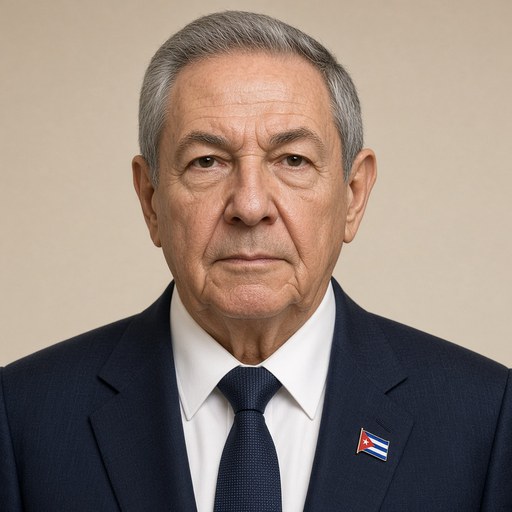
- Raúl Castro addressed mourners in Santiago de Cuba on December 4, 2016, during the burial ceremony for Fidel Castro at the Santa Ifigenia Cemetery.
- Main themes
- Fidel Castro's death and legacy, Cuban Revolution history, funeral procession and burial ceremony, rejection of cult of personality, Cuban people's resilience, the Special Period, revolutionary continuity, patriotism and socialism, internationalism, revolutionary heroes of Santiago de Cuba
- Duration
- ~15 min
- Words
- 1,747
- Sentences
- 41
- Readability
- 14
- Grade
- 21.3
- Syntax
- 3.54
- Vocabulary
- 2.62
Translated from Spanish
The broad sphere of national life a sentence belongs to. Every sentence has an Arena, so it is the denominator the other indices are read against.
Other41 sentences in 31 paragraphs
Dear Heads of State and Government;
Distinguished personalities accompanying us;
Compatriots who are here today representing the eastern provinces and Camagüey;
Santiagueras and santiagueros;
Dear people of Cuba:
This afternoon, upon their arrival in this heroic city, the funeral procession with the ashes of Fidel, which retraced the Freedom Caravan of January 1959 in reverse, made its way through emblematic sites of Santiago de Cuba, the cradle of the Revolution, where, just like in the rest of the country, it received the testimony of love from the Cuban people.
Tomorrow, his ashes will be laid to rest in a simple ceremony at the Santa Ifigenia Cemetery, very close to the mausoleum of National Hero José Martí; alongside his comrades in struggle from the Moncada, the Granma, and the Rebel Army; from the clandestine struggle and internationalist missions.
A few steps away are the graves of Carlos Manuel de Céspedes, the Father of the Homeland, and the legendary Mariana Grajales, mother of the Maceo, and I dare to improvise in this act, also mother of all Cubans. Nearby is the pantheon with the remains of the unforgettable Frank País García, a young santiaguero, murdered by henchmen of the Batista tyranny at just 22 years old, one month after his little brother Josué fell fighting in an action in this city. Frank's age did not prevent him from accumulating an exemplary combat record against the dictatorship, where he stood out as the leader of the armed uprising in Santiago de Cuba on November 30, 1956, in support of the landing of the Granma expeditionaries, as well as organizing the decisive shipment of weapons and fighters to the nascent Rebel Army in the Sierra Maestra.
Since the news of the death of the historical leader of the Cuban Revolution was known late on the night of November 25, pain and sadness took hold of the people who, deeply moved by his irreparable physical loss, demonstrated fortitude, patriotic conviction, discipline, and maturity by massively attending the organized tribute activities and making the oath of fidelity to the concept of Revolution, presented by Fidel on May 1, 2000, their own. Between November 28 and 29, millions of compatriots signed in support of the Revolution.
In the midst of the sorrow of these days, we have felt comforted and proud, once again, by the impressive reaction of Cuban children and youth, who reaffirm their willingness to be faithful continuers of the ideals of the leader of the Revolution.
On behalf of our people, the Party, the State, the Government, and the family members, I reiterate the deepest gratitude for the countless expressions of affection and respect for Fidel, his ideas, and his work, which continue to arrive from all corners of the planet.
Faithful to the Martian ethic that “all the glory of the world fits in a grain of corn,” the leader of the Revolution rejected any manifestation of a cult of personality and was consistent with that attitude until the last hours of his life, insisting that, once deceased, his name and figure should never be used to name institutions, squares, parks, avenues, streets, or other public places, nor should monuments, busts, statues, and other similar forms of tribute be erected in his memory.
In accordance with the determination of Comrade Fidel, we will present the necessary legislative proposals to the next session of the National Assembly of People's Power so that his will prevails.
Rightly, dear friend Bouteflika, President of Algeria, expressed that Fidel possessed the extraordinary ability to travel to the future, return, and explain it. On July 26, 1989, in the city of Camagüey, the Commander-in-Chief predicted, two and a half years in advance, the disappearance of the Soviet Union and the socialist camp, and assured the world that if those circumstances arose, Cuba would continue to defend the banners of socialism.
Fidel's authority and his close relationship with the people were decisive for the heroic resistance of the country during the dramatic years of the special period, when the Gross Domestic Product fell by 34.8% and the food situation of Cubans deteriorated significantly, we suffered blackouts of 16 and even 20 hours a day, and much of the industry and public transport came to a standstill. Despite this, we managed to preserve public health and education for our entire population.
I recall the Party meetings in the territories: eastern, in the city of Holguín; central, in the city of Santa Clara; and western, in the capital of the republic, Havana, held in July 1994 to analyze how to face the challenges of the special period, the growing imperialist blockade, and the media campaigns aimed at sowing discouragement among the citizenry. From those meetings, including the one in the west, which Fidel presided over, we all left convinced that with the strength and intelligence of the masses united under the leadership of the Party, it was possible and we could turn the special period into a new victorious battle in the history of the homeland.
At that time, few in the world bet on our ability to resist and overcome adversity and the reinforced enemy siege; however, our people, under Fidel's leadership, gave an unforgettable lesson in firmness and loyalty to the principles of the Revolution.
In recalling those difficult moments, I believe it is just and pertinent to revisit what I expressed about Fidel on July 26, 1994, one of the most difficult years, in the Isle of Youth, more than 22 years ago, I quote: “...the most illustrious son of Cuba in this century, the one who showed us that it was indeed possible to attempt the conquest of the Moncada Barracks; that it was indeed possible to turn that setback into victory,” which we achieved five years, five months, and five days later, on that glorious January 1, 1959, this last part added to the exact words I said on that occasion.
He showed us “that it was indeed possible to reach the shores of Cuba on the Granma yacht; that it was indeed possible to resist the enemy, hunger, rain, and cold, and to organize a revolutionary army in the Sierra Maestra after the debacle of Alegría de Pío; that it was indeed possible to open new guerrilla fronts in the province of Oriente, with Almeida's columns and ours; that it was indeed possible to defeat with 300 rifles the great offensive of more than 10,000 soldiers,” which, when defeated, Che wrote in his Campaign Diary, that with that victory the backbone of the tyranny's army had been broken; “that it was indeed possible to repeat the epic of Maceo and Gómez, extending the struggle from the east to the west of the island with Che and Camilo's columns; that it was indeed possible to overthrow, with the support of the entire people, the Batista tyranny backed by North American imperialism.
“That he taught us that it was indeed possible to defeat in 72 hours” or even less, “the mercenary invasion of Playa Girón and simultaneously continue the campaign to eradicate illiteracy in a year,” as was achieved in 1961.
That it was indeed possible to proclaim the socialist character of the Revolution 90 miles from the empire, and when their warships advanced towards Cuba, after the troops of the mercenary brigade; that it was indeed possible to firmly uphold the non-negotiable principles of our sovereignty without fearing the nuclear blackmail of the United States during the days of the Missile Crisis in October 1962.
“That it was indeed possible to send solidarity aid to other brother peoples struggling against colonial oppression, external aggression, and racism.
“That it was indeed possible to defeat the South African racists, preserving the territorial integrity of Angola, forcing the independence of Namibia, and delivering a severe blow to the apartheid regime.
“That it was indeed possible to turn Cuba into a medical power, reducing infant mortality to the lowest rates in the Third World, first, and then in the wealthy world; because in this continent we have at least lower infant mortality for children under one year of age than Canada and the United States themselves, and, at the same time, significantly raise the life expectancy of our population.
“That it was indeed possible to transform Cuba into a great scientific hub, advancing in the modern and decisive fields of genetic engineering and biotechnology; inserting ourselves into the closed circle of international pharmaceutical trade; developing tourism, despite the American blockade; building causeways in the sea to make Cuba an increasingly attractive archipelago, obtaining a growing income of foreign currency from our natural beauties.
“That it was indeed possible to resist, survive, and develop without renouncing the principles or the conquests of socialism in the unipolar world and the omnipotence of transnational corporations that emerged after the collapse of the socialist camp in Europe and the disintegration of the Soviet Union.
“The permanent teaching of Fidel is that it is indeed possible, that man is capable of overcoming the harshest conditions if his will to win does not falter, makes a correct assessment of each situation, and does not renounce his just and noble principles.” End of quote.
Those words I expressed more than two decades ago about the one who, after the disaster of the first combat in Alegría de Pío, of which the anniversary will be in two days, never lost faith in victory, and 13 days later, already in the mountains of the Sierra Maestra, on December 18 of that year, upon gathering seven rifles and a handful of fighters, exclaimed: “Now we will win the war!
That is the undefeated Fidel who calls us with his example and with the demonstration that it was possible, it is possible, and it will be possible! In other words, I repeat that he demonstrated that it was possible, it is possible, and it will be possible to overcome any obstacle, threat, or turbulence in our firm commitment to build socialism in Cuba, or in other words, to guarantee the independence and sovereignty of the homeland!
Before the remains of Fidel in the Plaza de la Revolución Mayor General Antonio Maceo Grajales, in the heroic city of Santiago de Cuba, let us swear to defend the homeland and socialism! And together let us all reaffirm the statement of the Titan of Bronze: “Whoever attempts to appropriate Cuba will gather the dust of its soil soaked in blood, if they do not perish in the struggle!
Fidel, Fidel! Until Victory!
The original Spanish. The tags above are read on the English translation's sentences.
Estimados Jefes de Estado y de Gobierno;
Destacadas personalidades que nos acompañan;
Compatriotas que se encuentran hoy aquí en representación de las provincias orientales y el Camagüey;
Santiagueras y santiagueros;
Querido pueblo de Cuba:
En la tarde de hoy, tras su arribo a esta heroica ciudad, el cortejo fúnebre con las cenizas de Fidel, que reeditó en sentido inverso la Caravana de la Libertad de enero de 1959, realizó un recorrido por sitios emblemáticos de Santiago de Cuba, cuna de la Revolución, donde, al igual que en el resto del país, recibió el testimonio de amor de los cubanos.
Mañana sus cenizas serán depositadas en una sencilla ceremonia en el Cementerio de Santa Ifigenia, muy cerca del mausoleo del Héroe Nacional José Martí; de sus compañeros de lucha en el Moncada, el Granma y el Ejército Rebelde; de la clandestinidad y las misiones internacionalistas.
A pocos pasos se encuentran las tumbas de Carlos Manuel de Céspedes, el Padre de la Patria, y de la legendaria Mariana Grajales, madre de los Maceo, y me atrevo a improvisar en este acto, que también madre de todos los cubanos y cubanas. Cercano también está el panteón con los restos del inolvidable Frank País García, joven santiaguero, asesinado por esbirros de la tiranía batistiana con apenas 22 años, un mes después de que cayera combatiendo en una acción en esta ciudad su pequeño hermano Josué. La edad de Frank no le impidió acumular una ejemplar trayectoria de combate contra la dictadura, en la que se destacó como jefe del levantamiento armado de Santiago de Cuba, el 30 de noviembre de 1956, en apoyo al desembarco de los expedicionarios del Granma, así como la organización del decisivo envío de armamento y combatientes al naciente Ejército Rebelde en la Sierra Maestra.
Desde que se conoció, ya tarde en la noche del 25 de noviembre, la noticia del deceso del líder histórico de la Revolución Cubana, el dolor y la tristeza se adueñaron del pueblo que, profundamente conmovido por su irreparable pérdida física, demostró entereza, convicción patriótica, disciplina y madurez al acudir de forma masiva a las actividades de homenaje organizadas y hacer suyo el juramento de fidelidad al concepto de Revolución, expuesto por Fidel el Primero de Mayo del año 2000. Entre los días 28 y 29 de noviembre millones de compatriotas estamparon sus firmas en respaldo a la Revolución.
En medio del dolor de estas jornadas nos hemos sentido reconfortados y orgullosos, una vez más, por la impresionante reacción de los niños y jóvenes cubanos, que reafirman sus disposición a ser fieles continuadores de los ideales del líder de la Revolución.
En nombre de nuestro pueblo, del Partido, el Estado, el Gobierno y de los familiares reitero el agradecimiento más profundo por las incontables muestras de afecto y respeto a Fidel, sus ideas y su obra, que continúan llegando desde todos los confines del planeta.
Fiel a la ética martiana de que “toda la gloria del mundo cabe en un grano de maíz”, el líder de la Revolución rechazaba cualquier manifestación de culto a la personalidad y fue consecuente con esa actitud hasta las últimas horas de vida, insistiendo en que, una vez fallecido, su nombre y su figura nunca fueran utilizados para denominar instituciones, plazas, parques, avenidas, calles u otros sitios públicos, ni erigidos en su memoria monumentos, bustos, estatuas y otras formas similares de tributo.
En correspondencia con la determinación del compañero Fidel, presentaremos al próximo período de sesiones de la Asamblea Nacional del Poder Popular, las propuestas legislativas requeridas para que prevalezca su voluntad.
Con razón, el querido amigo Bouteflika, presidente de Argelia, expresó que Fidel poseía la extraordinaria capacidad de viajar al futuro, regresar y explicarlo. El 26 de Julio de 1989, en la ciudad de Camagüey, el Comandante en Jefe predijo, con dos años y medio de antelación, la desaparición de la Unión Soviética y el campo socialista, y aseguró ante el mundo que si se dieran esas circunstancias, Cuba continuaría defendiendo las banderas del socialismo.
La autoridad de Fidel y su relación entrañable con el pueblo fueron determinantes para la heroica resistencia del país en los dramáticos años del período especial, cuando el Producto Interno Bruto cayó un 34,8% y se deterioró sensiblemente la alimentación de los cubanos, sufrimos apagones de 16 y hasta 20 horas diarias y se paralizó buena parte de la industria y el transporte público. A pesar de ello se logró preservar la salud pública y la educación a toda nuestra población.
Vienen a mi mente las reuniones del Partido en los territorios: oriental, en la ciudad de Holguín; central, en la ciudad de Santa Clara, y occidental, en la capital de la república, La Habana, efectuadas en julio de 1994 para analizar cómo enfrentar con mayor eficiencia y cohesión los retos del período especial, el creciente bloqueo imperialista y las campañas mediáticas dirigidas a sembrar el desánimo entre la ciudadanía. De esas reuniones, incluyendo la de occidente, que presidió Fidel, salimos todos convencidos de que con la fuerza y la inteligencia de las masas cohesionadas bajo la dirección del Partido, sí se podía y se pudo convertir el período especial en una nueva batalla victoriosa en la historia de la patria.
Entonces pocos en el mundo apostaban por nuestra capacidad de resistir y vencer ante la adversidad y el reforzado cerco enemigo; sin embargo, nuestro pueblo bajo la conducción de Fidel dio una inolvidable lección de firmeza y lealtad a los principios de la Revolución.
Al rememorar esos difíciles momentos, creo justo y pertinente retomar lo que sobre Fidel expresé el 26 de Julio de 1994, uno de los años más difíciles, en la Isla de la Juventud, hace más de 22 años, cito: “...el más preclaro hijo de Cuba en este siglo, aquel que nos demostró que sí se podía intentar la conquista del Cuartel Moncada; que sí se podía convertir aquel revés en victoria”, que logramos cinco años, cinco meses y cinco días, aquel glorioso Primero de Enero de 1959, esto último añadido a las palabras textuales que dije en aquella ocasión (Aplausos).
Nos demostró “que sí se podía llegar a las costas de Cuba en el yate Granma; que sí se podía resistir al enemigo, al hambre, a la lluvia y el frío, y organizar un ejército revolucionario en la Sierra Maestra tras la debacle de Alegría de Pío; que sí se podían abrir nuevos frentes guerrilleros en la provincia de Oriente, con las columnas de Almeida y la nuestra; que sí se podía derrotar con 300 fusiles la gran ofensiva de más de 10 000 soldados”, que al ser derrotados el Che escribió en su Diario de Campaña, que con esa victoria se le había partido la columna vertebral al ejército de la tiranía; “que sí se podía repetir la epopeya de Maceo y Gómez, extendiendo con las columnas del Che y Camilo la lucha desde el oriente hasta el occidente de la isla; que sí se podía derrocar, con el respaldo de todo el pueblo, la tiranía batistiana apoyada por el imperialismo norteamericano.
“Aquel que nos enseñó que sí se podía derrotar en 72 horas” y aún menos, “la invasión mercenaria de Playa Girón y proseguir al mismo tiempo la campaña para erradicar el analfabetismo en un año”, como se logró en 1961.
Que sí se podía proclamar el carácter socialista de la Revolución a 90 millas del imperio, y cuando sus naves de guerra avanzaban hacia Cuba, tras las tropas de la brigada mercenaria; que sí se podía mantener con firmeza los principios irrenunciables de nuestra soberanía sin temer al chantaje nuclear de Estados Unidos en los días de la Crisis de los misiles en octubre de 1962.
“Que sí se podía enviar ayuda solidaria a otros pueblos hermanos en lucha contra la opresión colonial, la agresión externa y el racismo.
“Que sí se podía derrotar a los racistas sudafricanos, salvando la integridad territorial de Angola, forzando la independencia de Namibia y asestando un rudo golpe al régimen del apartheid.
“Que sí se podía convertir a Cuba en una potencia médica, reducir la mortalidad infantil a la tasa más bajas del Tercer Mundo, primero, y del otro mundo rico después; porque en este continente por lo menos tenemos menos mortalidad infantil de menores de un año de edad que Canadá y los propios Estados Unidos (Aplausos), y, a su vez, elevar considerablemente la esperanza de vida de nuestra población.
“Que sí se podía transformar a Cuba en un gran polo científico, avanzar en los modernos y decisivos campos de la ingeniería genética y la biotecnología; insertarnos en el coto cerrado del comercio internacional de fármacos; desarrollar el turismo, pese al bloqueo norteamericano; construir pedraplenes en el mar para hacer de Cuba un archipiélago cada vez más atractivo, obteniendo de nuestras bellezas naturales un ingreso creciente de divisas.
“Que sí se puede resistir, sobrevivir y desarrollarnos sin renunciar a los principios ni a las conquistas del socialismo en el mundo unipolar y de omnipotencia de las transnacionales que surgió después del derrumbe del campo socialista de Europa y de la desintegración de la Unión Soviética.
“La permanente enseñanza de Fidel es que sí se puede, que el hombre es capaz de sobreponerse a las más duras condiciones si no desfallece su voluntad de vencer, hace una evaluación correcta de cada situación y no renuncia a sus justos y nobles principios.” Fin de la cita.
Esas palabras que expresé hace más de dos décadas sobre quien, tras el desastre del primer combate en Alegría de Pío, del que pasado mañana se cumplirán 60 años, nunca perdió la fe en la victoria, y 13 días después, ya en las montañas de la Sierra Maestra, un 18 de diciembre del año mencionado, al reunir siete fusiles y un puñado de combatientes, exclamó: “¡Ahora sí ganamos la guerra! (Aplausos y exclamaciones de: “¡Fidel, Fidel! ¡Ese es Fidel!”)
Ese es el Fidel invicto que nos convoca con su ejemplo y con la demostración de que ¡Sí se pudo, sí se puede y sí se podrá! (Aplausos y exclamaciones de: “¡Sí se puede!) O sea, repito que demostró que sí se pudo, sí se puede y se podrá superar cualquier obstáculo, amenaza o turbulencia en nuestro firme empeño de construir el socialismo en Cuba, o lo que es lo mismo, ¡Garantizar la independencia y la soberanía de la patria! (Aplausos.)
Ante los restos de Fidel en la Plaza de la Revolución Mayor General Antonio Maceo Grajales, en la heroica ciudad de Santiago de Cuba, ¡Juremos defender la patria y el socialismo! (Exclamaciones de: “¡Juramos!) Y juntos reafirmemos todos la sentencia del Titán de Bronce: “Quien intente apropiarse de Cuba, recogerá el polvo de su suelo anegado en sangre, si no perece en la lucha! (Exclamaciones.)
¡Fidel, Fidel! ¡Hasta la Victoria! (Exclamaciones de: “¡Siempre!) (Exclamaciones de: “¡Raúl es Fidel! y de: “¡Raúl, tranquilo, el pueblo está contigo!”
Homenaje a Fidel
Noticias
Política
Cuba conmemora 50 aniversario de la independencia de Angola y de relaciones diplomáticas entre ambas naciones 18 noviembre 2025 | 2 |
Homenajes a Fidel en diversas partes del mundo 25 noviembre 2024 | 6 |
Una visita histórica: Fidel en Caracas hace 65 años 23 enero 2024 | 2 |
Archivo CD: A 65 años de la Operación Verdad 21 enero 2024 | + |
Ellos están aquí 27 noviembre 2023 | 3
ir aHomenaje a Fidel »
Banco Metropolitano habilita servicio en todas sus sucursales para extracción de efectivo con tarjetas del BPA y Bandec 6 mayo 2026 | 1 |
UNE prevé afectación de 1 395 MW en horario pico este miércoles 6 mayo 2026 | + |
Qué trae la prensa cubana, miércoles 6 de mayo de 2026 6 mayo 2026 | +
La temporada ciclónica 2026 será poco activa, prevé el Instituto de Meteorología 6 mayo 2026 | 1 |
La deuda de EEUU supera el tamaño de su economía, por primera vez desde la Segunda Guerra Mundial 6 mayo 2026 | 7 |
ir aNoticias »
La deshistorización del tiempo 6 mayo 2026 | +
Canciller cubano: “El secretario de Estado afirmó que no existe un bloqueo petrolero a Cuba. Ha optado sencillamente por mentir” 5 mayo 2026 | 10
La nueva orden ejecutiva del presidente de EEUU: Una agresión inédita contra Cuba 5 mayo 2026 | 10 |
1 de Mayo: Ultra ricos y trabajadores pobres en la Argentina de Llao Llao 5 mayo 2026 | 3
Confesiones del Secretario de Estado 5 mayo 2026 | 9
ir aPolítica »