




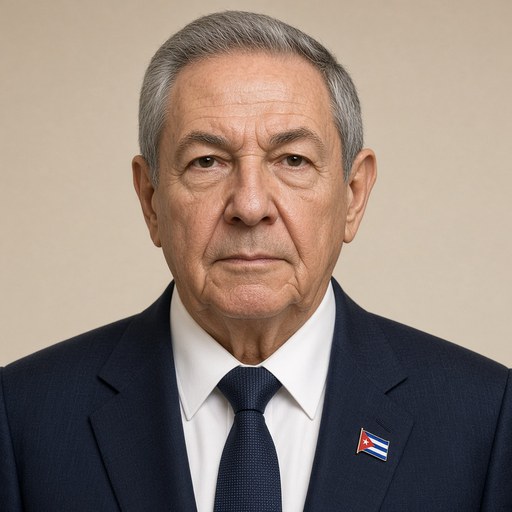
Raúl Castro at the Second Extraordinary Session of the National Assembly of People's Power
 Raúl Castro · President of Cuba
- Context
- Castro addressed the Second Extraordinary Session of Cuba's National Assembly on June 1, 2017, to present key documents on socialist economic and social development.
- Main themes
- Cuban economic and social model, socialist development, National Assembly of People's Power, economic and social policy guidelines, national development plan 2030, popular participation, Communist Party leadership, revolutionary process, Cuba's socialism, programmatic reform documents
- Duration
- ~10 min
- Words
- 1,223
- Sentences
- 34
- Readability
- 22
- Grade
- 19.1
- Syntax
- 3.78
- Vocabulary
- 2.30
Translated from Spanish
The broad sphere of national life a sentence belongs to. Every sentence has an Arena, so it is the denominator the other indices are read against.
Other34 sentences in 29 paragraphs
June 1, 2017 16:06:56
Speech delivered by Army General Raúl Castro Ruz, First Secretary of the Central Committee of the Communist Party of Cuba and President of the Councils of State and Ministers, at the Second Extraordinary Session of the National Assembly of People's Power in its VIII Legislature, at the Palace of Conventions, on June 1, 2017, "Year 59 of the Revolution."
(Transcription - Council of State)
Dear comrades:
I will only say a few brief words, given the extraordinary nature of this Assembly, convened by the Council of State to analyze comprehensive and complex documents, which, as we stated in our Central Report to the Seventh Congress of the Party, will mark the course of the Cuban revolutionary process, the Party, and society towards the future in the construction of our socialism.
We refer, first of all, to the Conceptualization of the Cuban Economic and Social Model of Socialist Development.
Also on this occasion, the National Assembly of People's Power, just as it did in July of last year, supported in spirit and letter the updating of the Guidelines of the Economic and Social Policy of the Party and the Revolution for the period 2016-2021, approved by the Seventh Congress of the Party, which already includes the opinions expressed after that date.
The National Assembly also learned about the results of the discussion process of the Bases of the National Economic and Social Development Plan until the year 2030, from which the aforementioned plan will be developed, which we will submit for approval to this Parliament in December 2018.
The preparation of these three documents has its origins in the resolutions approved by the Sixth Congress of the Party in 2011. Since then, several versions were developed that were submitted to the consideration of the Political Bureau for presentation to the Seventh Congress of the Party.
Prior consultations were held in each province with 971 delegates and 3,617 guests at the Congress, where 1,345 proposals were generated, clarifying concepts and expanding their foundations.
The Seventh Congress of the Party, by favorably receiving the presented projects, agreed to initiate a broad and democratic debate on the Conceptualization of the Economic and Social Model and the Bases of the National Economic and Social Development Plan until 2030 with all Party members and members of the Young Communists Union, representatives of mass organizations and various sectors of society, as well as to take into account the results of the consultation to adjust the Guidelines as necessary.
In compliance with this agreement, 47,470 meetings were held, in which more than 1,600,000 Cubans participated, generating 208,161 proposals and consequently modifying a significant part of the content or original wording of the documents.
This activity, where the preparation of the participants was evident, in addition to allowing the improvement of the aforementioned documents, constituted an important avenue for the exercise of popular participation in the debate and in the decisions made. It also served as an effective tool for communication and socialization of the fundamental transformations proposed by the update of the Model and showed support for the economic and social policy of the Party and the Revolution approved at the Sixth Congress.
The new projects, the result of the aforementioned process, were debated by the members of the Central Committee and the deputies in their respective provinces, whose proposals were analyzed at the Third Plenary of the Central Committee of the Party, an organism that approved, in accordance with the authority granted to it by the Seventh Congress, the Conceptualization of the Cuban Economic and Social Model, the Bases of the National Economic and Social Development Plan until 2030, and the new modifications to the Guidelines of the Economic and Social Policy of the Party and the Revolution for the period 2016-2021, while agreeing to submit the documents we have analyzed in this Extraordinary Session to the consideration of the National Assembly.
This brief, but necessary account, allows me to reaffirm today what I expressed on May 18 at the Third Plenary of the Central Committee that "these are the most studied, discussed, and rediscussed documents in the history of the Revolution," and perhaps in the history of the Republic of Cuba.
These programmatic foundations, recently approved by the Central Committee of the Party and now supported by the National Assembly of People's Power, reaffirm the socialist character of the Cuban Revolution and the role of the Communist Party as the superior leading force of society and the State, as established, with absolute clarity, in Article 5 of the Constitution of the Republic.
This will allow us to continue advancing in the updating of our economic and social model, or in other words, "to change everything that must be changed"; and we will do so at the speed allowed by the consensus we forge within our society and the capacity we demonstrate to do things well, to avoid serious errors that could compromise the successful fulfillment of this gigantic and honorable task.
In this very session and on behalf of the genuine will of our people, the Cuban Parliament approved a declaration of support for the people and government of the Bolivarian Republic of Venezuela.
On this issue, I want to emphasize that it is necessary to denounce and stop the aggression suffered by the sister nation. Imperialist political and economic interests are trying to prevent the exercise of self-determination by its people. The arbitrary and unjust unilateral sanctions from the United States are joined by the intervention in its internal affairs by the OAS and several governments, the defamation and gross manipulation of reality, all aimed at overthrowing the constitutionally elected government by the Venezuelans.
Many of those leading the protests and demanding international recognition are the same ones from the military coup of 2002, the oil coup of 2003, and the acts of coup violence of 2014.
Foreign interference is hypocritically justified, proclaiming that they want to help the Venezuelans; however, the only way to do so is by showing through actions full respect for Venezuela's sovereignty and encouraging constructive and respectful dialogue as the only way to channel differences.
If human rights and the integrity of individuals are truly a concern, the coup violence that has caused deaths and injuries must be unequivocally condemned. The images of young people beaten, stabbed, and burned alive by violent opponents recall the worst acts of fascism.
I reiterate our solidarity with the Bolivarian and Chavista Revolution, with the civic-military union of the Venezuelan people, and with the government led by the constitutional president Nicolás Maduro Moros.
We also observe with concern the development of events in Brazil, as a consequence of the methods by which comrade Dilma Rousseff was removed from the presidency, and the Workers' Party and its historical leader, comrade Luiz Inácio Lula da Silva, are being persecuted.
We are convinced that only respect for the sovereign will and mandate of the people will restore legitimacy to the political system of the brother country.
In that struggle, the Brazilian people can count and will count on the full solidarity of Cuba.
Comrades:
Before concluding, I wish to express to the deputies and to all our people that, as we traditionally do in each ordinary session of this Assembly, next July we will address other issues of national and international significance.
Thank you very much.
The original Spanish. The tags above are read on the English translation's sentences.
1 de junio de 2017 16:06:56
Discurso pronunciado por el General de Ejército Raúl Castro Ruz, Primer Secretario del Comité Central del Partido Comunista de Cuba y Presidente de los Consejos de Estado y de Ministros, en la Segunda Sesión Extraordinaria de la Asamblea Nacional del Poder Popular en su VIII Legislatura, en el Palacio de Convenciones, el 1º de junio de 2017, “Año 59 de la Revolución”.
(Versiones Taquigráficas - Consejo de Estado)
Queridas compañeras y compañeros:
Solo pronunciaré unas breves palabras, dado el carácter extraordinario de esta Asamblea, convocada por el Consejo de Estado para analizar abarcadores y complejos documentos, que como planteamos en nuestro Informe Central al Séptimo Congreso del Partido, marcarán el rumbo del proceso revolucionario cubano, del Partido y de la sociedad hacia el futuro en la construcción de nuestro socialismo.
Nos referimos, en primer lugar, a la Conceptualización del Modelo Económico y Social Cubano de Desarrollo Socialista.
También en esta ocasión, la Asamblea Nacional del Poder Popular, al igual que en julio del pasado año, respaldó en su espíritu y letra la actualización de los Lineamientos de la Política Económica y Social del Partido y de la Revolución para el período 2016-2021, aprobada por el Séptimo Congreso del Partido, que ya incluye las opiniones emitidas con posterioridad a esa fecha.
La Asamblea Nacional conoció además los resultados del proceso de discusión de las Bases del Plan Nacional de Desarrollo Económico y Social hasta el año 2030, a partir de las cuales se elaborará el citado plan, que someteremos a la aprobación de este Parlamento en diciembre del 2018.
La elaboración de estos tres documentos tiene sus antecedentes en las resoluciones aprobadas por el Sexto Congreso del Partido en el año 2011. Desde entonces, se elaboraron varias versiones que fueron sometidas a la consideración del Buró Político para su presentación al Séptimo Congreso del Partido.
Previamente se había llevado a cabo en cada provincia la consulta a 971 delegados y 3 617 invitados al Congreso, donde se generaron 1 345 propuestas y permitió esclarecer conceptos y ampliar sus fundamentos.
El Séptimo Congreso del Partido, al acoger favorablemente los proyectos presentados, acordó iniciar un debate amplio y democrático sobre la Conceptualización del Modelo Económico y Social y las Bases del Plan Nacional de Desarrollo Económico y Social hasta el 2030 con todos los militantes del Partido y de la Unión de Jóvenes Comunistas, representantes de las organizaciones de masas y de diversos sectores de la sociedad, así como tomar en cuenta los resultados de la consulta para ajustar los Lineamientos en lo que fuera necesario.
En cumplimiento de este acuerdo se realizaron 47 470 reuniones, en las que participaron más de un millón 600 000 cubanos, que generaron 208 161 propuestas y por consiguiente la modificación de una parte significativa del contenido o la redacción original de los documentos.
Esta actividad, donde se evidenció la preparación de los convocados, además de permitir el perfeccionamiento de los mencionados documentos, constituyó una importante vía para el ejercicio de la participación popular en el debate y en las decisiones adoptadas. También sirvió de efectiva herramienta de comunicación y socialización de las transformaciones fundamentales que propone la actualización del Modelo y mostró el apoyo a la política económica y social del Partido y la Revolución aprobada en el Sexto Congreso.
Los nuevos proyectos, fruto del referido proceso, fueron debatidos por los miembros del Comité Central y los diputados en sus respectivas provincias, cuyas propuestas se analizaron en el Tercer Pleno del Comité Central del Partido, organismo que aprobó, de acuerdo con la facultad que le otorgó el Séptimo Congreso, la Conceptualización del Modelo Económico y Social Cubano, las Bases del Plan Nacional de Desarrollo Económico y Social hasta el 2030 y las nuevas modificaciones a los Lineamientos de la Política Económica y Social del Partido y la Revolución para el período 2016-2021, al tiempo que acordó someter a la consideración de la Asamblea Nacional los documentos que hemos analizado en esta Sesión Extraordinaria.
Este resumido, pero necesario recuento, me permite ratificar hoy lo que expresé el pasado 18 de mayo en el Tercer Pleno del Comité Central de que “estos son los documentos más estudiados, discutidos y rediscutidos en la historia de la Revolución”, y tal vez de la historia de la República de Cuba.
Estos fundamentos programáticos, aprobados recientemente por el Comité Central del Partido y respaldados ahora por la Asamblea Nacional del Poder Popular, reafirman el carácter socialista de la Revolución Cubana y el papel del Partido Comunista como fuerza dirigente superior de la sociedad y del Estado, según lo establece, con absoluta nitidez, el Artículo 5 de la Constitución de la República.
Ello nos permitirá continuar avanzando en la actualización de nuestro modelo económico y social, o lo que es lo mismo, “cambiar todo lo que debe ser cambiado”; y lo haremos a la velocidad que nos permitan el consenso que forjemos al interior de nuestra sociedad y la capacidad que demostremos de hacer bien las cosas, para evitar graves errores que puedan comprometer el cumplimiento exitoso de esta gigantesca y honrosa tarea.
En esta propia sesión y en representación de la voluntad genuina de nuestro pueblo, el Parlamento cubano aprobó una declaración de respaldo al pueblo y gobierno de la República Bolivariana de Venezuela.
Sobre el tema, quiero enfatizar que es necesario denunciar y detener la agresión que sufre la hermana nación. Intereses políticos y económicos imperialistas tratan de impedir el ejercicio de la libre determinación por parte de su pueblo. A las arbitrarias e injustas sanciones unilaterales estadounidenses se unen la intervención en sus asuntos internos por parte de la OEA y de varios gobiernos, la difamación y la manipulación grosera de la realidad, todo ello dirigido al derrocamiento del gobierno constitucional electo por los venezolanos.
Muchos de los que lideran las protestas y reclaman reconocimiento internacional son los mismos del golpe militar del 2002, son los del golpe petrolero del 2003 y de los actos de violencia golpista del 2014.
Se intenta justificar hipócritamente la injerencia extranjera, pregonando que se quiere ayudar a los venezolanos, sin embargo, la única manera de hacerlo es mostrando con hechos el pleno respeto a la soberanía de Venezuela y alentando el diálogo constructivo y respetuoso, como única vía para encauzar las diferencias.
Si en realidad preocupan los derechos humanos y la integridad de las personas, debe condenarse inequívocamente la violencia golpista que ha causado muertos y heridos. Las imágenes de jóvenes golpeados, apuñalados y quemados vivos por violentos opositores, recuerdan los peores actos del fascismo.
Reitero nuestra solidaridad con la Revolución bolivariana y chavista, con la unión cívico-militar del pueblo venezolano y con el gobierno encabezado por el presidente constitucional Nicolás Maduro Moros.
También observamos con preocupación el desarrollo de los acontecimientos en Brasil, consecuencia de los métodos con que fue separada de la presidencia la compañera Dilma Rousseff, y son perseguidos el Partido de los Trabajadores y su líder histórico, el compañero Luiz Inácio Lula da Silva.
Estamos persuadidos de que solo el respeto a la voluntad soberana y al mandato del pueblo devolverán la legitimidad al sistema político del hermano país.
En esa lucha, el pueblo brasileño cuenta y contará con toda la solidaridad de Cuba.
Compañeras y compañeros:
Antes de concluir, deseo expresar a los diputados y a todo nuestro pueblo, que como tradicionalmente hacemos en cada sesión ordinaria de esta Asamblea, el próximo mes de julio abordaremos otras cuestiones del acontecer nacional e internacional.
Muchas gracias (Aplausos).
COMPARTIR facebook twitter google +