




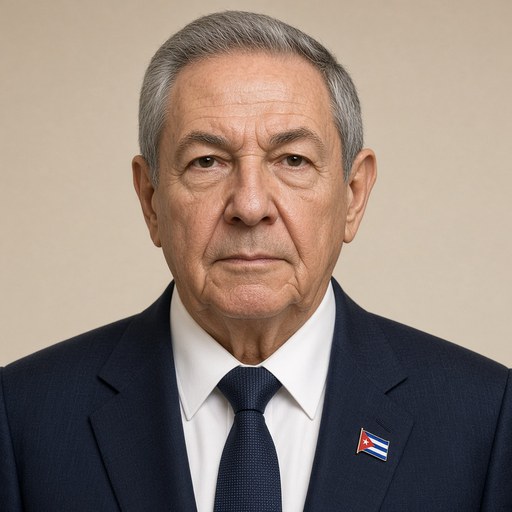
Intervention by President Raúl Castro at the closing of the VII AEC Summit
 Raúl Castro · President of Cuba
- Context
- Castro addressed the closing of the VII Association of Caribbean States Summit in Havana on June 4, 2016, summarizing outcomes and regional priorities.
- Main themes
- Caribbean regional integration and cooperation, AEC Summit outcomes, Declaration of Havana, Zone of Peace, climate change and global challenges, neoliberalism and social policy, sovereignty and self-determination, Caribbean unity, Muhammad Ali tribute, Cuba's AEC presidency
- Duration
- ~6 min
- Words
- 700
- Sentences
- 23
- Readability
- 28
- Grade
- 17.0
- Syntax
- 3.44
- Vocabulary
- 2.33
Translated from Spanish
The broad sphere of national life a sentence belongs to. Every sentence has an Arena, so it is the denominator the other indices are read against.
Other23 sentences in 16 paragraphs
Dear Ambassador Alfonso Múnera Cavadía, Secretary General of the AEC:
We send our message of condolences and solidarity to the family of the great boxing champion Muhammad Ali, to the people of the United States, especially to the African American community, whose rights he always defended, as well as to the entire international sports community. We will never forget his gentlemanliness and ethics, his rejection of war and his defense of peace, his respect and friendship with comrade Fidel and with that great boxer born in Cuba and Caribbean, Teófilo Stevenson, whose father was born in Saint Vincent and the Grenadines and who is the maternal grandson of a woman from San Cristóbal.
The Summit that concludes today demonstrates our region's ability to dialogue and reach consensus on the common problems and challenges we face, and to persevere in the search for solutions to them, adapted to the conditions, needs, and priorities of the area.
The documents and decisions adopted bear witness to this. We have found the necessary consensus to speak out on sensitive issues of common interest.
The recently agreed Declaration of Havana reaffirms the validity of the founding principles of our Association as a body for consultation, consensus, and cooperation, to adopt common positions among the States, Countries, and Territories of the Caribbean and to promote integration, as enshrined in the Constitutive Agreement.
We have approved concrete actions within the framework of the Action Plan for the next three years, on a variety of high-priority issues for all of us.
But we have much left to do and we face great challenges, such as the threats to international peace and security, the effects of the international economic and financial crisis, and the consequences of climate change.
The sustained debate demonstrates the necessity and capacity of our Association to address the essential issues of the region, which is essential to continue making progress in integration and cooperation, given that these depend essentially on the political will of governments and the common development priorities.
We have reaffirmed the importance of applying the postulates of the Proclamation of Latin America and the Caribbean as a Zone of Peace, signed by the Heads of State and Government in January 2014, in the relations between our nations and with other counterparts and partners.
Peace and stability, the defense of the interests of our peoples, and the exercise of sovereignty and self-determination, without external interference, are essential elements to advance towards the goals of integration and cooperation that we have set for ourselves. This juncture compels us to ask how to consolidate what has been achieved and move forward. We all know, from the experience of the lost decade, that a new wave of neoliberalism, with the dismantling of inclusive social policies, the increase of poverty and inequality, the deregulation of the market, the lack of environmental protection, and the reduction of the role of the State, will prevent us from achieving the regional integration and cooperation objectives we have set.
Cuba will continue to work, from the Presidency of the Council of Ministers of the Association, with the purpose of continuing to strengthen it and uniting wills to face collective challenges.
Our Association was created with the aim of uniting the entire Caribbean family, including the territories that are part of European states. We recognize the contribution of all of them, as well as that of the French Republic and the Netherlands, in their capacity as Associate Members. We hope they will continue to do so and that the rest of the Caribbean territories will also join.
We appreciate the participation and contributions of the observing nations and organizations, whose number continues to increase, as a sign of the interest that the Caribbean generates worldwide.
I wish to highlight, once again, the contribution of Ambassador Alfonso Múnera Cavadía to strengthening the Secretariat and the work of the AEC in these years. Starting next August, this effort will be led by Ambassador June Soomer, whom we congratulate once again on her election and reiterate our support.
We also thank all of you for being present in Havana and for your commitment to the advancement and consolidation of the Association.
Thank you very much.
The original Spanish. The tags above are read on the English translation's sentences.
Estimado Embajador Alfonso Múnera Cavadía, Secretario General de la AEC:
Enviamos nuestro mensaje de condolencias y solidaridad a la familia del gran campeón de boxeo Muhammad Ali , al pueblo de los Estados Unidos, en especial a la comunidad afroamericana, cuyos derechos siempre defendió, así como a toda la comunidad deportiva internacional. Nunca olvidaremos su caballerosidad y ética, su rechazo a la guerra y su defensa de la paz, su respeto y amistad con el compañero Fidel y con ese gran boxeador nacido en Cuba y caribeño que fue Teófilo Stevenson, cuyo padre nació en San Vicente y las Granadinas y nieto, por vía materna, de una sancristobaleña.
La Cumbre que hoy concluye demuestra la capacidad de nuestra región para dialogar y concertar posiciones sobre los problemas y desafíos comunes que enfrentamos, y para perseverar en la búsqueda de soluciones a los mismos, adaptadas a las condiciones, necesidades y prioridades del área.
Los documentos y decisiones adoptados dan fe de ello. Hemos encontrado el consenso necesario para pronunciarnos sobre temas sensibles, de interés común .
La recién acordada Declaración de La Habana reafirma la vigencia de los principios fundacionales de nuestra Asociación como organismo de consulta, concertación y cooperación, para adoptar posiciones comunes entre los Estados, Países y Territorios del Caribe y promover la integración, tal como está recogido en el Convenio Constitutivo.
Hemos aprobado acciones concretas en el marco del Plan de Acción para los próximos tres años, en una variedad de temas de alta prioridad para todos nosotros.
Pero nos queda mucho por hacer y tenemos grandes retos que enfrentar, como son las amenazas a la paz y la seguridad internacionales, los efectos de la crisis económica y financiera internacional, y las consecuencias del cambio climático.
El debate sostenido demuestra la necesidad y la capacidad de nuestra Asociación de tratar los temas esenciales de la región, lo que es imprescindible para continuar los avances en materia de integración y de cooperación, dado que estos dependen esencialmente de la voluntad política de los gobiernos y las prioridades comunes de desarrollo.
Hemos reafirmado la importancia de aplicar los postulados de la Proclama de América Latina y el Caribe como Zona de Paz , firmada por los Jefes de Estado y de Gobierno en enero de 2014, en las relaciones entre nuestras naciones y con otras contrapartes y socios.
La paz y la estabilidad, la defensa de los intereses de nuestros pueblos y el ejercicio de la soberanía y la autodeterminación, sin injerencia externa, son elementos esenciales para avanzar hacia las metas de integración y cooperación que nos hemos trazado. Esta coyuntura nos obliga a preguntarnos cómo consolidar lo alcanzado y seguir adelante. Sabemos todos, por la experiencia de la década perdida, que una nueva oleada neoliberal, con el desmontaje de las políticas sociales inclusivas, el aumento de la pobreza y la desigualdad, la desregulación del mercado, la desprotección ambiental y la disminución del papel del Estado, nos impedirá cumplir los objetivos de integración regional y cooperación que nos hemos fijado.
Cuba continuará trabajando, desde la Presidencia del Consejo de Ministros de la Asociación, con el propósito de seguir fortaleciéndola y aunando voluntades para hacer frente a los desafíos colectivos.
Nuestra Asociación fue creada con el objetivo de unir a toda la familia caribeña, incluyendo a los territorios que forman parte de estados europeos. Reconocemos la contribución de todos ellos, así como de la República Francesa y los Países Bajos, en su condición de Miembros Asociados. Esperamos que lo sigan haciendo y que también se sume el resto de los territorios caribeños.
Agradecemos la participación y los aportes de las naciones y organizaciones Observadoras, cuyo número continúa incrementándose, como muestra del interés que suscita el Caribe en todo el mundo.
Deseo destacar, una vez más, el aporte del Embajador Alfonso Múnera Cavadía al fortalecimiento de la Secretaría y de la labor de la AEC en estos años. A partir del próximo mes de agosto, este esfuerzo será liderado por la Embajadora June Soomer, a quien nuevamente felicitamos por su elección y le reiteramos nuestro apoyo.
Igualmente agradecemos la presencia de todos ustedes en La Habana y su compromiso con el avance y la consolidación de la Asociación.
Muchas gracias.
Infografía: Luis Amigo/Cubadebate.
Infografía: Luis Amigo/Cubadebate.
Infografía: Luis Amigo/Cubadebate.
Noticias
Política
Banco Metropolitano habilita servicio en todas sus sucursales para extracción de efectivo con tarjetas del BPA y Bandec 6 mayo 2026 | 1 |
UNE prevé afectación de 1 395 MW en horario pico este miércoles 6 mayo 2026 | + |
Qué trae la prensa cubana, miércoles 6 de mayo de 2026 6 mayo 2026 | +
La temporada ciclónica 2026 será poco activa, prevé el Instituto de Meteorología 6 mayo 2026 | 1 |
La deuda de EEUU supera el tamaño de su economía, por primera vez desde la Segunda Guerra Mundial 6 mayo 2026 | 7 |
ir aNoticias »
La deshistorización del tiempo 6 mayo 2026 | +
Canciller cubano: “El secretario de Estado afirmó que no existe un bloqueo petrolero a Cuba. Ha optado sencillamente por mentir” 5 mayo 2026 | 10
La nueva orden ejecutiva del presidente de EEUU: Una agresión inédita contra Cuba 5 mayo 2026 | 10 |
1 de Mayo: Ultra ricos y trabajadores pobres en la Argentina de Llao Llao 5 mayo 2026 | 3
Confesiones del Secretario de Estado 5 mayo 2026 | 9
ir aPolítica »