




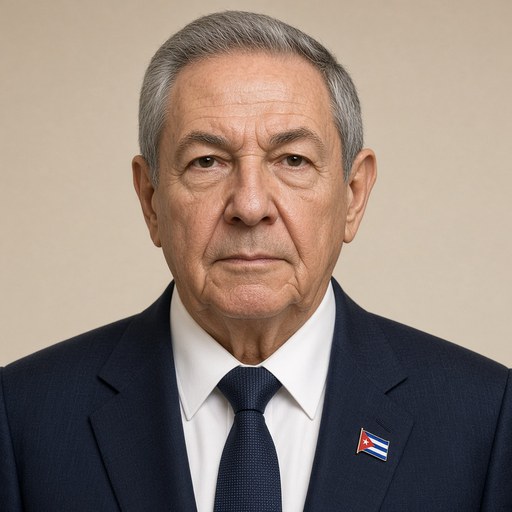
Raúl in France: New perspectives are opening up in this positive dynamic of exchanges.
 Raúl Castro · President of Cuba
- Context
- Castro addressed French officials and business leaders during a state visit to France in February 2016, marking his first official visit to an EU member state.
- Main themes
- Cuba-France bilateral relations, economic and commercial cooperation, US blockade of Cuba, debt agreement and Paris Club, cultural and historical ties, EU-Cuba relations, CELAC and Caribbean peace, tourism and investment, scientific collaboration, shared revolutionary heritage
- Duration
- ~9 min
- Words
- 1,034
- Sentences
- 45
- Readability
- 36
- Grade
- 13.9
- Syntax
- 2.86
- Vocabulary
- 2.29
Translated from Spanish
The broad sphere of national life a sentence belongs to. Every sentence has an Arena, so it is the denominator the other indices are read against.
Other45 sentences in 30 paragraphs
Dear Mr. President François Hollande;
Ministers, parliamentarians, business leaders, and personalities from the world of culture and the arts;
Dear compatriots and friends of Cuba;
Distinguished guests:
I thank you for the kind words spoken by President François Hollande, and for the warm welcome you have extended to our delegation in this beautiful city.
From France, I have a special feeling: in 1953, upon returning from a congress on youth rights held in Austria, I visited this nation for the first time. Being very young, as we began our last struggle for definitive independence, I made the most of my time, and even participated in the May Day parade that year.
Less than a year ago, we welcomed you in Havana, an occasion during which we held fruitful discussions that allowed us to exchange, deepen, and relaunch our ties based on mutual respect and understanding. Our meeting last September in New York, at the headquarters of the United Nations, was equally useful and cordial.
Today, with this State visit, the first of its kind that I make to a member country of the European Union, we confirm the very positive level of our bilateral relations.
I take this opportunity to reaffirm our willingness to expand and diversify relations with the French Republic in all its dimensions: political, economic-commercial, financial, cooperation, academic, and cultural.
We recognize your clear position denouncing the blockade that persists against Cuba and constitutes the main obstacle to our economic, commercial, and financial relations with the world, and particularly with France.
France has been, is, and will be an important economic partner for Cuba. French companies stood by us in the most difficult times, resisting extraterritorial pressures arising from the unjust American blockade that has lasted for more than half a century, and have participated in the economic and social development plans of our country.
Important French companies have participated in the growing development of the Cuban tourism sector, in the marketing of the classic Havana Club rum worldwide, and in the development of vaccines against infectious diseases, which demonstrates the wide range of opportunities for scientific and commercial collaboration in the field of research and development.
New perspectives are opening up in this positive dynamic of exchanges. The Bilateral Economic Agenda that we have just signed should serve as an effective mechanism for the implementation of joint projects in the medium and long term.
The agreement signed today regarding Cuba's debt to France creates a favorable scenario for the development of financial, commercial, and investment relations. This agreement is also the result of France's leadership in the prior negotiations between Cuba and the ad hoc group of the Paris Club, for which we thank President Hollande, his government, and the other creditors.
France has played a positive leadership role, fostering a better relationship between the European Union and Cuba. Due to its traditional relationship with Latin America and the Caribbean, your country can continue to play an essential role in deepening the ties between the European Union and the Community of Latin American and Caribbean States (CELAC). France and Cuba can contribute to finding solutions to the challenges facing the Caribbean region. The Proclamation of Latin America and the Caribbean as a Zone of Peace, signed by the heads of State and Government of the region at the CELAC Summit in Havana in January 2014, should serve as a basis for this, recognizing the principle of unity in diversity and the inalienable right of all States to freely choose their own political, economic, social, and cultural system.
Mr. President,
The historical-cultural and friendship ties that unite us are the result of mutual admiration and respect between our peoples.
The Cuban nation has forged its identity in the aspirations for freedom and independence, and in the perennial quest for the full dignity of man, a tradition that connects us to the historical legacy of the French revolutionaries of 1789 and their universal values of liberty, equality, fraternity.
Our national anthem, La Bayamesa, was inspired by La Marsellesa. Cuba, like France, has a heroine named Mariana, mother of the Maceo, the most heroic Cuban of all time.
The national emblem of Cuba, like the French Marianne, is crowned with a Phrygian cap, a symbol of freedom. Both national flags bear the colors red, blue, and white.
In the works of our National Hero José Martí, his admiration for Paris is evident. The writer Alejo Carpentier was one of the few who could describe the echoes of the French Revolution in the Antilles. The famous French writer Victor Hugo encouraged Cubans fighting to free themselves from colonial yoke from his exile.
In Cuba, French culture, language, and tradition are close to us. Thousands of Cubans are interested in them, as a result of the collaboration we have developed with the Alliance Française and our interest in maintaining a connection with the vast French educational-cultural universe.
We reiterate to the French people and government our solidarity and firm condemnation of the atrocious terrorist attacks that occurred in Paris last year. The people of Cuba have suffered firsthand from terrorism, which has caused the death of 3,478 citizens and lifelong disabilities to 2,099, as I mentioned at the Summit of the Americas in Panama in April 2015, in front of all the heads of State and Government from across the continent.
Mr. President,
I reaffirm our commitment to fulfill the new goals of joint work that we have set for ourselves, marking a qualitatively superior stage in the broad scope of Franco-Cuban ties.
Next May, we will celebrate, for the first time, a month of Cuban culture in France and French culture in Cuba, a living expression of the interest in expanding mutual knowledge.
The world today needs balance, understanding, and peace. The relations that our peoples have established and that both States and governments are now consolidating are the best tribute to that universal endeavor.
Allow me to conclude by extending, through you, a special greeting and gratitude to all the French people and friends of Cuba who have reserved a special place for our people in this great country.
Let us toast to the friendship between France and Cuba.
Thank you very much.
The original Spanish. The tags above are read on the English translation's sentences.
Estimado Señor Presidente François Hollande;
Ministros, parlamentarios, empresarios y personalidades del mundo de la cultura y las artes;
Estimados compatriotas y amigos de Cuba;
Distinguidos invitados:
Agradezco las gentiles palabras pronunciadas por el presidente François Hollande, y la amable acogida que han reservado a nuestra delegación en esta hermosa ciudad.
De una Francia, un sentimiento especial: en 1953, de regreso de un congreso por los derechos de la juventud, efectuado en Austria, visité esta nación por primera vez. Siendo muy joven, cuando comenzábamos nuestra última lucha por la definitiva independencia, aproveché al máximo el tiempo, e incluso me incorporé al desfile por el Primero de Mayo ese año.
Hace menos de un año le recibimos a usted en La Habana, ocasión en la que sostuvimos conversaciones fructíferas que nos permitieron intercambiar, profundizar y relanzar nuestros vínculos sobre la base del respeto y el entendimiento mutuos. Igualmente útil y cordial fue nuestro encuentro del pasado mes de septiembre en Nueva York, en la sede de la Organización de las Naciones Unidas.
Hoy, con esta visita de Estado, primera de ese carácter que realizo a un país miembro de la Unión Europea, constatamos el muy positivo nivel de nuestras relaciones bilaterales.
Aprovecho esta ocasión para reafirmar la voluntad de ampliar y diversificar las relaciones con la República Francesa en todas sus dimensiones: política, económico-comercial, financiera, de cooperación, académica y cultural.
Reconocemos su clara posición de denuncia del bloqueo que persiste contra Cuba y constituye el principal obstáculo a nuestras relaciones económicas, comerciales y financiera con el mundo y, en particular, con Francia.
Francia ha sido, es y será un importante socio económico para Cuba. Empresas francesas nos acompañaron en los momentos más difíciles, resistiendo presiones extraterritoriales derivadas del injusto bloqueo norteamericano que se mantiene por más de medio siglo, y han sido partícipes en los planes de desarrollo económico y social de nuestro país.
Importantes compañías francesas han participado en el creciente desarrollo del sector turístico cubano, en la comercialización en el mundo del clásico ron Havana Club y en el desarrollo de vacunas contra enfermedades infecciosas, lo que demuestra el amplio espacio de oportunidades para la colaboración científica y comercial en el campo de la investigación y el desarrollo.
Nuevas perspectivas se abren en esta positiva dinámica de intercambios. La Agenda Económica Bilateral que acabamos de suscribir debe constituirse en efectivo mecanismo para la implementación de proyectos conjuntos a mediano y largo plazos.
El acuerdo firmado hoy sobre la deuda de Cuba con Francia, genera un escenario favorable para el desarrollo de las relaciones financieras, comerciales y de inversión. Dicho acuerdo es también resultado del liderazgo de Francia en la negociación previa entre Cuba y el grupo ad hoc del Club de París, que agradecemos al presidente Hollande, a su gobierno y a los demás acreedores.
Francia ha desempeñado un positivo liderazgo, favoreciendo una mejor relación entre la Unión Europea y Cuba. Por su tradicional relación con América Latina y el Caribe, su país puede continuar desempeñando un papel esencial en la profundización de los vínculos entre la Unión Europea y la Comunidad de Estados Latinoamericanos y Caribeños (CELAC). Francia y Cuba pueden contribuir en la búsqueda de soluciones a los desafíos que enfrenta la región del Caribe. Debe servirnos de base para ello la Proclama de América Latina y el Caribe como Zona de Paz, firmada por los jefes de Estado y Gobierno de la región en la Cumbre de la CELAC de La Habana en enero de 2014, que reconoce el principio de la unidad en la diversidad y el derecho inalienable de todos los Estados a escoger libremente su propio sistema político, económico, social y cultural.
Señor Presidente,
Los vínculos histórico-culturales y de amistad que nos unen son fruto de la admiración y el respeto recíproco entre nuestros pueblos.
La nación cubana ha forjado su identidad en las aspiraciones de libertad e independencia, y en la perenne búsqueda de la dignidad plena del hombre, tradición que nos une al legado histórico de los revolucionarios franceses de 1789 y a sus universales valores de libertad, igualdad, fraternidad.
Nuestro himno nacional, La Bayamesa, se inspiró en La Marsellesa. Cuba cuenta, al igual que Francia, con una heroína de nombre Mariana, madre de los Maceo, la más heroica cubana de todos los tiempos.
El escudo nacional de Cuba, al igual que la Marianne francesa, está coronado por un gorro frigio, símbolo de la libertad. Ambas enseñas nacionales portan los colores rojo, azul y blanco.
En las obras de nuestro Héroe Nacional José Martí, quedó plasmada su admiración por París. El escritor Alejo Carpentier supo como pocos describir los ecos de la Revolución Francesa en las Antillas. El célebre escritor francés Víctor Hugo alentó desde su exilio a los cubanos que luchaban por desprenderse del yugo colonial.
En Cuba nos son cercanas la cultura, lengua y tradición francesas. Son miles los cubanos que se interesan por ellas, resultado de la colaboración que hemos desarrollado con la Alianza Francesa y de nuestro interés por mantener una interconexión con el vasto universo educativo-cultural francés.
Reiteramos al pueblo y gobierno franceses nuestra solidaridad y firme condena ante los atroces atentados terroristas ocurridos en París el pasado año. El pueblo de Cuba ha sufrido en carne propia el terrorismo, el cual ha provocado la muerte de 3 478 ciudadanos y discapacidad de por vida a 2 099, como dije en la Cumbre de las América de Panamá en abril de 2015, delante de todos los jefes de Estado y de Gobierno de todo el continente.
Señor Presidente,
Le ratifico nuestro compromiso de cumplimentar las nuevas metas de trabajo conjunto que nos hemos propuesto, y que marcan una etapa cualitativamente superior en el amplio ámbito de los vínculos franco-cubanos.
El próximo mes de mayo celebraremos, por primera vez, un mes de la cultura cubana en Francia y de la cultura francesa en Cuba, viva expresión del interés por expandir el conocimiento mutuo.
El mundo de hoy necesita equilibrio, entendimiento y paz. Las relaciones que han establecido nuestros pueblos y que hoy consolidan ambos Estados y gobiernos, son el mejor tributo a ese empeño universal.
Permítame al concluir extender, a través de usted, un especial saludo y la gratitud a todos los franceses y amigos de Cuba que han guardado para nuestro pueblo un especial lugar en este gran país.
Brindemos por la amistad entre Francia y Cuba.
Muchas gracias (Aplausos).
Especiales
Política
1 de Mayo: Ultra ricos y trabajadores pobres en la Argentina de Llao Llao 5 mayo 2026 | 3
Confesiones del Secretario de Estado 5 mayo 2026 | 9
Medicina Natural y Tradicional: Usos comunes para tres cítricos 5 mayo 2026 | 3
¿Cómo la crisis y la guerra impactan en la clase obrera del mundo? (+ Video) 5 mayo 2026 | 2
Pequeña entrevista marxiana a Néstor Kohan 5 mayo 2026 | 5
ir aEspeciales »
La deshistorización del tiempo 6 mayo 2026 | +
Canciller cubano: “El secretario de Estado afirmó que no existe un bloqueo petrolero a Cuba. Ha optado sencillamente por mentir” 5 mayo 2026 | 10
La nueva orden ejecutiva del presidente de EEUU: Una agresión inédita contra Cuba 5 mayo 2026 | 10 |
1 de Mayo: Ultra ricos y trabajadores pobres en la Argentina de Llao Llao 5 mayo 2026 | 3
Confesiones del Secretario de Estado 5 mayo 2026 | 9
ir aPolítica »