




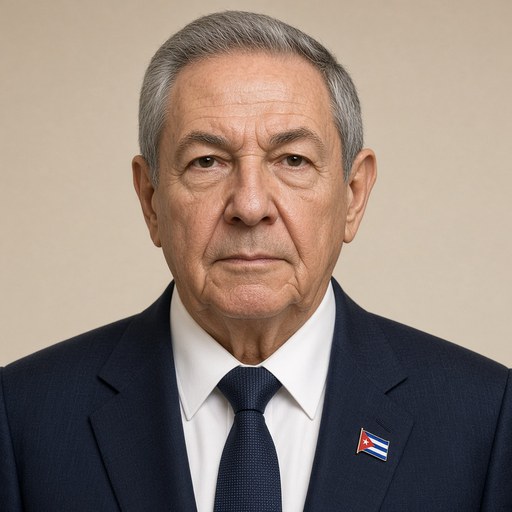
Press statement by Army General Raúl Castro Ruz at the Palace of the Revolution
 Raúl Castro · President of Cuba
- Context
- Castro addressed U.S. President Barack Obama at the Palace of the Revolution in Havana on March 22, 2016, during Obama's historic first visit to Cuba in 88 years.
- Main themes
- U.S.-Cuba bilateral relations, lifting of the economic blockade, diplomatic normalization, Obama's historic visit to Cuba, trade and cooperation agreements, Guantanamo Naval Base, human rights differences, Venezuela stability, Colombia peace process, telecommunications, health cooperation, Cuban sovereignty
- Duration
- ~10 min
- Words
- 1,199
- Sentences
- 51
- Readability
- 30
- Grade
- 14.9
- Syntax
- 3.08
- Vocabulary
- 2.17
Translated from Spanish
The broad sphere of national life a sentence belongs to. Every sentence has an Arena, so it is the denominator the other indices are read against.
Other51 sentences in 37 paragraphs
Good afternoon.
Mr. President Barack Obama:
We are pleased to welcome you on the first visit of a United States leader to our country after 88 years.
We hope that during your brief stay on the island you can appreciate the hospitality of the Cuban people, who have never harbored feelings of animosity towards the American people, with whom we share historical, cultural, and emotional ties.
Your visit is an important step in the process towards improving bilateral relations, which we hope will contribute to greater progress in our ties, for the benefit of both nations and the region.
We have just held a constructive and useful meeting, which continues the two previous ones we held in Panama and New York.
We note that in the 15 months since we announced the decision to restore diplomatic relations, we have achieved concrete results.
We resumed direct postal mail and signed an agreement to restore regular flights.
We have expanded cooperation in areas of mutual interest. We signed two memoranda of understanding on environmental protection and marine areas, and another to improve maritime navigation safety. Today, one more will be signed on cooperation in agriculture.
Currently, another group of bilateral instruments is being negotiated to cooperate in areas such as combating drug trafficking, trade and traveler security, and health. Regarding the latter, we have agreed to deepen collaboration in the prevention and treatment of communicable diseases such as Zika and non-communicable chronic diseases, including cancer. This cooperation is beneficial not only for Cuba and the United States but also for our hemisphere.
Based on the decisions made by President Obama to modify the application of some aspects of the blockade, Cuban companies and their American counterparts are working to identify possible business operations that could be realized within the still restrictive framework of the current regulations.
Some have materialized, especially in the area of telecommunications, in which our country has a program based on its development priorities and the necessary technological sovereignty, ensuring the appropriate use of these in service of national interests.
Negotiations are also advancing for the acquisition of medicines, medical equipment, and equipment for energy generation and environmental protection, among others.
Much more could be done if the United States lifted the blockade.
We recognize the position of President Obama and his government against the blockade and the repeated calls he has made to Congress to eliminate it.
The latest measures adopted by his government are positive, but not sufficient. I exchanged with the President about other measures that we believe can be taken to eliminate still existing restrictions and make a significant contribution to dismantling the blockade.
This is essential because the blockade remains in effect and has deterrent components and extraterritorial intimidating effects, about which I presented some examples to the President to show him their negative consequences for Cuba and other states.
The blockade is the most significant obstacle to our economic development and the well-being of the Cuban people. Therefore, its elimination will be essential to normalize bilateral relations. It will also be beneficial for the Cuban emigration, which wishes the best for their families and their country.
To advance towards normalization, it will also be necessary to return the territory illegally occupied by the Naval Base in Guantanamo.
Both issues, being the main obstacles, were addressed once again in the Editorial published on March 9 in the official organ of the Communist Party of Cuba and, just four days ago, in the press conference of our Foreign Minister Bruno Rodríguez Parrilla, widely disseminated by the press.
Likewise, other policies should be eliminated so that there can be normal relations between Cuba and the United States. It should not be expected that the Cuban people renounce the destiny they have freely and sovereignly chosen and for which they have made immense sacrifices.
We also exchanged views on international issues, particularly those that could affect peace and regional stability.
In particular, it was planned and there was not enough time to conclude it, to address our concern about the destabilization situation that is being attempted in Venezuela, which is counterproductive for the environment on the continent, but I express it on this occasion.
We also discussed the progress of the peace process in Colombia and the efforts to end this conflict.
There are profound differences between our countries that will not disappear, as we have different conceptions on many issues, such as political models, democracy, the exercise of human rights, social justice, international relations, peace, and global stability.
We defend human rights. We believe that civil, political, economic, social, and cultural rights are indivisible, interdependent, and universal. We cannot conceive of a government that does not defend and guarantee the right to health, education, social security, food, and development, to equal pay for equal work, and to the rights of children. We oppose political manipulation and double standards regarding human rights.
Cuba has much to say and show in this matter, and for that reason, I reiterated to the President our willingness to maintain the dialogue we initiated.
On December 17, 2014, when we announced the decision to restore diplomatic relations, I expressed: “we must learn the art of living together, in a civilized manner, with our differences.”
On July 15, 2015, before our Parliament, I pointed out: “Changing everything that must be changed is a sovereign and exclusive matter of the Cubans. The Revolutionary Government is willing to advance in normalizing relations, convinced that both countries can cooperate and coexist civilly, for mutual benefit, above the differences we have and will surely have, and contribute to peace, security, stability, development, and equity in our continent and the world.”
Today I reaffirm that we must put into practice the art of civilized coexistence, which involves accepting and respecting differences and not making them the center of our relationship, but rather promoting ties that prioritize the benefit of both countries and peoples and focusing on what brings us closer rather than what separates us.
We agree that we have a long and complex road ahead of us. But what is important is that we have begun to take steps to build a new type of relationship, like the one that has never existed between Cuba and the United States.
Destroying a bridge is easy and takes little time. Rebuilding it solidly is a much longer and more difficult task.
After four failed attempts, as a show of will and perseverance, on September 2, 2013, American swimmer Diana Nyad successfully swam across the Florida Strait, without a shark cage.
For that feat of overcoming the distance that geographically separates our countries, on August 30, 2014, to the tunes of the national anthems of Cuba and the United States, she was awarded the Order of Sporting Merit, granted by the Cuban State Council.
This achievement contains a strong message; it should serve as an example for bilateral relations, as it confirms that if she could do it, then we can too.
I reiterate to President Obama our gratitude for his visit and the willingness of the Government of Cuba to continue advancing in the coming months for the good of our peoples and countries.
Thank you very much.
The original Spanish. The tags above are read on the English translation's sentences.
Buenas tardes.
Señor presidente Barack Obama:
Nos complace recibirlo en la primera visita de un mandatario de los Estados Unidos a nuestro país después de 88 años.
Deseamos que durante su breve estancia en la isla pueda apreciar la hospitalidad del pueblo cubano, que nunca ha abrigado sentimientos de animosidad hacia el pueblo estadounidense, al que nos unen lazos históricos, culturales y afectivos.
Su visita es un paso importante en el proceso hacia la mejoría de las relaciones bilaterales, que esperamos contribuya a impulsar mayores avances en nuestros vínculos, en beneficio de ambas naciones y de la región.
Acabamos de sostener un constructivo y útil encuentro, que da continuidad a los dos anteriores que sostuvimos en Panamá y Nueva York.
Constatamos que en los 15 meses transcurridos desde que anunciamos la decisión de restablecer las relaciones diplomáticas hemos obtenido resultados concretos.
Reanudamos el correo postal directo y firmamos un acuerdo para restablecer los vuelos regulares.
Hemos ampliado la cooperación en áreas de interés mutuo. Suscribimos dos memorandos de entendimiento sobre protección del medio ambiente y áreas marinas, y otro para mejorar la seguridad de la navegación marítima. Hoy se firmará uno más sobre cooperación en la agricultura.
Actualmente se está negociando otro grupo de instrumentos bilaterales para cooperar en esferas como el enfrentamiento al narcotráfico, la seguridad del comercio y de los viajeros, y la salud.Sobre esta última, hemos acordado profundizar la colaboración en la prevención y tratamiento de enfermedades transmisibles como el Zika y de enfermedades crónicas no transmisibles, incluyendo el cáncer.Esta cooperación es beneficiosa no solo para Cuba y Estados Unidos, sino también para nuestro hemisferio.
A partir de las decisiones adoptadas por el presidente Obama para modificar la aplicación de algunos aspectos del bloqueo, empresas cubanas y sus contrapartes estadounidenses trabajan en la identificación de posibles operaciones comerciales que se pudieran concretar en el marco aún restrictivo de las regulaciones en vigor.
Algunas se han materializado, especialmente en el área de las telecomunicaciones, ámbito en el que nuestro país cuenta con un programa basado en sus prioridades de desarrollo y en la necesaria soberanía tecnológica, que garantice el uso apropiado de estas al servicio de los intereses nacionales.
También se avanza en negociaciones para la adquisición de medicamentos, equipos médicos y equipamiento para generación de energía y protección del medio ambiente, entre otras.
Mucho más pudiera hacerse si se levantara el bloqueo de los Estados Unidos.
Reconocemos la posición del presidente Obama y de su gobierno contra el bloqueo y los reiterados llamados que ha hecho al Congreso para que lo elimine.
Las últimas medidas adoptadas por su gobierno son positivas, pero no suficientes. Intercambié con el Presidente sobre otras medidas que pensamos pueden tomarse para eliminar restricciones aún vigentes y hacer una importante contribución al desmantelamiento del bloqueo.
Esto es esencial, porque el bloqueo continúa en vigor y tiene componentes disuasivos y efectos intimidatorios de alcance extraterritorial, sobre lo cual le expuse algunos ejemplos al Presidente para mostrarle sus consecuencias negativas para Cuba y otros Estados.
El bloqueo es el obstáculo más importante para nuestro desarrollo económico y el bienestar del pueblo cubano. Por eso, su eliminación será esencial para normalizar las relaciones bilaterales. También será beneficioso para la emigración cubana, que desea lo mejor para sus familias y su país.
Para avanzar hacia la normalización también será necesario que se devuelva el territorio ilegalmente ocupado por la Base Naval en Guantánamo.
Ambos temas, por ser los principales obstáculos, fueron abordados, una vez más, en el Editorial publicado el 9 de marzo pasado en el órgano oficial del Partido Comunista de Cuba y, hace solo cuatro días, en la conferencia de prensa de nuestro canciller Bruno Rodríguez Parrilla, ampliamente divulgados por la prensa.
Asimismo, otras políticas debieran ser suprimidas para que pueda haber relaciones normales entre Cuba y los Estados Unidos. No debiera pretenderse para ello que el pueblo cubano renuncie al destino que libre y soberanamente ha escogido y por el que ha hecho inmensos sacrificios.
Intercambiamos además sobre temas internacionales, en particular, aquellos que pudieran afectar la paz y la estabilidad regional.
Especialmente estaba previsto y no hubo tiempo para concluirlo, el abordar nuestra preocupación por la situación de desestabilización que se intenta fomentar en Venezuela, lo cual es contraproducente para el ambiente en el continente , pero lo expreso en esta ocasión.
Igualmente, dialogamos sobre la marcha del proceso de paz en Colombia y los esfuerzos para poner fin a este conflicto.
Existen profundas diferencias entre nuestros países que no van a desaparecer, pues tenemos concepciones distintas sobre muchos temas, como los modelos políticos, la democracia, el ejercicio de los derechos humanos, la justicia social, las relaciones internacionales, la paz y la estabilidad mundial.
Defendemos los derechos humanos. Consideramos que los derechos civiles, políticos, económicos, sociales y culturales son indivisibles, interdependientes y universales. No concebimos que un gobierno no defienda y garantice el derecho a la salud, a la educación, a la seguridad social, a la alimentación y al desarrollo, al salario igual por trabajo igual y a los derechos de los niños. Nos oponemos a la manipulación política y el doble rasero sobre los derechos humanos.
Cuba tiene mucho que decir y que mostrar en esta materia y, por ello, le reiteré al Presidente nuestra disposición a mantener el diálogo que iniciamos.
El pasado 17 de diciembre de 2014, cuando anunciamos la decisión de restablecer las relaciones diplomáticas expresé: “debemos aprender el arte de convivir, de forma civilizada, con nuestras diferencias”.
El 15 de julio de 2015 ante nuestro Parlamento señalé: “Cambiar todo lo que deba ser cambiado es asunto soberano y exclusivo de los cubanos. El Gobierno Revolucionario tiene la disposición de avanzar en la normalización de las relaciones, convencido de que ambos países podemos cooperar y coexistir civilizadamente, en beneficio mutuo, por encima de las diferencias que tenemos y seguramentetendremos, y contribuir con ello a la paz, la seguridad, la estabilidad, el desarrollo y la equidad en nuestro continente y el mundo”.
Hoy ratifico que debemos poner en práctica el arte de la convivencia civilizada, que implica aceptar y respetar las diferencias y no hacer de ellas el centro de nuestra relación, sino promover vínculos que privilegien el beneficio de ambos países y pueblos y concentrarnos en lo que nos acerca y no en lo que nos separa.
Coincidimos en que nos queda por delante un largo y complejo camino por recorrer. Pero lo importante es que hemos comenzado a dar pasos para construir una relación de nuevo tipo, como la que nunca ha existido entre Cuba y los Estados Unidos.
Destruir un puente es fácil y requiere poco tiempo. Reconstruirlo sólidamente es una tarea mucho más larga y difícil.
Después de cuatro intentos fallidos, en una muestra de voluntad y perseverancia, el 2 de septiembre del 2013, la nadadora estadounidense Diana Nyad, logró cruzar a nado el estrecho de la Florida, sin jaula antitiburones.
Por esa hazaña de vencer la distancia que separa geográficamente a nuestros países, el 30 de agosto del 2014, bajo los acordes de los himnos nacionales de Cuba y Estados Unidos, fue condecorada con la Orden al Mérito Deportivo, otorgada por el Consejo de Estado cubano.
Esta proeza contiene un fuerte mensaje, debería servirnos de ejemplo para las relaciones bilaterales, ya que confirma que si ella pudo, entonces nosotros también podremos.
Le reitero al presidente Obama nuestro agradecimiento por su visita y la voluntad del Gobierno de Cuba de seguir avanzando en los próximos meses por el bien de nuestros pueblos y países.
Muchas gracias.
Especiales
Política
1 de Mayo: Ultra ricos y trabajadores pobres en la Argentina de Llao Llao 5 mayo 2026 | 3
Confesiones del Secretario de Estado 5 mayo 2026 | 9
Medicina Natural y Tradicional: Usos comunes para tres cítricos 5 mayo 2026 | 3
¿Cómo la crisis y la guerra impactan en la clase obrera del mundo? (+ Video) 5 mayo 2026 | 2
Pequeña entrevista marxiana a Néstor Kohan 5 mayo 2026 | 5
ir aEspeciales »
La deshistorización del tiempo 6 mayo 2026 | +
Canciller cubano: “El secretario de Estado afirmó que no existe un bloqueo petrolero a Cuba. Ha optado sencillamente por mentir” 5 mayo 2026 | 10
La nueva orden ejecutiva del presidente de EEUU: Una agresión inédita contra Cuba 5 mayo 2026 | 10 |
1 de Mayo: Ultra ricos y trabajadores pobres en la Argentina de Llao Llao 5 mayo 2026 | 3
Confesiones del Secretario de Estado 5 mayo 2026 | 9
ir aPolítica »