




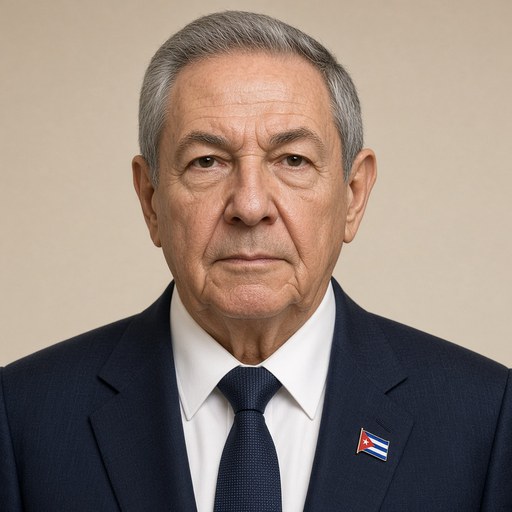
Raúl Castro's statement regarding the first anniversary of the decision to restore relations.
 Raúl Castro · President of Cuba
- Context
- Castro issued a statement on the first anniversary of the December 17, 2014 decision to restore Cuba-US diplomatic relations, assessing progress and remaining obstacles.
- Main themes
- Cuba-US diplomatic normalization, economic blockade and sanctions, bilateral cooperation achievements, Cuban sovereignty and independence, Guantanamo Naval Base, Cuban immigration policy, political-diplomatic relations, human rights dialogue, Cuba's revolutionary principles
- Duration
- ~8 min
- Words
- 914
- Sentences
- 26
- Readability
- 17
- Grade
- 19.6
- Syntax
- 3.43
- Vocabulary
- 2.26
Translated from Spanish
The broad sphere of national life a sentence belongs to. Every sentence has an Arena, so it is the denominator the other indices are read against.
Other26 sentences in 23 paragraphs
A year has passed since the simultaneous announcements made on December 17, 2014, by the Presidents of Cuba and the United States, to restore diplomatic relations and work towards improving our ties.
On a day like yesterday, within the agreements reached to address issues of mutual interest, we were able to announce with great joy for our entire people the return to the Homeland of Gerardo, Ramón, and Antonio, fulfilling Fidel's promise that our Five Heroes would return.
On that same date, in line with our reiterated willingness to engage in a respectful dialogue with the Government of the United States, based on sovereign equality, to address a wide range of topics reciprocally, without undermining national independence and the self-determination of our people, we agreed to adopt mutual measures to improve the bilateral climate and advance towards the normalization of relations between the two countries.
Since then, it can be stated that we have achieved some results, especially in the political-diplomatic sphere and in cooperation:
Diplomatic relations have been restored, and embassies have reopened in both countries, which was preceded by the rectification of the unjust designation of Cuba as a state sponsor of terrorism.
Two meetings have been held between the Presidents of both countries, as well as other high-level meetings and visits.
Existing cooperation on issues of mutual interest, such as air and aviation security, and the fight against drug trafficking, illegal immigration, human trafficking, and migration fraud has expanded.
New areas of bilateral cooperation have been opened on issues of common benefit, including environmental protection, law enforcement, maritime-port security, and health.
Dialogues have begun on matters of bilateral and multilateral interest, such as climate change, mutual compensation, human trafficking, and human rights, the latter being a topic on which we have deep differences and are holding exchanges based on respect and reciprocity.
We have signed agreements on environmental protection and the restoration of direct postal service.
All of this has been achieved through a professional and respectful dialogue, based on equality and reciprocity.
On the contrary, during this year, no progress has been made on the issues that are essential for Cuba to have normal relations with the United States.
Although President Barack Obama has reiterated his opposition to the economic, commercial, and financial blockade and has called on Congress to lift it, this policy remains in effect. The financial persecution of Cuba's legitimate transactions and the extraterritorial effects of the blockade continue, causing harm and deprivation to our people and being the main obstacle to the development of the Cuban economy.
The measures adopted so far by President Obama, while positive, have proven to have limited scope, which has hindered their implementation. The President, exercising his executive prerogatives, can expand the scope of the measures already taken and adopt new ones that substantially modify the application of the blockade.
Despite Cuba's repeated demand for the return of the territory illegally occupied by the Naval Base in Guantanamo, the Government of the United States has stated that it has no intention of changing the status of this enclave.
The Government of the United States maintains programs that are harmful to Cuban sovereignty, such as projects aimed at promoting changes in our political, economic, and social order, and illegal radio and television broadcasts, for which millions of dollars continue to be allocated.
A preferential immigration policy for Cuban citizens continues to be applied, expressed in the ongoing "wet foot, dry foot" policy, the parole program for medical professionals, and the Cuban Adjustment Act, which stimulates illegal, unsafe, disordered, and irregular emigration, promotes human trafficking and other related crimes, and generates problems for other countries.
The Government of Cuba will continue to insist that in order to achieve the normalization of relations, it is imperative that the Government of the United States eliminate all these past policies that affect the Cuban people and nation, and that do not correspond to the current bilateral context or to the will expressed by both countries when restoring diplomatic relations, to develop respectful and cooperative ties between both peoples and governments.
No one should expect Cuba to abandon the cause of independence for which our people, since 1868, have made great sacrifices in order to normalize relations with the United States; nor should anyone forget that, after many frustrations and 60 years of total dependence, this was finally achieved on January 1, 1959, with the victory of the Rebel Army, under the command of Commander in Chief Fidel Castro Ruz.
The Cuban people will not renounce the principles and ideals for which several generations of Cubans have fought over the last half century. The right of every state to choose the economic, political, and social system it desires, without interference in any form, must be respected.
The Government of Cuba is fully willing to continue advancing in the construction of a relationship with the United States that is different from all its previous history, based on mutual respect for sovereignty and independence, that is beneficial for both countries and peoples, and that is nourished by the historical, cultural, and familial connections that have existed between Cubans and Americans.
Cuba, in full exercise of its sovereignty and with the overwhelming support of its people, will continue to be immersed in the process of transformations to update its economic and social model, in order to advance the development of the country, increase the well-being of the population, and strengthen the achievements of the Socialist Revolution.
Thank you very much.
The original Spanish. The tags above are read on the English translation's sentences.
Ha transcurrido un año desde los anuncios simultáneos realizados el 17 de diciembre de 2014 por los Presidentes de Cuba y los Estados Unidos, de restablecer las relaciones diplomáticas y trabajar por el mejoramiento de nuestros vínculos .
Un día como ayer, dentro de los acuerdos alcanzados para solucionar temas de interés para ambos países, pudimos anunciar con gran júbilo para todo nuestro pueblo el regreso a la Patria de Gerardo, Ramón y Antonio , con lo que cumplimos la promesa de Fidel de que nuestros Cinco Héroes volverían.
En esa misma fecha, en correspondencia con nuestra reiterada disposición a sostener con el Gobierno de los Estados Unidos un diálogo respetuoso, basado en la igualdad soberana, para tratar los más diversos temas de forma recíproca, sin menoscabo a la independencia nacional y la autodeterminación de nuestro pueblo, acordamos adoptar medidas mutuas para mejorar el clima bilateral y avanzar hacia la normalización de los vínculos entre los dos países.
Desde entonces, se puede afirmar que hemos obtenido algunos resultados , sobre todo en el plano político-diplomático y de la cooperación:
Se restablecieron las relaciones diplomáticas y se reabrieron las embajadas en ambos países, lo cual estuvo precedido de la rectificación de la injusta designación de Cuba como Estado patrocinador del terrorismo.
Se han celebrado dos reuniones entre los Presidentes de ambos países , así como otros encuentros y visitas de alto nivel.
Se ha expandido la cooperación ya existente en temas de interés mutuo , como la seguridad aérea y de la aviación; y el enfrentamiento al narcotráfico, la emigración ilegal, el tráfico de emigrantes y el fraude migratorio.
Se han abierto nuevas áreas de cooperación bilateral sobre temas de beneficio común , entre ellas la protección del medio ambiente, la aplicación y el cumplimiento de la ley, la seguridad marítimo-portuaria y la salud.
Se han iniciado diálogos sobre asuntos de interés bilateral y multilateral, como el cambio climático, las compensaciones mutuas, la trata de personas y los derechos humanos , tema este último en el que tenemos profundas diferencias y estamos sosteniendo intercambios sobre la base del respeto y la reciprocidad.
Hemos suscrito acuerdos sobre protección del medio ambiente y el restablecimiento del servicio de correo postal directo .
Todo esto se ha logrado mediante un diálogo profesional y respetuoso, basado en la igualdad y la reciprocidad .
Por el contrario, durante este año, no se ha avanzado en la solución de los temas que para Cuba son esenciales para que haya relaciones normales con los Estados Unidos.
Aunque el Presidente Barack Obama ha reiterado su oposición al bloqueo económico, comercial y financiero y ha llamado al Congreso para que lo levante, esta política sigue en vigor. Se mantienen la persecución financiera a las transacciones legítimas de Cuba y los efectos extraterritoriales del bloqueo, lo cual provoca daños y privaciones a nuestro pueblo y es el obstáculo principal para el desarrollo de la economía cubana .
Las medidas adoptadas hasta el momento por el presidente Obama, aunque positivas, han demostrado tener un alcance limitado, lo cual ha impedido su implementación . El Presidente, en uso de sus prerrogativas ejecutivas, puede ampliar el alcance de las medidas ya tomadas y adoptar otras nuevas, que modifiquen sustancialmente la aplicación del bloqueo.
A pesar del reiterado reclamo de Cuba de que se le devuelva el territorio ilegalmente ocupado por la Base Naval en Guantánamo , el Gobierno de los Estados Unidos ha manifestado que no tiene la intención de cambiar el estatus de este enclave.
El Gobierno de los Estados Unidos mantiene programas que son lesivos a la soberanía cubana, como los proyectos dirigidos a promover cambios en nuestro orden político, económico y social , y las transmisiones radiales y televisivas ilegales, para cuya implementación continúan otorgándose fondos millonarios.
Se sigue aplicando una política migratoria preferencial a los ciudadanos cubanos, expresada en la vigencia de la política de pies secos-pies mojados, el programa de parole para profesionales médicos y la Ley de Ajuste Cubano, lo cual estimula una emigración ilegal, insegura, desordenada e irregular , promueve el tráfico de personas y otros delitos conexos, y genera problemas a otros países.
El Gobierno de Cuba seguirá insistiendo en que para alcanzar la normalización de las relaciones, es imperativo que el Gobierno de los Estados Unidos elimine todas estas políticas del pasado , que afectan al pueblo y a la nación cubana, y no se corresponden con el contexto bilateral actual ni con la voluntad expresada por los dos países, al restablecer las relaciones diplomáticas, de desarrollar vínculos respetuosos y de cooperación entre ambos pueblos y gobiernos.
Nadie debe pretender que Cuba, para normalizar las relaciones con los Estados Unidos, abandone la causa de la independencia por la que nuestro pueblo, desde 1868, hizo grandes sacrificios; ni olvide que, después de muchas frustraciones y 60 años de total dependencia, esta fue por fin alcanzada el primero de enero de 1959 con la victoria del Ejército Rebelde, bajo el mando del Comandante en Jefe Fidel Castro Ruz.
El pueblo cubano no renunciará a los principios e ideales por los que varias generaciones de cubanos han luchado a lo largo de este último medio siglo. El derecho de todo Estado a elegir el sistema económico, político y social que desee, sin injerencia de ninguna forma , debe ser respetado.
El Gobierno de Cuba tiene total disposición a continuar avanzando en la construcción de una relación con los Estados Unidos que sea distinta a la de toda su historia precedente, sobre bases de respeto mutuo a la soberanía y la independencia, que sea beneficiosa para ambos países y pueblos, y que se nutra de las conexiones históricas, culturales y familiares que han existido entre cubanos y estadounidenses.
Cuba, en pleno ejercicio de su soberanía y con el apoyo mayoritario de su pueblo, seguirá inmersa en el proceso de transformaciones para actualizar su modelo económico y social, en aras de avanzar en el desarrollo del país, incrementar el bienestar de la población y fortalecer los logros de la Revolución Socialista.
Muchas gracias.
Noticias
Política
Banco Metropolitano habilita servicio en todas sus sucursales para extracción de efectivo con tarjetas del BPA y Bandec 6 mayo 2026 | 1 |
UNE prevé afectación de 1 395 MW en horario pico este miércoles 6 mayo 2026 | + |
Qué trae la prensa cubana, miércoles 6 de mayo de 2026 6 mayo 2026 | +
La temporada ciclónica 2026 será poco activa, prevé el Instituto de Meteorología 6 mayo 2026 | 1 |
La deuda de EEUU supera el tamaño de su economía, por primera vez desde la Segunda Guerra Mundial 6 mayo 2026 | 7 |
ir aNoticias »
La deshistorización del tiempo 6 mayo 2026 | +
Canciller cubano: “El secretario de Estado afirmó que no existe un bloqueo petrolero a Cuba. Ha optado sencillamente por mentir” 5 mayo 2026 | 10
La nueva orden ejecutiva del presidente de EEUU: Una agresión inédita contra Cuba 5 mayo 2026 | 10 |
1 de Mayo: Ultra ricos y trabajadores pobres en la Argentina de Llao Llao 5 mayo 2026 | 3
Confesiones del Secretario de Estado 5 mayo 2026 | 9
ir aPolítica »