




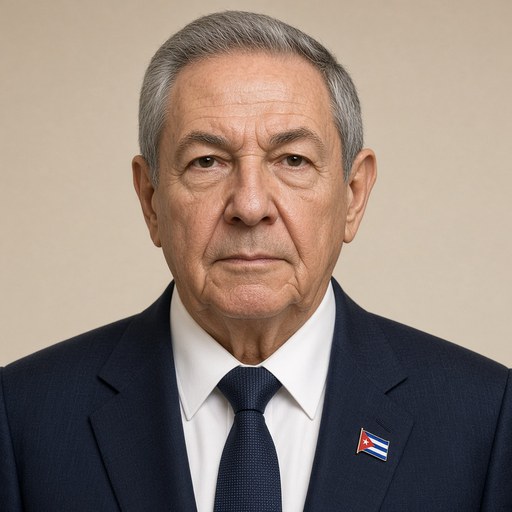

- Context
- Castro delivered the central report to the 7th Congress of the Communist Party of Cuba on April 17, 2016, outlining economic and social policy guidelines.
- Main themes
- Cuban socialist model update, economic and social development guidelines 2016-2021, Communist Party Congress proceedings, national development plan to 2030, party membership and organization, Bay of Pigs anniversary, revolutionary continuity, collective document elaboration, prosperous and sustainable socialism
- Duration
- ~99 min
- Words
- 11,841
- Sentences
- 321
- Readability
- 21
- Grade
- 19.2
- Syntax
- 3.54
- Vocabulary
- 2.30
Translated from Spanish
The broad sphere of national life a sentence belongs to. Every sentence has an Arena, so it is the denominator the other indices are read against.
Other321 sentences in 201 paragraphs
Comrades:
We begin the sessions of the 7th Congress of the Communist Party of Cuba as we mark the 55th anniversary of the proclamation, by Commander in Chief Fidel Castro Ruz, of the socialist character of the Revolution, on April 16, 1961, during the farewell for the victims of the bombings of the air bases the day before, a prelude to the mercenary invasion at Playa Girón, organized by the government of the United States and defeated in less than 72 hours, thanks to the prior actions undertaken by State Security and the courage of the fighters of the Rebel Army, police, and militiamen, who for the first time fought defending socialism, under the direct command of Fidel.
We gather today, exactly five years after the previous Congress, thus fulfilling Work Objective No. 17 approved by the First National Conference of the Party, which established maintaining the periodicity set in the Statutes for the celebration of Party congresses, except in the face of the threat of war, natural disasters, and other exceptional situations.
The 7th Congress, the supreme body of the party organization, has the participation of one thousand delegates, proposed from the grassroots and democratically elected, representing more than 670,000 members, integrated into approximately 54,500 nuclei.
As you can see, the membership of our Party has decreased, which is influenced by the negative demographic dynamics we face, the effect of a restrictive growth policy since 2004, and the inherent shortcomings in the work of recruitment, retention, and motivation of potential members. It is also true that in recent years we have managed to halt this trend.
In the period that has passed, we have been applying what is established in Objective No. 18 of the First National Conference, to hold at least two plenums of the Central Committee per year where the progress of the implementation of the Guidelines, the fulfillment of the Economic Plan and the Budget, and the Objectives themselves are analyzed. In the ordinary sessions of the National Assembly of People's Power, the supreme body of state power, the execution of the Economic Plan and the compliance with the Guidelines have also been debated twice a year.
We arrive at the 7th Congress with the presentation of four important projects of guiding documents, several of which began to be worked on practically at the conclusion of the 6th Congress of the Organization. These are:
First: Review of the evolution of the economy in the five-year period 2011-2015. Report on the results of the implementation of the Guidelines of the Economic and Social Policy of the Party and the Revolution. Update of the Guidelines for the period 2016-2021.
Second: Foundations of the National Plan for Economic and Social Development until 2030: Proposal for the Vision of the nation. Strategic axes and sectors.
Third: Conceptualization of the Cuban socialist development model.
Fourth: Party work in compliance with the Objectives approved at the First National Conference and the Guidelines of the First Secretary of the Central Committee.
These are comprehensive and complex documents that will mark the course of the Cuban revolutionary process, the Party, and society towards the future in the construction of a prosperous and sustainable socialism.
They are closely linked to each other, and we must approach them not as a completely finished work nor with a static or dogmatic prism, but rather, after the debates at this event, as we did starting from the 6th Congress, they will be subjected to periodic evaluations, where a dynamic vision of these programmatic documents prevails.
Unlike the previous Congress when the proposal of the Guidelines was subjected to extensive consultation with the party membership, the communist youth, and the people in general, and after its approval at that event was ratified by the National Assembly, this time that process was not carried out considering that it is a confirmation and continuation of the line agreed upon five years ago regarding the updating of our economic and social model.
The four projects listed that are presented at this event are the result of collective elaboration, with the participation of university professors, academics, researchers in the economic and social sciences, and officials from the Government and the Party.
For their analysis in the respective commissions, they were debated in two plenums of the Party's Central Committee, in the months of December and January, a process that contributed more than 900 opinions and suggestions that led to the elaboration of a new version to be submitted to the delegates at the Congress, in meetings in all provinces, at the beginning of March, with the contribution of more than 3,500 guests representing different sectors of society, including all deputies of the National Assembly, with whose interventions and proposals, which exceeded 8,800, the final version was prepared.
It is the first time that we present to a Party Congress the topic of Conceptualization, which encompasses the theoretical foundations and essential characteristics of the economic and social model we aspire to as a result of the updating process.
Throughout these five years, eight versions of the Conceptualization were elaborated that were successively analyzed, first in the meetings of the Political Bureau Commission for monitoring the implementation of the agreements of the 6th Congress and subsequently in the Political Bureau and in the plenums of the Central Committee, with the participation of the Council of Ministers.
For its part, the project related to the foundations of the National Development Plan until 2030 is the result of the work carried out over the past four years by academics and specialists from government agencies and the Permanent Commission for Implementation and Development. It addresses a matter of transcendent scope, whose great technical complexity did not allow us to arrive at the Congress with the National Development Plan until 2030 completed, as was the initial purpose, but rather its foundations are presented, that is, the Vision of the Nation and the Strategic Axes and Sectors, which provides us with a formidable tool to continue working until its conclusion, which we hope to achieve in 2017.
We have conceived that both documents, that is, the Conceptualization and the foundations of the National Development Plan, after their analysis at the Congress, be democratically debated by the Party membership and the Union of Young Communists, representatives of mass organizations and broad sectors of society, with the purpose of enriching and perfecting them.
To that end, we request the Congress to empower the Central Committee to be elected to introduce the modifications resulting from the consultation process and its final approval, including the necessary adjustments to the Guidelines that are approved at this event.
Since the approval of the Guidelines by the last Congress, it was clear to us that the process of their implementation would not constitute an easy path, free of obstacles and contradictions, and that the fundamental transformations required for the updating of the model would take us more than a five-year period. Practice has confirmed the correctness of that assessment. We have continued to advance with a sure step, without haste, but without pauses, that is, with the necessary gradualness and comprehensiveness to achieve success.
The fundamental obstacle we have faced, as we anticipated, is the burden of an obsolete mentality, which shapes an attitude of inertia or lack of confidence in the future. There have not been, as was logically to be expected, feelings of nostalgia for other, less complex moments of the revolutionary process, when the Soviet Union and the socialist camp existed. On the other extreme, there have been masked aspirations for the restoration of capitalism as a solution to our problems.
Despite this, work has been carried out systematically and intensively in the implementation of the Guidelines, with 21% of the 313 approved being fully implemented. 77% of them are in the implementation phase, while 2% have not yet begun.
These figures do not clearly show how much work has been done and advanced in the process, which is by no means insignificant, and they are reflected in the approval of 130 policies and the issuance of 344 new legal norms of different ranks, the modification of 55, and the repeal of 684. However, the slow implementation of legal regulations and their assimilation, above all, has delayed the implementation of the approved policies.
As a result of the work carried out in the implementation of the guidelines and the new tasks that were incorporated into the process of updating the economic model, an updated proposal for the period 2016-2021 is submitted for the Congress's consideration, with a total of 268 guidelines, of which 31 retain the original wording, 193 are modified, and 44 new ones are added.
In assessing the pace of the ongoing transformations, it should not be lost sight of the fact that in the case of Cuba, the application of so-called "shock therapies," often employed to the detriment of the most humble classes of society, can never be allowed. This premise, which corresponds to the principle that no one will be left unprotected, largely conditions the speed of the updating of the Cuban economic model, in which the influence of the international economic crisis and, in particular, the effects of the economic blockade against Cuba is undeniable.
Neoliberal formulas that advocate the accelerated privatization of state assets and social services, such as health, education, and social security, will never be applied in Cuban socialism.
Even with the present economic limitations, social services to the Cuban population in Education, Health, Culture, and Sports, and Social Security have been preserved and perfected. However, we must insist on the need to sustainably improve their quality.
The transformations carried out in the reorganization of these sectors, despite the initial complaints and misunderstandings that were duly clarified or the necessary adjustments made, have contributed to raising the quality of the aforementioned services at a lower budget cost, which is evidenced in the health indicators obtained, such as, to mention just one data point, the infant mortality rate of 4.2 per 1,000 live births, similar to that obtained in very few of the most developed countries.
The reorganization of the school network allowed for a reduction in the number of centers and around 250,000 internal students, while the existing pyramid in the training of middle technicians and skilled workers was inverted through the increase in enrollment in technical-professional education.
A program for the maintenance and recovery of the construction infrastructure and equipment of the Education system is underway.
In the national health system, a set of measures aimed at its reorganization, compaction, and regionalization of services has been implemented, with the objective of improving the health status of the population, increasing the quality and satisfaction of the people with the services provided to them, and making the system efficient and sustainable, while ensuring its development.
The improvement of management structures and the adjustment of staffing led to a reduction of 152,000 positions and the reassignment of more than 20,000 doctors to assistive activities. These decisions, along with others aimed at the rational use of resources, allowed for a reduction in the budget allocated to Health by more than 2 billion pesos.
At the same time, difficulties have arisen in the supply of imported and nationally produced medications to pharmacies, and hygienic-sanitary conditions persist that promote the transmission of infectious diseases such as cholera, dengue, chikungunya, and recently, zika. Currently, the Action Plan to confront diseases transmitted by the Aedes mosquito is being implemented, which cannot be seen as just another ephemeral campaign, but must guarantee its sustainability over time.
Decisions in the economy cannot, under any circumstances, signify a break with the ideals of equality and justice of the Revolution, much less fracture the unity of the majority of the people around the Party. It will also not be allowed that as a consequence of these measures, instability and uncertainty are generated in the Cuban population.
That is why I insist that a great deal of political sensitivity and intentionality is required to advance in the implementation of the Guidelines. It is necessary to ensure more explanation to the people, more discipline and demands, and closer monitoring of the process of changes. We must have, as we have already said, our ears and feet firmly on the ground.
The most eloquent demonstration of the complexity of the implementation process lies in the monetary and exchange duality, an issue that has not ceased to be worked on over these years, and whose solution will not be left for the Greek calends, since although it does not represent the magical solution to the structural distortions of the economy, it will mean a fundamental boost to advance in the rest of the tasks of updating our economic model.
The monetary ordering of the country will facilitate the creation of the conditions required to overcome the harmful effects of egalitarianism and make real the socialist principle that expresses “from each according to his ability, to each according to his work.” This will make it possible to rectify the phenomenon of the so-called “inverted pyramid” that does not allow for fair compensation for work based on its quantity, quality, and complexity, and for the standard of living to correspond with the legal income of citizens, generating demotivation among the workforce and also among the management, which discourages their promotion to greater responsibilities.
This is an opportune moment to reaffirm, once again, the decision to guarantee bank deposits in international currencies, in convertible Cuban pesos, and in Cuban pesos, as well as the cash held by the population and foreign and national legal entities.
The socialist state enterprise, defined as the main form of management in the national economy, finds itself at a disadvantage compared to the growing non-state sector that benefits from operating in a monetary circuit based on an exchange rate of 1 X 25, while for it the parity of the CUC with the Cuban peso applies. This significant distortion must be resolved as soon as possible, within the framework of monetary and exchange unification.
This anomaly, combined with the modest performance of our economy, has not allowed for substantial progress in the implementation of the guidelines related to the gradual elimination of undue gratuities and excessive subsidies, considering that it has not been possible to generalize the increase in workers' incomes, nor to ensure a stable supply of certain goods in the liberated market.
Despite the reduction or elimination of some products from the regulated family basket, namely the famous ration book, and the transfer of retail sales of these to the liberated market at unsubsidized prices, a high level of subsidy remains in a varied range of basic products and services.
On the other hand, the high aging index of the Cuban population, which also migrates from the countryside to the cities, concentrates and raises its qualification level, represents a strategic problem for development, originating from the existence for years of a set of socioeconomic and cultural factors that are not easy to reverse. A policy has been developed to address this situation, defining 76 measures and 252 actions, whose implementation will be gradual depending on the performance of the economy, and the results will be obtained in the long term.
The Policy for Foreign Investment has been approved, recognized as an important and necessary source for the country's development, and a new law in this area has come into effect, which, while providing incentives and legal security to investors, preserves national sovereignty, environmental protection, and the rational use of natural resources.
The Special Development Zone of Mariel was established with additional advantages for attracting national and foreign investors, and the necessary legal framework and infrastructure for its settlement and productive deployment were ensured with the aim of generating exports, promoting import substitution, facilitating the transfer of technologies and managerial skills of which we know very little, generating sources of employment and long-term financing, and forming the logistics that facilitate achieving high levels of efficiency.
Without underestimating in the slightest the obstacle that the American blockade and its extraterritorial application represent in this regard, it is necessary to leave behind archaic prejudices regarding foreign investment and to advance resolutely in the preparation, design, and realization of new businesses.
The destination of investments has changed substantially; if five years ago the productive sphere and infrastructures received 45% of them, in 2015 they accumulated 70%. Likewise, in the investment process, rigor and control in compliance with plans have increased, and in general, their indicators have improved, despite the fact that there are still many tensions in supplies and ensuring a properly qualified and motivated workforce, while improvisation, superficiality, and lack of comprehensiveness persist due to incorrect preparation of projects, leading to prolonged execution times and impacts on the quality of finishes.
In the effort to strengthen the role of the socialist state enterprise and its autonomy, progress has been made in separating state functions from business functions, gradually modifying the relationships of government agencies with enterprises, whose managers today have greater powers for their management.
However, this is a path that is not traveled in a day, weeks, or months, but will mature over the medium and long term as organizational conditions are consolidated, the training of management is improved, and the habit of waiting for instructions from above to act within the framework of already granted powers is overcome, instead of promoting initiative and entrepreneurial spirit.
At the same time, the process of perfecting the agencies of the Central State Administration and national entities has continued, including, in a first stage, the global agencies and those in the productive sphere. The process has been completed in four of them, four have been extinguished or merged, and 13 are in the implementation stage. Work continues with the agencies linked to the main services to the population.
The experiment being developed in the provinces of Artemisa and Mayabeque is also in the implementation phase, with a view to its subsequent generalization, which among other aspects seeks the separation of functions of the leadership of the People's Power assemblies and the Administrative Councils, allowing the assemblies to concentrate on direct attention to the delegates, popular councils, and the work of the Commissions in their control and oversight tasks.
The application of the new model in local administrations has led to a notable reduction in the positions of those bodies at the provincial and municipal levels, without generating instability in their functioning, favoring their authority to exercise the assigned state functions.
As expressed in the conclusions of the draft report on the results of the implementation of the Guidelines, there have been shortcomings and deficiencies on the part of the agencies and entities, including the Permanent Commission for Implementation and Development itself, causing delays in the application of some measures, the formation of proposals that lacked comprehensiveness or had a limited vision, fundamentally regarding the assessment of risk levels and the correct appreciation of the costs and benefits of certain measures.
Problems were also manifested in the management and control of the approved policies and in the dissemination and training at different levels of management. Above all, in this last aspect of training at different levels of management, some believed that by drafting a paper and sending it from one end of the country to the other and asking that it be studied by the management, the problem was already solved, and when we looked into it, each one applied the measure in their own way; this happened with Resolution 17 of the Ministry of Labor and Social Security, on such an important issue, which I will briefly refer to during this speech.
In some cases, there has been a lack of a sense of urgency when the effects in practice have not been as desired and even, at times, contrary to the spirit of the adopted measures, which translates into not decisively addressing a deviation when it is still small, and after its massification, the proper rectification becomes a political problem.
A graphic example of the above is represented by the behavior of agricultural product prices with the reappearance of the phenomenon of speculation and hoarding to the benefit of a few and to the detriment of the majority of the population.
Although we understand that the primary factor in the rise of prices lies in a level of production that does not meet demand and that progress in this area is conditioned by objective and subjective factors, we cannot remain with our arms crossed in the face of citizens' irritation over the unscrupulous handling of prices by intermediaries who only think about making more and more profit.
The recognition of the market in the functioning of the socialist economy does not imply that the Party, the Government, and mass organizations cease to fulfill their role in society to confront any situation that harms the population, nor much less to say: “it is a government issue, I cannot get involved.” I, as a Party member, I, as a Government member, at any level, and I, as a member of a mass organization would get involved in any unjust problem that affects our population.
That is why, as soon as the discussion in Parliament on this issue took place, which you will especially remember here, and which took us a long time to react to, I immediately supported the Second Secretary of the Party, comrade Machado Ventura, who went out to fight across the country confronting that problem.
And we must draw the conclusion from this fact, as from many others, that the worst thing that can happen, the worst thing that a revolutionary or a simple honest person, communist or not, can do is to remain with their arms crossed in the face of a problem. We have no right, much less in the times we are living in and in the changes we are introducing. It is an experience worth remembering, because we can encounter it hundreds of times, if not thousands of times, in the fulfillment of this gigantic task that we are developing for the improvement of our country and our socialism.
The introduction of the rules of supply and demand is not incompatible with the principle of planning. Both concepts can coexist and complement each other for the benefit of the country, as has been successfully demonstrated in the reform processes in China and the renewal in Vietnam, as they call it. We have called it updating because we are not going to change the fundamental objective of the Revolution.
Positive experiences have been obtained in some provinces with the recent adoption of a series of organizational measures, among them, the increase in procurement in order to ensure the presence of products in state markets, inducing a decrease in supply and demand prices. This is a matter that requires constant monitoring by all the institutions involved.
In the midst of these circumstances, salaries and pensions continue to be insufficient to meet the basic needs of the Cuban family. Although the average salary experienced a growth of 43% in the period 2010-2015, this was concentrated in the last two years, following decisions made in favor of workers in Public Health, Foreign Investment, the sports sector, and due to the flexibility in payment systems in the business sector. However, it has not been possible to extend the salary increases foreseen in the approved policy to the majority of budgeted activities.
The implementation of the new payment systems based on results established by Resolution No. 17 of the Ministry of Labor and Social Security, to which I just referred, while it generally influenced the elevation of workers' motivation and the increase in productivity, which I was able to ascertain personally by visiting different factories and talking to workers, it is true that multiple deficiencies also arose, fundamentally due to the inadequate preparation of prior conditions, including the training of business managers and the follow-up.
In this matter, there was also a delay in correcting the conceptual inconsistencies that became evident in its application.
Experiences teach us that it is not enough for normative documents to be well elaborated; it is necessary to prepare the direct executors and after a time, to give them some refresher courses and to control how well they understand the application of these important activities, to check their mastery of the regulations, to systematically demand that the provisions be complied with in practice, and to react promptly to deviations, preventing them from becoming major political problems.
Our National Hero, José Martí, reasoned that “To govern is to foresee,” what simple words, they are only three! Is it possible that for some of our officials it is so difficult to learn those three words from Martí's teachings? That is to say, “to govern is to foresee.” We must learn to foresee to avoid many problems. I must recognize that in general, during the implementation of the Guidelines, we have not been sufficiently foresighted or agile in acting to correct deficiencies.
In addition to not foreseeing, we then start to think about how to solve the problem that was created, and we do not have the necessary agility to immediately confront the problem. I am speaking with all frankness, as is appropriate in a congress of our Communist Party and in all meetings of communists.
The expansion of the non-state sector of the economy has continued, while state employment has decreased from 81.2% in 2010 to 70.8% in 2015. Just over half a million Cubans are registered as self-employed workers, providing services and generating much-needed production. An atmosphere is forming that does not discriminate against or stigmatize duly authorized self-employment; however, there have been manifestations of corruption and illegalities, against which the response has once again been insufficient and delayed, as is the case, for example, with tax evasion and the illegal exercise of prohibited activities.
We reaffirm the socialist principle of the predominance of the property of all the people over the fundamental means of production, as well as the need to relieve the State of other activities that are not decisive for the development of the nation.
Just as we aspire to greater efficiency and quality in the production and services of the state sector, we also favor the success of non-state forms of management, based, in all cases, on strict compliance with current legislation.
The creation and operation of non-agricultural production cooperatives is still in the experimental phase, mainly in commerce, gastronomy, technical services, small industry, and construction.
In this activity, some achievements have also been made, but deficiencies have also been evident, stemming from insufficient preparation and dissemination of the approved policy and the regulations issued — to which we have referred on several occasions in this report — inadequate organization and control of accounting, rising prices, and restrictions on access to supplies and services in the wholesale market.
At the same time, the management and control of this experiment by the corresponding authorities has proven inappropriate, which is why we decided to concentrate efforts on consolidating the cooperatives already created and to advance gradually.
In the midst of an unfavorable international environment, characterized by the global economic crisis that began at the end of the last decade, in the five-year period from 2011 to 2015, the gross domestic product of our country grew at an average annual rate of 2.8%, which is not enough to ensure the creation of the productive and infrastructure conditions required to advance development and improve the consumption of the population.
In this complex context, a set of actions aimed at cleaning up the country's external finances and particularly reorganizing the debt has been carried out, an issue in which significant results have been achieved and which, together with compliance with the financial commitments undertaken, contributes to the restoration of the international credibility of the Cuban economy and favors greater possibilities for trade, investment, and financing for development.
The export of medical services and tourism continues to expand, contributing more than half of the country's foreign exchange income, while the specific weight of traditional exports, hit by falling prices, is decreasing.
This reality confirms the advisability of continuing to diversify our sources of income so as never to depend again on a single market or product and to develop mutually beneficial trade and cooperation relationships with all countries, establishing an appropriate balance in this area.
The undeniable international prestige of Cuban medicine, a genuine fruit of the Revolution and the efforts of Comrade Fidel, holds enormous potential that has yet to be fully exploited, such as providing medical services to foreign patients in Cuba, for which investments are being made that will ultimately also benefit the Cuban population, which has free access to public health.
Regarding tourism, in the years since the 6th Congress, more than 10,900 new rooms have been put into operation and another 7,000 have been restored, complemented by an increase to more than 14,000 rooms rented in CUC by self-employed workers and the deployment of non-hotel facilities and services, which has allowed the upward trend of this important branch of the economy to continue, which has great potential to drive the development of other sectors and generate productive linkages.
The hotel investment program in the main destinations of the country is progressing well, and the construction of iconic luxury hotels in the capital has resumed to address the existing housing deficit. Each hotel that is inaugurated is another factory that generates much-needed export income within our borders for the country.
Last year, for the first time, the number of visitors exceeded three and a half million. The competitiveness of the Cuban tourism product in diversified source markets is consolidating, without ignoring the existing shortcomings that conspire against the quality of services.
Conditions are being established so that in the five-year period from 2016 to 2020 we can achieve superior results and create the foundations for sustainable economic-social development in our economy.
In the introductory part of this report, we explained that for the first time a Project for the conceptualization of the Cuban economic and social model is being presented to the highest event of our Party.
The main objective of this document is to clearly expose and substantiate the main features of the model, so that it serves as a theoretical and conceptual guide to the construction of socialism in Cuba, in accordance with our characteristics and efforts, based on the history of the nation and the revolutionary process, national culture, internal conditions, and the international situation, as well as the experiences of socialist economic and social development processes in other countries.
The principles that underpin the conceptualization stem from the Marti legacy, Marxism-Leninism, the thought of the Historical Leader of the Cuban Revolution, Fidel Castro Ruz, and the very work of the Revolution.
As I have already stated, the theoretical and practical complexity of this Project and its significant implications for the future advise that it not be approved within the framework of this Congress. Instead, we propose to the delegates to continue the debate and adopt, in principle, this Project so that it serves as a basis for the profound and democratic process of analysis by the Party's membership and the Union of Young Communists, as well as by broad sectors of our society, with whose results it will be presented for the final approval of the Central Committee. In other words, for the reasons stated, continue discussing it from the municipalities, and with the democratic participation of the entire Party, the youth, representatives of mass organizations, etc., with the aim of concluding its elaboration and empowering the Central Committee of the Party for its approval. Furthermore, it is expected to be presented to the National Assembly, the supreme organ of state power that is responsible for giving it legal value.
One of the novel aspects that has generated the most attention and even some controversy is that related to property relations, and it is logical that this is the case, since the predominance of one form of property over others determines the social regime of a country.
In socialist and sovereign Cuba, the property of all the people over the fundamental means of production is and will continue to be the main form of the national economy and the socioeconomic system and therefore constitutes the basis of the real power of the workers.
The recognition of the existence of private property has generated honest concerns among many of the participants in the discussions leading up to the Congress, who expressed worries that by doing so we would be taking the first steps toward the restoration of capitalism in Cuba. In my capacity as First Secretary of the Central Committee of the Party, I have the duty to assert that this is not, in the slightest, the purpose of this conceptual idea.
We are not naive nor do we ignore the aspirations of powerful external forces that bet on what they call the "empowerment" of non-state forms of management, in order to generate agents of change in the hope of ending the Revolution and socialism in Cuba by other means.
Cooperatives, self-employment, and medium, small, and micro private enterprises are not, by their essence, anti-socialist or counter-revolutionary, and the vast majority of those who work there are revolutionaries and patriots who defend the principles and benefit from the conquests of this Revolution.
The fourth project of the documents mentioned that is submitted to the 7th Congress is related to the work of the Party in fulfilling the objectives approved at its First National Conference. In this regard, I believe that there have been progress in overcoming the methods and styles of work that encouraged the replacement and interference by the Party in the functions and decisions that correspond to the State, government, and administrative institutions. Instead, the exercise of Party leadership and control over compliance with the agreements of the 6th Congress has been systematically developed, without ceasing to work together with the authorities in the direct attention to situations that affect the population, as we have already pointed out.
The moral authority of the Party demands from its members, particularly from those who hold leadership responsibilities, exemplary behavior, combativeness, preparation, as well as demonstrated ethical, political, and ideological qualities and a close and permanent bond with the masses.
The Party has continued to promote the participation of collectives of workers, students, and the people in the execution of the policies and measures linked to the process of updating the economic model, contributing to transforming the actions of the militants, Party nuclei, and cadres, by systematically drawing on the opinions and proposals of the masses.
Likewise, a greater bond and attention from the Party to the Union of Young Communists, to student organizations, and youth movements has been achieved, with the aim of raising their protagonism and developing political-ideological work with militants and young people, which presupposes the defense of their organic independence and encouraging initiatives.
At the same time, the Party has prioritized attention to mass organizations, which during this period undertook considerable transformations in their work and held their respective congresses, in whose preparation and development a broad debate was generated on the functioning of these organizations, the fulfillment of their functions, and political-ideological work.
We have noted that the ties between the Party and the rest of our organs and entities with different institutions, religious organizations, and fraternal associations in the various facets of national life have continued to tighten, which has contributed to the unity of Cubans, believers and non-believers alike.
It must be taken into account that to the extent that we advance in the implementation of the new model, a different scenario for the party organization will be configured, characterized by the increasing heterogeneity of sectors and groups in our society, which originates from the differentiation of their incomes. All of this imposes the challenge of preserving and strengthening national unity in circumstances different from those we have become accustomed to in previous stages.
Article No. 5 of the Constitution of the Republic enshrines the Communist Party of Cuba as the superior leading force of society and the State that organizes and guides common efforts towards the construction of socialism.
The Statutes of the organization define it as the faithful continuator of the Cuban Revolutionary Party founded by Martí to lead the struggle for independence, of the first communist party symbolized by Carlos Baliño and Julio Antonio Mella, and the result of the voluntary merger of the three revolutionary organizations that led the struggle against the Batista tyranny.
In Cuba, we have a unique Party, and with great honor, that represents and guarantees the unity of the Cuban nation, the main strategic weapon we have had to build the work of the Revolution and defend it from all types of threats and aggression. Therefore, it is no coincidence that we are attacked and demanded, from almost all parts of the planet to weaken us, to divide ourselves into several parties in the name of the sacred bourgeois democracy. These are concepts that should not be confused, neither today nor ever. If they were to fragment us one day, it would be the beginning of the end, never forget this! If they were to fragment us one day, it would be the beginning of the end in our homeland, of the Revolution, socialism, and national independence, forged with the resistance and sacrifice of several generations of Cubans since 1868.
I believe I should share a small, very real anecdote, which I tell and enjoy quite a bit, and I would like to share it with you.
As is natural, I have had to discuss and meet a lot with representatives of different levels of the United States, and with some who, without being North Americans, represent other countries and them as well. When we have entered into discussions about human rights, we have said that we are willing to discuss all those issues. I have been handed a note that says: “We are live.” I believe that what we are is alive.
I enjoy it and I also want everyone who has the kindness to watch us live, including those abroad, to enjoy it. We have said that we are willing to talk about all human rights.
Reviewing documents the other day about Treaties and Conventions, in this area that no one complies with all, it turns out that we are part of 44, and the United States of only 18. I have told them that as long as they intend to continue politicizing human rights, that is not going to work; for example, for us equal pay for equal work, whether man or woman, is a human right. In other countries, including the United States, it is not; women earn less, and thus dozens of so-called human rights can be cited.
Free healthcare in Cuba is a human right; in how many countries in the world is it? In many it is not a human right, it is a business. In our country, education is free; in how many countries in the world is education free? It is a business too. That is to say, we discuss this issue of human rights with anyone and anywhere, and we will give reason to those who have it.
What I enjoy the most, speaking of political rights, is when they tell me that in Cuba there is only one party. And I respond: “Yes, just like you, you have one party,” and the North Americans respond: “No, we have two.” And as if I didn’t know it, they tell me their names: “Democrat and Republican.” “Correct, that is correct, that is the same as if in Cuba we had two parties, Fidel leads one and I lead the other”.
Surely Fidel will say: “I want to lead the Communist one,” I will say: “Well, I will lead the other, no matter the name”.
As we expressed, there were three organizations here: 26th of July, the Popular Socialist Party, and the Revolutionary Directorate 13th of March. We could have made three parties; but everyone agreed on the need to unite to make one party, and merge their respective press organs, to be stronger; all their leaders had a magnificent and decisive attitude in taking that step, why are we going to divide ourselves now? What must be is a very democratic party, which is what we aspire to, and that any problem can be discussed in depth and with complete freedom.
The CTC itself, workers must unite to be stronger; in any Western press agency that you read something that refers to our Central Workers' Organization, they add in parentheses: unique, as if that were a crime. They want to model the world — you know who I am referring to: the United States and all those who accompany them — to adjust the world to their conveniences, that is what they want to do, and that is why we must be alert today more than ever. They themselves have said: 50 years of blockade did not yield results and we could not isolate Cuba; on the contrary, we were running the risk of being isolated ourselves in Latin America. That must change. And why are they going to change it? By other methods that are more difficult to combat. Hence the importance of these issues that must be sufficiently clear in our minds and in our people.
It is not idle to reiterate that these are concepts that should not lend themselves to confusion, neither today nor ever. If they were to fragment us someday, it would be the beginning of the end in our homeland, of the Revolution, Socialism, and national independence, forged with the resistance and sacrifice of several generations of Cubans since 1868.
The existence of a single party presupposes stimulating the broadest and sincerest exchange of opinions, both within the party organization and in its grassroots connection with workers and the population. The Party is obliged to enhance and permanently perfect our democracy, for which it is essential to definitively overcome false unanimity, formalism, and simulation. The Party has the duty to promote and guarantee the increasing participation of citizens in the fundamental decisions of society. We have no fear of different opinions or discrepancies, for only the frank and honest discussion of differences among revolutionaries will lead us to the best decisions.
We know that the Party and the Revolution have the majority support of the people; it is a fact that no one can deny. However, we do not ignore that in certain sectors of the population there are manifestations of lack of commitment and disinterest in political life, and that negative opinions persist about the exemplary nature of some militants and leaders, as well as their disconnection from our people.
In the most recent period, there has been a growth in actions aimed at fostering values of consumer society; division, apathy, discouragement, uprooting, and lack of trust in the leadership of the Revolution and the Party, sowing a matrix of opinion that tries to show us as a society without a future.
Illegal and disorderly emigration of young people and specialists from various sectors is encouraged under the Cuban Adjustment Act, the wet-foot/dry-foot policy, and the parole program, that is, the permit to reside in the United States, granted with absolute speed, for our doctors who provide services abroad, issues to which I will refer later.
In these circumstances, it is imperative to strengthen intelligent, firm, and systematic preventive work and raise the demands and control by the bodies responsible for confronting political-ideological subversion, as well as to raise the combativeness of militants, vigilance in workplaces, and ideological work with new generations, enhancing the irreplaceable role of the family and the school. I repeat: Enhancing the irreplaceable role of the family and the school!
Progress has been made in actions aimed at forging a communication culture in the country, and manifestations of secrecy have decreased; however, informational gaps and misinterpretations continue to arise due to the still insufficient dissemination of the progress of the updating process and the implementation of approved policies.
The influence on our reality of the complexities of the world in which we live, the policy of hostility and harassment, actions aimed at introducing platforms of neoliberal thought and capitalist restoration supported by a perverse strategy of political-ideological subversion that threatens the very essence of the Revolution and Cuban culture, the history and values that have been forged in it, the undeniable existence of accumulated problems in society, along with the very process of implementing the Guidelines and the profound changes in which we are immersed, as well as the new scenario in relations between Cuba and the United States, are facts that impose high challenges on ideological work. Those programs are directed towards the sectors that the enemy identifies as the most vulnerable and encompass young people, intellectuals, workers associated with non-state forms of management, and communities with greater material and economic difficulties.
While safeguarding in the people the historical memory of the nation and perfecting differentiated ideological work, with special emphasis on youth and childhood, we must strengthen among ourselves the anti-capitalist and anti-imperialist culture, combating with arguments, conviction, and firmness the pretensions to establish patterns of petty-bourgeois ideology characterized by individualism, selfishness, the desire for profit, banality, and the exacerbation of consumerism.
The best antidote against subversive policies consists of working integrally and without improvisation, doing things well, improving the quality of services to the population, not allowing problems to accumulate, reinforcing the knowledge of Cuba's history, national identity and culture, elevating the pride of being Cuban, and propagating in the country an atmosphere of legality, defense of public heritage, respect for the dignity of individuals, values, and social discipline.
The development of the national economy, along with the struggle for peace and ideological firmness, constitutes the main missions of the Party. The economy remains the fundamental pending subject, and political-ideological work is a permanent matter closely linked to the economic battle, as it ensures the conscious, active, and committed participation of the majority of the population in the process of updating the economic and social model.
In terms of the cadre policy, progress has also been made, although we do not consider ourselves satisfied. Important steps have been taken in the training and retraining of party, state, governmental, and business cadres, although it is necessary to insist on specific preparation for the performance of assigned positions.
We do not overlook the negative influence that objective and subjective factors represent in this sphere, such as the aforementioned phenomenon of the inverted pyramid, which favors the fluctuation of cadres and the lack of motivation to commit to the assigned missions.
Great potential is lost due to inadequate work with cadre reserves and the weak influence of those responsible in the process of selection and training of the talent pool, which leads to people without commitment and ethics being promoted to responsibilities linked to the control and disposition of material and financial resources, creating the breeding ground for corruption and other illegalities and indiscipline.
At the same time, there has been a progressive and sustained increase in the promotion of women, young people, blacks, and mestizos to leadership positions, based on merit in their gradual transition through different responsibilities and personal conditions. However, we do not feel satisfied with the results achieved because old habits and prejudices persist that conspire against the Party's cadre policy.
The fight against any vestige of racism that obstructs or hinders the rise to leadership positions of blacks and mestizos, whose specific weight in the total Cuban population has continued to rise from census to census, must continue without respite. To consolidate the results in this important and just policy of the Revolution, it is necessary to work with systematicity, foresight, and intentionality. A matter of this significance cannot be left to spontaneous generation or improvisation.
The number of women in decision-making positions has increased — a little, but it has increased, in positions where decisions are made, decision-making positions; that is to say, it has increased — but the figures still do not express the potential we have, since women make up 49% of the workforce in the civil state sector and 66.8% of the most highly qualified technical and professional workforce in the country. However, only 38% of positions in state bodies, government agencies, national entities, Administrative Councils, and Superior Business Management Organizations are occupied by women.
I adhere to the strictest truth when I affirm, based on my experience in so many years of Revolution, that women, in general, are more mature and better administrators than men. Therefore, although I recognize the progress made, I believe that under the leadership of the Party, the promotion of our combative women, especially to decision-making positions throughout the nation, must continue to rise.
In the Central Report to the 6th Congress, I referred to the need to gradually undertake, without haste or improvisation, the creation of a reserve of properly prepared cadres, with sufficient experience and maturity to assume the new and complex leadership tasks in the Party, the State, and the Government. I also expressed the convenience and necessity of limiting to a maximum of two consecutive five-year terms the performance of fundamental political and state positions that will be determined by the Central Committee in the case of the Party and mass organizations, and our Parliament regarding the State and the Government.
I believe that in this strategically significant matter, progress has also been made, although the next five years, for obvious reasons, will be defining, and we must introduce additional limits in the composition of the higher bodies of the Party, that is, the Central Committee, the Secretariat, and the Political Bureau, a transition process that must be executed and concluded with the celebration of the next Congress. This is a five-year transition to not do things in a rush; it is not about removing one to put another who is 10 years younger, etc. We have delays, and what we want to do is precisely to let that flow naturally, and it must be well specified in the laws or regulations that are established.
We propose to establish 60 years as the maximum age for entering the Central Committee of the Party. It could also be established at any other time to have younger substitutes in the Central Committee; all these things can be done, the question is to have a method, a path, a project so that things never catch us by surprise and evolve naturally. In this case, admissions must be, from the future, for those under 60 years old. Some may not believe that just because one cannot be at a level of leadership in the country, one can no longer do anything, but the experience of some countries has shown us that this is never positive, and although it is an open secret, never forget that at the end of the Soviet Union stage, which we estimate and cherish as always, three first secretaries of the Central Committee of the Party died in a short period of time.
That is why we propose to establish 60 years as the maximum age for entering the Central Committee and up to 70 years for holding leadership positions in the Party, which, combined with the limitation of up to two consecutive terms for holding political responsibilities, will guarantee, from the base, the systematic rejuvenation of the entire system of party positions. And I repeat, that this will have to be regulated precisely later, because there will be those who are 75 or 80 years old and can perform an important task, but not an important leadership activity, for obvious reasons, and due to the very experience with which we are speaking to you.
As is logical, if this proposal is approved by the Congress, the corresponding modifications will be introduced into the Party's statutes. We believe that the same policy should be applied in state institutions, governmental bodies, and mass organizations.
In my case, it is no secret that in 2018 I will conclude my second consecutive term as President of the Councils of State and Ministers and I will hand over those responsibilities to whoever is elected.
These modifications regarding deadlines and age limits for holding leadership positions must be established in the Constitution of the Republic that we propose to reform in the coming years, considering the important transformations associated with the updating of the economic and social model and its conceptualization. The Constitution must reflect everything we are doing, at the moment when those things are ready to be included in it and, above all, discussed with the population.
The current Constitution, approved in a popular referendum in 1976, 40 years ago, and partially reformed in 1992 and 2002, responds to historical circumstances and economic and social conditions that have changed over time and the very implementation of the Guidelines of the Economic and Social Policy of the Party and the Revolution.
The reform process, which must first be approved by the National Assembly, in accordance with its constituent powers, provides for broad popular participation, including the holding of a constitutional referendum.
This will be an opportunity to adjust in our Magna Carta other issues that require constitutional protection.
I must emphasize that within the scope of these constitutional changes we will propose to ratify the irrevocable nature of the political and social system enshrined in the current Constitution, which includes the leading role of the Communist Party of Cuba in our society, and that in the current Constitution it is Article 5.
I will dedicate some reflections to the topic of defense. In doing so, it is appropriate to recall Fidel's words in the Central Report to the 1st Congress when he expressed: “As long as imperialism exists, the Party, the State, and the people will give the highest attention to defense services. The revolutionary guard will never be neglected. History teaches too eloquently that those who forget this principle do not survive the error.”
The doctrine of the War of the Whole People constitutes the strategic foundation of the country's defense and defines that every Cuban knows and has a means, a place, and a way to fight against the enemy, under the direction of the Party, in a unique political-military and economic system of preparation and execution of war. If the aggressor attempted to occupy Cuba, they would have to face millions of Cuban men and women in a deadly hornet's nest, with no front, rear, or flanks, nor rest either, day and night.
As we do every four years since 1980, we plan to develop the Strategic Exercise Bastión 2016 in November with the aim of updating and training leaders, chiefs, and directing and commanding bodies in the conduct of the actions provided for in the country's defensive plans. This activity, as is traditional, will conclude with the celebration, one weekend, of two national Defense Days with massive popular participation.
A few days later, on December 2, we will reach the 60th Anniversary of the landing of the Granma, a date that marks the foundation of our Revolutionary Armed Forces and that we will commemorate with a Military Review dedicated to comrade Fidel on his 90th birthday and to our valiant youth, who will participate with an impressive and compact block that will close the parade, as heirs and continuators of the combative glories of the Cuban people throughout its history.
Comrades:
Since the 6th Congress, numerous events and substantial changes have occurred in the international arena.
Fifteen months have passed since we announced simultaneously with President Barack Obama the decision to restore diplomatic relations between Cuba and the United States, based on sovereign equality, non-interference in internal affairs, and absolute respect for our independence. Hours before that speech, Fidel's promise to the people had been fulfilled with the return to the homeland of the Five Heroes.
We reached that moment thanks to the heroic resistance and sacrifices of the Cuban people and their loyalty to the ideals and principles of the Revolution, which counted on the decisive support of international solidarity, manifested in multiple events and in international organizations, particularly the overwhelming votes of the United Nations General Assembly against the blockade.
The political map of Our America had changed under the influence of the advances of leftist political forces and popular movements that contributed to the progress of regional integration, symbolized in the constitution of the Community of Latin American and Caribbean States (CELAC) in December 2011.
All of this had placed the United States in a situation of unsustainable isolation in the hemisphere and put the so-called inter-American system in crisis, as was evident in the call for the end of the blockade and against Cuba's exclusion at the VI Summit of the Americas in Cartagena in 2012.
On the other hand, changes were occurring in North American society and among the Cuban emigration in favor of modifying the United States' policy towards Cuba.
In April of last year, we attended the 7th Summit of the Americas in Panama with our heads held high. It is not necessary to repeat here the considerations expressed on that occasion.
Throughout the period since December 17, 2014, concrete results have been observed in the dialogue and cooperation between Cuba and the United States. However, the economic, commercial, and financial blockade, imposed more than half a century ago, remains in force, with unquestionable extraterritorial intimidating effects, although we recognize the position of President Obama and high-ranking officials of the administration against the blockade and the repeated calls to Congress in the interest of eliminating it.
The measures announced shortly before his visit to Havana to introduce some modifications in the application of the blockade, based on the use of executive powers, are positive, but not sufficient.
As we stated in the meeting of both presidents with the press, to advance towards the normalization of relations, the blockade must be eliminated, which causes deprivations to our population and constitutes the main obstacle to the country's economic development, and the territory illegally occupied by the Naval Base in Guantanamo must be returned against the will of the Cuban government and people.
Likewise, the programs aimed at changing the political, economic, and social system that we have sovereignly chosen should be abolished, among other harmful policies still in force.
The migratory policy continues to be used as a weapon against the Revolution. The "Cuban Adjustment Act," the "wet foot-dry foot policy," and the "Parole Program for Cuban medical professionals" remain in effect, which stimulate illegal and unsafe emigration and seek to strip us of qualified personnel.
These practices do not correspond to the declared change of policy towards Cuba and generate difficulties for third countries.
There are many statements from U.S. government officials who, while recognizing the failure of the policy against Cuba, do not disguise their assertion that the purposes are the same and only the methods are modified.
We have the will to develop a respectful dialogue and build a new type of relationship with the United States, such as has never existed between the two countries before, because we are convinced that this can only bring mutual benefits.
However, it is necessary to reiterate that it should not be expected that in order to achieve this, Cuba renounces the principles of the Revolution or makes concessions inherent to its sovereignty and independence, nor cedes in the defense of its ideals or in the exercise of its foreign policy, committed to just causes, the defense of the self-determination of peoples, and the traditional support for brother countries.
As established in the Constitution of the Republic, “economic, diplomatic, and political relations with any other State may never be negotiated under aggression, threat, or coercion from a foreign power.”
The path to normalizing bilateral ties is long and complex, and we will advance to the extent that we are able to practice the art of civilized coexistence or, in other words, accept and respect differences, which are and will be numerous and profound; not making them the center of our relationship, but instead focusing on what brings us closer and not on what separates us, promoting the benefit of both countries.
Relations with the United States have historically represented a challenge for Cuba, due to its permanent intention to exercise its domination over our nation and the determination of Cubans to be free and independent, regardless of the dangers to face or the price we have to pay.
The unity of the people around the Party, their deep patriotism and political culture, which allowed us to confront the policy of aggression and hostility, will serve as a shield to overcome any attempt to undermine the revolutionary spirit of Cubans. This will be a challenge, especially for the younger generation, whom the Party recognizes as continuators of the revolutionary work and the patriotic convictions of their grandparents and parents.
We thank the support we have received over all these years from the international community, political parties and movements, social organizations, intellectuals, academics, religious figures, artists, union leaders, farmers, and students, supportive friends from all over the world who have accompanied us in our struggle. We know that we can continue to count on them in the battle to build a better world. To all of them, we reaffirm that they will always have the unconditional and supportive support of eternally revolutionary and internationalist Cuba.
Latin America and the Caribbean are experiencing the effects of a strong and coordinated imperialist and oligarchic counteroffensive against revolutionary and progressive governments, in a complex context marked by the slowdown of the economy, which has negatively impacted the continuity of development and social inclusion policies and the achievements made by popular sectors.
This reactionary onslaught uses methods and technologies characteristic of the new doctrine of unconventional warfare, especially in the field of communication and culture, without ruling out destabilizing and coup actions.
This policy is mainly directed against the sister Bolivarian Republic of Venezuela and has intensified in recent months in Bolivia, Ecuador, Brazil, as well as in Nicaragua and El Salvador.
Recent setbacks of leftist governments in the hemisphere are used to announce the closure of a progressive historical cycle, paving the way for the return of neoliberalism and demoralizing political forces and parties, social movements, and working classes, which we must face with greater unity and better coordination of revolutionary actions.
We firmly believe that the Venezuelan people will defend the legacy of the beloved comrade Hugo Chávez Frías and will prevent the dismantling of the achievements made. To the Bolivarian and Chavista Revolution, to President Maduro and his government, to the civic-military union of the Venezuelan people, we reaffirm our solidarity and commitment and our resolute rejection of the attempts to isolate Venezuela while dialogue is held with Cuba.
We demand that the sovereignty and independence of States be respected and that acts of interference in their internal affairs cease. At the same time, we reaffirm our unwavering support for all revolutionary and progressive governments, led by prestigious leaders, whose economic and social policies have brought justice, dignity, sovereignty, and tangible benefits to the vast majority in the most unequal region of the planet.
The efforts of the United States and its allies to undermine unity and the process of regional integration are also renewed, to thwart the advancement of CELAC, ALBA, UNASUR, and others, through a supposed reform of the inter-American system, particularly of the OAS, while giving greater prominence to other schemes aligned with their hegemonic interests.
We will never forget that the OAS—Organization of American States, founded by the United States in the mid-20th century, at the beginning of the Cold War—has only served interests contrary to those of our America. That organization, rightly described as the “ministry of colonies” of the United States by the Chancellor of Dignity, comrade Raúl Roa García, was the one that sanctioned Cuba and was willing to support and recognize a puppet government if the mercenary invasion of Playa Girón had been consolidated. The list of its actions against the nascent Cuban Revolution and other revolutionary and progressive governments is endless.
Although we have never encouraged other countries to leave that organization, I must reiterate what I expressed in Brazil a few years ago, paraphrasing José Martí, that before Cuba returns to the OAS “the North Sea will unite with the South Sea and a serpent will be born from an eagle's egg.”
It is essential to continue advancing in the consolidation of CELAC as a mechanism for genuinely Latin American and Caribbean political concertation, based on the concept of unity in diversity. The Proclamation of Latin America and the Caribbean as a Zone of Peace, signed by Heads of State and Government during the Second Summit held in Havana, remains fully valid, and its principles must govern relations between our States and also at the international level.
We will maintain our efforts, as we have until now, to encourage the peace process in Colombia.
Cuba's traditional support for the efforts of the Argentine Republic to recover sovereignty over the Malvinas, South Georgia, and South Sandwich Islands remains unchanged.
We reaffirm our solidarity with the people of Puerto Rico and their aspiration to achieve self-determination and independence, just as we reject any form of colonialism.
We will continue advocating, currently from the Presidency of the Association of Caribbean States, for full regional integration and the defense of the legitimate interests of Caribbean nations in economic and environmental matters and in support of their just demand for compensation for the terrible consequences of slavery and colonialism. We will continue to give special priority to our cooperation with Haiti.
The brotherly peoples of the Third World who strive to transform the legacy of centuries of colonial domination know that they will always count on the solidarity and support of Cuba and that we will continue to fulfill our cooperation commitments, based on sharing what we have, not what we have left over.
A confirmation of this was the heroic participation of Cuban medical personnel in the fight against Ebola, which garnered universal recognition.
We will continue to prioritize the multifaceted development of relations with all the friends and partners who have accompanied us over the years and will maintain the exchange of experiences with the parties and governments of socialist countries. At the same time, we reiterate our Party's policy of developing relations with all legitimate political forces and movements regardless of their ideological sign.
The upcoming signing of the Political Dialogue and Cooperation Agreement between Cuba and the European Union, which entails the elimination of the interventionist Common Position and the positive evolution of bilateral ties with its member States, are factors that contribute to the creation of a favorable climate for the development of a mutually beneficial interrelationship with this important bloc of nations.
This is joined by the recent agreement reached with the Paris Club, which will allow for the normalization of relations with the international financial community.
The visit to Cuba last year by Pope Francis, his preaching in favor of peace and equity, the eradication of poverty, the defense of the environment, and his analyses of the causes of the main problems affecting humanity contributed to the advancement of ties between the Holy See and Cuba, within the framework of the 80th anniversary of their establishment.
The historic meeting in Havana between Pope Francis and Patriarch Kirill last February deeply honored us and allowed us to reiterate Cuba's commitment to the preservation of peace and the promotion of dialogue at the international level.
The threats to international peace and security arising from the attempt by American imperialism to impose its hegemonic position in the face of changes in the global balance are increasingly greater, stemming from the philosophy of usurpation and control of strategic natural resources, which is evident in the increasingly offensive and aggressive nature of NATO's military doctrine and in the proliferation of unconventional wars under the pretext of confronting “international terrorism”; the intensification of its contradictions with Russia and China, and the danger of a military conflict of incalculable dimensions in the Middle East.
As we warned very early on, NATO's expansion towards the border with Russia has posed serious dangers to peace and stability, which is exacerbated by the application of arbitrary and unjust unilateral sanctions against that country.
The situation in Syria, due to foreign intervention, has resulted in hundreds of thousands of lives lost and enormous destruction. We trust in the capacity of the Syrian people and government to find a peaceful solution that preserves the independence and territorial integrity of that nation.
The waves of refugees towards Europe shake the conscience of humanity. They are a consequence of foreign intervention, wars provoked from the outside, and underdevelopment itself, revealing the double standard and hypocrisy in the treatment of human rights, the increase of xenophobia, racism, and discrimination against immigrants, as well as the strengthening of neofascist forces.
We maintain our tenacious opposition to terrorism in all its forms and manifestations, of which we have been victims since the very triumph of the Revolution.
We condemn Israel's occupation of Palestinian territories and other Arab countries, without whose solution a lasting peace in that region will not be achieved.
We reiterate our solidarity with the Sahrawi Arab Democratic Republic in its struggle against the occupation of its territory.
The unfavorable international economic situation, marked by the worsening of the global systemic crisis, and the recessionary trends of the major economies make the situation of Third World countries more vulnerable and precarious; the injustice and irrationality of the international economic order, which must be replaced, are accentuated, and the need to build a new international financial architecture becomes evident.
We believe that until this occurs, the objectives proclaimed regarding sustainable development and social inclusion at the United Nations Summit for the approval of the 2030 Sustainable Development Agenda will be unfeasible.
Likewise, we believe that the framework of cooperation agreed upon after the Paris Summit on climate change continues to be limited by the persistence and imposition of irrational patterns of production and consumption, incompatible with the preservation of the human species. The lack of political will from industrialized nations prevents the establishment of effective commitments regarding financing and technology transfer, in line with the concept of common but differentiated responsibilities.
In the complex circumstances of our region and the world, the foreign policy of the Cuban Revolution will remain faithful to the original principles that we have defended in the most difficult situations and in the face of the gravest threats and challenges.
Finally, comrades, we have intense days of work ahead of us in this Congress, convinced that it will be a historic and fruitful event, from which the main directions of our work in pursuit of a sovereign, independent, socialist, prosperous, and sustainable nation will emerge.
Thank you very much.
The original Spanish. The tags above are read on the English translation's sentences.
Compañeras y compañeros:
Damos inicio a las sesiones del 7mo. Congreso del Partido Comunista de Cuba cuando se cumple el 55 aniversario de la proclamación, por el Comandante en Jefe Fidel Castro Ruz, del carácter socialista de la Revolución, el 16 de abril de 1961, en la despedida del duelo de las víctimas en los bombardeos a las bases aéreas el día anterior, preludio de la invasión mercenaria por Playa Girón, organizada por el gobierno de los Estados Unidos y que fue derrotada en menos de 72 horas, gracias a las acciones previas acometidas por la Seguridad del Estado y al coraje de los combatientes del Ejército Rebelde, policías y milicianos, que por vez primera lucharon defendiendo el socialismo, bajo el mando directo de Fidel.
Nos reunimos hoy, a los cinco años exactos del anterior Congreso, con lo cual damos cumplimiento al Objetivo de trabajo No. 17 aprobado por la Primera Conferencia Nacional del Partido, que estableció mantener la periodicidad fijada en los Estatutos para la celebración de los congresos del Partido, salvo ante la amenaza de guerra, desastres naturales y otras situaciones excepcionales.
El 7mo. Congreso, órgano supremo de la organización partidista, cuenta con la participación de mil delegados, propuestos desde la base y electos democráticamente, que representan a más de 670 000 militantes, integrados en aproximadamente 54 500 núcleos.
Como podrá apreciarse, ha disminuido la militancia de nuestro Partido, lo que está influenciado por la negativa dinámica demográfica que afrontamos, el efecto de una política restrictiva de crecimiento desde el año 2004 y las insuficiencias propias en el trabajo de captación, retención y motivación del potencial de militantes. Cierto es también que en los últimos años se ha logrado frenar esta tendencia.
En el período transcurrido, se ha venido aplicando lo establecido en el Objetivo No. 18 de la Primera Conferencia Nacional, de efectuar como mínimo dos plenos del Comité Central al año donde se analiza la marcha del proceso de implementación de los Lineamientos, el cumplimiento del Plan de la Economía y el Presupuesto y de los propios Objetivos señalados. En las sesiones ordinarias de la Asamblea Nacional del Poder Popular, órgano supremo del poder del Estado, se han debatido igualmente dos veces al año la ejecución del Plan de la Economía y el cumplimiento de los Lineamientos.
Arribamos al 7mo. Congreso con la presentación de cuatro importantes proyectos de documentos rectores, en varios de los cuales se comenzó a trabajar prácticamente al concluir el 6to. Congreso de la Organización. Estos son:
Primero: Reseña de la evolución de la economía en el quinquenio 2011-2015. Informe sobre los resultados de la implementación de los Lineamientos de la Política Económica y Social del Partido y la Revolución. Actualización de los Lineamientos para el período 2016-2021.
Segundo: Bases del Plan Nacional de desarrollo económico y social hasta 2030: Propuesta de Visión de la nación. Ejes y sectores estratégicos.
Tercero: Conceptualización del modelo económico y social cubano de desarrollo socialista.
Cuarto: Trabajo del Partido en cumplimiento de los Objetivos aprobados en la Primera Conferencia Nacional y de las Directrices del Primer Secretario del Comité Central.
Son documentos abarcadores y de gran complejidad que marcarán el rumbo del proceso revolucionario cubano, del Partido y de la sociedad hacia el futuro en la construcción de un socialismo próspero y sostenible.
Están estrechamente vinculados entre sí y debemos enfocarlos no como una obra totalmente terminada ni con un prisma estático o dogmático, sino que tras los debates en este evento, tal y como hicimos a partir del 6to. Congreso, serán sometidos a evaluaciones periódicas, donde predomine una visión dinámica de estos documentos programáticos.
A diferencia del Congreso anterior cuando la propuesta de los Lineamientos fue sometida previamente a amplia consulta con la militancia del partido, la juventud comunista y el pueblo en general y posterior a su aprobación en ese evento se refrendó por la Asamblea Nacional, en esta ocasión no se realizó ese proceso considerando que se trata de la confirmación y continuidad de la línea acordada hace cinco años en cuanto a la actualización de nuestro modelo económico y social.
Los cuatro proyectos enumerados que se presentan a este evento son resultado de una elaboración colectiva, con la participación de profesores universitarios, académicos, investigadores de las ciencias económicas y sociales y funcionarios del Gobierno y el Partido.
Para su análisis en las respectivas comisiones, fueron debatidos en dos plenos del Comité Central del Partido, en los meses de diciembre y enero pasados, proceso que aportó más de 900 opiniones y sugerencias que conllevaron a la elaboración de una nueva versión para someterla al criterio de los delegados al Congreso, en reuniones en todas las provincias, a inicios de marzo, con la contribución de más de 3 500 invitados en representación de los diferentes sectores de la sociedad, incluidos todos los diputados de la Asamblea Nacional, con cuyas intervenciones y propuestas, que superaron la cifra de 8 mil 800, se preparó la versión final.
Es la primera vez que presentamos a un Congreso del Partido el tema de la Conceptualización, que recoge las bases teóricas y las características esenciales del modelo económico y social al que aspiramos como resultado del proceso de actualización.
A lo largo de estos cinco años se elaboraron ocho versiones de la Conceptualización que fueron analizadas sucesivamente, primero en las reuniones de la Comisión del Buró Político para el control de la implementación de los acuerdos del 6to. Congreso y posteriormente en el Buró Político y en los plenos del Comité Central, con la participación del Consejo de Ministros.
Por su parte, el proyecto relacionado con las bases del Plan Nacional de Desarrollo hasta el 2030, es fruto de la labor realizada desde hace cuatro años por académicos y especialistas de los organismos del gobierno y de la Comisión Permanente para la Implementación y Desarrollo. Aborda un asunto de alcance trascendental, cuya gran complejidad técnica no nos permitió llegar al Congreso con el Plan Nacional de Desarrollo hasta el 2030 terminado, como era el propósito inicial, sino que se presentan sus bases, o sea, la Visión de la Nación y los Ejes y Sectores Estratégicos, lo cual nos proporciona una formidable herramienta para continuar trabajando hasta su conclusión, que esperamos alcanzar en el año 2017.
Hemos concebido que ambos documentos, es decir, la Conceptualización y las bases del Plan Nacional de Desarrollo, luego de su análisis en el Congreso, sean debatidos democráticamente por la militancia del Partido y la Unión de Jóvenes Comunistas, representantes de las organizaciones de masas y de amplios sectores de la sociedad, con el propósito de enriquecerlos y perfeccionarlos.
Con ese fin solicitamos al Congreso que faculte al Comité Central que sea electo para introducir las modificaciones que resulten del proceso de consulta y su aprobación definitiva, incluyendo los ajustes pertinentes a los Lineamientos que se aprueben en este evento.
Desde la aprobación de los Lineamientos por el pasado Congreso nos quedaba claro que el proceso de su implementación no constituiría un camino fácil, libre de obstáculos y contradicciones, así como que las transformaciones fundamentales requeridas para la actualización del modelo nos tomarían más de un quinquenio. La práctica ha confirmado la justeza de aquella apreciación. Hemos continuado avanzando con paso seguro, sin prisas, pero sin pausas, o sea, con la gradualidad e integralidad necesarias para alcanzar el éxito.
El obstáculo fundamental que hemos enfrentado, tal y como previmos, es el lastre de una mentalidad obsoleta, que conforma una actitud de inercia o de ausencia de confianza en el futuro. No han faltado, como era lógico esperar, sentimientos de nostalgia hacia otros momentos menos complejos del proceso revolucionario, cuando existían la Unión Soviética y el campo socialista. En el otro extremo han estado presentes aspiraciones enmascaradas de restauración del capitalismo como solución a nuestros problemas.
Pese a ello se ha trabajado con sistematicidad e intensidad en la implementación de los Lineamientos, habiéndose implantado totalmente el 21% de los 313 aprobados. Se encuentran en la fase de implementación el 77% de ellos, mientras que no se ha iniciado en el 2%.
Estas cifras no logran mostrar con toda claridad cuánto se ha trabajado y avanzado en el proceso, que no es poco ni mucho menos, y encuentran su reflejo en la aprobación de 130 políticas y la emisión de 344 nuevas normas legales de diferentes rangos, la modificación de 55 y la derogación de 684. Sin embargo, la lenta puesta en práctica de las regulaciones jurídicas y su asimilación, sobre todo, ha dilatado la implantación de las políticas aprobadas.
Como resultado de la labor realizada en la implementación de los lineamientos y las nuevas tareas que se incorporaron al proceso de actualización del modelo económico, se somete a la consideración del Congreso una propuesta actualizada para el período 2016-2021, con un total de 268 lineamientos, de ellos 31 conservan la redacción original, 193 se modifican y se agregan 44 nuevos.
Al valorar el ritmo de las transformaciones en curso, no debe perderse de vista el hecho de que en el caso de Cuba jamás puede permitirse la aplicación de las llamadas “terapias de choque”, frecuentemente empleadas en detrimento de las clases más humildes de la sociedad. Esta premisa, que se corresponde con el principio de que nadie quedará desamparado, condiciona en gran medida la velocidad de la actualización del modelo económico cubano, en lo cual es innegable la influencia de la crisis económica internacional y en particular los efectos del bloqueo económico contra Cuba.
Las fórmulas neoliberales que propugnan la privatización acelerada del patrimonio estatal y de los servicios sociales, como la salud, la educación y la seguridad social, nunca serán aplicadas en el socialismo cubano.
Aun con las limitaciones económicas presentes, se han preservado y perfeccionado los servicios sociales a la población cubana en Educación, Salud, Cultura y Deportes y la Seguridad Social. Sin embargo, debemos insistir en la necesidad de mejorar sostenidamente su calidad.
Las transformaciones realizadas en el reordenamiento de estos sectores, a pesar de las quejas e incomprensiones iniciales que fueron debidamente esclarecidas o realizados los ajustes requeridos, han contribuido a elevar la calidad de los citados servicios con un menor costo presupuestario, lo que se evidencia en los indicadores de salud obtenidos, como es el caso, por sólo mencionar un dato, de la tasa de mortalidad infantil de 4,2 por cada 1 000 nacidos vivos, semejante a la que se obtiene en muy pocos de los países más desarrollados.
El reordenamiento de la red escolar permitió reducir la cantidad de centros y alrededor de 250 000 alumnos internos, mientras que se invirtió la pirámide existente en la formación de técnicos medios y obreros calificados mediante el incremento de la matrícula en la educación técnico-profesional.
Está en marcha un programa de mantenimiento y recuperación de la infraestructura constructiva y el equipamiento del sistema de Educación.
En el sistema nacional de Salud se ha venido ejecutando un conjunto de medidas dirigidas a su reorganización, compactación y regionalización de los servicios, con el objetivo de mejorar el estado de salud de la población, incrementar la calidad y satisfacción del pueblo por los servicios que se le prestan y hacer eficiente y sostenible el sistema, a la vez que se garantiza su desarrollo.
El perfeccionamiento de las estructuras de dirección y el ajuste de las plantillas propició la disminución de 152 000 plazas y la reubicación de más de 20 000 médicos en la actividad asistencial. Estas decisiones, unidas a otras orientadas al uso racional de los recursos, permitieron la reducción del presupuesto asignado a la Salud en más de 2 000 millones de pesos.
De forma paralela, se han presentado dificultades en el suministro a las farmacias de medicamentos importados y de producción nacional y persisten condiciones higiénico-sanitarias que propician la trasmisión de enfermedades infecciosas como el cólera, dengue, chikungunya y últimamente el zika. En la actualidad se acomete el Plan de acción para el enfrentamiento a enfermedades trasmitidas por el mosquito Aedes que no puede verse como una efímera campaña más, sino que debe garantizar su sostenibilidad en el tiempo.
Las decisiones en la economía no pueden, en ningún caso, significar una ruptura con los ideales de igualdad y justicia de la Revolución y mucho menos resquebrajar la unidad de la mayoría del pueblo en torno al Partido. Tampoco se permitirá que como consecuencia de esas medidas se genere inestabilidad e incertidumbre en la población cubana.
Por eso insisto en que se requiere mucha sensibilidad e intencionalidad política para avanzar en la implementación de los Lineamientos. Es preciso asegurar más explicación al pueblo, más disciplina y exigencia y un mayor y más cercano seguimiento al proceso de cambios. Hay que tener, como ya hemos dicho, los oídos y los pies bien puestos sobre la tierra.
La muestra más elocuente de la complejidad del proceso de implementación radica en la dualidad monetaria y cambiaria, asunto en el que no se ha dejado de trabajar a lo largo de estos años, y cuya solución no quedará para las calendas griegas, ya que aunque no representa la solución mágica a las distorsiones estructurales de la economía, significará un impulso fundamental para avanzar en el resto de las tareas de la actualización de nuestro modelo económico.
El ordenamiento monetario del país facilitará crear las condiciones requeridas para superar los nocivos efectos del igualitarismo y hacer realidad el principio socialista que expresa “de cada cual según su capacidad, a cada cual según su trabajo”. Con ello será posible rectificar el fenómeno de la llamada “pirámide invertida” que no permite retribuir de manera justa el trabajo en función de su cantidad, calidad y complejidad y que el nivel de vida se corresponda con los ingresos legales de los ciudadanos, generando desmotivación de la fuerza laboral y también en los cuadros, lo cual desestimula su promoción a mayores responsabilidades.
Es propicia la ocasión para ratificar, una vez más, la decisión de garantizar los depósitos bancarios en divisas internacionales, en pesos cubanos convertibles y pesos cubanos, así como el efectivo en poder de la población y las personas jurídicas extranjeras y nacionales.
La empresa estatal socialista, definida como la forma principal de gestión en la economía nacional, se encuentra en una posición desventajosa en comparación con el creciente sector no estatal que se beneficia por trabajar en un circuito monetario basado en la tasa de cambio de 1 X 25, mientras que para ella rige la paridad del CUC con el peso cubano. Esta importante distorsión deberá ser solucionada a la mayor brevedad posible, en el marco de la unificación monetaria y cambiaria.
Esa anomalía sumada al discreto desempeño de nuestra economía no ha permitido avanzar sustancialmente en la implementación de los lineamientos vinculados a la eliminación paulatina de las gratuidades indebidas y los subsidios excesivos, teniendo en cuenta que no se ha podido generalizar el incremento de los ingresos de los trabajadores, ni asegurar la oferta estable de determinadas mercancías en el mercado liberado.
A pesar de que se disminuyeron o suprimieron algunos productos de la canasta familiar normada, dígase la famosa libreta de abastecimientos, y se trasladó la venta minorista de estos al mercado liberado a precios no subsidiados, se mantiene un alto nivel de subsidio en una variada gama de productos y servicios básicos.
Por otra parte, el elevado índice de envejecimiento de la población cubana, la cual además migra del campo a las ciudades, se concentra y eleva su nivel de calificación, representa un problema estratégico para el desarrollo, que se origina en la existencia desde hace años de un conjunto de factores socioeconómicos y culturales no fáciles de revertir. Fue elaborada la Política para enfrentar esta situación, definiéndose 76 medidas y 252 acciones, cuya aplicación será gradual dependiendo del desempeño de la economía y los resultados se obtendrán en el largo plazo.
Fue aprobada la Política para la Inversión Extranjera, reconocida como una fuente importante y necesaria para el desarrollo del país y se puso en vigor una nueva Ley en esta materia, la cual a la par de brindar incentivos y seguridad jurídica a los inversionistas, preserva la soberanía nacional, la protección del medio ambiente y el uso racional de los recursos naturales.
Se constituyó la Zona Especial de Desarrollo del Mariel con ventajas adicionales para la atracción de inversionistas nacionales y foráneos, y se aseguró el marco jurídico y la infraestructura necesaria para su asentamiento y despliegue productivo con el objetivo de generar exportaciones, promover la sustitución de importaciones, propiciar la transferencia de tecnologías y habilidades gerenciales de los cuales apenas sabemos nada, generar fuentes de empleo y de financiamiento de largo plazo y conformar la logística que facilite alcanzar altos niveles de eficiencia.
Sin menospreciar en lo más mínimo el obstáculo que en este sentido significa el bloqueo norteamericano y su aplicación extraterritorial, se requiere dejar atrás prejuicios arcaicos respecto a la inversión extranjera y avanzar resueltamente en la preparación, diseño y concreción de nuevos negocios.
El destino de las inversiones se ha modificado sustancialmente, si hace 5 años la esfera productiva y las infraestructuras recibían el 45% de ellas, en el 2015 acumularon el 70%. Asimismo, en el proceso inversionista se ha incrementado el rigor y el control en el cumplimiento de los planes y en sentido general mejoraron sus indicadores, a pesar de que se mantienen no pocas tensiones en los suministros y el aseguramiento de fuerza de trabajo debidamente calificada y motivada, al tiempo que subsiste la improvisación, superficialidad y falta de integralidad a causa de una incorrecta preparación de las obras, lo que conduce a dilatados plazos de ejecución y afectaciones en la calidad de las terminaciones.
En el propósito de fortalecer el papel de la empresa estatal socialista y su autonomía, se ha avanzado en la separación de las funciones estatales de las empresariales, modificándose de manera paulatina las relaciones de los organismos del Gobierno con las empresas, cuyos directivos cuentan hoy con mayores facultades para su gestión.
No obstante, este es un trayecto que no se recorre en un día, semanas o meses, sino que madurará a mediano y largo plazos en la medida en que se consoliden las condiciones organizativas, la capacitación de los cuadros y se supere el hábito de esperar por instrucciones desde arriba para actuar en el marco de facultades ya otorgadas, en lugar de promover la iniciativa y el espíritu emprendedor.
Ha continuado al propio tiempo el avance del proceso de perfeccionamiento de los organismos de la Administración Central del Estado y entidades nacionales incluyéndose, en una primera etapa, a los organismos globales y de la esfera productiva. Se concluyó el proceso en cuatro de ellos, se extinguieron o fusionaron cuatro y 13 están en la etapa de implantación. Prosigue el trabajo con los organismos vinculados a los principales servicios a la población.
También se encuentra en fase de implementación el experimento que se desarrolla en las provincias de Artemisa y Mayabeque, con vistas a su posterior generalización, que entre otros aspectos persigue la separación de funciones de la dirección de las asambleas del Poder Popular y de los Consejos de Administración, lo que permite que las asambleas se concentren en la atención directa a los delegados, consejos populares y al trabajo de las Comisiones en su labor de control y fiscalización.
La aplicación del nuevo modelo en las administraciones locales ha conducido a una notable reducción de los cargos de esos órganos en provincia y municipio, sin generar inestabilidad en su funcionamiento, favoreciendo su autoridad para ejercer las funciones estatales asignadas.
Tal y como se expresa en las conclusiones del proyecto de informe sobre los resultados de la implementación de los Lineamientos, han existido insuficiencias y deficiencias por parte de los organismos y entidades, incluyendo la propia Comisión Permanente para la Implementación y Desarrollo, ocasionando dilaciones en la aplicación de algunas medidas, la conformación de propuestas que adolecían de falta de integralidad o con una visión limitada, fundamentalmente en lo referido a la valoración de los niveles de riesgo y en la apreciación correcta de los costos y beneficios de determinadas medidas.
También se manifestaron problemas en la conducción y control de las políticas aprobadas y en la divulgación y capacitación a los diferentes niveles de dirección. Sobre todo en este último aspecto de la capacitación de los diferentes niveles de dirección hubo quien se creyó que elaborando un papel y mandándolo de un extremo al otro del país y pidiendo que se lo estudiaran los cuadros ya se resolvía el problema, y cuando fuimos a ver cada uno aplicó la medida a su manera; así sucedió con la Resolución 17 del Ministerio de Trabajo y Seguridad Social, en un tema tan importante como ese, sobre el cual haré una breve referencia en el transcurso de este discurso.
En algunos casos ha faltado sentido de la urgencia cuando los efectos en la práctica no han sido los deseados y hasta, en ocasiones, contrarios al espíritu de las medidas adoptadas, lo que se traduce en que al no enfrentar decididamente una desviación cuando todavía es pequeña, luego de su masificación la justa rectificación se convierte en un problema político.
Un ejemplo gráfico de lo anterior lo representa el comportamiento de los precios de los productos agropecuarios con la reaparición del fenómeno de la especulación y el acaparamiento en beneficio de unos pocos y en detrimento de la mayoría de la población.
Aunque comprendemos que el factor primordial en el crecimiento de los precios reside en un nivel de producción que no satisface la demanda y que el avance en esta materia está condicionado por factores objetivos y subjetivos, no podemos quedarnos con los brazos cruzados ante la irritación de los ciudadanos por el manejo inescrupuloso de los precios por parte de intermediarios que solo piensan en ganar cada vez más.
El reconocimiento del mercado en el funcionamiento de la economía socialista no implica que el Partido, el Gobierno y las organizaciones de masas dejen de cumplir su papel en la sociedad de enfrentar cualquier situación que dañe a la población, ni mucho menos decir: “es una cuestión del Gobierno, yo no me puedo meter”. Yo Partido, yo Gobierno, de cualquier nivel, y yo miembro de una organización de masas me metería en cualquier problema injusto que afecte a nuestra población (Aplausos).
Por eso, apenas se produjo la discusión en el Parlamento sobre este tema, que recordarán sobre todo los diputados aquí presentes y que tardamos mucho en reaccionar, apoyé inmediatamente al Segundo Secretario del Partido, compañero Machado Ventura, que salió al combate por todo el país enfrentándose a ese problema (Aplausos).
Y debemos sacar la conclusión de este hecho, como de otros muchos, que lo peor que puede haber, lo peor que puede hacer un revolucionario o una simple persona honesta, comunista o no, es quedarse cruzado de brazos ante un problema. No tenemos derecho, mucho menos en los tiempos en que estamos viviendo y en los cambios que estamos introduciendo. Es una experiencia que vale la pena recordar, porque nos la podemos encontrar cientos de veces, por no decir miles de veces, en el cumplimiento de esta gigantesca tarea que estamos elaborando para el mejoramiento de nuestro país y de nuestro socialismo.
La introducción de las reglas de la oferta y la demanda no está reñida con el principio de la planificación. Ambos conceptos pueden convivir y complementarse en beneficio del país, como se ha demostrado exitosamente en los procesos de reforma en China y de renovación en Vietnam, como ellos lo califican. Nosotros le hemos llamado actualización porque no vamos a cambiar el objetivo fundamental de la Revolución.
Positivas son las experiencias obtenidas en algunas provincias con la adopción reciente de una serie de medidas organizativas, entre ellas, el incremento del acopio en interés de asegurar la presencia de productos en los mercados estatales, induciendo la disminución de los precios de oferta y demanda. Este es un asunto que requiere un seguimiento constante por parte de todas las instituciones involucradas.
En medio de estas circunstancias los salarios y pensiones siguen siendo insuficientes para satisfacer las necesidades básicas de la familia cubana. Aunque el salario medio experimentó un crecimiento del 43% en el período 2010-2015, este se concentró en los dos últimos años, a partir de las decisiones adoptadas a favor de los trabajadores de la Salud Pública, la Inversión Extranjera, la esfera del Deporte y por la flexibilización en los sistemas de pago en el sector empresarial. Sin embargo, no ha sido posible extender a la mayoría de las actividades presupuestadas los incrementos salariales previstos en la política aprobada.
La implementación de los nuevos sistemas de pago por resultado establecidos por la Resolución No. 17 del Ministerio de Trabajo y Seguridad Social, a la que hice mención hace un instante, si bien influyó en sentido general en la elevación de la motivación de los trabajadores y el aumento de la productividad, que pude precisar personalmente visitando diferentes fábricas y conversando con los trabajadores, cierto es que también se presentaron múltiples deficiencias, originadas en lo fundamental por la inadecuada preparación de condiciones previas, incluyendo la capacitación de los directivos empresariales y el seguimiento.
En esta cuestión igualmente se tardó en corregir las incongruencias conceptuales que se pusieron de manifiesto en su aplicación.
Las experiencias nos enseñan que no basta con que los documentos normativos estén bien elaborados, hay que preparar a los ejecutores directos y pasado un tiempo volverles a dar algunos cursillos y controlar cómo están sus conocimientos para la aplicación de estas importantes actividades, comprobar su dominio de las regulaciones, exigir con sistematicidad que se cumplan en la práctica las disposiciones y reaccionar oportunamente ante las desviaciones, impidiendo que se conviertan en problemas políticos mayores.
Nuestro Héroe Nacional, José Martí, razonó que “Gobernar es prever”, ¡qué simples palabras, son solo tres! ¿Será posible que a algunos de nuestros funcionarios les sea tan difícil aprenderse esas tres palabras de las enseñanzas martianas? Es decir, “gobernar es prever”. Tenemos que aprender a prever para evitarnos bastantes problemas. Debo reconocer que en general durante la implementación de los Lineamientos no hemos sido suficientemente previsores ni ágiles para actuar en la corrección de las deficiencias.
Además de no prever, después nos ponemos a pensar cómo resolver el problema que se creó y no tenemos la agilidad necesaria para enfrentar inmediatamente al problema. Estoy hablando con toda crudeza, como corresponde en un congreso de nuestro Partido Comunista y en todas las reuniones de los comunistas.
Ha proseguido la ampliación del sector no estatal de la economía, en tanto el empleo estatal se reduce del 81,2% en el 2010 a 70,8 en el 2015. Algo más de medio millón de cubanos están registrados como trabajadores por cuenta propia, prestan servicios y generan producciones muy necesarias. Se va conformando una atmósfera que no discrimina ni estigmatiza el trabajo por cuenta propia debidamente autorizado; sin embargo se han presentado manifestaciones de corrupción e ilegalidades, ante las cuales el enfrentamiento ha resultado, una vez más, insuficiente y tardío, como es el caso por ejemplo de conductas evasoras del pago de tributos y el ejercicio ilegal de actividades no permitidas.
Reafirmamos el principio socialista del predominio de la propiedad de todo el pueblo sobre los fundamentales medios de producción, así como la necesidad de descargar al Estado de otras actividades no determinantes en el desarrollo de la nación.
Como mismo aspiramos a mayor eficiencia y calidad en la producción y servicios del sector estatal, también favorecemos el éxito de las formas no estatales de gestión, sobre la base, en todos los casos, del estricto cumplimiento de la legislación vigente.
Continúa en fase experimental la creación y funcionamiento de cooperativas de producción no agropecuarias, principalmente en el comercio, la gastronomía, servicios técnicos, pequeña industria y la construcción.
En esta actividad también se han producido algunos logros, pero igualmente se han puesto de manifiesto deficiencias, que parten de la insuficiente preparación y divulgación de la política aprobada y las normativas emitidas —a las que hemos hecho referencia en varias ocasiones en este informe—, inadecuada organización y control de la contabilidad, aumento de los precios y restricciones para acceder a suministros y servicios en el mercado mayorista.
Al propio tiempo ha resultado inapropiada la conducción y control de este experimento por las instancias correspondientes, razón por la que decidimos concentrar el esfuerzo en consolidar las cooperativas ya creadas y avanzar con gradualidad.
En medio de un entorno internacional desfavorable, caracterizado por la crisis económica global iniciada a finales de la década pasada, en el quinquenio 2011-2015 el producto interno bruto de nuestro país creció a una tasa promedio anual del 2,8 %, no suficiente para asegurar la creación de las condiciones productivas y de infraestructura requeridas para avanzar en el desarrollo y mejorar el consumo de la población.
En este complejo contexto se ejecutó un conjunto de acciones enfiladas al saneamiento de las finanzas externas del país y en particular el reordenamiento de la deuda, cuestión en la que se han logrado resultados significativos y que, de conjunto con el cumplimiento de los compromisos financieros asumidos, contribuye al restablecimiento de la credibilidad internacional de la economía cubana y favorece mayores posibilidades de comercio, inversiones y financiamiento para el desarrollo.
Continúa expandiéndose la exportación de servicios médicos y el turismo, los que aportan más de la mitad de los ingresos en divisas del país, al tiempo que se reduce el peso específico de las exportaciones tradicionales, golpeadas por la caída de sus precios.
Esta realidad corrobora la conveniencia de proseguir diversificando nuestras fuentes de ingreso para no volver jamás a depender de un mercado ni de un producto y desarrollar relaciones comerciales y de cooperación mutuamente ventajosas con todos los países, configurando un adecuado equilibrio en esta esfera.
El innegable prestigio internacional de la medicina cubana, fruto genuino de la Revolución y de los desvelos del compañero Fidel, encierra enormes potencialidades todavía no explotadas en toda su dimensión, como por ejemplo la prestación de servicios médicos a pacientes extranjeros en Cuba, para lo cual se acometen inversiones que en definitiva también reportarán beneficios a la población cubana, que accede gratuitamente a la salud pública.
En cuanto al turismo, en los años transcurridos desde el 6to. Congreso se pusieron en explotación más de 10 900 nuevas habitaciones y se restablecieron otras 7 000, complementándose con el aumento hasta más de 14 000 de las habitaciones que arriendan en CUC los trabajadores por cuenta propia y el despliegue de instalaciones y servicios extrahoteleros, lo que ha permitido proseguir la senda ascendente de esta importante rama de la economía, que posee grandes posibilidades para impulsar el desarrollo de otros sectores y generar encadenamientos productivos.
El programa de inversiones hoteleras en los principales destinos del país marcha a buen ritmo y se retoma la construcción de emblemáticos hoteles de lujo en la capital para enfrentar el déficit habitacional existente. Cada hotel que se inaugura es una fábrica más que genera dentro de nuestras fronteras ingresos de exportación muy necesarios para el país.
El pasado año se sobrepasó por primera vez la cifra de tres millones y medio de visitantes. Se viene consolidando la competitividad del producto turístico cubano en mercados emisores diversificados, sin ignorar las insuficiencias presentes que conspiran contra la calidad de los servicios.
Se vienen conformando condiciones para que en el quinquenio 2016-2020 obtengamos resultados superiores y crear en nuestra economía las bases para un desarrollo económico-social sostenible.
En la parte introductoria de este informe explicamos que por primera vez se presenta al máximo evento de nuestro Partido un Proyecto de conceptualización del modelo económico y social cubano.
El objetivo principal de este documento es exponer y fundamentar con claridad los rasgos principales del modelo, de modo que sirva de guía teórica y conceptual a la construcción del socialismo en Cuba, en correspondencia con nuestras características y esfuerzos propios, tomando como base la historia de la nación y del proceso revolucionario, la cultura nacional, las condiciones internas y la situación internacional, así como las experiencias de los procesos de desarrollo económico y social socialista en otros países.
Los principios que sustentan la conceptualización parten del legado martiano, el marxismo-leninismo, el pensamiento del Líder Histórico de la Revolución Cubana, Fidel Castro Ruz, y la propia obra de la Revolución.
Como ya expuse, la complejidad teórica y práctica de este Proyecto y su trascendental repercusión de cara al futuro, aconsejan que no sea aprobado en el marco de este Congreso. En su lugar proponemos a los delegados continuar el debate y adoptar, en principio, ese Proyecto para que sirva de base al profundo y democrático proceso de análisis por la militancia del Partido y la Unión de Jóvenes Comunistas, así como por amplios sectores de nuestra sociedad, con cuyos resultados se presentará a la aprobación definitiva del Comité Central. O sea, por las razones expuestas, continuar discutiéndolo desde los municipios, y con la participación democrática de todo el Partido, la juventud, representantes de las organizaciones de masas, etcétera, con el objetivo de concluir su elaboración y se faculta al Comité Central del Partido para su aprobación. Además, se supone que se presente a la Asamblea Nacional, órgano supremo del poder del Estado que es a quien le corresponde darle el valor legal.
Uno de los aspectos novedosos que ha suscitado mayor atención y hasta cierta polémica, es el referido a las relaciones de propiedad, y es lógico que así sea, ya que en dependencia del predominio de una forma de propiedad sobre las demás se determina el régimen social de un país.
En Cuba socialista y soberana la propiedad de todo el pueblo sobre los medios fundamentales de producción es y continuará siendo la forma principal de la economía nacional y del sistema socioeconómico y por tanto constituye la base del poder real de los trabajadores.
El reconocimiento de la existencia de la propiedad privada ha generado inquietudes honestas de no pocos de los participantes en las discusiones previas al Congreso, quienes expresaron preocupaciones de que al hacerlo estaríamos dando los primeros pasos hacia la restauración del capitalismo en Cuba. En mi condición de Primer Secretario del Comité Central del Partido estoy en el deber de aseverar que ese no es, en lo más mínimo, el propósito de esta idea conceptual.
No somos ingenuos ni ignoramos las aspiraciones de poderosas fuerzas externas que apuestan a lo que llaman el “empoderamiento” de las formas no estatales de gestión, con el fin de generar agentes de cambio en la esperanza de acabar con la Revolución y el socialismo en Cuba por otras vías.
Las cooperativas, el trabajo por cuenta propia y la mediana, pequeña y microempresa privada no son por su esencia antisocialistas ni contrarrevolucionarias y la enorme mayoría de quienes allí laboran son revolucionarios y patriotas que defienden los principios y se benefician de las conquistas de esta Revolución.
El cuarto proyecto de los documentos mencionados que se somete al 7mo. Congreso es el referido al trabajo del Partido en cumplimiento de los objetivos aprobados en su Primera Conferencia Nacional. Sobre el particular considero que han existido progresos en la superación de los métodos y estilos de trabajo que propiciaban la suplantación e interferencia por el Partido de las funciones y decisiones que corresponden al Estado, gobierno e instituciones administrativas. En su lugar se han desarrollado con sistematicidad el ejercicio de la dirección y el control partidista sobre el cumplimiento de los acuerdos del 6to. Congreso, sin dejar de actuar de conjunto con las autoridades en la atención directa de situaciones que afectan a la población como ya señalamos.
La autoridad moral del Partido exige de sus militantes, en particular de quienes ostentan responsabilidades de dirección, ejemplaridad, combatividad, preparación, así como demostradas cualidades éticas, políticas e ideológicas y estrecho y permanente vínculo con las masas.
El Partido ha seguido promoviendo la participación de los colectivos de trabajadores, estudiantes y el pueblo en la ejecución de las políticas y las medidas vinculadas al proceso de actualización del modelo económico, coadyuvando a transformar el actuar de los militantes, núcleos del Partido y cuadros, a partir de nutrirse de modo sistemático de las opiniones y propuestas de las masas.
Igualmente se ha alcanzado un mayor vínculo y atención por el Partido a la Unión de Jóvenes Comunistas, a las organizaciones estudiantiles y los movimientos juveniles, con el objetivo de elevar su protagonismo y desarrollar la labor político-ideológica con los militantes y jóvenes, lo que presupone la defensa de su independencia orgánica e incentivar las iniciativas.
Al mismo tiempo el Partido ha priorizado la atención a las organizaciones de masa, que en este período asumieron considerables transformaciones en su quehacer y celebraron sus respectivos congresos, en cuya preparación y desarrollo se generó un amplio debate sobre el funcionamiento de estas organizaciones, el cumplimiento de sus funciones y la labor político-ideológica.
Hemos constatado que ha continuado el estrechamiento de los vínculos del Partido y el resto de nuestros órganos y entidades con las diferentes instituciones, organizaciones religiosas y asociaciones fraternales en las variadas facetas de la vida nacional, lo que ha contribuido a la unidad de los cubanos, creyentes y no creyentes.
Debe tenerse muy en cuenta que en la propia medida en que se avance en la implementación del nuevo modelo, se irá configurando un escenario distinto para la organización partidista, caracterizado por la creciente heterogeneidad de los sectores y grupos en nuestra sociedad, que se origina en la diferenciación de sus ingresos. Todo ello impone el reto de preservar y fortalecer la unidad nacional en circunstancias distintas a las que nos habituamos en etapas anteriores.
El artículo No. 5 de la Constitución de la República consagra al Partido Comunista de Cuba como la fuerza dirigente superior de la sociedad y del Estado que organiza y orienta los esfuerzos comunes hacia la construcción del socialismo.
Los Estatutos de la organización lo definen como fiel continuador del Partido Revolucionario Cubano que fundó Martí para dirigir la lucha por la independencia, del primer Partido comunista simbolizado en Carlos Baliño y Julio Antonio Mella y fruto de la fusión voluntaria de las tres organizaciones revolucionarias que protagonizaron la lucha contra la tiranía batistiana.
En Cuba tenemos un Partido único, y a mucha honra, que representa y garantiza la unidad de la nación cubana, arma estratégica principal con que hemos contado para edificar la obra de la Revolución y defenderla de todo tipo de amenazas y agresiones. Por ello, no es nada casual que se nos ataque y exija, desde casi todas partes del planeta para debilitarnos, que nos dividamos en varios partidos en nombre de la sacrosanta democracia burguesa. Son conceptos que no deben prestarse a la confusión, ni hoy ni nunca. Si lograran algún día fragmentarnos, sería el comienzo del fin, ¡no olviden nunca esto!, si lograran algún día fragmentarnos sería el comienzo del fin en nuestra patria, de la Revolución, el socialismo y la independencia nacional, forjados con la resistencia y el sacrificio de varias generaciones de cubanos desde 1868.
Creo que me deben permitir una pequeña anécdota, muy real, que yo la cuento y la disfruto bastante y quisiera compartir con ustedes.
Como es natural, con representantes de diferentes niveles de los Estados Unidos he tenido que discutir y reunirme mucho, y con algunos que sin ser norteamericanos, representan a otros países y también a ellos. Cuando hemos entrado a discutir derechos humanos, pues hemos dicho que estamos dispuestos a discutir sobre todas esas cuestiones... Me han pasado una nota que dice: “Estamos en vivo”. Yo creo que lo que estamos es vivos (Risas y aplausos).
Yo disfruto y quiero también que lo disfruten todos los que tienen la amabilidad de vernos en vivo, incluido en el exterior. Hemos dicho que estamos dispuestos a hablar de todos los derechos humanos.
Revisando documentos el otro día sobre los Tratados y Convenciones, en esta materia que nadie los cumple todos, resulta que nosotros somos parte de 44, y los Estados Unidos de solo18. Yo les he dicho que mientras se pretenda seguir politizando los derechos humanos eso no va a caminar; por ejemplo, para nosotros salario igual por igual trabajo, sea hombre o mujer, es un derecho humano. En otros países, entre ellos los Estados Unidos, no lo es, las mujeres ganan menos y así se pueden citar decenas de los llamados derechos humanos.
La atención médica gratuita en Cuba es un derecho humano, ¿en cuántos países del mundo lo es? En muchos no es un derecho humano, es un negocio. En nuestro país la educación es gratuita, ¿en cuántos países del mundo la educación es gratuita? Es un negocio también. Es decir, que este tema de los derechos humanos lo discutimos con el que sea y donde sea, y a los que tengan la razón se la daremos.
Lo que más disfruto, hablando de los derechos políticos, es cuando me dicen que en Cuba nada más hay un partido. Y yo les contesto: “Sí, igual que ustedes, tienen un solo partido”, y los norteamericanos me contestan: “No, nosotros tenemos dos.” Y como si yo no lo supiera, me dicen sus nombres: “Demócrata y Republicano.” “Correcto, eso es correcto, eso es igual que si en Cuba tuviéramos dos partidos, Fidel dirige uno y yo el otro” (Risas y aplausos).
Seguro que Fidel va a decir: “Yo quiero dirigir el comunista”, yo diré: “Bueno, yo dirigiré el otro, no importa el nombre” (Risas).
Como expresábamos, aquí había tres organizaciones: 26 de Julio, el Partido Socialista Popular y el Directorio Revolucionario 13 de Marzo. Podíamos haber hecho tres partidos; pero todos coincidieron en la necesidad de unirse para hacer un solo partido, y fusionar sus respectivos órganos de prensa, para ser más fuertes; todos sus dirigentes tuvieron una magnífica y decisiva actitud en dar ese paso, ¿por qué vamos a dividirnos ahora? Lo que sí tiene que ser es un partido muy democrático, que es a lo que aspiramos, y que se pueda discutir con profundidad y entera libertad cualquier problema.
La propia CTC, los obreros se tienen que unir para ser más fuertes, en cualquier agencia de prensa occidental que usted lea algo que haga referencia a nuestra Central de Trabajadores, añaden entre paréntesis: única, como si eso fuera un delito. Ellos quieren modelar al mundo —ya saben a quiénes me refiero: a los Estados Unidos y a todos los que los acompañan—, ajustar al mundo a sus conveniencias, es lo que quieren hacer, y por eso debemos estar alertas hoy más que nunca. Ellos mismos han dicho: 50 años de bloqueo no dio resultado y no pudimos aislar a Cuba, por el contrario, estábamos corriendo el riesgo de quedarnos aislados nosotros en América Latina. Hay que cambiar eso. ¿Y por qué lo van a cambiar?, por otros métodos más difíciles de combatir. De ahí la importancia de estas cuestiones que deben estar suficientemente claras en nuestras mentes y en nuestro pueblo.
No es ocioso reiterar que son conceptos que no deben prestarse a la confusión, ni hoy ni nunca. Si lograran algún día fragmentarnos, sería el comienzo del fin en nuestra patria, de la Revolución, el Socialismo y la independencia nacional, forjados con la resistencia y el sacrificio de varias generaciones de cubanos desde 1868.
La existencia de un partido único presupone estimular el más amplio y sincero intercambio de opiniones, tanto dentro de la organización partidista como en su vínculo en la base con los trabajadores y la población. El Partido está obligado a potenciar y perfeccionar de manera permanente nuestra democracia, para lo cual es imprescindible superar definitivamente la falsa unanimidad, el formalismo y la simulación. El Partido está en el deber de favorecer y garantizar la participación cada vez mayor de la ciudadanía en las decisiones fundamentales de la sociedad. No tenemos ningún miedo a opiniones distintas ni a las discrepancias, pues solo la discusión franca y honesta de las diferencias entre los revolucionarios nos conducirá a las mejores decisiones.
Sabemos que el Partido y la Revolución cuentan con el apoyo mayoritario del pueblo, es un hecho que nadie puede negar, no obstante, no ignoramos que en determinados sectores de la población existen manifestaciones de falta de compromiso y desinterés por los asuntos de la vida política y que se mantienen opiniones negativas sobre la ejemplaridad de algunos militantes y cuadros, así como su desvinculación de nuestro pueblo.
Se ha verificado en el período más reciente un crecimiento de las acciones enfiladas a fomentar valores de la sociedad de consumo; la división, la apatía, el desaliento, el desarraigo y la falta de confianza en la dirección de la Revolución y el Partido, sembrando una matriz de opinión que trata de mostrarnos como una sociedad sin futuro.
Se estimula la emigración ilegal y desordenada de jóvenes y de especialistas de diversos sectores al amparo de la Ley de Ajuste Cubano, la Política de pies secos-pies mojados y el Programa de parole, o sea, el permiso para residir en los Estados Unidos, otorgado con absoluta rapidez, para nuestros médicos, los que prestan servicios en el exterior, cuestiones a las que me referiré más adelante.
En estas circunstancias se impone fortalecer una labor preventiva inteligente, firme y sistemática y elevar las exigencias y el control por parte de los órganos encargados del enfrentamiento a la subversión político-ideológica, así como levantar la combatividad de los militantes, la vigilancia en los centros de trabajo y la labor ideológica con las nuevas generaciones, potenciando el insustituible papel de la familia y la escuela. Repito: ¡Potenciando el insustituible papel de la familia y la escuela!
Se ha avanzado en las acciones dirigidas a forjar una cultura comunicacional en el país y disminuyeron las manifestaciones de secretismo, sin embargo continúan presentándose vacíos informativos e interpretaciones erróneas a causa de que todavía no es suficiente la divulgación de la marcha del proceso de actualización y la implementación de las políticas aprobadas.
La influencia en nuestra realidad de las complejidades del mundo en que vivimos, la política de hostilidad y acoso, las acciones dirigidas a introducir plataformas de pensamiento neoliberal y de restauración capitalista apoyadas por una perversa estrategia de subversión político-ideológica que atenta contra las esencias mismas de la Revolución y la cultura cubana, la historia y los valores que en ella se han forjado, la innegable existencia de problemas acumulados en la sociedad, a lo que se suma el propio proceso de implementación de los Lineamientos y los profundos cambios en que nos encontramos inmersos, así como el nuevo escenario en las relaciones entre Cuba y los Estados Unidos, son hechos que imponen elevados desafíos al trabajo ideológico. Esos programas van dirigidos hacia los sectores que el enemigo identifica como los más vulnerables y abarca a los jóvenes, la intelectualidad, los trabajadores asociados a las formas no estatales de gestión y las comunidades con mayores dificultades materiales y económicas.
A la par que salvaguardamos en el pueblo la memoria histórica de la nación y perfeccionamos la labor ideológica diferenciada, con especial énfasis hacia a la juventud y la niñez, debemos afianzar entre nosotros la cultura anticapitalista y antiimperialista, combatiendo con argumentos, convicción y firmeza las pretensiones de establecer patrones de la ideología pequeño burguesa caracterizados por el individualismo, el egoísmo, el afán de lucro, la banalidad y la exacerbación del consumismo.
El mejor antídoto contra las políticas de subversión consiste en trabajar con integralidad y sin improvisación, hacer bien las cosas, mejorar la calidad en los servicios a la población, no dejar acumular problemas, reforzar el conocimiento de la historia de Cuba, la identidad y cultura nacionales, enaltecer el orgullo de ser cubano y propagar en el país un ambiente de legalidad, defensa del patrimonio público, de respeto a la dignidad de las personas, los valores y la disciplina social.
El desarrollo de la economía nacional, junto a la lucha por la paz y la firmeza ideológica, constituyen las principales misiones del Partido. La economía sigue siendo la asignatura pendiente fundamental y la labor político-ideológica es un asunto permanente vinculado íntimamente con la batalla económica, pues asegura la participación consciente, activa y comprometida de la mayoría de la población en el proceso de actualización del modelo económico y social.
En materia de la política de cuadros también se avanzó, aunque no nos damos por satisfechos. Se han dado pasos importantes en la preparación y recalificación de los cuadros partidistas, estatales, gubernamentales y empresariales, aunque se requiere insistir en la preparación específica para el desempeño de los cargos asignados.
No desconocemos la influencia negativa que representan en esta esfera factores objetivos y subjetivos, como el ya mencionado fenómeno de la pirámide invertida, que favorecen la fluctuación de los cuadros y la falta de motivación para comprometerse con las misiones encomendadas.
Grandes potencialidades se pierden a causa del inadecuado trabajo con las reservas de cuadros y por la débil influencia de los responsables en el proceso de selección y formación de la cantera, lo cual propicia que personas sin compromiso y ética sean promovidos a responsabilidades vinculadas al control y disposición de recursos materiales y financieros, creando el caldo de cultivo para la corrupción y otras ilegalidades e indisciplinas.
Al propio tiempo, se ha incrementado progresiva y sostenidamente la promoción de mujeres, jóvenes, negros y mestizos a cargos de dirección, sobre la base del mérito en su tránsito gradual por diferentes responsabilidades y las condiciones personales. No obstante, tampoco nos sentimos complacidos con los resultados alcanzados porque persisten viejos hábitos y prejuicios que conspiran contra la política de cuadros del Partido.
Deberá proseguirse sin tregua el combate contra cualquier vestigio de racismo que obstaculice o frene el ascenso a cargos de dirección de los negros y mestizos, cuyo peso específico en el total de la población cubana ha seguido elevándose de censo en censo. Para consolidar los resultados en esta importante y justa política de la Revolución, es preciso trabajar con sistematicidad, previsión e intencionalidad. Una cuestión de esta trascendencia no puede quedar a merced de la generación espontánea o la improvisación.
La cantidad de mujeres en cargos decisorios aumentó —poquito, pero aumentó, en cargos donde se decide, cargos decisorios; es decir que aumentó—, pero las cifras todavía no expresan el potencial de que disponemos, ya que son mujeres el 49 % de la masa de trabajadores en el sector estatal civil y el 66,8 % de la fuerza de mayor calificación técnica y profesional del país. Sin embargo, solo están ocupados por mujeres el 38 % de los cargos en los órganos del Estado, organismos del gobierno, entidades nacionales, Consejos de la Administración y Organizaciones Superiores de Dirección Empresarial.
Me atengo a la más estricta verdad cuando afirmo, sobre la base de mi experiencia en tantos años de Revolución, que las mujeres, por lo general, son más maduras y mejores administradoras que los hombres. Por ello, aunque reconozco el progreso alcanzado, considero que bajo la dirección del Partido debe proseguir elevándose la promoción de nuestras combativas féminas, especialmente a cargos decisorios en toda la nación.
En el Informe Central al 6to. Congreso me referí a la necesidad de acometer paulatinamente, sin precipitaciones ni improvisaciones, la creación de una reserva de cuadros debidamente preparados, con suficiente experiencia y madurez para asumir las nuevas y complejas tareas de dirección en el Partido, el Estado y el Gobierno. También expresé la conveniencia y necesidad de limitar a un máximo de dos períodos consecutivos de cinco años el desempeño de los cargos políticos y estatales fundamentales que determinará el Comité Central en el caso del Partido y las organizaciones de masas, y nuestro Parlamento en lo que respecta al Estado y el Gobierno.
Considero que en este asunto de significación estratégica también se ha avanzado, si bien los próximos cinco años, por razones obvias, serán definitorios y debemos introducir límites adicionales en la composición de los organismos superiores del Partido, es decir, el Comité Central, el Secretariado y el Buró Político, proceso de tránsito que se debe ejecutar y concluir con la celebración del próximo Congreso. Esto es un quinquenio de tránsito para no hacer las cosas corriendo, no es quitar a uno para poner a otro que tiene 10 años menos, etcétera. Atrasos tenemos, y lo que queremos hacer, precisamente, es que eso fluya con naturalidad, y debe estar bien precisado en las leyes o regulaciones que se establezcan.
Proponemos establecer 60 años como edad máxima para ingresar al Comité Central del Partido. Se podría establecer en cualquier otro momento también contar con suplentes en el Comité Central más jóvenes, todas esas cosas se pueden hacer, la cuestión es tener un método, un camino, un proyecto para que las cosas nunca nos sorprendan y evolucionen con naturalidad. En este caso, los ingresos deben ser, a partir del futuro con menos de 60 años. No crean algunos que porque no se pueda estar en un nivel de dirección del país ya no puede hacer nada, pero la experiencia de algunos países nos ha demostrado que eso no es positivo nunca, y aunque es un secreto a voces, nunca olviden, ya al final de la etapa de la Unión Soviética, la cual estimamos y queremos como siempre, que en un corto período de tiempo murieron tres primeros secretarios del Comité Central del Partido.
Por eso proponemos establecer 60 años como edad máxima para ingresar al Comité Central y hasta 70 años para desempeñar cargos de dirección en el Partido, lo cual, sumado a la limitación de hasta dos períodos consecutivos para ocupar responsabilidades políticas, garantizará, desde la base, el rejuvenecimiento sistemático en todo el sistema de cargos partidistas. Y repito, que después se tendrá que regular con precisión, porque habrá quien tenga 75 u 80 años y pueda desempeñar una tarea importante, pero no una actividad de dirigente importante, por razones obvias, y por la propia experiencia con la que les estamos hablando.
Como es lógico, de resultar aprobada esta propuesta por el Congreso, se introducirían las modificaciones correspondientes en los estatutos del Partido. Pensamos que esa misma política debe ser aplicada en las instituciones estatales, gubernamentales y las organizaciones de masas.
En mi caso no es un secreto que en el 2018 concluirá el segundo mandato consecutivo como Presidente de los Consejos de Estado y de Ministros y cederé esas responsabilidades a quien sea elegido.
Estas modificaciones en materia de plazos y edades límites para el desempeño de cargos de dirección, deberán fijarse en la Constitución de la República que nos proponemos reformar en los próximos años, considerando las importantes transformaciones asociadas a la actualización del modelo económico y social y su conceptualización. En la Constitución hay que reflejar todo lo que vamos haciendo, en el momento en que ya estén listos los que deban ser recogidos en la misma y, sobre todo, discutidos con la población.
La Constitución vigente, aprobada en referendo popular en 1976, hace 40 años, y reformada parcialmente en 1992 y en el 2002, responde a circunstancias históricas y condiciones económicas y sociales que han ido cambiando con el decursar del tiempo y la propia implementación de los Lineamientos de la Política Económica y Social del Partido y la Revolución.
El proceso de reforma, que previamente deberá ser aprobado por la Asamblea Nacional, en correspondencia con sus facultades constituyentes, prevé una amplia participación popular, incluyendo la realización de un referendo constitucional.
Esta será una oportunidad para ajustar en nuestra Carta Magna otras cuestiones que requieren de amparo constitucional.
Debo resaltar que en el alcance de estos cambios constitucionales propondremos ratificar el carácter irrevocable del sistema político y social refrendado en la actual Constitución, que incluye el papel dirigente del Partido Comunista de Cuba en nuestra sociedad (Aplausos), y que en la actual Constitución es el artículo 5.
Dedicaré algunas reflexiones al tema de la defensa. Al hacerlo es propicio recordar las palabras de Fidel en el Informe Central al 1er. Congreso cuando expresó: “Mientras exista el imperialismo, el Partido, el Estado y el pueblo les prestarán a los servicios de la defensa la máxima atención. La guardia revolucionaria no se descuidará jamás. La historia enseña con demasiada elocuencia que los que olvidan este principio no sobreviven al error”.
La doctrina de la Guerra de todo el Pueblo constituye el fundamento estratégico de la defensa del país y define que cada cubano conozca y disponga de un medio, un lugar y una forma de lucha contra el enemigo, bajo la dirección del Partido, en un sistema político-militar y económico único de preparación y realización de la guerra. Si el agresor intentara ocupar a Cuba tendría que enfrentar a millones de cubanas y cubanos en un mortal avispero, sin frente, retaguardia ni flancos, ni descanso tampoco, día y noche.
Como hacemos cada cuatro años desde 1980, planificamos desarrollar en noviembre el Ejercicio Estratégico Bastión 2016 con el objetivo de actualizar y ejercitar a los dirigentes, jefes y órganos de dirección y de mando en la conducción de las acciones previstas en los planes defensivos del país. Esta actividad, como es tradicional, concluirá con la celebración, un fin de semana, de dos días nacionales de la Defensa con masiva participación popular.
Unos días después, el 2 de diciembre, arribaremos al Aniversario 60 del desembarco del Granma, fecha que marca la fundación de nuestras Fuerzas Armadas Revolucionarias y que conmemoraremos con una Revista Militar dedicada al compañero Fidel en su 90 cumpleaños (Aplausos prolongados) y a nuestra aguerrida juventud, que participará con un impresionante y compacto bloque que cerrará el desfile, como heredera y continuadora de las glorias combativas del pueblo cubano a lo largo de su historia.
Compañeras y compañeros:
Desde el 6to. Congreso se han producido numerosos acontecimientos y cambios sustanciales en la arena internacional.
Han pasado 15 meses desde que anunciamos simultáneamente con el presidente Barack Obama, la decisión de restablecer las relaciones diplomáticas entre Cuba y los Estados Unidos, sobre la base de la igualdad soberana, la no injerencia en los asuntos internos y el respeto absoluto a nuestra independencia. Horas antes de esa alocución se había cumplido la promesa de Fidel al pueblo al completarse el regreso a la patria de los Cinco Héroes (Aplausos).
Llegamos a ese momento gracias a la heroica resistencia y sacrificios del pueblo cubano y su lealtad a los ideales y principios de la Revolución, que contó con el decisivo apoyo de la solidaridad internacional, puesta de manifiesto en múltiples eventos y en las organizaciones internacionales, en particular las abrumadoras votaciones de la Asamblea General de las Naciones Unidas contra el bloqueo.
El mapa político de Nuestra América había cambiado bajo el influjo de los avances de las fuerzas políticas de izquierda y movimientos populares que contribuyeron al progreso de la integración regional, simbolizado en la constitución de la Comunidad de Estados Latinoamericanos y Caribeños (CELAC), en diciembre de 2011.
Todo ello había colocado a los Estados Unidos en una situación de aislamiento insostenible en el hemisferio y puso en crisis al llamado sistema interamericano, como se hizo evidente en el reclamo del cese del bloqueo y contra la exclusión de Cuba en la VI Cumbre de las Américas de Cartagena, en el 2012.
Por otra parte, se venían produciendo cambios en la sociedad norteamericana y la emigración cubana a favor de la modificación de la política de Estados Unidos hacia Cuba.
En abril del pasado año, asistimos a la 7ma. Cumbre de las Américas en Panamá con la frente en alto. No es necesario repetir aquí las consideraciones expuestas en aquella ocasión.
A lo largo del período transcurrido, desde el 17 de diciembre de 2014, se han constatado resultados concretos en el diálogo y la cooperación entre Cuba y Estados Unidos. Sin embargo, el bloqueo económico, comercial y financiero, impuesto hace más de medio siglo, continúa vigente, con incuestionables efectos intimidatorios de alcance extraterritorial, aunque reconocemos la posición del Presidente Obama y altos funcionarios de la administración contra el bloqueo y los repetidos llamados al Congreso en interés de eliminarlo.
Las medidas anunciadas poco antes de su visita a La Habana para introducir algunas modificaciones en la aplicación del bloqueo, a partir de la utilización de facultades ejecutivas son positivas, pero no suficientes.
Como expusimos en el encuentro de ambos presidentes con la prensa, para avanzar hacia la normalización de relaciones deberá eliminarse el bloqueo, que provoca privaciones a nuestra población y constituye el principal obstáculo para el desarrollo económico del país, y devolverse el territorio ilegalmente ocupado por la Base Naval en Guantánamo en contra de la voluntad del gobierno y el pueblo cubanos.
Asimismo, debieran suprimirse los programas dirigidos a cambiar el sistema político, económico y social que escogimos soberanamente, entre otras políticas lesivas aún vigentes.
La política migratoria continúa siendo utilizada como un arma contra la Revolución. Se mantienen en vigor la “Ley de ajuste cubano”, la “política de pies secos-pies mojados” y el “Programa de parole para profesionales médicos cubanos”, que estimulan la emigración ilegal e insegura y buscan despojarnos de personal calificado.
Estas prácticas no se corresponden con el declarado cambio de política hacia Cuba y generan dificultades a terceros países.
No son pocas las declaraciones de funcionarios del gobierno norteamericano que al reconocer el fracaso de la política contra Cuba no disimulan al afirmar que los propósitos son los mismos y solo se modifican las formas.
Tenemos la voluntad de desarrollar un diálogo respetuoso y construir un nuevo tipo de relación con los Estados Unidos, como la que nunca antes ha existido entre ambos países, porque estamos convencidos de que ello solo puede reportar beneficios mutuos.
No obstante, es preciso reiterar que no debe pretenderse que para lograrlo Cuba renuncie a los principios de la Revolución ni realice concesiones inherentes a su soberanía e independencia, ceda en la defensa de sus ideales ni tampoco en el ejercicio de su política exterior, comprometida con las causas justas, la defensa de la autodeterminación de los pueblos y el tradicional apoyo a países hermanos.
Como establece la Constitución de la República, “las relaciones económicas, diplomáticas y políticas con cualquier otro Estado no podrán ser jamás negociadas bajo agresión, amenaza o coerción de una potencia extranjera”.
Es largo y complejo el camino hacia la normalización de los vínculos bilaterales y avanzaremos en la misma medida en que seamos capaces de poner en práctica el arte de la convivencia civilizada o, lo que es lo mismo, aceptar y respetar las diferencias, que son y serán numerosas y profundas; no hacer de ellas el centro de nuestra relación, en su lugar concentrarnos en lo que nos acerca y no en lo que nos separa, promoviendo el beneficio de ambos países.
Las relaciones con los Estados Unidos históricamente han representado un desafío para Cuba, por su permanente pretensión de ejercer su dominación sobre nuestra nación y la determinación de los cubanos de ser libres e independientes, sin importar los peligros a enfrentar ni el precio que tengamos que pagar (Aplausos).
La unidad del pueblo en torno al Partido, su profundo patriotismo y cultura política, que nos permitieron enfrentar la política de agresión y hostilidad, servirá de escudo para vencer cualquier intento de socavar el espíritu revolucionario de los cubanos. Este será un reto, en especial para los más jóvenes, a quienes el Partido reconoce como continuadores de la obra revolucionaria y de las convicciones patrióticas de sus abuelos y padres.
Agradecemos el apoyo que durante todos estos años hemos recibido de la comunidad internacional, partidos y movimientos políticos, organizaciones sociales, intelectuales, académicos, religiosos, artistas, líderes sindicales, campesinos y estudiantiles, amigos solidarios que desde todas partes del mundo nos han acompañado en nuestra lucha. Sabemos que podremos seguir contando con ellos en la batalla por construir un mundo mejor. A todos les ratificamos que siempre tendrán el apoyo incondicional y solidario de la Cuba eternamente revolucionaria e internacionalista.
América Latina y el Caribe se encuentran bajo los efectos de una fuerte y articulada contraofensiva imperialista y oligárquica contra los gobiernos revolucionarios y progresistas, en un contexto complejo, marcado por la desaceleración de la economía, que ha impactado negativamente en la continuidad de las políticas de desarrollo e inclusión social y las conquistas alcanzadas por los sectores populares.
Esa acometida reaccionaria utiliza métodos y tecnologías propias de la nueva doctrina de la guerra no convencional, especialmente en el terreno de la comunicación y la cultura, sin descartar acciones desestabilizadoras y golpistas.
Esta política está dirigida principalmente contra la hermana República Bolivariana de Venezuela y se ha intensificado en los últimos meses en Bolivia, Ecuador, Brasil, así como en Nicaragua y El Salvador.
Recientes reveses de gobiernos de izquierda en el hemisferio son utilizados para anunciar el cierre de un ciclo histórico progresista, abrir paso al retorno del neoliberalismo y desmoralizar a las fuerzas y partidos políticos, movimientos sociales y clases trabajadoras, lo que deberemos enfrentar con más unidad y mayor articulación de las acciones revolucionarias.
Abrigamos la firme convicción de que el pueblo venezolano defenderá el legado del querido compañero Hugo Chávez Frías e impedirá el desmantelamiento de los logros alcanzados. A la Revolución Bolivariana y Chavista, al Presidente Maduro y su gobierno, a la unión cívico-militar del pueblo venezolano, les ratificamos nuestra solidaridad y compromiso y el resuelto rechazo a las pretensiones de aislar a Venezuela mientras se dialoga con Cuba.
Demandamos que se respete la soberanía e independencia de los Estados y cesen los actos de injerencia en sus asuntos internos. Al propio tiempo, reafirmamos el apoyo decidido a todos los gobiernos revolucionarios y progresistas, encabezados por líderes prestigiosos, cuyas políticas económicas y sociales han llevado justicia, dignidad, soberanía y beneficios tangibles a las grandes mayorías de la región más desigual del planeta.
Se renuevan también los esfuerzos de los Estados Unidos y sus aliados, para socavar la unidad y el proceso de integración regional, frustrar el avance de la CELAC, del ALBA, UNASUR y otros, mediante una supuesta reforma del sistema interamericano, en particular de la OEA, así como se otorga mayor protagonismo a otros esquemas afines a sus intereses hegemónicos.
No olvidaremos jamás que la OEA—Organización de Estados Americanos, fundada por los Estados Unidos a finales de la mitad del siglo pasado, al inicio de la Guerra Fría— solo ha servido a intereses contrarios a los de nuestra América. Esa organización, justamente calificada como “ministerio de colonias” de Estados Unidos por el Canciller de la Dignidad, el compañero Raúl Roa García, fue la que sancionó a Cuba y estuvo dispuesta a dar apoyo y reconocer a un gobierno títere, si se hubiera consolidado la invasión mercenaria de Playa Girón. Es interminable la lista de su accionar contra la naciente Revolución cubana y otros gobiernos revolucionarios y progresistas.
A pesar de que nunca hemos estimulado a otros países para que abandonen dicha organización, sí debo reiterar lo expresado en Brasil hace ya unos años, parafraseando a José Martí, de que antes de que Cuba regrese a la OEA “se unirá el mar del Norte al mar del Sur y nacerá una serpiente de un huevo de águila”.
Es indispensable continuar avanzando en la consolidación de la CELAC como mecanismo de concertación política genuinamente latinoamericano y caribeño, basado en el concepto de la unidad en la diversidad. La Proclama de América Latina y el Caribe como Zona de Paz, firmada por los Jefes de Estado y Gobierno durante la Segunda Cumbre celebrada en La Habana, mantiene plena vigencia y sus principios deben regir las relaciones entre nuestros Estados y también a nivel internacional.
Mantendremos nuestros esfuerzos, como hasta ahora, para alentar el proceso de paz en Colombia.
Es invariable el tradicional apoyo de Cuba a los esfuerzos de la República Argentina para recuperar la soberanía sobre las islas Malvinas, Georgias del Sur y Sandwich del Sur.
Reafirmamos nuestra solidaridad con el pueblo de Puerto Rico y su aspiración de alcanzar la autodeterminación y la independencia, al igual que rechazamos cualquier forma de colonialismo.
Proseguiremos abogando, actualmente desde la Presidencia de la Asociación de Estados del Caribe, por la plena integración regional y la defensa de los legítimos intereses de las naciones caribeñas en materia económica y ambiental y en apoyo a su justa demanda de compensación por las terribles consecuencias de la esclavitud y el colonialismo. Seguiremos otorgando especial prioridad a nuestra cooperación con Haití.
Los pueblos hermanos del Tercer Mundo que se esfuerzan por transformar la herencia de siglos de dominación colonial saben que siempre contarán con la solidaridad y apoyo de Cuba y que continuaremos cumpliendo los compromisos de cooperación, sobre la base de compartir lo que tenemos, no lo que nos sobre.
Una confirmación de ello fue la participación heroica del personal médico cubano en la lucha contra el Ébola, que concitó reconocimiento universal.
Seguiremos priorizando el desarrollo multifacético de las relaciones con todos los amigos y socios que nos han acompañado durante estos años y mantendremos el intercambio de experiencias con los partidos y gobiernos de los países socialistas. Al mismo tiempo reiteramos la política de nuestro Partido de desarrollar relaciones con todas las fuerzas y movimientos políticos legítimos independientemente de su signo ideológico.
La próxima firma del Acuerdo de Diálogo Político y Cooperación entre Cuba y la Unión Europea, que entraña la eliminación de la injerencista Posición Común y la positiva evolución de los vínculos bilaterales con sus Estados miembros, son factores que contribuyen a la conformación de un clima propicio para el desarrollo de una interrelación mutuamente ventajosa con este importante bloque de naciones.
A ello se une el reciente acuerdo alcanzado con el Club de París, que permitirá normalizar las relaciones con la comunidad financiera internacional.
La visita a Cuba el pasado año del Papa Francisco, sus prédicas en favor de la paz y la equidad, la erradicación de la pobreza, la defensa del medio ambiente y sus análisis sobre las causas de los principales problemas que afectan a la humanidad contribuyeron al avance de los vínculos entre la Santa Sede y Cuba, en el marco del 80 aniversario de su establecimiento.
El histórico encuentro en La Habana del Papa Francisco y el Patriarca Kirill, el pasado mes de febrero, nos honró profundamente y permitió reiterar el compromiso de Cuba con la preservación de la paz y la promoción del diálogo a nivel internacional.
Son cada vez mayores las amenazas a la paz y la seguridad internacionales que se derivan del intento del imperialismo norteamericano de imponer su posición hegemónica frente a los cambios en el equilibrio mundial, de la filosofía de usurpación y control de recursos naturales estratégicos que se evidencian en el creciente carácter ofensivo y agresivo de la doctrina militar de la OTAN y en la proliferación de guerras no convencionales con el pretexto del enfrentamiento al “terrorismo internacional”; la agudización de sus contradicciones con Rusia y China, y el peligro de un conflicto bélico de dimensiones incalculables en el Medio Oriente.
Como advertimos muy tempranamente, la expansión de la OTAN hacia la frontera con Rusia ha provocado graves peligros a la paz y la estabilidad, lo cual se agrava por la aplicación de arbitrarias e injustas sanciones unilaterales contra ese país.
La situación en Siria, a causa de la intervención extranjera, ha tenido un saldo de cientos de miles de vidas y enorme destrucción. Confiamos en la capacidad del pueblo y el gobierno sirios para encontrar una solución pacífica que preserve la independencia y la integridad territorial de esa nación.
Las oleadas de refugiados hacia Europa conmueven la conciencia de la humanidad. Son consecuencia de la intervención foránea, las guerras provocadas desde el exterior y el propio subdesarrollo, poniéndose de manifiesto el doble rasero y la hipocresía en el tratamiento de los derechos humanos, el aumento de la xenofobia, el racismo y la discriminación de los inmigrantes, así como el reforzamiento de fuerzas neofascistas.
Mantenemos nuestra tenaz oposición al terrorismo en todas sus formas y manifestaciones y del que hemos sido víctimas desde el mismo triunfo de la Revolución.
Condenamos la ocupación por Israel de los territorios palestinos y de otros países árabes, sin cuya solución no se alcanzará una paz duradera en esa región.
Reiteramos nuestra solidaridad con la República Árabe Saharaui Democrática en la lucha contra la ocupación de su territorio.
La desfavorable situación económica internacional, marcada por el agravamiento de la crisis sistémica mundial, y las tendencias recesivas de las principales economías hacen más vulnerable y precaria la situación de los países del Tercer Mundo; se acentúan la injusticia y la irracionalidad del orden económico internacional que es indispensable sustituir y se pone de manifiesto la necesidad de construir una nueva arquitectura financiera internacional.
Consideramos que mientras ello no ocurra serán inviables los objetivos proclamados en materia de desarrollo sostenible e inclusión social en la Cumbre de las Naciones Unidas para la aprobación de la Agenda de Desarrollo Sostenible 2030.
De igual modo, creemos que el marco de cooperación acordado tras la Cumbre de París sobre el cambio climático continúa siendo limitado por la persistencia e imposición de patrones irracionales de producción y consumo, incompatibles con la preservación de la especie humana. La falta de voluntad política de las naciones industrializadas impide establecer compromisos efectivos en cuanto al financiamiento y la transferencia de tecnología, a tono con el concepto de responsabilidades comunes, pero diferenciadas.
En las complejas circunstancias de nuestra región y del mundo, la política exterior de la Revolución Cubana se mantendrá fiel a los principios originales que hemos defendido en las coyunturas más difíciles y ante las más graves amenazas y desafíos.
Finalmente, compañeras y compañeros, tenemos por delante intensas jornadas de labor en este Congreso, convencidos de que será un evento histórico y fructífero, del cual emanen las direcciones principales de nuestro trabajo en pos de la consecución de una nación soberana, independiente, socialista, próspera y sostenible.
Muchas gracias (Ovación).
Actualización del modelo socialista cubano
Noticias
Política
Banco Central de Cuba autoriza a diez empresas para usar criptomonedas en pagos al exterior 24 marzo 2026 | 28 |
Cienfuegos impulsa el desarrollo local a través de Postgrado de Comunicación Territorial y Estudios Demográficos 28 mayo 2025 | 1 |
Macroeconomía en Cuba 7 mayo 2024 | 44 |
Cuadrando la Caja: Responsabilidad social desde la economía cubana 12 febrero 2024 | 25
Esteban Lazo intercambia con Delegados de la Asamblea Municipal de Playa 20 septiembre 2023 | 13 |
ir aActualización del modelo socialista cubano »
Banco Metropolitano habilita servicio en todas sus sucursales para extracción de efectivo con tarjetas del BPA y Bandec 6 mayo 2026 | 1 |
UNE prevé afectación de 1 395 MW en horario pico este miércoles 6 mayo 2026 | + |
Qué trae la prensa cubana, miércoles 6 de mayo de 2026 6 mayo 2026 | +
La temporada ciclónica 2026 será poco activa, prevé el Instituto de Meteorología 6 mayo 2026 | 1 |
La deuda de EEUU supera el tamaño de su economía, por primera vez desde la Segunda Guerra Mundial 6 mayo 2026 | 7 |
ir aNoticias »
La deshistorización del tiempo 6 mayo 2026 | +
Canciller cubano: “El secretario de Estado afirmó que no existe un bloqueo petrolero a Cuba. Ha optado sencillamente por mentir” 5 mayo 2026 | 10
La nueva orden ejecutiva del presidente de EEUU: Una agresión inédita contra Cuba 5 mayo 2026 | 10 |
1 de Mayo: Ultra ricos y trabajadores pobres en la Argentina de Llao Llao 5 mayo 2026 | 3
Confesiones del Secretario de Estado 5 mayo 2026 | 9
ir aPolítica »