




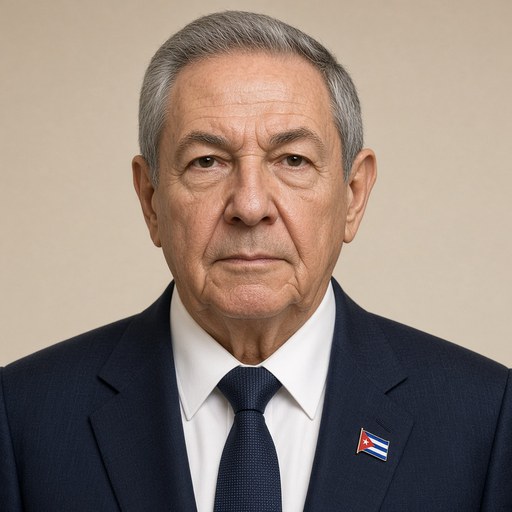
Raúl in the National Assembly: "Here we are and we will be, free, sovereign, and independent."
 Raúl Castro · President of Cuba
- Context
- Castro addressed the National Assembly's final ordinary session of the VIII Legislature on December 22, 2017, reviewing Hurricane Irma's impact and recent municipal elections.
- Main themes
- Hurricane Irma recovery, Cuban sovereignty and independence, municipal elections and socialist democracy, housing reconstruction, economic resilience, national unity and solidarity, public services restoration, defense doctrine, international solidarity with Cuba, National Assembly session conclusions
- Duration
- ~28 min
- Words
- 3,329
- Sentences
- 96
- Readability
- 15
- Grade
- 19.6
- Syntax
- 3.41
- Vocabulary
- 2.35
Translated from Spanish
The broad sphere of national life a sentence belongs to. Every sentence has an Arena, so it is the denominator the other indices are read against.
Other96 sentences in 73 paragraphs
Comrades:
I have the responsibility to present the conclusions of the last Ordinary Session of the VIII Legislature of the National Assembly. On this occasion, I will address several themes of national and international significance.
Between September 8 and 10, the country was struck by Hurricane Irma, classified as the most powerful and violent meteorological event in the history of the Atlantic, which impacted, to a greater or lesser extent, 12 provinces with strong winds, intense rains, and severe coastal flooding.
Despite the immense actions taken to safeguard the population, which included the protection of more than 1 million 800 thousand people, we had to mourn the loss of 10 compatriots. More than 179 thousand homes were affected, and significant damage occurred to infrastructure, national health system buildings, educational centers, agriculture, the sugar industry, tourist facilities, and communications. For the first time, the national electric system was interrupted throughout the country.
In summary, the damages caused by Hurricane Irma were quantified at 13 billion 185 million pesos, a figure calculated based on the parity of the peso with the US dollar.
Once again, the spirit of resistance and victory of our people was evident, who, with organization, unity, discipline, and solidarity, faced this event and the recovery phase.
In just 20 days, electricity and water supply were restored throughout the national territory, an activity in which, alongside specialized forces, mixed support brigades formed in each municipality stood out for their work in cleaning, pruning, opening holes, and transporting poles to support the workers who were tasked with restoring electricity.
Also, in just 62 days, all damages to tourist facilities were restored, so they were ready to provide services before the start of the high season.
No one was left helpless. The revolutionary government adopted a set of measures to facilitate the acquisition of construction materials and essential consumer goods for the affected individuals.
We managed to preserve education and health services, ensuring epidemiological stability.
Various programs for building stronger and more resilient homes are being implemented in the communities that suffered the most damage, which will remain one of the main priorities in the National Economic Plan for the coming year and beyond. In this regard, local resources must be enhanced to accelerate the solution to the long-standing housing problem.
It is fair to recognize the role played by the strategic regions and their respective leaders, the provincial and municipal defense councils, led by the highest leaders of the Party and the Government in those instances, and at the defense zone level, the mass organizations, the Revolutionary Armed Forces, the Ministry of the Interior, and other bodies of the Central State Administration.
The results achieved in confronting this hurricane and the experiences accumulated in the face of similar climatic phenomena in recent years confirm the relevance and validity of the doctrine of the War of All the People, and the organization of the territorial defensive system and its systematic improvement, as pillars to resist and overcome any event or threat, whether arising from nature or any other source.
Let this opportunity serve to reiterate, on behalf of the Cuban people, our deepest gratitude for the help and countless expressions of support that have come from all parts of the planet, through heads of state and government, political organizations, solidarity movements, and friends of Cuba.
Moving on to another topic, I take this opportunity to refer to the successful completion of the first stage of the general election process, where delegates to the municipal assemblies of the People's Power were elected, which were constituted last Sunday, December 17.
Once again, our people turned out en masse to exercise their right to vote, achieving an attendance rate of 89.02% in the first round, a figure similar to that of the previous process. At the same time, the quality of the vote was superior compared to the elections held in 2015, with a higher percentage of valid ballots and, consequently, lower figures of annulled and blank votes.
This process was characterized by greater preparation, organization, and cohesion of work among electoral authorities at different levels, state institutions, mass and social organizations, and the citizenry. In fact, it constituted a demonstration of massive support and trust from the people in the Revolution and socialist democracy, as well as a worthy tribute to its historical leader, and this should be the case in the next stage that will soon be convened.
As explained, due to the severe damage caused by Hurricane Irma, in the midst of the direct nomination phase of candidates for delegates, we were forced to modify the scheduled dates for the elections of delegates to the municipal assemblies of the People's Power.
As a consequence of the above, today, in accordance with the Constitution of the Republic, this Assembly agreed to extend the mandate of the delegates to the provincial assemblies and the deputies to the National Assembly of the People's Power, which means that the establishment of the new Parliament will not take place on February 24, as has been customary, but on April 19, coinciding with the day of victory at Playa Girón, which constituted the first great victory of socialism, as proclaimed by Fidel.
In this session, the Attorney General of the Republic and the Supreme People's Court reported, bodies that, due to their importance in strengthening institutionalism and social discipline, require ongoing support and attention in the performance of their assigned missions, as well as respect for their powers, independence, and strict compliance with the decisions they issue. At the same time, their members must be held to ethical behavior and an unwavering commitment to the people and the Revolution.
In this exercise, the progress that both institutions have demonstrated in fulfilling their functions as mandated by the Constitution was evident.
Since last Tuesday, the deputies have been thoroughly informed about the economic situation of the country, which frees me from going into details on that matter.
When I spoke in December of last year before this Assembly, I warned that in 2017 financial tensions and challenges would persist, which could even worsen; however, we anticipated resuming the upward path in the performance of the national economy and achieving moderate growth of the Gross Domestic Product around 2%.
As was explained to you during this session, the GDP maintained its positive sign, registering a growth of 1.6%, a result that, although it does not satisfy us, has been achieved in an aggravated scenario of financial restrictions, insufficient availability of fuels, compounded by the significant impact of the severe drought sustained over three years and the considerable damages caused by Hurricane Irma, a matter to which I have already referred.
The effects of the economic, commercial, and financial blockade imposed by the United States government cannot be overlooked, which not only remains in place for more than 56 years but has intensified under the new administration.
The modest rise of the economy was favored by the dynamics in tourism, an area in which a new record of international visitors of 4 million 700 thousand will be set; increases were also seen in the sectors of transportation, communications, agriculture, and construction, fundamentally.
The main investment programs linked to the development of infrastructure and the expansion of external income sources performed acceptably.
Amid financial tensions, the vitality of the social services provided free of charge to all Cubans was ensured.
Financial equilibrium was also preserved, with greater offerings in the retail network, which, although still insufficient, allow for an improved response to the growing demand of the population.
The Economic Plan and the State Budget for the year 2018 approved today by this Parliament estimate a growth of the Gross Domestic Product around 2%, which presupposes ensuring the efficient use of available financial and material resources, increasing export revenues, and boosting domestic production, particularly of food, without renouncing the development programs that are underway to generate income and new sources of employment.
Next year will also be complicated for the nation's external finances; however, we will maintain the firm intention to gradually recover the international credibility of our economy. I take this opportunity to reiterate to creditors our willingness to fulfill the commitments made in the various processes of restructuring external debt.
We will continue the effort to gradually reduce the portfolio of overdue current payments to our suppliers, to whom we express our gratitude for their support and understanding of the transitional difficulties we face.
We must also consolidate the still incipient participation of foreign investment in our economy, a direction that showed superior results during the year 2017, but is certainly still insufficient.
Today, the deputies, as we did yesterday in the Plenary of the Central Committee, evaluated the state of the implementation of the Guidelines of the Economic and Social Policy of the Party and the Revolution.
In the analyzed period, the process of drafting the final versions of the programmatic documents presented to the Seventh Congress of the Party was completed, and the implementation of the approved policies was critically assessed based on the experiences obtained, with the aim of correcting the deviations and violations that were evident.
Intense work has been carried out in the drafting of legal norms that refine non-state management forms, namely self-employment and the experiment of non-agricultural cooperatives.
It is not unnecessary in this regard to reaffirm that we do not renounce the deployment and development of non-state management forms in our economy. We will neither retreat nor paralyze, but we must ensure respect for the law, strengthen positive results, and firmly confront illegalities and violations of current policy; in other words, we must ensure that changes in this area are implemented well, and resolutely rectify any deviation that takes us away from the chosen path.
At the same time, the approved measures for the gradual transformation and improvement of the state enterprise system have been complied with, which, as we all know, is the main form of property in the socialist national economy.
Recently, new legal norms regarding the Cuban enterprise system were published, which represents another step towards the goal of separating state functions from business functions and increasing efficiency and organization, granting greater autonomy in their management.
Currently, training and dissemination actions are being carried out to facilitate the implementation of the published legal norms.
Although the elimination of monetary and exchange duality by itself will not magically solve all the accumulated problems in the Cuban economy, it constitutes the most decisive process to advance in the updating of the economic model due to the impact it will have on all spheres of the economic and social activity of the nation. Without resolving that, it is difficult to advance correctly.
In this period, work has been reinforced and intensified with greater comprehensiveness and scope, so that we are capable of, while unifying the monetary system, overcoming existing distortions in terms of subsidies, prices, and wholesale and retail tariffs, and, logically, pensions and salaries in the state sector of the economy.
No one can calculate, not even the wisest among us, the high cost that the persistence of monetary and exchange duality has meant for the state sector, which favors the unjust inverted pyramid, where greater responsibility receives lesser compensation, and not all capable citizens feel motivated to work legally, while promotion to higher positions for the best and most qualified workers and cadres is discouraged, some of whom migrate to the non-state sector.
I must acknowledge that this issue has taken us too long, and its solution cannot be delayed any longer.
As on other occasions, I find it appropriate now to make a brief assessment of some of the main issues of foreign policy.
In 2017, we have witnessed a serious and irrational deterioration in relations between the United States and Cuba. Our country is not at all responsible for this setback, marked by the intensification of the blockade, the return of aggressive and disrespectful rhetoric, and the arbitrary application of unjustified measures that significantly affect the ties between our peoples and families, as well as the rights and freedoms of Cubans and Americans.
The decisions taken by the government of the United States in recent months not only interrupted the process initiated by the sovereign decision of both countries to move towards a new type of relationship, for the first time in their history, based on respect and civilized coexistence, but have also opened new fronts of tension.
In this regression, the United States again resorts to the artificial fabrication of pretexts to justify a return to failed and universally rejected policies. I categorically reiterate that Cuba had and has no responsibility for the incidents that are alleged to have affected the health of accredited diplomats or other foreign visitors.
The results of the Cuban and American investigations, which have so far found not the slightest evidence of the causes and origin of the described health conditions, confirm this.
It has not been Cuba that has established new prohibitions on the very limited economic, commercial, and financial ties existing between the two countries, nor has it restricted the right of American citizens to visit our country and of Cubans to the United States, nor has it harmed the functioning of embassies, with negative consequences for migratory relations, exchanges, and travel between both nations.
We must not forget that the policy adopted by the new government of the United States has the opposition of the American people and the international community, which was clearly expressed on November 1 in the United Nations General Assembly by casting their votes, almost unanimously, with the exception of the United States and Israel, in favor of the resolution presented by our country on the need to end the economic, commercial, and financial blockade imposed by the government of the United States, which the Cuban people have suffered for more than 56 years.
It also does not have the support of the majority of the Cuban diaspora, which is also affected by decisions that only favor retrograde minority sectors, historically interested in leading both countries towards confrontation.
For our part, we have made efforts and will continue to work to preserve, to the extent possible, the spaces for exchange and cooperation established in recent years and, as I have said on repeated occasions, Cuba has the will to continue negotiating the pending bilateral issues with the United States, based on equality and respect for the sovereignty and independence of our country, and to continue respectful dialogue and cooperation on issues of common interest with the U.S. government.
The Cuban Revolution has withstood the onslaught of 11 administrations of the United States of different political stripes, and here we are and will be, free, sovereign, and independent.
Our Latin American and Caribbean region suffers attacks from imperialism and oligarchies aimed at reversing history and breaking the advances made by popular forces in recent years.
The Bolivarian Revolution faces the unconventional war imposed by its external enemies and internal coup-plotting sectors.
The results of the recent electoral processes reaffirm the legitimacy and democratic character of the government led by constitutional president Nicolás Maduro Moros and the civic-military union.
We reject the unilateral coercive measures imposed by the United States, Canada, and the European Union and the external interference against the Bolivarian and Chavista process in Venezuela that threaten peace and dialogue among Venezuelans with destabilizing purposes and generate economic hardships for its population.
Some governments in the hemisphere, in complicity with representatives of the discredited OAS, are trying to crush Venezuela. The Bolivarian Alliance for the Peoples of Our America reiterated, through the declaration of its Political Council, meeting in Havana in recent days, that we will remain united alongside it.
The Cuban Revolution has suffered for decades similar and even worse stages on some occasions. With that experience and faithful to our principles, we reaffirm our unwavering solidarity with the Bolivarian Republic of Venezuela. We will maintain cooperation with the Venezuelan government and people, even under the most adverse circumstances. We will do everything in our power to fulfill the revolutionary duty of contributing to the victory of the Bolivarian and Chavista Revolution.
We will never fail in the loyalty and gratitude we feel towards President Hugo Chávez Frías for his support and solidarity in difficult times.
Likewise, we reiterate our support for Senator Cristina Fernández de Kirchner who, as you know, was president of Argentina, and for former president Luiz Inacio Lula da Silva, who are now being harassed by the oligarchy with politically motivated judicial processes. In this increasingly complex scenario, the countries of Latin America and the Caribbean have the duty to advance towards the political, economic, and social integration of Our America. As I have stated in various forums, working for "unity within diversity" is an urgent necessity.
Cuba will spare no effort to ensure that CELAC, as a genuinely Latin American and Caribbean mechanism, continues to promote the common interests of the region. In that purpose, the postulates of the Proclamation of Latin America and the Caribbean as a Zone of Peace must continue to be the reference in relations between CELAC countries and the rest of the world with our States.
As has been reported, just a few days ago we held the Sixth CARICOM-Cuba Summit in Antigua and Barbuda, which demonstrated not only the high level of relations between the Caribbean nations and our country but also the importance of the mutual cooperation and solidarity that we have maintained for decades.
I wish to reiterate our permanent support for our Caribbean brothers, victims of devastating natural phenomena such as hurricanes Irma and Maria. We demand at the same time a fair and differentiated treatment for the Caribbean States, which today suffer the dramatic effects of climate change, and we reaffirm our conviction that it is necessary to decisively confront this phenomenon by all.
To the same extent that its nefarious consequences manifest, the position of the President of the United States to withdraw from the Paris Agreement becomes more incoherent, contrasting with the attitude of the rest of the international community, gathered in France on December 12 at the Summit convened by President Emmanuel Macron and the United Nations.
I consider it necessary to dedicate a few words to the situation in Palestine. I reaffirm our deep concern and rejection of the unilateral decision of the government of the United States to recognize the city of Jerusalem as the capital of the State of Israel, which constitutes a serious violation of United Nations resolutions on the issue and of International Law.
This measure, widely repudiated by the international community, further exacerbates tensions in the area and distances the possibilities of any effort aimed at resuming peace talks between Israelis and Palestinians.
We reaffirm our unwavering support for the search for a comprehensive, just, and lasting solution to the conflict, based on the creation of two States, which ensures the exercise of the inalienable right of the Palestinian people to self-determination, and to have an independent State within the borders prior to 1967, with its capital in East Jerusalem.
Finally, I reiterate with all energy and conviction that our country will continue to maintain its principled positions on all aspects of international relations, in favor of the rights of peoples, of peace, justice, and solidarity with the best causes of humanity.
Finally, comrades, I wish to reaffirm what I have already expressed at the Sixth and Seventh Congresses of the Party regarding the advisability of limiting to two five-year terms the exercise of the main positions of the nation. Consequently, when the National Assembly of People's Power is constituted on April 19 of next year, my second and last term at the head of the State and Government will have concluded, and Cuba will have a new president.
I can only wish you and all our people the warmest congratulations on the occasion of the New Year, the 60th year of the Revolution.
Thank you very much.
The original Spanish. The tags above are read on the English translation's sentences.
Compañeras y compañeros:
Me corresponde realizar las conclusiones del último Período Ordinario de Sesiones de la VIII Legislatura de la Asamblea Nacional. En esta oportunidad abordaré varias temáticas del acontecer nacional e internacional.
Entre los días 8 y 10 de septiembre el país fue azotado por el huracán Irma, calificado como el evento meteorológico más poderoso y violento de la historia del Atlántico, que impactó, en mayor o menor medida, a 12 provincias con fuertes vientos, lluvias intensas y severas inundaciones costeras.
A pesar de las ingentes acciones acometidas para salvaguardar a la población, que abarcó la protección de más de un millón 800 mil personas, tuvimos que lamentar la pérdida de 10 compatriotas. Más de 179 mil viviendas resultaron afectadas y se produjeron significativos daños en las infraestructuras, edificaciones del sistema nacional de salud, centros docentes, la agricultura, industria azucarera, instalaciones turísticas y en las comunicaciones. Por vez primera se produjo la interrupción del sistema eléctrico nacional en todo el país.
En resumen, los daños ocasionados por el huracán Irma fueron cuantificados en 13 mil millones 185 mil pesos, cifra calculada a partir de la paridad del peso con el dólar norteamericano.
Nuevamente se puso de manifiesto el espíritu de resistencia y victoria de nuestro pueblo, que con organización, unidad, disciplina y solidaridad enfrentó este evento y la etapa de la recuperación.
En apenas 20 días se restableció el suministro de electricidad y agua en todo el territorio nacional, actividad en la que, junto a las fuerzas especializadas, se destacaron las brigadas mixtas de apoyo conformadas en cada municipio para las labores de limpieza, poda, apertura de huecos y acarreo de postes en apoyo de los obreros que se ocuparon de restablecer la electricidad.
Igualmente en tan solo 62 días fueron restablecidas todas las afectaciones en las instalaciones turísticas, de modo que estuvieron listas para prestar servicios antes del inicio de la temporada alta.
Nadie quedó desamparado. El gobierno revolucionario adoptó un conjunto de medidas para facilitar la adquisición de materiales de la construcción y bienes de consumo de primera necesidad a los damnificados.
Logramos preservar los servicios de educación y salud, asegurándose la estabilidad epidemiológica.
Se encuentran en ejecución diferentes programas de construcción de viviendas más sólidas y resistentes en las comunidades que tuvieron las mayores afectaciones, lo cual se mantendrá como una de las principales prioridades en el Plan de la Economía Nacional para el próximo año y en adelante. En este sentido deben potenciarse los recursos locales disponibles para acelerar la solución al viejo problema de la vivienda.
Es justo reconocer el papel desempeñado por las regiones estratégicas y sus respectivos jefes, los consejos de defensa provinciales y municipales, encabezados por los máximos dirigentes del Partido y el Gobierno en esas instancias, y a nivel de zona de defensa, las organizaciones de masas, las Fuerzas Armadas Revolucionarias, el Ministerio del Interior y demás organismos de la Administración Central del Estado.
Los resultados alcanzados en el enfrentamiento a este huracán y las experiencias acumuladas ante fenómenos climatológicos similares en años recientes, confirman la vigencia y validez de la doctrina de la Guerra de todo el pueblo, y la organización del sistema defensivo territorial y su sistemático perfeccionamiento, como pilares para resistir y vencer cualquier evento o amenaza, ya sea proveniente de la naturaleza o de cualquier otra índole (Aplausos).
Sirva esta oportunidad para reiterar, en nombre del pueblo cubano, el más profundo agradecimiento por la ayuda y las incontables muestras de apoyo llegadas desde todas las partes del planeta, mediante jefes de Estado y de Gobierno, organizaciones políticas, movimientos de solidaridad y amigos de Cuba.
Pasando a otro tema, aprovecho la ocasión para referirme a la exitosa realización de la primera etapa del proceso de elecciones generales, donde resultaron electos los delegados a las asambleas municipales del Poder Popular, las cuales quedaron constituidas el pasado domingo 17 de diciembre.
Una vez más nuestro pueblo acudió masivamente a ejercer su derecho al voto, alcanzando en la primera vuelta un 89,02% de asistencia, cifra similar a la del anterior proceso. Al propio tiempo, la calidad del sufragio resultó superior, en comparación con las elecciones efectuadas en el año 2015, al alcanzarse un mayor por ciento de boletas válidas y por ende cifras inferiores de anuladas y en blanco.
Este proceso se caracterizó por una mayor preparación, organización y cohesión de trabajo entre las autoridades electorales en los distintos niveles, las instituciones estatales, organizaciones de masas y sociales y la ciudadanía. De hecho constituyó una demostración de respaldo masivo y confianza del pueblo en la Revolución y la democracia socialista, así como un digno homenaje a su líder histórico, y así debe ser en la siguiente etapa que próximamente se convocará.
Como se explicó, en virtud de las graves afectaciones ocasionadas por el huracán Irma, en medio de la fase de nominación directa de los candidatos a delegados, nos vimos obligados a modificar las fechas previstas para las elecciones de delegados a las asambleas municipales del Poder Popular.
Como consecuencia de lo anterior, en el día de hoy, de conformidad con la Constitución de la República, esta Asamblea acordó prorrogar el mandato de los delegados a las asambleas provinciales y los diputados a la Asamblea Nacional del Poder Popular, con lo cual la instauración del nuevo Parlamento no se realizará el 24 de febrero, como ha sido habitualmente, sino el 19 de abril, coincidiendo con el día del triunfo en Playa Girón, que constituyó la primera gran victoria del socialismo, ya proclamado por Fidel.
En esta sesión rindieron cuenta la Fiscalía General de la República y el Tribunal Supremo Popular, órganos que por la importancia que revisten en el fortalecimiento de la institucionalidad y de la disciplina social requieren el apoyo y la atención permanente en el desempeño de las misiones encomendadas, así como respetar sus atribuciones, independencia y el cumplimiento estricto de las decisiones que emitan. Al propio tiempo debe exigirse a sus integrantes un comportamiento ético y el compromiso invariable con el pueblo y la Revolución.
En este ejercicio se evidenciaron los avances que ambas instituciones han demostrado en el cumplimiento de las funciones que les competen por la Constitución.
Desde el martes pasado los diputados fueron informados ampliamente sobre la situación económica del país, lo cual me libera de entrar en detalles en esa materia.
Al intervenir en diciembre del pasado año ante esta Asamblea alerté que en el año 2017 persistirían las tensiones financieras y retos que podrían incluso recrudecerse, no obstante preveíamos retomar la senda ascendente en el desempeño de la economía nacional y lograr un crecimiento moderado del Producto Interno Bruto en el entorno del 2%.
Como les fue explicado en el transcurso de esta sesión, el PIB conservó su signo positivo al registrar un crecimiento del 1,6%, resultado que aunque no nos satisface, ha sido logrado en un escenario agravado de restricciones financieras, insuficiente disponibilidad de combustibles, a lo que se suma el nada despreciable impacto de la aguda sequía sostenida durante tres años y las cuantiosas afectaciones provocadas por el huracán Irma, cuestión a la que ya me referí.
Tampoco pueden soslayarse los efectos del bloqueo económico, comercial y financiero del gobierno de los Estados Unidos, que no solo sigue en pie desde hace más de 56 años, sino que se recrudece bajo la nueva administración.
El modesto ascenso de la economía se vio favorecido por la dinámica en el turismo, esfera en la que se impondrá un nuevo récord de visitantes internacionales de 4 millones 700 mil; incrementos en los sectores del transporte, comunicaciones, agricultura y las construcciones, fundamentalmente.
Los principales programas de inversiones vinculados con el desarrollo de las infraestructuras y la ampliación de las fuentes de ingreso externas tuvieron un comportamiento aceptable.
En medio de las tensiones financieras se aseguró la vitalidad de los servicios sociales que se brindan gratuitamente a todos los cubanos.
Igualmente se ha preservado el equilibrio financiero interno, con mayores ofertas en la red de establecimientos minoristas, que aunque todavía insuficientes, permiten mejorar la respuesta a la creciente demanda de la población.
El Plan de la Economía y el Presupuesto del Estado para el año 2018 aprobados hoy por este Parlamento, estiman un crecimiento del Producto Interno Bruto en el entorno del 2%, lo que presupone garantizar el uso eficiente de los recursos financieros y materiales disponibles, elevar los ingresos por exportaciones, aumentar las producciones nacionales, en particular de alimentos, sin renunciar a los programas de desarrollo que están en marcha para generar ingresos y nuevas fuentes de empleo.
El próximo año será también complicado para las finanzas externas de la nación, sin embargo, mantendremos el firme propósito de continuar recuperando gradualmente la credibilidad internacional de nuestra economía. Aprovecho la oportunidad para reiterar a los acreedores la voluntad de cumplimentar los compromisos asumidos en los diferentes procesos de reordenamiento de la deuda externa.
Proseguiremos el esfuerzo de reducir paulatinamente la cartera de pagos corrientes vencidos a nuestros proveedores, a quienes agradecemos el apoyo y comprensión de las dificultades transitorias que afrontamos.
Igualmente debemos consolidar la todavía incipiente participación de la inversión extranjera en nuestra economía, dirección que en el transcurso del año 2017 mostró resultados superiores, pero ciertamente es todavía insuficiente.
En el día de hoy los diputados, al igual que hicimos ayer en el Pleno del Comité Central, evaluaron el estado de la implementación de los Lineamientos de la Política Económica y Social del Partido y la Revolución.
En el período analizado culminó el proceso de elaboración de las versiones finales de los documentos programáticos presentados al Séptimo Congreso del Partido y se valoró con espíritu crítico el comportamiento de la implementación de las políticas aprobadas a partir de las experiencias obtenidas, con el objetivo de corregir las desviaciones y violaciones que se pusieron de manifiesto.
Se ha trabajado con intensidad en la elaboración de las normas jurídicas que perfeccionan las formas de gestión no estatales, dígase el trabajo por cuenta propia y el experimento de las cooperativas no agropecuarias.
No resulta ocioso en este sentido, ratificar que no renunciamos al despliegue y desarrollo de las formas de gestión no estatales en nuestra economía. Ni retrocederemos ni nos paralizaremos, pero hay que asegurar el respeto a la Ley, afianzar los resultados positivos y enfrentar con firmeza las ilegalidades y la violación de la política vigente; en otras palabras, debemos asegurar que los cambios en esta esfera se implementen bien, y rectificar resueltamente toda desviación que nos aparte del camino escogido.
Al propio tiempo, se ha dado cumplimiento a las medidas aprobadas para la transformación paulatina y el perfeccionamiento del sistema empresarial estatal, que como todos sabemos es la forma principal de propiedad en la economía nacional socialista.
En días recientes fueron publicadas las nuevas normas jurídicas sobre el sistema empresarial cubano, lo que representa un paso más en el objetivo de separar las funciones estatales de las empresariales e incrementar la eficiencia y organización, otorgándole mayor autonomía en su gestión.
Actualmente se realizan las acciones de capacitación y divulgación para facilitar la implementación de las normas jurídicas publicadas.
Aunque la eliminación de la dualidad monetaria y cambiaria por sí misma no solucionará mágicamente todos los problemas acumulados en la economía cubana, constituye el proceso más determinante para avanzar en la actualización del modelo económico por el impacto que tendrá en todas las esferas del quehacer económico y social de la nación. Sin resolver eso es difícil avanzar correctamente.
En este período se ha reforzado e intensificado el trabajo con una mayor integralidad y alcance, de modo que seamos capaces de, a la par que unificamos el sistema monetario, superar las distorsiones existentes en materia de subsidios, precios y tarifas mayoristas y minoristas y, como es lógico, las pensiones y los salarios del sector estatal de la economía.
Nadie puede calcular, ni el más sabio de los sabios que tengamos nosotros, el elevado costo que ha significado para el sector estatal la persistencia de la dualidad monetaria y cambiaria, la cual favorece la injusta pirámide invertida, donde a mayor responsabilidad se recibe una menor retribución y no todos los ciudadanos aptos se sienten motivados a trabajar legalmente, al tiempo que se desestimula la promoción a cargos superiores de los mejores y más capacitados trabajadores y cuadros, algunos de los cuales emigran al sector no estatal.
Debo reconocer que este asunto nos ha tomado demasiado tiempo y no puede dilatarse más su solución (Aplausos).
Al igual que en otras ocasiones, me parece oportuno ahora hacer un breve balance de algunos de los principales temas de la política exterior.
En 2017 hemos sido testigos de un serio e irracional deterioro en las relaciones entre los Estados Unidos y Cuba. Nuestro país no es en lo absoluto responsable de este retroceso, marcado por el recrudecimiento del bloqueo, el regreso de la retórica agresiva e irrespetuosa y la arbitraria aplicación de medidas injustificadas que afectan sensiblemente los vínculos entre los pueblos y las familias, así como los derechos y libertades de los cubanos y los estadounidenses.
Las decisiones adoptadas por el gobierno de los Estados Unidos en los últimos meses, no solo interrumpieron el proceso iniciado por decisión soberana de ambos países para avanzar hacia un nuevo tipo de relación, por primera vez en su historia, basado en el respeto y la convivencia civilizada, sino que han abierto nuevos frentes de tensión.
En este retroceso, los Estados Unidos acuden nuevamente a la fabricación artificial de pretextos que justifiquen el regreso a políticas fracasadas y universalmente rechazadas. Reitero categóricamente que Cuba no tuvo ni tiene responsabilidad alguna en los incidentes que se alega habrían afectado la salud de diplomáticos acreditados o de otros visitantes extranjeros.
Los resultados de las investigaciones cubanas y estadounidenses, que hasta ahora no han encontrado la más mínima evidencia de las causas y el origen de las afecciones de salud descritas, así lo confirman.
No ha sido Cuba la que ha establecido nuevas prohibiciones a los muy limitados vínculos económicos, comerciales y financieros existentes entre los dos países, ni quien ha vuelto a restringir el derecho de los ciudadanos estadounidenses a visitar nuestro país y de los cubanos a los Estados Unidos, ni la que ha perjudicado el funcionamiento de las embajadas, con consecuencias negativas para las relaciones migratorias, los intercambios y los viajes entre ambas naciones.
No debemos olvidar que la política adoptada por el nuevo gobierno de los Estados Unidos tiene la oposición del pueblo estadounidense y de la comunidad internacional, que se expresó claramente el pasado primero de noviembre en la Asamblea General de las Naciones Unidas al depositar su voto, de forma casi unánime, con la excepción de Estados Unidos e Israel, a favor de la resolución presentada por nuestro país sobre la necesidad de que se ponga fin al bloqueo económico, comercial y financiero por parte del gobierno de los Estados Unidos, que el pueblo cubano sufre desde hace más de 56 años.
Tampoco tiene el apoyo de la mayoría de la emigración cubana, que se ve afectada también por decisiones que solo favorecen a sectores retrógrados minoritarios, interesados históricamente en conducir a ambos países hacia una confrontación.
Por nuestra parte, hemos hecho esfuerzos y continuaremos trabajando para preservar, en la medida de lo posible, los espacios de intercambio y cooperación establecidos en los últimos años y, como he dicho en repetidas ocasiones, Cuba tiene la voluntad de continuar negociando los asuntos bilaterales pendientes con los Estados Unidos, sobre la base de la igualdad y el respeto a la soberanía y la independencia de nuestro país, y proseguir el diálogo respetuoso y la cooperación en temas de interés común con el gobierno estadounidense.
La Revolución Cubana ha resistido los embates de 11 administraciones de los Estados Unidos de distinto signo y aquí estamos y estaremos, libres, soberanos e independientes (Aplausos).
Nuestra región latinoamericana y caribeña sufre los ataques del imperialismo y de las oligarquías con el objetivo de hacer retroceder la historia y quebrar los avances logrados por las fuerzas populares durante los últimos años.
La Revolución Bolivariana enfrenta la guerra no convencional que le imponen sus enemigos externos y sectores golpistas internos.
Los resultados de los recientes procesos electorales ratifican la legitimidad y el carácter democrático del gobierno encabezado por el presidente constitucional Nicolás Maduro Moros y la unión cívico-militar.
Rechazamos las medidas coercitivas unilaterales impuestas por los Estados Unidos, Canadá y la Unión Europea y la injerencia externa contra el proceso bolivariano y chavista de Venezuela que amenazan la paz y el diálogo entre venezolanos con propósitos desestabilizadores y generan penurias económicas a su población.
Algunos gobiernos del hemisferio, en complicidad con personeros de la desprestigiada OEA, intentan aplastar a Venezuela. La Alianza Bolivariana para los Pueblos de Nuestra América reiteró, mediante la declaración de su Consejo Político, reunido en La Habana en días recientes, que permaneceremos unidos junto a ella.
La Revolución Cubana padeció por décadas etapas parecidas y aún peores en algunas ocasiones. Con esa experiencia y fieles a nuestros principios, ratificamos la invariable solidaridad con la República Bolivariana de Venezuela. Mantendremos la cooperación con el gobierno y el pueblo venezolanos, aun bajo las circunstancias más adversas. Haremos todo lo que esté en nuestras manos para cumplir el deber revolucionario de contribuir a la victoria de la Revolución bolivariana y chavista (Aplausos).
Nunca faltaremos a la lealtad y gratitud que sentimos hacia el presidente Hugo Chávez Frías por su apoyo y solidaridad en momentos difíciles.
Asimismo, reiteramos nuestro respaldo a la senadora Cristina Fernández de Kirchner que, como ustedes conocen, fue presidenta de Argentina, y al expresidente Luiz Inacio Lula da Silva, hoy acosados por la oligarquía con procesos judiciales motivados políticamente. En este escenario cada vez más complejo, los países de la América Latina y el Caribe tenemos el deber de avanzar hacia la integración política, económica y social de Nuestra América. Como he afirmado en diversos foros, trabajar por la “unidad dentro de la diversidad” es una necesidad impostergable.
Cuba no escatimará esfuerzos para que la CELAC, como mecanismo genuinamente latinoamericano y caribeño, siga promoviendo los intereses comunes de la región. En ese propósito, los postulados de la Proclama de América Latina y el Caribe como Zona de Paz deberán continuar siendo el referente en las relaciones entre los países de la CELAC, y del resto del mundo con nuestros Estados.
Como se ha informado, hace pocos días efectuamos la Sexta Cumbre Caricom-Cuba en Antigua y Barbuda, que demostró no solo el elevado nivel de relaciones entre las naciones caribeñas y nuestro país, sino también la importancia de la cooperación y la solidaridad mutuas que mantenemos desde hace décadas.
Deseo reiterar el permanente apoyo a los hermanos caribeños, víctimas de devastadores fenómenos naturales como los huracanes Irma y María. Demandamos al propio tiempo un tratamiento justo y diferenciado para los Estados del Caribe, que hoy sufren los dramáticos efectos del cambio climático, y reafirmamos nuestra convicción de que es preciso enfrentar decisivamente ese fenómeno por parte de todos.
En la misma medida en que se manifiestan sus nefastas consecuencias, resulta más incoherente la posición del Presidente de los Estados Unidos de retirarse del Acuerdo de París, lo que contrasta con la actitud del resto de la comunidad internacional, reunida en Francia el pasado 12 de diciembre en la Cumbre convocada por el presidente Emmanuel Macron y las Naciones Unidas.
Considero necesario dedicar unas palabras a la situación de Palestina. Ratifico nuestra profunda preocupación y rechazo a la decisión unilateral del gobierno de los Estados Unidos de reconocer a la ciudad de Jerusalén como capital del Estado de Israel, lo que constituye una grave violación de las resoluciones de Naciones Unidas sobre el tema, y del Derecho Internacional.
Esta medida, repudiada de manera generalizada por la comunidad internacional, agudiza aún más las tensiones en el área y aleja las posibilidades de cualquier esfuerzo dirigido a reanudar las conversaciones de paz entre israelíes y palestinos.
Reafirmamos el irrestricto apoyo a la búsqueda de una solución amplia, justa y duradera al conflicto, basada en la creación de dos Estados, que asegure el ejercicio del derecho inalienable del pueblo palestino a la libre determinación, y a disponer de un Estado independiente dentro de las fronteras anteriores a 1967, con su capital en Jerusalén Oriental.
Finalmente, reitero con toda energía y convicción que nuestro país seguirá manteniendo sus posiciones de principios en todos los aspectos de las relaciones internacionales, a favor de los derechos de los pueblos, de la paz, la justicia y de la solidaridad con las mejores causas de la humanidad (Aplausos).
Finalmente, compañeras y compañeros, deseo ratificar lo ya expresado por mí en el Sexto y Séptimo congresos del Partido acerca de la conveniencia de limitar a dos términos de cinco años el ejercicio de los principales cargos de la nación. En consecuencia, cuando la Asamblea Nacional del Poder Popular se constituya el 19 de abril del próximo año, habrá concluido mi segundo y último mandato al frente del Estado y el Gobierno y Cuba tendrá un nuevo presidente.
Solo me resta desear a ustedes y a todo nuestro pueblo las más calurosas felicitaciones con motivo del año nuevo, año 60 de la Revolución.
Muchas gracias (Ovación).
Alianza Bolivariana para los Pueblos de América (ALBA)
Especiales
Política
Cuba denuncia intentos irresponsables de producir un golpe en Venezuela 1 agosto 2024 | 102 |
El ALBA es la alianza del Milagro que hizo realidad proyectos aparentemente imposibles 25 abril 2024 | 6 |
Arriba hoy buque escuela venezolano "Simón Bolivar" 13 mayo 2023 | 2 |
Trabajemos por un ALBA más unida de solidaridad y dignidad 16 diciembre 2022 | 1 |
Maduro y Marrero remarcan voluntad de avanzar en fortalecimiento de cooperación entre ambos países 10 mayo 2022 | 5 |
ir aAlianza Bolivariana para los Pueblos de América (ALBA) »
1 de Mayo: Ultra ricos y trabajadores pobres en la Argentina de Llao Llao 5 mayo 2026 | 3
Confesiones del Secretario de Estado 5 mayo 2026 | 9
Medicina Natural y Tradicional: Usos comunes para tres cítricos 5 mayo 2026 | 3
¿Cómo la crisis y la guerra impactan en la clase obrera del mundo? (+ Video) 5 mayo 2026 | 2
Pequeña entrevista marxiana a Néstor Kohan 5 mayo 2026 | 5
ir aEspeciales »
La deshistorización del tiempo 6 mayo 2026 | +
Canciller cubano: “El secretario de Estado afirmó que no existe un bloqueo petrolero a Cuba. Ha optado sencillamente por mentir” 5 mayo 2026 | 10
La nueva orden ejecutiva del presidente de EEUU: Una agresión inédita contra Cuba 5 mayo 2026 | 10 |
1 de Mayo: Ultra ricos y trabajadores pobres en la Argentina de Llao Llao 5 mayo 2026 | 3
Confesiones del Secretario de Estado 5 mayo 2026 | 9
ir aPolítica »