




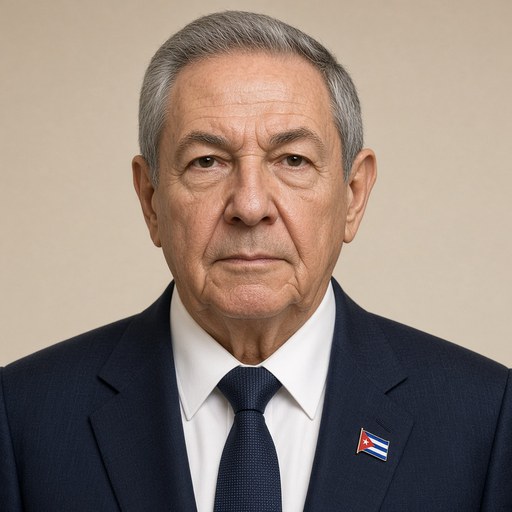
Speech delivered at the 3rd CELAC Summit, Costa Rica, 28 January 2015. (Spanish)
 Raúl Castro · President of Cuba
- Context
- Castro addressed CELAC heads of state and government at the January 2015 summit in Costa Rica, calling for regional unity and social justice.
- Main themes
- Latin American and Caribbean unity, social inequality and poverty, democracy and human rights, regional integration, economic development, solidarity, new international economic order, peace and sovereignty, Venezuela solidarity, environmental sustainability, Post-2015 Development Agenda, organized crime and violence
- Duration
- ~26 min
- Words
- 3,136
- Sentences
- 118
- Readability
- 30
- Grade
- 15.7
- Syntax
- 3.10
- Vocabulary
- 2.31
Translated from Spanish
The broad sphere of national life a sentence belongs to. Every sentence has an Arena, so it is the denominator the other indices are read against.
Other118 sentences in 79 paragraphs
Dear President Luis Guillermo Solís;
Dear Heads of State or Government of Latin America and the Caribbean;
Dear Heads of Delegations and guests who accompany us:
Our America has entered a new era and has advanced, since the creation of the Community of Latin American and Caribbean States, in its objectives of independence, sovereignty over its natural resources, integration, building a new world order, social justice, and democracy of the people, by the people, and for the people. There is today a commitment to justice and the rights of peoples that surpasses that of any other historical period.
Together, we are the third largest economy in the world, the region with the second largest oil reserves, the greatest biodiversity on the planet, and a high concentration of global mineral resources.
Developing unity in diversity, cohesive action, and respect for differences will continue to be our primary purpose and an unavoidable necessity, because the problems of the world are worsening and great dangers and serious challenges persist that transcend national and even subregional possibilities.
In the last decade, economic and social policies and sustained growth have allowed us to face the global economic crisis and have enabled a reduction in poverty, unemployment, and the unequal distribution of income.
The profound political and social transformations carried out in several countries in the region have brought dignity to millions of families who have emerged from poverty.
But the region of Latin America and the Caribbean is still the most unequal on the planet. On average, the 20% of households with the lowest income capture 5% of total income; 167 million people still suffer from poverty, one in five children under 15 lives in extreme poverty, and the number of illiterates exceeds 35 million.
Half of our youth do not have secondary education or ninth-grade education, but in the lowest-income sector, 78% do not complete it. Two-thirds of the new generation do not reach university.
The victims of organized crime and violence are increasing, threatening the stability and progress of nations.
What will the tens of millions of marginalized people think about democracy and human rights? What will their judgment be on political models? What will they think about electoral laws? Is this the civil society that governments and international organizations take into account? What would they say if consulted about economic and monetary policies?
Many of the industrialized states have little to show our region in these aspects, where half of their youth are unemployed, the crisis is offloaded onto workers and students who are repressed, while bankers are protected, unionization is hindered, women are paid less for equal work, inhumane policies against immigrants are applied, racism, xenophobia, violent extremism, and neofascist trends grow, and where citizens do not vote because they see no alternative to political corruption or know that electoral promises are forgotten very quickly.
To achieve so-called social inclusion and environmental sustainability, we will have to create our own vision of economic systems, patterns of production and consumption, the relationship between economic growth and development, and also about the effectiveness of political models.
We must overcome structural gaps, ensure free and high-quality education, universal and free health coverage, social security for all, equal opportunities, and achieve the full exercise of all human rights for all people.
Within such efforts, solidarity and the defense of the interests of the Caribbean, and in particular Haiti, will be essential duties.
A new international economic, financial, and monetary order is needed, where the interests and needs of the countries of the South and the majorities have a place and priority, where those imposed by the concentration of capital and neoliberalism do not prevail.
The Post-2015 Development Agenda must offer solutions to the structural problems of the region's economies and generate the changes that lead to sustainable development.
It is also essential to build a world of peace, without which development is impossible, governed by the Principles of the United Nations Charter and International Law.
The signing by the Heads of State and Government of the Proclamation of Latin America and the Caribbean as a Zone of Peace marked a historic step and offers a reference for relations between our States and with the rest of the world.
Solidarity in Our America will be decisive in advancing common interests.
We express our strong condemnation of the unacceptable and unjustified unilateral sanctions imposed on the Bolivarian Republic of Venezuela and the continued external intervention aimed at creating a climate of instability in that sister nation. Cuba, which knows all these stories deeply for having suffered them for more than 50 years, reiterates its firm support for the Bolivarian Revolution and the legitimate government led by President Nicolás Maduro Moros.
We join the Republic of Argentina in its claim for the Malvinas Islands, South Georgia, and South Sandwich Islands and the surrounding maritime spaces. We support the South American nation and its President Cristina Fernández, who faces attacks from speculative funds and decisions from venal courts that violate the sovereignty of that country.
We reaffirm our solidarity with the people and government of Ecuador, led by Rafael Correa, in support of their demands for reparations for the environmental damage caused by the transnational Chevron in the Ecuadorian Amazon.
As we have said on other occasions, the Community will be incomplete while Puerto Rico is absent. Its colonial situation is unacceptable, and its Latin American and Caribbean character leaves no room for doubt.
In the peace process in Colombia, the agreements reached by the Government and the Revolutionary Armed Forces of Colombia - People's Army at the Conversation Table taking place in Havana are significant. Never before has so much progress been made towards achieving peace. Cuba, in its capacity as guarantor and host of these conversations, will continue to provide the necessary facilities and contribute in every possible way to the end of the conflict and the construction of a just and lasting peace in sister Colombia.
We will resolutely support, as we have until now, the just claim of Caribbean countries for reparations for the damages of slavery and colonialism, as well as we will firmly oppose the decision to deprive them of essential financial resources under technocratic pretexts by attempting to classify them as middle-income.
We welcome the excellent progress made in the CELAC-China Forum and in the region's ties with the BRICS group.
We reiterate our concern over the enormous and growing military expenditures imposed on the world by the United States and NATO, as well as the attempt to extend their aggressive presence to the borders of Russia, with which we have historical and fraternal relations, mutually beneficial. We declare our strong opposition to the imposition of unilateral and unjust sanctions against that nation.
The increasing aggressiveness of NATO's military doctrine and the development of unconventional wars, which have already had devastating consequences and serious repercussions, threaten international peace and security.
For Cuba, the principle of sovereign equality of states and the self-determination of peoples is non-negotiable.
The General Assembly of the United Nations must use its powers to preserve international peace and security in the face of the double standards, excesses, and omissions of the Security Council.
It should not wait any longer to ensure full membership for Palestine, to which we express the solidarity of the Cuban people and government. The veto in the Security Council must cease to guarantee impunity for Israel's crimes.
Africa, where our roots also lie, does not need advice or interference, but rather the transfer of financial resources, technology, and fair treatment. We will always defend the legitimate interests of the nations with which we fought shoulder to shoulder against colonialism and apartheid and with which we maintain fraternal relations and cooperation. We will always remember their unwavering solidarity and support.
The voice of Cuba will tirelessly defend the just causes and interests of the countries of the South and will be loyal to their common objectives and positions, knowing that Homeland is Humanity. The foreign policy of the Cuban Revolution will remain faithful to its principles.
Dear colleagues:
On December 17, the Cuban anti-terrorist fighters Gerardo Hernández, Ramón Labañino, and Antonio Guerrero returned to their homeland, who along with Fernando González and René González are for us a source of pride and an example of steadfastness.
The President of the United States acknowledged the failure of the policy against Cuba applied for more than fifty years and the complete isolation it has caused his country; the damage that the blockade causes to our people and ordered the review of the obviously unjustifiable inclusion of the island in the List of State Sponsors of International Terrorism.
On that same day, he announced the decision to restore diplomatic relations between the United States and our Government.
These changes are the result of almost a century and a half of heroic struggle and fidelity to the principles of the Cuban people. They were also made possible thanks to the new era that our region is experiencing, and to the solid and brave demand of the governments and peoples of CELAC.
They have been a vindication for Our America, which acted in close unity for this objective in the United Nations and in all forums.
Preceded by the ALBA Summit in Cumaná, Venezuela, the discussions held in 2009 at the Summit of the Americas in Port of Spain, Trinidad and Tobago, led the newly elected President Obama to propose a new beginning with Cuba.
In Cartagena, Colombia, in 2012, there was a strong discussion with a unanimous and categorical stance against the blockade, at which time it incited an important American leader to refer to it as the great failure of Cartagena or disaster — that was the exact term — and there was debate about Cuba's exclusion from these events. Ecuador, in protest, had decided to be absent. Venezuela, Nicaragua, and Bolivia stated that they would not attend another Summit without Cuba and received support from Brazil, Argentina, and Uruguay. The Caribbean Community took the same stance. Mexico and the other nations also expressed themselves.
The Panamanian president, Juan Carlos Varela, before his inauguration, determinedly announced that he would invite Cuba, with full rights and equal conditions, to the VII Summit of the Americas, and he did so. Cuba immediately declared that it would attend.
The certainty of Martí is demonstrated when he wrote that "a just principle, from the depths of a cave, can do more than an army".
To all present, I express the deepest gratitude of Cuba.
To the 188 States that vote against the blockade in the United Nations, to those who made similar demands in the General Assembly, Summits, and international Conferences, and to all the popular movements, political forces, parliaments, and personalities who tirelessly mobilized for that objective, I sincerely thank you on behalf of the Nation.
To the people of the United States who expressed growing opposition to the policy of blockade and hostility, lasting more than five decades, I also reiterate our gratitude and friendly feelings.
These results demonstrate that governments with profound differences can find solutions to problems through respectful dialogue and exchanges, based on sovereign equality and reciprocity, for the benefit of their respective nations.
As I have repeatedly stated, Cuba and the United States must learn the art of civilized coexistence, based on respect for the differences between both governments and cooperation on issues of common interest, which contributes to solving the challenges facing the hemisphere and the world.
But it should not be expected that, for this, Cuba must renounce its ideals of independence and social justice, nor capitulate on any of our principles, nor yield an inch in the defense of national sovereignty.
We will not allow ourselves to be provoked, but we will also not accept any attempt to advise or pressure us regarding our internal affairs. We have earned this sovereign right with great sacrifices and at the cost of the greatest risks.
Could diplomatic relations be restored without resuming financial services to the Cuban Interests Section and its Consular Office in Washington, cut off as a result of the financial blockade? How can the restoration of diplomatic relations be explained without removing Cuba from the List of State Sponsors of International Terrorism? What will be the future conduct of U.S. diplomats in Havana regarding compliance with the norms established by the International Conventions for Diplomatic and Consular Relations? This is what our delegation has conveyed to the State Department in the bilateral talks last week, and more meetings will be required to address these issues.
We have shared with the President of the United States our willingness to move towards the normalization of bilateral relations, once diplomatic relations are restored, which implies adopting mutual measures to improve the climate between both countries, resolve other pending issues, and advance in cooperation.
The current situation modestly opens an opportunity for the hemisphere to find new and superior forms of cooperation that benefit both Americas. This would allow for the resolution of pressing problems and the opening of new paths.
The text of the Proclamation of Latin America and the Caribbean as a Zone of Peace constitutes the indispensable platform for this, including the recognition that every State has the inalienable right to choose its political, economic, social, and cultural system, without interference in any form by another State, which constitutes an unrenounceable principle of International Law.
The main problem has not been resolved. The economic, commercial, and financial blockade, which causes enormous human and economic damage and is a violation of International Law, must cease.
I recall the memorandum from Undersecretary Mallory, from April 1960, which, in the absence of effective political opposition, proposed the objective of creating hunger, desperation, and suffering in Cuba to provoke the overthrow of the revolutionary government. Now, everything seems to indicate that the objective is to foster an artificial political opposition through economic, political, and communicational means.
The restoration of diplomatic relations is the beginning of a process towards the normalization of bilateral relations, but this will not be possible while the blockade exists, the territory illegally occupied by the Guantanamo Naval Base is not returned, radio and television broadcasts that violate international norms do not cease, and there is no fair compensation to our people for the human and economic damages they have suffered.
It would not be ethical, just, or acceptable to ask Cuba for anything in return. If these problems are not resolved, this diplomatic rapprochement between Cuba and the United States would make no sense.
It cannot be expected that Cuba will accept to negotiate the aspects mentioned regarding our internal, absolutely sovereign matters.
We were able to advance in this recent negotiation because we treated each other with respect, as equals. To continue advancing, it must be this way.
We have closely followed the announcement by the President of the United States of some executive decisions to modify certain aspects of the application of the blockade.
The measures published are very limited. The prohibition of credits, the use of the dollar in our international financial transactions persists; individual travel by Americans under the license for so-called "people-to-people" exchanges is prohibited, these are conditioned for subversive purposes, and travel by sea is also prohibited. The acquisition in other markets of equipment and technologies that have more than 10% of American components remains prohibited, as do imports by the United States of goods containing Cuban raw materials, among many others.
President Barack Obama could decisively use his broad executive powers to substantially modify the application of the blockade, which he can do even without the decision of Congress.
He could allow in other sectors of the economy everything he has authorized in the field of telecommunications with evident political influence objectives in Cuba.
His decision to hold a debate with Congress with the aim of eliminating the blockade has been significant.
The spokespeople of the U.S. government have been clear in specifying that the methods are now changing, but not the objectives of the policy, and they insist on acts of interference in our internal affairs that we will not accept. The U.S. counterparts should not propose to relate to Cuban society as if there were no sovereign government in Cuba.
No one could dream that the new policy being announced would accept the existence of a socialist Revolution 90 miles from Florida.
It is desired that the so-called civil society be present at the Summit of the Americas in Panama, and that is what Cuba has always shared. We protest what happened at the World Trade Organization Conference in Seattle, at the Summits of the Americas in Miami and Quebec, at the Climate Change Summit in Copenhagen, or when the G-7 or the International Monetary Fund meet, where it was placed behind steel fences, under brutal police repression, confined to tens of kilometers from the events.
Of course, Cuban civil society will attend, and I hope there are no restrictions for the non-governmental organizations from our country that obviously do not have and are not interested in having any status in the OAS but do have the recognition of the UN.
I hope to see in Panama the popular movements and the Non-Governmental Organizations that advocate for nuclear disarmament, environmentalists, those against neoliberalism, the Occupy Wall Street and the Indignados of this region, university and high school students, farmers, unions, indigenous communities, organizations that oppose the contamination of shale, defenders of immigrant rights, those who denounce torture, extrajudicial executions, police brutality, racist practices, those who demand equal pay for equal work for women, those who demand reparations for damages to transnational companies.
However, the announcements made on December 17 have garnered worldwide recognition, and President Obama has received very broad support for this in his country.
Some forces in the United States will try to abort this process that is beginning. They are the same enemies of a just relationship between the United States and Latin America and the Caribbean, those who hinder the bilateral relations of many countries in our region with that nation. They are the ones who always blackmail and pressure.
We know that the end of the blockade will be a long and difficult road that will require the support, mobilization, and resolute action of all people of good will in the United States and in the world; the approval by the United Nations General Assembly, in its next session, of the resolution calling for an end to it, and, very particularly, the concerted action of Our America.
Dear Heads of State and Government:
Dear friends:
We congratulate Costa Rica, President Solís, and his government for the work done at the helm of CELAC. We welcome and will fully support Ecuador and President Correa, who will preside over the Community in 2015.
Thank you very much.
The original Spanish. The tags above are read on the English translation's sentences.
Estimado Presidente Luis Guillermo Solís;
Estimadas Jefas y Jefes de Estado o de Gobierno de América Latina y el Caribe;
Estimados Jefes de Delegaciones e invitados que nos acompañan:
Nuestra América se ha adentrado en una época nueva y ha avanzado, desde la creación de la Comunidad de Estados Latinoamericanos y Caribeños, en sus objetivos de independencia, soberanía sobre sus recursos naturales, integración, construcción de un nuevo orden mundial, justicia social y democracia del pueblo, por el pueblo y para el pueblo. Existe hoy un compromiso con la justicia y el derecho de los pueblos superior al de cualquier otro período histórico.
Juntos, somos la tercera economía a nivel mundial, la zona con la segunda mayor reserva petrolera, la mayor biodiversidad del planeta y con una alta concentración de los recursos mineros globales.
Desarrollar la unidad en la diversidad, la actuación cohesionada y el respeto a las diferencias seguirá siendo nuestro primer propósito y una necesidad ineludible, porque los problemas del mundo se agravan y persisten grandes peligros y recios desafíos que trascienden las posibilidades nacionales e incluso subregionales.
En el último decenio, las políticas económicas y sociales y el crecimiento sostenido, nos permitieron enfrentar la crisis económica global y posibilitaron una disminución de la pobreza, el desempleo y la desigual distribución de ingresos.
Las profundas transformaciones políticas y sociales llevadas a cabo en varios países de la región han traído la dignidad a millones de familias que han salido de la pobreza.
Pero la región de América Latina y el Caribe es aún la más desigual del planeta. En promedio, el 20% de los hogares con menores ingresos capta el 5% de los ingresos totales; 167 millones de personas sufren todavía de la pobreza, uno de cada cinco menores de 15 años vive en la indigencia y la cifra de analfabetos supera los 35 millones.
La mitad de nuestros jóvenes no tienen educación secundaria o noveno grado de enseñanza, pero en el sector de menos ingresos no la completa el 78%. Dos tercios de la nueva generación no llegan a la universidad.
Crecen las víctimas del crimen organizado y de la violencia que amenazan la estabilidad y el progreso de las naciones.
¿Qué pensarán las decenas de millones de marginados acerca de la democracia y los derechos humanos? ¿Cuál será su juicio sobre los modelos políticos? ¿Qué opinarán acerca de las leyes electorales? ¿Es esta la sociedad civil que toman en cuenta los gobiernos y las organizaciones internacionales? ¿Qué dirían si se les consultara sobre las políticas económicas y monetarias?
Poco tienen que mostrar a nuestra región, en estos aspectos, muchos de los Estados industrializados donde la mitad de sus jóvenes están en el desempleo, se descarga la crisis sobre los trabajadores y los estudiantes a los que se reprime, mientras se protege a los banqueros, se impide la sindicalización, se paga inferior salario a las mujeres por trabajo igual, se aplican políticas inhumanas contra los inmigrantes, crece el racismo, la xenofobia, el extremismo violento y tendencias neofascistas, y donde los ciudadanos no votan porque no ven alternativa a la corrupción de la política o saben que las promesas electorales se olvidan muy pronto.
Para alcanzar la llamada inclusión social y la sostenibilidad ambiental, tendremos que crear una visión propia sobre los sistemas económicos, los patrones de producción y consumo, la relación entre el crecimiento económico y el desarrollo y, también, sobre la eficacia de los modelos políticos.
Debemos superar las brechas estructurales, asegurar educación gratuita y de alta calidad, cobertura universal y gratuita de salud, seguridad social para todos, igualdad de oportunidades, lograr el ejercicio pleno de todos los derechos humanos por todas las personas.
Dentro de tales esfuerzos, será elemental deber la solidaridad y la defensa de los intereses del Caribe y, en particular, de Haití.
Se precisa un nuevo orden económico, financiero y monetario internacional, donde tengan cabida y prioridad los intereses y necesidades de los países del Sur y de las mayorías, donde no prevalezcan los que impone la concentración del capital y el neoliberalismo.
La Agenda de Desarrollo después del 2015 debe ofrecer soluciones a los problemas estructurales de las economías de la región y generar los cambios que conduzcan al desarrollo sostenible.
Es también imprescindible construir un mundo de paz, sin el cual es imposible el desarrollo, regido por los Principios de la Carta de las Naciones Unidas y del Derecho Internacional.
La firma por los Jefes de Estado y Gobierno de la Proclama de América Latina y el Caribe como Zona de Paz, significó un paso histórico y ofrece una referencia para las relaciones entre nuestros Estados y con el resto del mundo.
La solidaridad en Nuestra América será decisiva para hacer avanzar los intereses comunes.
Expresamos enérgica condena a las inaceptables e injustificadas sanciones unilaterales impuestas a la República Bolivariana de Venezuela y a la continuada intervención externa dirigida a crear un clima de inestabilidad en esa hermana nación. Cuba, que conoce todas esas historias profundamente por haberlas padecido durante más de 50 años, reitera su más firme respaldo a la Revolución Bolivariana y al Gobierno legítimo conducido por el presidente Nicolás Maduro Moros.
Nos unimos a la República Argentina en su reclamo de las islas Malvinas, Georgias del Sur y Sandwich del Sur y los espacios marítimos circundantes. Apoyamos a la nación suramericana y a su Presidenta Cristina Fernández, que enfrenta los ataques de los fondos especulativos y las decisiones de cortes venales, violatorias de la soberanía de ese país.
Reafirmamos la solidaridad con el pueblo y gobierno de Ecuador, que preside Rafael Correa, en apoyo a sus demandas de reparación por los daños ambientales provocados por la trasnacional Chevron en la amazonia ecuatoriana.
Como hemos dicho en otras ocasiones, la Comunidad estará incompleta mientras falte Puerto Rico. Su situación colonial es inadmisible, y su carácter latinoamericano y caribeño no admite lugar a dudas.
En el proceso de paz de Colombia, son significativos los acuerdos alcanzados por el Gobierno y las Fuerzas Armadas Revolucionarias de Colombia - Ejército del Pueblo en la Mesa de Conversaciones que se desarrolla en La Habana. Nunca antes se había avanzado tanto en la dirección de alcanzar la paz. Cuba, en su condición de garante y sede de estas conversaciones, proseguirá brindando las facilidades necesarias y contribuyendo en todo lo posible al fin del conflicto y la construcción de una paz justa y duradera en la hermana Colombia.
Daremos resuelto apoyo, como hasta ahora, al justo reclamo de los países del Caribe de reparación por los daños de la esclavitud y el colonialismo, así como nos opondremos resueltamente a la decisión de privarlos de recursos financieros imprescindibles con pretextos tecnocráticos al pretender considerarlos de renta media.
Saludamos los excelentes progresos alcanzados en el Foro CELAC-China y en los vínculos de la región con el grupo BRICS.
Reiteramos la preocupación por los enormes y crecientes gastos militares impuestos al mundo por Estados Unidos y la OTAN, así como el intento de extender la agresiva presencia de esta hasta las fronteras de Rusia, con la cual tenemos históricas y fraternales relaciones, mutuamente provechosas. Declaramos enérgica oposición a la imposición de sanciones unilaterales e injustas contra esa nación.
La creciente agresividad de la doctrina militar de la OTAN y el desarrollo de guerras no convencionales, que ya han tenido devastadoras consecuencias y graves secuelas, amenazan la paz y la seguridad internacionales.
Para Cuba, el principio de igualdad soberana de los Estados y de autodeterminación de los pueblos es irrenunciable.
La Asamblea General de la Organización de las Naciones Unidas debe usar sus facultades para preservar la paz y la seguridad internacionales ante los dobles raseros, excesos y omisiones del Consejo de Seguridad.
No debe esperar más para asegurar su plena membresía a Palestina, a la que expresamos la solidaridad del pueblo y gobierno cubanos. Debe cesar el veto en el Consejo de Seguridad para garantizar impunidad a los crímenes de Israel.
África, donde están también nuestras raíces, no necesita consejos ni intromisión, sino transferencia de recursos financieros, tecnología y trato justo. Siempre defenderemos los intereses legítimos de las naciones con las que luchamos hombro con hombro contra el colonialismo y el apartheid y con las que sostenemos fraternales relaciones y cooperación. Siempre recordaremos su invariable solidaridad y apoyo.
La voz de Cuba defenderá sin descanso las causas justas y los intereses de los países del Sur y será leal a sus objetivos y posiciones comunes sabiendo que Patria es Humanidad. La política exterior de la Revolución cubana seguirá siendo fiel a sus principios.
Estimadas y estimados colegas:
El pasado 17 de diciembre, regresaron a su Patria los luchadores antiterroristas cubanos Gerardo Hernández, Ramón Labañino y Antonio Guerrero, que junto a Fernando González y René González son para nosotros motivo de orgullo y ejemplo de firmeza.
El Presidente de Estados Unidos reconoció el fracaso de la política contra Cuba aplicada por más de cincuenta años y el completo aislamiento que ha provocado a su país; el daño que el bloqueo ocasiona a nuestro pueblo y ordenó la revisión de la obviamente injustificable inclusión de la isla en la Lista de Países Patrocinadores del Terrorismo Internacional.
También ese día, anunció la decisión de restablecer las relaciones diplomáticas de Estados Unidos con nuestro Gobierno.
Estos cambios son el resultado de casi siglo y medio de heroica lucha y fidelidad a los principios del pueblo cubano. Fueron también posibles gracias a la nueva época que vive nuestra región, y al sólido y valiente reclamo de los gobiernos y pueblos de la CELAC.
Han sido una reivindicación para Nuestra América que actuó en estrecha unidad por este objetivo en la Organización de las Naciones Unidas y en todos los ámbitos.
Precedidos por la Cumbre del ALBA en Cumaná, Venezuela, los debates sostenidos en el 2009 en la Cumbre de las Américas en Puerto España, Trinidad y Tobago, llevaron al Presidente Obama, recién electo, a plantear un nuevo comienzo con Cuba.
En Cartagena, Colombia, en el 2012, se produjo una fuerte discusión con un planteamiento unánime y categórico contra el bloqueo, ocasión en que incitó a un importante dirigente norteamericano a referirse a la misma como el gran fracaso de Cartagena o desastre fue el término exacto y se debatió sobre la exclusión de Cuba de estos eventos. Ecuador, en protesta, había decidido ausentarse. Venezuela, Nicaragua y Bolivia plantearon que no asistirían a otra Cumbre sin Cuba y recibieron el apoyo de Brasil, Argentina y Uruguay. La Comunidad del Caribe asumió igual postura. México y las restantes naciones se pronunciaron asimismo.
El presidente panameño, Juan Carlos Varela, antes de su toma de posesión, hizo saber con determinación que invitaría a Cuba, con plenos derechos e igualdad de condiciones, a la VII Cumbre de las Américas y así lo hizo. Cuba inmediatamente declaró que asistiría.
Se demuestra la certeza de Martí cuando escribió que un principio justo, desde el fondo de una cueva, puede más que un ejército (Aplausos).
A todos los presentes les expreso la más profunda gratitud de Cuba.
A los 188 Estados que votan contra el bloqueo en las Naciones Unidas, a los que hicieron similar reclamo en la Asamblea General, Cumbres y Conferencias internacionales y a todos los movimientos populares, fuerzas políticas, parlamentos y personalidades que se movilizaron incansablemente con ese objetivo, les agradezco sinceramente a nombre de la Nación.
Al pueblo de Estados Unidos que manifestó creciente oposición a la política de bloqueo y hostilidad, de más de cinco décadas, también le reitero nuestro agradecimiento y amistosos sentimientos.
Estos resultados demuestran que gobiernos que tienen profundas diferencias pueden encontrar solución a los problemas mediante un diálogo respetuoso e intercambios, basados en la igualdad soberana y la reciprocidad, en beneficio de sus respectivas naciones.
Como he afirmado reiteradamente, Cuba y Estados Unidos debemos aprender el arte de la convivencia civilizada, basada en el respeto a las diferencias entre ambos gobiernos y en la cooperación en temas de interés común, que contribuya a la solución de los desafíos que enfrentan el hemisferio y el mundo.
Pero no se debe pretender que, para ello, Cuba tenga que renunciar a sus ideales de independencia y justicia social, ni claudicar en uno solo de nuestros principios, ni ceder un milímetro en la defensa de la soberanía nacional.
No nos dejaremos provocar, pero tampoco aceptaremos ninguna pretensión de aconsejar ni presionar en materia de nuestros asuntos internos. Nos hemos ganado este derecho soberano con grandes sacrificios y al precio de los mayores riesgos.
¿Acaso podrían restablecerse las relaciones diplomáticas sin reanudar los servicios financieros a la Sección de Intereses de Cuba y su Oficina Consular en Washington, cortados como consecuencia del bloqueo financiero? ¿Cómo explicar el restablecimiento de relaciones diplomáticas sin que se retire a Cuba de la Lista de Estados Patrocinadores del Terrorismo Internacional? ¿Cuál será, en lo adelante, la conducta de los diplomáticos estadounidenses en La Habana respecto a la observancia de las normas que establecen las Convenciones Internacionales para las Relaciones Diplomáticas y Consulares? Es lo que nuestra delegación ha dicho al Departamento de Estado en las conversaciones bilaterales de la semana pasada y se requerirán más reuniones para tratar estos temas.
Hemos compartido con el Presidente de Estados Unidos la disposición de avanzar hacia la normalización de las relaciones bilaterales, una vez que sean restablecidas las relaciones diplomáticas, lo que implica adoptar medidas mutuas para mejorar el clima entre ambos países, resolver otros problemas pendientes y avanzar en la cooperación.
La situación actual abre, modestamente, una oportunidad al hemisferio de encontrar nuevas y superiores formas de cooperación que convienen a las dos Américas. Ello permitiría resolver acuciantes problemas y abrir nuevos caminos.
El texto de la Proclama de América Latina y el Caribe como Zona de Paz constituye la plataforma indispensable para ello, incluido el reconocimiento de que todo Estado tiene el derecho inalienable a elegir su sistema político, económico, social y cultural, sin injerencia en ninguna forma por parte de otro Estado, lo que constituye un principio irrenunciable de Derecho Internacional.
El problema principal no ha sido resuelto. El bloqueo económico, comercial y financiero, que provoca enormes daños humanos y económicos y es una violación del Derecho Internacional, debe cesar .
Recuerdo el memorándum del subsecretario Mallory , de abril de 1960, que, a falta de una oposición política efectiva, planteaba el objetivo de crear en Cuba hambre, desesperación y sufrimiento para provocar el derrocamiento del gobierno revolucionario. Ahora, todo parece indicar que el objetivo es fomentar una oposición política artificial por medios económicos, políticos y comunicacionales.
El restablecimiento de las relaciones diplomáticas es el inicio de un proceso hacia la normalización de las relaciones bilaterales, pero esta no será posible mientras exista el bloqueo, no se devuelva el territorio ilegalmente ocupado por la Base Naval de Guantánamo (Aplausos), no cesen las trasmisiones radiales y televisivas violatorias de las normas internacionales, no haya compensación justa a nuestro pueblo por los daños humanos y económicos que ha sufrido.
No sería ético, justo ni aceptable que se pidiera a Cuba nada a cambio. Si estos problemas no se resuelven, este acercamiento diplomático entre Cuba y Estados Unidos no tendría sentido.
No puede esperarse tampoco que Cuba acepte negociar los aspectos mencionados por nuestros asuntos internos, absolutamente soberanos.
Se pudo avanzar en esta reciente negociación porque nos tratamos recíprocamente con respeto, como iguales. Para seguir avanzando, tendrá que ser así.
Hemos seguido con atención el anuncio del Presidente de Estados Unidos de algunas decisiones ejecutivas para modificar ciertos aspectos de la aplicación del bloqueo.
Las medidas publicadas son muy limitadas. Persisten la prohibición de créditos, del uso del dólar en nuestras transacciones financieras internacionales; se impiden los viajes individuales de norteamericanos bajo la licencia para los llamados intercambios pueblo a pueblo, se condicionan estos a fines subversivos y se impide también que viajen por vía marítima. Continúa prohibida la adquisición en otros mercados de equipos y tecnologías que tengan más de un 10% de componentes norteamericanos y las importaciones por Estados Unidos de mercancías que contengan materias primas cubanas, entre muchísimas otras.
El presidente Barack Obama podría utilizar con determinación sus amplias facultades ejecutivas para modificar sustancialmente la aplicación del bloqueo, lo que está en sus manos hacer, aun sin la decisión del Congreso.
Pudiera permitir en otros sectores de la economía todo lo que ha autorizado en el ámbito de las telecomunicaciones con evidentes objetivos de influencia política en Cuba.
Ha sido significativa su decisión de sostener un debate con el Congreso con el objetivo de la eliminación del bloqueo.
Los voceros del gobierno norteamericano han sido claros en precisar que cambian ahora los métodos, pero no los objetivos de la política, e insisten en actos de injerencia en nuestros asuntos internos que no vamos a aceptar. Las contrapartes estadounidenses no deberían proponerse relacionarse con la sociedad cubana como si en Cuba no hubiera un gobierno soberano (Aplausos).
Nadie podría soñar que la nueva política que se anuncia acepte la existencia de una Revolución socialista a 90 millas de la Florida.
Se quiere que en la Cumbre de las Américas de Panamá esté la llamada sociedad civil y eso es lo que Cuba ha compartido siempre. Protestamos por lo que ocurrió en la Conferencia de la Organización Mundial de Comercio en Seattle, en las Cumbres de las Américas de Miami y Quebec, en la Cumbre de Cambio Climático de Copenhague, o cuando se reúne el G-7 o el Fondo Monetario Internacional, donde se le situó detrás de cercas de acero, bajo una brutal represión policial, confinada a decenas de kilómetros de los eventos.
Claro que la sociedad civil cubana asistirá y yo espero que no haya restricciones para las organizaciones no gubernamentales de nuestro país que obviamente no tienen ni les interesa tener ningún estatus en la OEA pero sí cuentan con el reconocimiento de la ONU.
Espero poder ver en Panamá a los movimientos populares y las Organizaciones No Gubernamentales que abogan por el desarme nuclear, ambientalistas, contra el neoliberalismo, los Occupy Wall Street y los Indignados de esta región, los estudiantes universitarios y secundarios, los campesinos, los sindicatos, las comunidades originarias, las organizaciones que se oponen a la contaminación de los esquistos, las defensoras de los derechos de los inmigrantes, las que denuncian la tortura, las ejecuciones extrajudiciales, la brutalidad policial, las prácticas racistas, las que reclaman para las mujeres salario igual por trabajo igual, las que exigen reparación por los daños a las compañías trasnacionales.
Sin embargo, los anuncios realizados el 17 de diciembre han concitado reconocimiento mundial y el presidente Obama ha recibido por ello muy amplio apoyo en su país.
Algunas fuerzas en Estados Unidos tratarán de abortar este proceso que comienza. Son los mismos enemigos de una relación justa de Estados Unidos con América Latina y el Caribe, son los que entorpecen las relaciones bilaterales de muchos países de nuestra región con esa nación. Son los que siempre chantajean y presionan.
Sabemos que el cese del bloqueo será un camino largo y difícil que requerirá del apoyo, la movilización y la acción resuelta de todas las personas de buena voluntad en Estados Unidos y en el mundo; de la aprobación por parte de la Asamblea General de las Naciones Unidas, en su próxima sesión, de la resolución que reclama ponerle fin y, muy en particular, de la acción concertada de Nuestra América.
Estimadas Jefas y Jefes de Estado y Gobierno:
Estimados amigos:
Felicitamos a Costa Rica, al Presidente Solís y a su gobierno por la labor desarrollada al frente de la CELAC. Damos la bienvenida y prestaremos pleno apoyo al Ecuador y al Presidente Correa que presidirá la Comunidad en el 2015.
Muchas gracias (Aplausos).