




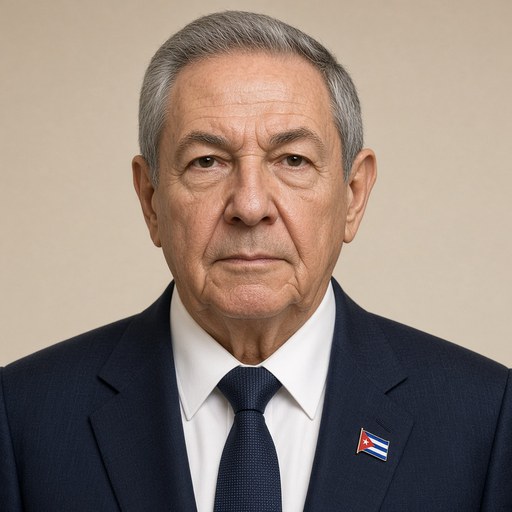
We will continue at our own pace the process of transformations in Cuban society.
 Raúl Castro · President of Cuba
- Context
- Castro addressed the closing of the V Ordinary Session of the VIII Legislature of Cuba's National Assembly on July 15, 2015, reviewing economic performance and ongoing reforms.
- Main themes
- Cuban economic performance, GDP growth, socialist economic model updating, transportation sector challenges, water scarcity and drought, external financial restrictions, US blockade, social services preservation, monetary and financial balance, Party Congress preparations, state enterprise reform, agricultural production
- Duration
- ~20 min
- Words
- 2,385
- Sentences
- 70
- Readability
- 26
- Grade
- 17.8
- Syntax
- 3.52
- Vocabulary
- 2.34
Translated from Spanish
The broad sphere of national life a sentence belongs to. Every sentence has an Arena, so it is the denominator the other indices are read against.
Other70 sentences in 46 paragraphs
July 15, 2015 23:07:49
Speech delivered by Army General Raúl Castro Ruz, First Secretary of the Central Committee of the Communist Party of Cuba and President of the Councils of State and Ministers, at the closing of the V Ordinary Period of Sessions of the VIII Legislature of the National Assembly of People's Power, at the Palace of Conventions, on July 15, 2015, "Year 57 of the Revolution." (Transcription Versions - State Council) Comrades:
In recent months, we have witnessed several events of great relevance for the country, of which you and our people have been informed in a timely manner.
As is customary, the deputies received abundant information in these days about the performance of the economy during the first half of the year and the estimates until the end of the year.
Certainly, the trend of deceleration in the growth of the Gross Domestic Product —known by the acronym GDP— that manifested in recent years has been reversed. As of June 30, the GDP grew by 4.7% and we estimate that by the end of the year it will be around 4%. And this is very good, considering that last year we only grew by 1%; however, to achieve this expected 4%, we must work hard and with great discipline, especially in the economic order, as Minister of Economy Marino Murillo pointed out.
Despite various shortcomings, the production of the sugar and manufacturing industries, as well as construction, commerce, tourism activity, and agricultural production grew, even though the latter suffers the effects of the intense drought that is manifesting throughout the national territory.
I must emphasize, in this regard, the need for a more rational use of this vital resource, as several comrades have referred to. At the end of June, the stored water was only 38% of the existing capacity —today it is at 36.1% according to the president of the Hydraulic Resources Institute, Inés María Chapman— presenting the most unfavorable scenario in the provinces of Guantánamo, Santiago de Cuba, Granma, Las Tunas, Ciego de Ávila, Sancti Spíritus, and Pinar del Río.
One of the greatest dissatisfactions in the execution of the plan is found in the transportation sector, which has caused difficulties in the behavior of the economy due to organizational deficiencies and low technical availability in the railway and motor transport system, associated with the lack of spare parts and problems in maintenance and repairs. This situation was also aggravated by the delay in the arrival in the country of the equipment corresponding to the plan of last and this year, most of which must arrive in 2015.
To this, we add the decision adopted at the recent meeting of the Council of Ministers to deliver means of transport and also construction equipment from the State Reserve, as well as to anticipate the contracting of the equipment initially considered in the 2016 plan.
During the first half of the year, we faced severe external financial restrictions; however, the country has continued to rigorously meet its payment obligations with foreign creditors and suppliers, a practice that favors the gradual restoration of the credibility of the national economy, despite the fact that the American blockade remains in full force.
In the midst of these difficulties, we have managed to preserve social services to the population —a matter that we will never neglect— and as a demonstration of this, we can point out that the epidemiological situation in the country has improved substantially.
On the other hand, monetary and financial balance is maintained. Inflation, in general, is contained within the expected levels, between 3% and 5%, although we do not ignore the legitimate concern of the population regarding the high prices of agricultural products, which are rising faster than the average salary.
You have been able to appreciate, unlike previous sessions of the National Assembly, that on this occasion, information on the status of the implementation of the Guidelines of Economic and Social Policy approved by the 6th Congress of the Party was not included, as we have considered it appropriate to concentrate on the preparation of the draft report that on this subject will be presented to the 7th Congress in April 2016, as was convened by the Plenary of the Central Committee held yesterday.
However, I will briefly refer to the main tasks carried out in the interest of updating our economic and social model. Among them is the development of the theoretical conceptualization of socialism in Cuba and the strategic lines and sectors that will make up the economic and social development program until 2030. Both documents will be part of the topics to be analyzed at the next Party Congress.
At the same time, we continued to advance in elevating the role that the socialist state enterprise must play as a fundamental figure of the national economy, adjusting previously approved measures and incorporating others related to its more flexible functioning and to salary systems associated with work results.
Likewise, various transformations have been executed in the economic planning process in accordance with the improvement of the business system, which has allowed for a more comprehensive incorporation of the policies approved as a result of the implementation of the guidelines and the programming of monetary balances in the State Plan and Budget.
Progress continues in the fulfillment of the set of measures aimed at monetary unification, a process of extreme complexity that is essential for the efficient performance of the economy. It is not idle to reiterate what has been stated on several occasions, before our Parliament, regarding the guarantee of bank deposits in international currencies, convertible Cuban pesos (CUC), and Cuban pesos (CUP), as well as cash in the hands of the population and national and foreign legal entities.
In the same way, the experimental process of creating non-agricultural cooperatives continues, which has as priorities consolidating the functioning of the existing ones and gradually advancing in the constitution of new cooperatives, without repeating the distortions already identified.
In addition, just over half a million Cubans are working as self-employed workers in multiple activities, a figure that will continue to grow gradually, as a number of gastronomic establishments and services to the population are transferred to this form of management, while the State preserves ownership of the properties.
We will continue at our own pace the process of transformations in Cuban society, which we have decided sovereignly with the overwhelming support of the people, in order to build a prosperous and sustainable socialism, an essential guarantee of our independence.
The first half of the year has been characterized by an intense international performance.
The III Summit of the Community of Latin American and Caribbean States (CELAC), held in January in Costa Rica, expressed the firm demand that the economic, commercial, and financial blockade be lifted and urged President Obama to resolutely use his broad executive powers to substantially modify the application of that policy. Just days later, the African Union Summit made a similar statement.
The VII Summit of the Americas, which Cuba attended for the first time, held in Panama in April, was a suitable space for the region to reiterate its support for the just struggle of our people against the blockade and to raise the need to modify the nature of hemispheric relations in this time when it can no longer be treated as a backyard.
Precisely in Panama, we held a meeting with the President of the United States.
My words at both events reflect the unwavering principled position of the foreign policy of the Cuban Revolution and express loyalty to the ideas that our people have defended, in the face of all risks and challenges, under the guidance of Commander in Chief Fidel Castro Ruz. This frees me from repeating them here today, as they are well known to you.
However, I must reiterate our solidarity with the Bolivarian Revolution and the government led by President Nicolás Maduro in the face of attempts at destabilization and any act of external interference. We were pleased to learn of the results of the primary elections of the United Socialist Party of Venezuela, while we continue to closely follow the dialogue process between that country and the United States.
We denounce the destabilizing campaigns against the government of President Rafael Correa and the Citizen Revolution in Ecuador, to which we reaffirm Cuba's solidarity.
We appreciate that an imperialist and oligarchic offensive has been put into practice against the revolutionary and progressive processes in Latin America, which will be faced with determination by our peoples.
Let the solidarity greeting from this Parliament reach President Dilma Rousseff and the Brazilian people who defend the important social and political advances of regional integration and the countries of the South in the face of attempts to reverse them.
In early May, we attended the impressive commemoration in Moscow of the 70th Anniversary of the Victory against Fascism, an event that no one can distort or erase from the memory of Humanity.
We warned early on, in this very hall, that the attempt to extend NATO to the borders of Russia would bring serious threats to international peace and security.
Today we reaffirm that the purpose of applying sanctions against Russia will harm the interests of Europe and bring greater instability and new dangers. This position was reiterated by Cuba at the Second CELAC-European Union Summit, where our willingness to dialogue and cooperate in the community block was also reaffirmed, with which we are negotiating an agreement in this regard. On this occasion, our delegation was led by First Vice President Miguel Díaz-Canel.
We welcome the agreement reached between the Islamic Republic of Iran and the group of permanent member countries of the Security Council plus Germany. We reiterate our support for the inalienable right of every State to the peaceful use of nuclear energy. This outcome demonstrates that dialogue and negotiation are the only effective tools to resolve differences between States.
From now on, we are preparing to receive, next September, Pope Francis, with affection, respect, and hospitality, as he deserves.
His preaching in favor of peace and equity, the eradication of poverty, the defense of the environment, and his analysis of the causes of the problems of Humanity awaken worldwide admiration, which we have all followed closely, especially during his memorable tour of Ecuador, Bolivia, and Paraguay.
It has already been reported that on July 20, as a result of the negotiations that were conducted respectfully and on an equal footing, diplomatic relations between Cuba and the United States will be officially restored and Embassies will be reopened in the respective capitals; first ours.
Thus, the first phase of the process initiated on December 17 will have concluded, and a new, long, and complex stage will begin on the path toward the normalization of relations, which will require the will to find solutions to the problems that have accumulated for more than five decades and affect the ties between our countries and peoples. As we have said, it is about founding a new type of ties between both States, different from those of our entire common history.
As stated in the Declaration of the Revolutionary Government of July 1, it is not possible to conceive, while the blockade is maintained, normal relations between Cuba and the United States.
In recognizing President Obama's call to the U.S. Congress to lift the blockade on Cuba, reiterated in his statement of July 1, we hope he continues to use his executive powers, that is, those that he as President can adopt without the participation of Congress, to dismantle aspects of this policy, which causes harm and deprivation to our people. The rest of the measures of the blockade correspond, as is natural, to Parliament, that is, to his Congress.
To normalize bilateral ties, it will also be necessary to return the territory illegally occupied by the Naval Base in Guantánamo, to cease illegal radio and television broadcasts to Cuba, to eliminate programs aimed at promoting subversion and internal destabilization, and to compensate the Cuban people for the human and economic damages caused by U.S. policies.
Changing everything that must be changed is a sovereign and exclusive matter of the Cubans. The Revolutionary Government is willing to advance in the normalization of relations, convinced that both countries can cooperate and coexist civilly, for mutual benefit, above the differences we have and will have, and contribute to peace, security, stability, development, and equity in our continent and the world.
Comrades:
A few weeks ago, we welcomed to our homeland the members of the "Henry Reeve" Contingent who participated in the battle against Ebola in West Africa, where they set an extraordinary example of solidarity, altruism, and personal courage in facing that deadly epidemic. Our eternal tribute to Jorge Juan Guerra Rodríguez and Reynaldo Villafranca Antigua, the two cooperators who passed away from other diseases contracted while fulfilling that mission.
Also, a Cuban medical brigade, which will return in the coming days, assisted with great solidarity spirit the victims of the earthquakes in the mountains of Nepal.
Our country will continue to fulfill, according to its possibilities, the internationalist duty to support needy peoples, as tens of thousands of compatriots are doing today in more than 80 countries in Latin America, the Caribbean, Africa, and Asia, under the principle that those who can afford to collaborate do so, and those who do not have resources will continue to be helped. In just 10 days, we will celebrate the 62nd anniversary of the assaults on the Moncada and Carlos Manuel de Céspedes barracks and the 500th anniversary of the founding of the city of Santiago de Cuba. There we will share with that valiant people the joy of these events — valiant just like the rest of the country, including the Isle of Youth and its adjacent cays — and we will listen to the words of the Second Secretary of the Central Committee of the Party, comrade José Ramón Machado Ventura.
Anyone who today compares that heroic city with the one that remained after being battered by Hurricane Sandy, less than three years ago, will understand that nothing is impossible for a united people, like ours, willing to fight and defend the work of its Revolution. We will see each other in Santiago. Thank you very much.
The original Spanish. The tags above are read on the English translation's sentences.
15 de julio de 2015 23:07:49
Discurso pronunciado por el General de Ejército Raúl Castro Ruz, Primer Secretario del Comité Central del Partido Comunista de Cuba y Presidente de los Consejos de Estado y de Ministros, en la clausura del V Periodo Ordinario de Sesiones de la VIII Legislatura de la Asamblea Nacional del Poder Popular, en el Palacio de Convenciones, el 15 de julio de 2015, “Año 57 de la Revolución”. (Versiones Taquigráficas-Consejo de Estado) Compañeras y compañeros:
En los últimos meses hemos sido testigos de varios acontecimientos de gran relevancia para el país, de los cuales ustedes y nuestro pueblo han sido informados oportunamente.
Como es habitual, los diputados recibieron en estos días abundante información acerca del desempeño de la economía durante el primer semestre y los estimados hasta fin de año.
Ciertamente ha podido revertirse la tendencia a la desaceleración del crecimiento del Producto Interno Bruto —conocido por las siglas PIB— que se manifestó en años recientes. Hasta el 30 de junio el PIB creció un 4,7 % y estimamos que al concluir el año quedará en el entorno del 4 %. Y esto es muy bueno, teniendo en cuenta que en el pasado año solo crecimos un 1 %; no obstante, para lograr este 4 % esperado, hay que trabajar duro y con mucha disciplina, sobre todo en el orden económico como señalaba el ministro de Economía, Marino Murillo.
A pesar de diversos incumplimientos, creció la producción de las industrias azucarera y manufacturera, así como la construcción, el comercio, la actividad turística y la producción agropecuaria, aun cuando esta última sufre los efectos de la intensa sequía que se manifiesta en todo el territorio nacional.
Debo enfatizar, en este sentido, la necesidad de un uso más racional de ese recurso vital, como se han referido varios compañeras y compañeros. Al cierre de junio el agua embalsada era solo del 38 % de la capacidad existente —hoy está el 36,1 % según informó la presidenta del Instituto de Recursos Hidráulicos, Inés María Chapman—, presentándose el escenario más desfavorable en las provincias de Guantánamo, Santiago de Cuba, Granma, Las Tunas, Ciego de Ávila, Sancti Spíritus y Pinar del Río.
Una de las mayores insatisfacciones en la ejecución del plan se encuentra en el sector del transporte, lo que ha ocasionado dificultades en el comportamiento de la economía a causa de deficiencias organizativas y baja disponibilidad técnica en el sistema ferroviario y el transporte automotor, asociada a la falta de piezas de repuesto y problemas en el mantenimiento y las reparaciones. Esta situación se vio también agravada por el retraso en la llegada al país de los equipos correspondientes al plan del pasado y del presente año, la mayoría de los cuales deben arribar en el 2015.
A lo anterior se une la decisión adoptada en la reciente reunión del Consejo de Ministros de entregar medios de transporte y también equipamiento constructivo de la Reserva Estatal, así como anticipar la contratación de los equipos inicialmente considerados en el plan del 2016.
Durante el primer semestre hemos enfrentado severas restricciones financieras externas; sin embargo, el país ha continuado cumpliendo rigurosamente sus obligaciones de pago con acreedores y proveedores extranjeros, práctica que favorece el paulatino restablecimiento de la credibilidad de la economía nacional, a pesar de que el bloqueo norteamericano sigue en pleno vigor.
En medio de estas dificultades, se ha logrado preservar los servicios sociales a la población —cuestión que jamás descuidaremos— y como muestra de ello podemos señalar que ha mejorado de manera sustancial la situación epidemiológica del país.
Por otra parte, se mantiene el equilibrio monetario y financiero. La inflación, en general, se encuentra contenida en los niveles previstos, entre el 3 % y el 5 %, aunque no ignoramos la justa preocupación de la población por los altos precios de los productos agropecuarios, que crecen más que el salario medio.
Ustedes han podido apreciar, a diferencia de sesiones anteriores de la Asamblea Nacional, que en esta oportunidad no se incluyó la información sobre el estado de la implementación de los Lineamientos de la Política Económica y Social aprobados por el 6to. Congreso del Partido, atendiendo a que hemos considerado conveniente concentrarnos en la elaboración del proyecto del informe que sobre esta temática será presentado al 7mo. Congreso, en abril del 2016, tal y como fue convocado por el Pleno del Comité Central efectuado ayer.
No obstante, me referiré brevemente a las principales tareas llevadas a cabo en interés de la actualización de nuestro modelo económico y social. Entre ellas se encuentra la elaboración de la conceptualización teórica del socialismo en Cuba y las líneas y sectores estratégicos que conformarán el programa de desarrollo económico y social hasta el 2030. Ambos documentos formarán parte de los temas que se analizarán en el próximo Congreso del Partido.
Al propio tiempo, se continuó avanzando en la elevación del papel que corresponde desempeñar a la empresa estatal socialista como figura fundamental de la economía nacional, ajustando medidas aprobadas con anterioridad e incorporando otras relativas a su funcionamiento más flexible y a sistemas salariales asociados a los resultados del trabajo.
Igualmente, se han ejecutado diversas transformaciones en el proceso de planificación económica en consonancia con el perfeccionamiento del sistema empresarial, lo que ha permitido incorporar al plan, con mayor integralidad, las políticas aprobadas como resultado de la implementación de los lineamientos y la programación de los equilibrios monetarios en el Plan y el Presupuesto del Estado.
Prosigue el avance en el cumplimiento del conjunto de medidas orientadas a la unificación monetaria, proceso de extrema complejidad y que resulta imprescindible para un eficiente desempeño de la economía. No es ocioso reiterar lo planteado en varias ocasiones, ante nuestro Parlamento, acerca de que se garantizarán los depósitos bancarios en divisas internacionales, pesos cubanos convertibles (CUC) y pesos cubanos (CUP), así como el efectivo en manos de la población y las personas jurídicas nacionales y extranjeras.
De la misma forma, se mantiene en marcha el proceso experimental de creación de cooperativas no agropecuarias, el que tiene como prioridades consolidar el funcionamiento de las existentes y seguir avanzando de manera gradual en la constitución de nuevas cooperativas, sin repetir las distorsiones ya identificadas.
A ello se une que poco más de medio millón de cubanos se desempeñan como trabajadores por cuenta propia en múltiples actividades, cifra que seguirá creciendo de manera paulatina, al trasladarse a esta forma de gestión un conjunto de establecimientos gastronómicos y de servicios a la población, preservando el Estado la propiedad de los inmuebles.
Continuaremos a nuestro ritmo el proceso de transformaciones en la sociedad cubana, que hemos decidido soberanamente con el apoyo mayoritario del pueblo, en aras de la construcción de un socialismo próspero y sostenible, garantía esencial de nuestra independencia.
El primer semestre del año se ha caracterizado por una intensa ejecutoria internacional.
La III Cumbre de la Comunidad de Estados Latinoamericanos y Caribeños (CELAC), efectuada en enero en Costa Rica, expresó el firme reclamo de que se ponga fin al bloqueo económico, comercial y financiero y exhortó al presidente Obama a utilizar resueltamente sus amplias facultades ejecutivas para modificar de manera sustancial la aplicación de esa política. Apenas días después, la Cumbre de la Unión Africana hizo un planteamiento similar.
La VII Cumbre de las Américas, a la que Cuba asistió por primera vez, celebrada en Panamá en abril, fue espacio propicio para que la región reiterara el apoyo a la justa lucha de nuestro pueblo frente al bloqueo y planteara la necesidad de modificar la naturaleza de las relaciones hemisféricas en esta época en que ya no puede tratársele como traspatio.
Precisamente en Panamá, sostuvimos una reunión con el Presidente de Estados Unidos.
Mis palabras en ambos eventos recogen la invariable posición de principios de la política exterior de la Revolución Cubana y expresan lealtad a las ideas que nuestro pueblo ha defendido, frente a todos los riesgos y desafíos, bajo la guía del Comandante en Jefe Fidel Castro Ruz. Eso me libera de repetirlas hoy aquí, ya que son bien conocidas por ustedes.
Sin embargo, debo reiterar nuestra solidaridad con la Revolución Bolivariana y el gobierno que encabeza el presidente Nicolás Maduro frente a los intentos de desestabilización y cualquier acto de injerencia externa. Conocimos con satisfacción los resultados de las elecciones primarias del Partido Socialista Unido de Venezuela, al tiempo que seguimos con atención el proceso de diálogo entre ese país y Estados Unidos.
Denunciamos las campañas desestabilizadoras contra el gobierno del presidente Rafael Correa y la Revolución Ciudadana en Ecuador, a los que confirmamos la solidaridad de Cuba.
Apreciamos que se ha puesto en práctica una ofensiva imperialista y oligárquica contra los procesos revolucionarios y progresistas latinoamericanos, la cual será enfrentada con determinación por nuestros pueblos.
Llegue desde este Parlamento el saludo solidario a la presidenta Dilma Rousseff y al pueblo brasileño que defienden los importantes avances sociales y políticos de integración regional y de los países del Sur frente a los intentos de revertirlos.
A principios de mayo, asistimos a la impresionante conmemoración en Moscú del 70 Aniversario de la Victoria contra el Fascismo, hecho que nadie podrá tergiversar ni borrar de la memoria de la Humanidad.
Nosotros advertimos tempranamente, en esta propia sala, que el intento de extender la OTAN hasta las fronteras de Rusia traería serias amenazas a la paz y la seguridad internacionales.
Hoy reafirmamos que el propósito de aplicar sanciones contra Rusia lesionará los intereses de Europa y traerá mayor inestabilidad y nuevos peligros. Esta posición fue planteada nuevamente por Cuba en la Segunda Cumbre CELAC-Unión Europea, donde se ratificó también nuestra disposición al diálogo y la cooperación en el bloque comunitario, con el cual estamos negociando un acuerdo al respecto. En esta ocasión presidió nuestra delegación el primer vicepresidente, compañero Miguel Díaz-Canel.
Saludamos el acuerdo alcanzado entre la República Islámica de Irán y el grupo de países miembros permanentes del Consejo de Seguridad más Alemania. Reiteramos nuestro respaldo al derecho inalienable de todo Estado al uso pacífico de la energía nuclear. Este resultado demuestra que el diálogo y la negociación son la única herramienta efectiva para solventar las diferencias entre los Estados.
Desde ahora, nos preparamos para recibir, el próximo mes de septiembre, al Papa Francisco, con afecto, respeto y hospitalidad, como merece.
Despierta admiración mundial su prédica a favor de la paz y la equidad, la erradicación de la pobreza, la defensa del medio ambiente y su análisis de las causas de los problemas de la Humanidad, que todos hemos seguido con atención, especialmente durante su memorable recorrido por Ecuador, Bolivia y Paraguay.
Ya fue informado que el próximo 20 de julio, como resultado de las negociaciones que se desarrollaron de manera respetuosa y en pie de igualdad, quedarán oficialmente restablecidas las relaciones diplomáticas entre Cuba y Estados Unidos y se reabrirán Embajadas en las respectivas capitales; en primer lugar la nuestra.
Habrá concluido así la primera fase del proceso iniciado el 17 de diciembre y comenzará entonces una nueva etapa, larga y compleja, en el camino hacia la normalización de las relaciones, que requerirá voluntad para encontrar soluciones a los problemas que se han acumulado por más de cinco décadas y afectan los vínculos entre nuestros países y pueblos. Como hemos dicho, se trata de fundar un nuevo tipo de lazos entre ambos Estados, distintos a los de toda nuestra historia común.
Tal como señala la Declaración del Gobierno Revolucionario del 1ro. de julio, no es posible concebir, mientras se mantenga el bloqueo, relaciones normales entre Cuba y Estados Unidos.
Al reconocer el llamado del presidente Obama al Congreso norteamericano para que levante el bloqueo a Cuba, reiterado en su declaración del pasado 1ro. de julio, esperamos que continúe usando sus facultades ejecutivas, es decir, aquellas que él como Presidente puede adoptar sin participación del Congreso, para desmantelar aspectos de esta política, que causa daños y privaciones a nuestro pueblo. El resto de las medidas del bloqueo corresponden como es natural, al Parlamento, o sea, su Congreso.
Para normalizar los vínculos bilaterales también será necesario que se devuelva el territorio ilegalmente ocupado por la Base Naval en Guantánamo, que cesen las transmisiones radiales y televisivas ilegales hacia Cuba, que se eliminen los programas dirigidos a promover la subversión y la desestabilización internas, y se compense al pueblo cubano por los daños humanos y económicos provocados a causa de las políticas de Estados Unidos.
Cambiar todo lo que deba ser cambiado es asunto soberano y exclusivo de los cubanos. El Gobierno Revolucionario tiene la disposición de avanzar en la normalización de las relaciones, convencido de que ambos países podemos cooperar y coexistir civilizadamente, en beneficio mutuo, por encima de las diferencias que tenemos y tendremos, y contribuir con ello a la paz, la seguridad, la estabilidad, el desarrollo y la equidad en nuestro continente y el mundo.
Compañeras y compañeros:
Hace pocas semanas, recibimos en la Patria a los integrantes del Contingente “Henry Reeve” que participaron en la batalla contra el Ébola en África Occidental, donde dieron un extraordinario ejemplo de solidaridad, altruismo y valor personal al enfrentarse a esa mortífera epidemia. Nuestro eterno homenaje a Jorge Juan Guerra Rodríguez y Reynaldo Villafranca Antigua, los dos cooperantes que fallecieron por otras enfermedades contraídas durante el cumplimiento de esa misión.
También una brigada médica cubana, que regresa en los próximos días, asistió con gran espíritu solidario a las víctimas de los terremotos en las montañas de Nepal.
Nuestro país continuará cumpliendo, según sus posibilidades, con el deber internacionalista de apoyar a los pueblos necesitados, como hoy lo hacen decenas de miles de compatriotas en más de 80 países de América Latina, el Caribe, África y Asia, bajo el principio de que aquellos que puedan sufragar la colaboración lo hagan y a los que no cuenten con recursos los proseguiremos ayudando. En apenas 10 días celebraremos el 62 aniversario de los asaltos a los cuarteles Moncada y Carlos Manuel de Céspedes y los 500 años de la fundación de la ciudad de Santiago de Cuba. Allí compartiremos con ese aguerrido pueblo la alegría por estos acontecimientos —aguerrido igual que el resto del país, incluyendo la Isla de la Juventud y sus cayos adyacentes (Aplausos)— y escucharemos las palabras del Segundo Secretario del Comité Central del Partido, compañero José Ramón Machado Ventura (Aplausos).
Quien hoy compare esa ciudad heroína con aquella que quedó después de ser azotada por el huracán Sandy, hace menos de tres años, podrá comprender que no hay nada imposible para un pueblo unido, como el nuestro, dispuesto a luchar y defender la obra de su Revolución. Nos veremos en Santiago, Muchas gracias (Aplausos prolongados).
COMPARTIR facebook twitter google +