




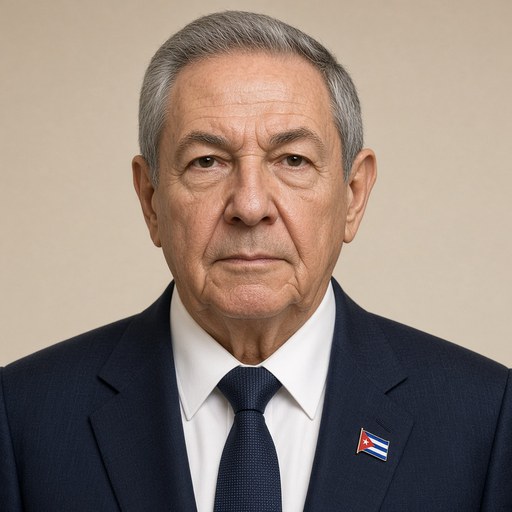
Speech delivered at the 7th Summit of the Americas, Panama, 11 April 2015. (Spanish)
 Raúl Castro · President of Cuba
- Context
- Raúl Castro addressed the 7th Summit of the Americas in Panama City on April 11, 2015, marking Cuba's historic return to the hemispheric forum after decades of exclusion.
- Main themes
- Cuba-US relations, Latin American sovereignty and integration, CELAC and hemispheric unity, history of US intervention in Cuba, Platt Amendment, Simón Bolívar and José Martí's ideals, independence and self-determination, Guantanamo Naval Base, solidarity among Latin American nations, manifest destiny and expansionism
- Duration
- ~37 min
- Words
- 4,449
- Sentences
- 168
- Readability
- 35
- Grade
- 14.7
- Syntax
- 3.10
- Vocabulary
- 2.31
Translated from Spanish
The broad sphere of national life a sentence belongs to. Every sentence has an Arena, so it is the denominator the other indices are read against.
Other168 sentences in 89 paragraphs
It was about time that I spoke here on behalf of Cuba.
I was informed at the beginning that I could give a speech of eight minutes; although I made a great effort, along with my Foreign Minister, to reduce it to eight minutes, and since I am owed six summits from which we were excluded, 6 times 8, 48, I asked President Varela for permission just moments before entering this magnificent hall, to grant me a few more minutes, especially after so many interesting speeches that we are hearing, and I am not only referring to President Obama’s, but also to Ecuadorian President Rafael Correa, President Dilma Rousseff, and others.
Without further ado, I will begin.
Excellency Mr. Juan Carlos Varela, President of the Republic of Panama;
Presidents;
Prime Ministers;
Distinguished guests:
First of all, I express our solidarity with President Bachelet and the people of Chile, for the natural disasters they have been suffering.
I thank the solidarity of all the countries of Latin America and the Caribbean that made it possible for Cuba to participate on equal footing in this hemispheric forum, and to the President of the Republic of Panama for the kind invitation he extended to us. I bring a fraternal embrace to the Panamanian people and to those of all the nations represented here.
When on December 2 and 3, 2011, the Community of Latin American and Caribbean States (CELAC) was created in Caracas, a new stage in the history of Our America was inaugurated, which made evident its well-earned right to live in peace and to develop as its peoples freely decide, and a path of development and integration was traced for the future, based on cooperation, solidarity, and the common will to preserve independence, sovereignty, and identity.
The ideal of Simón Bolívar to create a "great American Homeland" inspired true independence epics.
In 1800, there was thought to add Cuba to the Union of the North as the southern limit of the vast empire. In the 19th century, the Doctrine of Manifest Destiny emerged with the purpose of dominating the Americas and the world, and the idea of the Ripe Fruit for the inevitable gravitation of Cuba towards the North American Union, which scorned the birth and development of an independent and emancipatory thought.
Later, through wars, conquests, and interventions, this expansionist and hegemonic force stripped Our America of territories and extended to the Rio Bravo.
After long struggles that were frustrated, José Martí organized the "necessary war" of 1895 — the Great War, as it was also called, began in 1868 — and created the Cuban Revolutionary Party to lead it and found a Republic "with all and for the good of all" that aimed to achieve "the full dignity of man."
By defining with certainty and anticipation the traits of his time, Martí dedicated himself to the duty "to prevent in time with the independence of Cuba that the United States extend through the Antilles and fall, with that force more, upon our lands of America" — these were his exact words.
Our America is for him that of the Creole, the Indian, the Black, and the Mulatto, the mestizo and working America that had to make common cause with the oppressed and plundered. Now, beyond geography, this is an ideal that is beginning to become a reality.
117 years ago, on April 11, 1898, the then President of the United States requested Congress for authorization to intervene militarily in the war of independence that Cuba had been waging for nearly 30 years at that time, already practically won at the cost of rivers of Cuban blood, and this — the American Congress — issued its deceptive Joint Resolution, which recognized the independence of the island "de facto and de jure." They entered as allies and seized the country as occupiers.
An appendix was imposed on Cuba to its Constitution, the Platt Amendment — known by the name of the senator who proposed it — which stripped it of its sovereignty, authorized the powerful neighbor to intervene in internal affairs, and gave rise to the Guantanamo Naval Base, which still usurps part of our territory. During that period, the invasion of Northern capital increased, there were subsequently two military interventions, and support for cruel dictatorships.
When Cubans, at the beginning of the 20th century, made their draft Constitution and presented it to the governor, self-appointed by his country, an American general, he replied that something was missing, and when the Cuban constitutionalists asked, he answered: This amendment presented by Senator Platt, which gives the right to intervene in Cuba whenever deemed necessary by the United States.
They made use of that right; of course, the Cubans rejected it, and the response was: Very well, we will stay here. That remained until 1934.
There were two military interventions, in addition, and support for cruel dictatorships during that mentioned period.
The "gunboat policy" predominated towards Latin America and then the "Good Neighbor" policy. Successive interventions overthrew democratic governments and installed terrible dictatorships in 20 countries, 12 of them simultaneously. Who among us does not remember that quite recent stage of dictatorships everywhere, mainly in South America, that murdered hundreds of thousands of people? President Salvador Allende left us an everlasting example.
Exactly 13 years ago, the coup d'état against the beloved President Hugo Chávez Frías occurred, which the people defeated. Then came, almost immediately, the costly oil coup.
On January 1, 1959, 60 years after the entry of American soldiers into Havana, the Cuban Revolution triumphed, and the Rebel Army, commanded by Commander Fidel Castro Ruz, arrived in the capital, on the same day, exactly 60 years later. These are the incomprehensible ironies of history. The Cuban people, at a very high price, began the full exercise of their sovereignty. It was six decades of absolute domination.
On April 6, 1960 — just a year after the triumph — Undersecretary of State Lester Mallory wrote in a perverse memorandum — and I find no other qualifier to give it. This memorandum was declassified decades later — I quote some paragraphs: "(...) the majority of Cubans support Castro. There is no effective political opposition. The only foreseeable way to reduce internal support is through disillusionment and discouragement based on dissatisfaction and economic hardships (...), weaken the economic life (...) and deprive Cuba of money and supplies in order to reduce nominal and real wages, provoke hunger, desperation, and the overthrow of the government." End of quote. 77% of the Cuban population was born under the rigors imposed by the blockade, more terrible than they can imagine, even many Cubans, but our patriotic convictions prevailed, the aggression increased resistance and accelerated the revolutionary process. That happens when the natural revolutionary process of peoples is harassed. Harassment brings more revolution, history demonstrates it, and not only in the case of our continent or Cuba.
The blockade did not start when President Kennedy signed it in 1962, to which I will make a brief reference later for a positive initiative to contact the head of our Revolution to begin what President Obama and I are now starting; almost simultaneously came the news of his assassination when a message from him was being received.
That is to say, the aggression increased. It was in 1961 the aggression at Playa Girón, a mercenary invasion, sponsored and organized by the United States. Six years of war against armed groups that on two occasions encompassed the entire country. We had no radar, and clandestine aviation — it is unknown where it came from — dropping weapons by parachute. Thousands of lives were cost by that process; we have not been able to accurately account for the economic cost. It was in January 1965 when it concluded, and they began to support it in late 1959, about 10 or 11 months after the triumph of the Revolution, when we had not yet declared socialism, which was declared in 1961, at the burial of the victims of the bombings of the airports the day before the invasion. The next day our small army at that time and all our people went to combat that aggression and fulfilled the order of the Head of the Revolution to destroy it before 72 hours. Because if they had managed to consolidate there at the landing site, which was protected by the largest swamp of the Caribbean island, they would have transferred a government already constituted — with a Prime Minister and the appointment of the other ministers — that was in a North American military base in Florida. If they had managed to consolidate the position they initially occupied, transferring that government to Playa Girón would have been easy. And immediately the OAS, which had already sanctioned us for proclaiming ideas foreign to the continent, would have given its recognition. The constituted government in Cuba, based on a small piece of land, would have requested help from the OAS and that help was on American warships three miles off the coast, which was the limit that then existed for territorial waters, which as you know now are 12.
And the Revolution continued to strengthen, radicalizing. The other option was to surrender. What would have happened? What would have happened in Cuba? How many hundreds of thousands of Cubans would have died? Because we already had hundreds of thousands of light weapons; we had received the first tanks that we did not even know how to handle well. The artillery, we knew how to fire cannon shots, but we did not know where they would land; what some militiamen learned in the morning, they had to teach to others in the afternoon.
But there was a lot of courage, there was only one route to take, because it was a swamp where the troops could not deploy, nor could heavy tanks or vehicles transit. We had more casualties than the attackers. That is why Fidel's order was fulfilled: to liquidate them before 72 hours.
And that same American fleet was the one that accompanied that expedition from Central America, and was there, from the coast they could be seen, only three miles away some of their ships.
How much did the famous invasion cost Guatemala in 1954? I remember well because I was imprisoned in the prison of Isla de la Juventud — or of Pinos, as it was called then — for the attack on the Moncada barracks a year earlier. How many hundreds of thousands of Mayan Indians, aboriginals, and other Guatemalan citizens perished in a long process that will take years to recover? That was the beginning.
When we had already proclaimed socialism and the people had fought at Playa Girón to defend it, President John F. Kennedy — to whom I just referred a moment ago — was assassinated precisely at the same moment, the same day that the leader of the Cuban Revolution Fidel Castro received a message from him — from John Kennedy — seeking to initiate dialogue.
After the Alliance for Progress and having paid several times the external debt without preventing it from continuing to multiply, a savage and globalizing neoliberalism was imposed on us, as an expression of imperialism in this era, which left a lost decade in the region.
"The proposal then for a mature hemispheric association resulted in the attempt to impose the Free Trade Area of the Americas (FTAA) on us, associated with the emergence of these Summits, which would have destroyed the economy, sovereignty, and common destiny of our nations, if it had not been shipwrecked in 2005, in Mar del Plata, under the leadership of Presidents Chávez, Kirchner, and Lula. A year earlier, Chávez and Fidel had given birth to the Bolivarian Alternative, today the Bolivarian Alliance for the Peoples of Our America.
Excellencies:
We have expressed — and I reiterate now — to President Barack Obama, our willingness for respectful dialogue and civilized coexistence between both States within our deep differences.
I appreciate as a positive step his recent declaration that he will quickly decide on Cuba's presence on a list of countries sponsoring terrorism in which it should never have been — imposed under President Reagan's administration.
A terrorist country, us! Yes, we have carried out some acts of solidarity with other peoples, which can be considered terrorist, when we were cornered, besieged, and harassed to infinity, there was only one alternative: to surrender or to fight. You know which one we chose with the support of our people. Who can think that we are going to force an entire people to make the sacrifice that the Cuban people has made to survive, to help other nations?! But "the Castro dictatorship forced them," just as it forced them to vote for socialism with 97.5% of the population.
I reiterate that I appreciate as a positive step the recent declaration of President Obama that he will quickly decide on Cuba's presence on a list of countries sponsoring terrorism in which it should never have been, I was saying, because when this was imposed on us, it turns out that the terrorists were the ones who were putting the dead — I do not have the exact data in mind — only for terrorism within Cuba, and in some cases of Cuban diplomats in other parts of the world who were murdered. My colleagues are now providing me with the data: at that stage we had 3,478 dead and 2,099 permanently disabled; plus many others who were injured.
The terrorists were the ones who left the dead. Where did the terror come from then? Who provoked it? Some of those who have even been in Panama these days, like the CIA agent Rodríguez, who was the one who killed Che and took his severed hands to prove by his fingerprints, I don’t know where, that it was Che’s corpse, which we later recovered through the efforts of a friendly government in Bolivia. But, well, since then we have been terrorists.
I truly apologize, even to President Obama and to others present at this event for expressing myself this way. I told him myself that my passion comes out through my pores when it comes to the Revolution. I apologize because President Obama has no responsibility for any of this. How many presidents have we had? Ten before him, all of them owe us, except President Obama.
After saying so many harsh things about a system, it is fair that I apologize, because I am one of those who think — and I have expressed this to a few heads of state and government that I see here, in private meetings I have had with them in my country when receiving them — that, in my opinion, President Obama is an honest man. I have read some of his biography in the two books that have appeared, not complete, I will do that with more calm. I admire his humble origins, and I think that his way of being obeys that humble origin.
I meditated a lot on these words to say them, I even had them written down and took them out; I put them back and took them out again, and in the end, I said them, and I am satisfied.
Until today, the economic, commercial, and financial blockade is applied in all its intensity against the island, causing damage and shortages to the people and is the essential obstacle to the development of our economy. It constitutes a violation of International Law and its extraterritorial scope affects the interests of all States.
It is not casual that the vote has been almost unanimous, except for Israel and the United States itself, in the UN for so many consecutive years. And while the blockade exists, which is not the responsibility of the President, and which was codified by agreements and subsequent laws with a law in Congress that the President cannot modify, we must continue fighting and supporting President Obama in his intentions to eliminate the blockade.
One thing is to establish diplomatic relations and another thing is the blockade. That is why I ask everyone, and life also obliges us, to continue supporting that fight against the blockade.
Excellencies:
We have publicly expressed to President Obama, who was also born under the policy of the blockade against Cuba, our recognition for his brave decision to engage in a debate with the Congress of his country to put an end to it.
This and other elements must be resolved in the process towards the future normalization of bilateral relations.
For our part, we will continue to be immersed in the process of updating the Cuban economic model with the aim of perfecting our socialism, advancing towards development, and consolidating the achievements of a Revolution that has set out to "conquer all justice" for our people. What we will do is in a program since 2011, approved at the Party Congress. In the next Congress, which is next year, we will expand it, review what we have done, and how much we still have to do to meet the challenge.
Dear colleagues:
I must warn you that I am halfway through, if you want I can shorten it and if you are interested I will continue. I will speed up a bit.
Venezuela is not and cannot be a threat to the national security of a superpower like the United States. It is positive that the American President has recognized this.
I must reaffirm all our support, resolutely and loyally, to the sister Bolivarian Republic of Venezuela, to the legitimate government and to the civic-military union led by President Nicolás Maduro, to the Bolivarian and Chavista people who fight to follow their own path and face attempts at destabilization and unilateral sanctions that we demand be lifted, that the Executive Order be repealed, although it is difficult due to the law, which would be appreciated by our Community as a contribution to dialogue and hemispheric understanding.
We know. I believe I can be one of the few gathered here who knows the Venezuelan process best, not because we are there or influencing there and they tell us everything, we know because they are going through the same path we went through and are suffering the same aggressions we suffered, or part of them.
We will maintain our support for the efforts of the Republic of Argentina to recover the Malvinas Islands, South Georgia, and South Sandwich Islands, and we will continue to back their legitimate struggle in defense of financial sovereignty.
We will continue to support the actions of the Republic of Ecuador against the transnational companies that cause ecological damage to its territory and seek to impose abusive conditions.
I wish to recognize the contribution of Brazil, and of President Dilma Rousseff, to the strengthening of regional integration and the development of social policies that brought advances and benefits to broad popular sectors, which, within the offensive against various leftist governments in the region, are intended to be reversed.
Our support for the Latin American and Caribbean people of Puerto Rico in their endeavor to achieve self-determination and independence will remain unwavering, as has been ruled dozens of times by the United Nations Decolonization Committee.
We will also continue our contribution to the peace process in Colombia until its happy conclusion.
We should all multiply aid to Haiti, not only through humanitarian assistance but with resources that allow for its development, and support that Caribbean countries receive fair and differentiated treatment in their economic relations, and reparations for the damages caused by slavery and colonialism.
We live under the threat of enormous nuclear arsenals that should be eliminated and of climate change that leaves us without time. The threats to peace are increasing and conflicts are proliferating.
As President Fidel Castro expressed then, "the fundamental causes lie in poverty and underdevelopment, and in the unequal distribution of wealth and knowledge that prevail in the world. It cannot be forgotten that the current underdevelopment and poverty are the consequence of conquest, colonization, enslavement, and the plundering of most of the Earth by colonial powers, the emergence of imperialism, and the bloody wars for new divisions of the world. Humanity must become aware of what we have been and what we cannot continue to be. Today" — Fidel continued — "our species has acquired sufficient knowledge, ethical values, and scientific resources to march towards a historical stage of true justice and humanism. Nothing that exists today in the economic and political order serves the interests of humanity. It cannot be sustained. It must be changed," concluded Fidel.
Cuba will continue to defend the ideas for which our people have made the greatest sacrifices and risks and fought, alongside the poor, the sick without medical care, the unemployed, the abandoned children, or those forced to work or prostitute themselves, the hungry, the discriminated, the oppressed, and the exploited who constitute the vast majority of the world’s population.
Financial speculation, the privileges of Bretton Woods, and the unilateral removal of the dollar's convertibility into gold are increasingly suffocating. We require a transparent and equitable financial system.
It cannot be accepted that fewer than a dozen empires, mainly American — four or five out of seven or eight — determine what is read, seen, or heard on the planet. The Internet must have international, democratic, and participatory governance, especially in content generation. The militarization of cyberspace and the covert and illegal use of computer systems to attack other States is unacceptable. We will not allow ourselves to be dazzled or colonized again. About the Internet, which is a fabulous invention, one of the greatest in recent years, we could well say, recalling the example of the tongue in Aesop's fable, that the Internet serves for the best and is very useful, but at the same time, it also serves for the worst.
Mr. President:
Hemispheric relations, in my opinion, must change profoundly, particularly in the political, economic, and cultural spheres; so that, based on International Law and the exercise of self-determination and sovereign equality, they focus on developing mutually beneficial ties and cooperation to serve the interests of all our nations and the proclaimed objectives.
The approval, in January 2014, at the Second CELAC Summit in Havana, of the Proclamation of Latin America and the Caribbean as a Zone of Peace, constituted a significant contribution to that purpose, marked by Latin American and Caribbean unity in its diversity.
This is demonstrated by the fact that we are moving towards genuinely Latin American and Caribbean integration processes through CELAC, UNASUR, CARICOM, MERCOSUR, ALBA-TCP, SICA, and the Association of Caribbean States, which underline the growing awareness of the need to unite to guarantee our development.
This Proclamation commits us to that "the differences between nations be resolved peacefully, through dialogue and negotiation or other forms of solution, and in full accordance with International Law."
Living in peace, cooperating with one another to face the challenges and solve the problems that, in the end, affect and will affect us all, is now an imperative necessity.
The right of every State to choose its political, economic, social, and cultural system must be respected, as stated in the Proclamation of Latin America and the Caribbean as a Zone of Peace, signed by all Heads of State and Government of OUR AMERICA, as an essential condition to ensure peaceful coexistence among nations.
With it, we committed ourselves to fulfilling our "obligation not to intervene directly or indirectly in the internal affairs of any other State and to observe the principles of national sovereignty, equality of rights, and the self-determination of peoples," and to respect "the principles and norms of International Law (...) and the principles and purposes of the Charter of the United Nations."
That historic document urges "all member States of the International Community to fully respect this declaration in their relations with the member States of CELAC."
We now have the opportunity for all of us here to learn, as the Proclamation also expresses, to "practice tolerance and live in peace as good neighbors."
There are substantial discrepancies, yes, but there are also common points on which we can cooperate to make it possible to live in this world full of threats to peace and human survival.
What prevents, at the hemispheric level — as some of the presidents who preceded me in speaking have already referred to — cooperation to face climate change?
Why can’t the countries of the two Americas, North and South, fight together against terrorism, drug trafficking, or organized crime, without politically biased positions?
Why not seek, together, the necessary resources to provide the hemisphere with schools, hospitals — even if they are not luxurious, a modest little hospital, in those places where people die because there is no doctor — provide employment, advance in eradicating poverty?
Couldn’t we reduce the inequity in the distribution of wealth, lower infant mortality, eliminate hunger, eradicate preventable diseases, and end illiteracy?
Last year, we established hemispheric cooperation in confronting and preventing Ebola, and the countries of the two Americas worked together, which should serve as an impetus for greater efforts.
Cuba, a small country devoid of natural resources, which has developed in a highly hostile context, has been able to achieve the full participation of its citizens in the political and social life of the nation; universal coverage of education and health, free of charge; a social security system that guarantees that no Cuban is left unprotected; significant progress towards equal opportunities and in confronting all forms of discrimination; the full exercise of the rights of children and women; access to sports and culture; the right to life and citizen security.
Despite shortages and difficulties, we continue the motto of sharing what we have. Currently, 65,000 Cuban cooperators work in 89 countries, mainly in the fields of medicine and education. 68,000 professionals and technicians have graduated in our island, of which 30,000 are from health, from 157 countries.
If with very scarce resources, Cuba has been able to do this, what could the hemisphere not achieve with the political will to join efforts to contribute to the most needy countries?
Thanks to Fidel and the heroic Cuban people, we have come to this Summit, to fulfill Martí's mandate with the freedom conquered with our own hands, "proud of our America, to serve it and honor it... with the determination and capacity to contribute to it being valued for its merits, and respected for its sacrifices," as Martí pointed out.
Mr. President:
I apologize, and to all of you, for the time taken.
Thank you very much to everyone.
The original Spanish. The tags above are read on the English translation's sentences.
Ya era hora de que yo hablara aquí a nombre de Cuba.
Me informaron al principio que podría hacer un discurso de ocho minutos; aunque hice un gran esfuerzo, junto con mi Canciller, de reducirlo a ocho minutos, y como me deben seis cumbres de las que nos excluyeron, 6 por 8, 48 (Risas y aplausos), le pedí permiso al presidente Varela unos instantes antes de entrar a este magnífico salón, para que me cedieran unos minutos más, sobre todo después de tantos discursos interesantes que estamos escuchando, y no me refiero solo al del presidente Obama, sino también al del presidente ecuatoriano, Rafael Correa, a la Presidenta Dilma Rousseff y otros.
Sin más preámbulos, comenzaré.
Excelentísimo Señor Juan Carlos Varela, Presidente de la República de Panamá;
Presidentas y Presidentes:
Primeras y Primeros Ministros;
Distinguidos invitados:
En primer lugar, expreso nuestra solidaridad con la Presidenta Bachelet y el pueblo de Chile, por los desastres naturales que han estado padeciendo.
Agradezco la solidaridad de todos los países de la América Latina y el Caribe que hizo posible que Cuba participara en pie de igualdad en este foro hemisférico, y al Presidente de la República de Panamá por la invitación que tan amablemente nos cursara. Traigo un fraterno abrazo al pueblo panameño y a los de todas las naciones aquí representadas.
Cuando los días 2 y 3 de diciembre de 2011 se creó la Comunidad de Estados Latinoamericanos y Caribeños (CELAC), en Caracas, se inauguró una nueva etapa en la historia de Nuestra América, que hizo patente su bien ganado derecho a vivir en paz y a desarrollarse como decidan libremente sus pueblos, y se trazó para el futuro un camino de desarrollo e integración, basada en la cooperación, la solidaridad y la voluntad común de preservar la independencia, soberanía e identidad.
El ideal de Simón Bolívar de crear una gran Patria Americana inspiró verdaderas epopeyas independentistas.
En 1800 se pensó en agregar a Cuba a la Unión del Norte como el límite sur del extenso imperio. En el siglo XIX, surgieron la Doctrina del Destino Manifiesto con el propósito de dominar las Américas y al mundo, y la idea de la Fruta Madura para la gravitación inevitable de Cuba hacia la Unión norteamericana, que desdeñaba el nacimiento y desarrollo de un pensamiento propio y emancipador.
Después, mediante guerras, conquistas e intervenciones, esta fuerza expansionista y hegemónica despojó de territorios a Nuestra América y se extendió hasta el Río Bravo.
Luego de largas luchas que se frustraron, José Martí organizó la guerra necesaria de 1895 la Gran Guerra, como fue llamada también, empezó en 1868 y creó el Partido Revolucionario Cubano para conducirla y fundar una República con todos y para el bien de todos que se propuso alcanzar la dignidad plena del hombre.
Al definir con certeza y anticipación los rasgos de su época, Martí se consagra al deber de impedir a tiempo con la independencia de Cuba que se extiendan por las Antillas los Estados Unidos y caigan, con esa fuerza más, sobre nuestras tierras de América fueron sus palabras textuales.
Nuestra América es para él la del criollo, del indio, la del negro y del mulato, la América mestiza y trabajadora que tenía que hacer causa común con los oprimidos y saqueados. Ahora, más allá de la geografía, este es un ideal que comienza a hacerse realidad.
Hace 117 años, el 11 de abril de 1898, el entonces Presidente de los Estados Unidos solicitó al Congreso autorización para intervenir militarmente en la guerra de independencia que por cerca de 30 años libraba Cuba en esos momentos, ya ganada prácticamente al precio de ríos de sangre cubana, y este el Congreso americano emitió su engañosa Resolución Conjunta, que reconocía la independencia de la isla de hecho y de derecho. Entraron como aliados y se apoderaron del país como ocupantes.
Se impuso a Cuba un apéndice a su Constitución, la Enmienda Platt conocida así por el nombre del senador que la propuso , que la despojó de su soberanía, autorizaba al poderoso vecino a intervenir en los asuntos internos y dio origen a la Base Naval de Guantánamo, la cual todavía usurpa parte de nuestro territorio. En ese periodo se incrementó la invasión del capital norteño, posteriormente hubo dos intervenciones militares y el apoyo a crueles dictaduras.
Cuando los cubanos, al comienzo del siglo XX, hicieron su proyecto de Constitución y se la presentaron al gobernador, autonombrado por su país, un general norteamericano, este les contestó que ahí faltaba algo, y al preguntar los cubanos constituyentistas , les respondió: Esta enmienda que presenta el senador Platt, que da derecho a intervenir en Cuba cada vez que sea considerado por los Estados Unidos.
Hicieron uso de ese derecho; por supuesto, los cubanos lo rechazaron y la respuesta fue: Muy bien, nos quedaremos aquí. Eso se mantuvo hasta 1934.
Hubo dos intervenciones militares, además, y el apoyo a crueles dictaduras en ese periodo mencionado.
Predominó hacia América Latina la política de las cañoneras y luego del Buen Vecino. Sucesivas intervenciones derrocaron gobiernos democráticos e instalaron terribles dictaduras en 20 países, 12 de ellas de forma simultánea. ¿Quién de nosotros no recuerda esa etapa bastante reciente de dictaduras por todas partes, fundamentalmente en Sudamérica, que asesinaron a cientos de miles de personas? El Presidente Salvador Allende nos legó un ejemplo imperecedero.
Hace exactamente 13 años, se produjo el golpe de Estado contra el entrañable Presidente Hugo Chávez Frías que el pueblo derrotó. Después vino, casi inmediatamente , el costoso golpe petrolero.
El 1ro. de enero de 1959, 60 años después de la entrada de los soldados norteamericanos en La Habana, triunfó la Revolución Cubana, y el Ejército Rebelde, comandado por el Comandante Fidel Castro Ruz, llegó a la capital, el mismo día, exactamente 60 años después. Esas son las incomprensibles ironías de la historia. El pueblo cubano, a muy alto precio, iniciaba el pleno ejercicio de su soberanía. Fueron seis décadas de dominación absoluta.
El 6 de abril de 1960 apenas un año después del triunfo , el subsecretario de Estado Lester Mallory escribió en un perverso memorando y no encuentro otro calificativo que darle. Este memorand o fue desclasificado decenas de años después, cito algunos párrafos: (... ) la mayoría de los cubanos apoya a Castro No hay una oposición política efectiva. El único medio previsible para restarle apoyo interno es a través del desencanto y el desaliento basados en la insatisfacción y las penurias económicas ( ), debilitar la vida económica (...) y privar a Cuba de dinero y suministros con el fin de reducir los salarios nominales y reales, provocar hambre, desesperación y el derrocamiento del gobierno. Fin de la cita. . El 77% de la población cubana nació bajo los rigores que impone el bloqueo, más terribles de lo que se imaginan, incluso, muchos cubanos, pero nuestras convicciones patrióticas prevalecieron, la agresión aumentó la resistencia y aceleró el proceso revolucionario. Eso sucede cuando se hostiga al proceso revolucionario natural de los pueblos. El hostigamiento trae más revolución, la historia lo demuestra y no solo en el caso de nuestro continente o de Cuba.
El bloqueo no empezó cuando lo firmó el Presidente Kennedy en 1962, que después haré una breve referencia a él por una iniciativa positiva de ponerse en contacto con el Jefe de nuestra Revolución para comenzar lo que ahora estamos empezando el Presidente Obama y yo; casi simultáneamente llegó la noticia de su asesinato, cuando se recibía un mensaje suyo.
Es decir que la agresión aumentó. Fue en el año 1961 la agresión a Playa Girón, una invasión mercenaria, apadrinada y organizada por Estados Unidos. Seis años de guerra contra grupos armados que en dos ocasiones abarcaron todo el país. No teníamos ni un radar, y aviación clandestina no se sabe de dónde salió, arrojando armamento en paracaídas. Miles de vida nos costó ese proceso; el costo económico no hemos logrado llevarlo con exactitud. Fue en enero de 1965 cuando concluyó, y lo comenzaron a apoyar a fines de 1959, unos 10 u 11 meses después del triunfo de la Revolución, cuando no habíamos declarado todavía el socialismo, que se declaró en 1961, en el entierro de las víctimas de los bombardeos a los aeropuertos el día antes de la invasión. Al día siguiente nuestro pequeño ejército en aquel momento y todo nuestro pueblo fue a combatir esa agresión y cumplió la orden del Jefe de la Revolución de destruirla antes de las 72 horas. Porque si llegan a consolidarse ahí en el lugar del desembarco, que estaba protegido por la más grande ciénaga del Caribe isleño, hubieran trasladado un gobierno ya constituido ---con Primer Ministro y el nombramiento de los demás ministros---, que estaba en una base militar norteamericana en la Florida. Si llegan a consolidar la posición que ocuparon inicialmente, trasladar ese gobierno a Playa Girón era fácil. E inmediatamente la OEA, que ya nos había sancionado por proclamar ideas ajenas al continente, le hubiera dado su reconocimiento. El gobierno constituido en Cuba, basificado en un pedacito de tierra, hubiera pedido ayuda a la OEA y esa ayuda estaba sobre barcos de guerra norteamericanos a tres millas de la costa, que era el límite que entonces existía de las aguas territoriales, que como ustedes conocen ahora son 12.
Y la Revolución se siguió fortaleciendo, radicalizándose. Lo otro era renunciar. ¿Qué hubiera pasado? ¿Qué hubiera pasado en Cuba? ¿Cuántos cientos de miles de cubanos hubieran muerto?, porque ya teníamos cientos de miles de armamentos ligeros; habíamos recibido los primeros tanques que no sabíamos ni manejar bien. La artillería, sabíamos tirar cañonazos, pero no conocíamos dónde iban a dar; lo que unos milicianos aprendían por la mañana, tenían que enseñárselos a los otros por la tarde.
Pero hubo mucho valor, había que ir por un solo itinerario, porque era una ciénaga por donde las tropas no se podían desplegar, ni transitar los tanques o vehículos pesados. Tuvimos más bajas que los atacantes. Por eso se cumplió la orden de Fidel: liquidarlos antes de las 72 horas.
Y esa misma flota americana fue la que acompañó a esa expedición desde Centroamérica, y estaba ahí, desde la costa se veían, a solo tres millas algunos de sus barcos.
¿Cuánto costó a Guatemala la invasión famosa en 1954?, que recuerdo bien porque estaba preso en el presidio de Isla de la Juventud o de Pinos, llamada así entonces, por el ataque al cuartel Moncada un año antes. ¿Cuántos cientos de miles de indios mayas, aborígenes y otros ciudadanos guatemaltecos perecieron en todo un largo proceso que durará años recuperar? Ese fue el comienzo.
Cuando ya habíamos proclamado el socialismo y el pueblo había combatido en Playa Girón para defenderlo, el Presidente John F. Kennedy al que ya hice referencia hace un instante fue asesinado precisamente en el mismo momento, el mismo día en que el líder de la Revolución Cubana Fidel Castro recibía un mensaje suyo de John Kennedy buscando iniciar el diálogo.
Después de la Alianza para el Progreso y de haber pagado varias veces la deuda externa sin evitar que esta se siga multiplicando, se nos impuso un neoliberalismo salvaje y globalizador, como expresión del imperialismo en esta época, que dejó una década perdida en la región.
La propuesta entonces de una asociación hemisférica madura resultó el intento de imponernos el Área de Libre Comercio de las Américas (ALCA), asociado al surgimiento de estas Cumbres, que hubiera destruido la economía, la soberanía y el destino común de nuestras naciones, si no se le hubiera hecho naufragar en el 2005, en Mar del Plata, bajo el liderazgo de los Presidentes Chávez, Kirchner y Lula. Un año antes, Chávez y Fidel habían hecho nacer la Alternativa Bolivariana, hoy Alianza Bolivariana Para los Pueblos de Nuestra América.
Excelencias:
Hemos expresado y le reitero ahora al Presidente Barack Obama, nuestra disposición al diálogo respetuoso y a la convivencia civilizada entre ambos Estados dentro de nuestras profundas diferencias.
Aprecio como un paso positivo su reciente declaración de que decidirá rápidamente sobre la presencia de Cuba en una lista de países patrocinadores del terrorismo en la que nunca debió estar impuesta bajo el gobierno del Presidente Reagan.
¡País terrorista nosotros! Sí, hemos hecho algunos actos de solidaridad con otros pueblos, que pueden considerarse terroristas, cuando estábamos acorralados, arrinconados y hostigados hasta el infinito, solo había una alternativa: rendirse o luchar. Ustedes saben cuál fue la que escogimos con el apoyo de nuestro pueblo. ¡¿ Quién puede pensar que vamos a obligar a todo un pueblo a hacer el sacrificio que ha hecho el pueblo cubano para subsistir, para ayudar a otras naciones?! (Aplausos). Pero la dictadura de los Castro los obligó, igual que los obligó a votar por el socialismo con el 97,5% de la población.
Reitero que aprecio como un paso positivo la reciente declaración del Presidente Obama de que decidirá rápidamente sobre la presencia de Cuba en una lista de países patrocinadores del terrorismo en la que nunca debió estar , les decía, porque cuando esto se nos impuso resulta que los terroristas éramos los que poníamos los muertos no tengo en la mente el dato exacto, solo por terrorismo dentro de Cuba, y en algunos casos de diplomáticos cubanos en otras partes del mundo que fueron asesinados. Me aportan el dato ahora mis compañeros: en esa etapa tuvimos 3 478 muertos y 2 099 discapacitados de por vida; más otros muchos que fueron heridos.
Los terroristas eran los que ponían los muertos. ¿De dónde venía el terror entonces? ¿Quiénes lo provocaban? Algunos de los que incluso han estado por Panamá en estos días, como el agente de la CIA Rodríguez, que fue el que asesinó al Che y se llevó sus manos cortadas para probar por sus huellas digitales, no sé en qué lugar, que se trataba del cadáver del Che, que después recuperamos por la gestión de un gobierno amigo en Bolivia. Pero, bueno, desde entonces somos terroristas.
Realmente pido disculpas, incluso, al Presidente Obama y a otros presentes en esta actividad por expresarme así. Yo a él mismo le dije que a mí la pasión se me sale por los poros cuando de la Revolución se trata. Le pido disculpas porque el presidente Obama no tiene ninguna responsabilidad con nada de esto. ¿Cuántos presidentes hemos tenido? Diez antes que él, todos tienen deuda con nosotros, menos el Presidente Obama.
Después de decir tantas cosas duras de un sistema, es justo que le pida disculpas, porque yo soy de los que pienso y así se lo he manifestado a unos cuantos jefes de Estado y de Gobierno que veo aquí, en reuniones privadas que he tenido con ellos en mi país al recibirlos que, según mi opinión, el Presidente Obama es un hombre honesto. Me he leído algo de su biografía en los dos libros que han aparecido, no completos, eso lo haré con más calma. Admiro su origen humilde, y pienso que su forma de ser obedece a ese origen humilde (Aplausos prolongados).
Estas palabras las medité mucho para decirlas, incluso las tuve escritas y las quité; las volví a poner y las volví a quitar, y, al final, las dije, y estoy satisfecho.
Hasta hoy, el bloqueo económico, comercial y financiero se aplica en toda su intensidad contra la isla, provoca daños y carencias al pueblo y es el obstáculo esencial al desarrollo de nuestra economía. Constituye una violación del Derecho Internacional y su alcance extraterritorial afecta los intereses de todos los Estados.
No es casual el voto casi unánime, menos el de Israel y el propio Estados Unidos, en la ONU durante tantos años seguidos. Y mientras exista el bloqueo, que no es responsabilidad del Presidente, y que por acuerdos y leyes posteriores se codificó con una ley en el Congreso que el Presidente no puede modificar, hay que seguir luchando y apoyando al Presidente Obama en sus intenciones de liquidar el bloqueo (Aplausos).
Una cuestión es establecer relaciones diplomáticas y otra cuestión es el bloqueo. Por eso les pido a todos, y la vida nos obliga además, a seguir apoyando esa lucha contra el bloqueo.
Excelencias:
Hemos expresado públicamente al Presidente Obama, quien también nació bajo la política del bloqueo a Cuba, nuestro reconocimiento por su valiente decisión de involucrarse en un debate con el Congreso de su país para ponerle fin.
Este y otros elementos deberán ser resueltos en el proceso hacia la futura normalización de las relaciones bilaterales.
Por nuestra parte, continuaremos enfrascados en el proceso de actualización del modelo económico cubano con el objetivo de perfeccionar nuestro socialismo, avanzar hacia el desarrollo y consolidar los logros de una Revolución que se ha propuesto conquistar toda la justicia para nuestro pueblo. Lo que haremos está en un programa desde el año 2011, aprobado en el Congreso del Partido. En el próximo Congreso, que es el año que viene, lo ampliaremos, revisaremos lo que hemos hecho y lo mucho que nos falta todavía para cumplir el reto.
Estimados colegas:
Debo advertirles que voy por la mitad, si quieren corto y si les interesa continúo. Voy a acelerar un poco (Risas) .
Venezuela no es ni puede ser una amenaza a la seguridad nacional de una superpotencia como Estados Unidos (Aplausos). Es positivo que el Presidente norteamericano lo haya reconocido.
Debo reafirmar todo nuestro apoyo, de manera resuelta y leal, a la hermana República Bolivariana de Venezuela, al gobierno legítimo y a la unión cívico-militar que encabeza el Presidente Nicolás Maduro, al pueblo bolivariano y chavista que lucha por seguir su propio camino y enfrenta intentos de desestabilización y sanciones unilaterales que reclamamos sean levantadas, que la Orden Ejecutiva sea derogada, aunque es difícil por la ley, lo que sería apreciado por nuestra Comunidad como una contribución al diálogo y al entendimiento hemisférico.
Nosotros conocemos. Creo que puedo ser de los que estamos aquí reunidos uno de los pocos que mejor conoce el proceso de Venezuela, no es porque estemos allí ni estemos influyendo allí y ellos nos cuenten todas las cosas a nosotros, lo sabemos porque están pasando por el mismo camino por el que pasamos nosotros y están sufriendo las mismas agresiones que sufrimos nosotros, o una parte de ellas.
Mantendremos nuestro aliento a los esfuerzos de la República Argentina para recuperar las islas Malvinas, las Georgias del Sur y las Sandwich del Sur, y continuaremos respaldando su legítima lucha en defensa de la soberanía financiera.
Seguiremos apoyando las acciones de la República del Ecuador frente a las empresas transnacionales que provocan daños ecológicos a su territorio y pretenden imponerle condiciones abusivas.
Deseo reconocer la contribución de Brasil, y de la Presidenta Dilma Rousseff, al fortalecimiento de la integración regional y al desarrollo de políticas sociales que trajeron avances y beneficios a amplios sectores populares, las cuales, dentro de la ofensiva contra diversos gobiernos de izquierda de la región, se pretende revertir.
Será invariable nuestro apoyo al pueblo latinoamericano y caribeño de Puerto Rico en su empeño por alcanzar la autodeterminación e independencia, como ha dictaminado decenas de veces el Comité de Descolonización de las Naciones Unidas.
También continuaremos nuestra contribución al proceso de paz en Colombia hasta su feliz conclusión.
Debiéramos todos multiplicar la ayuda a Haití, no sólo mediante asistencia humanitaria, sino con recursos que le permitan su desarrollo, y apoyar que los países del Caribe reciban un trato justo y diferenciado en sus relaciones económicas, y reparaciones por los daños provocados por la esclavitud y el colonialismo.
Vivimos bajo la amenaza de enormes arsenales nucleares que debieran eliminarse y del cambio climático que nos deja sin tiempo. Se incrementan las amenazas a la paz y proliferan los conflictos.
Como expresó entonces el Presidente Fidel Castro, las causas fundamentales están en la pobreza y el subdesarrollo, y en la desigual distribución de las riquezas y los conocimientos que imperan en el mundo. No puede olvidarse que el subdesarrollo y la pobreza actuales son consecuencia de la conquista, la colonización, la esclavización y el saqueo de la mayor parte de la Tierra por las potencias coloniales, el surgimiento del imperialismo y las guerras sangrientas por nuevos repartos del mundo. La humanidad debe tomar conciencia de lo que hemos sido y de lo que no podemos seguir siendo. Hoy continuaba Fidel nuestra especie ha adquirido conocimientos, valores éticos y recursos científicos suficientes para marchar hacia una etapa histórica de verdadera justicia y humanismo. Nada de lo que existe hoy en el orden económico y político sirve a los intereses de la humanidad. No puede sostenerse. Hay que cambiarlo, concluyó Fidel.
Cuba seguirá defendiendo las ideas por las que nuestro pueblo ha asumido los mayores sacrificios y riesgos y luchado, junto a los pobres, los enfermos sin atención médica, los desempleados, los niños y niñas abandonados a su suerte u obligados a trabajar o a prostituirse, los hambrientos, los discriminados, los oprimidos y los explotados que constituyen la inmensa mayoría de la población mundial.
La especulación financiera, los privilegios de Bretton Woods y la remoción unilateral de la convertibilidad en oro del dólar son cada vez más asfixiantes. Requerimos un sistema financiero transparente y equitativo.
No puede aceptarse que menos de una decena de emporios, principalmente norteamericanos cuatro o cinco de siete u ocho , determinen lo que se lee, ve o escucha en el planeta. Internet debe tener una gobernanza internacional, democrática y participativa, en especial en la generación de contenidos. Es inaceptable la militarización del ciberespacio y el empleo encubierto e ilegal de sistemas informáticos para agredir a otros Estados. No dejaremos que se nos deslumbre ni colonice otra vez. Sobre la Internet que es un invento fabuloso, de los mayores en los últimos años, bien pudiéramos decir, recordando el ejemplo de la lengua en la fábula de Esopo, que Internet sirve para lo mejor y es muy útil, pero a su vez, también sirve para lo peor.
Señor Presidente:
Las relaciones hemisféricas, en mi opinión, han de cambiar profundamente, en particular en los ámbitos político, económico y cultural; para que, basadas en el Derecho Internacional y en el ejercicio de la autodeterminación y la igualdad soberana, se centren en el desarrollo de vínculos mutuamente provechosos y en la cooperación para servir a los intereses de todas nuestras naciones y a los objetivos que se proclaman.
La aprobación, en enero del 2014, en la Segunda Cumbre de la CELAC, en La Habana, de la Proclama de la América Latina y el Caribe como Zona de Paz, constituyó un trascendente aporte en ese propósito, marcado por la unidad latinoamericana y caribeña en su diversidad.
Lo demuestra el hecho de que avanzamos hacia procesos de integración genuinamente latinoamericanos y caribeños a través de la CELAC, UNASUR, CARICOM, MERCOSUR, ALBA-TCP, el SICA y la Asociación de Estados del Caribe, que subrayan la creciente conciencia sobre la necesidad de unirnos para garantizar nuestro desarrollo.
Dicha Proclama nos compromete a que las diferencias entre las naciones se resuelvan de forma pacífica, por la vía del diálogo y la negociación u otras formas de solución, y en plena consonancia con el Derecho Internacional.
Vivir en paz, cooperando unos con otros para enfrentar los retos y solucionar los problemas que, en fin de cuentas, nos afectan y afectarán a todos, es hoy una necesidad imperiosa.
Debe respetarse, como reza la Proclama de la América Latina y el Caribe como Zona de Paz, firmada por todos los Jefes de Estado y de Gobierno de NUESTRA AMÉRICA, el derecho inalienable de todo Estado a elegir su sistema político, económico, social y cultural, como condición esencial para asegurar la convivencia pacífica entre las naciones.
Con ella, nos comprometimos a cumplir nuestra obligación de no intervenir directa o indirectamente, en los asuntos internos de cualquier otro Estado y observar los principios de soberanía nacional, igualdad de derechos y la libre determinación de los pueblos, y a respetar los principios y normas del Derecho Internacional ( ) y los principios y propósitos de la Carta de las Naciones Unidas.
Ese histórico documento insta a todos los Estados miembros de la Comunidad Internacional a respetar plenamente esta declaración en sus relaciones con los Estados miembros de la CELAC.
Tenemos ahora la oportunidad para que todos los que estamos aquí aprendamos, como también expresa la Proclama, a practicar la tolerancia y convivir en paz como buenos vecinos.
Existen discrepancias sustanciales, sí, pero también puntos en común en los que podemos cooperar para que sea posible vivir en este mundo lleno de amenazas a la paz y a la supervivencia humana.
¿Qué impide, a nivel hemisférico como ya se refirieron algunos de los presidentes que me precedieron en el uso de la palabra , cooperar para enfrentar el cambio climático?
¿Por qué no podemos los países de las dos Américas, la del Norte y la del Sur, luchar juntos contra el terrorismo, el narcotráfico o el crimen organizado, sin posiciones sesgadas políticamente?
¿Por qué no buscar, de conjunto, los recursos necesarios para dotar al hemisferio de escuelas, hospitales aunque no sean lujosos, un hospitalito modesto, en aquellos lugares donde la gente muere porque no hay un médico , proporcionar empleo, avanzar en la erradicación de la pobreza?
¿No se podría disminuir la inequidad en la distribución de la riqueza, reducir la mortalidad infantil, eliminar el hambre, erradicar las enfermedades prevenibles y acabar con el analfabetismo?
El pasado año, establecimos cooperación hemisférica en el enfrentamiento y prevención del ébola y los países de las dos Américas trabajamos mancomunadamente, lo que debe servirnos de acicate para empeños mayores.
Cuba, país pequeño y desprovisto de recursos naturales, que se ha desenvuelto en un contexto sumamente hostil, ha podido alcanzar la plena participación de sus ciudadanos en la vida política y social de la nación; una cobertura de educación y salud universales, de forma gratuita; un sistema de seguridad social que garantiza que ningún cubano quede desamparado; significativos progresos hacia la igualdad de oportunidades y en el enfrentamiento a toda forma de discriminación; el pleno ejercicio de los derechos de la niñez y de la mujer; el acceso al deporte y la cultura; el derecho a la vida y a la seguridad ciudadana.
Pese a carencias y dificultades, seguimos la divisa de compartir lo que tenemos. En la actualidad 65 000 cooperantes cubanos laboran en 89 países, sobre todo en las esferas de medicina y educación. Se han graduado en nuestra isla 68 000 profesionales y técnicos, de ellos, 30 000 de la salud, de 157 países.
Si con muy escasos recursos, Cuba ha podido, ¿qué no podría hacer el hemisferio con la voluntad política de aunar esfuerzos para contribuir con los países más necesitados?
Gracias a Fidel y al heroico pueblo cubano, hemos venido a esta Cumbre, a cumplir el mandato de Martí con la libertad conquistada con nuestras propias manos, orgullosos de nuestra América, para servirla y honrarla... con la determinación y la capacidad de contribuir a que se la estime por sus méritos, y se la respete por sus sacrificios , como señaló Martí.
Señor Presidente:
Perdón, y a todos ustedes, por el tiempo ocupado.
Muchas gracias a todos (Aplausos).