




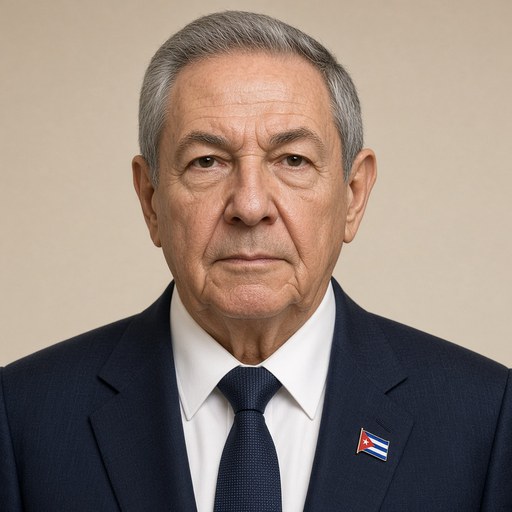
Speech delivered at the closing of the Second Ordinary Session of the VIII Legislature.
 Raúl Castro · President of Cuba
- Context
- Castro addressed the National Assembly at the closing of the Second Ordinary Session of the VIII Legislature in Havana on December 21, 2013, reviewing Cuba's economic performance and legislative achievements.
- Main themes
- Labor Code approval, economic performance review, GDP growth, U.S. blockade impact, investment deficiencies, social services maintenance, financial obligations, budget for 2014, popular consultation process, debt restructuring, economic planning to 2030, export revenues
- Duration
- ~23 min
- Words
- 2,692
- Sentences
- 76
- Readability
- 23
- Grade
- 18.6
- Syntax
- 3.39
- Vocabulary
- 2.28
Translated from Spanish
The broad sphere of national life a sentence belongs to. Every sentence has an Arena, so it is the denominator the other indices are read against.
Other76 sentences in 51 paragraphs
Comrades:
The days have been intense and extensive in recent times. Last Wednesday and Thursday, as reported, we held the expanded meeting of the Council of Ministers in which, among other matters, we reviewed the status of the implementation of the agreements from the Sixth Congress of the Party, the results of the economy for the year, and the plan and budget proposal for 2014. The members of the Political Bureau and the Secretariat of the Central Committee, the Council of State, and the Presidents of important higher organizations of business management (OSDE) attended as guests.
During the current session, the National Assembly approved the Labor Code, which updates, in accordance with the projected economic model, the regulations for the protection of rights and the fulfillment of labor duties by workers and employers, both in the state and non-state sectors, fostering the creation of an environment of greater discipline and reaffirmation of the authority and responsibility of management.
A year ago, the last session of the previous legislature agreed to submit the draft Labor Code to popular consultation, a process that took place throughout the country between July 20 and October 15, under the guidance of the Central Workers' Union of Cuba and the active participation of deputies and officials from the Ministry of Labor and Social Security.
More than two million 800 thousand workers participated in the extensive debate—as has been stated here by different speakers—in 69 thousand 56 assemblies, where more than 620 thousand interventions were made, generating 171 thousand 680 proposals, leading to significant modifications of the initial version.
This process was characterized by its political, democratic, and participatory nature, achieving the understanding and majority support of workers regarding the need to modify the previous Code and allowing the CTC and its union organizations to provide information, clarify, and guide on the implementation and application of the Guidelines.
Although the Cuban economy continued to advance this year, the planned targets were not met. The Gross Domestic Product grew by 2.7 percent, lower than the 3.6 percent planned.
This was conditioned by the contraction of revenues from exports, both of services and goods, whose prices decreased, while the prices of imported products increased. The expected growth in international tourism and some national productions that substitute costly imports will also not be achieved.
At the same time, deficiencies in investments were once again evident, due to difficulties faced with financing and late supplies, inadequate preparation, delays in projects, and a shortage of construction forces.
Even in these complex circumstances, social services, such as health and education, among others, which are provided free of charge to the entire Cuban population, were maintained at similar levels.
Throughout 2013, and despite the intensification of the U.S. blockade, especially in the commercial and financial spheres, the global economic crisis, and the limitations of our economy to access external credit sources, we continued to strictly fulfill our financial obligations. This was also aided by the significant progress made in various debt restructuring processes, all of which fosters the gradual and secure rise of the international credibility of the Cuban economy.
Likewise, the favorable trend in the cleaning up of internal finances has been maintained, which is expressed in the reduction of overdue accounts receivable and payable, while a positive correlation between the growth of the average salary and productivity was achieved, benefiting the national financial balance.
As was widely argued, next year the influence of external factors that will restrict the performance of the National Economy will continue. Nevertheless, it is planned that the Gross Domestic Product will grow by 2.2 percent. This indicator, which does not satisfy us at all, is the result of a deep and objective analysis of our current possibilities and will require all actors in the economic scenario to enhance the enormous reserves of existing efficiency and greater rationality and organization to achieve superior results.
The plan for 2014 ensures the resources required in the interest of the export of services and goods and aims to preserve the main investment programs designed to generate new and increasing revenues.
We are leaving behind the short-term vision, conditioned by urgencies and unforeseen events; we are already in a position to project, on solid bases and with confidence in the future, development up to the year 2030, a matter to which we will pay the required attention during 2014.
The National Assembly agreed to approve the Budget Law for the next year, whose deficit amounts to 4.7 percent of the Gross Domestic Product, which does not prevent ensuring monetary stability and guaranteeing the country's primary economic and social objectives.
The plan and budget for 2014, despite their limitations, will fundamentally support the implementation of the policies approved in the interest of updating the economic and social model, in line with the agreements of the Sixth Congress of the Communist Party of Cuba.
In this regard, you received substantial information demonstrating that progress continues, in accordance with the strategic projection approved for the implementation of the Guidelines.
A crucial step, due to its impact on all facets of national life, was the implementation of the work schedule for monetary and exchange unification, which will begin in the sector of legal entities, that is, state agencies, business entities, cooperatives, and others, with the aim of creating conditions for increased efficiency, adequately measuring economic facts, and stimulating branches that generate export revenues or substitute imports. In the second stage, it will extend to natural persons.
We are in the period of preparing conditions, which includes the establishment of the legal framework, modifications to accounting records and accounting standards, as well as the training of the officials involved.
I consider it appropriate to reaffirm that the process of monetary unification will not affect those who legally earn income, both in foreign currency and in pesos, nor the cash in the hands of the population or the deposits in the national banking system. I also reiterate that this decision by itself does not constitute the magic solution to our problems, but it will decisively contribute to improving the functioning of the economy and the building of a prosperous and sustainable socialism, less equal and more just, which will ultimately provide greater benefits to all Cubans.
At the same time, the instruments for controlling monetary issuance and the financial balance of the population in the new scenario, which foresees an increasing role of the non-state sector, are being perfected. The gradual deployment of the credit policy that provides more access to financing, both for natural persons and for the different modalities of management, cooperative or private, has been maintained.
On the other hand, a set of measures is underway that orderly relaxes the social purpose of the socialist state enterprise and grants it greater autonomy, favoring better exploitation of its productive capacities and access to the market, after fulfilling the state order.
The creation of the Mariel Special Development Zone has generated enormous interest, as it is set to become an important pole for attracting foreign investment and at the same time a testing ground for modern technologies and forms and methods of business management, in harmony with environmental preservation. At the end of next January, we will inaugurate the first stage of the Container Terminal being built there, along with other vital infrastructures, for which we have received financing from the supportive government of Brazil.
In this same direction, the Council of Ministers approved the improvement of the policy for Foreign Investment, a factor of singular importance for stimulating the economic and social development of the country. Based on this, work is being done on the preparation of a draft Law in this area that we plan to submit to a forthcoming session of the National Assembly, which, as we agreed yesterday, will be in March, in an extraordinary meeting to address this issue and others.
The expansion of the experiment of non-agricultural cooperatives has continued, of which more than 250 are currently operating, although the short time elapsed does not yet allow for a comprehensive evaluation of their results. At this stage, permanent supervision and control of the experience by the governing institutions of each activity is required to detect and correct any deviation in a timely manner.
More than 440 thousand Cubans are engaged in self-employment, and it is expected that this modality will continue to increase as a result of the further relaxation of existing regulations and the expansion of the activities included in this form of non-state management.
Now, just as the Party and the Government—this was also said about the unions at the time—are obliged to facilitate self-employment and eradicate the stigmas and prejudices that existed towards it, it must also be guaranteed by all the order and respect for the Law and the strict compliance with the taxes and other tributes established for these workers.
Recent events have highlighted inadequate control by government institutions regarding illegalities in self-employment, which were not faced resolutely and in a timely manner, creating an atmosphere of impunity that in turn stimulated the accelerated growth of activities that had never been authorized within the defined scope for certain occupations.
Regardless of the measures we were forced to adopt to correct these phenomena, I consider it advisable that we analyze the causes of their emergence and rapid spread and learn the lesson, which can be summarized in that every step we take must be accompanied by the establishment and preservation of a climate of ORDER, DISCIPLINE, AND DEMAND; that problems must be anticipated before they arise, and if they do arise, action must be taken immediately, without hesitation, preferably when they are small and isolated, which will always be preferable to paying the political cost that inertia and passivity in enforcing legality entails.
Let us not delude ourselves; the path we have chosen will not be free of obstacles and risks, but success will depend on the intelligence, patience, and above all, the firmness with which we act, with the support of our people and the workers in this sector, who mostly comply with the current regulations.
We will continue to decisively advance in the implementation of the agreements of the Sixth Congress, without haste, but without pause; I repeat, without haste, but without pause, despite various exhortations with good intentions and others that definitely are not. We do not ignore that those who urge us to speed up are pushing us towards failure, disunity, and damaging the trust and support of the people in the construction of Socialism, or what is the same, the independence and sovereignty of the Cuban nation, which only socialism brought to this country and will maintain.
Let no one doubt it; those of us who have dedicated almost our entire lives to these ideals, for obvious reasons, are among the most interested in advancing even faster. History records many experiences regarding the disastrous results that occur when the rhythm is violated and stages are skipped, which inevitably, instead of advancing in the realization of a program, leads to regression and defeat.
Neither we, the so-called historical leadership of the Revolution, nor the new generations will allow the work of the Revolution to be lost; there will be no space to subject our people to the effects of failed adjustment packages that condemn the vast majority to misery; we will never admit in revolutionary Cuba shock therapies like those we are seeing in rich and supposedly cultured Europe, which would plunge the country into a climate of division and instability, serving as a pretext for interventionist adventures against the nation.
As is known, last November, we conducted the Strategic Exercise "Bastion 2013," which constituted the most important activity of preparation for defense in the last four years. Its execution was planned in 2012; however, we decided to postpone it due to the damage caused by Hurricane Sandy in the eastern provinces.
"Bastion 2013" was successfully carried out, with the enthusiastic participation of the population in the activities of the national defense days, conducted under a criterion of maximum rationality. The experiences from this exercise allow us to continue the constant improvement of the defensive capacity achieved by the country.
As on other occasions, I will now briefly refer to matters of foreign policy.
First of all, I would like to share with you the emotion we felt during the visit to South Africa to pay a deserved tribute to our comrade Nelson Mandela. There, we witnessed the affection and gratitude of the South African people towards Cuba, Fidel, and our internationalist fighters, who fell in the struggles for Africa's independence and against apartheid, whose names are inscribed on the walls of the Freedom Park alongside tens of thousands of South African fighters, at the personal initiative of Mandela himself.
I held fraternal meetings with President Zuma and with leaders of the African National Congress (ANC) and the Communist Party, organizations that, under the leadership of Mandela and other historical leaders, led the popular resistance and armed struggle of that people. Facts that at this point some seek to distort.
The example of Mandela, whom Fidel described last Wednesday, the 18th, as "an integral man, a profoundly revolutionary and radically socialist man," will continue to show the path of national liberation and social justice to future generations.
The decisive result achieved by the revolutionary forces, under the leadership of President Nicolás Maduro, in the municipal elections of December 8 in Venezuela, constitutes a resounding response to the destabilizing attempts of their enemies and demonstrates the will of the Venezuelan government and people to preserve and defend the achievements made and the legacy of the Leader of the Bolivarian Revolution, Hugo Chávez Frías.
On the international stage, our country recently achieved two important successes: a new victory at the UN, where 188 nations voted in favor of lifting the American blockade, and its election—Cuba's—as a member of the Human Rights Council. Both events are further evidence of the recognition and sympathy that the struggle of the Cuban people evokes in the world.
Throughout the year, we have held the Pro Tempore Presidency of the Community of Latin American and Caribbean States (CELAC), motivated by the desire to contribute to the unity of our region, within its diversity. In January, we will celebrate in Havana the Summit of Heads of State and Government of Latin America and the Caribbean, which will be another opportunity to exchange and adopt political decisions on the issues that most concern our nations, including the fight against inequalities.
If in recent times we have been able to maintain some exchanges on mutually beneficial topics between Cuba and the United States, we believe that we can resolve other matters of interest and establish a civilized relationship between both countries as our people and the vast majority of American citizens and the Cuban diaspora desire.
As far as we are concerned, we have expressed on multiple occasions our willingness to engage in a respectful dialogue with the United States, on equal terms and without compromising the independence, sovereignty, and self-determination of the nation. We do not demand that the United States change its political and social system, nor do we accept negotiating ours. If we truly wish to advance in bilateral relations, we will have to learn to mutually respect our differences and get used to living peacefully with them. Only then; otherwise, we are prepared to endure another 55 years in the same situation.
It has been more than fifteen years since the Heroes Gerardo, Ramón, Antonio, and Fernando have been unjustly imprisoned in American jails. Their release and return to the Homeland and their families has had, has, and will have the highest priority for our people, Party, and Government, on whose behalf we send them a huge embrace.
Finally, comrades, I wish to conclude my remarks by sending, through you, the noble and heroic Cuban people, congratulations for the New Year and for the 55th anniversary of the triumph of the Revolution, which we will celebrate in Santiago de Cuba on January 1.
Thank you very much.
Long live the Revolution forever!
Long live Fidel!
And long live his fighting spirit!
The original Spanish. The tags above are read on the English translation's sentences.
Compañeras y compañeros:
Intensas y extensas han sido las jornadas en los últimos días. El miércoles y jueves pasados, como fue informado, efectuamos la reunión ampliada del Consejo de Ministros en la que, entre otros asuntos, pasamos balance al estado de la implementación de los acuerdos del Sexto Congreso del Partido, los resultados de la economía en el año y el plan y la propuesta de Presupuesto para el 2014. Asistieron como invitados los integrantes del Buró Político y el Secretariado del Comité Central, del Consejo de Estado y los Presidentes de importantes organizaciones superiores de dirección empresarial (OSDE).
En el actual período de sesiones la Asamblea Nacional aprobó el Código de Trabajo que actualiza, en correspondencia con el modelo económico proyectado, las regulaciones para la protección de los derechos y el cumplimiento de los deberes laborales por parte de trabajadores y empleadores, tanto en el sector estatal como no estatal, propiciando la creación de un ambiente de mayor disciplina y de reafirmación de la autoridad y responsabilidad de la administración.
Hace un año, la última sesión de la anterior legislatura acordó someter a consulta popular el anteproyecto del Código de Trabajo, proceso que se efectuó en todo el país entre el 20 de julio y el 15 de octubre, bajo la conducción de la Central de Trabajadores de Cuba y la activa participación de los diputados y funcionarios del Ministerio de Trabajo y Seguridad Social.
Tomaron parte en el amplio debate como ya se ha afirmado aquí por diferentes oradores más de dos millones 800 mil trabajadores en 69 mil 56 asambleas, donde se produjeron más de 620 mil intervenciones que generaron 171 mil 680 planteamientos, conllevando a la modificación significativa de la versión inicial.
Este proceso se caracterizó por su sentido político, democrático y participativo, obteniéndose la comprensión y el apoyo mayoritario de los trabajadores sobre la necesidad de modificar el anterior Código y permitió a la CTC y sus organizaciones sindicales aportar información, esclarecer y orientar sobre la instrumentación y puesta en práctica de los Lineamientos.
A pesar de que la economía cubana prosiguió su avance en el actual año, no se alcanzan las metas previstas. El Producto Interno Bruto crece un 2,7 por ciento, inferior al 3,6 planificado.
Ello estuvo condicionado por la contracción de los ingresos por exportaciones, tanto de servicios como de mercancías, cuyos precios disminuyeron, a la vez que se encarecían los productos de importación. Tampoco se logrará el crecimiento esperado en el turismo internacional y algunas producciones nacionales que sustituyen costosas importaciones.
Al propio tiempo, se pusieron nuevamente de manifiesto deficiencias en las inversiones, debido a dificultades afrontadas con el financiamiento y suministros fuera de fecha, inadecuada preparación, atrasos en los proyectos y déficit de fuerzas constructoras.
Aún en estas complejas circunstancias se logró sostener en niveles similares los servicios sociales, como por ejemplo, la salud y la educación , entre otros, que se brindan gratuitamente a toda la población cubana.
A lo largo del 2013 y a pesar del recrudecimiento del bloqueo norteamericano, especialmente en el plano comercial y financiero, la crisis económica global y las limitaciones de nuestra economía para acceder a fuentes de crédito externo, se continuó cumpliendo estrictamente con las obligaciones financieras asumidas. A ello también contribuyó el avance significativo obtenido en diferentes procesos de reestructuración de la deuda, todo lo cual propicia que la credibilidad internacional de la economía cubana prosiga su ascenso paulatino y seguro.
Asimismo, se ha mantenido la tendencia favorable en el saneamiento de las finanzas internas, lo que se expresa en la reducción de las cuentas por cobrar y pagar vencidas, a la par que se logró una correlación positiva entre el crecimiento del salario medio y la productividad, en beneficio del equilibrio financiero nacional.
Como fue ampliamente argumentado, en el próximo año se mantendrá la influencia de factores externos que restringirán el desempeño de la Economía Nacional. No obstante, se planifica que el Producto Interno Bruto crezca un 2.2 por ciento. Este indicador, que no nos satisface en lo absoluto, es fruto de un profundo y objetivo análisis de nuestras actuales posibilidades y exigirá de todos los actores en el escenario económico potenciar las enormes reservas de eficiencia existentes y una mayor racionalidad y organización para alcanzar resultados superiores.
El Plan para el 2014 asegura los recursos requeridos en interés de las exportaciones de servicios y mercancías y concibe preservar los principales programas inversionistas, diseñados para la generación de nuevos y crecientes ingresos.
Vamos dejando atrás la visión del corto plazo, condicionada por urgencias e imprevistos; ya estamos en condiciones de proyectar, sobre bases sólidas y confianza en el futuro, el desarrollo hasta el año 2030, cuestión a la que prestaremos la atención requerida durante el 2014.
La Asamblea Nacional acordó aprobar la Ley del Presupuesto para el próximo año, cuyo déficit equivale al 4,7 por ciento del Producto Interno Bruto, lo cual no impide asegurar la estabilidad monetaria y garantizar los objetivos económicos y sociales primordiales del país.
El plan y el presupuesto del 2014, a pesar de sus limitaciones respaldarán, en lo fundamental, la aplicación de las políticas aprobadas en interés de la actualización del modelo económico y social, en línea con los acuerdos del Sexto Congreso del Partido Comunista de Cuba.
En esta materia, ustedes recibieron una sustanciosa información que demuestra que continúa el avance, en correspondencia con la proyección estratégica aprobada para la implementación de los Lineamientos.
Un paso trascendental, por su repercusión en todas las facetas de la vida nacional, lo constituyó la puesta en vigor del cronograma de trabajo para la unificación monetaria y cambiaria, el cual se iniciará en el sector de las personas jurídicas, o sea, los organismos estatales, entidades empresariales, cooperativas y otros, con el propósito de ir creando las condiciones para el incremento de la eficiencia, medir adecuadamente los hechos económicos y estimular a las ramas que generan ingresos por exportación o sustituyen importaciones. En la segunda etapa se extenderá a las personas naturales.
Nos encontramos en el período de preparación de condiciones, que incluye la conformación del marco jurídico, las modificaciones de los registros contables y de las normas de contabilidad, así como la capacitación de los funcionarios involucrados.
Considero oportuno ratificar que el proceso de unificación monetaria no afectará a quienes lícitamente obtienen ingresos, tanto en divisas como en pesos, ni el efectivo en manos de la población o los depósitos en el sistema bancario nacional. También reiterar que esta decisión por sí misma no constituye la solución mágica de nuestros problemas, pero sí contribuirá de manera decisiva a mejorar el funcionamiento de la economía y la edificación de un socialismo próspero y sostenible , menos igualitario y más justo, lo que en definitiva propiciará mayores beneficios a todos los cubanos.
Al propio tiempo, se perfeccionan los instrumentos para el control sobre la emisión monetaria y el equilibrio financiero de la población en el nuevo escenario que prevé una actuación creciente del sector no estatal. Se ha mantenido el despliegue paulatino de la política crediticia que brinda más acceso al financiamiento, tanto a personas naturales como a las diferentes modalidades de gestión, cooperativa o privada.
Por otra parte, se encuentra en marcha un conjunto de medidas que flexibiliza de manera ordenada el objeto social de la empresa estatal socialista y la va dotando de mayor autonomía, favoreciendo una mejor explotación de sus capacidades productivas y el acceso al mercado, luego de cumplir con el encargo estatal.
Enorme interés ha concitado la creación de la Zona Especial de Desarrollo Mariel, llamada a convertirse en un importante polo de atracción de la inversión extranjera y al mismo tiempo en polígono de experimentación de modernas tecnologías y formas y métodos de gestión empresarial, en armonía con la preservación del medio ambiente. A finales del próximo mes de enero inauguraremos la primera etapa de la Terminal de Contenedores que se construye allí, junto con otras infraestructuras vitales y para lo cual hemos contado con el financiamiento brindado por el gobierno solidario de Brasil.
En esta misma dirección, el Consejo de Ministros aprobó el perfeccionamiento de la política para la Inversión Extranjera , factor de singular importancia para dinamizar el desarrollo económico y social del país. A partir de ello se trabaja en la elaboración de un proyecto de Ley en esta materia que prevemos someter a una próxima sesión de la Asamblea Nacional que, como acordamos ayer, será en el mes de marzo, en reunión extraordinaria para tratar este tema y otros más.
Ha proseguido la ampliación del experimento de las cooperativas no agropecuarias, de las cuales se encuentran funcionando más de 250, aunque el corto tiempo transcurrido no permite todavía una evaluación integral de sus resultados. En esta etapa se requiere una permanente supervisión y control de la experiencia por las instituciones rectoras de cada actividad para detectar y corregir oportunamente cualquier desviación.
Más de 440 mil cubanos ejercen el trabajo por cuenta propia y se espera que esta modalidad siga aumentando como resultado de la flexibilización ulterior de las regulaciones existentes y la ampliación de las actividades comprendidas en esta forma de gestión no estatal.
Ahora bien, como mismo el Partido y el Gobierno también lo dijimos de los sindicatos en su momento están en el deber de facilitar el trabajo por cuenta propia y desterrar estigmas y prejuicios que existían hacia él, también tiene que garantizarse por todos el orden y el respeto a la Ley y el cumplimiento riguroso de los impuestos y demás tributos establecidos para estos trabajadores.
Hechos recientes pusieron en evidencia un inadecuado control por parte de las instituciones gubernamentales de cara a ilegalidades en el ejercicio del trabajo por cuenta propia, las cuales no fueron enfrentadas resuelta y oportunamente, creándose un ambiente de impunidad que a su vez estimuló el crecimiento acelerado de actividades que nunca habían sido autorizadas en el alcance definido para determinadas ocupaciones.
Con independencia de las medidas que nos vimos obligados a adoptar para corregir estos fenómenos, considero conveniente que analicemos las causas de su aparición y rápida difusión y aprendamos la lección, que se resume en que cada paso que demos debe acompañarse del establecimiento y preservación de un clima de ORDEN, DISCIPLINA Y EXIGENCIA ; que los problemas deben preverse antes de su aparición y si surgen, hay que actuar de inmediato, sin vacilación, preferentemente cuando son pequeños y aislados, que siempre será preferible a pagar el costo político que entraña la inercia y la pasividad en hacer cumplir la legalidad.
No nos ilusionemos, el camino que hemos escogido no estará libre de obstáculos y riesgos, pero el éxito dependerá de la inteligencia, paciencia y sobre todo la firmeza con que actuemos, con el apoyo de nuestro pueblo y de los propios trabajadores de este sector, que mayoritariamente cumplen las disposiciones vigentes.
Continuaremos avanzando con decisión en la implementación de los acuerdos del Sexto Congreso, sin prisas, pero sin pausas, repito, sin prisas, pero sin pausas, a pesar de variadas exhortaciones con sanas intenciones y otras que definitivamente no lo son. No ignoramos que quienes nos apremian a acelerar el paso nos empujan al fracaso, a la desunión y a dañar la confianza y el apoyo del pueblo en la construcción del Socialismo, o lo que es lo mismo, la independencia y soberanía de la nación cubana, que a este país solo las trajo y las mantendrá el socialismo.
Que nadie lo dude, quienes hemos dedicado casi la vida entera a esos ideales, por razones obvias, nos encontramos entre los más interesados en avanzar todavía a mayor velocidad. No pocas experiencias registra la historia acerca de los nefastos resultados que ocasionan violentar el ritmo y saltarse etapas, lo cual irremisiblemente en lugar de adelantar en la materialización de un programa conduce al retroceso y la derrota.
Ni nosotros, la llamada dirección histórica de la Revolución , ni las nuevas generaciones permitiremos que se pierda la obra de la Revolución , no habrá espacio para someter a nuestro pueblo a los efectos de los fallidos paquetes de ajuste que condenan a la miseria a las grandes mayorías, nunca admitiremos en la Cuba revolucionaria terapias de choque como las que estamos viendo en la rica y llamada culta Europa, que sumirían al país en un clima de división e inestabilidad, que sirva de pretexto para aventuras intervencionistas contra la nación.
Como es conocido, el pasado mes de noviembre, realizamos el Ejercicio Estratégico "Bastión 2013", que constituyó la actividad más importante de la preparación para la defensa en los últimos cuatro años. Su realización estaba planificada en el 2012, sin embargo decidimos posponerlo atendiendo a las afectaciones ocasionadas por el paso del huracán Sandy en las provincias orientales.
Bastión 2013 se realizó de manera exitosa, con la entusiasta participación de la población en las actividades de los días nacionales de la defensa, efectuados bajo un criterio de máxima racionalidad. Las experiencias de este ejercicio nos permiten continuar el perfeccionamiento constante de la capacidad defensiva alcanzada por el país.
Como en otras ocasiones, me referiré ahora brevemente a asuntos de la política exterior.
En primer lugar, quisiera compartir con ustedes la emoción que sentimos durante la visita a Sudáfrica para rendir merecido tributo al compañero Nelson Mandela. Allí constatamos el cariño y agradecimiento del pueblo sudafricano a Cuba, a Fidel y a nuestros combatientes internacionalistas, caídos en las luchas por la independencia de África y contra el apartheid, cuyos nombres están esculpidos en los muros del Parque de la Libertad junto a decenas de miles de luchadores sudafricanos, por iniciativa personal del propio Mandela.
Sostuve fraternales reuniones con el presidente Zuma y con dirigentes del Congreso Nacional Africano ANC y del Partido Comunista, organizaciones que, bajo la conducción de Mandela y otros líderes históricos, encabezaron la resistencia popular y la lucha armada de ese pueblo. Hechos que a estas alturas algunos pretenden desvirtuar.
El ejemplo de Mandela, a quien Fidel calificó el pasado miércoles 18 como un hombre íntegro, revolucionario profundo y radicalmente socialista, seguirá mostrando el camino de la liberación nacional y la justicia social a las generaciones venideras.
El decisivo resultado alcanzado por las fuerzas revolucionarias, bajo la dirección del Presidente Nicolás Maduro, en las elecciones municipales del 8 de diciembre, en Venezuela, constituye una respuesta contundente ante los intentos desestabilizadores de sus enemigos y demuestra la voluntad del gobierno y el pueblo venezolanos de preservar y defender las conquistas alcanzadas y el legado del Jefe de la Revolución Bolivariana Hugo Chávez Frías.
En la arena internacional, nuestro país obtuvo recientemente dos importantes éxitos: una nueva victoria en la ONU , donde 188 naciones votaron a favor del levantamiento del bloqueo norteamericano y su elección la de Cuba como miembro del Consejo de Derechos Humanos. Ambos acontecimientos son una muestra más del reconocimiento y la simpatía que despierta en el mundo la lucha del pueblo cubano.
Durante el año hemos ejercido la Presidencia Pro Témpore de la Comunidad de Estados Latinoamericanos y Caribeños (CELAC), animados por la voluntad de contribuir a la unidad de nuestra región, dentro de su diversidad. En enero celebraremos en La Habana la Cumbre de los Jefes de Estado y de Gobierno de América Latina y el Caribe que será otra oportunidad para intercambiar y adoptar decisiones políticas sobre las cuestiones que más interesan a nuestras naciones, incluida la lucha contra las desigualdades.
Si en los últimos tiempos hemos sido capaces de sostener algunos intercambios sobre temas de beneficio mutuo entre Cuba y los Estados Unidos, consideramos que podemos resolver otros asuntos de interés y establecer una relación civilizada entre ambos países como desea nuestro pueblo y la amplia mayoría de los ciudadanos estadounidenses y la emigración cubana.
En lo que a nosotros respecta, hemos expresado en múltiples ocasiones la disposición para sostener con Estados Unidos un diálogo respetuoso, en igualdad y sin comprometer la independencia, soberanía y autodeterminación de la nación. No reclamamos a Estados Unidos que cambie su sistema político y social ni aceptamos negociar el nuestro. Si realmente deseamos avanzar en las relaciones bilaterales, tendremos que aprender a respetar mutuamente nuestras diferencias y acostumbrarnos a convivir pacíficamente con ellas. Solo así; de lo contrario, estamos dispuestos a soportar otros 55 años en la misma situación (Aplausos).
Hace ya más de quince años que los Héroes Gerardo, Ramón, Antonio y Fernando cumplen injusta condena en cárceles norteamericanas. Su liberación y regreso a la Patria y familias ha tenido, tiene y tendrá la máxima prioridad para nuestro pueblo, Partido y Gobierno, a cuyo nombre les trasmitimos un inmenso abrazo.
Por último, compañeras y compañeros, deseo terminar mis palabras enviando, a través de ustedes, al noble y heroico pueblo cubano la felicitación por el Año Nuevo y por el 55 aniversario del triunfo de la Revolución , que celebraremos en Santiago de Cuba el 1ro de enero.
Muchas gracias.
¡ Viva la Revolución siempre! (Exclamaciones de: ¡Viva!)
¡Viva Fidel! (Exclamaciones de: ¡Viva!)
¡Y viva su espíritu de combate! (Exclamaciones de: ¡Viva!)
(Ovación.)