




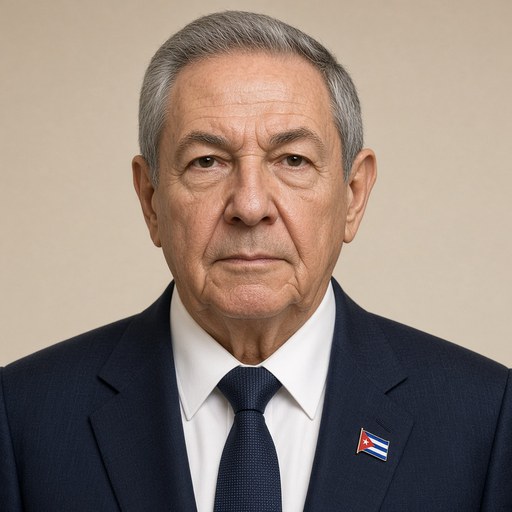
Speech delivered at the inauguration of the II Summit of the Community of Latin American States.
 Raúl Castro · President of Cuba
- Context
- Castro addressed the II CELAC Summit in Havana on January 28, 2014, marking the 161st anniversary of José Martí's birth, during Cuba's pro tempore presidency.
- Main themes
- Latin American and Caribbean unity, CELAC integration, poverty and inequality, fight against hunger, sovereignty and self-determination, regional cooperation, natural resources, social development, tribute to Hugo Chávez, wealth distribution, food security, political solidarity
- Duration
- ~18 min
- Words
- 2,183
- Sentences
- 74
- Readability
- 29
- Grade
- 16.0
- Syntax
- 3.15
- Vocabulary
- 2.37
Translated from Spanish
The broad sphere of national life a sentence belongs to. Every sentence has an Arena, so it is the denominator the other indices are read against.
Other74 sentences in 48 paragraphs
Dear Heads of State and Government of Latin America and the Caribbean;
Distinguished Ministers and guests:
On behalf of the people and government of Cuba, I extend the warmest welcome to all of you and wish you a pleasant stay. It is a great honor and a sincere reason for gratitude for us to have the presence of all of you at this Summit of "Our America," convened on the 161st anniversary of the birth of José Martí.
We deeply regret the physical absence of one of the great leaders of our America, the unforgettable Venezuelan president, Hugo Rafael Chávez Frías, a fervent and tireless promoter and fighter for independence, cooperation, solidarity, integration, and Latin American and Caribbean unity, and for the very creation of this Community.
I ask for a minute of silence in his memory.
(A minute of silence is observed.)
Distinguished colleagues:
The period since the last CELAC Summit has been complex but fruitful.
The countries of Latin America and the Caribbean have had to face numerous challenges. The crisis has continued to affect the global economy, dangers to peace remain present in various parts of the world, and sister nations have been subjected to threats, unilateral coercive measures, and international legal demands for the legitimate actions they have taken in defense of their sovereignty.
However, we have been able to continue advancing in the construction of CELAC and in following up on the decisions we agreed upon in Caracas and Santiago de Chile. Little by little, we are creating a Community of Latin American and Caribbean States that is now internationally recognized as the legitimate representative of the interests of Latin America and the Caribbean. Likewise, we have been bringing our positions closer together, and despite inevitable differences, a spirit of greater unity in diversity is being fostered, which must be the ultimate goal.
As I said in Santiago de Chile, "we know that among us there are different thoughts and even differences, but CELAC has emerged from the legacy of two hundred years of struggle for independence and is based on a profound community of objectives. Therefore, CELAC is not merely a succession of meetings or pragmatic coincidences, but a common vision of the Great Homeland of Latin America and the Caribbean that is owed solely to its peoples."
Creating a common political space in which we advance towards achieving peace and respect among our nations must be a priority, in which we are able to overcome the objective obstacles and those that are intentionally imposed on us, in which we can use resources sovereignly and for the common good, and put scientific and technical capacities to work for the progress of our peoples, in which we uphold non-negotiable principles such as self-determination, sovereignty, and the sovereign equality of states.
Only in this way will we achieve that the assertion that Latin America and the Caribbean is the most unequal region on the planet ceases to be a reality.
The Cuban Pro Tempore Presidency of CELAC has precisely aimed at fulfilling that objective, which is why the central theme of this summit is "the fight against poverty, hunger, and inequality."
It is true that in recent years there have been advances, but they have been slow, fragmented, and unstable. According to ECLAC, to which we express our gratitude for its ongoing cooperation with the Cuban Presidency and the five studies it has prepared within the framework of that collaboration, in Latin America and the Caribbean, the poverty rate reached at least 28.2% of the population in 2012, that is, 164 million people, and the rate of indigence or extreme poverty was 11.3%, which equates to 66 million inhabitants of the region. But the most concerning issue is child poverty, which affects 70.5 million children and adolescents, of whom 23.3 million are in extreme poverty.
The richest 10% of the Latin American population receives 32% of total income, while the poorest 40% receives only 15%.
The peoples of Latin America and the Caribbean demand and require a better distribution of wealth and income, universal and free access to quality education, full employment, better wages, the eradication of illiteracy, the establishment of true food security, health systems for the entire population, the right to decent housing, potable water, and sanitation.
All of these are achievable objectives whose attainment will measure the progress of our region.
We have all the conditions to reverse the current situation. With just over 15% of the Earth's surface and 8.5% of the global population, the region has a significant percentage of the most important non-renewable mineral reserves, one-third of the freshwater reserves, 12% of the arable land, the greatest global potential in food production, and 21% of natural forests.
And precisely, that wealth must become the engine for eliminating inequalities. Our imperative and challenge is to be able to transform that natural capital into human capital, economic infrastructure, and diversification of the productive and export base, in such a way that it decisively contributes to a true process of development.
One of the problems we face in Latin America and the Caribbean is that we have not translated periods of high prices for the natural resources we export into long-term economic development processes that genuinely reduce poverty and raise the per capita income of our populations. To achieve this, we must fully exercise sovereignty over our natural resources and establish appropriate policies in relations with foreign investment and with the transnational companies operating in the countries that make up CELAC.
The benefits of foreign direct investment for the economies of the region and the capital injections from the transnational companies operating in it are undeniable, but we forget that the excessive growth of the profits they obtain, 5.5 times in the last nine years, affects their positive impact on the balance of payments of our countries.
In terms of education, the region faces significant gaps, both in terms of access and quality, while functional illiteracy persists, although with marked differences between countries.
While progress has been evident in the region in access to primary education, information from ECLAC and UNESCO makes it clear that this and the quality of the training received by students are closely linked to their income level.
The situation is more serious in secondary education, not only because 50% of young people between 20 and 24 years old did not complete it, but also because only 21.7% of young people from the poorest sector in that age group had finished it. In contrast, 78.3% of their peers from the wealthiest segment completed this level of education. That is, a gap of 56.6 percentage points separated both groups in 2010.
In the case of university education, it is even more complex, as according to estimates from ECLAC, enrollment for this type of education was, in 2010, one-third of young people between 18 and 24 years old.
We have all the possibilities, resources, and methodologies to eradicate illiteracy from the face of Latin America and the Caribbean. We must have the political will to do so and to provide our populations with the opportunity to access, without exceptions or inequalities, all levels of education. Nothing we propose to do will be possible without educated and cultured peoples.
The diversity in the level of development of different social and productive sectors among our countries is, moreover, an opportunity for complementarity and the integration of their economies and cooperation.
We must establish a new paradigm of regional and international cooperation. Within the framework of CELAC, we have the possibility to build a model of our own adapted to our realities, based on the principles of common benefit and solidarity, which takes into account the best experiences developed in recent years by the countries of the region and by Latin American and Caribbean integration organizations, such as MERCOSUR, ALBA, PETROCARIBE, UNASUR, CARICOM, SICA, and others, which over the years have already paved the way.
On the other hand, we cannot forget that the Small Island Developing States of the Caribbean require special attention to their particular problems, which have been exacerbated by the effects of global crises and climate change that, while affecting us all, have an even greater impact on Caribbean countries whose economies shrank or grew below the regional average in 2012.
The impact of the economic crisis of 2008-2009 was especially severe in that subregion, costing small islands, on average, 13.2% of their Gross Domestic Product. The effect of devastating natural disasters also influenced that reality.
Furthermore, it is a moral obligation of the international community and our countries to continue contributing to the integral development of the Republic of Haiti through concrete actions of solidarity cooperation based on its specific needs and national priorities.
An important task ahead for the countries of CELAC this year is to work together in preparing the Post-2015 Development Agenda and to ensure that the mistakes that presided over the conception of the Millennium Development Goals are not repeated.
Dear Heads of State and Government:
Regardless of our progress, we continue to live in a world governed by an unjust and exclusionary international order, in which threats to peace and external interference in the region continue.
We cannot forget the long history of intervention in internal affairs, military invasions, and bloody coups d'état. The so-called "centers of power" are unwilling to accept having lost control of this rich region, nor will they renounce attempts to change the course of history in our countries to regain lost influence and benefit from their resources.
In 1999, when the socialist camp no longer existed, NATO modified its strategic conception to act against supposed global threats, offensively, outside the territory of the member states of the Alliance, in what it called the "Euro-Atlantic periphery." At the EU-Latin America and Caribbean Summit, held shortly thereafter, in June, in Rio de Janeiro, the historical leader of the Cuban Revolution, Fidel Castro Ruz, asked whether our region was included in that "periphery" and subject to that increasingly aggressive and dangerous doctrine. That question remains unanswered to this day, 15 years later.
Last year, the existence of a global communications espionage system by the United States government was revealed, which indiscriminately targeted Heads of State and Government, international organizations, political parties, companies, and citizens of the region, in flagrant violation of International Law and the sovereignty of states.
Another issue that generates great concern due to its potential to provoke international conflicts is the covert and illegal use, by individuals, organizations, and states, of the computer systems of other nations to attack third countries. Some governments have even expressed the possibility of responding to those attacks with conventional weapons. The only way to prevent and confront these novel threats is through joint cooperation among all states, just as it is to prevent cyberspace from becoming a theater of military operations.
We therefore welcome the initiative of the Brazilian government to hold the Global Multisectoral Meeting on Internet Governance in São Paulo in April 2014.
As a demonstration of its firm commitment to nuclear disarmament and peace, Latin America was the first region in the world to establish, through the Treaty of Tlatelolco, a Nuclear Weapons Free Zone. But we must go further. Peace and development are interdependent and indissoluble. There can be no peace without development, nor development without peace. That is why we have set out to proclaim our region as a Zone of Peace that forever banishes war, threats, and the use of force, in which disputes between our countries are resolved by ourselves, through peaceful means and negotiation, in accordance with the principles of International Law.
We reiterate our full solidarity with the Republic of Argentina in its claim for the Malvinas Islands, South Georgia, and South Sandwich Islands and their adjacent seas. While we reject any attempt to exploit the natural resources of those territories, including those of the subsoil, before an agreement has been reached, we call on the United Kingdom to accept dialogue and negotiation, as requested by the Argentine government.
As the Puerto Rican poet Lola Rodríguez de Tió wrote, "Cuba and Puerto Rico are the two wings of a bird," which is why I reiterate that "our Community will be incomplete as long as the seat of Puerto Rico, a genuinely Latin American and Caribbean sister nation that suffers a colonial situation, is missing."
We convey our solidarity to the people and government of Ecuador, threatened by lawsuits from transnational companies in courts biased by greed and a neocolonial political vision.
I thank everyone for the expressions of solidarity in the face of the criminal blockade imposed on my country for more than half a century and the unjust inclusion of Cuba on the list of state sponsors of terrorism by the United States Department of State.
Dear colleagues:
With my best wishes for success in the deliberations we will undertake and keeping in mind the enormous responsibility we share towards the unity of our region, I hereby formally declare the II Summit of the Community of Latin American and Caribbean States open.
Thank you very much.
The original Spanish. The tags above are read on the English translation's sentences.
Estimadas y estimados Jefas y Jefes de Estado o de Gobierno de América Latina y el Caribe;
Distinguidos Cancilleres e invitados:
En nombre del pueblo y el gobierno de Cuba les doy la más cordial bienvenida y les deseo una grata estancia. Para nosotros es un gran honor y motivo de sincero agradecimiento contar con la presencia de todos ustedes en esta Cumbre de Nuestra América, convocada en el 161 aniversario del natalicio de José Martí.
Lamentamos profundamente la ausencia física de uno de los grandes líderes de nuestra América, el inolvidable presidente venezolano, Hugo Rafael Chávez Frías (Aplausos), un ferviente e incansable promotor y luchador por la independencia, la cooperación, la solidaridad, la integración y la unidad latinoamericana y caribeña, y por la propia creación de esta Comunidad.
Pido un minuto de silencio en su memoria.
(Rinden minuto de silencio.)
Distinguidas y distinguidos colegas:
El período transcurrido desde la pasada Cumbre de la CELAC ha sido complejo, pero fructífero.
Los países de América Latina y el Caribe hemos tenido que hacer frente a numerosos desafíos. La crisis ha continuado afectando la economía mundial, los peligros para la paz siguen presentes en varias partes del mundo y naciones hermanas han sido objeto de amenazas, medidas coercitivas unilaterales y demandas legales internacionales por las legítimas acciones que han adoptado en defensa de su soberanía.
Sin embargo, hemos sido capaces de seguir avanzando en la construcción de la CELAC y en darles continuidad a las decisiones que acordamos en Caracas y Santiago de Chile. Poco a poco, vamos creando una Comunidad de Estados Latinoamericanos y Caribeños que hoy se reconoce internacionalmente como representante legítima de los intereses de la América Latina y el Caribe. Igualmente, hemos ido acercando nuestras posiciones y, a pesar de inevitables diferencias, se fomenta un espíritu de mayor unidad en la diversidad, que debe ser el fin último.
Como dije en Santiago de Chile, sabemos que entre nosotros hay pensamientos distintos e, incluso, diferencias, pero la CELAC ha surgido sobre el acervo de doscientos años de lucha por la independencia y se basa en una profunda comunidad de objetivos. No es la CELAC , por tanto, una sucesión de meras reuniones ni coincidencias pragmáticas, sino una visión común de la Patria Grande latinoamericana y caribeña que solo se debe a sus pueblos.
Debe ser prioridad la creación de un espacio político común en el que avancemos hacia el logro de la paz y el respeto entre nuestras naciones, en el que seamos capaces de superar los obstáculos objetivos y aquellos que intencionadamente se nos impongan, en el que podamos utilizar los recursos de manera soberana y para el bienestar común y poner las capacidades científicas y técnicas en función del progreso de nuestros pueblos, en el que hagamos valer principios irrenunciables como la autodeterminación, la soberanía y la igualdad soberana de los Estados.
Solo así lograremos que deje de ser realidad el aserto de que la América Latina y el Caribe es la región más desigual del planeta.
La Presidencia Pro Témpore cubana de la CELAC se ha dirigido precisamente al cumplimiento de ese objetivo, de ahí que el tema central de esta cumbre sea la lucha contra la pobreza, el hambre y la desigualdad.
Es cierto que durante los últimos años se han producido avances, pero han sido lentos, fragmentados e inestables. Según la CEPAL , a la que agradecemos su permanente cooperación con la Presidencia cubana y los cinco estudios que ha elaborado en el marco de dicha colaboración, en la América Latina y el Caribe la tasa de pobreza alcanzó en 2012, como mínimo, un 28,2% de la población, o sea, 164 millones de personas, y la de indigencia o pobreza extrema, el 11,3%, lo que equivale a 66 millones de habitantes de la región. Pero lo más preocupante es la pobreza infantil, que afecta a 70,5 millones de niños, niñas y adolescentes, de ellos 23,3 millones en pobreza extrema.
El 10% más rico de la población latinoamericana recibe el 32% de los ingresos totales, mientras que el 40% más pobre recibe solo el 15%.
Los pueblos de América Latina y el Caribe demandan y requieren una mejor distribución de las riquezas y los ingresos, el acceso universal y gratuito a una educación de calidad, el pleno empleo, mejores salarios, la erradicación del analfabetismo, el establecimiento de una verdadera seguridad alimentaria, sistemas de salud para la totalidad de la población, derecho a una vivienda digna, al agua potable y al saneamiento.
Todos son objetivos alcanzables cuya consecución medirá el progreso de nuestra región.
Tenemos todas las condiciones para revertir la situación actual. Con algo más del 15% de la superficie terrestre y el 8,5% de la población global, la región cuenta con un porcentaje apreciable de las reservas minerales no renovables más importantes, con un tercio de las reservas de agua dulce, un 12% del área cultivable, el mayor potencial mundial en la producción de alimentos y el 21% de los bosques naturales.
Y, precisamente, esa riqueza debe convertirse en el motor para la eliminación de las desigualdades. Nuestro imperativo y desafío es ser capaces de transformar ese capital natural en capital humano, infraestructura económica y diversificación de la base productiva y exportadora, de tal forma que contribuya de manera decisiva a un verdadero proceso de desarrollo.
Uno de los problemas que padecemos en América Latina y el Caribe es que no hemos traducido los períodos de altos precios de los recursos naturales que exportamos en procesos de desarrollo económico de largo plazo, de forma tal que permitan reducir realmente la pobreza y elevar el ingreso per cápita de nuestras poblaciones. Para ello debemos ejercer plenamente la soberanía sobre nuestros recursos naturales y plantearnos políticas adecuadas en las relaciones con la inversión extranjera y con las empresas transnacionales que operan en los países que componen la CELAC.
Son innegables los beneficios de la inversión extranjera directa para las economías de la región y de las inyecciones de capital de las empresas transnacionales que operan en ella, pero olvidamos que el crecimiento desmedido de las utilidades que obtienen, 5,5 veces en los últimos nueve años, afecta su impacto positivo sobre la balanza de pagos de nuestros países.
En materia de educación, la región enfrenta brechas significativas, tanto en términos del acceso como en la calidad, a la par que pervive la existencia del analfabetismo funcional, aunque con diferencias marcadas entre países.
Si bien se han evidenciado progresos en la región en el acceso a la educación primaria, las informaciones de la CEPAL y la UNESCO dejan claro que este y la calidad de la formación que reciben los educandos están muy vinculados con su nivel de ingresos.
La situación es más seria en la educación secundaria, no solo porque el 50% de los jóvenes entre 20 y 24 años no la concluyeron, sino porque solamente el 21,7% de los jóvenes del sector más pobre en ese grupo de edades la había terminado. En contraste, el 78,3% de sus pares del segmento más rico completaron este nivel de educación. Es decir, una brecha de 56,6 puntos porcentuales separaba en 2010 a ambos grupos.
En el caso de la educación universitaria es aún más compleja, pues de acuerdo con estimaciones de la CEPAL , la matrícula para este tipo de enseñanza era, en 2010, de un tercio de los jóvenes entre 18 y 24 años.
Contamos con todas las posibilidades, los recursos y las metodologías para desterrar el analfabetismo de raíz (la faz) de América Latina y el Caribe. Debemos tener la voluntad política de hacerlo y de proporcionar a nuestras poblaciones la posibilidad de acceder, sin excepciones ni desigualdades, a todos los niveles de educación. Nada de lo que nos proponemos hacer será posible sin pueblos educados y cultos.
La diversidad en el nivel de desarrollo de distintos sectores sociales y productivos entre nuestros países es, además, una oportunidad para la complementariedad y la integración de sus economías y la cooperación.
Debemos establecer un nuevo paradigma de cooperación regional e internacional. En el marco de la CELAC tenemos la posibilidad de construir un modelo propio adaptado a nuestras realidades, basado en los principios del beneficio común y la solidaridad, que tome en cuenta las mejores experiencias desarrolladas en los últimos años por los países de la región y por las organizaciones latinoamericanas y caribeñas de integración, como MERCOSUR, ALBA, PETROCARIBE, UNASUR, CARICOM, SICA y otras, que a lo largo de los años ya han trazado un camino.
Por otra parte, no podemos olvidar que los Pequeños Estados Insulares en Desarrollo del Caribe requieren una especial atención a sus problemas particulares, que se han agravado por los efectos de las crisis globales y el cambio climático que, si bien nos afecta a todos, tiene un impacto aún mayor sobre los países caribeños cuyas economías decrecieron o crecieron por debajo del promedio regional en 2012.
El impacto de la crisis económica de 2008-2009 fue especialmente severo en esa subregión, y costó a las pequeñas islas, como promedio, el 13,2% de su Producto Interno Bruto. El efecto de devastadores desastres naturales también incidió en esa realidad.
Asimismo, es una obligación moral de la comunidad internacional y de nuestros países continuar contribuyendo al desarrollo integral de la República de Haití mediante acciones concretas de cooperación solidaria sobre la base de sus necesidades específicas y prioridades nacionales.
Tarea importante que tenemos por delante los países de la CELAC durante este año es trabajar de forma mancomunada en la preparación de la Agenda de Desarrollo Post-2015 y cuidar que no se cometan los errores que presidieron la concepción de los Objetivos de Desarrollo del Milenio.
Estimados Jefes de Estado y Gobierno:
Independientemente de nuestros progresos, seguimos viviendo en un mundo regido por un orden internacional injusto y excluyente, en el que las amenazas a la paz y la injerencia externa en la región continúan.
No podemos olvidar la larga historia de intervención en los asuntos internos, invasiones militares y sangrientos golpes de Estado. Los llamados centros de poder no se resignan a haber perdido el control de esta rica región, ni renunciarán a los intentos de cambiar el curso de la historia en nuestros países para recuperar la influencia perdida y beneficiarse de sus recursos.
En 1999, cuando ya no existía el campo socialista, la OTAN modificó su concepción estratégica para actuar ante supuestas amenazas globales, de manera ofensiva, fuera del territorio de los Estados miembros de la Alianza, en lo que llamó la periferia euro-atlántica. En la Cumbre Unión Europea-América Latina y el Caribe, celebrada poco después, en junio, en Río de Janeiro, el líder histórico de la Revolución Cubana, Fidel Castro Ruz, preguntó si nuestra región estaba comprendida en esa periferia y sujeta a esa doctrina cada vez más agresiva y peligrosa. Dicha pregunta permanece sin respuesta hasta hoy, 15 años después.
El año pasado fue develada la existencia de un sistema global de espionaje de las comunicaciones por parte del gobierno de los Estados Unidos, del que fueron blanco indiscriminado Jefas y Jefes de Estado y Gobierno, organismos internacionales, partidos políticos, empresas y ciudadanos de la región, en flagrante violación del Derecho Internacional y la soberanía de los Estados.
Otro asunto que genera gran preocupación por sus potencialidades para provocar conflictos internacionales, es el empleo encubierto e ilegal, por individuos, organizaciones y Estados, de los sistemas informáticos de otras naciones para agredir a terceros países. Algunos gobiernos han expresado, incluso, la posibilidad de responder a esos ataques con armas convencionales. El único camino para prevenir y enfrentar estas novedosas amenazas es la cooperación mancomunada entre todos los Estados, al igual que para evitar que el ciberespacio se convierta en un teatro de operaciones militares.
Saludamos, por tanto, la iniciativa del gobierno de Brasil de efectuar en Sao Paulo, en abril de 2014, la Reunión Multisectorial Global sobre Gobernanza de Internet.
Como muestra de su firme compromiso con el desarme nuclear y la paz, América Latina fue la primera en el mundo en establecer, mediante el Tratado de Tlatelolco, una Zona Libre de Armas Nucleares. Pero debemos llegar más lejos. La paz y el desarrollo son interdependientes e indisolubles. No puede haber paz sin desarrollo, ni desarrollo sin paz. Por eso nos hemos propuesto proclamar a nuestra región como una Zona de Paz que destierre para siempre la guerra, la amenaza y el uso de la fuerza, en la que los diferendos entre nuestros países se resuelvan por nosotros mismos, por vías pacíficas y de negociación, conforme a los principios del Derecho Internacional.
Reiteramos la más plena solidaridad con la República Argentina en su reclamo de las islas Malvinas, Georgias del Sur y Sandwich del Sur y sus mares adyacentes. A la par que rechazamos todo intento de explotar, antes de que se haya logrado una avenencia, los recursos naturales de dichos territorios, incluidos los del subsuelo, hacemos un llamado al Reino Unido a que acepte el diálogo y la negociación, tal como ha solicitado el gobierno argentino.
Como escribió la poetisa puertorriqueña Lola Rodríguez de Tió, Cuba y Puerto Rico son de un pájaro las dos alas, por lo que reitero que nuestra Comunidad estará incompleta mientras falte en ella el escaño de Puerto Rico, nación hermana genuinamente latinoamericana y caribeña, que padece una situación colonial.
Trasmitimos nuestra solidaridad al pueblo y gobierno del Ecuador, amenazados por demandas de empresas transnacionales en tribunales sesgados por la codicia y una visión política neocolonial.
Agradezco a todos las muestras de solidaridad ante el criminal bloqueo impuesto a mi país durante más de medio siglo y la injusta inclusión de Cuba en la lista de patrocinadores del terrorismo del Departamento de Estado de Estados Unidos.
Estimadas y estimados colegas:
Con mis mejores deseos de éxito en las deliberaciones que efectuaremos y teniendo presente la enorme responsabilidad que compartimos hacia la unidad de nuestra región, declaro inaugurada formalmente la II Cumbre de la Comunidad de Estados Latinoamericanos y Caribeños.
Muchas gracias (Aplausos).