




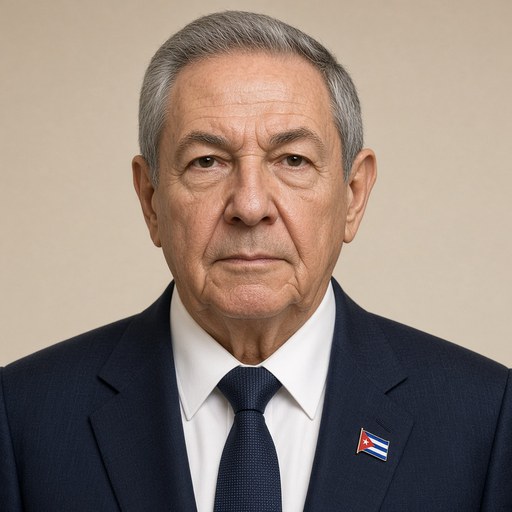
Speech delivered at the commemoration of the 60th Anniversary of the attack on the Moncada barracks.
 Raúl Castro · President of Cuba
- Context
- Raúl Castro addressed a commemorative ceremony in Santiago de Cuba on July 26, 2013, marking the 60th anniversary of the Moncada barracks assault.
- Main themes
- 60th anniversary of Moncada barracks attack, Cuban Revolution legacy, Latin American solidarity and integration, ALBA and regional alliances, anti-imperialism, José Martí and Simón Bolívar ideals, US blockade of Cuba, progressive governments of Latin America, CELAC presidency, Fidel Castro's political vision, Hurricane Sandy relief solidarity
- Duration
- ~22 min
- Words
- 2,623
- Sentences
- 74
- Readability
- 23
- Grade
- 18.8
- Syntax
- 3.48
- Vocabulary
- 2.50
Translated from Spanish
The broad sphere of national life a sentence belongs to. Every sentence has an Arena, so it is the denominator the other indices are read against.
Other74 sentences in 57 paragraphs
Dear friends:
Do not be surprised that, over this olive green uniform and the rank of General of the Army, considering that it was born from the mambí army, I put on a mambí hat and dark glasses, although I like to look clearly into the eyes of my interlocutors.
Distinguished guests;
People of Santiago;
Easterners;
People of Cuba:
We have listened with deep attention to the words of solidarity and generosity from the Heads of State and Government of the Bolivarian Alliance of the Peoples of Our America, and also from the President of Uruguay, who is once again visiting Cuba, José Mujica, who was here back in 1960 when this fortress was turned into a school. He was a young dreamer just like today, but without rheumatism.
We also extend our gratitude to the distinguished personalities from other countries who are with us.
At the same time, we greet the members of the twenty-fourth Friendship Caravan United States-Cuba, organized by the interreligious group Pastors for Peace, which continues the solidarity effort of the unforgettable Reverend Lucius Walker.
The presence of all of them at this event, where we commemorate the 60th anniversary of the assault on the Moncada and Carlos Manuel de Céspedes barracks, constitutes a tangible manifestation of support and solidarity with the Cuban Revolution and demonstrates how much Our America has changed since the difficult and dark days of 1953.
Even then, we, and especially Fidel, had read about the feats of Bolívar and other heroes of American independence and perceived the importance of an independent and united Latin American and Caribbean region.
In Fidel's momentous self-defense plea, known as "History Will Absolve Me," he anticipated, I quote: "Cuban policy in America would be one of close solidarity with the democratic peoples of the continent and that the political prisoners of the bloody tyrannies that oppress our sister nations would find in the homeland of Martí, not persecution, hunger, and betrayal, but generous asylum, brotherhood, and bread. Cuba should be a bastion of freedom and not a shameful link of despotism," end of quote.
The premature death of Martí in combat had frustrated the longing he expressed in his unfinished letter to the Mexican Manuel Mercado, "to prevent in time, with the independence of Cuba, the United States from spreading through the Antilles and falling, with that force, upon our lands of America."
The Cuban Revolution has been supportive and faithful to that legacy, even in the most difficult moments, when there were attempts to isolate it, to bring it to its knees through hunger with a criminal blockade that has lasted more than half a century, and to destroy it with all kinds of aggression.
We will never forget that Mexico, after our imprisonment, gave us shelter and after the triumph was the only government in Latin America that refused to leave us alone.
We have never lacked the support and solidarity of the peoples of all continents, particularly those of this region, who have always seen Cuba as an inseparable part of Our America, which united in its diversity advances with determination towards its second and definitive independence.
Twenty years after the triumph of January First, the victory of the Sandinista Revolution occurred, which Nicaragua, full of youth, celebrated a week ago, with its Commander Daniel Ortega at the forefront.
Two more decades later, the beloved brother Hugo Chávez embodied the ideals of Bolívar and multiplied in his people advances today alongside his Revolution, firmly led by President Nicolás Maduro.
The processes of the Democratic and Cultural Revolution of Bolivia, led by Evo Morales and symbolizing the reclamation of indigenous peoples, march unstoppable; the triumphant Citizen Revolution, led with broad popular support in Ecuador by President Rafael Correa, represented here today by Chancellor Ricardo Patiño; the social advances in Uruguay led by comrade José Mujica, a Tupamaro guerrilla, imprisoned for fourteen years; the developments in the Caribbean that fights for sustainable development, justice, and sovereign equality, whose prominent leaders, Prime Ministers Roosevelt Skerrit of Dominica; Baldwin Spencer of Antigua and Barbuda; Ralph Gonsalves of Saint Vincent and the Grenadines; and Kenny Anthony of Saint Lucia, are here with us.
Despite attempts to divide us to continue plundering us, the integration of our countries in ALBA, CARICOM, MERCOSUR, UNASUR, among others, continues its upward course.
The Community of Latin American and Caribbean States (CELAC), which Cuba is honored to preside over, continues its consolidation.
I take this opportunity to, on behalf of the Cubans and particularly of those affected by Hurricane Sandy in the provinces of Guantánamo, Holguín, and Santiago de Cuba, express the deepest gratitude to all the governments and peoples who generously supported and continue to support us in the reconstruction efforts.
Nine months ago, that hurricane entered the national territory through this city. The fury of the winds reached approximately 200 kilometers per hour and battered the provinces of Santiago de Cuba, Holguín, and Guantánamo for five hours, causing the death of 11 citizens.
The effects of this meteorological phenomenon were also felt in the central provinces with intense rains and flooding.
The total economic losses amounted, after a rigorous study, to almost 7 billion pesos. Most of this was related to housing and properties, although considerable damage occurred to agriculture and vital infrastructures, such as electricity, communications, and roads.
Considering the trajectory of the aforementioned hurricane, the province of Santiago de Cuba and especially its capital suffered the greatest impact, affecting 50% of its housing stock, collapsing the electricity and telephone distribution systems. Fallen trees and all kinds of debris obstructed traffic for days in the streets of the second city of the country, with half a million inhabitants.
In Holguín, the municipalities located in the northeast of that province suffered the brunt of Sandy, coincidentally the same ones that endured the onslaught of the strong hurricane Ike upon its entry into Cuba, four years earlier, in September 2008. 19.3% of the housing was damaged, and a good part of the agricultural and sugarcane crops were affected. So far, 52% of the affected homes have been addressed.
In the municipalities to the west of the province of Guantánamo, the consequences of this hurricane were also felt, although the damages were less extensive and have already been recovered by now.
Returning to Santiago de Cuba, with the participation, first and foremost, of the Santiago people themselves and the determined support of the rest of the country, including the contributions of the combatants of the Revolutionary Armed Forces and the Ministry of the Interior, as well as contingents of electrical and telephone workers from all provinces, the minimum conditions for life were restored in a few days. The greatest contribution to the situation in Santiago de Cuba, which was sent personally by comrade Hugo Chávez, did not take long to arrive and was one of the first to reach.
In the months that have passed since then, work has not ceased in the recovery efforts, and as a result, 42% of the affected homes have been resolved. A construction program is currently underway throughout the province, which will help alleviate the tense situation that exists in this regard.
Furthermore, the government decided to subsidize 50% of the price of construction materials intended for the restoration of damaged homes, to grant bank loans for the same purpose with lower interest rates and longer payment terms, and in cases of total collapses, to assume the payment of said interests by the State Budget, as well as to subsidize those families with lower incomes.
At the same time, progress has been made in the recovery of public health, education, culture, and transportation facilities.
The investment process initiated in 2004 for the rehabilitation and expansion of the provincial capital's aqueduct is also ongoing, which has allowed for a stable water supply, with daily frequency, to 30 of the 32 hydrometric sectors of the city, with the remaining areas of Altamira and Litoral receiving it every other day. It is up to the provincial authorities and companies to ensure the sustainability of the system.
These tasks, which are being systematically monitored by the Central Government, have not concluded, and to the people of Santiago, I reaffirm that we will build, primarily with their direct participation, an increasingly beautiful, hygienic, orderly, and disciplined city, worthy of its status as Heroic City, the cradle of the Revolution. Moreover, let no one forget that Santiago remains Santiago.
It would seem a miracle that 60 years after that July 26, several of those who participated in those events are still alive, after which the thirst for revenge of the dictatorship was unleashed, and many of the captured combatants were tortured and murdered.
We too wanted to take the sky by assault; it was a dream, we tried, it could not be; but exactly five years, five months, and five days later, on January First, 1959, we were entering through this main door to demand, in the name of Fidel, the unconditional surrender of the garrison of the city, which numbered over 5,000 men.
The firmness and dignity of Fidel, who transformed from accused to accuser in the trial to which we were subjected, constituted our first victory.
Then came fruitful imprisonment, exile in Mexico, the reorganization of the revolutionary forces, the preparations for the expedition of the Granma yacht, whose delayed arrival on Cuban shores prevented the planned synchronization with the heroic uprising of Santiago de Cuba, organized by the young leader Frank País, on November 30, 1956—he was still not 22 years old, and the following year, before turning 23, he was vilely murdered by the henchmen of the dictatorship; the setback at Alegría de Pío; the reunion with Fidel two weeks later in Cinco Palmas, the liberation war, first in the Sierra Maestra and later extended to other mountainous regions; the decisive victory in 74 days of incessant and intense fighting over the great offensive of Batista's troops against the territory of the First Front of the Sierra Maestra where the General Command of the Rebel Army was located, an event of enormous significance that, as Che said, "broke the spine of the tyranny," and initiated the strategic counteroffensive of the insurrectional movement.
Thus began, in the summer of 1958, the irreversible turn of the war that, with the operations of the invading columns, emerging from the Sierra Maestra, and the actions of the clandestine fighters, led to the military collapse of the regime, the seizure of power by the triumphant Revolution, and the establishment of the first Revolutionary Government at the University of this city. With the general strike—called by Fidel from Palma Soriano, before entering Santiago—of the working class and all the people, the maneuver of the American Embassy to steal the victory was defeated while Fidel advanced towards Havana. This is a brief summary of an intense history.
A much more difficult stage would then begin, which shook the foundations of the entire society. Four and a half months after the triumph, in the very Sierra Maestra and at the Command Post that Fidel used in the last months of the war, in compliance with the Moncada Program, the first Agrarian Reform Law was enacted, which confronted the Revolution with the powerful foreign economic interests and the criollo bourgeoisie, who financed and stimulated for several years the actions of armed bands, the murder of young literacy workers, many of them teenagers; sabotage and terrorism throughout the country; the invasion at Playa Girón in April 1961, on the eve of which the socialist character of the Revolution was proclaimed; the Missile Crisis, when the United States was already preparing a direct invasion with its troops to Cuba, in October 1962, and the incessant aggressions and crimes against our people for decades.
Years have passed, but this remains a revolution of youth, just as we were on July 26, 1953; those who fought and fell in the streets of Santiago de Cuba on November 30, 1956. Young people were, for the most part, those who participated in the struggle against bandits for five years, from 1960 to January 1965, approximately, during which time they had active bands of different sizes in all provinces of the country, including the south of the capital, on two occasions; young people were also those who defeated the mercenaries at Playa Girón; those who joined, even teenagers, the literacy campaign, most of them students; those who massively joined the Militias, the nascent Revolutionary Armed Forces, and the Ministry of the Interior; the hundreds of thousands of compatriots who fulfilled internationalist missions in other lands of the world, the bulk of whom were in Angola, as one of our guests referred to; those who today provide health and education services — most of them are also young and, moreover, women — in different nations; the scientists, intellectuals, artists, and athletes who have reaped so many glories; those who, at the call of the homeland, fulfill their military service, including the young women who voluntarily join this task; the high school students; our university students who successfully led the last population and housing census; the workers and farmers who generate income for the economy through production and services; our teachers and professors.
This will continue to be the Socialist Revolution of the humble, by the humble, and for the humble, proclaimed by Fidel on April 16, 1961, at the funeral of the victims of the bombings prior to the invasion of Playa Girón. This, I repeat, because it has been demonstrated over 60 years, will continue to be a Revolution of youth.
Today, more than 70% of Cubans were born after the triumph of the Revolution. It could be said that we coexist on our homeland with several generations, each with its own history and merits, corresponding to the moment they lived through.
The Historical Generation is peacefully and confidently passing the torch to the "new pines," based on the preparation and demonstrated ability to uphold the banners of the Revolution and Socialism, for which countless patriots and revolutionaries gave their lives, from the indigenous people and slaves who rebelled against oppression to our days.
As has already been reported, the process of gradual and orderly transfer of the main leadership responsibilities in the nation to the new generations is underway.
To ensure success in this endeavor, the strategic importance of preserving, above all — I repeat — preserving above all! the unity of all dignified Cubans must never be neglected, as Fidel taught us.
Comrades:
The occasion is opportune to pay deserved tribute to those who have fallen throughout centuries of redemptive struggle.
Also to Fidel, the Commander in Chief of the Cuban Revolution, who, with his unwavering optimism and alongside the people — capable of enduring so many sacrifices and the true protagonist of this epic — guided us to victory and placed our small island on the world map as a bastion of social justice and respect for human dignity.
Let us honor the Cuban woman, mother, fighter, companion in sacrifices, joys, and struggles; to the new generations who will forever continue to defend revolutionary ideals.
From this historic place, we send a fraternal embrace to the valiant anti-terrorist fighters unjustly imprisoned 15 years ago in the United States, for whose return to the Homeland we will continue to fight tirelessly.
In this hour, we must pay the most heartfelt tribute to the undefeated Commander in Chief of the Bolivarian Revolution of sister Venezuela, the beloved comrade Hugo Chávez Frías, an outstanding disciple of the heroes of Latin American and Caribbean independence.
Eternal glory to the martyrs of the Homeland!
Long live the Socialist Revolution!
Long live a free Cuba!
Long live Fidel!
Until victory always!
The original Spanish. The tags above are read on the English translation's sentences.
Queridos amigos y amigas: No se sorprendan de que sobre este uniforme verde olivo y el grado de General de Ejército, teniendo en cuenta que el mismo nació del ejército mambí, me ponga un sombrero mambí (Aplausos) y unos espejuelos oscuros, aunque me gusta mirar con claridad los ojos de mis interlocutores.
Distinguidos invitados;
Santiagueras y Santiagueros;
Orientales;
Pueblo de Cuba:
Hemos escuchado con profunda atención las palabras solidarias y generosas de los Jefes de Estado y de Gobierno de la Alianza Bolivariana de los Pueblos de Nuestra América, y también del Presidente de Uruguay, quien se encuentra en Cuba de visita una vez más, José Mujica, que estuvo aquí, por allá por el año 1960, cuando esta fortaleza fue convertida en escuela. Era un joven soñador igual que hoy, pero sin reumatismo (Risas y aplausos).
Llegue asimismo nuestra gratitud a las destacadas personalidades de otros países que nos acompañan.
Saludamos al propio tiempo a los integrantes de la vigésimo cuarta Caravana de la Amistad Estados Unidos-Cuba (Aplausos), organizada por la agrupación interreligiosa Pastores por la Paz (Aplausos), continuadora del esfuerzo solidario del inolvidable Reverendo Lucius Walker.
La presencia de todos ellos en este acto, en que conmemoramos el 60 aniversario del asalto a los cuarteles Moncada y Carlos Manuel de Céspedes, constituye una manifestación fehaciente de apoyo y solidaridad con la Revolución Cubana y demuestra cuánto ha cambiado Nuestra América desde los días difíciles y oscuros del año 1953.
Ya entonces nosotros, y sobre todo Fidel, habíamos leído sobre las hazañas de Bolívar y otros próceres de la independencia americana y percibíamos la importancia de una región latinoamericana y caribeña independiente y unida.
En el trascendental alegato de autodefensa de Fidel, conocido como La Historia me Absolverá, se anticipaba cito: la política cubana en América sería de estrecha solidaridad con los pueblos democráticos del continente y que los perseguidos políticos de las sangrientas tiranías que oprimen a las naciones hermanas, encontrarían en la patria de Martí, no persecución, hambre y traición, sino asilo generoso, hermandad y pan. Cuba debía ser baluarte de libertad y no eslabón vergonzoso de despotismo, fin de la cita.
La muerte prematura de Martí en combate había frustrado el anhelo que expresó en su carta inconclusa al mexicano Manuel Mercado, de impedir a tiempo con la independencia de Cuba que se extiendan por las Antillas los Estados Unidos y caigan, con esa fuerza más, sobre nuestras tierras de América.
La Revolución Cubana ha sido solidaria y fiel a ese legado, aun en los momentos más difíciles, cuando se pretendió aislarla, rendirla por hambre mediante un bloqueo criminal que ya dura más de medio siglo y destruirla con todo tipo de agresiones.
Nunca olvidaremos que México, tras la prisión, nos dio albergue y después del triunfo fue el único gobierno de América Latina que se negó a dejarnos solos.
Jamás nos ha faltado el respaldo y la solidaridad de los pueblos de todos los continentes, en particular los de esta región, que siempre vieron a Cuba como parte indisoluble de Nuestra América, que unida en su diversidad avanza con determinación hacia su segunda y definitiva independencia.
Veinte años después del triunfo del Primero de Enero, se produjo la victoria de la Revolución Sandinista, que Nicaragua, llena de juventud, celebró hace una semana, con su Comandante Daniel Ortega al frente (Aplausos).
Pasadas otras dos décadas el entrañable hermano Hugo Chávez encarnó los ideales de Bolívar y multiplicado en su pueblo avanza hoy junto a su Revolución, conducida firmemente por el compañero Presidente Nicolás Maduro (Aplausos).
Marchan indetenibles los procesos de la Revolución Democrática y Cultural de Bolivia, encabezada por Evo Morales y que es símbolo de la reivindicación de los pueblos originarios (Aplausos) ; la triunfante Revolución Ciudadana, que lidera con amplio apoyo popular en Ecuador el Presidente Rafael Correa (Aplausos), representado hoy aquí por el Canciller Ricardo Patiño; los avances sociales como los de Uruguay que conduce el compañero José Mujica (Aplausos), guerrillero tupamaro, encarcelado por catorce años; los que se producen en el Caribe que lucha por el desarrollo sostenible, la justicia y la igualdad soberana, cuyos destacados líderes, los primeros ministros Rooselvelt Skerrit, de Dominica; Baldwin Spencer, de Antigua y Barbuda; Ralph Gonsalves, de San Vicente y las Granadinas, y Kenny Anthony, de Santa Lucía, están aquí con nosotros (Aplausos).
Pese a los intentos por dividirnos para seguirnos saqueando, continúa su curso ascendente la integración de nuestros países en el ALBA, CARICOM, MERCOSUR, UNASUR, entre otros.
La Comunidad de Estados Latinoamericanos y Caribeños (CELAC), que Cuba se honra en presidir, prosigue su consolidación.
Aprovecho esta ocasión para, en nombre de los cubanos y en particular de los damnificados por el huracán Sandy en las provincias de Guantánamo, Holguín y Santiago de Cuba, expresar el más profundo agradecimiento a todos los gobiernos y pueblos que generosamente nos apoyaron y apoyan en las labores de reconstrucción (Aplausos).
Hace nueve meses dicho huracán penetró al territorio nacional por esta ciudad. La furia de los vientos alcanzó aproximadamente 200 kilómetros por hora y azotó a las provincias de Santiago de Cuba, Holguín y Guantánamo, por espacio de cinco horas, provocando la muerte de 11 ciudadanos.
Los efectos de este fenómeno meteorológico también se hicieron sentir en las provincias centrales con intensas lluvias e inundaciones.
Las pérdidas económicas totales ascendieron, después de un riguroso estudio, a casi 7 000 millones de pesos. La mayor parte correspondió a las viviendas e inmuebles, aunque se produjeron considerables daños a la agricultura e infraestructuras vitales, como la electricidad, las comunicaciones y los viales.
Considerando la trayectoria del citado huracán, la provincia de Santiago de Cuba y en especial su capital sufrieron el mayor impacto, afectándose el 50% de su fondo habitacional, colapsó el sistema de distribución de la energía eléctrica y el telefónico. Los árboles derribados y todo tipo de escombros obstaculizaron durante días el tránsito en las calles de la segunda ciudad del país, con medio millón de habitantes.
En Holguín sufrieron en mayor medida los embates de Sandy los municipios ubicados al noreste de esa provincia, coincidentemente los mismos que soportaron el azote del fuerte huracán Ike a su entrada a Cuba, cuatro años antes, en septiembre de 2008. Resultó dañado el 19,3% de las viviendas y buena parte de los cultivos agrícolas y cañeros. Hasta el momento se ha dado solución al 52% de los hogares afectados.
En los municipios al oeste de la provincia de Guantánamo también se sintieron las consecuencias de este huracán, aunque los perjuicios tuvieron menor envergadura y a estas alturas ya han sido recuperados.
Regresando a Santiago de Cuba, con el concurso, en primer lugar de los propios santiagueros y el apoyo decidido del resto del país, incluyendo el aporte de los combatientes de las Fuerzas Armadas Revolucionarias y el Ministerio del Interior, así como contingentes de trabajadores eléctricos y telefónicos de todas las provincias, en pocos días se restablecieron las condiciones mínimas para la vida. No se hizo esperar, y fue de los primeros en llegar, el mayor de los aportes a la situación de Santiago de Cuba, que fue enviada personalmente por el compañero Hugo Chávez (Aplausos).
En los meses transcurridos desde entonces no se ha dejado de trabajar en las labores de recuperación y como resultado de ello se ha solucionado el 42% de las viviendas afectadas. Se encuentra hoy en ejecución un programa de construcción en toda la provincia, que permitirá aliviar perspectivamente la tensa situación existente en esta materia.
Por otra parte, el gobierno decidió bonificar el 50% del precio de los materiales de construcción destinados al restablecimiento de las viviendas dañadas, otorgar con igual propósito créditos bancarios con menores tasas de interés y mayores plazos de pagos y en los casos de derrumbes totales asumir por el Presupuesto del Estado el pago de los citados intereses, así como subsidiar a aquellos núcleos familiares de menores ingresos.
Al propio tiempo se ha avanzado en la recuperación de las instalaciones del sistema de salud pública, de educación, cultura y transporte.
Igualmente se mantiene la ejecución del proceso inversionista iniciado en el año 2004 para la rehabilitación y ampliación del acueducto de la capital provincial, que ha permitido el abasto estable de agua, con frecuencia diaria, a 30 de los 32 sectores hidrométricos de la ciudad, restando garantizar el servicio diario a las zonas de Altamira y Litoral, que hoy lo reciben en días alternos. Corresponde a las autoridades provinciales y empresas asegurar la sostenibilidad del sistema.
Estas tareas, que están siendo controladas sistemáticamente por el Gobierno Central, no han culminado y a las santiagueras y santiagueros les ratifico que edificaremos, en primer lugar con su participación directa, una ciudad cada vez más bella, higiénica, ordenada y disciplinada (Aplausos), a la altura de su condición de Ciudad Heroína, cuna de la Revolución. Además, que nadie se olvide de que Santiago (Exclamaciones de: Sigue siendo Santiago) sigue siendo Santiago.
Parecería un milagro que a 60 años de aquel 26 de julio estemos vivos todavía varios de los participantes en aquellos acontecimientos, tras los cuales se desató la sed de venganza de la dictadura y fueron torturados y asesinados muchos de los combatientes capturados.
También nosotros quisimos tomar el cielo por asalto, era un sueño, lo intentamos, no pudo ser; pero exactamente cinco años, cinco meses y cinco días después, el Primero de Enero de 1959, estábamos entrando por esta puerta principal a exigir, en nombre de Fidel, el rendimiento incondicional de la guarnición de la ciudad, que pasaba de 5 000 hombres (Aplausos).
La firmeza y el decoro de Fidel, que de acusado se convirtió en acusador en el juicio a que fuimos sometidos, constituyó nuestra primera victoria.
Luego vino la prisión fecunda, el exilio en México, la recomposición de las fuerzas revolucionarias, los preparativos para la expedición del yate Granma , cuyo demorado arribo a costas cubanas impidió la sincronización prevista con el heroico alzamiento de Santiago de Cuba, organizado por el joven dirigente Frank País, el 30 de noviembre de 1956 todavía no había cumplido 22 años, y al año siguiente, sin haber cumplido los 23, fue vilmente asesinado por los esbirros de la dictadura; el revés de Alegría de Pio; el reencuentro con Fidel dos semanas después en Cinco Palmas, la guerra de liberación, primero en la Sierra Maestra y más tarde extendida a otras regiones montañosas; la decisiva victoria en 74 días de incesante e intenso batallar sobre la gran ofensiva de las tropas batistianas contra el territorio del Primer Frente de la Sierra Maestra donde se encontraba la Comandancia General del Ejército Rebelde, hecho de enorme significación que, como dijo el Ché, le quebró a la tiranía el espinazo, y dio inicio a la contraofensiva estratégica del movimiento insurreccional.
Comenzaba así, en el verano de 1958 el viraje irreversible de la guerra que con las operaciones de las columnas invasoras, salidas de la Sierra Maestra , y las acciones de los combatientes clandestinos, condujeron al colapso militar del régimen, a la toma del poder por la Revolución triunfante y la constitución del primer Gobierno Revolucionario en la Universidad de esta ciudad. Con la huelga general a la que llamó Fidel desde Palma Soriano, antes de entrar a Santiago de la clase obrera y todo el pueblo se derrotó la maniobra de la Embajada Norteamericana para escamotear la victoria, mientras Fidel avanzaba hacia La Habana. Esto es una apretada síntesis de una intensa historia.
Empezaría entonces una etapa mucho más difícil, que estremeció los cimientos de toda la sociedad. A cuatro meses y medio del triunfo, en la propia Sierra Maestra y en el Puesto de Mando que utilizó Fidel en los últimos meses de la guerra, en cumplimiento del Programa del Moncada, se promulgó la primera Ley de Reforma Agraria, que enfrentó a la Revolución con los poderosos intereses económicos extranjeros y de la burguesía criolla, que financiaron y estimularon por espacio de varios años el accionar de bandas armadas, el asesinato de jóvenes alfabetizadores, adolescentes muchos de ellos; el sabotaje y el terrorismo en todo el país; la invasión por Playa Girón en abril de 1961, en vísperas de la cual se proclamó el carácter Socialista de la Revolución; la Crisis de los misiles, cuando ya Estados Unidos estaba preparando una invasión directa con sus tropas a Cuba, en Octubre de 1962 y las incesantes agresiones y crímenes contra nuestro pueblo durante décadas.
Han pasado los años, pero esta sigue siendo una revolución de jóvenes (Aplausos), como lo éramos el 26 de julio de 1953; los que combatieron y cayeron en las calles de Santiago de Cuba el 30 de noviembre de 1956. Jóvenes fueron en su inmensa mayoría quienes participaron en la lucha contra bandidos durante cinco años, desde 1960 hasta enero de 1965, aproximadamente, que en dos ocasiones, durante ese tiempo, llegaron a tener bandas activas de diferentes tamaños en todas las provincias del país, incluyendo el sur de la capital; jóvenes eran también los que derrotaron a los mercenarios en Playa Girón; los que se sumaron, incluso adolescentes, a la campaña de alfabetización, la mayoría estudiantes; los que se incorporaron masivamente a las Milicias, a las nacientes Fuerzas Armadas Revolucionarias y el Ministerio del Interior; los cientos de miles de compatriotas que cumplieron misiones internacionalistas en otras tierras del mundo, el grueso de los mismos fue en Angola, como se refería uno de nuestros invitados; los que hoy prestan servicios de salud y educación la mayoría también son jóvenes y además mujeres en diferentes naciones; los científicos, intelectuales, artistas y deportistas que tantas glorias han cosechado; los que al llamado de la patria cumplen su servicio militar, entre ellos las muchachas que por propia voluntad se suman a esta tarea; los estudiantes de la enseñanza media; nuestros universitarios que protagonizaron con éxito el último censo de población y vivienda; los obreros y campesinos que generan en la producción y los servicios ingresos a la economía; nuestros maestros y profesores.
Esta seguirá siendo la Revolución Socialista de los humildes, por los humildes y para los humildes proclamada por Fidel el 16 de abril de 1961, en el entierro de las víctimas de los bombardeos previos a la invasión de Playa Girón. Esta, repito, porque se ha demostrado en 60 años, seguirá siendo una Revolución de los jóvenes (Aplausos).
Hoy más del 70% de los cubanos nació después del triunfo de la Revolución. Podría decirse que convivimos en suelo patrio varias generaciones, cada una de ellas con historia y méritos propios, en correspondencia con el momento que les tocó vivir.
La Generación Histórica va cediendo su lugar a los pinos nuevos con tranquilidad y serena confianza, basados en la preparación y capacidad demostradas de mantener en alto las banderas de la Revolución y el Socialismo, por las que entregaron sus vidas innumerables patriotas y revolucionarios, desde los indios y esclavos que se rebelaron contra la opresión hasta nuestros días.
Como ya se ha informado, está en marcha el proceso de transferencia paulatina y ordenada a las nuevas generaciones de las principales responsabilidades de dirección en la nación.
Para asegurar el éxito en este empeño jamás podrá descuidarse la importancia estratégica que tiene, como nos enseñó Fidel, preservar por encima de todo repito ¡preservar por encima de todo! la unidad de todos los cubanos dignos (Aplausos).
Compañeras y compañeros:
La ocasión es propicia para rendir merecido homenaje a los caídos a lo largo de siglos de gesta redentora.
También a Fidel, el Comandante en Jefe de la Revolución Cubana (Aplausos), que con su inconmovible optimismo y junto al pueblo capaz de resistir tantos sacrificios y verdadero protagonista de esta epopeya, nos guió a la victoria y situó en el mapamundi a nuestra pequeña isla como un baluarte de la justicia social y el respeto a la dignidad humana.
Rindamos honor a la mujer cubana (Aplausos), madre, combatiente, compañera de sacrificios, alegrías y luchas (Aplausos); a las nuevas generaciones que continuarán defendiendo por siempre los ideales revolucionarios.
Enviamos desde este histórico lugar un abrazo fraternal a los valerosos luchadores antiterroristas (Aplausos) injustamente encarcelados hace 15 años en Estados Unidos, por cuyo regreso a la Patria seguiremos batallando sin descanso.
No puede faltar en esta hora el más sentido homenaje al invicto Comandante en Jefe de la Revolución Bolivariana de la hermana Venezuela, el querido compañero Hugo Chávez Frías, discípulo aventajado de los próceres de la independencia latinoamericana y caribeña (Aplausos).
¡Gloria eterna a los mártires de la Patria! (Exclamaciones de: ¡Gloria!)
¡Viva la Revolución Socialista! (Exclamaciones de: ¡Viva!)
¡Viva Cuba libre! (Exclamaciones de: ¡Viva!)
¡Viva Fidel! (Exclamaciones de: ¡Viva!)
¡Hasta la Victoria siempre! (Exclamaciones de: ¡Viva, viva!)