




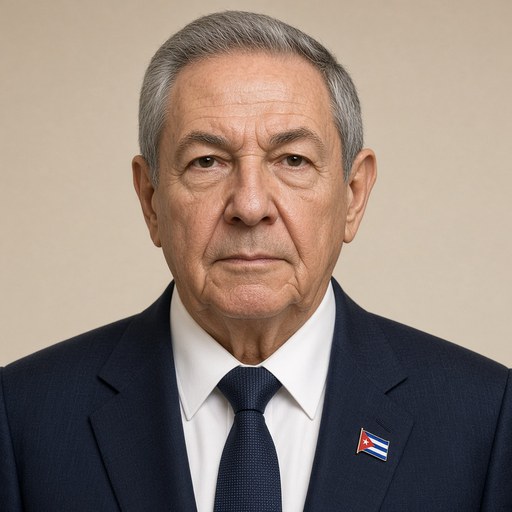
Speech delivered at the commemoration of the 55th Anniversary of the triumph of the Revolution,
 Raúl Castro · President of Cuba
- Context
- Raúl Castro addressed the Cuban people in Santiago de Cuba on January 1, 2014, commemorating the 55th anniversary of the triumph of the Cuban Revolution.
- Main themes
- 55th anniversary of the Cuban Revolution, revolutionary history and legacy, resistance against U.S. imperialism, Cuban independence struggle, tribute to fallen combatants, socialism in Cuba, role of Cuban women in the revolution, economic blockade, Fidel Castro's leadership, national sovereignty, anti-imperialism
- Duration
- ~25 min
- Words
- 2,940
- Sentences
- 79
- Readability
- 21
- Grade
- 19.5
- Syntax
- 3.44
- Vocabulary
- 2.46
Translated from Spanish
The broad sphere of national life a sentence belongs to. Every sentence has an Arena, so it is the denominator the other indices are read against.
Other79 sentences in 58 paragraphs
Santiagueras and santiagueros;
Orientals;
Combatants of the Rebel Army, of the clandestine struggle, and of all the combative actions in defense of the Revolution over these 55 years;
Compatriots:
Not even the most dreamer among those of us who accompanied Fidel at an event like this, on January 1, 1959, could have imagined that we would be here today.
This long and uncertain path has not been easy. It has been possible, first and foremost, thanks to the immense capacity for resistance and struggle of several generations of the noble and heroic Cuban people, the true protagonists of this, their Revolution, which is the triumph of the same ideal of the mambises who, in 1868, with Céspedes at the helm, began the war for independence from Spanish rule; of Maceo and Gómez, with whom José Martí in 1895 resumed the liberating struggle, interrupted by the American intervention in 1898, which prevented the entry of the Liberating Army into Santiago de Cuba.
It is also the cause that was championed against the bourgeois and neocolonial republic by Baliño, Mella, Rubén Martínez Villena, Guiteras, and Jesús Menéndez, to name just a few.
That was the drive that motivated the Generation of the Centenary, under Fidel's command, to storm the Moncada barracks in this city and Carlos Manuel de Céspedes in Bayamo; to overcome failure, endure the rigors of prison, come in the Granma yacht expedition, withstand the harsh setback of Alegría de Pío, and head to the Sierra Maestra to begin the guerrilla struggle of the nascent Rebel Army, whose Commander in Chief, a personal example of courage in combat, tenacity, and unwavering faith in victory, along with his unifying vocation and indisputable leadership, forged the unity of all revolutionary forces and led them to definitive triumph.
Exactly 60 years after the American interveners snatched victory from the insurrectionary forces, this time the mambises were able to enter the city of Santiago de Cuba.
Today we pay a well-deserved tribute to those who gave their lives in mountains, fields, and cities, combatants of the Rebel Army and clandestine fighters, to those who, after the triumph, fell in many other honorable missions, to all those who dedicated their youth and energies to building socialism, guided by Martí's preaching that all the glory of the world fits in a grain of corn and that there is no greater satisfaction or reward than fulfilling one's duty.
We cannot fail to mention the decisive contribution of Cuban women throughout the revolutionary process, as worthy continuators of the example of Mariana Grajales, the mother of the Maceo, both in guerrilla warfare and particularly in clandestinity, subjected to the brutal persecution of the henchmen of the tyranny. On the occasion of this 55th anniversary, Cuban Television has been broadcasting the historical series Clandestinas as a fitting tribute to those brave young women who so often risked their lives. Some of them are present here today, to our joy.
In this very place, on January 1, 1959, amid the popular jubilation that took over the entire country, Fidel already foresaw, I quote: "The Revolution begins now, the Revolution will not be an easy task, the Revolution will be a hard and dangerous undertaking."
From very early on, countless destabilization plans were set in motion, starting with the refuge provided in the United States to criminals and torturers of the Batista regime and also to all sorts of embezzlers who appropriated the nation's treasury.
The triumphant Revolution had to face the fostering and organization of state terrorism through sabotage and armed banditry, which on two occasions acted in the six provinces that the country then had; the exclusion of Cuba from the OAS and the break in diplomatic relations by all Latin American countries, with the honorable exception of Mexico; the invasion of Playa Girón, the economic, commercial, and financial blockade, the massive media campaign to defame the revolutionary process and its leaders, especially against Fidel, the target of more than 600 assassination plots; the Missile Crisis in October 1962, the hijacking and attacks on civilian boats and aircraft, the murder of teachers and literacy workers, workers, farmers, students, and diplomats, which has left a toll, to this day, of 3,478 dead and 2,099 incapacitated.
It has been 55 years of relentless struggle against the designs of eleven U.S. administrations that, with varying degrees of hostility, have not ceased in their purpose to change the economic and social regime resulting from the Revolution, extinguish its example, and restore imperial dominance over our Homeland.
The Cuban Revolution put an end to several myths, among them, that it was not possible to build socialism on a small island 90 miles from the United States. A Revolution that was not the result of an international confrontation nor did it have massive support from abroad. A Revolution that did not limit itself to the replacement of one power with another, but in less than 24 hours dissolved the repressive machinery of the dictatorial regime and laid the foundations for a new society. A Revolution that built an army that is the people in uniform, and developed, to defend itself, its own military doctrine.
A Revolution that has been working for and on behalf of the people for 55 years, which made them owners of the land and industries, first by providing literacy and training teachers and professors, building general and special schools for all children, universities, art and sports schools, constructing polyclinics and hospitals, training doctors for Cuba and the world. A Revolution that has led us to achieve education and health indices that are now an international reference.
A Revolution that laid the foundations to democratize the spaces of creation, dissemination, and access to culture.
In summary, a Revolution that has made reality and will continue to fulfill the deep yearning of Martí that presides over the Constitution and states, I quote: "I want the first law of our Republic to be the cult of Cubans to the full dignity of man."
When speaking of these issues, I remember Fidel's phrase on July 26, 2003, when he intervened in the act for the 50th anniversary of the Moncada when he stated: "Educating the people in the truth, with words and irrefutable facts, has perhaps been the fundamental factor of the grandiose feat that this has accomplished."
How else can we qualify the colossal capacity for resistance and self-confidence that our people have shown to the world, who were able to stoically withstand the harsh special period we were subjected to as a consequence of the disappearance of the Soviet Union and the socialist camp, amid the wave of uncertainty and demoralization that those dramatic events generated in a good part of the progressive forces of humanity.
The image of Cuba, famous in America before the Revolution as a paradise for gambling, prostitution, a refuge for mobsters, and a preferred destination for their dirty investments, facilitated by the widespread administrative corruption of the tyranny, was transformed through the revolutionary process into a symbol of dignity, independence, humanism, and intransigence in defense of principles.
Following Martí's maxim, the Cuban Revolution has never asked which side lives better, but which side is on duty. We have been coherent and consistent with Martí's ethics. Over 55 years, we have received the noble and generous solidarity of many brother peoples, first and foremost from the Soviet Union while it existed and especially in the early and difficult years, while we provided our solidarity support in different regions of the planet, both in glorious internationalist combat missions and in medical, educational, sports, and other collaboration programs, making the legacy of "Homeland is Humanity" a reality.
We have never yielded nor will we yield to aggression, blackmail, or threats. The foreign policy of the Revolution has always been a powerful weapon to defend national independence, self-determination, and sovereignty, in favor of world peace, development, social justice, and solidarity with the peoples of the Third World.
The planet we inhabit has changed a lot since January 1, 1959. This small island, which through brutal pressures from the U.S. governments was intended to be separated from its regional environment, holds the Pro Tempore presidency of the Community of Latin American and Caribbean States (CELAC) and is preparing to host its Summit meeting in Havana at the end of this month, inspired by the ideal of forging a new unity within diversity in Our America.
We do not forget the unique historical coincidence that on a date like today, January 1, 210 years ago, the first revolution in the Latin American and Caribbean region triumphed, which was also the first and only victory of a revolutionary movement led by enslaved blacks fighting against that disgraceful system and at the same time for national independence.
The effects of those dramatic events reverberated in Cuba, as the veins of many easterners run with Haitian blood.
Both nations have had to pay a high price for the audacity of confronting the dominant empires.
In addressing this matter, I wish to reiterate to the brotherly Haitian people and their government that Cubans will never abandon you and that you can always count on our modest collaboration.
Comrades:
I take this opportunity to dedicate a few brief words to the progress of two important programs in the interest of Santiago de Cuba.
At a cost of more than 200 million dollars, the reconstruction of the aqueduct of the second most populated city in the country has been carried out, where a quarter of a million inhabitants received water service every 7 to 9 days, another 76,500 had a distribution cycle exceeding 15 days, and more than 16,000 did not even have an aqueduct, which led to about 200 daily truck trips to supply them, with high fuel consumption.
For almost all of you, today the situation described belongs to the past, as of the 32 existing hydrometric sectors, 29 are supplied daily, with three that do so on alternate days, and work is underway to calibrate the distribution system to achieve the set goal. In addition, the three water purification plants and 22 pumping stations have been rehabilitated.
As part of this program, the construction of sewage and storm drainage has also begun, specifically in the San Pedrito neighborhood, which will extend to the rest of the city starting in 2014.
The Water and Sewage Company has been provided with the necessary equipment to ensure the sustainability of its services. It is now up to you to make rational use of water.
As is known, this city suffered the fury of Hurricane Sandy's winds in the early morning of October 25, 2012, which also affected, although to a lesser extent, the provinces of Holguín and Guantánamo. The loss of 11 human lives and the devastating images of destruction of homes, infrastructure, and vital facilities that we had to endure in the first days following the event highlighted, along with national and international solidarity, first and foremost from our Venezuelan brothers, the capacity of the Santiago people to overcome any obstacle.
A year and two months of intense work have resulted in the resolution of 50% of the 171,380 reported housing damages, and 97% of public health facilities have been restored, 88% of the education system, 82% of culture and sports, as well as 100% in the case of the food industry.
Despite the failure to meet the provincial plan for new housing, the 331 planned in the San Pedrito neighborhood, historically one of the humblest, have been completed, and work continues in other areas of the city.
We will continue to systematically monitor these efforts from the Central Government until their total restoration.
To build a city that is increasingly beautiful, hygienic, orderly, and disciplined, worthy of its status as Heroic City, the cradle of the Revolution, as I expressed on July 26 of last year when commemorating the 60th anniversary of the Moncada, it is now up to the authorities, with the support of their citizens, to reinforce respect—I repeat, reinforce respect—for the role that Physical Planning must play, to which the strict compliance with the new Territorial Ordering Plan of the city, which will be approved this year by the Provincial Assembly of the People's Power, will contribute.
I believe that if we all fulfill our duty, we can continue to ensure that "Santiago remains Santiago". Exactly. If we wanted to help translate it, that means that it can be built, but not where everyone wants, if we are never going to have a city as we said on July 26 and today: beautiful, hygienic, orderly, and disciplined. Do you all agree?
That is all I intended to say about both programs.
Next, I will address an issue in which there is still a long way to go. I refer to the challenge posed by the ongoing campaign of political-ideological subversion conceived and directed from the centers of global power to recolonize the minds of the peoples and nullify their aspirations to build a better world.
In his brilliant definition of the concept of "Revolution" formulated on May 1, 2000, in the Plaza de la Revolución in Havana, Fidel stated, among other ideas, the following:
"Revolution is to challenge powerful dominant forces both within and outside the social and national sphere;"
"it is to defend values in which one believes at the cost of any sacrifice;"
"it is a deep conviction that there is no force in the world capable of crushing the force of truth and ideas."
In our case, as is the case in several regions of the world, there are attempts to subtly introduce platforms of neoliberal thought and the restoration of neocolonial capitalism, aimed against the very essence of the Socialist Revolution through a premeditated manipulation of history and the current situation of the general crisis of the capitalist system, to the detriment of national values, identity, and culture, favoring individualism, selfishness, and mercantilist interests over morality.
In summary, they are deceitfully striving to sell to the youngest the supposed advantages of dispensing with ideologies and social consciousness, as if those precepts did not fully represent the interests of the dominant class in the capitalist world. With this, they also intend to induce a break between the historical leadership of the Revolution and the new generations and promote uncertainty and pessimism regarding the future, all with the marked aim of dismantling socialism in Cuba from within.
In the current circumstances, the challenge becomes greater, and we are confident that with the support of the forces available to the Revolution, we will emerge victorious in this decisive battlefield, making the objectives approved in the ideological sphere by the First National Conference of the Party two years ago a reality, a direction in which we have not advanced as necessary.
There is still a great deal of work to be done. For this, we count on the vigor and patriotic commitment of the great mass of revolutionary intellectuals, artists, professors, and teachers, as well as the firmness of our social research centers, universities, and their student body, which have yet to fully utilize their potential.
The efforts to disseminate ideas that deny the vitality of Marxist, Leninist, and Marti concepts must be countered, among other means, with a creative theoretical conceptualization of socialism possible under the conditions of Cuba, as the only alternative for equality and justice for all.
The new generations of leaders, who are gradually and orderly assuming the main responsibilities in the direction of the nation, must never forget that this is the Socialist Revolution of the humble, by the humble, and for the humble, an essential premise and effective antidote to avoid falling under the influence of the siren songs of the enemy, who will not renounce the objective of distancing them from our people, in the effort to undermine their unity with the Communist Party, the only legitimate heir to the legacy and authority of the Commander in Chief of the Cuban Revolution, Comrade Fidel Castro Ruz.
In this sense, it is worth remembering the importance of constantly perfecting the principle of directly consulting the population on vital decisions for the development of society, as was demonstrated during the process leading up to the approval of the new Labor Code by our National Assembly, just as was done at the time with the project of the Guidelines of Economic and Social Policy, which, after their broad and democratic popular examination, were approved by the Sixth Congress of the Party and subsequently ratified in our Parliament, to which we report twice a year on its implementation, and in a similar manner, this is done within the Government and the Party.
With this method, it will be possible to ensure that the program of the Revolution is updated every five years, so that it always responds to the true interests of the people in the fundamental matters of society and corrects any errors in a timely manner. This will also ensure the permanent improvement and deepening of our socialist democracy.
Closely linked to these concepts of strategic scope, truly strategic for the present and future of the Homeland, is the phrase pronounced by Fidel here, almost at this same hour, from that very balcony, 55 years ago today, with which, for its eternal relevance, I wish to conclude my words, I quote: "The Revolution triumphs without commitments to anyone at all, but to the people, to whom it owes its victories".
Fifty-five years later, in the same place, we can proudly repeat: The Revolution remains the same, without commitments to anyone at all, only to the people!
Thank you very much.
The original Spanish. The tags above are read on the English translation's sentences.
Santiagueras y santiagueros;
Orientales;
Combatientes del Ejército Rebelde, de la lucha clandestina y de todas las acciones combativas en defensa de la Revolución a lo largo de estos 55 años;
Compatriotas:
Ni el más soñador de los que acompañamos a Fidel en un acto como este, el Primero de Enero de 1959, podía imaginar que hoy estaríamos aquí.
Nada fácil ha resultado este largo y azaroso camino. Ello ha sido posible, en primer lugar, gracias a la inmensa capacidad de resistencia y lucha de varias generaciones del noble y heroico pueblo cubano, verdadero protagonista de esta, su Revolución, que es el triunfo del mismo ideal de los mambises que en 1868, con Céspedes a la cabeza, iniciaron la guerra por la independencia del yugo español; de Maceo y Gómez, con quienes José Martí en 1895 retoma la gesta libertaria, truncada por la intervención norteamericana en 1898, que impidió la entrada a Santiago de Cuba del Ejército Libertador.
Es también la causa que enarbolaron contra la república burguesa y neocolonial Baliño, Mella, Rubén Martínez Villena, Guiteras y Jesús Menéndez, por solo mencionar a algunos.
Fue ese el afán que motivó a la Generación del Centenario, bajo el mando de Fidel, a asaltar los cuarteles Moncada, en esta ciudad, y Carlos Manuel de Céspedes, en Bayamo; a sobreponerse al fracaso, resistir el rigor de la prisión, venir en la expedición del yate Granma , soportar el duro revés de Alegría de Pío y encaminarse a la Sierra Maestra para empezar la lucha guerrillera del naciente Ejército Rebelde, cuyo Comandante en Jefe, ejemplo personal de valor en el combate, tenacidad e inclaudicable fe en la victoria, junto a su vocación unitaria e indiscutible liderazgo, supo forjar la unidad de todas las fuerzas revolucionarias y conducirlas al triunfo definitivo.
Exactamente 60 años después de que los interventores norteamericanos escamotearan la victoria a las huestes insurrectas, esta vez los mambises sí pudieron entrar a la ciudad de Santiago de Cuba.
Rendimos hoy merecido tributo a quienes entregaron sus vidas en montañas, campos y ciudades, combatientes del Ejército Rebelde y luchadores clandestinos, a aquellos que después del triunfo cayeron en otras muchas honrosas misiones, a todos los que dedicaron su juventud y energías a construir el socialismo, guiándose por la prédica martiana de que toda la gloria del mundo cabe en un grano de maíz y que no hay satisfacción ni premio más grande que cumplir con el deber.
No podemos dejar de mencionar la contribución decisiva de las mujeres cubanas a lo largo del proceso revolucionario, como dignas continuadoras del ejemplo de Mariana Grajales, la madre de los Maceo, tanto en la lucha guerrillera como particularmente en la clandestinidad, sometidas a la brutal persecución de los esbirros de la tiranía. En ocasión de este 55 aniversario, la Televisión Cubana ha estado difundiendo el serial histórico Clandestinas como un justo homenaje a aquellas valerosas muchachitas que tantas veces arriesgaron la vida. Algunas de ellas se encuentran aquí presentes, para alegría nuestra (Aplausos).
En este propio lugar, el Primero de Enero de 1959, en medio del júbilo popular que se adueñó de todo el país, ya Fidel premonitoriamente advertía, cito: La Revolución empieza ahora, la Revolución no será una tarea fácil, la Revolución será una empresa dura y llena de peligros.
Desde bien temprano, se pusieron en marcha infinidad de planes de desestabilización, comenzando con el refugio brindado en Estados Unidos a criminales y torturadores del régimen de Batista y también a toda suerte de malversadores que se apropiaron del erario de la nación.
La Revolución triunfante debió enfrentar el fomento y la organización del terrorismo de Estado mediante el sabotaje y el bandidismo armado, que en dos ocasiones llegó a actuar en las seis provincias que entonces tenía el país; la exclusión de Cuba de la OEA y la ruptura de relaciones diplomáticas por todos los países latinoamericanos, con la honrosa excepción de México; la invasión de Playa Girón, el bloqueo económico, comercial y financiero, la masiva campaña mediática para difamar al proceso revolucionario y a sus líderes, en especial contra Fidel, objetivo de más de 600 planes de atentado; la Crisis de los cohetes en octubre de 1962, el secuestro y ataques a embarcaciones y aeronaves civiles, el asesinato de maestros y alfabetizadores, obreros, campesinos, estudiantes y diplomáticos, que dejó una estela, hasta ahora, de 3 478 muertos y 2 099 incapacitados.
Han sido 55 años de incesante lucha frente a los designios de once administraciones norteamericanas que, con mayor o menor hostilidad, no han cejado en el propósito de cambiar el régimen económico y social fruto de la Revolución, apagar su ejemplo y reinstaurar el dominio imperial sobre nuestra Patria.
La Revolución Cubana puso fin a varios mitos, entre ellos, el de que no era posible construir el socialismo en una pequeña isla a 90 millas de Estados Unidos. Una Revolución que no fue consecuencia de una confrontación internacional ni contó con apoyo masivo del exterior. Una Revolución que no se limitó a la sustitución de un poder por otro, sino que en menos de 24 horas disolvió la maquinaria represiva del régimen dictatorial y sentó las bases de una sociedad nueva. Una Revolución que construyó un ejército que es el pueblo uniformado, y elaboró, para defenderse, su propia doctrina militar.
Una Revolución que cumple 55 años de trabajo por y para el pueblo, a quien hizo dueño de la tierra y las industrias, alfabetizando primero y formando maestros y profesores, construyendo escuelas generales y especiales para todos los niños, universidades, escuelas de arte y de deportes, edificando policlínicos y hospitales, preparando médicos para Cuba y el mundo. Una Revolución que nos ha llevado a alcanzar índices de educación y salud que hoy son referencia internacional.
Una Revolución que sentó las bases para democratizar los espacios de creación, difusión y acceso a la cultura.
Resumiendo, una Revolución que ha hecho realidad y proseguirá cumpliendo el profundo anhelo martiano que preside la Constitución y señala, cito: Yo quiero que la ley primera de nuestra República sea el culto de los cubanos a la dignidad plena del hombre.
Al hablar de estas cuestiones, recuerdo la frase de Fidel el 26 de julio del 2003 al intervenir en el acto por el aniversario 50 del Moncada cuando afirmó: educar al pueblo en la verdad, con palabras y con hechos irrebatibles, ha sido quizás el factor fundamental de la grandiosa proeza que este ha realizado .
Cómo calificar de otra manera la colosal capacidad de resistencia y de confianza en sí mismo que brindó al mundo nuestro pueblo, que supo resistir estoicamente el durísimo período especial a que nos vimos sometidos como consecuencia de la desaparición de la Unión Soviética y el campo socialista, en medio de la ola de incertidumbre y desmoralización que esos dramáticos acontecimientos generaron en buena parte de las fuerzas progresistas de la humanidad.
La imagen de Cuba, famosa en América antes de la Revolución como un paraíso para el juego, la prostitución, refugio de mafiosos y destino preferido de sus sucias inversiones, facilitadas por la generalizada corrupción administrativa de la tiranía, se transformó mediante el proceso revolucionario en símbolo de dignidad, independencia, humanismo e intransigencia en defensa de los principios.
Siguiendo la máxima de Martí, la Revolución Cubana nunca ha preguntado de qué lado se vive mejor, sino de qué lado está el deber. Hemos sido coherentes y consecuentes con la ética martiana. A lo largo de 55 años recibimos la solidaridad noble y generosa de muchos pueblos hermanos, en primer lugar de la Unión Soviética mientras existió y muy especialmente en los primeros y difíciles años, al tiempo que brindamos nuestro apoyo solidario en distintas regiones del planeta, tanto en las gloriosas misiones combativas internacionalistas como en los programas de colaboración médica, educacional, deportiva y en otras esferas, haciendo realidad el legado de que Patria es Humanidad.
Jamás hemos cedido ni cederemos ante agresiones, chantajes ni amenazas. La política exterior de la Revolución siempre ha sido un arma poderosa para defender la independencia, autodeterminación y soberanía nacionales, en favor de la paz mundial, el desarrollo, la justicia social y la solidaridad con los pueblos del Tercer Mundo.
El planeta que habitamos ha cambiado mucho desde el primero de enero de 1959. Esta pequeña isla, a la que mediante brutales presiones de los gobiernos norteamericanos se pretendió separar de su entorno regional, ejerce la presidencia Pro Témpore de la Comunidad de Estados Latinoamericanos y Caribeños (CELAC) y se apresta a celebrar su reunión Cumbre en La Habana a finales de este mes, animada por el ideal de forjar una nueva unidad dentro de la diversidad en Nuestra América.
No olvidamos la singular coincidencia histórica de que en una fecha como hoy, 1ro de enero , hace 210 años, triunfó la primera revolución en la región latinoamericana y caribeña, la que también fue la primera y única victoria de un movimiento revolucionario dirigido por negros esclavos que luchaban contra ese oprobioso sistema y a la vez por la independencia nacional.
Los efectos de aquellos dramáticos acontecimientos repercutieron en Cuba, incluso por las venas de no pocos orientales corre sangre haitiana.
Ambas naciones hemos tenido que pagar un alto precio por la audacia de enfrentar a los imperios dominantes.
Al abordar este asunto deseo reiterar al hermano pueblo haitiano y a su gobierno que los cubanos jamás los abandonaremos y que siempre podrán contar con nuestra modesta colaboración (Aplausos).
Compañeras y compañeros:
Aprovecho la ocasión para dedicar unas breves palabras a la marcha de dos importantes programas en interés de Santiago de Cuba.
A un costo de más de 200 millones de dólares se ha ejecutado la reconstrucción del acueducto de la segunda ciudad en población del país, en la que un cuarto de millón de habitantes recibía el servicio de agua entre 7 y 9 días, otros 76 500 tenían un ciclo de distribución superior a 15 días y más de 16 000 ni siquiera contaban con acueducto, lo que llevaba a realizar unos 200 viajes de pipas diarios para abastecerlos, con un elevado consumo de combustible.
Para casi todos ustedes hoy la situación descrita pertenece al pasado, pues de los 32 sectores hidrométricos existentes, 29 se abastecen diariamente, quedando tres que lo hacen en días alternos y se trabaja en la calibración del sistema de distribución para alcanzar la meta trazada. Además fueron rehabilitadas las tres plantas potabilizadoras y 22 estaciones de bombeo.
Como parte de este programa también se inició la construcción del alcantarillado y drenaje pluvial, específicamente en el reparto San Pedrito, lo que se extenderá al resto de la ciudad a partir del 2014.
Se ha dotado a la Empresa de Acueducto y Alcantarillado del equipamiento requerido para asegurar la sostenibilidad de sus servicios. Corresponde ahora a ustedes hacer un uso racional del agua.
Como es conocido, esta ciudad sufrió la furia de los vientos del huracán Sandy en la madrugada del 25 de octubre del 2012, que también afectó, aunque en menor magnitud, a las provincias de Holguín y Guantánamo. La pérdida de 11 vidas humanas y las desoladoras imágenes de destrucción de viviendas, infraestructuras e instalaciones vitales que tuvimos que padecer en las primeras jornadas posteriores al evento, pusieron de manifiesto, junto a la solidaridad nacional e internacional, en primer lugar de los hermanos venezolanos (Aplausos), la capacidad del pueblo santiaguero para vencer cualquier obstáculo.
A un año y dos meses de intenso trabajo, se ha logrado solucionar el 50% de las 171 380 afectaciones reportadas a la vivienda, además fue restablecido el 97% de las instalaciones de salud pública, el 88% del sistema de educación, el 82% de cultura y deportes, así como el ciento por ciento en el caso de la industria alimentaria.
A pesar del incumplimiento del plan provincial de nuevas viviendas, se culminaron las 331 planificadas en el barrio de San Pedrito, históricamente uno de los más humildes, y se continúan los trabajos en otras zonas de la ciudad.
Proseguiremos controlando sistemáticamente desde el Gobierno Central estas labores hasta su total restablecimiento.
Para lograr edificar una ciudad cada vez más bella, higiénica, ordenada y disciplinada, a la altura de su condición de Ciudad Heroica, cuna de la Revolución, como expresé el 26 de julio del año pasado al conmemorar el 60 aniversario del Moncada, corresponde ahora, en primer lugar a las autoridades, con el apoyo de sus ciudadanos, reforzar el respeto repito, reforzar el respeto al papel que debe jugar la Planificación Física, a lo que contribuirá el estricto cumplimiento del nuevo Plan de Ordenamiento Territorial de la ciudad, que será aprobado este año por la Asamblea Provincial del Poder Popular.
Pienso que si todos cumplimos con nuestro deber, podremos continuar asegurando que Santiago sigue siendo Santiago (Exclamaciones de: ¡Santiago!). Exactamente (Aplausos). Si quisiéramos ayudar a traducirlo, eso quiere decir que se puede construir, pero no donde a cada cual se le ocurra, si no más nunca vamos a tener una ciudad como decíamos el 26 de Julio y hoy: bella, higiénica, ordenada y disciplinada. ¿Están de acuerdo ustedes? (Exclamaciones de: ¡Sí! y aplausos.)
Hasta aquí lo que pensaba decirles sobre ambos programas.
Seguidamente abordaré una cuestión en la que resta un largo trecho por recorrer. Me refiero al reto que nos impone la permanente campaña de subversión político-ideológica concebida y dirigida desde los centros del poder global para recolonizar las mentes de los pueblos y anular sus aspiraciones de construir un mundo mejor.
En su brillante definición del concepto Revolución formulada el primero de mayo del año 2000, en la Plaza de la Revolución, en La Habana, Fidel enunció, entre otras ideas, las siguientes:
Revolución es desafiar poderosas fuerzas dominantes dentro y fuera del ámbito social y nacional;
es defender valores en los que se cree al precio de cualquier sacrificio;
es convicción profunda de que no existe fuerza en el mundo capaz de aplastar la fuerza de la verdad y las ideas.
En nuestro caso, como sucede en varias regiones del mundo, se perciben intentos de introducir sutilmente plataformas de pensamiento neoliberal y de restauración del capitalismo neocolonial, enfiladas contra las esencias mismas de la Revolución Socialista a partir de una manipulación premeditada de la historia y de la situación actual de crisis general del sistema capitalista, en menoscabo de los valores, la identidad y la cultura nacionales, favoreciendo el individualismo, el egoísmo y el interés mercantilista por encima de la moral.
En resumen, se afanan engañosamente en vender a los más jóvenes las supuestas ventajas de prescindir de ideologías y conciencia social, como si esos preceptos no representaran cabalmente los intereses de la clase dominante en el mundo capitalista. Con ello pretenden, además, inducir la ruptura entre la dirección histórica de la Revolución y las nuevas generaciones y promover incertidumbre y pesimismo de cara al futuro, todo ello con el marcado fin de desmantelar desde adentro el socialismo en Cuba.
En las presentes circunstancias, el desafío se hace mayor y estamos seguros de que con el concurso de las fuerzas de que dispone la Revolución saldremos victoriosos en este decisivo campo de batalla, haciendo realidad los objetivos que en la esfera ideológica aprobó la Primera Conferencia Nacional del Partido hace dos años, dirección en la que no se ha avanzado lo necesario.
Queda muchísimo trabajo por hacer. Para ello contamos con la pujanza y compromiso patriótico de la gran masa de intelectuales, artistas, profesores y maestros revolucionarios, así como con la firmeza de nuestros centros de investigaciones sociales, universidades y de su estudiantado, aún sin utilizar plenamente sus potencialidades.
Los empeños de diseminar ideas que niegan la vitalidad de los conceptos marxistas, leninistas y martianos, deberán contrarrestarse, entre otros medios, con una creativa conceptualización teórica del socialismo posible en las condiciones de Cuba, como única alternativa de igualdad y justicia para todos.
Las nuevas generaciones de dirigentes, que paulatina y ordenadamente van asumiendo las principales responsabilidades en la dirección de la nación, nunca podrán olvidar que esta es la Revolución Socialista de los humildes, por los humildes y para los humildes (Aplausos y exclamaciones), premisa imprescindible y antídoto efectivo para no caer bajo el influjo de los cantos de sirena del enemigo, que no renunciará al objetivo de distanciarlas de nuestro pueblo, en el propósito de socavar su unidad con el Partido Comunista, único heredero legítimo del legado y la autoridad del Comandante en Jefe de la Revolución Cubana, el compañero Fidel Castro Ruz (Aplausos y exclamaciones de: ¡Viva!).
En este sentido, vale la pena recordar la relevancia que tiene continuar perfeccionando constantemente el principio de consultar de manera directa con la población las decisiones vitales para el desarrollo de la sociedad, como quedó demostrado durante el proceso previo a la aprobación del nuevo Código de Trabajo por nuestra Asamblea Nacional, al igual que en su momento se hizo con el proyecto de los Lineamientos de la Política Económica y Social, los que luego de su amplio y democrático examen popular fueron aprobados por el Sexto Congreso del Partido y refrendados posteriormente en nuestro Parlamento, ante el cual se rinde cuenta dos veces al año acerca de su implementación y de similar manera se procede en el seno del Gobierno y del Partido.
Con este método se podrá garantizar que el programa de la Revolución se actualice cada cinco años, para que siempre responda a los verdaderos intereses del pueblo en los asuntos fundamentales de la sociedad y corregir oportunamente cualquier error. Así se asegurará también el permanente perfeccionamiento y profundización de nuestra democracia socialista.
Estrechamente vinculada con estos conceptos de alcance estratégico, verdaderamente estratégico para el presente y el futuro de la Patria, está la frase pronunciada por Fidel aquí, casi a esta misma hora, desde ese balcón exactamente, hace hoy 55 años, con la que, por su eterna vigencia deseo concluir mis palabras, cito: La Revolución llega al triunfo sin compromisos con nadie en absoluto, sino con el pueblo, que es al único que le debe sus victorias (Aplausos) .
Cincuenta y cinco años después, en el propio lugar, podemos repetir con orgullo: ¡La Revolución sigue igual, sin compromisos con nadie en absoluto , solo con el pueblo!
Muchas gracias.
(Exclamaciones de: ¡Viva la Revolución, Vivan Fidel y Raúl!)
(Ovación.)