




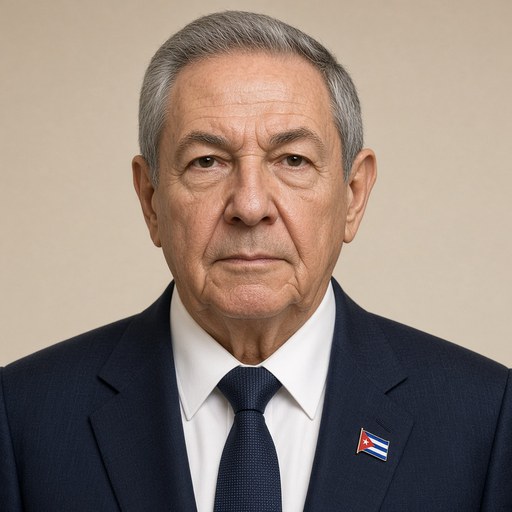
Raúl Castro: "The greatest satisfaction is the tranquility and serene confidence that we feel when we go into the future."
 Raúl Castro · President of Cuba
- Context
- Castro addressed the Cuban National Assembly on February 24, 2013, being sworn in for another presidential term while announcing succession plans and constitutional reforms.
- Main themes
- Presidential inauguration, defense of Cuban socialism, constitutional reform, generational leadership transfer, Miguel Díaz-Canel appointment, term limits, Cuban Revolution continuity, economic and social policy guidelines, cadre development, revolutionary history
- Duration
- ~25 min
- Words
- 3,026
- Sentences
- 83
- Readability
- 22
- Grade
- 19.1
- Syntax
- 3.39
- Vocabulary
- 2.38
Translated from Spanish
The broad sphere of national life a sentence belongs to. Every sentence has an Arena, so it is the denominator the other indices are read against.
Other83 sentences in 65 paragraphs
On a date like today, February 24, 1895, the struggle for independence was reignited with the merging of the seasoned mambises from the first war and the new recruits, under the leadership of the Cuban Revolutionary Party and Martí.
I have the honor once again to assume before you and all our people the presidency of the Council of State and the Government.
In this regard, I believe it is not unnecessary to reiterate what I have stated twice in this Parliament, I quote: “I was not elected President to restore capitalism in Cuba, nor to hand over the Revolution. I was elected to defend, maintain, and continue perfecting socialism, not to destroy it.”
In accordance with the agreements of the 6th Congress, it will be necessary to harmonize the postulates of the Constitution of the Republic with the changes associated with the gradual implementation of the Guidelines of the Economic and Social Policy of the Party and the Revolution.
Among the modifications we propose to introduce to the Constitution is the limitation to a maximum of two consecutive five-year terms for the performance of the main positions of the State and the Government and the establishment of maximum ages to hold those responsibilities.
At the same time, it is not healthy to be continuously reformulating the Magna Carta of the Nation, and since carrying out a constitutional reform will necessarily take us a prudent amount of time, given that while some issues can be modified by Parliament itself, others more important require the ratification by the favorable vote of the majority of citizens in a referendum; I wish to clarify that in my case, regardless of the date on which the Constitution is perfected, this will be the last mandate.
In this session, the National Assembly elected comrade Miguel Díaz-Canel Bermúdez as First Vice President of the Council of State and subsequently approved his appointment as First Vice President of the Council of Ministers.
We believe that in the circumstances the country is living and has been forced to develop for more than half a century of Revolution, the executive unity must be guaranteed at the top of the state and governmental power in the face of any contingency due to the loss of the maximum leader, so that the continuity and stability of the nation is preserved without any interruptions.
This decision is of particular historical significance because it represents a defining step in shaping the future leadership of the country, through the gradual and orderly transfer to the new generations of the main positions, a process that we must complete in a five-year period and act henceforth in an intentional and foresighted manner, in order to avoid finding ourselves in a situation where we do not have sufficient reserves of prepared cadres to occupy the higher positions of the country and ensure that the turnover of leaders constitutes a natural and systematic process.
Comrade Díaz-Canel is not a newcomer or an improvised leader. His work trajectory accumulates almost 30 years, starting at the grassroots level, in the profession he studied, and after having completed Military Service in anti-aircraft rocket units of the FAR, he taught at the Faculty of Electrical Engineering of the Central University of Las Villas, where he was proposed as a professional cadre of the Union of Young Communists and later, considering the results achieved, he was promoted to the Party, gradually ascending to greater responsibilities, including First Secretary of the Provincial Committee in Villa Clara for almost a decade and then in Holguín for six years.
He has been a member of the Central Committee of the Party since 1991 and of the Political Bureau since 2003. He completed an internationalist mission in Nicaragua. He is a graduate of the National Defense College.
In 2009, he began to perform governmental functions, first as Minister of Higher Education and from 2012, as Vice President of the Council of Ministers in charge of various agencies related to education, science, sports, and culture. On the other hand, he participates weekly in the Economic and Financial Commission of the Government and in the Political Bureau Commission for monitoring the implementation of the agreements of the 6th Congress.
Special mention should be made of the conduct of comrades Machado Ventura and Colomé Ibarra, who took the initiative to offer their positions in the Council of State in favor of promoting the new generation.
In the case of Machado Ventura, with exceptional qualities as a leader and human being, modesty, and dedication to work, a distinguished revolutionary trajectory for nearly 60 years, a combatant of the Sierra Maestra and founder of the Second Eastern Front “Frank País,” where he created and developed 20 field hospitals and 11 dispensaries distributed in mountainous areas throughout the province of Guantánamo and parts of Santiago de Cuba and Holguín that encompassed this guerrilla front. He participated in multiple combat actions, being wounded in one of them; also based on the prestige, preparation, experience, and vitality he retains, as well as his real capacity to continue contributing to the direction of decisive activities, the National Assembly elected him to occupy one of the vice presidencies of the Council of State.
Likewise, comrade Abelardo Colomé Ibarra remains a member of the Council of State, who from a very young age joined the revolutionary struggle in his native Santiago de Cuba, participating in the uprising of November 30, 1956, under the orders of Frank País, who selected him to integrate the first reinforcement to the nascent Rebel Army in the Sierra Maestra.
Like Machado Ventura, he is a founder of the Second Eastern Front “Frank País,” wounded twice in combat against the tyranny's troops, standing out for his bravery, which earned him a rise from soldier to the rank of Commander.
After the triumph of the Revolution, he has successfully, humbly, and loyally carried out the tasks assigned to him, among which I must highlight the fulfillment of delicate internationalist missions, later carrying out the development of the always competent Military Counterintelligence, contributing decisively to the first victory over the invading forces in Angola, at the head of the Cuban Military Mission, from 1975 to 1977, and has held, among others, the positions of First Deputy Minister of the Ministry of the Revolutionary Armed Forces and Minister of the Interior.
The attitude of Machado Ventura and Colomé Ibarra is not casual nor should it surprise anyone; it is a concrete demonstration of their genuine revolutionary fiber, in which there is no room for vanity and personal interest, much less for clinging to any position. That is the essence of the founding generation of this Revolution. That is how Fidel acted five years ago, setting a noble example. Thus, we trust that the new generations will also act.
When talking about these issues, it is appropriate to recall what Fidel expressed exactly 15 years ago, before the National Assembly on February 24, 1998, regarding the first rule or trait that should characterize a revolutionary cadre, I quote: “Never to aspire to positions, that men reach the positions that correspond to them by their merits, by their work, by their virtues, by their patriotism...”.
The Council of State elected in this session of our Parliament is a reflection of how we are beginning to make the agreements of the 6th Congress of the Party in terms of cadre policy a reality. Of its 31 members, 41.9 percent are women and 38.6 percent are black and mestizo. The average age is 57 years, and 61.3 percent were born after the triumph of the Revolution.
There are already two vice presidents of the Council of State, and we will persist in the will for female representation in this body and in all institutions of the country to continue growing.
Likewise, the National Assembly was renewed by 67.26 percent, women raised their participation to 48.86 percent, and blacks and mestizos to 37.9. 82.68 percent of our deputies have a higher education level, and the average age is 48 years.
In 10 of the 15 provinces of the country, women were elected to preside over the Provincial Assemblies of People's Power, the average age in these positions is 47 years, and all have a university level.
These data corroborate the quality of the Cuban electoral process and the potential that the organs of People's Power and this Assembly as the supreme organ of state power have to execute the important powers established in the Constitution.
It is precisely this legislature that has a fruitful and intense legislative work ahead in strengthening our institutions, especially in light of the implementation of the Guidelines of the Economic and Social Policy of the Party and the Revolution, a process that has the highest priority and in which, as I explained in the last session of the National Assembly, we are beginning to delve into issues of greater scope, complexity, and depth.
We are filled with healthy pride and satisfaction that the Cuban Parliament is headed, starting today, by comrade Esteban Lazo Hernández, a member of the Political Bureau, a black man of humble origins, a sugarcane cutter from a very young age, a worker in the rice mill and dryer of Jovellanos, a municipality where he integrated the Municipal Committee of the Party. With enormous effort and without abandoning his party responsibilities, he obtained a degree in Economics.
He later held the position of First Secretary of the Provincial Committee of the PCC in Matanzas and then in Santiago de Cuba and Havana.
The same can be said in the cases of the new vice presidents of the Council of State, Díaz-Canel, Mercedes López Acea, the efficient first secretary of the Party in the capital, and Salvador Valdés Mesa, a direct representative of the working class, who in his capacity as a member of the Political Bureau, will take charge of the Central Workers of Cuba (CTC), in addition to other functions that will be assigned to him through the party.
All of them emerged from the people and, like the rest of the members of the Council of State, constitute a tangible example of how Fidel's words were put into practice on April 16, 1961, on the eve of the mercenary invasion at Playa Girón, when he said: “this is the socialist and democratic Revolution of the humble, by the humble, and for the humble.” Today we are demonstrating that it will continue to be so forever.
It is also a legitimate source of happiness to have a youth identified with ethical values and principles of social justice, who are prepared in every sense, including militarily, to defend and uphold the banners of the Revolution and Socialism.
Certainly, those of us who had the honor of accompanying Fidel in the early days of the revolutionary struggle and in the insurrectional fight against tyranny have had the privilege, along with the heroic people, to see with our own eyes the consolidated work of the Revolution; however, the greatest satisfaction is the tranquility and serene confidence we feel as we hand over to the new generations the responsibility of continuing to build socialism and thereby ensuring national independence and sovereignty.
We do this having defined the course to update the Cuban economic model and achieve a prosperous and sustainable socialist society, a society that is less equal but more just, principles that serve as the foundation for the formation of the development program up to the year 2030, which is in the process of being elaborated.
This will be possible because the Guidelines of the Economic and Social Policy are the result, first and foremost, of the broad and democratic exchanges with the people, who made them their own, reformulating 68 percent of the initial proposal as a result of the popular consultation.
In the same way, they were supported by Parliament, in whose ordinary sessions a report is given, twice a year, on the progress of the economic plan and the process of implementing the aforementioned guidelines.
A similar analysis is systematically carried out in the plenums of the Central Committee and the provincial and municipal committees of the Party, with the participation of local administrative leaders.
These methods of direct consultation with the population that have been developed over more than 50 years of the revolutionary process and that will continue to be perfected before, during, and after making the most transcendent decisions for the future of the country, constitute an additional factor for the tranquility and hope for the future that we members of the historical leadership of the Revolution experience, since in addition to permanently strengthening the unity and support of the people, it will ensure timely correction of any errors we may commit.
In Cuba, no one will ever be allowed to overlook that, as stated in the Constitution in its Article No. 3, I quote: “sovereignty resides in the people, from whom all state power derives.”
By virtue of this, prior to the celebration of future Party congresses, a process of popular consultation must be carried out, increasingly profound and organized, so that the updated Program of the Revolution that is approved always reflects, in all vital matters of society, the opinion of the population.
To those who, inside or outside the country, with good or bad intentions, encourage us to go faster, we say that we will continue without haste, but without pause, with our feet and ears firmly on the ground, without shock therapies against the people and without leaving any citizen unprotected, overcoming the barrier of immobility and obsolete mentality in favor of untangling the knots that hinder the development of productive forces, that is, the advancement of the economy, as an essential foundation to strengthen, among other spheres, the social achievements of the Revolution in education, public health, culture, and sports, which should be fundamental human rights and not a private business.
At the same time, we aim to maintain the confrontation against indiscipline and illegalities of all kinds, including the fight against manifestations of corruption that threaten the very foundations of our social system, starting from the premise that without the establishment of an environment of ORDER, DISCIPLINE, AND DEMAND in society, any result will be ephemeral. In the meeting of this Parliament, in the first half of July, we will address this shameful issue of indiscipline and illegalities in depth.
Turning to international matters, I cannot fail to mention that on January 28, on the 160th anniversary of the birth of José Martí, Cuba assumed the Presidency of the Community of Latin American and Caribbean States (CELAC) and will have the responsibility of organizing its next Summit in our country in 2014.
This is a fact of particular relevance that vindicates the struggle of the Cuban people for their sovereignty and self-determination, demonstrates how far Latin America and the Caribbean have advanced towards definitive independence, and exposes the isolation and failure of the economic and media blockade policy of the United States against our nation.
The Cuban Presidency of CELAC will act with prudence and determination to enhance what unites us on the common path of peace, development, social justice, democracy with true participation of the people, guarantees for the exercise of ALL human rights for ALL people, sovereignty over natural resources, and reduction of social inequality and poverty.
We must safeguard our unity within diversity and prevent division among us. We know that the consolidation of this organization will face strong obstacles, derived from the unjust and unsustainable international order, the global economic crisis, the aggressive policy of NATO, the threats and consequences of its unconventional wars, and the attempt at a new repartition of the world; the existence of enormous nuclear arsenals and new weapons, as well as climate change.
The inequity in the distribution of wealth on the continent is the main weakness and at the same time the greatest challenge we face. In Our America, with more unity, integration, and social justice, nothing can stop us.
I take this opportunity to reiterate, on behalf of this Assembly and the Cuban people, our congratulations to President Rafael Correa and the Citizen Revolution that he leads, for their resounding electoral victory last Sunday.
May a fraternal embrace and wishes for recovery of health reach President Hugo Chávez Frías. To the Bolivarian Revolution, the Venezuelan people, and their leaders, we reaffirm all the solidarity of this National Assembly and our compatriots.
More than a month after their entry into force, the new migration regulations are being fully implemented without setbacks, with a favorable reception from the population and the overwhelming majority of the Cuban emigration.
We will continue to demand the release and return to the Homeland of our Five Heroes, to whom we send fraternal greetings, recognition, and commitment from this Parliament and all the people.
To conclude my remarks, and especially thinking of the future of the Homeland, I believe the best way to do so is with the brilliant definition of the concept of Revolution formulated by its Commander in Chief Fidel Castro Ruz, on May 1, 2000, in the Plaza de la Revolución, I quote:
“Revolution is the sense of the historical moment;
it is changing everything that must be changed;
it is full equality and freedom;
it is being treated and treating others as human beings;
it is emancipating ourselves by our own efforts;
it is challenging powerful dominant forces inside and outside the social and national sphere;
it is defending values in which one believes at the cost of any sacrifice;
it is modesty, selflessness, altruism, solidarity, and heroism;
it is fighting with audacity, intelligence, and realism;
it is never lying or violating ethical principles;
it is a deep conviction that there is no force in the world capable of crushing the force of truth and ideas.
Revolution is unity, it is independence,
it is fighting for our dreams of justice for Cuba and for the world, which is the basis of our patriotism, our socialism, and our internationalism” (end of quote).
May this masterful definition serve forever as a guide to all generations of Cuban patriots and revolutionaries!
Thank you very much.
The original Spanish. The tags above are read on the English translation's sentences.
En una fecha como hoy, el 24 de febrero de 1895, se reinició la lucha por la independencia con la fusión de los fogueados mambises de la primera guerra y los pinos nuevos, bajo el liderazgo del Partido Revolucionario Cubano y de Martí.
Me corresponde asumir nuevamente ante ustedes y todo nuestro pueblo el honor de presidir el Consejo de Estado y el Gobierno.
En este sentido, creo que no es ocioso reiterar lo afirmado dos veces en este Parlamento, cito: “A mí no me eligieron Presidente para restaurar el capitalismo en Cuba, ni para entregar la Revolución. Fui elegido para defender, mantener y continuar perfeccionando el socialismo, no para destruirlo”.
En concordancia con los acuerdos del 6to Congreso, será preciso armonizar los postulados de la Constitución de la República con los cambios asociados a la paulatina implementación de los Lineamientos de la Política Económica y Social del Partido y la Revolución.
Entre las modificaciones que nos proponemos introducir a la Constitución se encuentra la de limitar a un máximo de dos períodos consecutivos de cinco años el desempeño de los principales cargos del Estado y del Gobierno y establecer edades máximas para ocupar esas responsabilidades.
Al propio tiempo, no resulta saludable estar reformulando continuamente la Carta Magna de la Nación y comoquiera que efectuar una reforma constitucional nos tomará necesariamente un tiempo prudencial, ya que si bien algunas cuestiones pueden modificarse por el propio Parlamento, otras más importantes requieren además la ratificación por el voto favorable de la mayoría de los ciudadanos en referendo; deseo esclarecer que en mi caso, con independencia de la fecha en que se perfeccione la Constitución, este será el último mandato.
En esta sesión la Asamblea Nacional eligió al compañero Miguel Díaz Canel Bermúdez Primer Vicepresidente del Consejo de Estado y posteriormente aprobó su designación como Primer Vicepresidente del Consejo de Ministros.
Consideramos que en las circunstancias que vive el país y se ha visto obligado a desenvolverse durante más de medio siglo de Revolución, debe garantizarse en la cúspide del poder estatal y gubernamental la unidad ejecutiva frente a cualquier contingencia por la pérdida del máximo dirigente, de manera que se preserve, sin interrupciones de ningún tipo, la continuidad y estabilidad de la nación.
Esta decisión reviste particular trascendencia histórica porque representa un paso definitorio en la configuración de la dirección futura del país, mediante la transferencia paulatina y ordenada a las nuevas generaciones de los principales cargos, proceso que debemos concretar en un quinquenio y actuar en lo adelante de manera intencionada y previsora, a fin de evitar que se nos repita la situación de no contar oportunamente con suficientes reservas de cuadros preparados para ocupar los puestos superiores del país y asegurar que el relevo de los dirigentes constituya un proceso natural y sistemático.
El compañero Díaz Canel no es un advenedizo ni un improvisado. Su trayectoria laboral acumula casi 30 años, comenzando en la base, en la profesión que estudió, y tras haber cumplido el Servicio Militar en unidades coheteriles antiaéreas de las FAR, impartió docencia en la Facultad de Ingeniería Eléctrica de la Universidad Central de Las Villas, donde se le propuso como cuadro profesional de la Unión de Jóvenes Comunistas y más adelante, considerando los resultados alcanzados, fue promovido al Partido, ascendiendo gradualmente a mayores responsabilidades, entre ellas, Primer Secretario del Comité Provincial en Villa Clara, por espacio de casi una década y después en Holguín durante seis años.
Es miembro del Comité Central del Partido desde 1991 y del Buró Político en el 2003. Cumplió misión internacionalista en Nicaragua. Es graduado del Colegio de Defensa Nacional.
En el año 2009 pasó a desempeñar funciones gubernamentales, primero como Ministro de Educación Superior y a partir del 2012, Vicepresidente del Consejo de Ministros a cargo de la atención de diferentes organismos vinculados a la educación, la ciencia, el deporte y la cultura. Por otra parte, participa semanalmente en la Comisión Económico Financiera del Gobierno y en la Comisión del Buró Político para el control de la implementación de los acuerdos del 6to Congreso.
Mención aparte merece la conducta de los compañeros Machado Ventura y Colomé Ibarra , quienes tuvieron la iniciativa de ofrecer sus cargos en el Consejo de Estado en favor de la promoción de la nueva generación.
En el caso de Machado Ventura, con excepcionales cualidades como dirigente y ser humano, modestia y consagración al trabajo, destacada trayectoria revolucionaria por cerca de 60 años, combatiente de la Sierra Maestra y fundador del Segundo Frente Oriental “Frank País”, donde creó y desarrolló 20 hospitales de campaña y 11 dispensarios distribuidos en zonas montañosas en toda la provincia de Guantánamo y en parte de las de Santiago de Cuba y Holguín que abarcaba este frente guerrillero. Participó en múltiples acciones combativas, siendo herido en una de ellas; partiendo también del prestigio, preparación, experiencia y la vitalidad que conserva, así como su capacidad real de continuar aportando en la dirección de decisivas actividades, la Asamblea Nacional lo eligió para ocupar una de las vicepresidencias del Consejo de Estado.
Asimismo, se mantiene como miembro del Consejo de Estado el compañero Abelardo Colomé Ibarra, quien desde muy joven se sumó a la lucha revolucionaria en su natal Santiago de Cuba, participando en la sublevación del 30 de noviembre de 1956, bajo las órdenes de Frank País, que lo seleccionó para integrar el primer refuerzo al naciente Ejército Rebelde en la Sierra Maestra.
Al igual que Machado Ventura es fundador del Segundo Frente Oriental “Frank País”, herido en dos ocasiones en combate contra las tropas de la tiranía, destacándose por su valor, lo que le mereció ascender desde soldado hasta el grado de Comandante.
Luego del triunfo de la Revolución ha ejecutado con éxito, humildad y lealtad las tareas encomendadas, entre las cuales debo resaltar el cumplimiento de delicadas misiones internacionalistas, posteriormente llevó a cabo el desarrollo de la siempre competente Contrainteligencia Militar, contribuyó de manera decisiva a la primera victoria sobre las fuerzas invasoras en Angola, al frente de la Misión Militar Cubana, de 1975 al 1977 y ha desempeñado, entre otros, los cargos de Viceministro Primero del Ministerio de las Fuerzas Armadas Revolucionarias y Ministro del Interior.
La actitud de Machado Ventura y Colomé Ibarra no es casual ni debe sorprender a nadie, es una demostración concreta de su genuina fibra revolucionaria, en la que no hay cabida a la vanidad y el interés personal, ni mucho menos el aferramiento a cargo alguno. Esa es la esencia de la generación fundadora de esta Revolución. Así actuó Fidel hace cinco años, dando un ejemplo enaltecedor. Así confiamos que también sean las nuevas generaciones.
Al hablar de estos temas es oportuno recordar lo expresado por Fidel, hace exactamente 15 años, ante la Asamblea Nacional el 24 de febrero de 1998, en cuanto a la primera regla o rasgo que debe caracterizar a un cuadro revolucionario, cito : “No ambicionar nunca cargos, que los hombres lleguen a los cargos que les correspondan por sus méritos, por su trabajo, por sus virtudes, por su patriotismo…”.
El Consejo de Estado elegido en esta sesión de nuestro Parlamento es un reflejo de cómo comenzamos a hacer realidad los acuerdos del 6to Congreso del Partido en materia de la política de cuadros. De sus 31 miembros el 41,9 por ciento son mujeres y el 38,6 por ciento son negros y mestizos. La edad promedio es de 57 años y el 61.3 por ciento nació después del triunfo de la Revolución.
Ya son dos las vicepresidentas del Consejo de Estado y persistiremos en la voluntad de que siga creciendo la representación femenina en este órgano y en todas las instituciones del país.
De igual forma, la Asamblea Nacional fue renovada en un 67,26 por ciento, las mujeres elevaron su participación hasta el 48,86 por ciento y los negros y mestizos al 37.9. El 82,68 por ciento de nuestros diputados posee nivel superior de educación y la edad promedio es de 48 años.
De las 15 provincias del país, en 10 resultaron electas mujeres para presidir las Asambleas Provinciales del Poder Popular, el promedio de edad en estos cargos es de 47 años y todos poseen nivel universitario.
Estos datos corroboran la calidad del proceso electoral cubano y las potencialidades que tienen los órganos del Poder Popular y esta Asamblea como órgano supremo de poder del Estado, para ejecutar las importantes potestades fijadas en la Constitución.
Precisamente a esta legislatura le corresponde una fecunda e intensa labor legislativa en el fortalecimiento de nuestra institucionalidad, en especial de cara a la implementación de los Lineamientos de la Política Económica y Social del Partido y la Revolución, proceso que tiene la primera de las prioridades y en el cual, como expliqué en la pasada sesión de la Asamblea Nacional, nos comenzamos a adentrar en cuestiones de mayor alcance, complejidad y profundidad.
Nos llena de sano orgullo y satisfacción que el Parlamento cubano sea encabezado, a partir de hoy, por el compañero Esteban Lazo Hernández, miembro del Buró Político, un negro de origen humilde, cortador de caña desde muy joven, obrero en el molino y secadero de arroz de Jovellanos, municipio donde integró el Comité Municipal del Partido. Con enorme esfuerzo y sin abandonar sus responsabilidades partidistas obtuvo el título de Licenciado en Economía.
Posteriormente ocupó el cargo de Primer Secretario del Comité Provincial del PCC en Matanzas y luego en Santiago de Cuba y Ciudad de La Habana.
Lo mismo podemos decir en los casos de los nuevos vicepresidentes del Consejo de Estado, Díaz-Canel, de Mercedes López Acea, la eficiente primera secretaria del Partido en la capital y de Salvador Valdés Mesa, representante directo de la clase obrera, quien en su condición de miembro del Buró Político, pasará a atender a la Central de Trabajadores de Cuba (CTC), además de otras funciones que se le asignarán por la vía partidista.
Todos ellos surgieron del pueblo y como el resto de los miembros del Consejo de Estado constituyen un ejemplo fehaciente de cómo se han llevado a la práctica las palabras de Fidel el 16 de abril de 1961, en vísperas de la invasión mercenaria por Playa Girón, cuando dijo: “esta es la Revolución socialista y democrática de los humildes, por los humildes y para los humildes”. Hoy estamos demostrando que así lo seguirá siendo para siempre.
Es asimismo motivo de legítima felicidad contar con una juventud identificada con los valores éticos y los principios de justicia social, que está preparada en todos los sentidos, inclusive militarmente, para defender y mantener en alto las banderas de la Revolución y el Socialismo.
Ciertamente quienes tuvimos el honor de acompañar a Fidel en los inicios de la gesta revolucionaria y en la lucha insurreccional contra la tiranía, hemos tenido el privilegio, junto al pueblo heroico, de ver con nuestros propios ojos la obra consolidada de la Revolución; sin embargo la mayor satisfacción es la tranquilidad y serena confianza que sentimos al ir entregando a las nuevas generaciones la responsabilidad de continuar construyendo el socialismo y con ello asegurar la independencia y la soberanía nacional.
Lo hacemos teniendo definido por el Congreso del Partido el rumbo para actualizar el modelo económico cubano y alcanzar una sociedad socialista próspera y sostenible, una sociedad menos igualitaria, pero más justa, principios estos que sirven de fundamento para la conformación del programa de desarrollo hasta el año 2030, en fase de elaboración.
Ello será posible porque los Lineamientos de la Política Económica y Social son fruto, en primer lugar, de los amplios y democráticos intercambios con el pueblo, que los hizo suyos, reformulándose el 68 por ciento de la propuesta inicial como resultado de la consulta popular.
De la misma forma fueron respaldados por el Parlamento, en cuyas sesiones ordinarias se rinde cuenta, dos veces al año, sobre la marcha del plan de la economía y del proceso de implementación de los citados lineamientos.
Similar análisis se efectúa sistemáticamente en los plenos del Comité Central y de los comités provinciales y municipales del Partido, con la participación de dirigentes administrativos locales.
Estos métodos de consulta directa con la población que se han desarrollado en más de 50 años del proceso revolucionario y que proseguirán perfeccionándose antes, durante y después de adoptar las decisiones más trascendentales para el futuro del país, constituyen un factor adicional para la tranquilidad y esperanza hacia el futuro que experimentamos los integrantes de la dirección histórica de la Revolución, ya que además de fortalecer de manera permanente la unidad y apoyo del pueblo, garantizará rectificar oportunamente los errores que podamos cometer.
En Cuba nunca a nadie se le permitirá soslayar que tal y como expresa la Constitución en su artículo No. 3, cito: “la soberanía reside en el pueblo, del cual dimana todo el poder del Estado”.
En virtud de ello, previo a la celebración de los futuros congresos del Partido, deberá llevarse a cabo un proceso de consulta popular, cada vez más profundo y organizado, de modo que el Programa actualizado de la Revolución que se apruebe refleje siempre, en todos los asuntos vitales de la sociedad, la opinión de la población.
A aquellos que dentro o fuera del país, con buenas o malas intenciones, nos alientan a ir más rápido, les decimos que continuaremos sin prisa, pero sin pausa, con los pies y los oídos bien pegados a la tierra, sin terapias de choque contra el pueblo y sin dejar a ningún ciudadano desamparado, superando la barrera del inmovilismo y la mentalidad obsoleta en favor de desatar los nudos que frenan el desarrollo de las fuerzas productivas, o sea, el avance de la economía, como cimiento imprescindible para afianzar, entre otras esferas, los logros sociales de la Revolución en la educación, la salud pública, la cultura y el deporte, que debieran ser derechos humanos fundamentales y no un negocio particular.
Al mismo tiempo, nos proponemos mantener el enfrentamiento a las indisciplinas e ilegalidades de todo tipo, incluyendo el combate a las manifestaciones de corrupción que atentan contra las bases mismas de nuestro sistema social, partiendo de que sin la conformación de un ambiente de ORDEN, DISCIPLINA Y EXIGENCIA en la sociedad, cualquier resultado será efímero. En la reunión de este Parlamento, en la primera quincena del mes de julio, trataremos a profundidad este bochornoso asunto de las indisciplinas e ilegalidades.
Pasando a temas de carácter internacional, no puedo dejar de mencionar que el pasado 28 de enero, en el 160 aniversario del natalicio de José Martí, Cuba asumió la Presidencia de la Comunidad de Estados Latinoamericanos y Caribeños (CELAC) y tendrá la responsabilidad de organizar en nuestro país su próxima Cumbre en el año 2014.
Este es un hecho de particular relevancia que reivindica la lucha del pueblo cubano por su soberanía y autodeterminación, demuestra cuánto han avanzado América Latina y el Caribe hacia la definitiva independencia y expone el aislamiento y fracaso de la política de bloqueo económico y mediático de Estados Unidos contra nuestra nación.
La Presidencia Cubana de la CELAC actuará con prudencia y determinación para potenciar lo que nos une en el camino común de paz, desarrollo, justicia social, democracia con participación verdadera del pueblo, garantía para el ejercicio de TODOS los derechos humanos por TODAS las personas, soberanía sobre los recursos naturales y disminución de la desigualdad social y la pobreza.
Tendremos que cuidar nuestra unidad dentro de la diversidad e impedir que se nos divida. Sabemos que la consolidación de esta organización enfrentará recios obstáculos, derivados del injusto e insostenible orden internacional, la crisis económica global, la agresiva política de la OTAN, las amenazas y consecuencias de sus guerras no convencionales y el intento de un nuevo reparto del mundo; la existencia de enormes arsenales nucleares y novedosas armas, así como el cambio climático.
La inequidad en la distribución de la riqueza en el continente es la principal debilidad y a la vez el mayor desafío que enfrentamos. En la América Nuestra con más unidad, integración y justicia social, nada podrá detenernos.
Aprovecho la ocasión para reiterar, en nombre de esta Asamblea y del pueblo cubano, la felicitación al Presidente Rafael Correa y la Revolución Ciudadana, que él encabeza, por su resonante victoria electoral el pasado domingo.
Llegue al Presidente Hugo Chávez Frías el abrazo fraternal y deseos de recuperación de su salud. A la Revolución Bolivariana, al pueblo venezolano y a sus dirigentes ratificamos toda la solidaridad de esta Asamblea Nacional y de nuestros compatriotas.
A más de un mes de su entrada en vigor, las nuevas regulaciones migratorias están en completa aplicación sin contratiempos, con una favorable acogida por parte de la población y la abrumadora mayoría de la emigración cubana.
Proseguiremos demandando la liberación y el regreso a la Patria de nuestros Cinco Héroes, a quienes trasmitimos el fraterno saludo, reconocimiento y compromiso de este Parlamento y de todo el pueblo.
Para terminar mis palabras y sobre todo pensando en el porvenir de la Patria, creo que la mejor manera de hacerlo es con la brillante definición del concepto Revolución formulado por su Comandante en Jefe Fidel Castro Ruz, el 1º de mayo del año 2000 en la Plaza de la Revolución, cito:
“Revolución es sentido del momento histórico;
es cambiar todo lo que debe ser cambiado;
es igualdad y libertad plenas;
es ser tratado y tratar a los demás como seres humanos;
es emanciparnos por nosotros mismos y con nuestros propios esfuerzos;
es desafiar poderosas fuerzas dominantes dentro y fuera del ámbito social y nacional;
es defender valores en los que se cree al precio de cualquier sacrificio;
es modestia, desinterés, altruismo, solidaridad y heroísmo;
es luchar con audacia, inteligencia y realismo;
es no mentir jamás ni violar principios éticos;
es convicción profunda de que no existe fuerza en el mundo capaz de aplastar la fuerza de la verdad y las ideas.
Revolución es unidad, es independencia,
es luchar por nuestros sueños de justicia para Cuba y para el mundo, que es la base de nuestro patriotismo, nuestro socialismo y nuestro internacionalismo” ( fin de la cita ).
¡Que esta magistral definición sirva para siempre de guía a todas las generaciones de patriotas y revolucionarios cubanos!
Muchas gracias.
Especiales
Política
1 de Mayo: Ultra ricos y trabajadores pobres en la Argentina de Llao Llao 5 mayo 2026 | 3
Confesiones del Secretario de Estado 5 mayo 2026 | 9
Medicina Natural y Tradicional: Usos comunes para tres cítricos 5 mayo 2026 | 3
¿Cómo la crisis y la guerra impactan en la clase obrera del mundo? (+ Video) 5 mayo 2026 | 2
Pequeña entrevista marxiana a Néstor Kohan 5 mayo 2026 | 5
ir aEspeciales »
La deshistorización del tiempo 6 mayo 2026 | +
Canciller cubano: “El secretario de Estado afirmó que no existe un bloqueo petrolero a Cuba. Ha optado sencillamente por mentir” 5 mayo 2026 | 10
La nueva orden ejecutiva del presidente de EEUU: Una agresión inédita contra Cuba 5 mayo 2026 | 10 |
1 de Mayo: Ultra ricos y trabajadores pobres en la Argentina de Llao Llao 5 mayo 2026 | 3
Confesiones del Secretario de Estado 5 mayo 2026 | 9
ir aPolítica »