




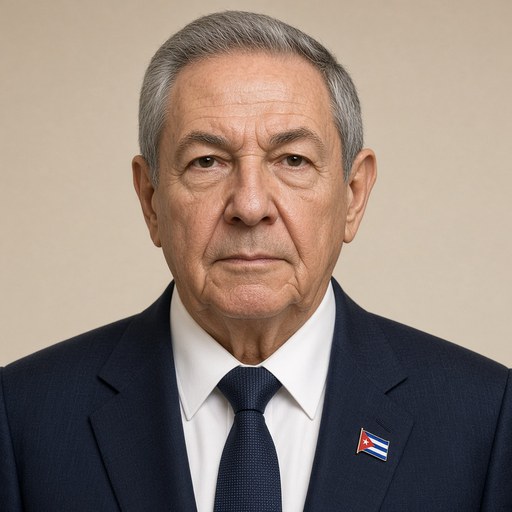
Speech delivered at the III Session Period of the Eighth Legislature of the National Assembly
 Raúl Castro · President of Cuba
- Context
- Castro addressed the National Assembly's third session of the Eighth Legislature on July 5, 2014, reviewing Cuba's economic performance and reform progress.
- Main themes
- Cuban economic performance, GDP growth, monetary unification, foreign investment law, economic model updating, U.S. blockade, debt restructuring, socialist development, long-term development program to 2030, state enterprise autonomy, financial discipline, social ownership
- Duration
- ~19 min
- Words
- 2,237
- Sentences
- 56
- Readability
- 20
- Grade
- 19.9
- Syntax
- 3.53
- Vocabulary
- 2.35
Translated from Spanish
The broad sphere of national life a sentence belongs to. Every sentence has an Arena, so it is the denominator the other indices are read against.
Other56 sentences in 45 paragraphs
Comrades:
In recent weeks, we have held important meetings, including the Council of Ministers on June 21 and the VIII Plenary of the Central Committee of the Party last Thursday. Both events, especially the meeting of the Council of Ministers, were widely reported in the media.
For their part, since Wednesday, the deputies in their respective permanent commissions have deeply debated the main themes of national affairs. For that reason, my intervention will be brief.
As has already been reported, in the first half of the year, the Cuban economy maintained a discreetly upward performance; the Gross Domestic Product (GDP) grew by 0.6%, which indicates a deceleration in the growth rate of this indicator due to the failure to meet external income, the impact of weather conditions, as well as the persistence of internal deficiencies in economic management.
Despite the growth in the sectors of transportation, communications, agricultural activity, the sugar industry, and tourism, mining and industrial production decreased, the latter due to significant impacts on timely financing and the consequent late arrival of imported raw materials.
On the other hand, the global economic crisis continued to negatively influence, while the U.S. blockade has intensified, especially the financial persecution of entities that maintain ties with our country, a matter I will address later.
In the midst of these undeniable circumstances, we have met our financial commitments resulting from the restructuring of debts with the main creditors, a fact that favors the sustained recovery of our economy's international credibility.
At the same time, we have managed to preserve the conditions of internal monetary balance, both in the population sector and in the economy as a whole. The trend towards restoring financial discipline in terms of collections and payments is also consolidating.
To achieve a GDP growth of 1.4% by the end of the year, we will need to work harder and better in the second half and enhance the use of efficiency reserves that we have not adequately exploited.
The result achieved does not satisfy us, but neither does it discourage us in the slightest. In the face of these complex circumstances, the spirit of fighting with firmness and optimism to reverse the situation and recover rates of progress that ensure socialist development on sustainable and irreversible bases is imperative.
In this endeavor and as part of the implementation of the Guidelines adopted by the Sixth Congress of the Party, the Council of Ministers approved the foundations of the long-term economic and social development program for the country, with a vision up to the year 2030, which will serve as a platform for the preparation of five-year plans.
Among the principles of this development program is to maintain social ownership over the fundamental means of production and to forge a development model with efficiency in all spheres, aimed at ensuring well-being, equity, and social justice for Cubans.
In terms of updating the economic model, we find ourselves in a qualitatively superior phase, in which decisions of greater complexity and scope are being evaluated; among them, the preparation of conditions that ensure the success of the monetary unification process, which, as has already been explained, does not mean a magic solution to all the problems present in the economy, but will be a decisive factor in achieving a substantial increase in efficiency and labor productivity, while also fostering a fairer distribution of the wealth created.
In this regard, it is not unnecessary to reiterate that bank deposits in foreign currencies, convertible Cuban pesos (CUC), and Cuban pesos (CUP), as well as cash in the possession of the population and national and foreign legal entities, will be guaranteed.
On Saturday, June 28, the new Foreign Investment Law, approved by this Assembly in an extraordinary session on March 29, came into effect, along with the complementary regulatory norms, all of which form a legal framework that offers greater incentives and guarantees to potential investors. It is up to the agencies and business entities to update the portfolio of opportunities in order to concretize, as soon as possible and on mutually advantageous bases, the attraction of foreign capital investments aimed at boosting the performance of production and services.
Likewise, the improvement of the structures and functions of the Central State Administration agencies and other national entities has continued, and their implementation is currently being carried out in the first group made up of 20 of them.
Progress is being made in separating state functions from business functions, and a set of measures has begun to be applied in the interest of granting greater autonomy and broad powers to the socialist state enterprise.
In this regard, I consider it necessary to emphasize that this process, to be successful, must be conducted with appropriate gradualness, as we said this morning, and accompanied by the permanent control of the different party and government structures at every level, as well as systematic actions for the training of managers and officials who assume new responsibilities in a more flexible and less centralized management scenario.
At the same time, the growing trend in self-employment and non-agricultural cooperatives continues, the latter still in the experimental phase.
In the last meeting of the Council of Ministers, the update of the policy for the implementation of non-state management in the activities of gastronomy, technical and personal services was approved, all of which should contribute to offering better quality and variety in the supply to the population and also reduce the frequent losses and thefts in this sector, allowing the State to focus on issues of greater magnitude and importance for the development of the nation.
In this sphere, there should also be no room for haste or improvisation. Gradualness is not a whim, nor is it the desire to delay the changes we must make; on the contrary, it is a necessity to ensure order and avoid gaps that would lead us directly to errors that distort the proposed objectives.
Next, I will also address issues related to foreign policy.
Despite the growing international rejection, particularly in Latin America and the Caribbean, and even within the United States itself, of the economic, commercial, and financial blockade against Cuba, this policy continues in full force in open violation of the principles enshrined in the Charter of the United Nations.
The harassment of commercial and banking institutions that relate to our country has increased to unprecedented levels, often with an aggressive extraterritorial character, even affecting its allies, as was the very recent fine of 8.97 billion dollars imposed on the French bank BNP Paribas, the largest in France, yet another assault against the sovereignty of states, the norms of free trade, and international law, as denounced in the statement from our Ministry of Foreign Affairs on July 2.
It is an unusual fact that, as a consequence of the financial blockade, the Cuban Consular Section in Washington has been deprived of banking services, which harms Cubans living in the United States and complicates their family ties and travel to our country.
The United States also does not renounce subversion against Cuba, using covert methods and employing new information and communication technologies, as evidenced by the recent revelations about the Zunzuneo project, which constitutes a violation of our sovereignty and international law.
It is time for the United States to understand that these policies are doomed to failure and that it must respect the will and right of Cubans to build their future in peace.
Today, Venezuela resists and triumphs against the most sophisticated means of subversion and destabilization, including attempts at coups d'état, according to the conceptions of unconventional warfare that the United States applies in different regions. The Bolivarian and Chavista Revolution and the government led by the constitutional President, Nicolás Maduro Moros, receive broad regional and international solidarity, in support of the Venezuelan people who defend their achievements.
Recently, our country expressed, through a statement from the Ministry of Foreign Affairs, its solidarity and support for the Republic of Argentina and President Cristina Fernández in the face of attacks associated with speculative funds, backed by unacceptable and interventionist decisions of U.S. courts.
Latin America and the Caribbean stand united in defense of this sister nation, knowing that this aggression against the Argentine people is also directed against the efforts of regional integration and the sovereignty of all southern countries.
The agreements reached so far by the Colombian government and the Revolutionary Armed Forces of Colombia (FARC) at the Negotiation Table are significant. Never before had that country advanced so much towards achieving peace in a conflict that has lasted more than half a century. At the request of the parties, Cuba will continue to serve as one of the two guarantors and hosts of these conversations, and will continue to provide all necessary facilities for their successful development.
We also welcome the exploratory process of that government and the National Liberation Army (ELN), to which we will continue to contribute.
The celebration of the II CELAC Summit in January, coinciding with the 161st anniversary of Martí's birth, was a success for the Cuban people due to the high level of participation of Heads of State and Government, the importance of the issues discussed, and the documents adopted, such as the Havana Declaration and the Action Program, which demonstrate our unity in diversity and the political will to advance in Latin American and Caribbean integration.
The signing by all Heads of State and Government of the Proclamation of Latin America and the Caribbean as a Zone of Peace was a milestone of great historical significance that enshrines respect for the principles and norms of international law and the purposes and principles of the United Nations Charter, as well as the permanent commitment to the peaceful resolution of disputes in order to banish the use and threat of the use of force from our region forever.
It also commits us to the strict fulfillment of the obligation not to intervene, directly or indirectly, in the internal affairs of any other country and to observe the principles of national sovereignty, equality of rights, and the self-determination of peoples; as well as the full respect—established in these documents—for the inalienable right of every state to choose its political, economic, social, and cultural system, as an essential condition to ensure peaceful coexistence—this is the first time that this principle has been established in a document signed by all Heads of State of Latin America and the Caribbean; the promotion of a culture of peace; and disarmament and the promotion of nuclear disarmament and general and complete disarmament, to foster the strengthening of trust among nations.
Now, in the CELAC Quartet, composed of Costa Rica, which holds the pro tempore presidency, Cuba, which held it until the last summit meeting, and Ecuador, which will succeed the current presidency, along with Saint Vincent and the Grenadines as a representative of CARICOM—that is, the Caribbean—our country continues to support the work of consolidating and strengthening the Community.
In May, the Minister of Public Health, Roberto Morales Ojeda, on behalf of Cuba, successfully presided over the 67th World Health Assembly, the highest body of the World Health Organization. This constitutes a high recognition of the achievements made in this area at the national level and in the international cooperation provided by tens of thousands of compatriots.
The Summit of the Group of 77 plus China in Bolivia last June showcased the outstanding popular and international leadership of President Evo Morales Ayma, adopted important decisions in defense of the interests of southern countries, and paid tribute to Commander Ernesto Che Guevara on the date of his birth.
As a testament to our fruitful, supportive, and growing ties and the identity of objectives and interests with the Caribbean Community, of which we feel a close part, the diplomatic representation in Havana of its member states has been completed with the opening, by Prime Minister Denzil Douglas, of the Embassy of Saint Kitts and Nevis.
We are already working on the preparation of the V CARICOM-Cuba Summit, which will take place on our homeland's soil on December 8 of this year, in commemoration of the day when Barbados, Guyana, Jamaica, and Trinidad and Tobago simultaneously established diplomatic relations with Cuba and made an unforgettable contribution to our regional insertion, a step that carried great weight at a time when very few countries had relations with us, not only Mexico, which was the only one that did not break relations, but a few more.
With the satisfaction of having René and Fernando back in the Homeland, after fully serving their unjust sentences, we reiterate our commitment to not relent, alongside them, in our efforts for the liberation of Gerardo, Ramón, and Antonio, a cause to which we will continue to give the highest priority.
Finally, comrades, on the upcoming July 26, we will commemorate together with the people of Artemisa the 61st anniversary of the Assault on the Moncada and Carlos Manuel de Céspedes barracks, in the young province that was the birthplace of many of the brave protagonists of that epic. On this occasion, it will be one of them, the Commander of the Revolution Ramiro Valdés Menéndez, who will deliver the central remarks.
Let us work to preserve the conquests of the Revolution, for which so many generations of Cubans have fought, and to achieve the construction of a prosperous and sustainable socialism.
That is all for now,
Thank you very much.
The original Spanish. The tags above are read on the English translation's sentences.
Compañeras y compañeros:
En las últimas semanas hemos efectuado importantes reuniones, entre ellas el Consejo de Ministros el 21 de junio y el VIII Pleno del Comité Central del Partido el pasado jueves. Acerca de ambos eventos, sobre todo de la reunión del Consejo de Ministros, se informó en los medios de prensa ampliamente.
Por su parte, desde el miércoles, los diputados en sus respectivas comisiones permanentes han debatido con profundidad las principales temáticas del quehacer nacional. Por esa razón mi intervención será breve.
Como ya fue informado, en el primer semestre la economía cubana mantuvo un desempeño discretamente ascendente; el Producto Interno Bruto (PIB) creció un 0,6%, lo que denota una desaceleración del ritmo de crecimiento de este indicador a causa del incumplimiento de los ingresos externos, la incidencia de condiciones climatológicas, así como la persistencia de insuficiencias internas en la gestión económica.
A pesar del crecimiento de las ramas del transporte, comunicaciones, actividad agropecuaria, la industria azucarera y el turismo, decreció la minería y la producción industrial, esta última por sensibles afectaciones en el financiamiento oportuno y la consiguiente entrada tardía de materias primas importadas.
Por otra parte, continuó influyendo negativamente la crisis económica global, al tiempo que se ha recrudecido el bloqueo norteamericano, en especial la persecución financiera a entidades que mantienen vínculos con nuestro país, asunto que retomaré más adelante.
En medio de estas innegables circunstancias, hemos cumplido puntualmente los compromisos financieros resultantes del reordenamiento de las deudas con los principales acreedores, hecho que favorece a la sostenida recuperación de la credibilidad internacional de nuestra economía.
Al propio tiempo se ha logrado preservar las condiciones de equilibrio monetario interno, tanto en el sector de la población como en la economía en su conjunto. Igualmente se consolida la tendencia al rescate de la disciplina financiera en materia de los cobros y pagos.
Para alcanzar al cierre del año un crecimiento del Producto Interno Bruto del 1,4%, se requerirá trabajar más y mejor en el segundo semestre y potenciar el empleo de las reservas de eficiencia que no explotamos adecuadamente.
El resultado alcanzado no nos satisface, pero tampoco nos desanima en lo más mínimo. Ante estas complejas circunstancias se impone el espíritu de luchar con firmeza y optimismo para revertir la situación y recuperar ritmos de avance que aseguren el desarrollo socialista sobre bases sostenibles e irreversibles.
En este empeño y como parte de la implementación de los Lineamientos adoptados por el Sexto Congreso del Partido, el Consejo de Ministros aprobó las bases del programa de desarrollo económico y social del país a largo plazo, con una visión hasta el año 2030, que servirá de plataforma para la elaboración de los planes quinquenales.
Entre los principios del citado programa de desarrollo está mantener la propiedad social sobre los medios fundamentales de producción y forjar un modelo de desarrollo con eficiencia en todas las esferas, encaminado a asegurar bienestar, equidad y justicia social para los cubanos.
En materia de la actualización del modelo económico nos encontramos en una fase cualitativamente superior, en la que se evalúan decisiones de mayor complejidad y alcance; entre ellas la preparación de condiciones que aseguren el éxito del proceso de unificación monetaria, el cual, como ya se ha explicado, no significa la solución mágica a todos los problemas presentes en la economía, sino que será un factor decisivo en pos de un sustantivo incremento de la eficiencia y de la productividad del trabajo, a la vez que propiciará una distribución más justa de la riqueza creada.
Sobre el particular no resulta ocioso reiterar que se garantizarán los depósitos bancarios en divisas foráneas, pesos cubanos convertibles (CUC) y pesos cubanos (CUP), así como el efectivo en poder de la población y las personas jurídicas nacionales y extranjeras.
El pasado sábado 28 de junio entró en vigor la nueva Ley de la Inversión Extranjera, aprobada por esta Asamblea en sesión extraordinaria el 29 de marzo, al igual que las normas regulatorias complementarias, todo lo cual conforma un marco jurídico que ofrece mayores incentivos y garantías a potenciales inversionistas. Corresponde a los organismos y entidades empresariales actualizar la cartera de oportunidades en interés de concretar, en el menor plazo posible y sobre bases mutuamente ventajosas, la captación de inversiones de capital extranjero llamadas a dinamizar el desempeño de la producción y los servicios.
Asimismo, ha proseguido el perfeccionamiento de las estructuras y funciones de los organismos de la Administración Central del Estado y otras entidades nacionales y actualmente se lleva a cabo su implantación en el primer grupo integrado por 20 de ellos.
Se avanza en la separación de las funciones estatales de las empresariales y ha empezado a aplicarse un conjunto de medidas en interés de conceder superior autonomía y amplias facultades a la empresa estatal socialista.
Al respecto considero necesario resaltar que este proceso, para resultar exitoso, debe conducirse con una adecuada gradualidad , como decíamos en la mañana de hoy, y acompañarse del control permanente de las diferentes estructuras partidistas y del gobierno a cada nivel, así como de acciones sistemáticas para la capacitación de los directivos y funcionarios que asumen nuevas responsabilidades en un escenario de gestión más flexible y menos centralizado.
Al propio tiempo, continúa la tendencia creciente en el trabajo por cuenta propia y las cooperativas no agropecuarias, estas últimas todavía en fase experimental.
En la última reunión del Consejo de Ministros se aprobó la actualización de la política para la implementación de la gestión por formas no estatales en las actividades de gastronomía, servicios técnicos y personales, todo lo cual debe contribuir a ofrecer una mejor calidad y variedad en la oferta a la población y también reducir las pérdidas y robos tan frecuentes en este sector, permitiendo al Estado dedicarse a las cuestiones de mayor envergadura e importancia para el desarrollo de la nación.
Tampoco en esta esfera debe dejarse espacio a la precipitación ni a la improvisación. La gradualidad no es un capricho, ni mucho menos el deseo de retrasar los cambios que debemos efectuar; todo lo contrario, se trata de una necesidad para asegurar el orden y evitar vacíos que nos conducirían directamente a errores que desvirtúen los objetivos propuestos.
A continuación abordaré, además, cuestiones relacionadas con la política exterior.
A pesar del creciente rechazo internacional, en particular en América Latina y el Caribe, e incluso dentro del propio Estados Unidos, al bloqueo económico, comercial y financiero contra Cuba, lejos de rectificarse esta política, continúa en vigor plenamente en abierta violación de los principios consagrados en la Carta de las Naciones Unidas.
Se ha acrecentado a niveles sin precedentes el acoso a las instituciones comerciales y bancarias que se relacionan con nuestro país, en muchas ocasiones con un agresivo carácter extraterritorial, afectando incluso a sus aliados, como fue la muy reciente multa de 8 970 millones de dólares impuesta al banco francés BNP- Paribás , el más grande de Francia, un atropello más contra la soberanía de los Estados, las normas de libre comercio y del Derecho Internacional, como se denunció en la Declaración de nuestro Ministerio de Relaciones Exteriores el pasado 2 de julio.
Es un hecho insólito que, como consecuencia del bloqueo financiero, la Sección Consular de Cuba en Washington haya sido privada de los servicios bancarios, lo que perjudica a los cubanos que viven en Estados Unidos y dificulta sus vínculos familiares y los viajes a nuestro país.
Estados Unidos tampoco renuncia a la subversión contra Cuba, con el uso de métodos encubiertos y el empleo de las nuevas tecnologías de la información y las comunicaciones, como lo evidenciaron las recientes revelaciones sobre el proyecto Zunzuneo , que constituye una violación de nuestra soberanía y del Derecho Internacional.
Es hora ya de que Estados Unidos entienda que estas políticas están condenadas al fracaso y que debe respetar la voluntad y el derecho de los cubanos a construir su futuro en paz.
Hoy Venezuela resiste y triunfa frente a los medios más sofisticados de subversión y desestabilización , incluidos los intentos de golpe de Estado, según las concepciones de la guerra no convencional que Estados Unidos aplica en diferentes regiones. La Revolución Bolivariana y Chavista y el gobierno encabezado por el Presidente constitucional, Nicolás Maduro Moros, reciben amplia solidaridad regional e internacional, en apoyo al pueblo venezolano que defiende sus conquistas.
Recientemente nuestro país expresó, a través de una Declaración del Ministerio de Relaciones Exteriores, su solidaridad y respaldo a la República Argentina y a la presidenta Cristina Fernández frente a los ataques asociados a fondos especulativos, amparados por decisiones inaceptables e injerencistas de cortes estadounidenses.
América Latina y el Caribe cierran filas en defensa de esta hermana nación, sabiendo que esa agresión al pueblo argentino está dirigida también contra los esfuerzos de integración regional y la soberanía de todos los países del sur.
Son significativos los acuerdos alcanzados hasta el momento por el gobierno colombiano y las Fuerzas Armadas Revolucionarias de Colombia (FARC) en la Mesa de Conversaciones. Nunca antes ese país había avanzado tanto en la dirección de alcanzar la paz, en un conflicto que ya dura más de medio siglo. A solicitud de las partes, Cuba seguirá desempeñándose como uno de los dos garantes y sede de estas conversaciones, y proseguirá brindando todas las facilidades necesarias para su buen desarrollo.
Saludamos también el proceso exploratorio de dicho gobierno y el Ejército de Liberación Nacional (ELN), al cual continuaremos contribuyendo.
La celebración de la II Cumbre de la CELAC, en enero, coincidiendo con el 161 aniversario del natalicio de Martí, constituyó un éxito para el pueblo cubano por el elevado nivel de participación de Jefes de Estado y Gobierno, la importancia de los temas debatidos y de los documentos adoptados, como la Declaración de La Habana y el Programa de Acción, que demuestran nuestra unidad en la diversidad y la voluntad política de avanzar en la integración latinoamericana y caribeña.
La firma por todos los Jefes de Estado y Gobierno de la Proclama de América Latina y el Caribe como Zona de Paz fue un hito de gran trascendencia histórica que consagra el respeto de los principios y normas del derecho internacional y los propósitos y principios de la Carta de las Naciones Unidas, así como el compromiso permanente con la solución pacífica de controversias a fin de desterrar de nuestra región para siempre el uso y la amenaza del empleo de la fuerza.
Igualmente nos compromete al estricto cumplimiento de la obligación de no intervenir, directa o indirectamente, en los asuntos internos de cualquier otro país y observar los principios de soberanía nacional, la igualdad de derechos y la libre determinación de los pueblos; así como el pleno respeto establecido en estos documentos al derecho inalienable de todo Estado a elegir su sistema político, económico, social y cultural, como condición esencial para asegurar la convivencia pacífica primera vez que ese principio se establece en un documento firmado por todos los Jefes de Estado de América Latina y el Caribe; la promoción de una cultura de paz; y el desarme y la promoción del desarme nuclear y del desarme general y completo, para propiciar el fortalecimiento de la confianza entre las naciones.
Ahora, en el Cuarteto de la CELAC, compuesto por Costa Rica, que ostenta su presidencia pro tempore , Cuba que la desempeñó hasta la última reunión cumbre y Ecuador, que sucederá a la actual presidencia más San Vicente y las Granadinas como representante del CARICOM o sea del Caribe, nuestro país continúa apoyando la labor de consolidación y fortalecimiento de la Comunidad.
En mayo, el Ministro de Salud Pública, Roberto Morales Ojeda, a nombre de Cuba, presidió de manera exitosa la 67 Asamblea Mundial de la Salud, máxima instancia de la Organización Mundial de la Salud. Ello constituye un alto reconocimiento a los logros alcanzados en esta esfera a nivel nacional y en la cooperación internacional que han prestado y prestan decenas de miles de compatriotas.
La Cumbre del Grupo de los 77 más China en Bolivia, el pasado mes de junio, mostró el destacado liderazgo popular e internacional del presidente Evo Morales Ayma , adoptó importantes decisiones en defensa de los intereses de los países del Sur y rindió homenaje al Comandante Ernesto Che Guevara en la fecha de su nacimiento.
Como testimonio de nuestros provechosos, solidarios y crecientes vínculos y de la identidad de objetivos e intereses con la Comunidad del Caribe, de la que nos sentimos parte entrañable, se ha completado la representación diplomática en La Habana de sus Estados miembros con la apertura, por parte del Primer Ministro Denzil Douglas , de la Embajada de San Cristóbal y Nieves.
Trabajamos ya en la preparación de la V Cumbre CARICOM-Cuba que se realizará en suelo patrio el 8 de diciembre del presente año, en conmemoración del día en que Barbados, Guyana, Jamaica y Trinidad-Tobago establecieron simultáneamente relaciones diplomáticas con Cuba y prestaron una inolvidable contribución a nuestra inserción regional, paso que tuvo un gran peso en un momento en que eran muy pocos los países que tenían relaciones con nosotros, ya no solo era México que fue el único que no rompió, sino unos cuantos más.
Con la satisfacción de tener de regreso en la Patria a René y a Fernando, tras cumplir íntegramente sus injustas condenas, reiteramos el compromiso de no cejar, junto a ellos, en nuestros esfuerzos por la liberación de Gerardo, Ramón y Antonio, causa a la que seguiremos confiriendo máxima prioridad.
Por último, compañeras y compañeros, el próximo 26 de julio conmemoraremos junto al pueblo de Artemisa el 61 aniversario del Asalto a los cuarteles Moncada y Carlos Manuel de Céspedes, en la joven provincia que fue cuna de muchos de los valerosos protagonistas de aquella epopeya. En esta ocasión corresponderá a uno de ellos, al Comandante de la Revolución Ramiro Valdés Menéndez, pronunciar las palabras centrales.
Trabajemos para preservar las conquistas de la Revolución, por las que tantas generaciones de cubanos han luchado, y alcanzar la construcción de un socialismo próspero y sostenible.
Eso es todo por ahora,
Muchas gracias.